
Round-Body vs Square-Head Hydraulic Cylinders
Construction Style Compared — A Technical Deep-Dive for Engineers and Procurement Teams
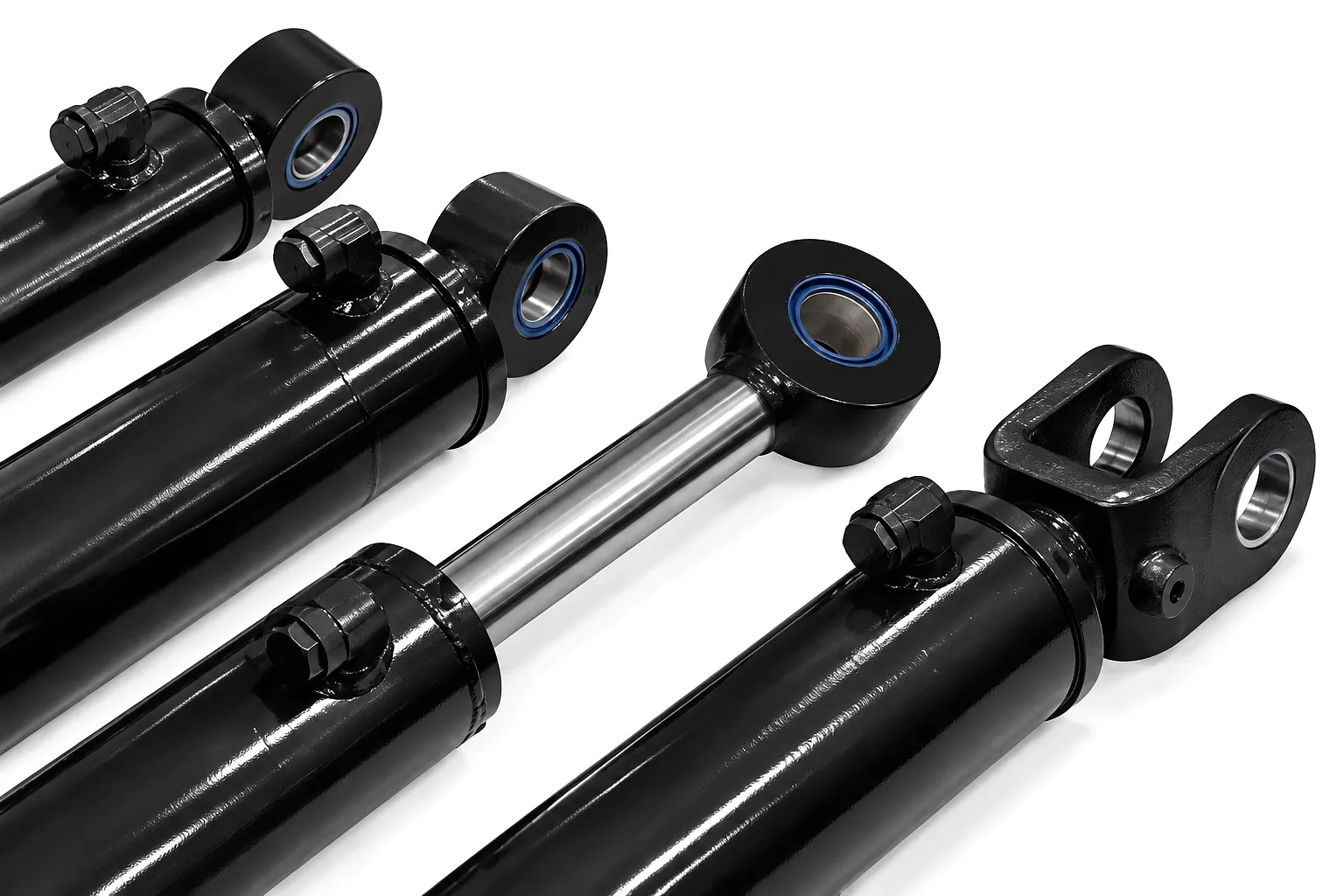 Walk through any hydraulic systems workshop in Sheffield or Birmingham and you will see two distinctly different cylinder bodies bolted into press frames, agricultural rigs, and lifting platforms side by side. One has a smooth, round barrel machined from seamless tube stock; the other presents flat, precisely milled surfaces at each end — what the industry calls a square-head or rectangular-head configuration. The choice between these two construction philosophies is far more consequential than it first appears. It shapes installation geometry, tie-rod count, seal accessibility, operating pressure ceiling, and long-term maintenance cost across an asset’s entire service life. For British manufacturing plants running three shifts a day, or for OEM design teams specifying cylinders into a new compact excavator attachment, understanding the structural logic behind each format is not optional background knowledge — it is the foundation of a reliable, cost-effective hydraulic circuit.
What Defines Round-Body and Square-Head Construction?
A round-body hydraulic cylinder gets its name from its circular cross-section barrel, typically machined from cold-drawn seamless steel tube or honed stainless tube. The end caps — known as the cap end and the rod end — are welded or threaded directly onto the barrel in most configurations, creating a compact, self-contained pressure vessel with no external tie rods visible along the body. This construction style suits applications where the cylinder must fit into a tight envelope or where external surface damage from debris is a concern. The absence of longitudinal tie rods means the barrel wall itself carries the full hoop stress generated by system pressure, which means the wall thickness and material grade are critical design parameters.
In British agricultural machinery — combine harvesters, bale wrappers, and round-baler tension arms manufactured by firms operating out of Lincolnshire and Yorkshire — the round-body cylinder is the default choice precisely because it offers a slim profile and resists mud packing around exposed hardware. The smooth external surface also makes seal replacement quicker in field workshop conditions, where a mechanic cannot always access a full parts inventory.
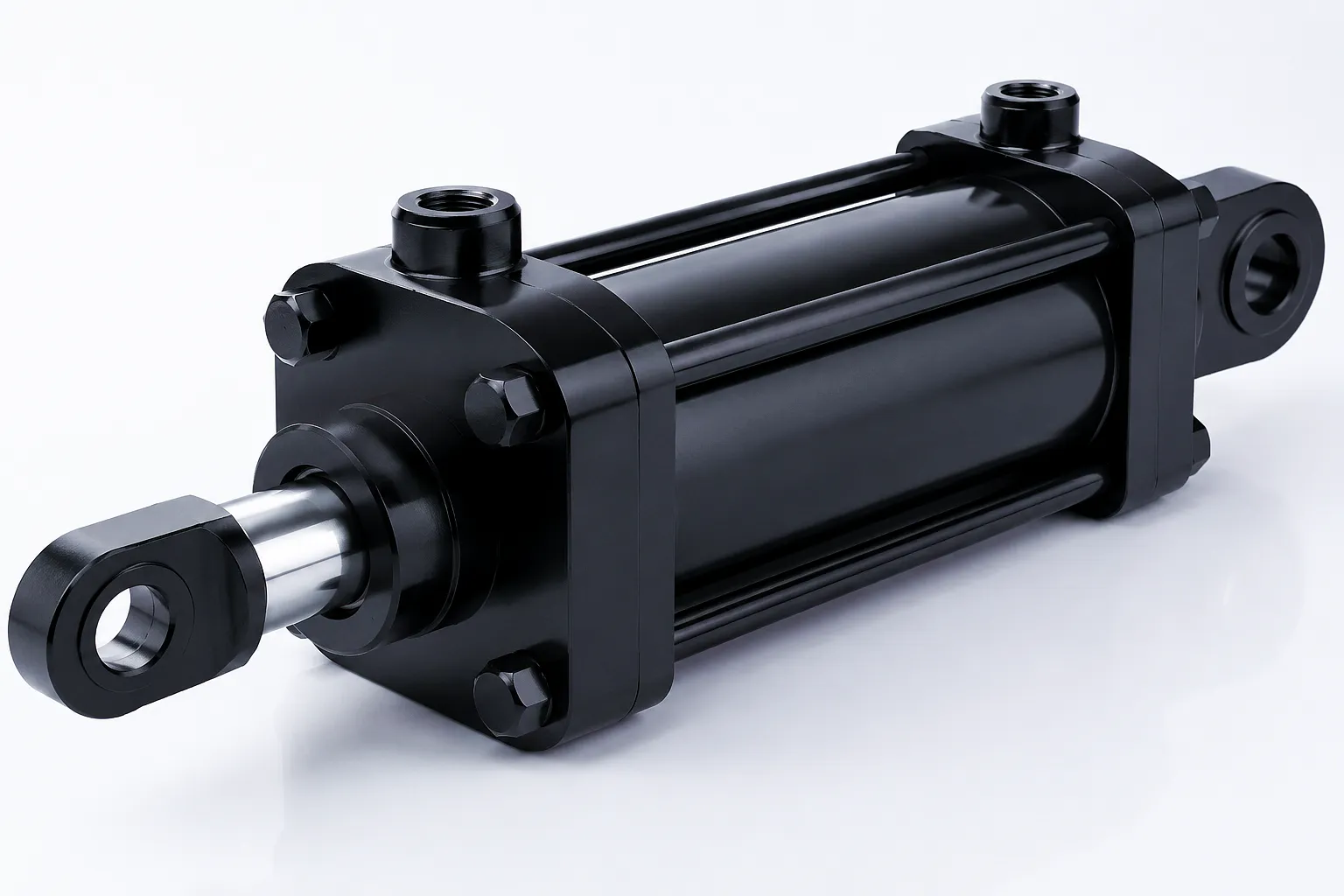
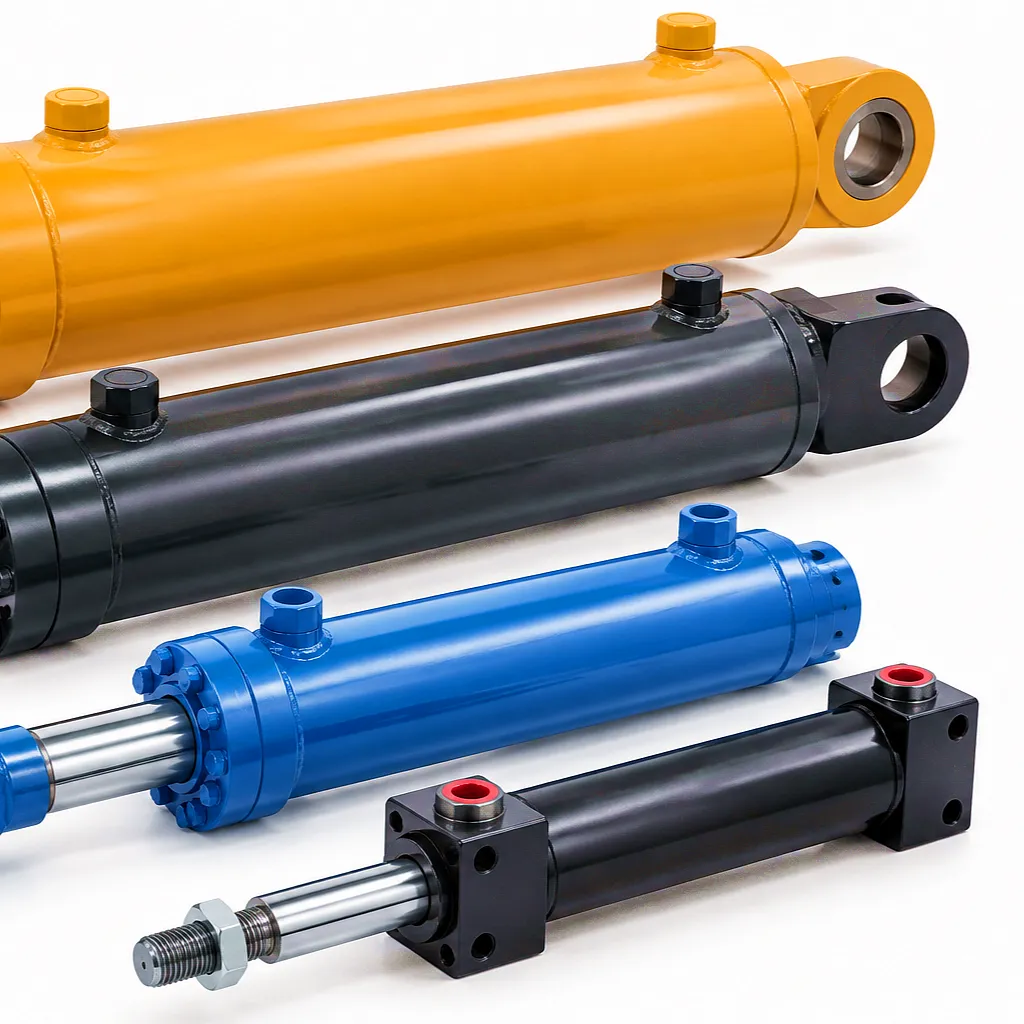
Square-head or rectangular-head cylinders use flat-faced, precision-machined end plates — the head and the cap — that are clamped together around the barrel by external high-tensile tie rods, typically four rods arranged at the corners of the square profile. This tie-rod architecture means the end plates can be removed without cutting or unthreading the barrel itself, giving maintenance engineers clean access to the piston assembly, seals, and bearing surfaces with nothing more than a set of spanners. It is the reason that square-head cylinders dominate in industrial press applications, hydraulic power units inside machine tools, and injection moulding machinery found in the Midlands manufacturing corridor stretching from Coventry to Derby.
The square-head format also makes port location extremely flexible. Because the end plates are flat-faced machined blocks, ports can be drilled at the face, on the side, or even angled to match unusual manifold arrangements — a critical advantage when designing compact hydraulic power packs where pipe routing space is limited. This versatility has made the square-head cylinder the preferred format in custom automation lines across Sheffield’s advanced manufacturing sector.
Core Materials: What Goes Into Each Construction Style
Material selection is where the engineering conversation gets genuinely interesting, because the two construction styles impose different stress distributions and therefore call for different material strategies. In a round-body cylinder, the barrel must handle biaxial hoop stress without any external reinforcement. This drives the specification toward high-grade cold-drawn seamless steel — typically equivalent to EN 10305-1 E355 or DIN ST52 — with a honed bore finish of Ra 0.2–0.4 µm to ensure seal longevity. Some high-pressure variants used in offshore hydraulic control manifolds operate at pressures exceeding 350 bar, requiring the barrel wall to be calculated with a safety factor of at least 4:1, which can push wall thickness into ranges that make round-body cylinders notably heavier than their square-head equivalents for the same bore diameter.
The piston rod — the component that translates hydraulic force into mechanical motion — is universally manufactured from case-hardened and hard chrome plated steel or, in corrosive environments such as wash-down food processing areas or marine engineering operations, from 316L stainless steel or nickel-chrome alloy rod. The chrome layer, typically 25–50 µm thick, provides the wear surface that rides against the rod seal and the rod-end bearing, and its surface hardness — typically 850–1,000 HV — is the primary determinant of seal life. For round-body cylinders operating in the open field conditions of UK farming, UV-resistant wiper seals and dust seals are specified as standard; for square-head cylinders inside enclosed machine tools, a simpler seal stack often suffices because the environment is controlled.
Tie rods in square-head cylinders introduce an additional material consideration: the rods are typically high-tensile alloy steel — grade 8.8 or 10.9 equivalent — and they must be torqued to a precise preload during assembly to keep the end plates clamped under the highest operating pressure the system will see. Under-torqued tie rods allow micro-movement of the end plates at peak pressure, generating fretting wear on the barrel-to-end-plate seating face and eventually causing external leakage that is difficult to diagnose. Over-torqued rods can yield under thermal cycling. This assembly sensitivity is one reason that quality square-head cylinder manufacturing demands calibrated torque tooling and documented assembly procedures — disciplines that set tier-one suppliers apart from commodity importers.
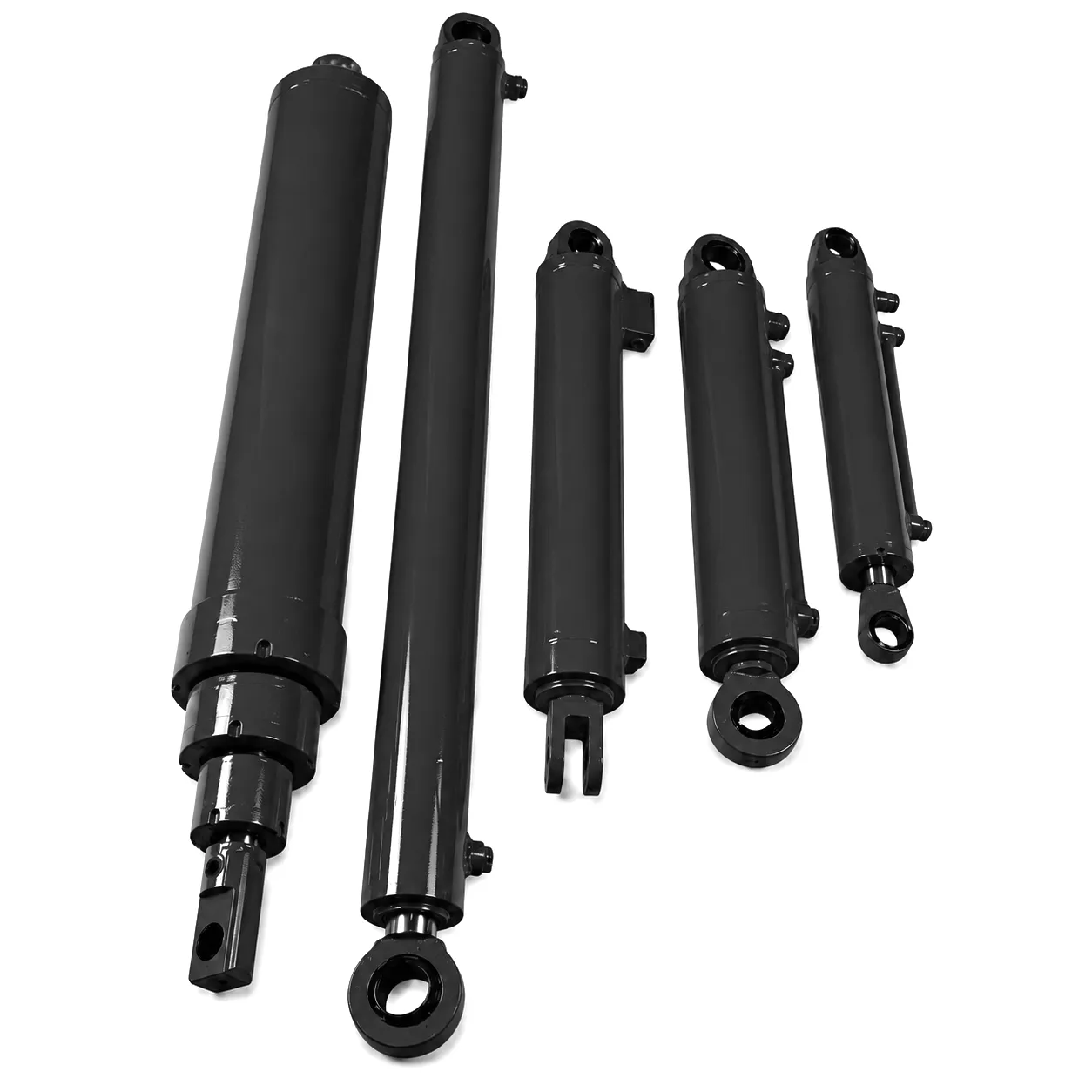
Hydraulic Cylinders For Combine Harvester Machine ↗
Purpose-engineered round-body cylinders built for the cyclic loading and contamination exposure of UK grain harvest operations.
How Each Construction Style Handles Pressure: The Operating Principle
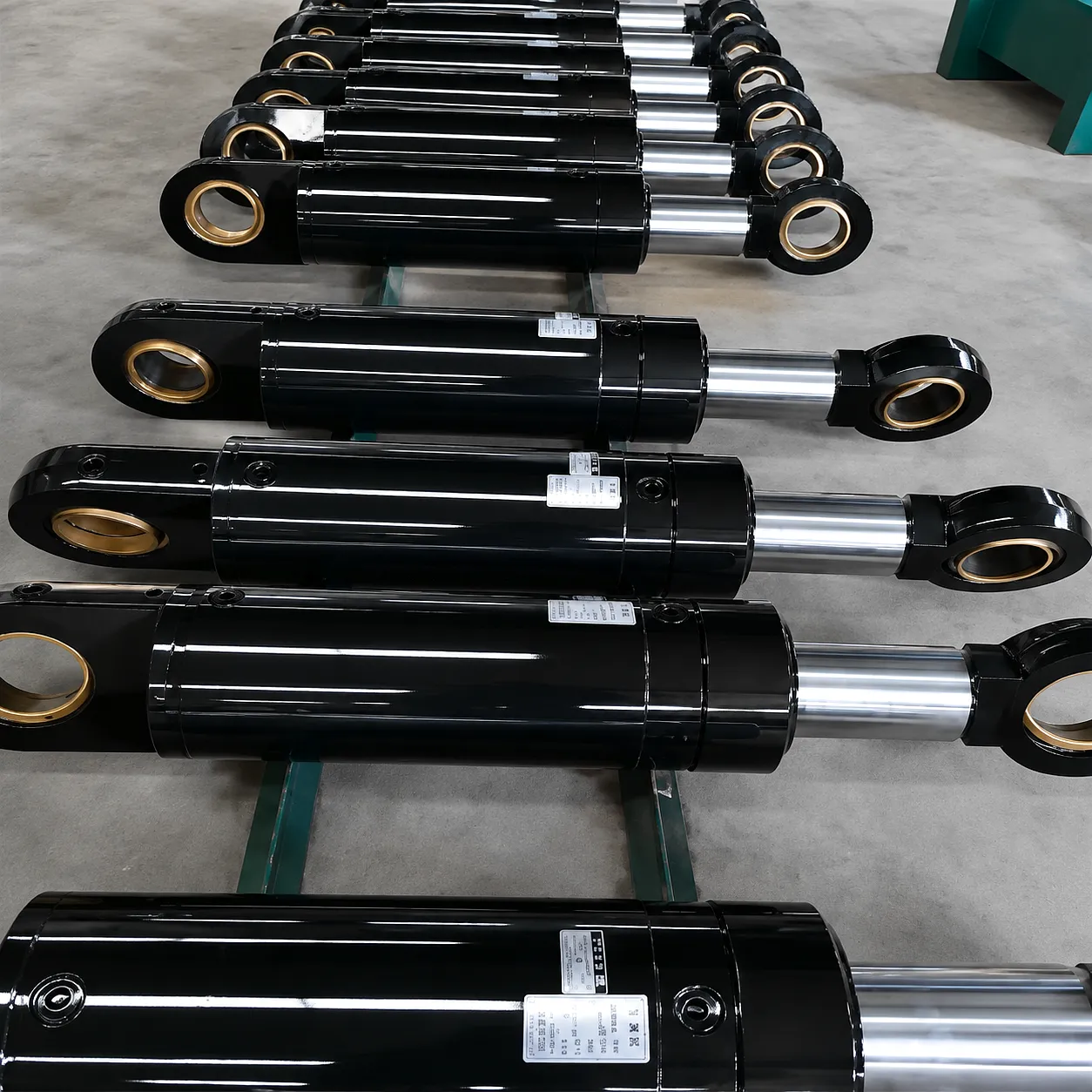
Both round-body and square-head cylinders convert hydraulic pressure into linear mechanical force using the same fundamental physics: force equals pressure multiplied by effective piston area (F = P × A). Where they diverge is in how that pressure is contained, how the end loads are reacted, and how the resulting stress is distributed through the structure. In a round-body cylinder operating in double-acting mode — pressurised alternately on the cap side and the rod side — the cylindrical barrel carries hoop (circumferential) stress as the dominant load. Because a cylinder in pure hoop stress is a pressure vessel in the classical sense, thin-walled or thick-walled vessel calculations from Lamé’s equations govern the design. Crucially, every point on the barrel circumference carries an equal portion of the load, which is why a smooth, round barrel with no stress concentration points is inherently efficient from a fatigue life perspective.
Square-head cylinders handle end cap loads very differently. When the hydraulic pressure acts on the cap end or head end, it generates an axial force trying to push those end plates apart. In a round-body welded cylinder, the weld joint or the threaded engagement reacts this force. In a square-head tie-rod cylinder, the four tie rods take this axial tensile load in parallel. The advantage is that the rods can be specified — number, diameter, grade — to match exactly the pressure and bore of the application, and they can be inspected visually for cracking or corrosion without disassembling the cylinder. The flat end plates, meanwhile, must be thick enough to resist bending under the hydraulic end load — this is where finite element analysis at the design stage adds genuine value, and where less experienced manufacturers cut corners.
The piston seal arrangement follows the same physics in both configurations. Bi-directional piston seals — typically polyurethane or PTFE-backed NBR composite profiles — must maintain a dynamic sealing contact with the bore while allowing relative motion at sliding speeds that can reach 0.5 m/s in fast-acting motion control applications. Seal groove geometry is machined to tolerances of ±0.025 mm to ensure the seal sits at the correct compression ratio. Deviation from this tolerance — even 0.05 mm — shortens seal life dramatically. This is why bore honing quality is a non-negotiable specification point when evaluating a cylinder supplier, regardless of whether the body is round or square.
Technical Performance Parameters: Round-Body vs Square-Head
| Parameter | Round-Body | Square-Head (Tie-Rod) |
|---|---|---|
| Bore Range | 20 mm – 320 mm | 25 mm – 500 mm |
| Max Operating Pressure | Up to 500 bar (welded/heavy-duty) | Up to 250 bar (standard); 350 bar (heavy-duty) |
| Stroke Range | 50 mm – 6,000 mm | 50 mm – 3,000 mm |
| Barrel Material | ST52 / E355 seamless tube; 316L SS option | Cold-drawn DOM tube; honed bore |
| Rod Material | Hard chrome plated alloy steel (850–1,000 HV) | Hard chrome or electroless nickel plate |
| Chrome Layer Thickness | 25–50 µm | 20–40 µm |
| Bore Finish (Ra) | Ra 0.2–0.4 µm | Ra 0.2–0.4 µm |
| Seal Type | PU / NBR composite; PTFE-backed | PU / NBR / EPDM / Viton options |
| Service / Seal Access | Moderate (unthread or cut) | Excellent (remove tie rods, open end cap) |
| Profile / Envelope | Compact, slim | Larger; square cross-section |
| Port Location Options | Barrel side, angled | Face, side, angled, manifold-mount |
| Mounting Options | Clevis, trunnion, flange, threaded end | Flange (NFPA/ISO), foot, extended tie rod |
| Typical Operating Temp. | -20 °C to +80 °C (standard NBR) | -30 °C to +120 °C (Viton option) |
| Typical Industry | Agriculture, mobile plant, marine, offshore | Machine tools, presses, automation, lift tables |
Core Technical Advantages of Each Construction Style
✓
Higher pressure ceiling per unit weight — the continuous cylindrical structure is the most pressure-efficient geometry, allowing compact barrels to operate at 350–500 bar without the end plate bending concerns that constrain tie-rod designs at very high pressures.
✓
Slimmer installation envelope — no external tie rods means the cylinder can be routed through narrower structural members, making round-body the only viable choice in many compact excavator attachment and agricultural implement designs.
✓
Better resistance to side-loading and bending moments — welded and threaded round-body construction creates a monolithic assembly with inherently higher lateral stiffness than a bolted-together square-head unit under off-axis loads.
✓
No tie-rod corrosion risk — in outdoor, marine, or chemical process environments where the external surface is exposed to moisture or process fluids, the absence of external threaded rods eliminates a common failure initiation site that plagues tie-rod cylinders in those conditions.
✓
Superior field serviceability — removing four tie-rod nuts gives full access to the seal stack, piston assembly, and bore surface without specialist tooling or destructive disassembly. This advantage compounds over the cylinder’s service life in applications where scheduled maintenance windows are short.
✓
Maximum port and mounting flexibility — flat-faced end plates allow ports and mounting bosses to be positioned with almost unlimited geometric freedom, enabling manifold-mount designs that eliminate external pipework and the leak points it introduces.
✓
Interchangeable with ISO 6020/6022 and NFPA standards — square-head cylinders built to these dimensional standards are interchangeable across suppliers, protecting buyers against single-source dependency and giving procurement teams negotiating leverage on replacement parts and spare seal kits.
✓
Barrel rebore and re-sleeve capability — because the end plates are removable, a worn or scored barrel can be extracted and rebored or sleeved independently, effectively rebuilding the cylinder body at a fraction of replacement cost. This whole-life cost advantage is significant in high-duty press applications running in Birmingham’s automotive pressing supply chain.
Industrial Application Scenarios Across UK Sectors
Round-body double-acting hydraulic cylinders control header height, reel position, and grain tank cover actuation on combine harvesters operating across the East Midlands and East Anglian arable belts. The duty profile demands cyclic operation at pressures between 180–220 bar, combined with sustained exposure to crop dust, rain, and UV radiation. Welded round-body cylinders with polyurethane rod seals and stainless-steel rod options are the established choice because their sealed, smooth outer surface resists ingress of the abrasive chaff particles that destroy exposed tie-rod threads in a single harvest season. Stroke lengths from 100 mm to 600 mm cover the full range of header geometry control functions.
Square-head tie-rod cylinders dominate the blanking and drawing presses found in Birmingham’s automotive supply chain, particularly in the Midlands manufacturing corridor stretching through Solihull and Wolverhampton. These presses demand cylinders that can tolerate millions of full-stroke cycles at pressures up to 250 bar while remaining serviceable during planned weekend maintenance windows. The removable end-cap design lets a maintenance engineer replace the piston seal pack in under 90 minutes without removing the cylinder from the press frame — a critical advantage when press uptime directly determines a Tier 1 supplier’s delivery performance. ISO 6020/1 dimensional compliance ensures seal kit sourcing remains competitive across the life of the press.
Steel-city Sheffield’s distribution and logistics infrastructure relies on hydraulic dock levellers and scissor lift tables using both round-body and square-head cylinders depending on the platform geometry. Telescopic round-body configurations handle the compact under-platform cavity of flush-mounted dock levellers where a conventional long-stroke single-stage cylinder would protrude below the floor slab. For heavier-duty scissor tables supporting loads above 5,000 kg, square-head cylinders with extended tie rods and dual-acting manifold ports provide the structural rigidity and maintenance accessibility that high-throughput logistics operations demand. Viton seal options protect against exposure to cleaning chemicals used in food-grade warehouse areas.
Injection moulding machines operating throughout Nottingham and Leicester’s plastics processing sector use square-head cylinders extensively in the clamping unit, ejector, and core-pull functions. The manifold-mount port arrangement eliminates high-pressure hose connections that present a leak and burn risk in hot environments surrounding the mould area. Clamping cylinders on large horizontal machines with clamping forces above 1,000 kN operate at 140–200 bar with cycle rates that can exceed 3,000 cycles per day, making seal longevity the primary procurement driver. PTFE-backed composite seals with engineered groove geometry achieve service intervals in excess of 10 million cycles in optimised hydraulic fluid conditions, dramatically reducing unplanned downtime.
North Sea deck equipment — hatch cover actuators, ramp cylinders on RoRo ferries operating from Hull and Aberdeen, and crane luffing cylinders on offshore support vessels — almost universally specifies round-body cylinders in 316L stainless steel or with nickel-chrome plated rods and corrosion-inhibiting paint systems. The marine environment’s combination of saltwater spray, temperature cycling, and structural vibration disqualifies exposed tie-rod assemblies in most deck-exposed locations. Purpose-engineered hydraulic cylinders for these applications carry pressure test certificates to 1.5 times working pressure, full material traceability documentation, and compliance with Lloyd’s Register or DNV-GL equipment codes — requirements that commodity square-head catalogue cylinders cannot typically meet.
Custom Double Acting Telescopic Hydraulic Cylinders For Lifting Platform ↗
Telescopic round-body variants engineered for scissor tables and dock levellers across UK logistics and distribution facilities.
Ever Power Hydraulic Cylinder Range
Ever Power: Precision Manufacturing and Custom Cylinder Solutions
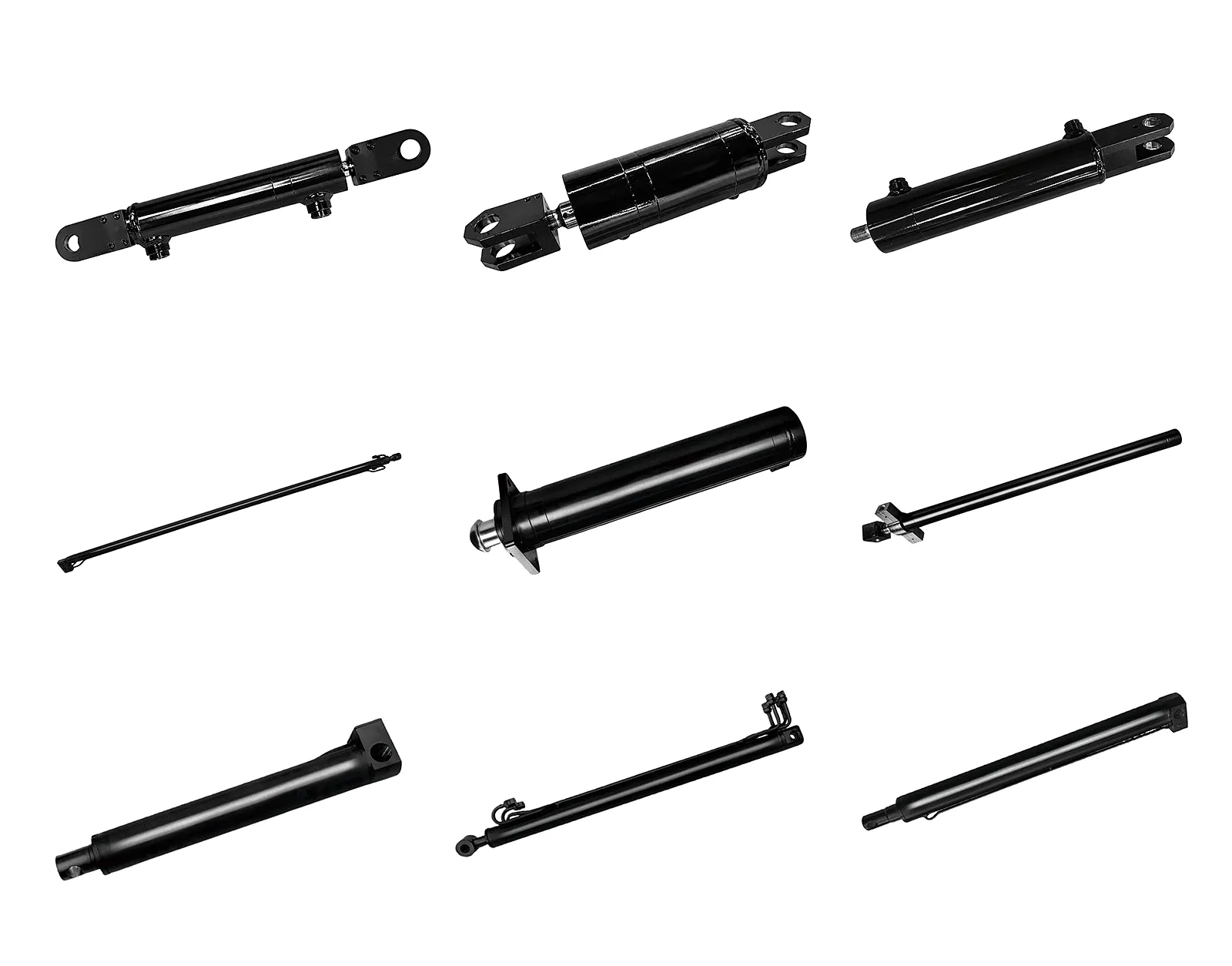
Ever Power operates purpose-built hydraulic cylinder manufacturing facilities equipped with multi-axis CNC honing centres, deep-hole boring machines capable of achieving bore diameters from 20 mm to 500 mm, and automated hard chrome plating lines running to ±2 µm thickness tolerances. The production floor is structured around a full quality management system aligned with ISO 9001:2015, with in-process CMM inspection at the bore, rod, and end cap machining stages. Every cylinder leaving the facility carries a test certificate documenting static pressure test results at 1.5× working pressure and, for dynamic test requests, a recorded stroke cycle log. This level of documentation traceability is precisely what UK buyers in regulated sectors — medical device manufacturing, nuclear facility maintenance, food processing — require from their hydraulic component suppliers.
Customisation capability at Ever Power extends well beyond selecting a bore and stroke from a catalogue. The engineering team routinely develops position sensor integration — magnetostrictive, inductive, or Hall-effect — within the cylinder body, side-loading correction via adjustable cushion geometry, and non-standard mounting configurations including bi-directional trunnion arrangements for applications where the cylinder must pivot in two axes simultaneously. For the UK market specifically, the team is experienced in delivering cylinders with BSPP port threads as standard, BSP fittings, and dual-language documentation in English as required by British procurement teams and maintenance departments.
Supply chain reliability is built into the model. Ever Power maintains buffer stock of common bore diameters in raw honed tube and pre-machined rod stock, enabling short-run custom orders to be completed and dispatched within lead times that consistently meet the expectations of UK buyers used to next-day delivery culture on standard components. Air freight and consolidated sea freight options are available, with DDP Incoterms accommodated for customers who want a fully landed cost with no customs handling burden. Technical pre-sales support is provided by engineers who understand BS EN ISO cylinder standards and can cross-reference from legacy Parker, Bosch Rexroth, or PHD cylinder specifications to Ever Power equivalents without requiring the customer to redraw a mounting envelope from scratch.
Send Ever Power your bore, stroke, pressure, duty cycle, and mounting requirements. Our engineering team will return a fully costed proposal with dimensional drawings within 48 hours.
Customer Success Story
 A Tier 2 automotive pressing supplier operating three transfer presses in Dudley, West Midlands, had been experiencing accelerating cylinder seal failures on their existing square-head clamping cylinders — 80 mm bore, 500 mm stroke, rated at 200 bar. The failures were clustering at the cap-end seal and were causing hydraulic fluid contamination in the press pit. Press downtime for each cylinder change-out was running at four to five hours, and with four cylinders per press, the cumulative maintenance cost was becoming untenable against the contract margin on the door panel assembly component they were producing for a major OEM.
Their engineering manager contacted Ever Power with measured bore wear data — the bores had worn to the upper limit of their nominal tolerance — and the seal failure pattern photographs. The Ever Power engineering team identified that the original cylinder specification used a standard PU seal profile in a groove whose depth-to-width ratio was marginal for the combination of operating pressure and cycling rate the press was actually running. The customer’s production data showed cycle rates roughly 40% higher than the original cylinder design basis, which had elevated contact stress at the seal lip beyond its design envelope.
Ever Power supplied twelve direct-replacement square-head cylinders with rebored tolerances tightened to H7/h6 from the original H8 specification, upgraded to PTFE-backed composite piston seals with a groove profile re-optimised for the actual duty cycle, and added a secondary wiper at the rod end to prevent particulate ingress from the press environment. The tie-rod preload was specified using documented torque values calibrated to the operating temperature range of the press. Following installation, the customer recorded over 14 months of operation before the first scheduled preventive seal replacement — compared to their previous average of 11 weeks between emergency call-outs. The ROI on the specification upgrade was recovered within the first four months of operation.
“The upgraded seal specification Ever Power proposed made an immediate difference. We went from reactive maintenance every few weeks to a planned replacement interval that fits our shutdown schedule. The technical depth in their pre-sales support was what convinced us — they clearly understood press hydraulics, not just cylinder geometry.”
“We run combine harvesters through 600 acres of East Yorkshire winter barley, and seal failures in harvest week are catastrophic. The round-body cylinders from Ever Power have been running two full harvests now with zero issues. The polyurethane rod seals they specified for our contamination environment have genuinely held up to what the field puts through them.”
“Getting cylinders with BSPP ports, DDP delivery, and material certs in plain English — without having to fight through a distributor — made the whole procurement straightforward. Ever Power’s lead time on custom bore sizes was half what our previous UK-stocked supplier quoted for a catalogue item. The price was competitive and the dimensional accuracy was exactly as documented.”
How to Choose Between Round-Body and Square-Head for Your Application
Your installation envelope is compact, your operating pressure exceeds 280 bar, the cylinder is exposed to outdoor contamination or corrosive environments, side-loading or bending moments are a design consideration, or the application is mobile plant, marine, or agricultural where external surface damage is a realistic hazard. The round-body format is also preferable when the cylinder must pass through a structural hinge or pin assembly where a square profile would create geometric interference.
Seal serviceability in the field is a high priority, the installation environment is clean and enclosed, port and mounting flexibility matter for manifold integration, ISO or NFPA dimensional interchangeability is a procurement requirement, or you need a cylinder that can be fully rebuilt including bore re-sleeving without replacement of the entire body. Square-head is the default format for static industrial machinery, machine tools, injection moulding, and hydraulic press applications operating at up to 250 bar.
Some applications — compact lifting platforms, dock levellers, and semi-mobile industrial equipment — sit at the boundary between the two format categories. In these cases, the deciding factors are typically maintenance strategy (can you always access the cylinder for a welded-cap reseal, or do you need in-place seal replacement?) and pressure rating (does your system push toward the upper limit of what standard tie-rod construction comfortably accommodates?). Ever Power’s engineering team is available to work through these boundary cases and recommend the format — and the specific construction variant within that format — that gives the best whole-life cost outcome.
Frequently Asked Questions
Round-body or square-head, standard bore or fully bespoke — our engineering team covers the full specification conversation and delivers documented, tested cylinders to UK addresses with DDP terms and BSPP ports as standard.
📧 Contact Ever Power — [email protected]
 English
  Italian
  Portuguese
  Dutch
Dutch  Swedish
  Danish
  Finnish
  Polish
  Hindi
Hindi  Kazakh
  Turkish
  Ukrainian
  Romanian
  Spanish
  German
  Russian
  Korean
  Japanese
  Vietnamese
  Thai
Thai  Indonesian
  Malay
Malay  French
  Greek
Greek