
Produktbeskrivelse
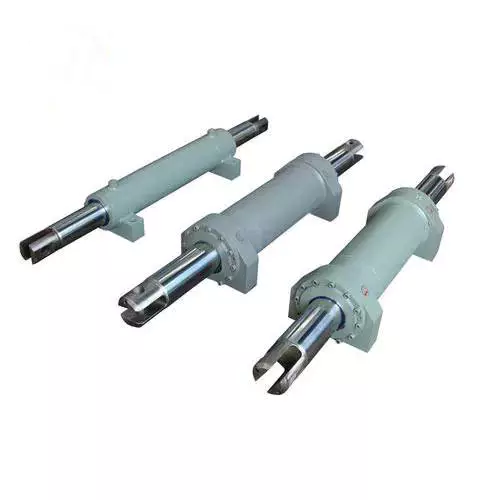
Double Action Hydraulic Cylinder for Hydraulic Scissors
Produkt Specifikationer:
| Punkt | Specifikationer |
| Boringsdiameter | 280mm,customizable |
| Boddiameter | 190mm,customizable |
| Slagtilfælde | 300mm,customizable |
| Working Pressure | 35Mpa,customizable |
| Overfladebehandling af stempelstang | Hårdforkromning, elektropletteret mælkehvid krom + hårdforkromning, fornikling + hårdforkromning, højhastigheds iltbrændstof CrC NiC, keramisk belægning, nitrering, laserbeklædning |
| Arbejdspres | Maximum 38MPa,Customizable |
| Materiale | Højstyrke koldtrukket rør, præcisionsslebet for forlænget tætningslevetid |
| Montering | Ørering, flange, gaffelbensfod, drejetap, tilpasselig |
| Forseglingstype | Parker,NOK, Hallite GAPI or as customer’s requirement |
| Garanti | 18 måneder |
| MOQ | 1pcs |
| Produktionstid | Baseret på ordremængde. Normalt 30-40 dage. |
| Certificering | ISO9001, CE, SGS |
| Farve | Red,White,Pink,Yellow,Bule,etc,Customizable |
| Emballage | Metal case,plywood case,carton or as requirement |
| Service | OEM og ODM |
| Prisfordel | Konkurrencedygtig fabrikspris med garanteret kvalitet |
| Virksomhedstype | Fabrikant |
Produktvisning:
Product Advantages:
Special structural design, high-strength material use, and special heat treatment and welding processes ensure that the oil cylinder has extremely high fatigue durability under high pressure and heavy load.
The front and rear suspension cylinders can be analyzed and calculated based on the parameters provided by customers, and the stiffness and damping curves required by customers can be designed.
The surface of the piston rod adopts special surface treatment to ensure excellent wear and corrosion resistance of the piston rod.
Select heavy-duty sealing rings to meet the harsh working conditions of the mining area, ensuring excellent dustproof and sealing performance of the oil cylinder.
Select a wide series and high bearing capacity integrated guide ring, with strong lateral force resistance.
The interior of the lifting cylinder can be designed with a buffer structure to avoid excessive impact during lifting and lowering processes.
The steering cylinder can be equipped with a built-in displacement sensor to monitor the cylinder stroke in real-time.
The piston accumulator adopts a dual piston design, with high and low pressure chambers to meet various road conditions.
The reliable sealing structure design of the piston accumulator ensures the separation of oil and gas.
Applikationer:Construction Machinery,Hydraulic Scissors.
Monteringsmetode:
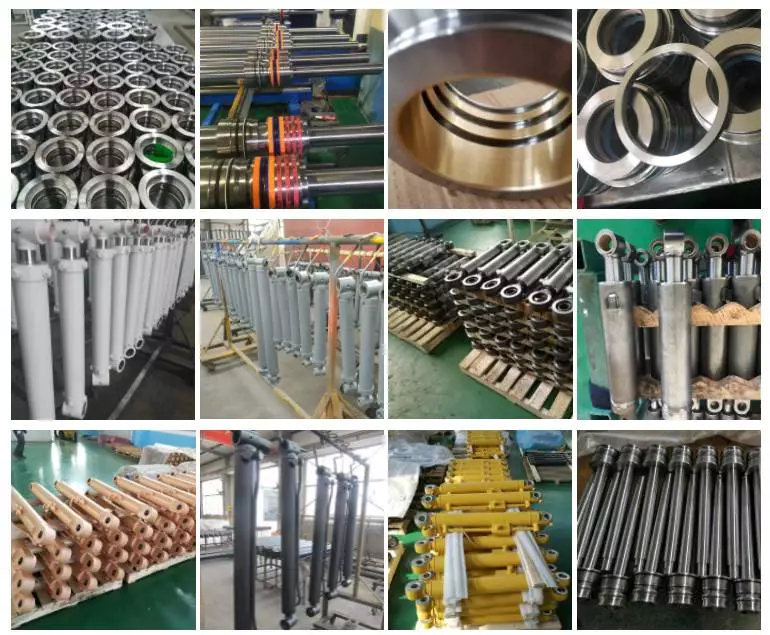
Vores fabrik:
Inspektionsproces:
| Inspektionstype | Inspektionsstandard |
| Inspektion af råmaterialer | Før opbevaring foretager QC måling af råmaterialerne. |
| Inspektion af procesmateriale | Under produktionen udfører kvalitetskontrolteamet stikprøvekontrol. Før de hydrauliske cylinderdele overføres til den næste proces, foretager QC'er inspektion. |
| Endelig funktionstest | Alle hydrauliske cylindre gennemgår en hydraulisk funktionstest |
Inspektion af råmaterialers mekaniske egenskaber
Process Inspection
Final Testing
Pakning og levering:
Om os:
Vores certifikat
ZheJiang Tianjian Hydraulic Technology Co.,Ltd er specialiseret i produktion af forskellige typer hydrauliske cylindre samt cylindercylinder, stempelcylinder og andet cylindertilbehør.
Som en højt specialiseret producent af hydrauliske cylindre leverer Tianjian designoptimeringsløsninger og pålidelige produkter til mange kunder i ind- og udland. Uanset om det drejer sig om entreprenørmaskiner, jernbanebromaskiner, havneskibsmaskiner, metallurgi- og minedriftsmaskiner, olie- og letindustrimaskiner, specialkøretøjer og andre industrier, kan Tianjian tilbyde forskellige standard- og ikke-standardiserede designoptimeringsordninger og produkter til hydrauliske cylindre i henhold til brugernes krav og levere integrerede tjenester for perfektion og kvalitet.
Hvis det er muligt, bedes du bruge nedenstående oplysninger, når du kontakter os
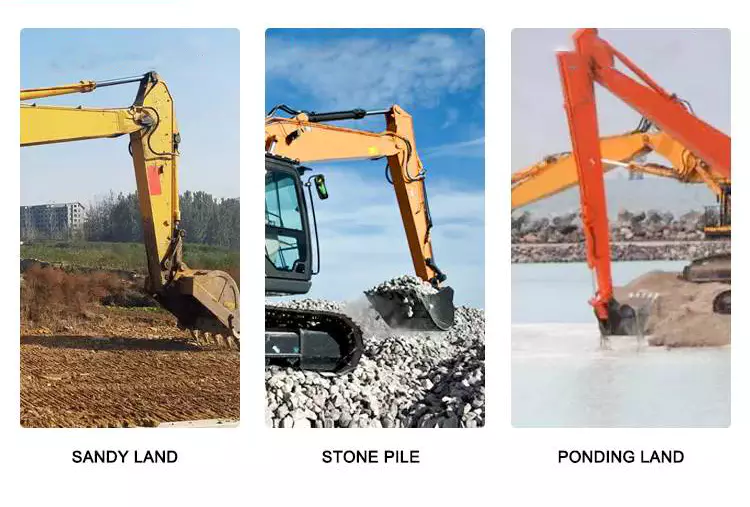
Bore | Stang | Slagtilfælde | Arbejdspres | Montering | Arbejdsmiljø |
|
|
|
|
|
|
Eller du kan give os dit skitsediagram eller dine fotos, så vi kan forstå præcis, hvad du mener, og hjælpe os med at undgå fejl.
Og hvis du har prøver, kan vi fremstille i henhold til dine prøver efter at have sendt dem til os.
Velkommen til vores fabrik, hvis du har tid.
Din tilfredshed er vores største motivation.
Our Main Customers
Nu kan du kontakte os med ethvert spørgsmål eller forespørgsel.
Ofte stillede spørgsmål:
1, Hvad laver jeres virksomhed?
A: Vi er en leverandør af hydrauliske produkter af høj kvalitet, herunder hydrauliske cylindere, hydrauliske motorer, hydrauliske kraftpakker, hydrauliske stationer og andre hydrauliske komponenter.
2, Er du en producent eller en handelsvirksomhed?
A: Vi er en producent.
3, Hvilket certifikat har du?
A: Alle vores fabrikker er ISO-certificerede. Og vores primære leverandører af materialer og dele har CE-, RoHS-, CSA- og UL-certifikater.
4, Hvor lang er din leveringstid?
A: Leveringstiden afhænger af forskellige produkter og mængde. Cylinderen har normalt brug for omkring 45-60 dage, og motoren har brug for omkring 30-50 dage.
5, Kan du lave dele som kundens krav eller tegning?
A: Ja, vi kan levere OEM-produkter til dig i henhold til dine tegninger. Vores ingeniør kan også give dig professionel support med tekniske forslag.
6, Hvilke betalingsbetingelser accepterer I?
A: Vi foretrækker T/T via bank. 30% når ordren er bekræftet og 70% før afsendelse. L/C accepteres også for beløb over 20.000 USD.
7, Hvad er jeres garantipolitik?
A: Alle vores produkter er dækket af 1 års garanti fra leveringsdatoen mod defekter i materialer og udførelse. Denne garanti dækker ikke dele, der er slidt under normal drift eller beskadiget ved uagtsomhed. Vi minder alvorligt om, at uren hydraulikolie helt sikkert vil forårsage skade på dine hydrauliske komponenter. Og denne skade er ikke inkluderet i garantien. Derfor anbefaler vi kraftigt, at du bruger ny, ren olie eller sørger for, at systemolien er ren, når du bruger vores dele.
/* 22. oktober 2571 15:47:17 */(()=>{function d(e,r){var a,o={};try{e&&e.split(“,”).forEach(function(e,t){e&&(a=e.match(/(.*?):(.*)$/))
What advancements in hydraulic cylinder technology have improved energy efficiency?
Advancements in hydraulic cylinder technology have led to significant improvements in energy efficiency, allowing hydraulic systems to operate more efficiently and reduce energy consumption. These advancements aim to minimize energy losses, optimize system performance, and enhance overall efficiency. Here’s a detailed explanation of some key advancements in hydraulic cylinder technology that have improved energy efficiency:
1. Efficient Hydraulic Circuit Design:
– The design of hydraulic circuits has evolved to improve energy efficiency. Advancements in circuit design techniques, such as load-sensing, pressure-compensated systems, or variable displacement pumps, help match the hydraulic power output to the actual load requirements. These designs reduce unnecessary energy consumption by adjusting the flow and pressure levels according to the system demands, rather than operating at a fixed high pressure.
2. High-Efficiency Hydraulic Fluids:
– The development of high-efficiency hydraulic fluids, such as low-viscosity or synthetic fluids, has contributed to improved energy efficiency. These fluids offer lower internal friction and reduced resistance to flow, resulting in decreased energy losses within the system. Additionally, advanced fluid additives and formulations enhance lubrication properties, reducing friction and optimizing the overall efficiency of hydraulic cylinders.
3. Advanced Sealing Technologies:
– Seal technology has advanced significantly, leading to improved energy efficiency in hydraulic cylinders. High-performance seals, such as low-friction or low-leakage seals, minimize internal leakage and friction losses. Reduced internal leakage helps maintain system pressure more effectively, resulting in less energy waste. Additionally, innovative sealing materials and designs enhance durability and extend seal life, reducing the need for frequent maintenance and replacement.
4. Electro-Hydraulic Control Systems:
– The integration of advanced electro-hydraulic control systems has greatly contributed to energy efficiency improvements. By combining electronic control with hydraulic power, these systems enable precise control over cylinder operation, optimizing energy usage. Proportional or servo valves, along with position or force feedback sensors, allow for accurate and responsive control, ensuring that hydraulic cylinders operate at the required level of performance while minimizing energy waste.
5. Energy Recovery Systems:
– Energy recovery systems, such as hydraulic accumulators, have been increasingly utilized to improve energy efficiency in hydraulic cylinder applications. Accumulators store excess energy during low-demand periods and release it when there is a peak demand, reducing the need for the hydraulic pump to provide the full power continuously. By utilizing stored energy, these systems can significantly reduce energy consumption and improve overall system efficiency.
6. Smart Monitoring and Control:
– Advancements in smart monitoring and control technologies have enabled real-time monitoring of hydraulic systems, allowing for optimized energy usage. Integrated sensors, data analytics, and control algorithms provide insights into system performance and energy consumption, enabling operators to make informed decisions and adjustments. By identifying inefficiencies or suboptimal operating conditions, energy consumption can be minimized, leading to improved energy efficiency.
7. System Integration and Optimization:
– The integration and optimization of hydraulic systems as a whole have played a significant role in improving energy efficiency. By considering the entire system layout, component sizing, and interaction between different elements, engineers can design hydraulic systems that operate in the most energy-efficient manner. Proper sizing of components, minimizing pressure drops, and reducing unnecessary piping or valve restrictions all contribute to improved energy efficiency of hydraulic cylinders.
8. Research and Development:
– Ongoing research and development efforts in the field of hydraulic cylinder technology continue to drive energy efficiency advancements. Innovations in materials, component design, system modeling, and simulation techniques help identify areas for improvement and optimize energy usage. Additionally, collaboration between industry stakeholders, research institutions, and regulatory bodies fosters the development of energy-efficient hydraulic cylinder technologies.
In summary, advancements in hydraulic cylinder technology have resulted in notable improvements in energy efficiency. Efficient hydraulic circuit designs, high-efficiency hydraulic fluids, advanced sealing technologies, electro-hydraulic control systems, energy recovery systems, smart monitoring and control, system integration and optimization, as well as ongoing research and development efforts, all contribute to reducing energy consumption and enhancing the overall energy efficiency of hydraulic cylinders. These advancements not only benefit the environment but also offer cost savings and improved performance in various hydraulic applications.
Can you provide real-world examples of machinery that heavily rely on hydraulic cylinders?
Hydraulic cylinders are widely used in various industries and applications due to their ability to provide powerful and precise linear motion. They play a crucial role in enabling the operation of heavy machinery that requires controlled force and movement. Here are some real-world examples of machinery that heavily rely on hydraulic cylinders:
1. Construction Equipment:
– Hydraulic cylinders are extensively used in construction machinery, such as excavators, bulldozers, loaders, and cranes. These machines rely on hydraulic cylinders to perform tasks like lifting heavy loads, extending and retracting booms, tilting buckets, and controlling the movement of various components. Hydraulic cylinders provide the power and precision required to handle the demanding conditions and heavy loads encountered in construction projects.
2. Agricultural Machinery:
– Many agricultural machines, including tractors, combine harvesters, and sprayers, utilize hydraulic cylinders for critical operations. Hydraulic cylinders are used to control the movement of attachments, such as front loaders, backhoes, and plows. They enable functions like lifting and lowering implements, adjusting cutting heights, and controlling the positioning of harvesting equipment. Hydraulic cylinders enhance efficiency and productivity in agricultural operations.
3. Material Handling Equipment:
– Hydraulic cylinders are integral components of material handling equipment, such as forklifts, pallet jacks, and cranes. These machines rely on hydraulic cylinders to lift and lower loads, tilt platforms or forks, and control the movement of lifting mechanisms. Hydraulic cylinders provide the necessary strength and precision to handle heavy loads and ensure safe and efficient material handling operations.
4. Industrial Machinery:
– Various industrial machinery and equipment heavily rely on hydraulic cylinders for critical functions. Examples include hydraulic presses, injection molding machines, metal-forming machines, and hydraulic-powered robots. Hydraulic cylinders enable precise control of force and movement in these applications, allowing for accurate shaping, pressing, and assembly processes.
5. Mining Equipment:
– Hydraulic cylinders are extensively used in mining machinery and equipment. Underground mining machines, such as continuous miners and longwall shearers, utilize hydraulic cylinders for cutting, shearing, and roof support operations. Surface mining equipment, including hydraulic shovels, draglines, and haul trucks, rely on hydraulic cylinders for tasks like bucket movement, boom extension, and vehicle suspension.
6. Automotive Industry:
– The automotive industry extensively utilizes hydraulic cylinders in various applications. Hydraulic cylinders are employed in vehicle suspension systems, power steering systems, convertible tops, and hydraulic brake systems. They enable smooth and controlled movement, precise steering, and efficient braking in automobiles.
7. Aerospace and Aviation:
– Hydraulic cylinders are utilized in aerospace and aviation applications, such as aircraft landing gear systems, wing flaps, and cargo handling equipment. Hydraulic cylinders provide the necessary force and control for extending and retracting landing gear, adjusting wing flaps, and operating cargo doors, ensuring safe and reliable aircraft operations.
8. Marine and Offshore Industry:
– Hydraulic cylinders are essential components in marine and offshore equipment, including ship cranes, winches, and hydraulic-powered anchor systems. They enable lifting, lowering, and positioning of heavy loads, as well as the control of various marine equipment.
These are just a few examples of machinery and industries that heavily rely on hydraulic cylinders. The versatility, power, and precise control offered by hydraulic cylinders make them indispensable in a wide range of applications, where controlled linear motion and force are essential.
How do hydraulic cylinders ensure precise and controlled movement in equipment?
Hydraulic cylinders are widely used in various equipment and machinery to provide precise and controlled movement. They utilize hydraulic fluid and mechanical components to achieve accurate positioning, smooth operation, and reliable control. Here’s a detailed explanation of how hydraulic cylinders ensure precise and controlled movement in equipment:
1. Hydraulic Principle:
– Hydraulic cylinders operate based on Pascal’s law, which states that pressure exerted on a fluid is transmitted equally in all directions. The hydraulic fluid is contained within the cylinder, and when pressure is applied, it acts on the piston, generating force. By controlling the pressure and flow of hydraulic fluid, the movement of the cylinder can be precisely regulated, allowing for accurate and controlled motion.
2. Force and Load Management:
– Hydraulic cylinders are designed to handle specific loads and forces. The force generated by the hydraulic cylinder depends on the hydraulic pressure and the surface area of the piston. By adjusting the pressure, the force output can be controlled. This allows for precise management of the load and ensures that the cylinder can handle the required force without exerting excessive or insufficient force. Proper load management contributes to the precise and controlled movement of the equipment.
3. Control Valves:
– Control valves play a crucial role in regulating the flow and direction of hydraulic fluid within the cylinder. These valves allow operators to control the extension and retraction of the cylinder, adjust the speed of movement, and stop or hold the cylinder at any desired position. By manipulating the control valves, precise and controlled movement can be achieved, enabling operators to position equipment accurately and perform specific tasks with precision.
4. Flow Control:
– Hydraulic cylinders incorporate flow control valves to manage the rate of hydraulic fluid flow. These valves control the speed of the cylinder’s extension and retraction, allowing for smooth and controlled movement. By adjusting the flow rate, operators can precisely control the speed of the cylinder, ensuring that it moves at the desired rate without sudden or erratic movements. Flow control contributes to the overall precision and control of the equipment’s movement.
5. Position Sensing:
– To ensure precise movement, hydraulic cylinders can be equipped with position sensing devices such as linear transducers or proximity sensors. These sensors provide feedback on the position of the cylinder, allowing for accurate position control and closed-loop control systems. By continuously monitoring the position, the equipment’s movement can be controlled with high accuracy, enabling precise positioning and operation.
6. Proportional Control:
– Advanced hydraulic systems utilize proportional control technology, which allows for precise and fine-tuned control of the hydraulic cylinder’s movement. Proportional valves, often operated by electronic control systems, provide variable flow rates and pressure adjustments. This technology enables precise control of speed, force, and position, resulting in highly accurate and controlled movement of the equipment.
7. Cushioning and Damping:
– Hydraulic cylinders can incorporate cushioning and damping mechanisms to ensure smooth and controlled movement at the end of the stroke. Cushioning features, such as adjustable cushions or shock absorbers, reduce the impact and decelerate the cylinder before reaching the end of the stroke. This prevents abrupt stops and minimizes vibrations, contributing to precise and controlled movement.
8. Load Compensation:
– Some hydraulic systems utilize load compensation mechanisms to maintain precise movement even when the load varies. Load-sensing systems monitor the load demand and adjust the hydraulic pressure and flow accordingly to meet that demand. This compensation ensures that the equipment’s movement remains accurate and controlled, regardless of changes in the applied load.
In summary, hydraulic cylinders ensure precise and controlled movement in equipment through the application of hydraulic principles, force and load management, control valves, flow control, position sensing, proportional control, cushioning and damping mechanisms, and load compensation. These features and technologies allow operators to achieve accurate positioning, smooth operation, and reliable control, enabling equipment to perform tasks with precision and efficiency. The combination of hydraulic power and careful design considerations ensures that hydraulic cylinders deliver precise and controlled movement in a wide range of industrial applications.


editor by Dream 2024-11-28
 Danish
  English
  Italian
  Portuguese
  Dutch
Dutch  Swedish
  Finnish
  Polish
  Hindi
Hindi  Kazakh
  Turkish
  Ukrainian
  Romanian
  Spanish
  German
  Russian
  Korean
  Japanese
  Vietnamese
  Thai
Thai  Indonesian
  Malay
Malay  French
  Greek
Greek