
Produktbeskrivelse
Products Description
Product Name | HSG Series Hydraulic Cylinder | |||
Work Press | 7/14/16/21/31.5MPa 37.5/63MPa Can be Customized | |||
Materiale | Aluminum,Cast Iron,45mnb Steel,Stainless Steel | |||
Bore Size | 40mm–320mm,Customizable | |||
Shaft Diameter | 20mm–220mm,Customizable | |||
Stroke Length | 30mm–14100mm,Customizable | |||
Rod Surface Hardness | HRC48-54 | |||
Paint Color | Black,Yellow,Blue,Brown,Customizable | |||
Montering | Ørering, flange, gaffelbensfod, drejetap, tilpasselig | |||
Garanti | 1 Year | |||
MOQ | 1 Piece | |||
Delivery Time | 7-15 Days,Also depands on specific demands | |||
Certificering | ISO9001,CE | |||
Firmaprofil
QIANGLIN HYDRAULIC MACHINERY CO., LTD
| QiangLin is a professional hydraulic equipment manufacturer, mainly engaged in hydraulic system design, manufacture, installation, transformation, sales, and technical services. Our manufacturing facilities are certified to the ISO 9001 standard. We are an approved supplier to many equipment manufacturers in China. We are also partners with many customers from America, Canada, Australia, Germany, England, and other European Countries. Product quality, shorter delivery time, and customer satisfaction are our long-term commitments to our CHINAMFG customers. Hope to be your partner. |
Ofte stillede spørgsmål:
Q1: Are you a trading company or a manufacturer?
A: We have our own factory.
Q2: Are you able to make Non-standard or customized products?
A: Yes, we can.
Q3: How long is your delivery time?
A: Normally, the delivery time is 7 days if we have stock, 15-30 working days if we don’t. but it
also depends on the product
requirements and quantity.
Q4: Do you provide samples? are the samples free or not?
A: Yes, we can provide samples, but they are not free of charge.
Q5: What are your payment terms?
A: 30% deposit T/T or Irrevocable L/C at sight, If you have any questions, please feel free to
contact us.
Q6: What are your After-sales services?
A: Before shipment, Each individual product will be strictly inspected on our factory QC Process
System. In addition, We have a
Customer Service team to respond to customers’ questions within 12 hours. Being helpful in
solving customers’ problems is always our goal.
| Certification: | CE, ISO9001 |
|---|---|
| Pressure: | High Pressure |
| Work Temperature: | Normal Temperature |
| Customization: | Available |
|
|---|
.shipping-cost-tm .tm-status-off{background: none;padding:0;color: #1470cc}
| Shipping Cost: Estimated freight per unit. | about shipping cost and estimated delivery time. |
|---|
| Payment Method: |
|
|---|---|
| Initial Payment Full Payment |
| Currency: | US$ |
|---|
| Return&refunds: | You can apply for a refund up to 30 days after receipt of the products. |
|---|
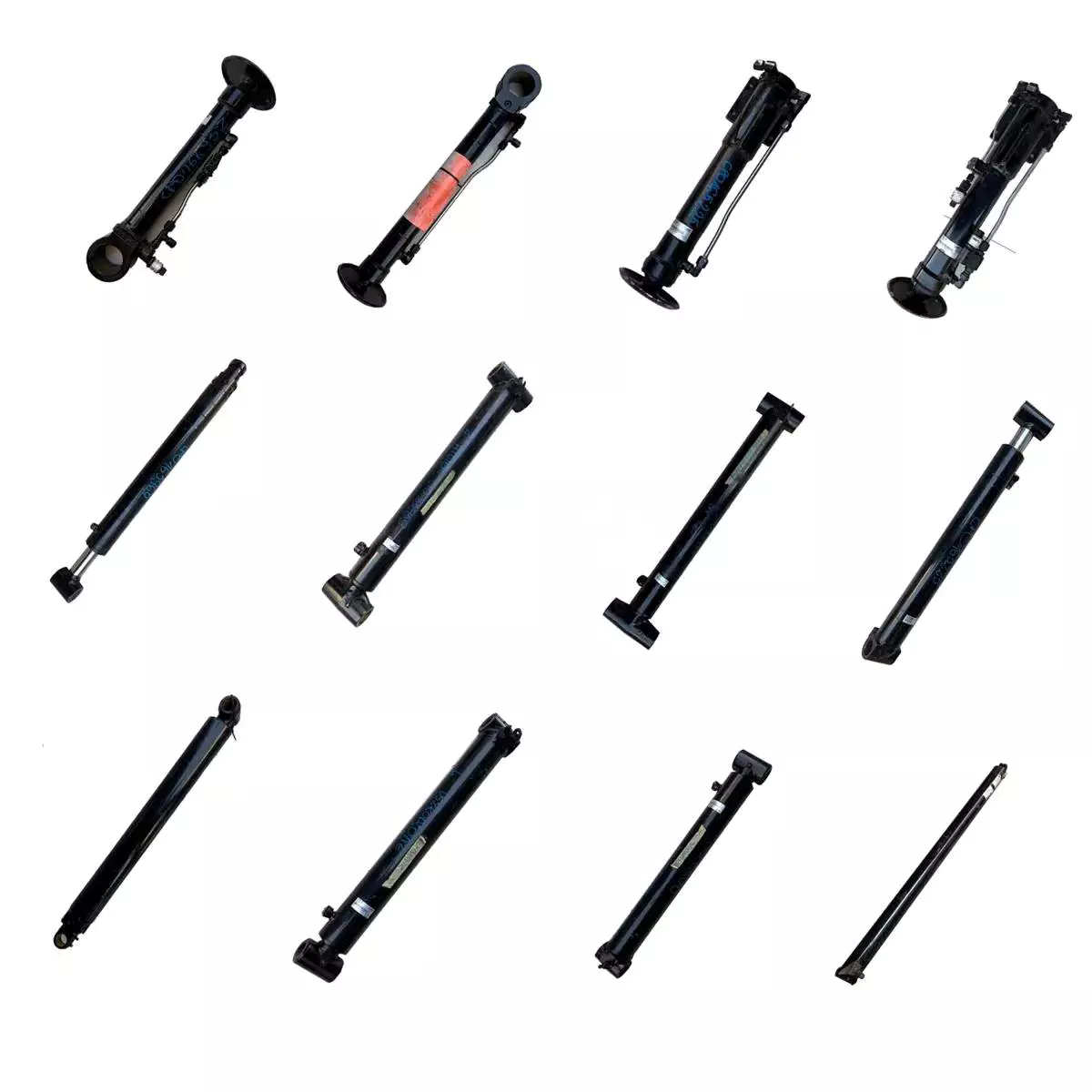
How do hydraulic cylinders handle the challenges of precise positioning and control?
Hydraulic cylinders are designed to handle the challenges of precise positioning and control with a combination of engineering principles and advanced control systems. These challenges often arise in applications where accurate and controlled movements are required, such as in industrial automation, construction, and material handling. Here’s a detailed explanation of how hydraulic cylinders overcome these challenges:
1. Fluid Power Control:
– Hydraulic cylinders utilize fluid power control to achieve precise positioning and control. The hydraulic system consists of a hydraulic pump, control valves, and hydraulic fluid. By regulating the flow of hydraulic fluid into and out of the cylinder, operators can control the speed, direction, and force exerted by the cylinder. The fluid power control allows for smooth and accurate movements, enabling precise positioning of the hydraulic cylinder and the attached load.
2. Control Valves:
– Control valves play a crucial role in handling the challenges of precise positioning and control. These valves are responsible for directing the flow of hydraulic fluid within the system. They can be manually operated or electronically controlled. Control valves allow operators to adjust the flow rate of the hydraulic fluid, controlling the speed of the cylinder’s movement. By modulating the flow, operators can achieve fine control over the positioning of the hydraulic cylinder, enabling precise and accurate movements.
3. Proportional Control:
– Hydraulic cylinders can be equipped with proportional control systems, which offer enhanced precision in positioning and control. Proportional control systems utilize electronic feedback and control algorithms to precisely regulate the flow and pressure of the hydraulic fluid. These systems provide accurate and proportional control over the movement of the hydraulic cylinder, allowing for precise positioning at various points along its stroke length. Proportional control enhances the cylinder’s ability to handle complex tasks that require precise movements and control.
4. Position Feedback Sensors:
– To achieve precise positioning, hydraulic cylinders often incorporate position feedback sensors. These sensors provide real-time information about the position of the cylinder’s piston rod. Common types of position feedback sensors include potentiometers, linear variable differential transformers (LVDTs), and magnetostrictive sensors. By continuously monitoring the position, the feedback sensors enable closed-loop control, allowing for accurate positioning and control of the hydraulic cylinder. The feedback information is used to adjust the flow of hydraulic fluid to achieve the desired position accurately.
5. Servo Control Systems:
– Advanced hydraulic systems employ servo control systems to handle the challenges of precise positioning and control. Servo control systems combine electronic control, position feedback sensors, and proportional control valves to achieve high levels of accuracy and responsiveness. The servo control system continuously compares the desired position with the actual position of the hydraulic cylinder and adjusts the flow of hydraulic fluid to minimize any positional error. This closed-loop control mechanism enables the hydraulic cylinder to maintain precise positioning and control, even under varying loads or external disturbances.
6. Integrated Automation:
– Hydraulic cylinders can be integrated into automated systems to achieve precise positioning and control. In such setups, the hydraulic cylinders are controlled by programmable logic controllers (PLCs) or other automation controllers. These controllers receive input signals from various sensors and use pre-programmed logic to command the hydraulic cylinder’s movements. The integration of hydraulic cylinders into automated systems allows for precise and repeatable positioning and control, enabling complex sequences of movements to be executed with high accuracy.
7. Advanced Control Algorithms:
– Advancements in control algorithms have also contributed to the precise positioning and control of hydraulic cylinders. These algorithms, such as PID (Proportional-Integral-Derivative) control, adaptive control, and model-based control, enable sophisticated control strategies to be implemented. These algorithms consider factors such as load variations, system dynamics, and environmental conditions to optimize the control of hydraulic cylinders. By employing advanced control algorithms, hydraulic cylinders can compensate for disturbances and achieve precise positioning and control over a wide range of operating conditions.
In summary, hydraulic cylinders overcome the challenges of precise positioning and control through the use of fluid power control, control valves, proportional control, position feedback sensors, servo control systems, integrated automation, and advanced control algorithms. By combining these elements, hydraulic cylinders can achieve accurate and controlled movements, enabling precise positioning and control in various applications. These capabilities are essential for industries that require high precision and repeatability in their operations, such as industrial automation, robotics, and material handling.
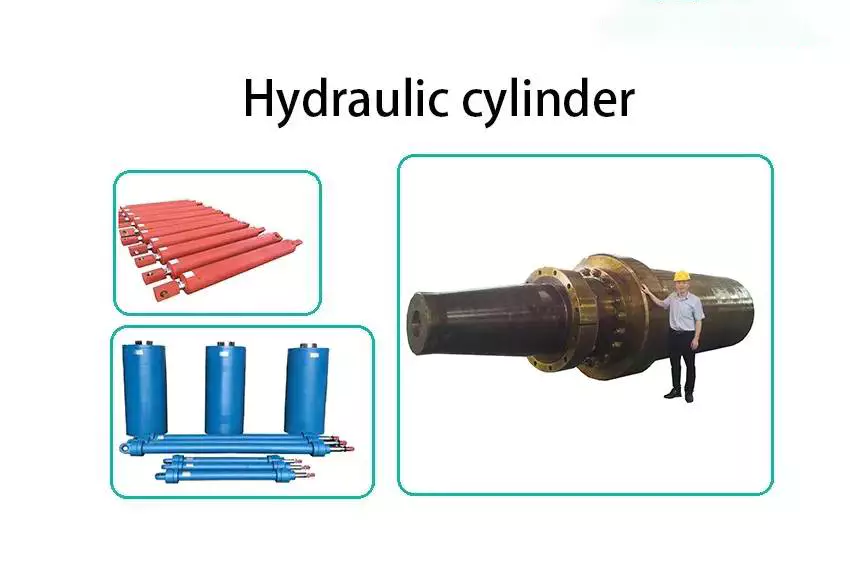
Tilpasning af hydrauliske cylindre til medicinsk udstyr og luftfartsapplikationer
Hydrauliske cylindre har potentiale til at blive tilpasset til brug i medicinsk udstyr og luftfartsapplikationer, hvilket tilbyder unikke fordele i disse industrier. Lad os undersøge, hvordan hydrauliske cylindre kan tilpasses til disse specialiserede områder:
- Medicinsk udstyr: Hydrauliske cylindre kan tilpasses til forskellige medicinske udstyrsapplikationer, herunder hospitalssenge, patientlifte, operationsborde og rehabiliteringsudstyr. Sådan er hydrauliske cylindre nyttige i medicinsk udstyr:
- Positionering og justerbarhed: Hydrauliske cylindre giver præcis og jævn bevægelse, hvilket muliggør nøjagtig positionering og justering af medicinsk udstyr. Dette er afgørende for at sikre patientkomfort, korrekt justering og brugervenlighed.
- Lasthåndtering: Hydrauliske cylindre tilbyder høj kraftkapacitet, hvilket muliggør sikker håndtering af tunge belastninger i medicinsk udstyr. De kan understøtte patienters vægt, lette gnidningsløse overgange og give stabilitet under procedurer.
- Kontrolleret bevægelse: Hydrauliske cylindre giver kontrolleret og stabil bevægelse, hvilket er afgørende for følsomme medicinske procedurer. Muligheden for at justere hastighed, position og kraft muliggør præcise og kontrollerede bevægelser, hvilket minimerer patientens ubehag og sikrer præcis behandling.
- Holdbarhed og pålidelighed: Hydrauliske cylindre er designet til at modstå krævende brug og miljøer, hvilket gør dem velegnede til medicinsk udstyr. Deres holdbarhed og pålidelighed bidrager til medicinsk udstyrs langsigtede ydeevne og sikkerhed.
- Luftfartsapplikationer: Hydrauliske cylindre kan også tilpasses til luftfartsapplikationer, hvor lette, men robuste systemer er afgørende. Sådan er hydrauliske cylindre fordelagtige inden for luftfart:
- Flykontrolsystemer: Hydrauliske cylindre spiller en afgørende rolle i flys flyvekontrolsystemer, herunder krængror, højderor, ror og landingsudstyr. De giver præcis og pålidelig aktivering, så piloter kan kontrollere flyets bevægelser med nøjagtighed og respons.
- Vægtoptimering: Hydrauliske cylindre kan designes ved hjælp af letvægtsmaterialer, såsom aluminiumlegeringer eller kompositmaterialer, for at reducere den samlede vægt. Denne vægtoptimering er afgørende i luftfartsapplikationer for at forbedre brændstofeffektivitet, nyttelastkapacitet og flys ydeevne.
- Stød- og vibrationsmodstand: Luftfartsmiljøer involverer betydelige stød- og vibrationskræfter. Hydrauliske cylindre kan konstrueres til at modstå disse dynamiske belastninger, samtidig med at ydeevne og pålidelighed opretholdes, hvilket sikrer ensartet drift selv under ekstreme forhold.
- Pladsbegrænsninger: Hydrauliske cylindre kan designes til at passe inden for pladsbegrænsningerne i fly eller rumfartøjer. Deres kompakte størrelse og fleksible monteringsmuligheder muliggør effektiv integration i den begrænsede tilgængelige plads.
Kort sagt kan hydrauliske cylindre tilpasses til brug i medicinsk udstyr og luftfartsapplikationer, idet de udnytter deres præcise positionering, lasthåndteringsegenskaber, kontrollerede bevægelse, holdbarhed og pålidelighed. Inden for medicinsk udstyr muliggør hydrauliske cylindre komfortabel patientpositionering, jævne overgange og kontrollerede bevægelser under procedurer. Inden for luftfart giver hydrauliske cylindre præcis aktivering, vægtoptimering, stød- og vibrationsmodstand samt pladsbesparende løsninger. Ved at tilpasse hydrauliske cylindre til disse specialiserede områder kan producenter opfylde de unikke krav og forbedre ydeevnen af medicinsk udstyr og luftfartssystemer.
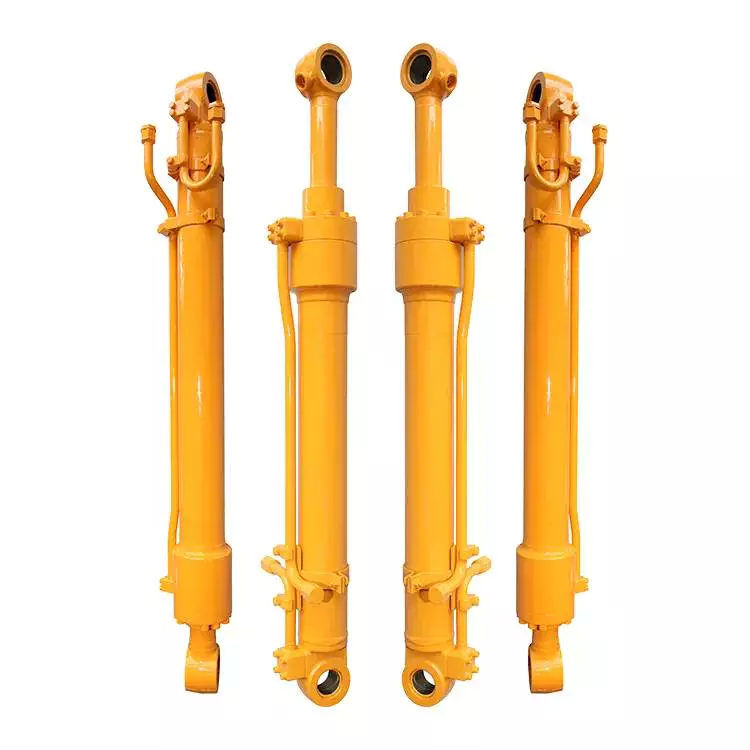
Hvilke vedligeholdelsespraksis er afgørende for at forlænge levetiden på hydrauliske cylindre?
Vedligeholdelse af hydrauliske cylindre er afgørende for at forlænge deres levetid og sikre optimal ydeevne. Regelmæssig vedligeholdelse hjælper med at forhindre for tidligt slid, skader og fejl, hvilket i sidste ende reducerer nedetid og sparer omkostninger. Her er nogle vigtige vedligeholdelsespraksisser, du skal overveje for at forlænge levetiden for hydrauliske cylindre:
1. Regelmæssige inspektioner:
– Udfør rutinemæssige visuelle inspektioner af hydrauliske cylindre for at identificere tegn på skader, lækager eller slid. Inspicer cylinderhus, stempelstang, pakninger og monteringspunkter. Se efter væskelækager, rust, buler eller unormale slidmønstre. Tidlig opdagelse af problemer muliggør rettidig reparation eller udskiftning, hvilket forhindrer yderligere skader og forlænger cylinderens levetid.
2. Renlighed:
– Oprethold et rent miljø omkring hydrauliske cylindre for at forhindre forurenende stoffer i at trænge ind i systemet. Støv, snavs og affald kan beskadige pakninger og andre interne komponenter, hvilket fører til hurtigere slid og reduceret ydeevne. Rengør cylinderen og dens omgivelser regelmæssigt for at minimere risikoen for kontaminering.
3. Proper Lubrication:
– Adequate lubrication is critical for the smooth operation and longevity of hydraulic cylinders. Follow the manufacturer’s recommendations for lubrication intervals and use the appropriate lubricant. Apply lubrication to the cylinder’s moving parts, such as the piston rod, to reduce friction and minimize wear.
4. Seal Maintenance:
– Seals play a vital role in preventing hydraulic fluid leaks and maintaining the cylinder’s performance. Inspect and replace worn or damaged seals promptly. Ensure that seals are properly installed and lubricated. Regularly clean the seal grooves to remove any debris that could compromise seal effectiveness.
5. Pressure Checks:
– Periodically check the hydraulic system’s pressure to ensure it is within the recommended operating range. Excessive pressure can strain the cylinder and its components, leading to premature wear. Monitor pressure levels and make adjustments as necessary to prevent overloading the cylinder.
6. Control Valve Maintenance:
– Maintain and inspect control valves that regulate the flow and direction of hydraulic fluid. Ensure that the valves are functioning correctly and not causing excessive stress or pressure spikes in the cylinder. Clean or replace control valves if they are damaged or malfunctioning.
7. Cylinder Alignment:
– Proper alignment of hydraulic cylinders is essential for their longevity. Misalignment can cause excessive side loads, leading to uneven wear and potential damage. Ensure that the cylinder is correctly aligned with other components and that the mounting points are secure.
8. Preventing Overloading:
– Avoid subjecting hydraulic cylinders to loads exceeding their rated capacity. Overloading can cause internal damage, seal failure, and reduced lifespan. Ensure that the load requirements are within the cylinder’s capabilities and consider using safety devices like overload protection systems when necessary.
9. Training and Operator Awareness:
– Provide proper training to equipment operators on the correct use and handling of hydraulic cylinders. Operators should be aware of the cylinder’s limitations, safe operating procedures, and the importance of regular maintenance. Promote a culture of proactive maintenance and encourage operators to report any potential issues promptly.
10. Documentation and Record-Keeping:
– Maintain detailed documentation of all maintenance activities, including inspections, repairs, and replacements. Keep records of lubrication schedules, pressure checks, and any maintenance performed on the hydraulic cylinders. This documentation helps track the cylinder’s history, identify recurring issues, and plan future maintenance effectively.
By following these maintenance practices, hydraulic cylinder lifespan can be extended, ensuring reliable performance and reducing the risk of unexpected failures. Regular inspections, cleanliness, proper lubrication, seal maintenance, pressure checks, control valve maintenance, cylinder alignment, preventing overloading, operator training, and documentation contribute to the overall longevity and optimal functioning of hydraulic cylinders.


editor by CX 2023-11-19
 Danish
  English
  Italian
  Portuguese
  Dutch
Dutch  Swedish
  Finnish
  Polish
  Hindi
Hindi  Kazakh
  Turkish
  Ukrainian
  Romanian
  Spanish
  German
  Russian
  Korean
  Japanese
  Vietnamese
  Thai
Thai  Indonesian
  Malay
Malay  French
  Greek
Greek