
Produktbeskrivelse
| Cylinder Type: | Mill type, head bolted, base welded |
| Structure: | Piston type |
| Standard: | GB/T15622-1995 JB/T15715-2000 |
| Bore diameter: | Up to 700mm |
| Rod diameter: | Up to 500mm |
| Stroke length: | Up to 10,000mm |
| Piston rod material: | 20#,45#,40Cr, 27SiMn,30CrMo,35CrMo,42CrMo |
| Rod surface treatment: | Hard chrome plated, chrome/nickel plated, ceramic coated |
| Tube material: | 20#, 25#, 45#, 27SiMn,30CrMo,35CrMo,42CrMo |
| Tube surface painting: | Colors as RAL, thickness according to request |
| Mounting type: | Clevis, cross tube, flange, trunnion, tang, thread |
| Design pressure: | Up to 40Mpa |
| Seal kits type: | PARKER, MERKEL, HALLITE, NOK, TRELLEBORG |
/* January 22, 2571 19:08:37 */!function(){function s(e,r){var a,o={};try{e&&e.split(“,”).forEach(function(e,t){e&&(a=e.match(/(.*?):(.*)$/))&&1
| Certification: | ISO9001 |
|---|---|
| Pressure: | with or Without High and Low Pressure Switch |
| Work Temperature: | Normal or Lower Temperature with Matched Sealing |
| Acting Way: | Single Acting |
| Working Method: | Straight Trip |
| Adjusted Form: | Switching or Regulated Type |
| Samples: | US$ 500/Piece 1 Piece(Min.Order) | |
|---|
| Customization: | Available |
|
|---|
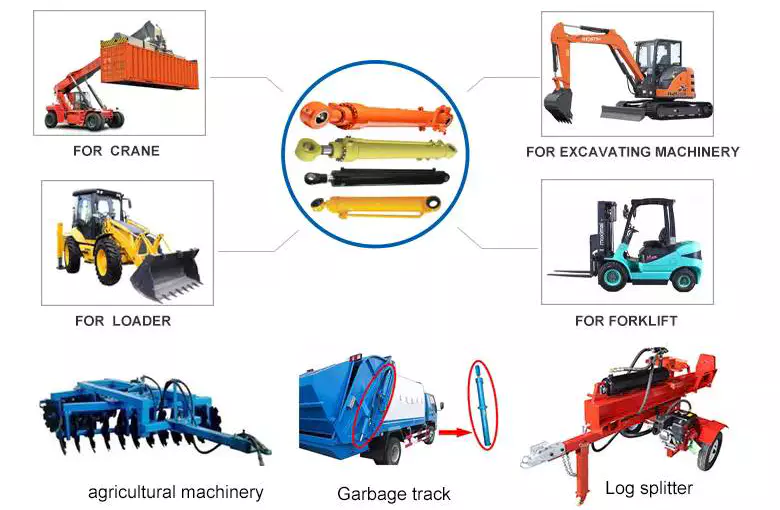
Are there any emerging trends in hydraulic cylinder technology, such as smart features?
Yes, there are several emerging trends in hydraulic cylinder technology, including the integration of smart features. As industries continue to adopt advanced technologies and seek greater efficiency, hydraulic cylinders are being equipped with innovative capabilities to enhance their performance and provide additional benefits. Here are some of the emerging trends in hydraulic cylinder technology:
1. Sensor Integration:
– One of the significant trends in hydraulic cylinder technology is the integration of sensors. Sensors can be embedded within the hydraulic cylinder to monitor various parameters such as pressure, temperature, position, and load. These sensors provide real-time data, allowing for condition monitoring, predictive maintenance, and improved operational control. By collecting and analyzing data, operators can optimize the performance of hydraulic systems, detect potential issues in advance, and prevent failures, resulting in increased reliability and reduced downtime.
2. Connectivity and IoT:
– Hydraulic cylinders are being integrated into the Internet of Things (IoT) ecosystem, enabling connectivity and data exchange. By connecting hydraulic cylinders to a network, operators can remotely monitor and control their performance. IoT-enabled hydraulic cylinders facilitate features such as remote diagnostics, performance optimization, and predictive maintenance. The connectivity aspect allows for better integration with overall equipment systems and enables data-driven decision-making for improved efficiency and productivity.
3. Energy-Efficient Designs:
– With the increasing focus on sustainability and energy efficiency, hydraulic cylinder technology is evolving to incorporate energy-saving features. Manufacturers are developing hydraulic cylinders with improved sealing technologies, reduced friction, and optimized fluid flow dynamics. These advancements minimize energy losses and increase overall system efficiency. Energy-efficient hydraulic cylinders contribute to reduced power consumption, lower operating costs, and a smaller environmental footprint.
4. Advanced Materials and Coatings:
– The use of advanced materials and coatings is another emerging trend in hydraulic cylinder technology. Manufacturers are exploring lightweight materials, such as composites and alloys, to reduce the overall weight of hydraulic cylinders without compromising strength and durability. Furthermore, specialized coatings and surface treatments are being applied to improve corrosion resistance, wear resistance, and lifespan. These advancements enhance the longevity and reliability of hydraulic cylinders, particularly in demanding environments.
5. Intelligent Control Systems:
– Hydraulic cylinder technology is embracing intelligent control systems that optimize performance and enable advanced functionalities. These systems utilize algorithms, machine learning, and artificial intelligence to automate processes, adapt to changing conditions, and optimize hydraulic cylinder movements. Intelligent control systems can adjust parameters in real-time, ensuring precise and efficient operation. This trend allows for increased automation, improved productivity, and enhanced safety in hydraulic system applications.
6. Predictive Maintenance:
– Predictive maintenance is gaining prominence in hydraulic cylinder technology. By utilizing data collected from sensors and monitoring systems, predictive maintenance algorithms can analyze the condition and performance of hydraulic cylinders. This analysis helps to identify potential failures or degradation in advance, enabling proactive maintenance actions. Predictive maintenance reduces unplanned downtime, extends the lifespan of hydraulic cylinders, and optimizes maintenance schedules, resulting in cost savings and improved equipment availability.
7. Enhanced Safety Features:
– Hydraulic cylinder technology is incorporating enhanced safety features to improve operator and equipment safety. These features include integrated safety valves, load monitoring systems, and emergency stop functionalities. Safety systems in hydraulic cylinders help prevent accidents, protect against overloads, and ensure reliable operation. The integration of advanced safety features contributes to safer working environments and compliance with stringent safety regulations.
These emerging trends in hydraulic cylinder technology demonstrate the industry’s focus on innovation, performance optimization, and sustainability. The integration of smart features, connectivity, advanced materials, and predictive maintenance capabilities enables hydraulic cylinders to operate more efficiently, provide real-time insights, and enhance overall system performance. As technology continues to advance, hydraulic cylinder technology is expected to evolve further, offering increased functionality and efficiency for various industries and applications.
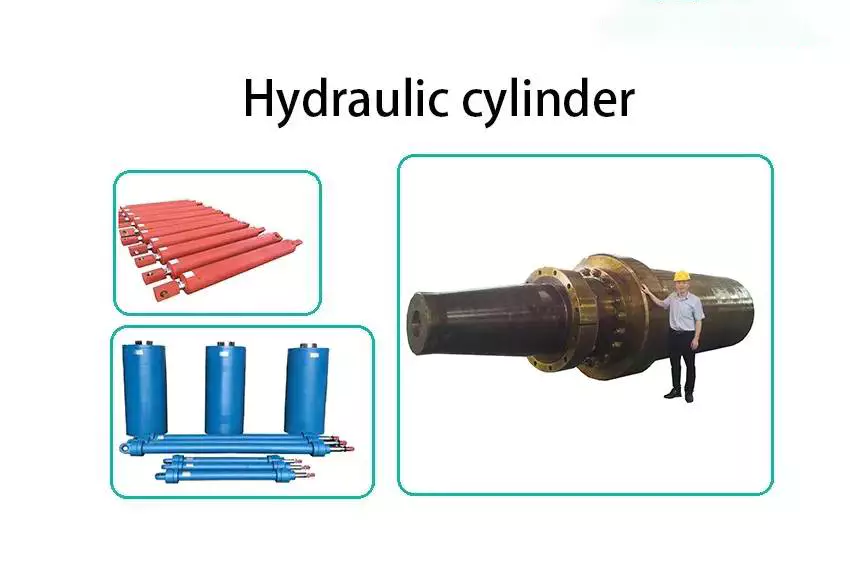
Tilpasning af hydrauliske cylindre til medicinsk udstyr og luftfartsapplikationer
Hydrauliske cylindre har potentiale til at blive tilpasset til brug i medicinsk udstyr og luftfartsapplikationer, hvilket tilbyder unikke fordele i disse industrier. Lad os undersøge, hvordan hydrauliske cylindre kan tilpasses til disse specialiserede områder:
- Medicinsk udstyr: Hydrauliske cylindre kan tilpasses til forskellige medicinske udstyrsapplikationer, herunder hospitalssenge, patientlifte, operationsborde og rehabiliteringsudstyr. Sådan er hydrauliske cylindre nyttige i medicinsk udstyr:
- Positionering og justerbarhed: Hydrauliske cylindre giver præcis og jævn bevægelse, hvilket muliggør nøjagtig positionering og justering af medicinsk udstyr. Dette er afgørende for at sikre patientkomfort, korrekt justering og brugervenlighed.
- Lasthåndtering: Hydrauliske cylindre tilbyder høj kraftkapacitet, hvilket muliggør sikker håndtering af tunge belastninger i medicinsk udstyr. De kan understøtte patienters vægt, lette gnidningsløse overgange og give stabilitet under procedurer.
- Kontrolleret bevægelse: Hydrauliske cylindre giver kontrolleret og stabil bevægelse, hvilket er afgørende for følsomme medicinske procedurer. Muligheden for at justere hastighed, position og kraft muliggør præcise og kontrollerede bevægelser, hvilket minimerer patientens ubehag og sikrer præcis behandling.
- Holdbarhed og pålidelighed: Hydrauliske cylindre er designet til at modstå krævende brug og miljøer, hvilket gør dem velegnede til medicinsk udstyr. Deres holdbarhed og pålidelighed bidrager til medicinsk udstyrs langsigtede ydeevne og sikkerhed.
- Luftfartsapplikationer: Hydrauliske cylindre kan også tilpasses til luftfartsapplikationer, hvor lette, men robuste systemer er afgørende. Sådan er hydrauliske cylindre fordelagtige inden for luftfart:
- Flykontrolsystemer: Hydrauliske cylindre spiller en afgørende rolle i flys flyvekontrolsystemer, herunder krængror, højderor, ror og landingsudstyr. De giver præcis og pålidelig aktivering, så piloter kan kontrollere flyets bevægelser med nøjagtighed og respons.
- Vægtoptimering: Hydrauliske cylindre kan designes ved hjælp af letvægtsmaterialer, såsom aluminiumlegeringer eller kompositmaterialer, for at reducere den samlede vægt. Denne vægtoptimering er afgørende i luftfartsapplikationer for at forbedre brændstofeffektivitet, nyttelastkapacitet og flys ydeevne.
- Stød- og vibrationsmodstand: Luftfartsmiljøer involverer betydelige stød- og vibrationskræfter. Hydrauliske cylindre kan konstrueres til at modstå disse dynamiske belastninger, samtidig med at ydeevne og pålidelighed opretholdes, hvilket sikrer ensartet drift selv under ekstreme forhold.
- Pladsbegrænsninger: Hydrauliske cylindre kan designes til at passe inden for pladsbegrænsningerne i fly eller rumfartøjer. Deres kompakte størrelse og fleksible monteringsmuligheder muliggør effektiv integration i den begrænsede tilgængelige plads.
Kort sagt kan hydrauliske cylindre tilpasses til brug i medicinsk udstyr og luftfartsapplikationer, idet de udnytter deres præcise positionering, lasthåndteringsegenskaber, kontrollerede bevægelse, holdbarhed og pålidelighed. Inden for medicinsk udstyr muliggør hydrauliske cylindre komfortabel patientpositionering, jævne overgange og kontrollerede bevægelser under procedurer. Inden for luftfart giver hydrauliske cylindre præcis aktivering, vægtoptimering, stød- og vibrationsmodstand samt pladsbesparende løsninger. Ved at tilpasse hydrauliske cylindre til disse specialiserede områder kan producenter opfylde de unikke krav og forbedre ydeevnen af medicinsk udstyr og luftfartssystemer.
How do hydraulic cylinders handle variations in load and pressure during operation?
Hydraulic cylinders are designed to handle variations in load and pressure during operation, making them versatile and efficient in various applications. Hydraulic systems use the principle of transmitting force through incompressible fluid to generate linear motion. Here’s a detailed explanation of how hydraulic cylinders handle variations in load and pressure:
1. Load Handling:
– Hydraulic cylinders are capable of handling different loads by utilizing the principle of Pascal’s law. According to Pascal’s law, when pressure is applied to a fluid in a confined space, the pressure is transmitted equally in all directions. In a hydraulic cylinder, the force applied to the piston results in an equal force output at the rod end of the cylinder. The size of the piston and the pressure exerted determine the force generated by the cylinder. Therefore, hydraulic cylinders can handle a wide range of loads by adjusting the pressure applied to the fluid.
2. Pressure Compensation:
– Hydraulic systems incorporate pressure compensation mechanisms to handle variations in pressure during operation. Pressure compensating valves or regulators are often used to maintain a consistent pressure in the hydraulic system, regardless of load changes. These valves automatically adjust the flow rate or pressure to ensure stable and controlled operation of the hydraulic cylinder. By compensating for pressure variations, hydraulic cylinders can maintain a consistent force output and prevent damage or instability due to excessive pressure.
3. Control Valves:
– Control valves play a crucial role in managing variations in pressure and load during hydraulic cylinder operation. Directional control valves, such as spool valves or poppet valves, control the flow of hydraulic fluid into and out of the cylinder, enabling precise control of the cylinder’s extension and retraction. By adjusting the position of the control valve, the speed and force exerted by the hydraulic cylinder can be regulated to match the load and pressure requirements of the application. Control valves allow for efficient handling of variations in load and pressure by providing fine-tuned control over the hydraulic system.
4. Accumulators:
– Hydraulic accumulators are often used to handle fluctuations in pressure and load. Accumulators store hydraulic fluid under pressure, which can be released or absorbed as needed to compensate for sudden changes in load or pressure. When the load on the hydraulic cylinder decreases, the accumulator releases stored fluid to maintain pressure and prevent pressure spikes. Conversely, when the load on the cylinder increases, the accumulator absorbs excess fluid to maintain system stability. By utilizing accumulators, hydraulic cylinders can effectively handle variations in load and pressure, ensuring smooth and controlled operation.
5. Feedback and Control Systems:
– Advanced hydraulic systems may incorporate feedback and control systems to monitor and adjust the operation of hydraulic cylinders in real-time. Position sensors or pressure sensors provide feedback on the cylinder’s position, force, and pressure, allowing the control system to make continuous adjustments to optimize performance. These systems can automatically adapt to variations in load and pressure, ensuring precise control and efficient operation of the hydraulic cylinder.
6. Design Considerations:
– Proper design considerations, such as selecting the appropriate cylinder size, piston diameter, and rod diameter, are essential for handling variations in load and pressure. The design should account for the maximum anticipated load and pressure conditions to ensure the hydraulic cylinder operates within its specified range. Additionally, the selection of suitable seals, materials, and components that can withstand the anticipated load and pressure variations is crucial for maintaining the reliability and longevity of the hydraulic cylinder.
By utilizing the principles of hydraulic systems, incorporating pressure compensation mechanisms, employing control valves and accumulators, and implementing feedback and control systems, hydraulic cylinders can effectively handle variations in load and pressure during operation. These features and design considerations allow hydraulic cylinders to adapt and perform optimally in a wide range of applications and operating conditions.


editor by Dream 2024-04-29
 Danish
  English
  Italian
  Portuguese
  Dutch
Dutch  Swedish
  Finnish
  Polish
  Hindi
Hindi  Kazakh
  Turkish
  Ukrainian
  Romanian
  Spanish
  German
  Russian
  Korean
  Japanese
  Vietnamese
  Thai
Thai  Indonesian
  Malay
Malay  French
  Greek
Greek