
Produktbeskrivelse
China Factory Fabricate Custom Injection Hydraulic Cylinder for Dual-Plated Injection Molding Machine
Produkt Specifikationer:
| Punkt | Specifikationer |
| Boringsdiameter | 200mm-500mm,customizable |
| Boddiameter | 120mm-420mm,customizable |
| Slagtilfælde | 350mm-1200mm,customizable |
| Working Pressure | 7-40Mpa,customizable |
| Overfladebehandling af stempelstang | Hårdforkromning, elektropletteret mælkehvid krom + hårdforkromning, fornikling + hårdforkromning, højhastigheds iltbrændstof CrC NiC, keramisk belægning, nitrering, laserbeklædning |
| Arbejdspres | Maximum 38MPa,Customizable |
| Materiale | Højstyrke koldtrukket rør, præcisionsslebet for forlænget tætningslevetid |
| Montering | Ørering, flange, gaffelbensfod, drejetap, tilpasselig |
| Forseglingstype | Parker,NOK, Hallite GAPI or as customer’s requirement |
| Garanti | 18 måneder |
| MOQ | 1pcs |
| Produktionstid | Baseret på ordremængde. Normalt 30-40 dage. |
| Certificering | ISO9001, CE, SGS |
| Farve | Red,White,Pink,Yellow,Bule,etc,Customizable |
| Emballage | metalkasse, krydsfinerkasse, karton eller som krav |
| Service | OEM og ODM |
| Prisfordel | Konkurrencedygtig fabrikspris med garanteret kvalitet |
| Virksomhedstype | Fabrikant |
Produktvisning:
Applikationer:Industrial Engineering,Dual-plated Injection Molding Machine.
Monteringsmetode:
Vores fabrik:
Inspektionsproces:
| Inspektionstype | Inspektionsstandard |
| Inspektion af råmaterialer | Før opbevaring foretager QC måling af råmaterialerne. |
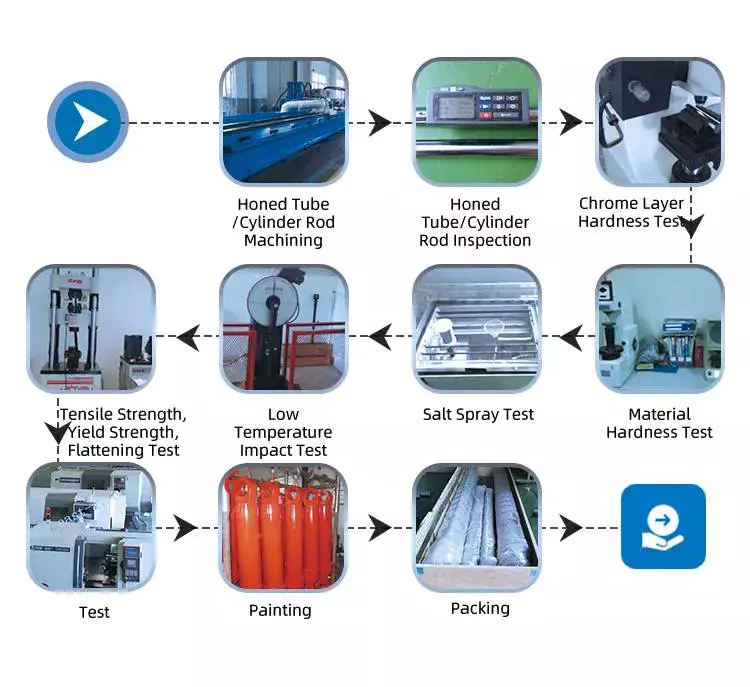
| Inspektion af procesmateriale | Under produktionen udfører kvalitetskontrolteamet stikprøvekontrol. Før de hydrauliske cylinderdele overføres til den næste proces, foretager QC'er inspektion. |
| Endelig funktionstest | Alle hydrauliske cylindre gennemgår en hydraulisk funktionstest |
Inspektion af råmaterialers mekaniske egenskaber
Inspektion af procesmateriale
Endelig funktionstest
Pakning og levering:
Om os:
Vores certifikat
ZheJiang Tianjian Hydraulic Technology Co.,Ltd er specialiseret i produktion af forskellige typer hydrauliske cylindre samt cylindercylinder, stempelcylinder og andet cylindertilbehør.
Som en højt specialiseret producent af hydrauliske cylindre leverer Tianjian designoptimeringsløsninger og pålidelige produkter til mange kunder i ind- og udland. Uanset om det drejer sig om entreprenørmaskiner, jernbanebromaskiner, havneskibsmaskiner, metallurgi- og minedriftsmaskiner, olie- og letindustrimaskiner, specialkøretøjer og andre industrier, kan Tianjian tilbyde forskellige standard- og ikke-standardiserede designoptimeringsordninger og produkter til hydrauliske cylindre i henhold til brugernes krav og levere integrerede tjenester for perfektion og kvalitet.
Hvis det er muligt, bedes du bruge nedenstående oplysninger, når du kontakter os
Bore | Stang | Slagtilfælde | Arbejdspres | Montering | Arbejdsmiljø |
|
|
|
|
|
|
Eller du kan give os dit skitsediagram eller dine fotos, så vi kan forstå præcis, hvad du mener, og hjælpe os med at undgå fejl.
Og hvis du har prøver, kan vi fremstille i henhold til dine prøver efter at have sendt dem til os.
Velkommen til vores fabrik, hvis du har tid.
Din tilfredshed er vores største motivation.
Our Main Customers
Nu kan du kontakte os med ethvert spørgsmål eller forespørgsel.
Ofte stillede spørgsmål:
1, Hvad laver jeres virksomhed?
A: Vi er en leverandør af hydrauliske produkter af høj kvalitet, herunder hydrauliske cylindere, hydrauliske motorer, hydrauliske kraftpakker, hydrauliske stationer og andre hydrauliske komponenter.
2, Er du en producent eller en handelsvirksomhed?
A: Vi er en producent.
3, Hvilket certifikat har du?
A: Alle vores fabrikker er ISO-certificerede. Og vores primære leverandører af materialer og dele har CE-, RoHS-, CSA- og UL-certifikater.
4, Hvor lang er din leveringstid?
A: Leveringstiden afhænger af forskellige produkter og mængde. Cylinderen har normalt brug for omkring 45-60 dage, og motoren har brug for omkring 30-50 dage.
5, Kan du lave dele som kundens krav eller tegning?
A: Ja, vi kan levere OEM-produkter til dig i henhold til dine tegninger. Vores ingeniør kan også give dig professionel support med tekniske forslag.
6, Hvilke betalingsbetingelser accepterer I?
A: Vi foretrækker T/T via bank. 30% når ordren er bekræftet og 70% før afsendelse. L/C accepteres også for beløb over 20.000 USD.
7, Hvad er jeres garantipolitik?
A: Alle vores produkter er dækket af 1 års garanti fra leveringsdatoen mod defekter i materialer og udførelse. Denne garanti dækker ikke dele, der er slidt under normal drift eller beskadiget ved uagtsomhed. Vi minder alvorligt om, at uren hydraulikolie helt sikkert vil forårsage skade på dine hydrauliske komponenter. Og denne skade er ikke inkluderet i garantien. Derfor anbefaler vi kraftigt, at du bruger ny, ren olie eller sørger for, at systemolien er ren, når du bruger vores dele.
| Certification: | GS, RoHS, CE, ISO9001 |
|---|---|
| Pressure: | High Pressure |
| Work Temperature: | High Temperature |
| Acting Way: | Double Acting |
| Working Method: | Straight Trip |
| Adjusted Form: | Regulated Type |
| Samples: | US$ 1100/Set 1 Set(Min.Order) | |
|---|
| Customization: | Available |
|
|---|
Can hydraulic cylinders be integrated with advanced control systems and automation?
Yes, hydraulic cylinders can be integrated with advanced control systems and automation technologies to enhance their functionality, precision, and overall performance. The integration of hydraulic cylinders with advanced control systems allows for more sophisticated and precise control over their operation, enabling automation and intelligent control. Here’s a detailed explanation of how hydraulic cylinders can be integrated with advanced control systems and automation:
1. Electronic Control:
– Hydraulic cylinders can be equipped with electronic sensors and transducers to provide real-time feedback on their position, force, pressure, or velocity. These sensors can be integrated with advanced control systems, such as programmable logic controllers (PLCs) or distributed control systems (DCS), to monitor and control the operation of hydraulic cylinders. By integrating electronic control, the position, speed, and force of hydraulic cylinders can be precisely monitored and adjusted, allowing for more accurate and automated control.
2. Closed-Loop Control:
– Closed-loop control systems use feedback from sensors to continuously monitor and adjust the operation of hydraulic cylinders. By integrating hydraulic cylinders with closed-loop control systems, precise control over position, velocity, and force can be achieved. Closed-loop control enables the system to automatically compensate for variations, external disturbances, or changes in operating conditions, ensuring accurate and consistent performance. This integration is particularly beneficial in applications that require precise positioning, synchronization, or force control.
3. Proportional and Servo Control:
– Hydraulic cylinders can be integrated with proportional and servo control systems to achieve finer control over their operation. Proportional control systems use proportional valves to regulate the flow and pressure of hydraulic fluid, allowing for precise adjustment of cylinder speed and force. Servo control systems, on the other hand, combine feedback sensors, high-performance valves, and advanced control algorithms to achieve extremely precise control over hydraulic cylinders. Proportional and servo control integration enhances the responsiveness, accuracy, and dynamic performance of hydraulic cylinders.
4. Human-Machine Interface (HMI):
– Hydraulic cylinders integrated with advanced control systems can be operated and monitored through human-machine interface (HMI) devices. HMIs provide a graphical user interface that allows operators to interact with the control system, monitor cylinder performance, and adjust parameters. HMIs enable operators to set desired positions, forces, or velocities, and visualize the real-time feedback from sensors. This integration simplifies the operation and monitoring of hydraulic cylinders, making them more user-friendly and facilitating seamless integration into automated systems.
5. Communication and Networking:
– Hydraulic cylinders can be integrated into communication and networking systems, enabling them to be part of a larger automated system. Integration with industrial communication protocols, such as Ethernet/IP, Profibus, or Modbus, allows for seamless information exchange between the hydraulic cylinders and other system components. This integration enables centralized control, data logging, remote monitoring, and coordination with other automated processes. Communication and networking integration enhance the overall efficiency, coordination, and integration of hydraulic cylinders within complex automation systems.
6. Automation and Sequential Control:
– By integrating hydraulic cylinders with advanced control systems, they can be seamlessly incorporated into automated processes and sequential control operations. The control system can execute predefined sequences or programmed logic to control the operation of hydraulic cylinders based on specific conditions, inputs, or timing. This integration enables the automation of complex tasks, such as material handling, assembly operations, or repetitive motions. Hydraulic cylinders can be synchronized with other actuators, sensors, or devices, allowing for coordinated and automated operation in various industrial applications.
7. Predictive Maintenance and Condition Monitoring:
– Advanced control systems can also enable predictive maintenance and condition monitoring for hydraulic cylinders. By integrating sensors and monitoring capabilities, the control system can continuously monitor the performance, health, and condition of hydraulic cylinders. This integration allows for the detection of abnormalities, wear, or potential failures in real-time. Predictive maintenance strategies can be implemented based on the collected data, optimizing maintenance schedules, reducing downtime, and enhancing the overall reliability of hydraulic systems.
In summary, hydraulic cylinders can be integrated with advanced control systems and automation technologies to enhance their functionality, precision, and performance. The integration allows for electronic control, closed-loop control, proportional and servo control, human-machine interface (HMI) interaction, communication and networking, automation and sequential control, as well as predictive maintenance and condition monitoring. These integrations enable more precise control, automation, improved efficiency, and optimized performance of hydraulic cylinders in various industrial applications.
Handling Challenges of Different Fluid Viscosities in Hydraulic Cylinders
Hydraulic cylinders are designed to handle the challenges associated with different fluid viscosities. The viscosity of hydraulic fluid can vary based on temperature, type of fluid used, and other factors. Hydraulic systems need to accommodate these variations to ensure optimal performance and efficiency. Let’s explore how hydraulic cylinders handle the challenges of different fluid viscosities:
- Fluid Selection: Hydraulic cylinders are designed to work with a range of hydraulic fluids, each with its specific viscosity characteristics. The selection of an appropriate fluid with the desired viscosity is crucial to ensure optimal performance. Manufacturers provide guidelines regarding the recommended viscosity range for specific hydraulic systems and cylinders. By choosing the right fluid, hydraulic cylinders can effectively handle the challenges posed by different fluid viscosities.
- Viscosity Compensation: Hydraulic systems often incorporate features to compensate for variations in fluid viscosity. For example, some hydraulic systems utilize pressure compensating valves that adjust the flow rate based on the viscosity of the fluid. This compensation ensures consistent performance across different operating conditions and fluid viscosities. Hydraulic cylinders work in conjunction with these compensation mechanisms to maintain precision and control, regardless of the fluid viscosity.
- Temperature Control: Fluid viscosity is highly dependent on temperature. Hydraulic cylinders employ various temperature control mechanisms to address the challenges posed by temperature-induced viscosity changes. Heat exchangers, coolers, and thermostatic valves are commonly used to regulate the temperature of the hydraulic fluid within the system. By controlling the fluid temperature, hydraulic cylinders can maintain the desired viscosity range, ensuring reliable and efficient operation.
- Efficient Filtration: Contaminants in hydraulic fluid can affect its viscosity and overall performance. Hydraulic systems incorporate efficient filtration systems to remove particles and impurities from the fluid. Clean fluid with the appropriate viscosity ensures optimal functioning of hydraulic cylinders. Regular maintenance and filter replacements are essential to uphold the desired fluid viscosity and prevent issues related to fluid contamination.
- Proper Lubrication: Different fluid viscosities can impact the lubrication properties within hydraulic cylinders. Lubrication is essential for minimizing friction and wear between moving parts. Hydraulic systems employ lubricants specifically formulated for the anticipated fluid viscosity range. Adequate lubrication ensures smooth operation and extends the lifespan of hydraulic cylinders, even in the presence of varying fluid viscosities.
In summary, hydraulic cylinders employ various strategies to handle the challenges associated with different fluid viscosities. By selecting appropriate fluids, incorporating viscosity compensation mechanisms, controlling temperature, implementing efficient filtration, and ensuring proper lubrication, hydraulic cylinders can accommodate variations in fluid viscosity. These measures enable hydraulic systems to deliver consistent performance, precise control, and efficient operation across different fluid viscosity ranges.
What is a hydraulic cylinder and how does it function in various applications?
A hydraulic cylinder is a mechanical actuator that converts hydraulic energy into linear force and motion. It plays a critical role in various applications where controlled and powerful linear motion is required. Hydraulic cylinders are commonly used in industries such as construction, manufacturing, agriculture, and transportation. Here’s a detailed explanation of what a hydraulic cylinder is and how it functions:
Definition and Components:
– A hydraulic cylinder consists of a cylindrical barrel, a piston, a piston rod, and various seals. The barrel is a hollow tube that houses the piston and allows for fluid flow. The piston divides the cylinder into two chambers: the rod side and the cap side. The piston rod extends from the piston and provides a connection point for external loads. Seals are used to prevent fluid leakage and maintain hydraulic pressure within the cylinder.
Function:
– The function of a hydraulic cylinder is to convert the pressure and flow of hydraulic fluid into linear force and motion. The hydraulic fluid, typically oil, is pressurized and directed into one of the chambers of the cylinder. As the fluid enters the chamber, it applies pressure on the piston, causing it to move in a linear direction. This linear motion of the piston is transferred to the piston rod, creating a pushing or pulling force.
Working Principle:
– The working principle of a hydraulic cylinder is based on Pascal’s law, which states that pressure exerted on a fluid in a confined space is transmitted equally in all directions. In a hydraulic cylinder, when hydraulic fluid is pumped into one side of the cylinder, it creates pressure on the piston. The pressure is transmitted through the fluid to the other side of the piston, resulting in a balanced force across the piston and piston rod. This force generates linear motion in the direction determined by the fluid input.
Applications:
– Hydraulic cylinders find extensive use in a wide range of applications due to their ability to generate high forces and precise control of linear motion. Some common applications include:
1. Construction Equipment: Hydraulic cylinders are used in excavators, loaders, bulldozers, and cranes for lifting, pushing, and digging tasks.
2. Manufacturing Machinery: Hydraulic cylinders are employed in presses, machine tools, and material handling equipment for pressing, clamping, and lifting operations.
3. Agricultural Machinery: Hydraulic cylinders are used in tractors, harvesters, and irrigation systems for tasks like steering, lifting, and controlling attachments.
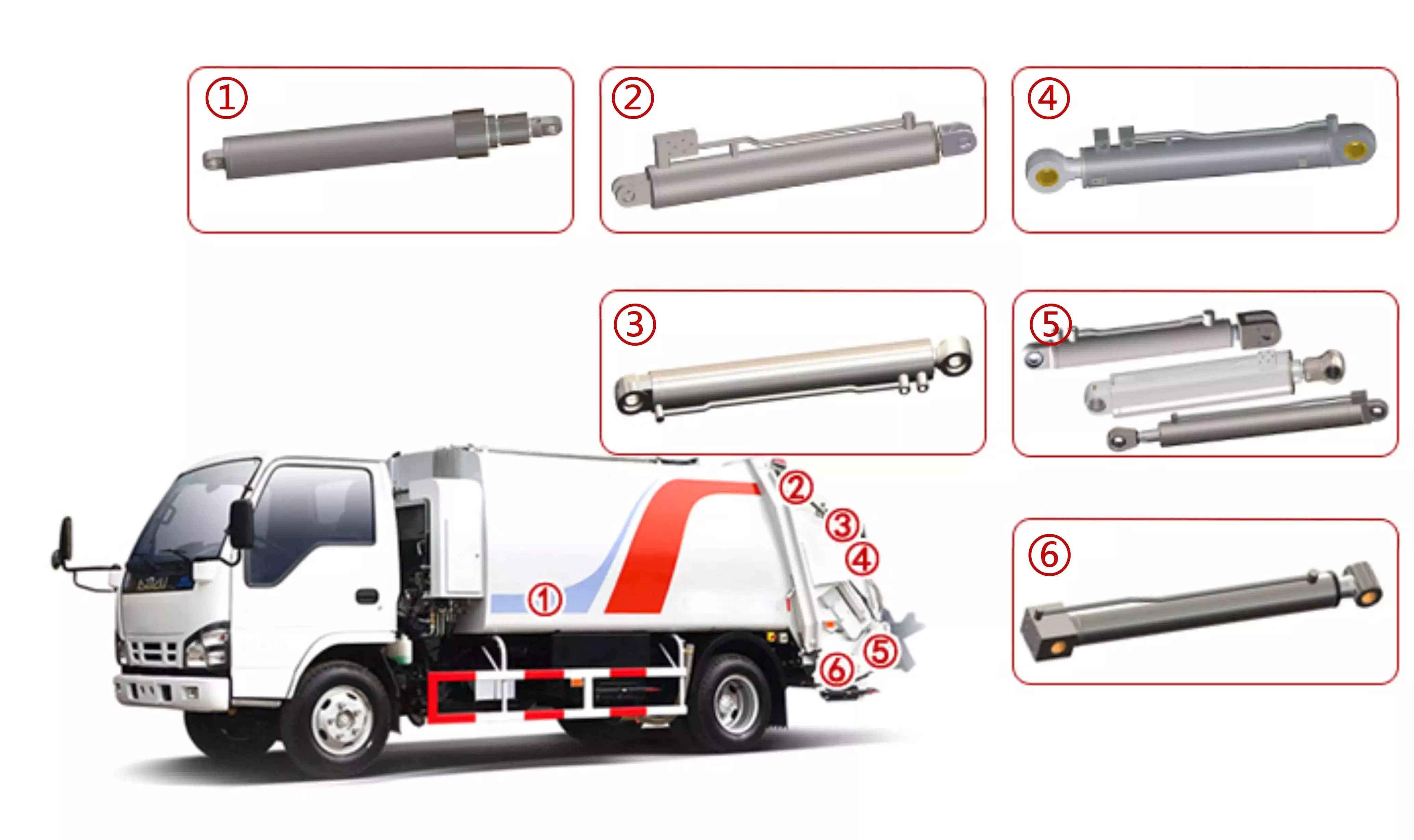
4. Transportation: Hydraulic cylinders are utilized in vehicles such as dump trucks, garbage trucks, and forklifts for tilting, lifting, and tipping operations.
5. Aerospace and Defense: Hydraulic cylinders are employed in aircraft landing gear, missile systems, and hydraulic actuators for control surfaces.
6. Marine and Offshore: Hydraulic cylinders are used in ship steering systems, cranes, and offshore drilling equipment for various lifting and positioning tasks.
In these applications, hydraulic cylinders offer advantages such as high force capability, precise control, compact size, and durability. They provide efficient and reliable linear motion, contributing to enhanced productivity and functionality in a wide range of industries.
Overall, hydraulic cylinders are integral components in various applications where controlled and powerful linear motion is required. Their ability to convert hydraulic energy into mechanical force makes them invaluable in numerous industries, enabling the operation of heavy machinery, precise positioning, and efficient load handling.


editor by CX 2023-11-21
 Danish
  English
  Italian
  Portuguese
  Dutch
Dutch  Swedish
  Finnish
  Polish
  Hindi
Hindi  Kazakh
  Turkish
  Ukrainian
  Romanian
  Spanish
  German
  Russian
  Korean
  Japanese
  Vietnamese
  Thai
Thai  Indonesian
  Malay
Malay  French
  Greek
Greek