
Produktbeskrivelse
Produktbeskrivelse
Seamless carbon steel Mn37 6.7L CO2 gas cylinder
We produce various seamless gas cylinders such as oxygen cylinders, carbon dioxide cylinders, nitrogen cylinders, and argon cylinders of various specifications and styles, and we have independent nitrogen storage tanks that can be filled by ourselves.
Features:
1. Desigend and approved by ISO9809-3& GB5099 Standard
2. Light weight, easy operation.
3. Screen printing label can be customized.
4. Each cylinder pass hydrostatic test at 250bar for 30 seconds in workshop. Each cylinder pass water leakage test before leaving factory.
5. Color can be customized
6. Heat treatment and internal polishing increase smoothness
7. Control of raw materials to ensure that it is 100% manganese steel
Product Parameters
| Capacity: | 6.7L | Material: | 37Mn |
| Cylinder Diameter: | 140mm | Cylinder Length: | 575mm |
| Cylinder Thickness: | 4.5mm | Cylinder Weight: | 9kg |
| Standard: | ISO9809-3/GB5099 | Working Pressure: | 150bar |
| Test Pressure: | 250bar | Burst Pressure: | 420bar |
| Packing Size: | 14.5*14.5*80cm | Packing Weight: | 9.5kg |
Packaging & Shipping
Each cylinder is packed in a plastic mesh bag. Cylinders are mounted on a pallet and secured with a bandage. All cylinders will be fitted in the container.
Production Process
We take No. 37 manganese steel from the steel mill, cut the steel into sections according to different heights and hydraulic cutting. Sections of steel are welded to form a bottle cone and a bottle bottom, which are then machined into specific bottle threads. The pressure, model and other information are printed on the bottle body through the stencil printer. We will do a 30S hydraulic test for each cylinder to ensure that the test pressure can reach 250bar. Through internal and external throwing, the smoothness of the cylinder is increased. The air tightness test of the gas cylinder is to test whether the gas cylinder has good air tightness at a specific temperature. Spray the bottle body and spray according to the color required by the customer.
Factory Show
Firmaprofil
Safety Plus Industrials Co., Ltd is ISO 9001 Certified company from Quality Management System. We are professional manufacturer and supplier of fire fighting equipments and we have skilled production team and advanced international standard equipment. We have professional sales markting team to give our customer best suitable proposal. Our products enjoys a high reputation as a regular supplier to over 20 countries and regions, such as the Middle East, Southeast Asia, South America ,Europe and Africa.
In order to meet the needs of the international market, we have invested in equipment to produce SABS, CE, BSI Kitemark, UL and other international standard dry powder fire extinguishers. Currently, we are working with new customers to develop other certified dry powder fire extinguishers. Our extinguisher product line will be continuously enlarged. Welcome to contact us freely for business cooperation talking.
Our Advantages
Price: From the very beginning quotation,you will find the very competitive price. Maybe it is not the cheapest price but it is the most competitive 1 if you compare to that of equally quality product . Trust me,never only CHINAMFG for cheap price, you know why.
Sample service: Sample service: Free sample can be provided for you to check quality; Welcome you to send us sample for custom-make service.
Payment term: Payment term is negotiable during our collaboration process. For long term partner, you may make payment by your convenient method. All payment mode accepted like L/C, T/T, Western Union, Credit card etc..
Delivery time: Always fast delivery!Normally, it takes 1 month and a half to produce container order. For urgent order, we provide rush order service too.
OEM: You can get customization service from us on products, customized logo can be shown on label, printing, stamps and even on extinguisher spare parts like pressure gauge, valve, safety pin, discharge hose, neck ring.
QC: Test and inspection will be made during and after the production. Inspection picture or video will be provided: discharging ability, fire rating, bursting test, leaking test, pressure gauge test and package etc.
FAQ
1. What’s your payment term?
A: Our payment term is 50%T/T in advance, the balance T/T before shipment. It depends on the products and amount of order. We do L/C , D/P or CASH etc. too.
2. How about your delivery time?
A: Generally, it will take 30 to 40 days for production of full container order. The specific delivery time depends on the items and the quantity of your order.
3. How do you make our business long-term and build good relationship?
A: We keep good quality and competitive price of our fire fighting equipments to ensure our customers benefit ;
We regard every customer as our friend and we sincerely do business with them, no matter where they come from.
4. Can you put our logo on extinguisher label?
Yes, sure. We provide OEM service. We can custom make label and package for our clients.
| After-sales Service: | Yes |
|---|---|
| Warranty: | Yes |
| Function: | Storage Pressure Vessel |
| Application: | Gas |
| Material: | Carbon Steel |
| Pressure: | 10.0MPa≤p<100.0MPa |
| Samples: | US$ 30/Piece 1 Piece(Min.Order) | |
|---|
| Customization: | Available |
|
|---|
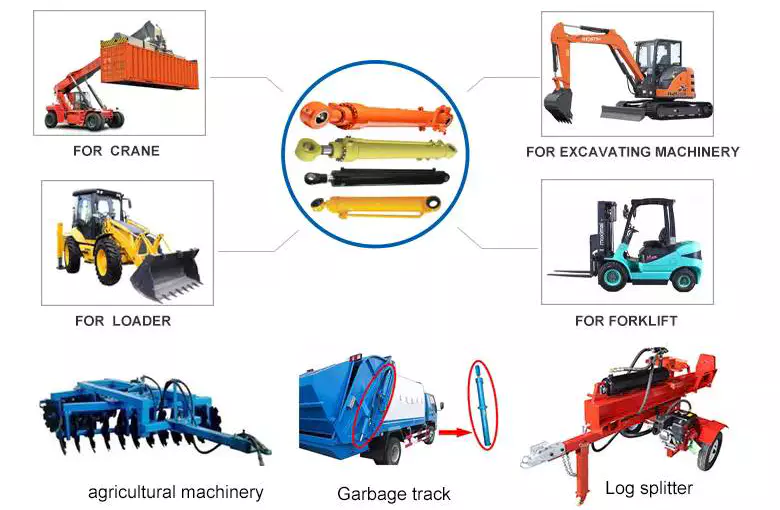
Can hydraulic cylinders be integrated with modern telematics and remote monitoring?
Yes, hydraulic cylinders can indeed be integrated with modern telematics and remote monitoring systems. The integration of hydraulic cylinders with telematics and remote monitoring technology offers numerous benefits, including enhanced operational efficiency, improved maintenance practices, and increased overall productivity. Here’s a detailed explanation of how hydraulic cylinders can be integrated with modern telematics and remote monitoring:
1. Sensor Integration:
– Hydraulic cylinders can be equipped with various sensors to gather real-time data about their performance and operating conditions. Sensors such as pressure transducers, temperature sensors, position sensors, and load sensors can be integrated directly into the cylinder or its associated components. These sensors provide valuable information about parameters such as pressure, temperature, position, and load, enabling remote monitoring and analysis of the cylinder’s behavior.
2. Data Transmission:
– The data collected from the sensors in hydraulic cylinders can be transmitted wirelessly or through wired connections to a central monitoring system. Wireless communication technologies such as Bluetooth, Wi-Fi, or cellular networks can be employed to transmit data in real-time. Alternatively, wired connections such as Ethernet or CAN bus can be utilized for data transmission. The choice of communication method depends on the specific requirements of the application and the available infrastructure.
3. Remote Monitoring Systems:
– Remote monitoring systems receive and process the data transmitted from hydraulic cylinders. These systems can be cloud-based or hosted on local servers, depending on the implementation. Remote monitoring systems collect and analyze the data to provide insights into the cylinder’s performance, health, and usage patterns. Operators and maintenance personnel can access the monitoring system through web-based interfaces or dedicated software applications to view real-time data, receive alerts, and generate reports.
4. Condition Monitoring and Predictive Maintenance:
– Integration with telematics and remote monitoring enables condition monitoring and predictive maintenance of hydraulic cylinders. By analyzing the collected data, patterns and trends can be identified, allowing for the detection of potential issues or anomalies before they escalate into major problems. Predictive maintenance algorithms can be applied to the data to generate maintenance schedules, recommend component replacements, and optimize maintenance activities. This proactive approach helps prevent unexpected downtime, reduces maintenance costs, and maximizes the lifespan of hydraulic cylinders.
5. Performance Optimization:
– The data collected from hydraulic cylinders can also be utilized to optimize their performance. By analyzing parameters such as pressure, temperature, and load, operators can identify opportunities for improving operational efficiency. Insights gained from the remote monitoring system can guide adjustments in system settings, load management, or operational practices to optimize the performance of hydraulic cylinders and the overall hydraulic system. This optimization can result in energy savings, improved productivity, and reduced wear and tear.
6. Integration with Equipment Management Systems:
– Telematics and remote monitoring systems can be integrated with broader equipment management systems. This integration allows hydraulic cylinder data to be correlated with data from other components or related machinery, providing a comprehensive view of the overall system’s performance. This holistic approach enables operators to identify potential interdependencies, optimize system-wide performance, and make informed decisions regarding maintenance, repairs, or upgrades.
7. Enhanced Safety and Fault Diagnosis:
– Telematics and remote monitoring can contribute to enhanced safety and fault diagnosis in hydraulic systems. Real-time data from hydraulic cylinders can be used to detect abnormal conditions, such as excessive pressure or temperature, which may indicate potential safety risks. Fault diagnosis algorithms can analyze the data to identify specific issues or malfunctions, enabling prompt intervention and reducing the risk of catastrophic failures or accidents.
In summary, hydraulic cylinders can be effectively integrated with modern telematics and remote monitoring systems. This integration enables the collection of real-time data, remote monitoring of performance, condition monitoring, predictive maintenance, performance optimization, integration with equipment management systems, and enhanced safety. By harnessing the power of telematics and remote monitoring, hydraulic cylinder users can achieve improved efficiency, reduced downtime, optimized maintenance practices, and enhanced overall productivity in various applications and industries.
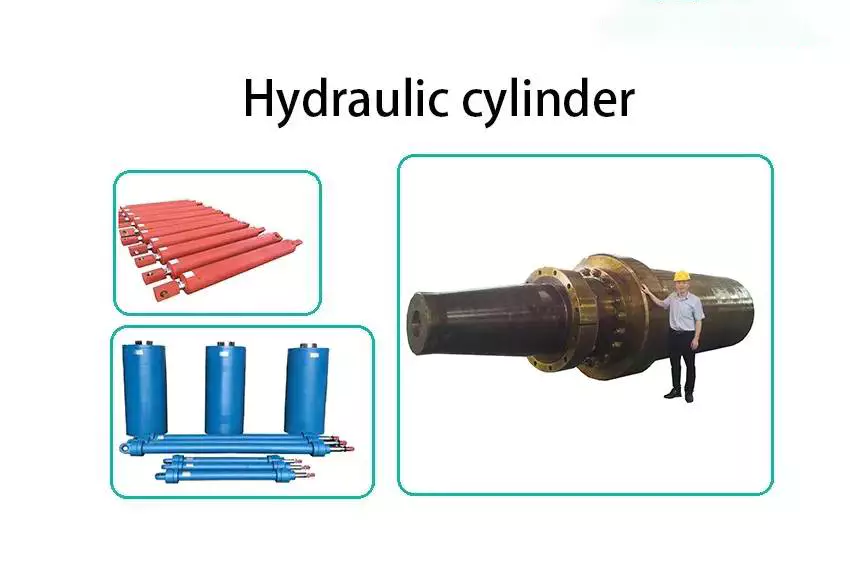
Tilpasning af hydrauliske cylindre til medicinsk udstyr og luftfartsapplikationer
Hydrauliske cylindre har potentiale til at blive tilpasset til brug i medicinsk udstyr og luftfartsapplikationer, hvilket tilbyder unikke fordele i disse industrier. Lad os undersøge, hvordan hydrauliske cylindre kan tilpasses til disse specialiserede områder:
- Medicinsk udstyr: Hydrauliske cylindre kan tilpasses til forskellige medicinske udstyrsapplikationer, herunder hospitalssenge, patientlifte, operationsborde og rehabiliteringsudstyr. Sådan er hydrauliske cylindre nyttige i medicinsk udstyr:
- Positionering og justerbarhed: Hydrauliske cylindre giver præcis og jævn bevægelse, hvilket muliggør nøjagtig positionering og justering af medicinsk udstyr. Dette er afgørende for at sikre patientkomfort, korrekt justering og brugervenlighed.
- Lasthåndtering: Hydrauliske cylindre tilbyder høj kraftkapacitet, hvilket muliggør sikker håndtering af tunge belastninger i medicinsk udstyr. De kan understøtte patienters vægt, lette gnidningsløse overgange og give stabilitet under procedurer.
- Kontrolleret bevægelse: Hydrauliske cylindre giver kontrolleret og stabil bevægelse, hvilket er afgørende for følsomme medicinske procedurer. Muligheden for at justere hastighed, position og kraft muliggør præcise og kontrollerede bevægelser, hvilket minimerer patientens ubehag og sikrer præcis behandling.
- Holdbarhed og pålidelighed: Hydrauliske cylindre er designet til at modstå krævende brug og miljøer, hvilket gør dem velegnede til medicinsk udstyr. Deres holdbarhed og pålidelighed bidrager til medicinsk udstyrs langsigtede ydeevne og sikkerhed.
- Luftfartsapplikationer: Hydrauliske cylindre kan også tilpasses til luftfartsapplikationer, hvor lette, men robuste systemer er afgørende. Sådan er hydrauliske cylindre fordelagtige inden for luftfart:
- Flykontrolsystemer: Hydrauliske cylindre spiller en afgørende rolle i flys flyvekontrolsystemer, herunder krængror, højderor, ror og landingsudstyr. De giver præcis og pålidelig aktivering, så piloter kan kontrollere flyets bevægelser med nøjagtighed og respons.
- Vægtoptimering: Hydrauliske cylindre kan designes ved hjælp af letvægtsmaterialer, såsom aluminiumlegeringer eller kompositmaterialer, for at reducere den samlede vægt. Denne vægtoptimering er afgørende i luftfartsapplikationer for at forbedre brændstofeffektivitet, nyttelastkapacitet og flys ydeevne.
- Stød- og vibrationsmodstand: Luftfartsmiljøer involverer betydelige stød- og vibrationskræfter. Hydrauliske cylindre kan konstrueres til at modstå disse dynamiske belastninger, samtidig med at ydeevne og pålidelighed opretholdes, hvilket sikrer ensartet drift selv under ekstreme forhold.
- Pladsbegrænsninger: Hydrauliske cylindre kan designes til at passe inden for pladsbegrænsningerne i fly eller rumfartøjer. Deres kompakte størrelse og fleksible monteringsmuligheder muliggør effektiv integration i den begrænsede tilgængelige plads.
Kort sagt kan hydrauliske cylindre tilpasses til brug i medicinsk udstyr og luftfartsapplikationer, idet de udnytter deres præcise positionering, lasthåndteringsegenskaber, kontrollerede bevægelse, holdbarhed og pålidelighed. Inden for medicinsk udstyr muliggør hydrauliske cylindre komfortabel patientpositionering, jævne overgange og kontrollerede bevægelser under procedurer. Inden for luftfart giver hydrauliske cylindre præcis aktivering, vægtoptimering, stød- og vibrationsmodstand samt pladsbesparende løsninger. Ved at tilpasse hydrauliske cylindre til disse specialiserede områder kan producenter opfylde de unikke krav og forbedre ydeevnen af medicinsk udstyr og luftfartssystemer.
How do hydraulic cylinders handle variations in load and pressure during operation?
Hydraulic cylinders are designed to handle variations in load and pressure during operation, making them versatile and efficient in various applications. Hydraulic systems use the principle of transmitting force through incompressible fluid to generate linear motion. Here’s a detailed explanation of how hydraulic cylinders handle variations in load and pressure:
1. Load Handling:
– Hydraulic cylinders are capable of handling different loads by utilizing the principle of Pascal’s law. According to Pascal’s law, when pressure is applied to a fluid in a confined space, the pressure is transmitted equally in all directions. In a hydraulic cylinder, the force applied to the piston results in an equal force output at the rod end of the cylinder. The size of the piston and the pressure exerted determine the force generated by the cylinder. Therefore, hydraulic cylinders can handle a wide range of loads by adjusting the pressure applied to the fluid.
2. Pressure Compensation:
– Hydraulic systems incorporate pressure compensation mechanisms to handle variations in pressure during operation. Pressure compensating valves or regulators are often used to maintain a consistent pressure in the hydraulic system, regardless of load changes. These valves automatically adjust the flow rate or pressure to ensure stable and controlled operation of the hydraulic cylinder. By compensating for pressure variations, hydraulic cylinders can maintain a consistent force output and prevent damage or instability due to excessive pressure.
3. Control Valves:
– Control valves play a crucial role in managing variations in pressure and load during hydraulic cylinder operation. Directional control valves, such as spool valves or poppet valves, control the flow of hydraulic fluid into and out of the cylinder, enabling precise control of the cylinder’s extension and retraction. By adjusting the position of the control valve, the speed and force exerted by the hydraulic cylinder can be regulated to match the load and pressure requirements of the application. Control valves allow for efficient handling of variations in load and pressure by providing fine-tuned control over the hydraulic system.
4. Accumulators:
– Hydraulic accumulators are often used to handle fluctuations in pressure and load. Accumulators store hydraulic fluid under pressure, which can be released or absorbed as needed to compensate for sudden changes in load or pressure. When the load on the hydraulic cylinder decreases, the accumulator releases stored fluid to maintain pressure and prevent pressure spikes. Conversely, when the load on the cylinder increases, the accumulator absorbs excess fluid to maintain system stability. By utilizing accumulators, hydraulic cylinders can effectively handle variations in load and pressure, ensuring smooth and controlled operation.
5. Feedback and Control Systems:
– Advanced hydraulic systems may incorporate feedback and control systems to monitor and adjust the operation of hydraulic cylinders in real-time. Position sensors or pressure sensors provide feedback on the cylinder’s position, force, and pressure, allowing the control system to make continuous adjustments to optimize performance. These systems can automatically adapt to variations in load and pressure, ensuring precise control and efficient operation of the hydraulic cylinder.
6. Design Considerations:
– Proper design considerations, such as selecting the appropriate cylinder size, piston diameter, and rod diameter, are essential for handling variations in load and pressure. The design should account for the maximum anticipated load and pressure conditions to ensure the hydraulic cylinder operates within its specified range. Additionally, the selection of suitable seals, materials, and components that can withstand the anticipated load and pressure variations is crucial for maintaining the reliability and longevity of the hydraulic cylinder.
By utilizing the principles of hydraulic systems, incorporating pressure compensation mechanisms, employing control valves and accumulators, and implementing feedback and control systems, hydraulic cylinders can effectively handle variations in load and pressure during operation. These features and design considerations allow hydraulic cylinders to adapt and perform optimally in a wide range of applications and operating conditions.


editor by CX 2023-10-30
 Danish
  English
  Italian
  Portuguese
  Dutch
Dutch  Swedish
  Finnish
  Polish
  Hindi
Hindi  Kazakh
  Turkish
  Ukrainian
  Romanian
  Spanish
  German
  Russian
  Korean
  Japanese
  Vietnamese
  Thai
Thai  Indonesian
  Malay
Malay  French
  Greek
Greek