
Why Does My Hydraulic Cylinder Make Noise?
Cavitation, Aeration, and Mechanical Causes
An authoritative guide for UK engineers, procurement managers, and maintenance teams — covering every source of hydraulic cylinder noise, how to diagnose it, and what to do about it.
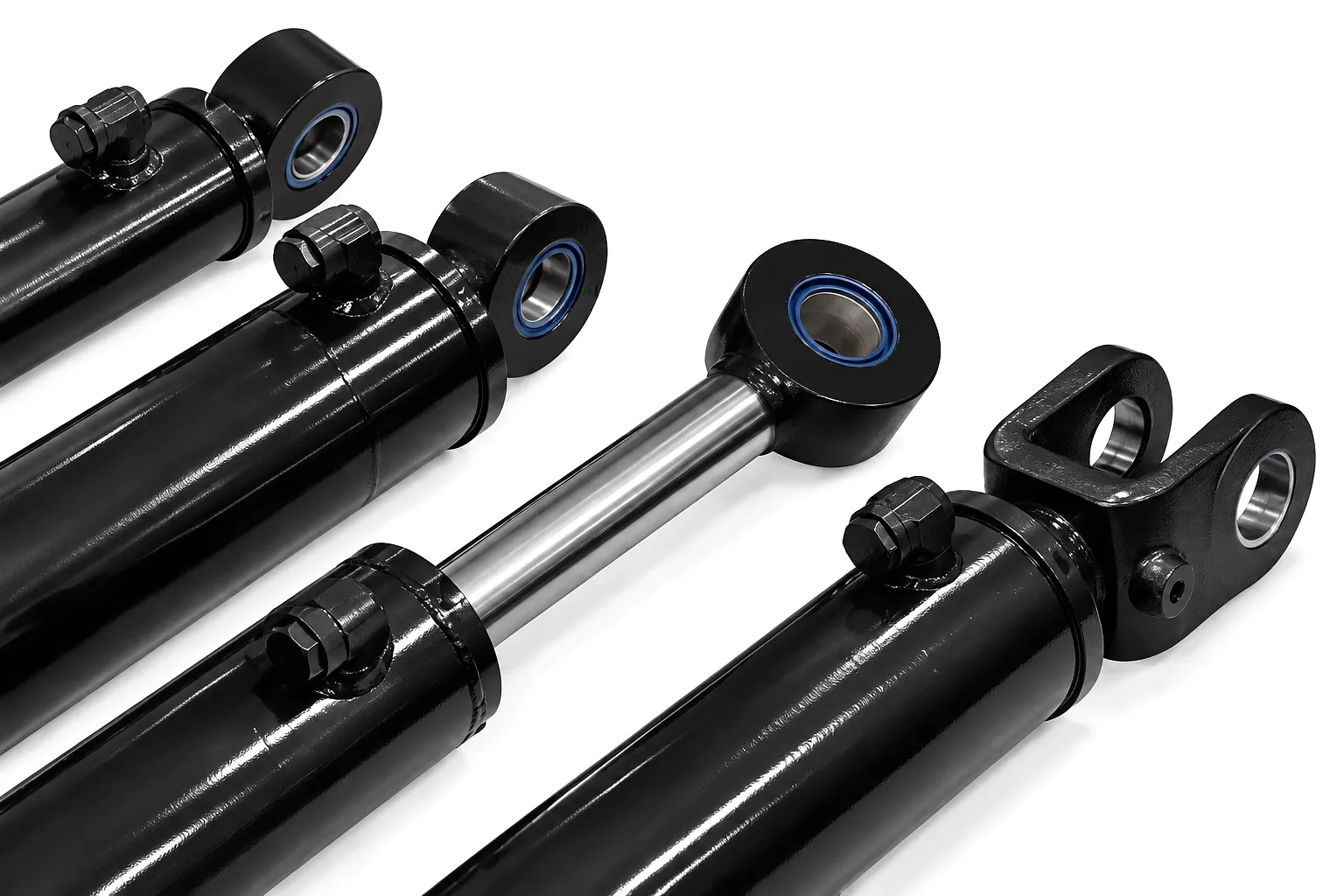 Hydraulic cylinders are among the hardest-working components in any industrial machine — yet the moment they start making noise, production managers across Birmingham assembly lines and Sheffield steelworks alike reach for the maintenance log with a familiar sense of dread. A banging, whining, or grinding sound is rarely random. Each acoustic signature points to a specific root cause, and understanding those causes is the difference between a five-minute fix and a £12,000 cylinder replacement.
Understanding Why Hydraulic Cylinders Generate Noise
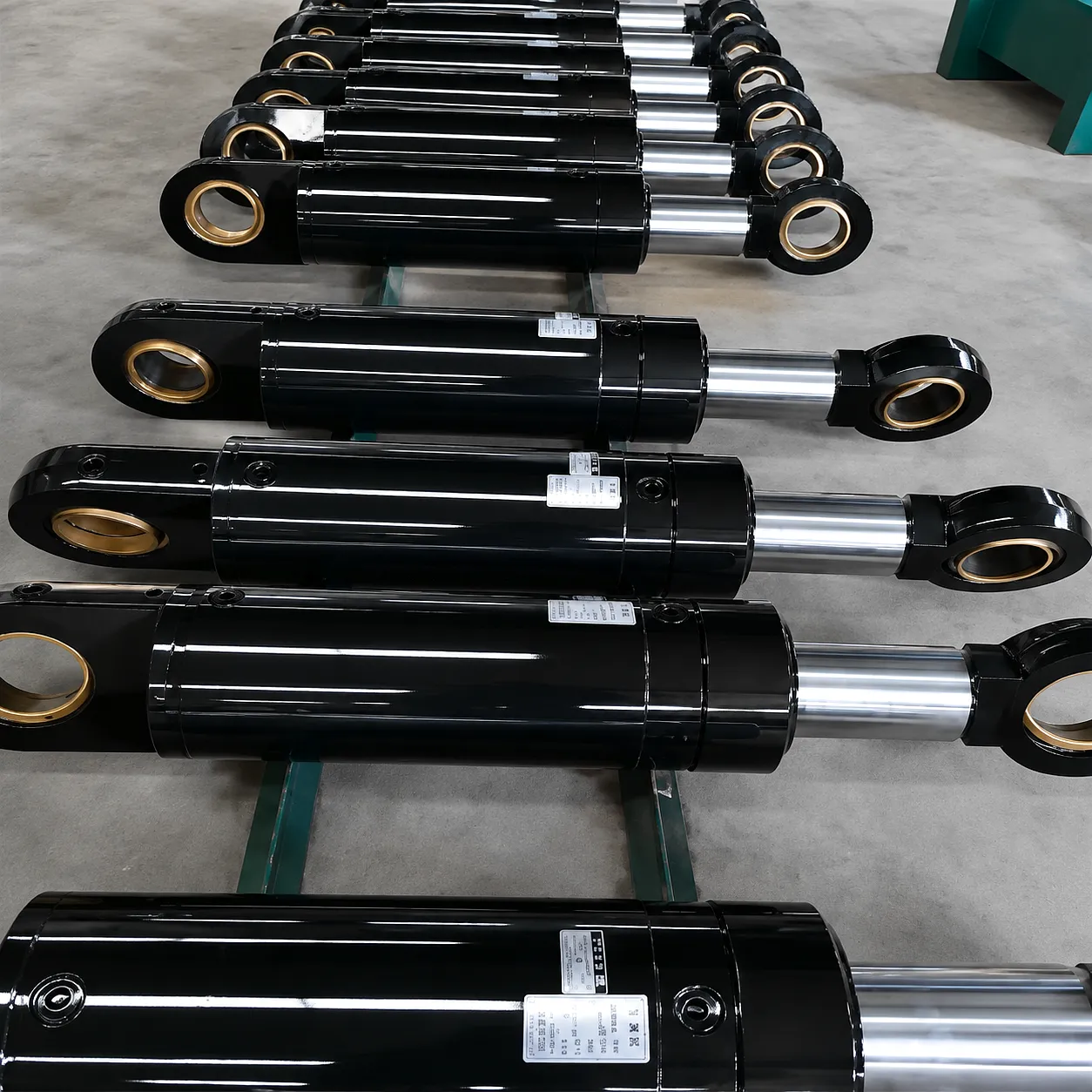
Hydraulic cylinders operate under continuous pressure cycles — sometimes reaching 350 bar or more in heavy industrial applications. Under these conditions, even minor changes in fluid quality, component geometry, or seal integrity can trigger acoustic phenomena that range from a subtle hum to a violent hammering that shakes the entire machine frame. In UK manufacturing, where precision engineering underpins sectors from automotive tier-one supply in the West Midlands to offshore equipment fabrication in Aberdeen, the consequences of ignoring cylinder noise extend well beyond comfort: unexpected downtime costs an average mid-size plant between £8,000 and £25,000 per hour of lost production.
Noise in a hydraulic cylinder is almost always a symptom, not the problem itself. The cylinder is telling you something has changed in the system — whether it is a drop in reservoir fluid level, a deteriorating piston seal, a misaligned mounting, or the early stages of bore scoring. Reading that signal correctly requires understanding the physics behind each noise type and cross-referencing it with operating conditions at the time the sound first appeared.
Cavitation
Formation and violent collapse of vapour bubbles within the hydraulic fluid, releasing intense micro-shockwaves that erode metal surfaces and produce a characteristic rattling or machine-gun crackling sound.
Aeration
Free air or dissolved gases entering the hydraulic circuit and becoming entrained in the fluid. As these bubbles compress and expand under pressure, they generate a spongy response, erratic rod movement, and a high-pitched whining or sizzling noise.
Mechanical
Physical wear, misalignment, loose fasteners, side-loading, and seal degradation that create solid-to-solid contact inside the cylinder or at its mounting points, producing knocking, grinding, or squealing sounds that often correlate with specific positions along the stroke.
Cavitation: The Bubble That Breaks Metal
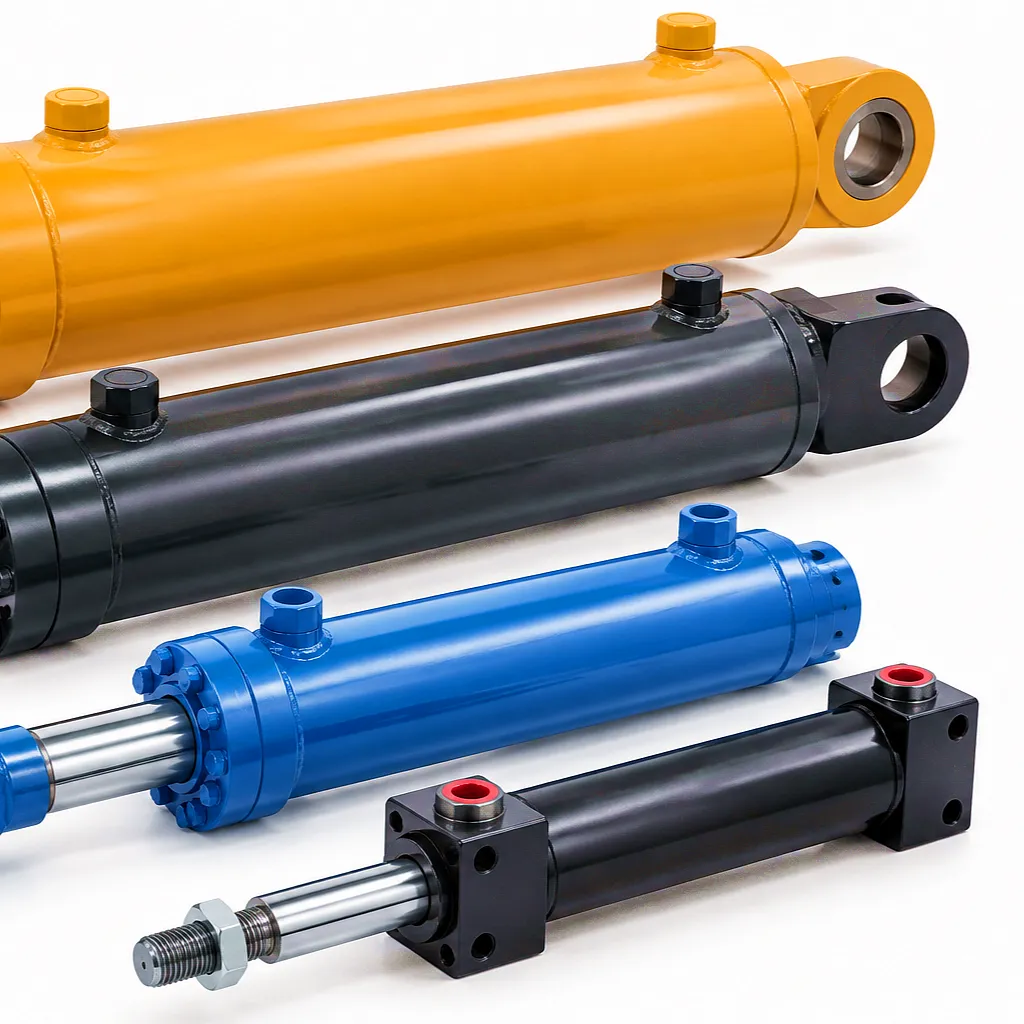
Cavitation in a hydraulic cylinder is one of the most destructive forces an engineer will encounter — and also one of the most misunderstood. It occurs when the local pressure in the hydraulic fluid drops below the fluid’s vapour pressure, causing dissolved gases and fluid vapour to form bubbles. These bubbles are not stable. When they migrate into a higher-pressure region — which happens repeatedly during every stroke cycle — they collapse almost instantaneously. That collapse generates localised pressure spikes that can reach several thousand bar at a microscopic scale, blasting metal from the bore wall, piston face, and rod surface with every single cycle.
The acoustic fingerprint of cavitation is distinctive: a crackling, rattling sound, sometimes described as gravel travelling through the cylinder, that intensifies under load or at high speed. In practice at Sheffield forge shops and Birmingham press lines, this sound is frequently heard during the retraction stroke when the pump struggles to supply fluid fast enough to fill the expanding rod-side volume. Suction cavitation at the pump inlet is another common trigger, particularly when reservoir fluid levels are low, inlet filters are blocked, or the pump speed exceeds the fluid’s ability to fill the inlet port. The resulting pressure drop propagates through the circuit and manifests as noise and shock loading throughout connected actuators.
Primary Causes of Hydraulic Cylinder Cavitation
- Low fluid level in the hydraulic reservoir, causing the pump to draw air
- Blocked or partially clogged suction strainer or return-line filter
- Pump operating speed that exceeds the self-priming capacity of the inlet port
- Fluid viscosity too high for the ambient temperature — common in UK winter conditions where unheated plant rooms drop to 5°C–8°C overnight
- Sharp bends, undersized suction lines, or excessive pipe lengths creating high inlet restriction
- Inadequate case drain back-pressure on piston pumps, leading to internal vapour pockets
- Sudden load drop causing the load-holding side of the cylinder to go sub-atmospheric
Cavitation Damage — What You Will Find
Post-cavitation inspection typically reveals a pitted, cratered bore surface with a frosted appearance. The piston head may show erosion pitting on the high-pressure face, and chrome rod surfaces often develop micro-crack networks. Seals degrade rapidly in aerated, cavitating fluid because the micro-jets strip protective lubricant films and introduce contaminants. If you are seeing a hydraulic cylinder producing noise alongside discoloured (dark, metallic) fluid and reduced force output, cavitation damage should be your primary diagnosis.
Aeration: When Air Gets Into the System
Aeration and cavitation are siblings but not twins. Where cavitation involves the phase change of hydraulic fluid itself, aeration describes the introduction of atmospheric air — or other gases — into the working fluid from external sources. The most common entry points are loose or cracked suction line fittings, worn shaft seals on the pump, or a reservoir that has been overfilled with an incorrect fluid type, causing foaming. In UK coastal installations and offshore-adjacent equipment, salt-laden humid air can also accelerate fitting corrosion and create pinhole ingress paths that are nearly invisible to routine inspection.
The sound generated by aeration is subtly different from cavitation. Rather than a sharp cracking noise, aerated fluid tends to produce a softer whining or sizzling — sometimes compared to the sound of frying. The cylinder rod may also exhibit a spongy, erratic travel pattern during fine positioning tasks, because the entrained air acts as a compressible cushion. This is a particular problem on servo-controlled hydraulic cylinders used in UK automotive body-pressing operations, where positioning repeatability to ±0.1 mm is expected and any compressibility in the fluid is immediately visible as reject parts.
Diagnosing aeration requires a careful look at the fluid condition. Freshly aerated fluid appears milky or frothy. If the reservoir sight glass shows a foamy top layer that does not dissipate within 10–15 minutes after the pump stops, air ingress is almost certain. Drawing a fluid sample and observing it in a clear jar will also reveal the characteristic creamy discolouration of dissolved air, contrasted with the dark, metallic appearance of fluid contaminated by cavitation erosion products. A key diagnostic step is to check all suction-side fittings with a thread sealant test: brush a small amount of grease over fittings while the pump is running — any fitting that stops making noise briefly as the grease seals the leak is a confirmed air ingress point.
| Aeration Source | Symptom Clue | Corrective Action |
|---|---|---|
| Loose suction line fitting | Noise worse at start-up, improves when warm | Re-torque or replace fitting with BSPP taper seal |
| Worn pump shaft seal | Continuous whine, steady foam in reservoir | Replace shaft seal; check case drain rate |
| Low reservoir level | Noise intermittent, correlates with pump load | Top up to correct level; inspect for external leaks |
| Fluid foaming (wrong fluid type) | Frothy reservoir; rapid seal wear | Drain, flush, refill with correct ISO VG grade |
| Cylinder rod seal ingress (ram retraction) | Noise on retraction stroke only | Replace rod wiper and seal pack |
Mechanical Causes: Wear, Misalignment, and Structural Faults
Mechanical noise sources in hydraulic cylinders are the most varied and the most likely to escalate into catastrophic failure if left unaddressed. Unlike fluid-based noise that can sometimes be resolved by a fluid change or fitting re-torque, mechanical noise indicates progressive physical damage or a persistent installation problem that will continue to worsen with every operating cycle. The sounds produced — knocking, thumping, squealing, grinding — tend to be positional, appearing at specific points along the stroke rather than continuously, which is one of the key diagnostic differentiators.
Side loading is perhaps the single most common mechanical cause encountered across UK heavy industry. It occurs when the cylinder is required to absorb a radial or bending load in addition to the intended axial force. Press operations in Leeds, injection moulding machines in the East Midlands, and tipping gear on agricultural vehicles throughout Yorkshire all place hydraulic cylinders in situations where the load path is not perfectly axial. The result is that the rod bears against the rod seal and guide bushing on one side, causing metal-to-metal contact, accelerated bushing wear, and a characteristic intermittent knock or squeal that grows louder as the bushing clearance increases.
🔗 Relateret produkt
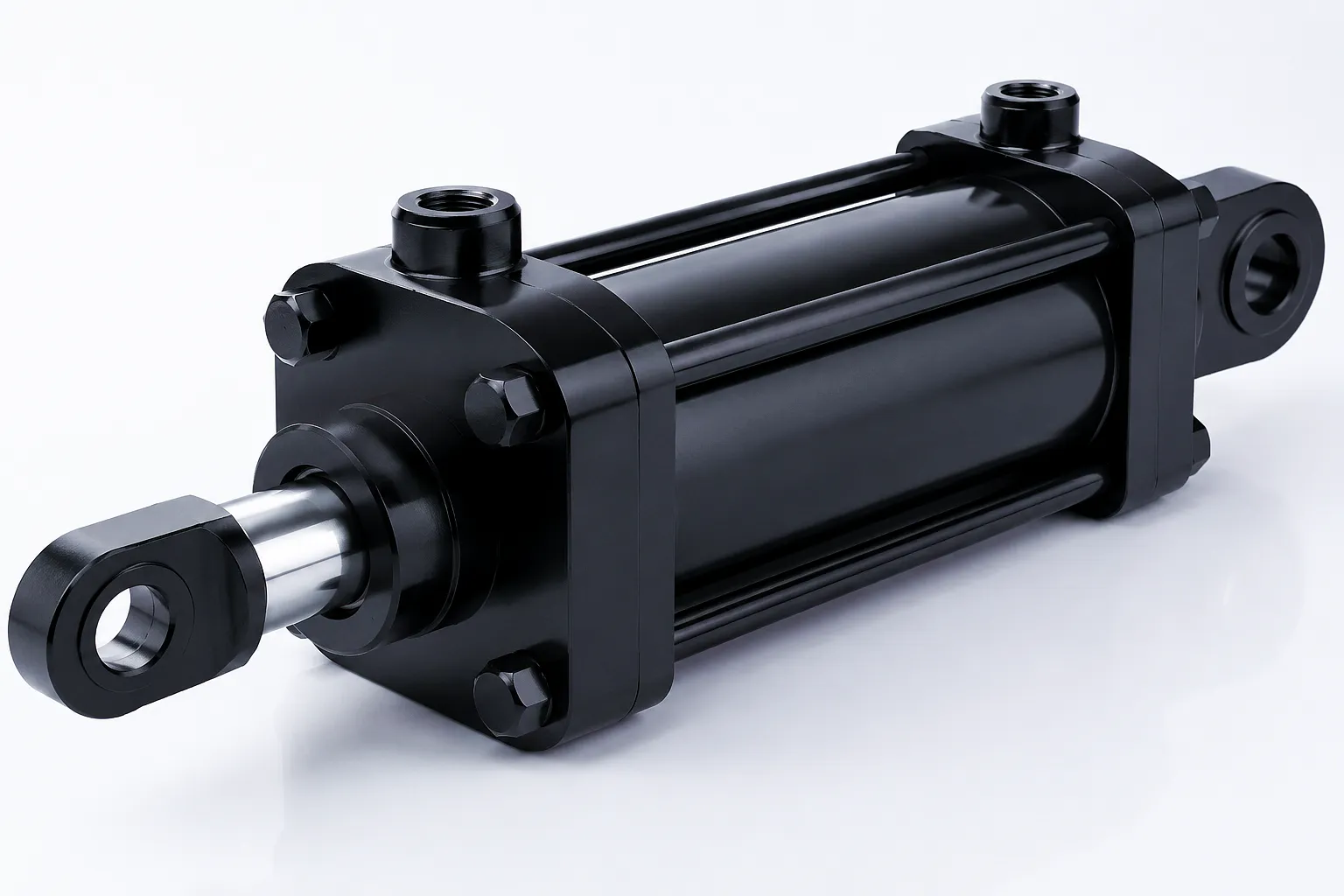
Heavy Duty Hydraulic Cylinder — Single Acting Cylinders
Precision-machined heavy duty single acting cylinders with hardened bore, chrome rod, and composite bearing guide designed to resist side-loading — addressing the most common mechanical noise source in industrial presses and compaction equipment.
Mechanical Fault Identification Guide
| Noise Type | When It Occurs | Likely Cause | Urgency |
|---|---|---|---|
| Hard knock / thump | End of stroke | Cushion failure or no cushion installed | High — stop and inspect |
| Squeal / squeak | Throughout stroke | Dry or contaminated seal / rod scoring | Medium — monitor closely |
| Grinding / scraping | Mid-stroke | Bore scoring / metallic contamination | High — replace cylinder |
| Intermittent knock | Under side load | Worn bushing / misalignment | Medium — re-align and regrease |
| Vibration / rattle | High flow / speed | Loose mounts / resonance | Low — check fastener torque |
End-of-stroke hammering is another mechanical noise that appears repeatedly in fieldwork reports from UK plant engineers. When the internal cushioning mechanism — the adjustable needle or fixed orifice that slows the piston before it contacts the end cap — wears out or is incorrectly adjusted, the piston impacts the end cap at full velocity. The resulting force can be thousands of kilonewtons in large bore cylinders, and the noise is impossible to ignore: a deep, resonant boom that can be felt as much as heard. Left unattended, it leads to cracked end caps, damaged tie rods, and displacement of the entire cylinder from its mounting.
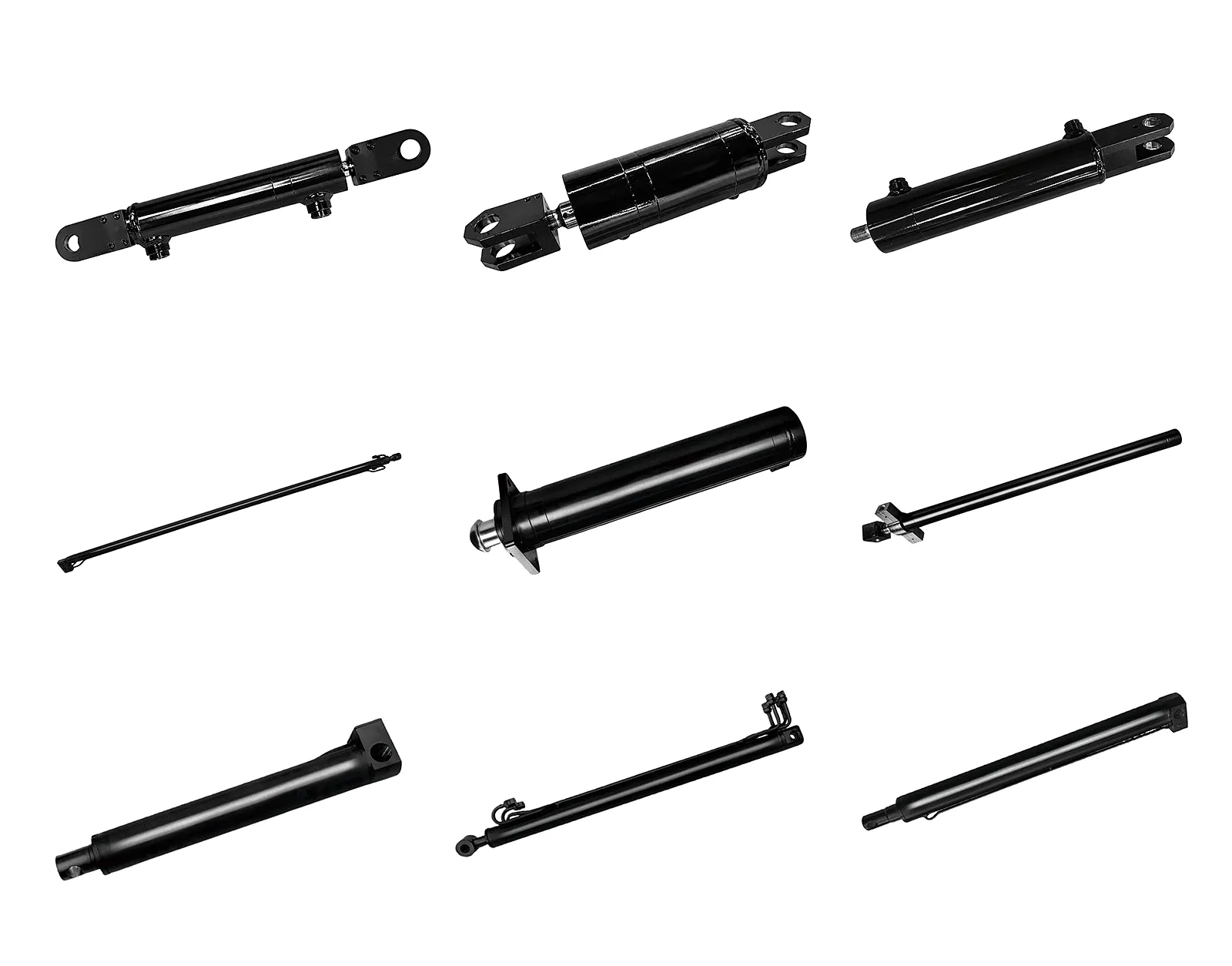
Ever Power — Full Range of Industrial Hydraulic Cylinders
Hydraulic Cylinder Technical & Performance Parameters
Understanding the operating envelope of a hydraulic cylinder helps maintenance engineers determine whether a noise complaint stems from the component being pushed beyond its design limits or from internal deterioration within normal operating parameters. The table below presents typical specifications for industrial double-acting cylinders of the kind supplied to UK manufacturing and construction sectors.
| Parameter | Typical Range | Units / Notes | Noise Risk if Exceeded |
|---|---|---|---|
| Bore Diameter | 40 – 500 | mm | Side loading risk rises with larger bore at same rod diameter ratio |
| Operating Pressure | 100 – 350 | bar | Cavitation risk above design pressure; seal failure above 350 bar |
| Stroke Length | 50 – 8,000 | mm | Longer strokes increase rod buckling and lateral vibration risk |
| Fluid Temperature | -20 – +90 | °C | Below 10°C: high viscosity aeration; above 80°C: vapour cavitation |
| Stempelstangmateriale | C45E / 42CrMo4 | EN standard steel, hard chrome plated | Score marks on chrome indicate side-loading or contamination entry |
| Cylinder Bore Material | ST52 / S355J2 | Honed to Ra 0.2 – 0.4 µm | Surface roughness above 0.8 µm causes accelerated seal wear and friction squeal |
| Tætningsmateriale | Polyurethane / PTFE / NBR | Selected by fluid and temperature | Wrong seal material causes swelling, friction noise, and leakage |
| Piston Speed (max) | 0.5 – 3.0 | m/s | Above 1.5 m/s: turbulent flow noise; above 3.0 m/s: cushion essential |
| Thrust Force (typical) | 3 – 3,500+ | kN | Overload beyond rated force generates shock noise and rod deflection |
| Cushion Type | Fixed / Adjustable needle | Per application cycle speed | No cushion or worn needle = end-of-stroke hammering |
| Contamination Tolerance | ISO 4406 Class 16/14/11 | Cleanliness level for extended life | Contamination above Class 18/16/13 causes rapid wear noise |
Industrial Application Scenarios Across UK Sectors
The acoustic characteristics of a noisy hydraulic cylinder vary considerably depending on the duty cycle, load profile, and ambient environment of each application. Understanding how common industrial settings in the United Kingdom generate and amplify specific types of cylinder noise allows maintenance teams to prioritise correctly and engage suppliers with precise technical briefs.
Agricultural Machinery — Yorkshire & East Anglia
Combine harvesters, balers, and forage machines operating across the flat fenlands of East Anglia and the rolling terrain of North Yorkshire place hydraulic cylinders under extreme and irregular loading. Cavitation is a persistent issue here during cold morning start-up, when overnight temperatures can drop below 5°C and ISO VG 46 mineral fluid thickens substantially, restricting suction flow. The cylinder noise heard by operators at dawn is almost always aeration-driven, clearing within 10–15 minutes as the fluid warms. More serious mechanical knock issues arise mid-season when crop-deflection cylinders on cutting headers absorb repeated side impacts from unexpected field debris — a problem compounded by the absence of protective rod covers on many OEM designs. Specifying cylinders with integrated wiper rings and chrome-plated rods helps significantly in this environment.
Heavy Press and Forging — Sheffield & Rotherham
Sheffield’s legacy as the world’s steel city persists in dozens of specialist forging and heat-treatment operations that still operate large tonnage hydraulic presses. The cylinders in these machines run at pressures of 250–350 bar for 20 hours a day, making fluid quality and contamination control the primary noise management disciplines. Cavitation damage appears rapidly in this duty cycle because even a brief drop in reservoir level during a busy production shift can trigger a destructive chain reaction. Operators at Rotherham forge plants have found that installing high-sensitivity pressure transducers on the pump inlet — and connecting them to alarm logic that stops the press before cavitation noise begins — has reduced cylinder replacement frequency by up to 60%. For this class of application, cylinders with phosphate-treated bore walls and long-life polyurethane seal packs are specified as standard.
Lifting Platforms and Dock Levellers — Port of Liverpool & Bristol
Hydraulic lifting platforms at UK ports and distribution centres present a unique noise challenge because their cylinders operate at very slow speeds but with high static loads held for extended periods. The dominant noise complaint in dock levellers and scissor lifts is a slow, rhythmic groan as the cylinder maintains position against a loaded pallet or vehicle deck. This is almost always attributable to stick-slip friction — a phenomenon where the piston seal alternately sticks and releases against the bore wall due to surface finish degradation or inadequate lubricity in the hydraulic fluid. Upgrading to a low-friction PTFE-faced piston seal, combined with a fluid change to an anti-wear ISO VG 68 formulation, resolves most cases without any mechanical disassembly.
Automotive Assembly — West Midlands & Sunderland
Vehicle assembly plants in Coventry, Solihull, and Sunderland run hydraulic cylinders on body-pressing, door-hanging, and glazing jigs at cycle rates of 400–600 strokes per hour. At these intensities, thermal management is the primary concern: fluid temperature climbs quickly, and as viscosity falls, the film strength protecting bore and rod surfaces diminishes. The resulting noise profile is a progressive, high-frequency whine that intensifies through a shift as temperatures rise. Installing an adequately sized oil cooler and monitoring fluid temperature with automatic shutdown at 75°C prevents both the noise and the associated accelerated wear. Cylinders specified for this environment typically incorporate stainless steel end caps for corrosion resistance against paint mist and cleaning chemicals.
Construction & Civil Engineering — London & Manchester
On construction sites across Greater London and Greater Manchester, hydraulic cylinders in excavators, piling rigs, and demolition attachments face the most hostile contamination environment of any sector. Fine silicate dust, concrete slurry, and groundwater are constantly challenging the rod wiper seals. When these seals fail, abrasive particles enter the cylinder and score both the rod and bore, generating a characteristic grinding-and-scoring noise followed rapidly by fluid leakage. The standard industry response is to specify cylinders with double-lip wiper seals and rod extensions coated with nickel-chrome or ceramic composite hard chrome, combined with a maintenance interval of no more than 500 operating hours before wiper inspection.
Step-by-Step Diagnosis Workflow for a Noisy Hydraulic Cylinder
A structured diagnostic approach saves significant time and prevents the common error of replacing expensive components without addressing the underlying cause. The following sequence works for the majority of industrial hydraulic cylinder noise complaints encountered in UK plant environments.
Record the noise signature
Note the exact sound type (crack, whine, knock, squeal, grind), when it occurs (extension, retraction, hold, start-up), how it varies with load and temperature, and whether it appeared suddenly or developed gradually. A short audio recording on a smartphone is invaluable for remote diagnosis.
Inspect fluid condition first
Draw a 0.5-litre sample from the reservoir return port and examine colour, smell, and clarity. Milky fluid confirms air ingress. Dark metallic fluid suggests cavitation erosion. Contaminated fluid with visible particulate indicates mechanical wear debris entering the circuit. Do not skip this step — it determines whether the problem is fluid-side or structural.
Check reservoir level and suction circuit
Confirm that reservoir fluid is at the mid-to-high operating mark. Check all suction-side fittings for tightness. Replace or clean the suction strainer if maintenance records show it has not been serviced in the last 2,000 hours or twelve months, whichever is sooner.
Inspect rod and external cylinder surfaces
With the system depressurised and isolated, wipe the rod clean and examine the chrome surface for scoring lines, pitting, or surface roughness. Score marks running parallel to the stroke axis confirm side loading or particulate ingress. Pitting patterns concentrated on one face confirm cavitation. A smooth rod with a damaged seal confirms over-pressure or thermal degradation.
Verify mounting alignment
Use a dial indicator to check that the rod centreline tracks within ±0.15 mm of true axial movement throughout the stroke. Any deviation greater than 0.3 mm confirms structural misalignment that must be corrected before re-sealing, or the replacement seals will fail within 200–400 hours under the same side-loading conditions.
Decide: repair, reseal, or replace
If bore scoring depth exceeds 0.05 mm, re-honing and re-sealing is required. Scores deeper than 0.2 mm typically mean the cylinder tube must be replaced. For aeration or cavitation without mechanical damage, a fluid service, fitting inspection, and correct fluid grade selection resolves the noise without any cylinder disassembly. Engage an experienced UK supplier if bore measurement requires specialist honing equipment.
Ever Power — Precision Manufacturing & Custom Hydraulic Cylinder Solutions
Engineered to eliminate noise. Built to outlast the machine around them.
🏭 Manufacturing Capability
Ever Power operates a 28,000 m² precision manufacturing facility equipped with CNC deep-hole boring machines capable of producing cylinder bores from 40 mm to 500 mm diameter, honed to a surface roughness of Ra 0.2 µm — the specification level that eliminates seal stick-slip noise at its root cause. Our rod manufacturing line produces C45E and 42CrMo4 steel rods with hard chrome deposits of 20–30 µm, engineered to EN 10297 tolerances that prevent any rod-to-seal contact noise under normal operating conditions. Every cylinder undergoes hydrostatic pressure testing at 1.5 times nominal working pressure before dispatch, with documentation provided for CE marking and UKCA compliance.
⚙️ Customisation Capabilities
Noise complaints in UK field applications frequently trace back to cylinders that were specified for a generic duty cycle rather than the actual operating conditions of the machine. Ever Power’s engineering team offers a full application review service — analysing load vectors, pressure cycles, temperature ranges, and contamination environment to specify the correct bore surface finish, seal material, cushion design, and mounting geometry for each specific task. Custom stroke lengths, non-standard port configurations (including BSP, metric, and SAE flanged ports for UK installations), and specialist coatings such as nickel-chrome and hard anodising for corrosive environments are all standard offerings within our made-to-order programme.
🚚 Supply Chain & UK Delivery
Ever Power maintains strategic inventory of fast-moving cylinder sizes at a European logistics hub, enabling 5–7 working day delivery to mainland UK addresses for standard configurations. Custom engineered cylinders typically ship within 3–5 weeks of drawing approval. All shipments include full material certificates, test reports, and packaging designed to prevent rod damage in transit. DDP (Delivered Duty Paid) Incoterms are available on request for UK buyers, removing all import administration from the customer’s scope.
Experiencing a noisy hydraulic cylinder? Share your application details with our engineering team.
Customer Success Story: Birmingham Automotive Pressings Ltd
CASE STUDY · WEST MIDLANDS, UK · AUTOMOTIVE MANUFACTURING
Birmingham Automotive Pressings Ltd operates six large-tonnage body panel stamping presses at their Smethwick facility in the West Midlands, each equipped with four double-acting hydraulic cylinders controlling the blankholder force. Over a 14-month period, production supervisors logged a progressive increase in cylinder noise — initially described as a low, grating hum at the start of each shift, which intensified through the day into a pronounced crackling sound that could be heard from the press shop floor exit. Rod seal leaks began appearing on three of the 24 cylinders within six months of the noise first being reported.
The maintenance team’s initial diagnosis focused on seal replacement, but the replacement seals began leaking within 400 hours — far shorter than the expected 3,000-hour service interval. Fluid samples drawn at this point revealed ISO 4406 cleanliness levels of Class 20/18/15, far above the system’s specified Class 16/14/11 requirement. Particle count analysis showed a high proportion of hard ferrous particles in the 6–14 µm range, consistent with bore erosion from cavitation. The root cause was traced to a combination of factors: the suction strainer had not been serviced in three years, a pump inlet elbow had developed a hairline crack admitting air, and the system was running with ISO VG 46 fluid in a plant room that regularly fell to 4°C overnight before the first shift started — significantly above the pour point but well into the high-viscosity zone that restricts pump suction.
Ever Power’s application engineering team was engaged to provide replacement cylinders for the three worst-affected presses and to advise on the remaining 21. For the replacement units, Ever Power specified 42CrMo4 rods with a 25 µm hard chrome deposit and a Kantkote ceramic-blend topcoat to resist future erosion. Bore surfaces were honed to Ra 0.25 µm and fitted with combined polyurethane / PTFE piston seal packs specifically selected for the contaminated-fluid operating environment. System recommendations included upgrading to ISO VG 68 fluid, fitting a 6 µm high-pressure return-line filter, and installing a reservoir immersion heater set to maintain minimum 18°C before pump start. Eighteen months after implementation, Birmingham Automotive Pressings Ltd reported zero unplanned cylinder noise events, seal service life back to 3,200+ hours, and an estimated annual maintenance cost saving of £68,000.
What UK Engineers Say About Ever Power Cylinders
★★★★★
“We had three presses running noisy for over a year. After switching to Ever Power cylinders with the seal pack they recommended, the crackling we’d been living with just stopped. Bore finish and rod quality are noticeably better than what we had from our previous UK distributor. The application review before ordering was genuinely useful — not just a sales call.”
— James T., Engineering Manager, Birmingham Automotive Pressings Ltd, West Midlands
★★★★★
“Our forging press cylinders were producing a knocking noise at end-of-stroke that had been getting worse for six months. Ever Power supplied replacements with adjustable cushion needles and a longer guide bushing — exactly what the machine needed. Lead time was four weeks for a completely custom bore size, which for a specialist application is excellent. Documentation for CE compliance arrived with the goods.”
— R. Hutchinson, Maintenance Director, Sheffield Special Steels Group, South Yorkshire
★★★★★
“We operate dock levellers at three warehouses near Bristol and had consistent groaning from the lift cylinders under loaded vehicles. Ever Power’s technical team identified stick-slip as the cause and supplied PTFE-faced piston seals with a higher-viscosity fluid recommendation. Noise resolved within one week of the fluid changeover. Pricing was competitive with UK stock alternatives and the quote came back within 24 hours.”
— S. Pearce, Operations Manager, Bristol Logistics Hub Ltd, South West England
🔗 Relateret produkt
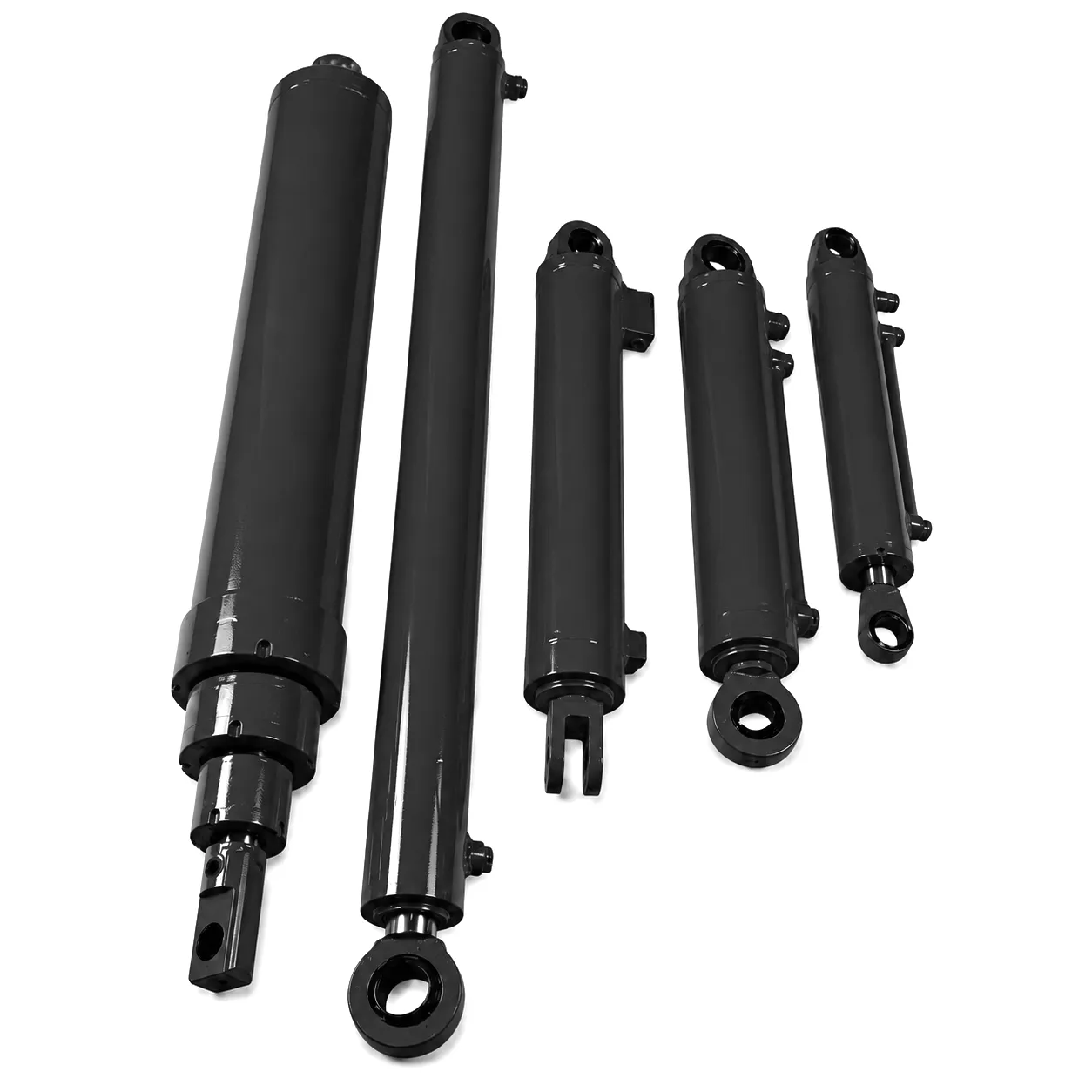
Custom Telescopic Hydraulic Cylinders for Lifting Platforms
Designed to eliminate stick-slip noise and aeration-related spongy travel in lifting platform applications. Available with PTFE-composite seals, adjustable cushion, and BSP port configuration for UK markets. Custom stroke and bore combinations manufactured to order within 3–5 weeks.
Ofte stillede spørgsmål
What causes a hydraulic cylinder to make a rattling or crackling noise when it is operating under load in a UK manufacturing plant?
A rattling or crackling noise under load almost certainly indicates cavitation. This happens when localised pressure in the hydraulic fluid drops below its vapour pressure, forming bubbles that collapse violently and erode metal surfaces. In a UK manufacturing context, the most common trigger is a restricted suction line, low fluid level, or fluid that is too viscous for the ambient temperature at start-up — all of which can be resolved without cylinder replacement if caught early.
How do I know whether my hydraulic cylinder noise is caused by aeration or cavitation, and which one is more dangerous for the cylinder?
Aeration produces a softer whining or sizzling sound and turns the hydraulic fluid milky. Cavitation produces a sharper crackling or rattling and leaves the fluid dark with metallic particles. Both are damaging, but cavitation causes faster and more severe bore erosion and is considered the more urgent condition. Draw a fluid sample: milky colour points to aeration; dark, metallic fluid points to cavitation.
Where in the UK can I find a reliable hydraulic cylinder supplier who can give me a fast quote for a custom replacement cylinder for my Sheffield forge press?
Ever Power supplies custom hydraulic cylinders to UK industrial customers including forge and press operations in Sheffield and South Yorkshire. Quotes are typically returned within 24 hours of enquiry. Custom cylinders with adjustable cushions and specialist seal packs for high-pressure forge applications ship within 3–5 weeks of drawing approval, with DDP delivery available to UK addresses. Contact: [email protected].
How much does it typically cost to repair or replace a hydraulic cylinder that has developed cavitation damage on a Birmingham manufacturing line?
Repair costs depend heavily on bore diameter and the extent of erosion. A reseal on a 100 mm bore cylinder typically costs £300–£600 in parts and labour. If honing is required, add £150–£400. A complete tube and piston replacement for the same cylinder ranges from £800 to £2,500. For a new custom-engineered replacement, costs vary by specification — contact Ever Power at [email protected] with your cylinder dimensions for a specific price. Acting on noise early keeps repair costs at the reseal level; waiting until bore damage requires replacement multiplies the cost significantly.
Which hydraulic fluid viscosity grade should I use in winter for a UK outdoor construction machine to prevent start-up aeration noise in the cylinders?
For outdoor construction machines in the UK where overnight temperatures regularly fall to 2°C–8°C in winter, ISO VG 32 or a multi-grade hydraulic oil such as ISO HV 32 is generally recommended. Standard ISO VG 46 becomes too viscous below approximately 10°C, restricting suction flow and triggering aeration noise at start-up. A machine running with a reservoir immersion heater set to 15°C minimum can typically use ISO VG 46 year-round. Consult your equipment manufacturer’s cold-weather operating guidance before switching grades.
What is the best way to stop a hydraulic cylinder from making a knocking sound at the end of its stroke on a high-cycle press in a West Midlands automotive plant?
End-of-stroke knocking on a high-cycle press cylinder is almost always caused by a worn or incorrectly adjusted cushion mechanism. The first step is to adjust the cushion needle (where fitted) to provide a deceleration zone of 20–50 mm before end-of-stroke contact. If the noise persists after adjustment, or if the cylinder has fixed cushions that are worn beyond function, the cylinder requires disassembly for cushion plunger and seat inspection. On presses running above 300 cycles per hour, specifying adjustable cushions with hard-faced plungers at the next cylinder replacement is strongly recommended to extend service life.
When should I contact a hydraulic cylinder supplier for a new cylinder rather than trying to repair the noisy one that is already installed on my machine?
Replacement becomes more cost-effective than repair when bore scoring depth exceeds 0.2 mm, when cavitation pitting covers more than 10% of the bore contact area, when the rod has surface cracks or corrosion penetrating below the chrome layer, or when seal replacements are failing within 400 hours of fitting. At this point, further repair work will not restore service life to an acceptable level. Contact Ever Power at [email protected] with your cylinder dimensions and application details to receive a replacement quotation — typically returned within 24 hours.
EVER POWER HYDRAULIC CYLINDERS
Ready to specify a quiet, long-life cylinder for your application?
Send us your bore size, stroke, pressure, and duty cycle — our engineers will specify the right configuration and provide a competitive UK-delivered price within 24 hours.
✉ [email protected] — Get a Quote
redigeret af gzl
 Danish
  English
  Italian
  Portuguese
  Dutch
Dutch  Swedish
  Finnish
  Polish
  Hindi
Hindi  Kazakh
  Turkish
  Ukrainian
  Romanian
  Spanish
  German
  Russian
  Korean
  Japanese
  Vietnamese
  Thai
Thai  Indonesian
  Malay
Malay  French
  Greek
Greek