
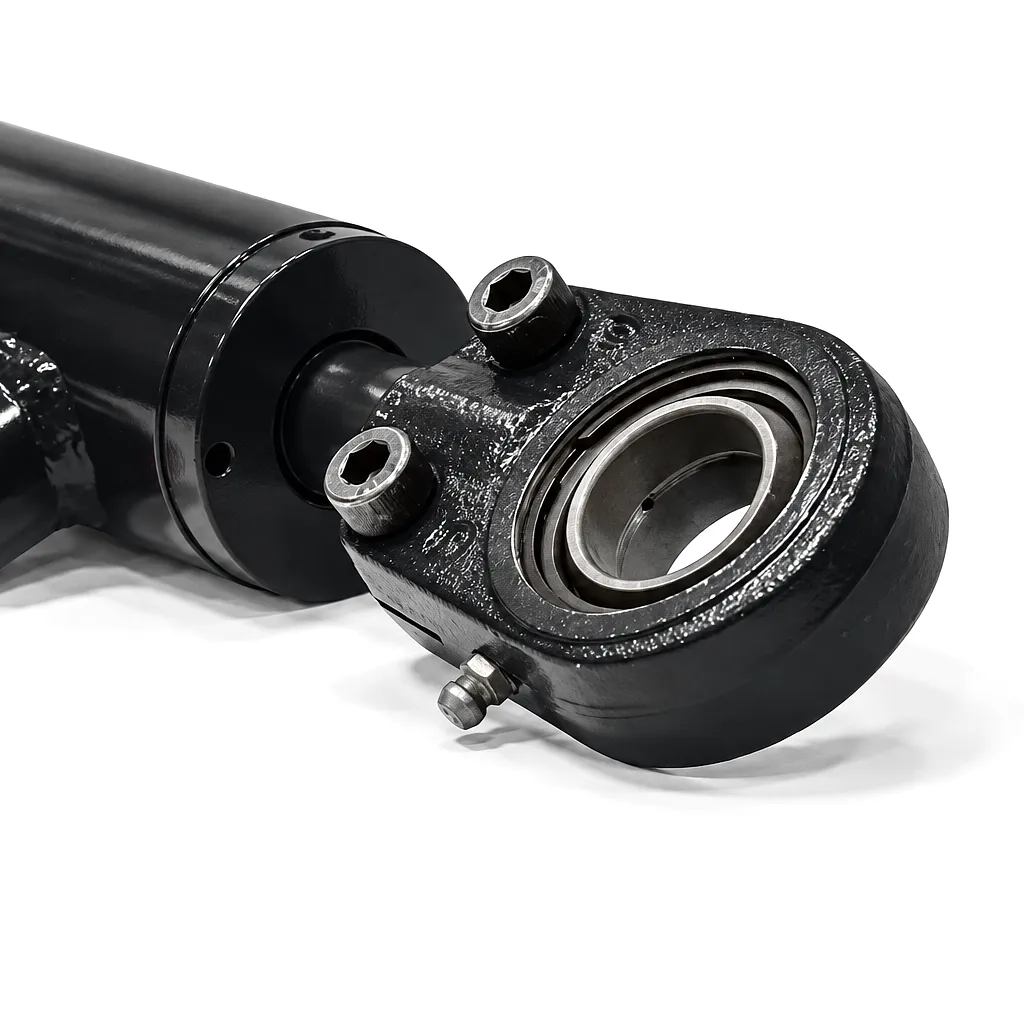
 Among the most widely specified actuator sizes in British manufacturing, the 2-inch bore hydraulic cylinder occupies a unique position between compact pneumatic actuators and heavy-tonnage hydraulic rams. With a nominal bore diameter of 50.8 millimetres, this cylinder class delivers a push force in the region of 5,900 to 7,100 lbf at rated working pressures between 1,500 and 3,000 PSI — enough thrust to drive press tooling, reposition structural assemblies, and control valve gates in mid-scale process lines across Sheffield’s steel fabrication corridors, Birmingham’s automotive tier-one plants, and the marine engineering yards of Newcastle and Glasgow.
Unlike generic off-the-shelf cylinders, a precision-manufactured 2-inch bore unit from a specialist supplier integrates honed alloy bore tubes, hardened chrome-plated piston rods, and multi-lip sealing systems designed to sustain continuous-duty cycles in wet, vibration-intensive environments. For UK procurement engineers who specify to BS EN ISO 6020 and 6022 standards, selecting the correct configuration — bore, stroke, rod diameter, mounting style, and port position — is not a trivial exercise. This article walks through every technical dimension in depth.
How a 2-Inch Bore Hydraulic Cylinder Works
Pascal’s Principle in Action
A 2-inch bore hydraulic cylinder translates hydraulic fluid pressure into controlled linear motion. Pressurised oil — typically mineral or biodegradable hydraulic fluid — enters through the cap-end port and acts upon the full bore cross-section (approximately 3.14 in²). The resulting force pushes the piston and its attached rod outward in a single, smooth stroke. When the circuit director reverses flow to the rod-end port, oil pressure acts on the annular area of the piston (full bore minus rod area), generating a slightly lower retract force but maintaining precise position control throughout the full stroke cycle.
Force Calculation at Working Pressure
The extend (push) force is calculated as: Force (lbf) = Pressure (PSI) × Bore Area (in²). At 2,500 PSI on a 2-inch bore, the extend force reaches approximately 7,854 lbf (roughly 34.9 kN). British engineers working in metric units may use the equivalent formula: Force (kN) = Pressure (bar) × Bore Area (cm²) ÷ 10. At 172 bar working pressure with a 50.8 mm bore (area ≈ 20.27 cm²), the cylinder delivers about 34.9 kN — sufficient to operate hydraulic shearing blades, press fixtures, and clamp assemblies in medium-capacity production settings. Cushioning at both ends of travel absorbs kinetic energy and prevents metal-to-metal contact, protecting cylinder internals and downstream tooling alike.
Sealing and Leakage Control
Modern 2-inch bore cylinders employ a multi-stage seal pack at both the piston and rod gland positions. A primary PTFE-backed energised lip seal provides the pressure boundary, while a secondary rod wiper removes contaminant particles before they can migrate inward. The gland bushing, typically machined from leaded bronze or reinforced nylon, guides the rod and prevents side-loading damage to the primary seal. Internal bypass leakage is engineered to be effectively zero under normal operating conditions — a critical requirement for UK hydraulic equipment directive compliance (Pressure Equipment (Safety) Regulations 2016) and ISO 10100 cylinder performance standards.
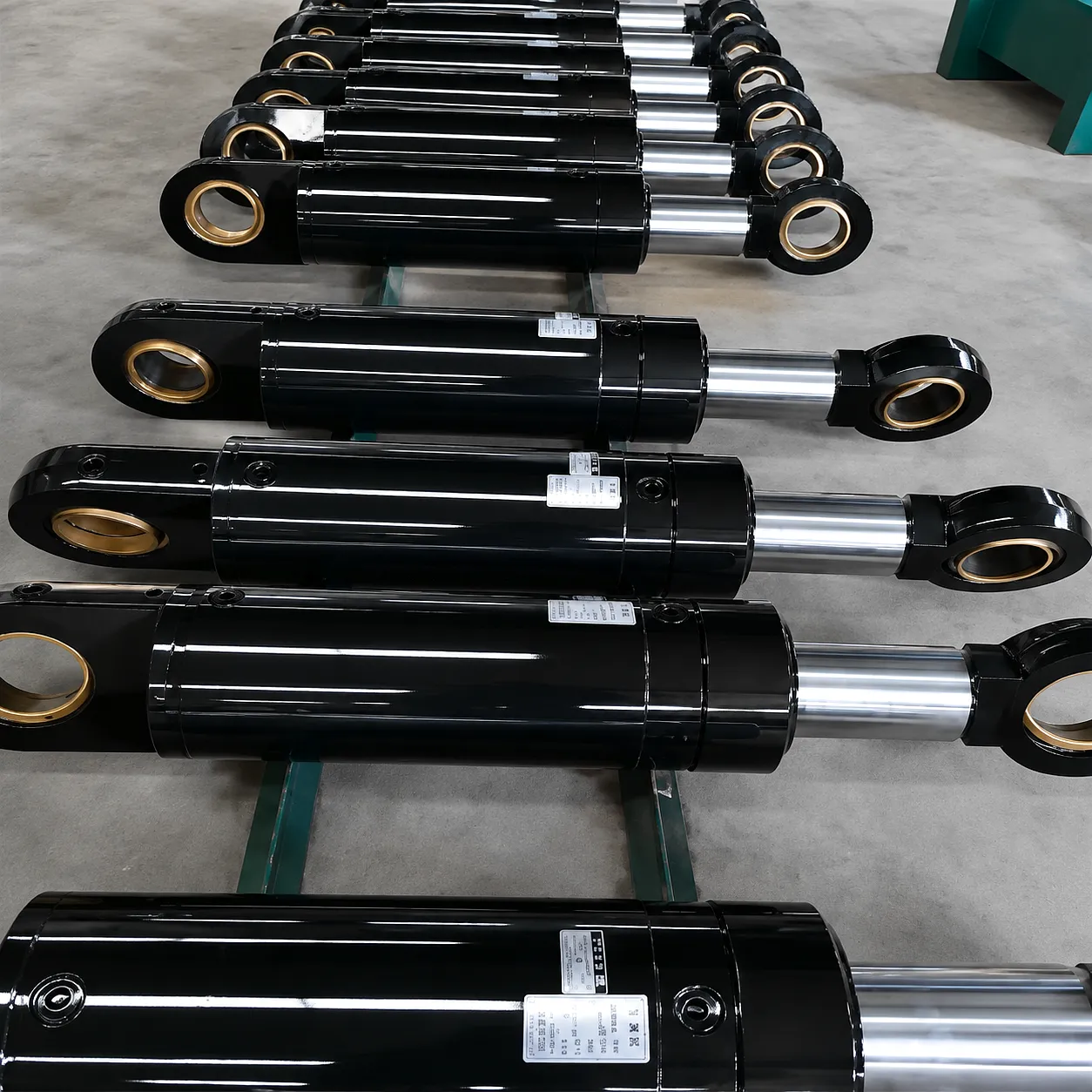
Core Materials Engineering
Barrel / Bore Tube
Cold-drawn seamless steel (EN 10305-1, typically E235 or E355 grade) honed to an internal surface roughness of Ra 0.2–0.4 µm. The honing process creates a cross-hatch pattern that retains a microscopic oil film, reducing friction and extending seal life significantly across high-cycle applications.
Ράβδος εμβόλου
High-tensile steel (42CrMo4 or equivalent EN 1.7225) ground and hard chrome plated to a minimum deposit thickness of 25 µm, with a surface hardness of 850–1,000 HV. The chrome layer resists corrosion, abrasive particle scoring, and seawater splash exposure — properties especially valued at UK coastal industrial sites from Aberdeen to Portsmouth.
End Caps & Flanges
Forged or machined from EN8 carbon steel or EN24T alloy steel, with all pressure-retaining welds performed under certified procedures complying with EN ISO 15614. For marine and offshore duty, 316L stainless steel end caps are available to withstand salt-air environments without surface treatment dependency.
Seals & Wipers
Standard duty employs NBR (nitrile) piston and rod seals rated to -40°C / +120°C, compatible with mineral oils, water-glycol, and phosphate ester fluids. High-temperature variants use FKM (Viton) seals for operating environments up to 200°C, such as those encountered in die-casting auxiliary presses or heat treatment handling equipment in the West Midlands fabrication sector.
Piston Material
Ductile iron (SG iron, GJS-500-7 grade) is the standard piston material, machined to precision bore tolerances of H7/h6 class. For lightweight applications or where magnetic-interference rejection is required, aluminium alloy pistons (6061-T6) with anodised wear rings are specified. The piston carries dual T-seal grooves and a guide ring groove to prevent metal-to-bore contact under lateral loading.
Technical Advantages of the 2-Inch Bore Hydraulic Cylinder
✓ High Force-to-Size Ratio
The 2-inch bore provides a genuinely useful force output of up to 35 kN within a compact envelope. Compared to pneumatic cylinders of the same bore, a hydraulic unit delivers roughly 10–15× the force at comparable size and weight. This makes the cylinder an ideal choice for space-constrained installations, including robotic end-effectors, compact clamping fixtures, and trailer hitch mechanisms used across UK agricultural machinery manufacturing in regions like Lincolnshire and Yorkshire.
✓ Precise, Controllable Positioning
Hydraulic fluid is nearly incompressible, which means a 2-inch bore cylinder can hold a load in position indefinitely without drift — impossible with pneumatic systems. When paired with a proportional directional control valve, the cylinder supports sub-millimetre position repeatability. This characteristic makes it the preferred actuator for CNC press brakes, injection moulding clamping systems, and precision assembly jigs where dimensional tolerance is non-negotiable and traceability to BS 8888 drawing standards is expected.
✓ Durability in Harsh Conditions
With a hard chrome rod, honed steel bore, and multi-lip seal system, a quality 2-inch bore hydraulic cylinder is designed to exceed one million full extension–retraction cycles before scheduled seal replacement. In real-world terms, this equates to multiple years of three-shift operation before planned maintenance is required — a critical consideration for UK manufacturers operating under continuous improvement (CI) programmes where unplanned downtime carries disproportionate cost penalties on tight-margin production contracts.
✓ Versatile Mounting Configurations
A 2-inch bore cylinder is available in virtually every mounting style recognised by ISO 6020/6022: tie-rod construction with flange or clevis mounts, welded barrel with trunnion pivots, and mill-duty designs with rectangular flanges. This breadth of configuration means a single supplier catalogue can satisfy the mounting geometry of a tracked excavator arm pivot, a foot-mounted injection clamp, and a side-lug linear conveyor drive — all from one standard bore size, reducing the engineering effort required on multi-axis machine builds.
✓ Stroke Flexibility and Custom Lengths
Standard catalogue strokes for a 2-inch bore cylinder range from 50 mm to over 2,000 mm, with custom strokes available to the nearest millimetre from specialist manufacturers. This flexibility is indispensable when retrofitting hydraulic actuation into legacy machine frames with fixed dimensional envelopes — a common challenge in the UK’s large base of aging but productive manufacturing plant, particularly in the tool rooms and foundries of the Black Country and the East Midlands press shops.
Product Technical & Performance Parameters
The following table summarises key technical parameters for Ever Power’s standard 2-inch bore hydraulic cylinder range. Custom configurations are available — contact our engineering team for specification-matched quotations.
| Παράμετρος | Standard Range | High-Duty Option | Notes |
|---|---|---|---|
| Bore Diameter | 50.8 mm (2.0 in) | 50.8 mm (2.0 in) | ISO 6020-1 compliant |
| Διάμετρος ράβδου | 25 mm (1.0 in) | 32 mm (1.25 in) | Larger rod for column-load resistance |
| Πίεση εργασίας | up to 207 bar (3,000 PSI) | up to 350 bar (5,000 PSI) | Welded or tie-rod body |
| Extend Force (at 207 bar) | ~41.97 kN (9,436 lbf) | ~70.9 kN (at 350 bar) | Cap-end push force |
| Retract Force (at 207 bar) | ~31.89 kN (7,172 lbf) | ~54.1 kN (at 350 bar) | Rod-end pull force (25 mm rod) |
| Stroke Range | 50–1,500 mm | Custom to 3,000 mm | Buckling check required above 1,000 mm |
| Θερμοκρασία λειτουργίας | -20°C to +120°C (NBR seals) | -40°C to +200°C (FKM seals) | Specify seal compound at order |
| Test Pressure | 1.5× working pressure | 1.5× working pressure | Factory hydrostatic test, documented |
| Bore Surface Finish | Ra 0.2–0.4 µm | Ra ≤ 0.2 µm (mirror hone) | Diamond honing on request |
| Rod Chrome Thickness | Min 25 µm HCr | HVOF ceramic coat available | ELV-compliant Cr(III) option |
| Port Thread Standard | BSP (G) or BSPT | SAE ORB or NPT on request | UK market standard: G 1/4 to G 1/2 |
| Mounting Options | Flange, Foot, Clevis, Trunnion | Swivel base, Side lug, Cap pivot | All mounts available in-house |
| External Coating | Primer + polyurethane topcoat | Zinc-phosphate + epoxy (C4) | EN ISO 12944 corrosion class |
| Fluid Compatibility | Mineral oil HLP/HM | HEES bio, HWCF, phosphate ester | Specify fluid grade at order |
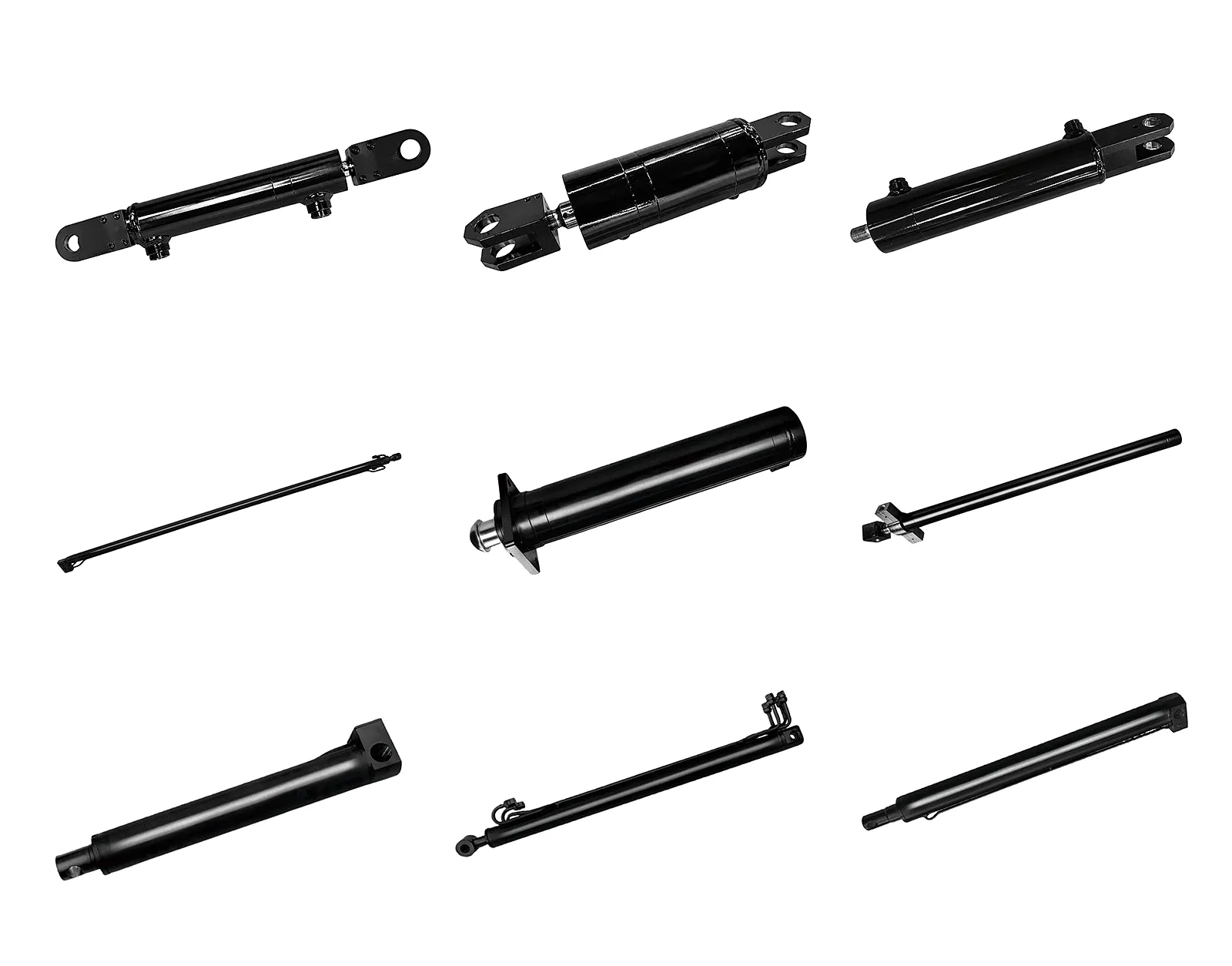
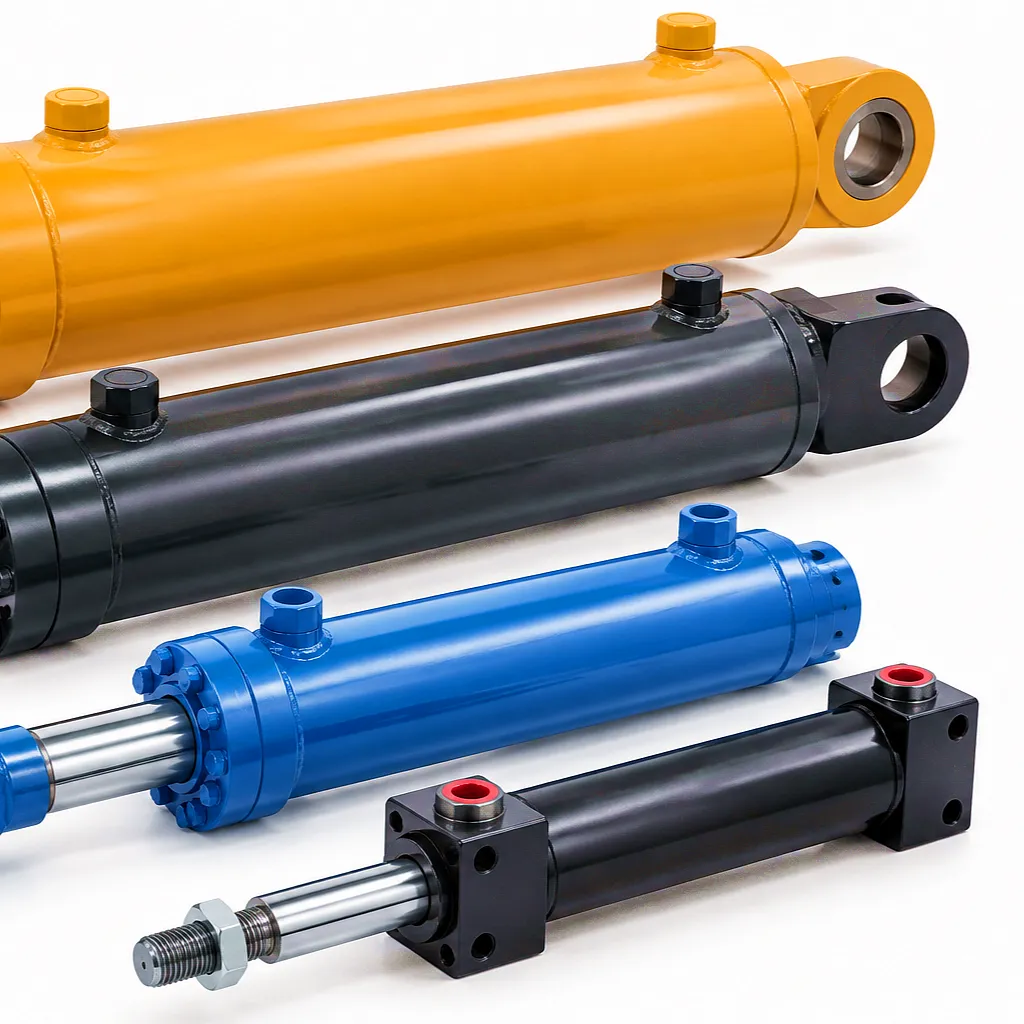
Ever Power — Full Range of Industrial Hydraulic Cylinders Including 2-Inch Bore Series
Mounting Options Explained
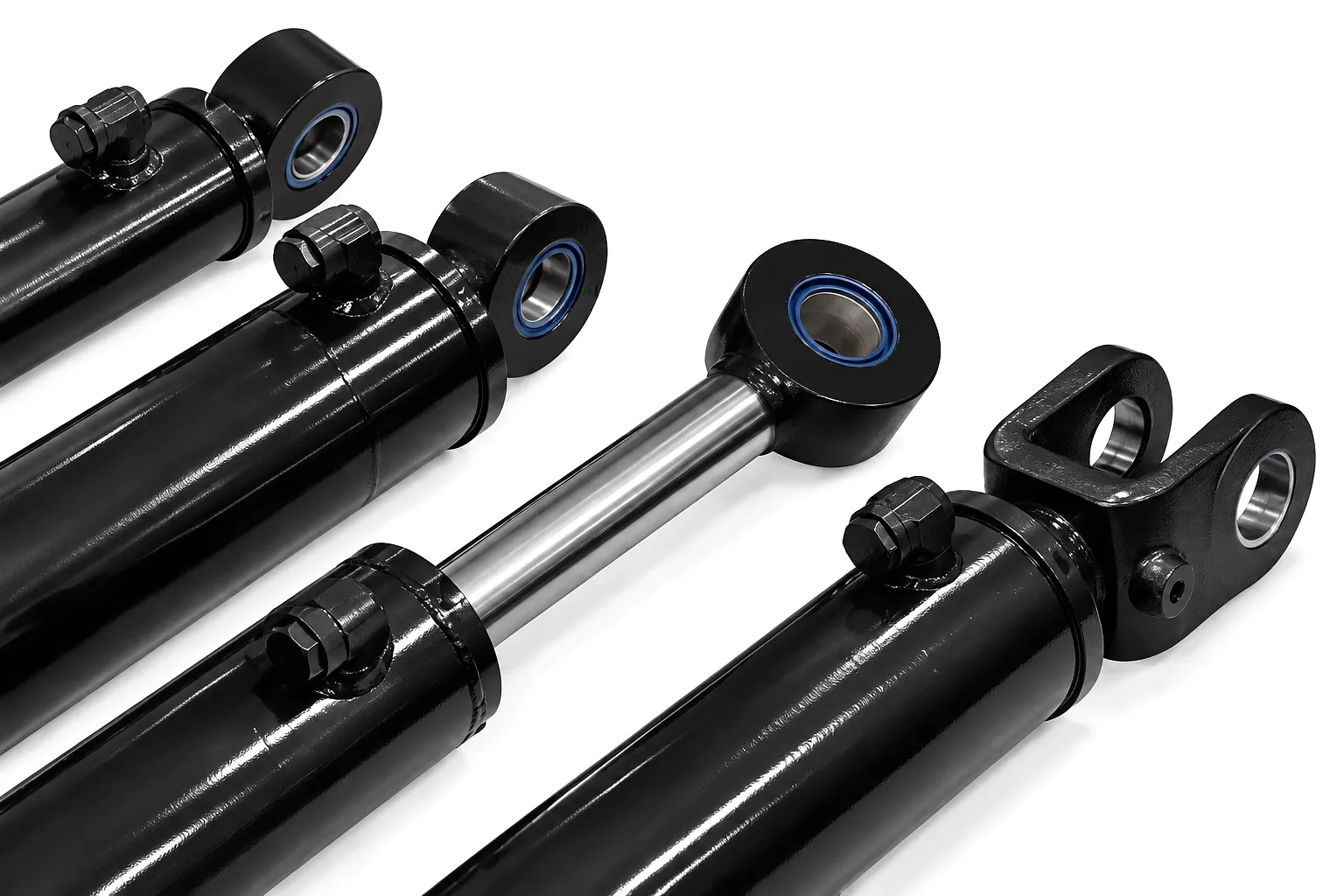
Choosing the right mounting style is often as important as specifying the correct bore and stroke. An incorrectly mounted 2-inch bore hydraulic cylinder can transmit bending moments into the rod, accelerate gland seal wear, and introduce frame fatigue at the mounting points. The following configurations cover the majority of industrial installations encountered across UK manufacturing and construction equipment sectors.
Flange Mount (Front / Rear)
Flanges bolt directly to a machine frame face, transmitting all cylinder forces in pure tension or compression with no bending. Ideal for fixed-axis, in-line applications such as punch press actuators and hydraulic gate operators. Front flange mounts facilitate easy rod alignment during installation.
Clevis / Pin Mount
A clevis bracket at the cap end accommodates angular movement in one plane, absorbing minor misalignment in articulated linkage systems. Common on agricultural implements, bucket lift arms, and vehicle-mounted crane outriggers — all heavily represented in UK ground-working and plant hire industries centred around the Midlands and East Anglia.
Trunnion Mount
Trunnion pins project from the cylinder mid-body or near the cap end, allowing the cylinder to pivot in a vertical or horizontal arc as it extends. This configuration handles two-dimensional force vectors efficiently and is selected for hydraulic press platens, tipper body hoist systems, and tilting rotary furnace drives found across the UK’s metals-processing heartland in Sheffield and Rotherham.
Foot / Base Mount
Foot brackets weld or bolt to the bottom of the cylinder barrel, enabling side-of-machine mounting where the push axis must be elevated above the frame rail. Widely used in horizontal transfer presses and conveyor diverter gates. This low-profile mounting style simplifies cylinder changeout during maintenance shutdowns — a preference frequently requested by UK maintenance engineers under TPM programmes.
Side Lug / Cap Flange Pivot
Side lugs bolt to the cylinder body at one or two positions along the barrel length, distributing mounting loads across a wider footprint than a single cap mount. Pivot-cap mounts at the blind end are especially suited to telescopic and dump-body applications where extreme-angle operation is needed. These configurations feature heavily in skip-loader and refuse vehicle hydraulic systems built by manufacturers across the North West of England.
Industrial Application Scenarios
The 2-inch bore hydraulic cylinder’s combination of compact dimensions and meaningful force output places it at the heart of several distinct UK industrial sectors. Below are the most significant real-world deployment environments.
🏭 Automotive Press Tooling — West Midlands
Tier-one and tier-two automotive suppliers in Coventry and Birmingham routinely specify 2-inch bore cylinders as clamping actuators in progressive die stamping tools. Operating at 150–180 bar on 50–100 mm strokes, these cylinders hold blanks against die faces during forming, then retract in under 0.3 seconds to permit part ejection. The short-stroke, high-cycle nature of this application demands exceptional seal life — a specification area where chrome-rod, honed-bore cylinders significantly outperform standard off-the-shelf pneumatic equivalents.
🏛 Agricultural Implement Actuation — Yorkshire & Lincolnshire
Combine harvester header-lift systems, seed drill depth adjustment, and fertiliser spreader deflectors across the broad-acre arable farmland of Yorkshire and Lincolnshire commonly use 2-inch bore double-acting cylinders on strokes from 200 to 600 mm. These agricultural cylinders face intermittent duty cycles with long static hold periods, high-shock extend events when terrain obstacles are struck, and prolonged exposure to fertiliser spray and field dust — conditions that require robust wiper seals, corrosion-protected rod finishes, and positive cushioning at both ends of travel.
⚛ Steel Processing & Tube Mills — Sheffield
Sheffield’s steel processing plants use 2-inch bore cylinders in guide-roll positioning, shear gate actuation, and coil decoiler brake mechanisms. These applications require precise force control at elevated temperatures and in the presence of fine metal swarf and cooling emulsion mist. FKM (Viton) seals are standard on cylinder builds destined for Sheffield’s rolling mills, and stainless-steel port plugs and filtered breather caps are specified to manage the abrasive environmental contamination inherent in secondary-process steelmaking environments.
⚓ Marine & Offshore Equipment — Aberdeen & Glasgow
Deck equipment on North Sea service vessels and in Aberdeen’s oil-support supply base uses 2-inch bore cylinders to actuate hatch covers, stabiliser fins, and cargo lashing tensioners. The salt-laden, spray-wet environment demands 316 stainless steel end caps, ceramic-coated piston rods as an alternative to standard chrome, and ISO VG 46 biodegradable (HEES) hydraulic fluid compatibility to satisfy offshore environmental compliance requirements under the UK OPPC Regulations.
🏗 Construction Machinery — National
Mini excavators, skid-steer loaders, and compact telehandlers operating on UK construction sites from London’s infrastructure expansion projects to Scottish renewable energy installations all incorporate 2-inch bore cylinders in blade-lift and stabiliser-pad actuation circuits. The mobile-plant sector demands cylinders with high side-load tolerance — achieved through extended gland bearings and increased rod-to-bore ratio — and exceptional dustwiper integrity to survive the mixed-face ground conditions that characterise UK civil engineering groundwork across a British seasonal weather cycle.
⚖ Injection Moulding Clamp Actuation — East Midlands
Plastics injection moulding machine manufacturers concentrated in Derbyshire and Leicestershire integrate 2-inch bore cylinders as core-pull actuators and mould-half alignment assistants in medium-tonnage (50–300 tonne clamp) machines. These cylinders operate at a pressure of 180–250 bar with cycle times as short as eight seconds, placing extreme demands on internal fluid routing, cushion valve precision, and end-cap thread integrity. Proximity sensor mounting provisions — machined reed-switch slots or inductive sensor boss positions — are factory-fitted for position feedback integration into the machine’s PLC cycle controller.
Customer Success Story: Sheffield Forgemaster & Hydraulic Actuator Upgrade
Case Study — South Yorkshire Heavy Fabrication
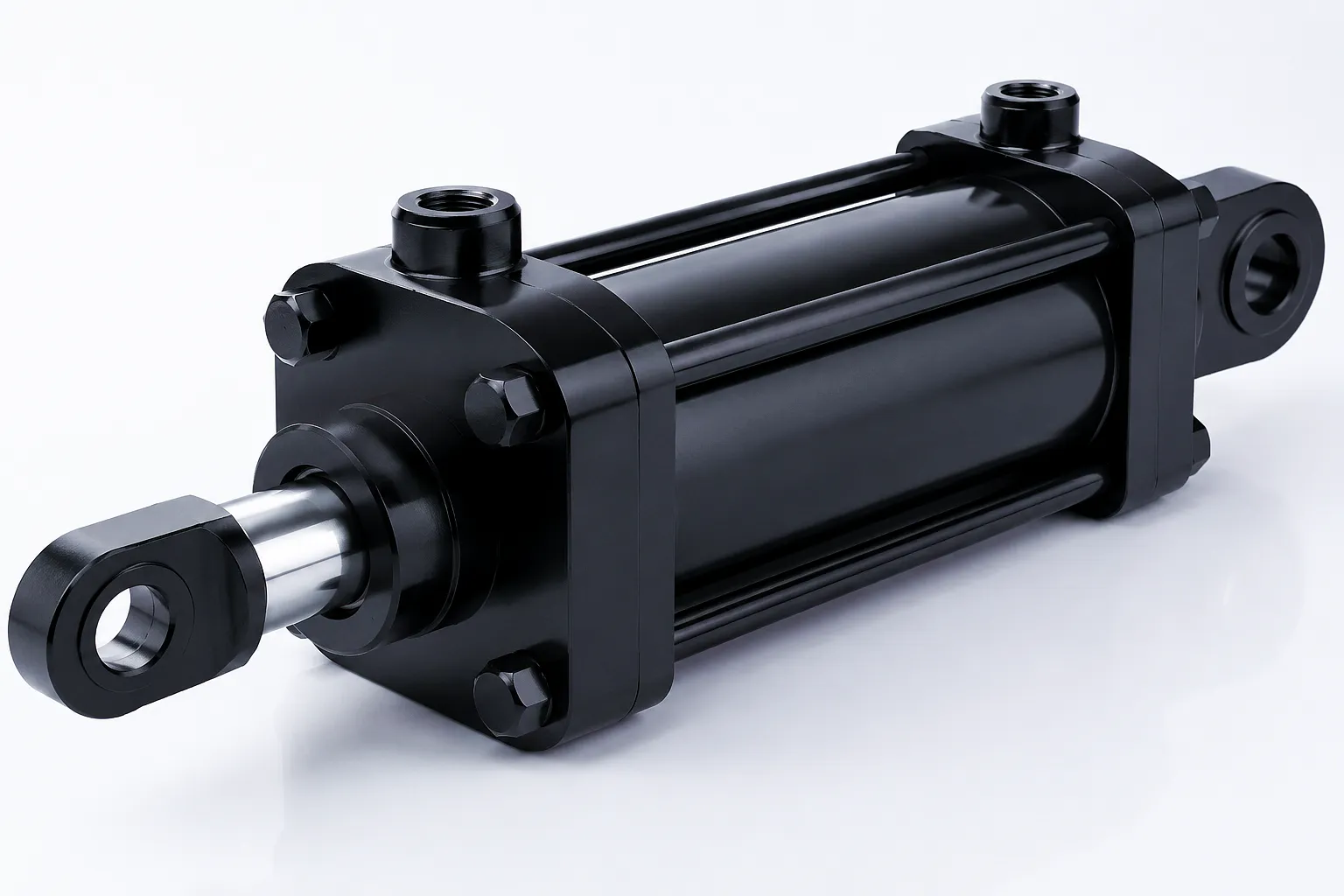
A medium-sized open-die forging and heavy fabrication facility operating outside Sheffield approached Ever Power in response to persistent cylinder failures on their horizontal billet-transfer shuttle — a pneumatic-hydraulic hybrid system that had been in service for nearly twelve years. The original cylinders, sourced from a domestic UK supplier at lowest-bid tender price, were suffering from rod scoring caused by inadequate wiper seal geometry and from internal leakage past the piston seal that produced unpredictable velocity bleed-off during the final 30 mm of rod extension.
The facility’s maintenance engineering manager submitted a detailed failure-mode analysis and a set of existing cylinder drawings to Ever Power’s technical support team. Within 48 hours, Ever Power proposed a direct-replacement 2-inch bore cylinder — retaining the existing port positions, flange bolt patterns, and overall closed length — but upgraded with a 32 mm hard-chrome piston rod (versus the original 25 mm rod), a polyurethane rod wiper combined with an RACO-type scraper ring, and a PTFE-backed primary piston seal replacing the original O-ring-backed arrangement.
Six replacement cylinders were delivered to the Sheffield facility within 19 working days of purchase order issue, packaged individually with test certification and installation torque data sheets. After fitting, the shuttle system ran a monitored 120-day trial at full production rate — three-shift operation, approximately 2,400 cycles per 24-hour period. Zero rod scoring, zero internal leakage, and no reportable seal failures were observed across the entire monitoring period. The facility subsequently placed a framework agreement with Ever Power for annual seal-pack replacement kits and standby spare cylinders held on a 72-hour call-off basis.
What Our Customers Say
★★★★★
“The drop-in replacement cylinders from Ever Power solved a rod-scoring problem we had battled for two years. The upgraded rod diameter and wiper seal design are exactly what the application needed. After four months of three-shift production, we have zero leaks and no scoring whatsoever. The material certificates and test records were comprehensive — our quality auditor was satisfied without any additional correspondence.”
D. Hartley — Maintenance Engineering Manager, Heavy Fabrication, Sheffield
★★★★★
“We needed eight 2-inch bore cylinders with non-standard 600 mm strokes and side-port exits to fit inside a very tight die-casting machine frame in our Coventry plant. Ever Power turned around a fully dimensioned drawing confirmation within 24 hours and delivered the finished cylinders in 22 working days. The dimensional accuracy on the flange bolt patterns was excellent — all eight units installed first time without shimming or rework. We’ve now standardised on Ever Power for all our hydraulic actuator procurement.”
R. Patel — Senior Hydraulics Engineer, Die Casting Machinery OEM, Coventry
★★★★★
“Offshore-rated cylinders with 316 stainless end caps and HEES fluid compatibility were a genuine requirement for our Aberdeen vessel deck-equipment contract. Most suppliers either couldn’t confirm full stainless end-cap construction or had delivery lead times exceeding twelve weeks. Ever Power confirmed the specification within a day and delivered certified cylinders in 24 working days. The FKM seal pack performance at our operating temperature range has been completely reliable over an 18-month review period.”
C. Mackenzie — Procurement Lead, Marine Deck Equipment Division, Aberdeen
Related Hydraulic Cylinder Products
Συχνές ερωτήσεις
How much does a 2-inch bore hydraulic cylinder typically cost from a UK supplier, and where can I get a competitive quote?
Pricing for a 2-inch bore hydraulic cylinder varies considerably depending on body type, stroke length, pressure rating, seal compound, and surface treatment. Basic catalogue tie-rod units on short strokes typically start from £80–£150 per unit for small-quantity orders, while custom welded mill-duty cylinders with stainless end caps and FKM seals can reach £400–£900 depending on configuration. Ever Power provides formal quotations with full specification confirmation — send your drawings or requirements to [email protected] for a response within one business day.
What is the maximum load capacity a 2-inch bore hydraulic cylinder can handle at 3,000 PSI operating pressure?
At 3,000 PSI (207 bar), a standard 2-inch bore cylinder generates an extend (push) force of approximately 9,424 lbf or 41.9 kN acting on the full bore cross-sectional area of 3.14 in² (20.27 cm²). The retract force (rod-end) is slightly lower, depending on rod diameter — with a standard 1-inch rod it is approximately 7,070 lbf (31.4 kN). Note that allowable column load — which limits the maximum compressive force before rod buckling becomes a risk — depends on stroke length and rod diameter; for strokes above 600 mm, an Euler buckling calculation should be performed before committing to the 25 mm rod configuration.
Which mounting style is best for a 2-inch bore hydraulic cylinder used in an articulated agricultural linkage in Yorkshire?
For an articulated agricultural linkage where the cylinder must pivot as the arm moves, a clevis-to-clevis or trunnion mounting arrangement is the correct choice. A clevis cap-end bracket at the fixed anchor point combined with a clevis rod-end lug (or female clevises at both ends) allows the cylinder to track arc movement without transmitting bending load into the rod or barrel. This configuration is standard on Yorkshire-built round balers, seed drills, and front-loader lift arms. If angular movement is restricted to a small range (less than ±5°), a spherical rod-end bearing provides the same angular freedom with a more compact footprint.
How long does it take to get a custom 2-inch bore hydraulic cylinder delivered to a Birmingham manufacturing plant from Ever Power?
For custom 2-inch bore cylinders requiring non-standard strokes, special seal compounds, or unique mounting configurations, Ever Power’s typical production lead time is 14–28 working days from receipt of confirmed purchase order and approved drawings. Standard-configuration units with catalogue stroke lengths are often available on shorter lead times of 10–14 working days. Freight from Ever Power’s manufacturing facility to a Birmingham destination typically adds 7–10 working days via documented freight forwarding, bringing total order-to-delivery time to roughly 3–5 weeks for custom builds and 3–4 weeks for standard configurations — competitive with UK-held stock from domestic distributors on high-specification items.
What seal material should I specify for a 2-inch bore hydraulic cylinder operating in a Sheffield steel mill environment with elevated temperatures?
For steel mill environments in Sheffield where ambient temperatures near the cylinder can exceed 100°C and cooling emulsions may be present, FKM (Viton) seals are the recommended choice. FKM compounds are rated to continuous operating temperatures up to 200°C, resist mineral oil, synthetic esters, and dilute water-soluble cutting fluids, and maintain their elastomeric properties under thermal cycling. The polyurethane rod wiper is equally important — a PU dual-wiper with a PTFE-tipped scraper blade provides superior emulsion and swarf exclusion compared to a standard NBR wiper in this environment. Specify FKM seal compound plus PU wiper on your enquiry form when requesting a quote from Ever Power.
Who are the most reliable suppliers of precision 2-inch bore hydraulic cylinders for UK OEM manufacturers, and how do I compare their prices?
UK OEM manufacturers sourcing 2-inch bore hydraulic cylinders typically evaluate suppliers on five criteria: dimensional compliance with ISO 6020/6022, material certification (EN 10204 3.1), hydrostatic test documentation, custom-configuration capability, and lead time reliability. Ever Power satisfies all five, combining precision manufacture with direct-factory pricing and full documentation. When comparing quotes, look beyond unit price to include certification scope, packaging quality, and the supplier’s responsiveness on engineering queries — factors that carry significant downstream cost when specifications need to be revised mid-project. Submitting parallel enquiries to two or three specialist suppliers and comparing the quality of their technical responses is the most effective way to identify the right long-term partner.
Ready to Source Precision 2-Inch Bore Hydraulic Cylinders?
Contact Ever Power’s engineering team for a no-obligation technical review and commercial quotation — custom configurations welcome.
📧 Λάβετε μια προσφορά — [email protected]
Ever Power · Precision Hydraulic Cylinder Manufacturer · Supplying UK OEMs & Industrial Buyers · edit by gzl
 Greek
Greek  English
  Italian
  Portuguese
  Dutch
Dutch  Swedish
  Danish
  Finnish
  Polish
  Hindi
Hindi  Kazakh
  Turkish
  Ukrainian
  Romanian
  Spanish
  German
  Russian
  Korean
  Japanese
  Vietnamese
  Thai
Thai  Indonesian
  Malay
Malay  French