
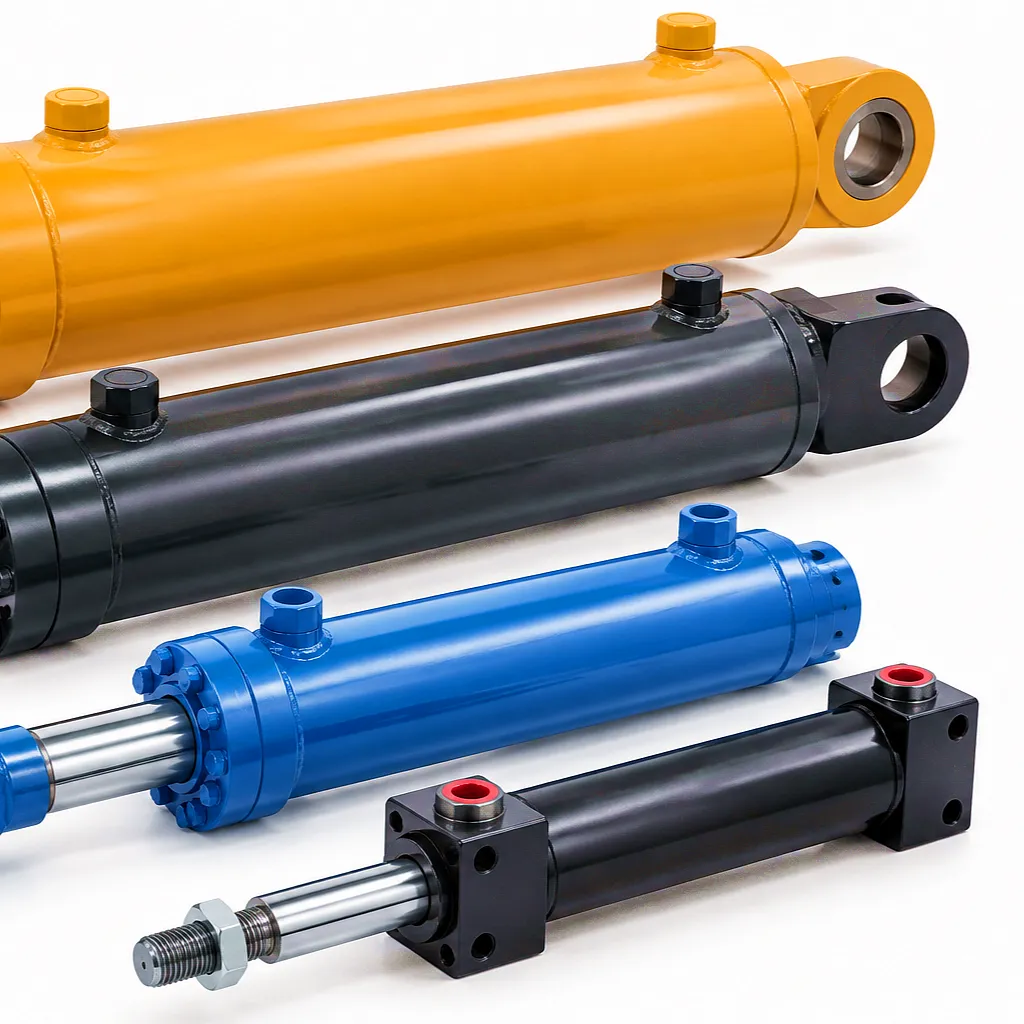
The Operating Principle: Fluid Power Becomes Linear Motion
Step-by-Step Mechanism Explained
Hydraulic Fluid Pressurisation
The system pump draws oil from the reservoir and pressurises it — in most UK-spec excavators and crane systems, this means achieving working pressures between 180 bar and 320 bar. The pump output flows through high-pressure hoses toward the directional control valve. At this stage, the hydraulic boom cylinder is simply a consumer waiting for its supply: all energy is stored in fluid pressure, ready to be converted to mechanical work the moment the operator activates a joystick or lever. The quality of filtration at this stage directly impacts cylinder longevity — contaminated oil is the number-one cause of premature seal failure and bore wear.
Directional Control Valve Routing
The directional control valve (DCV) acts as the brain of the extension or retraction cycle. When the operator commands extension, the DCV shifts to route high-pressure fluid into the cylinder’s cap-end (blind end) port. Simultaneously, it opens a return path from the rod-end port back to the tank. This differential routing is what determines the direction of travel. Proportional DCVs — increasingly specified by UK OEMs demanding precision — modulate flow volume as well as direction, giving operators fine-grained speed control over boom movement. The valve spool clearances are manufactured to sub-micron tolerances to prevent internal bypassing under high load.
Piston Force Generation
As pressurised oil fills the cap-end chamber, it exerts force uniformly across the entire piston face. The physics are straightforward: Force = Pressure × Effective Area (F = P × A). A cylinder with a 120 mm bore operating at 250 bar generates an extension force of roughly 28 tonnes — sufficient to lift an excavator boom carrying a full bucket of dense earth. The piston itself is machined from high-grade steel and fitted with low-friction composite seal rings that maintain the pressure differential between cap-end and rod-end chambers. Any leakage past the piston reduces mechanical efficiency and generates heat that degrades the hydraulic fluid.
Rod Travel and Load Bearing
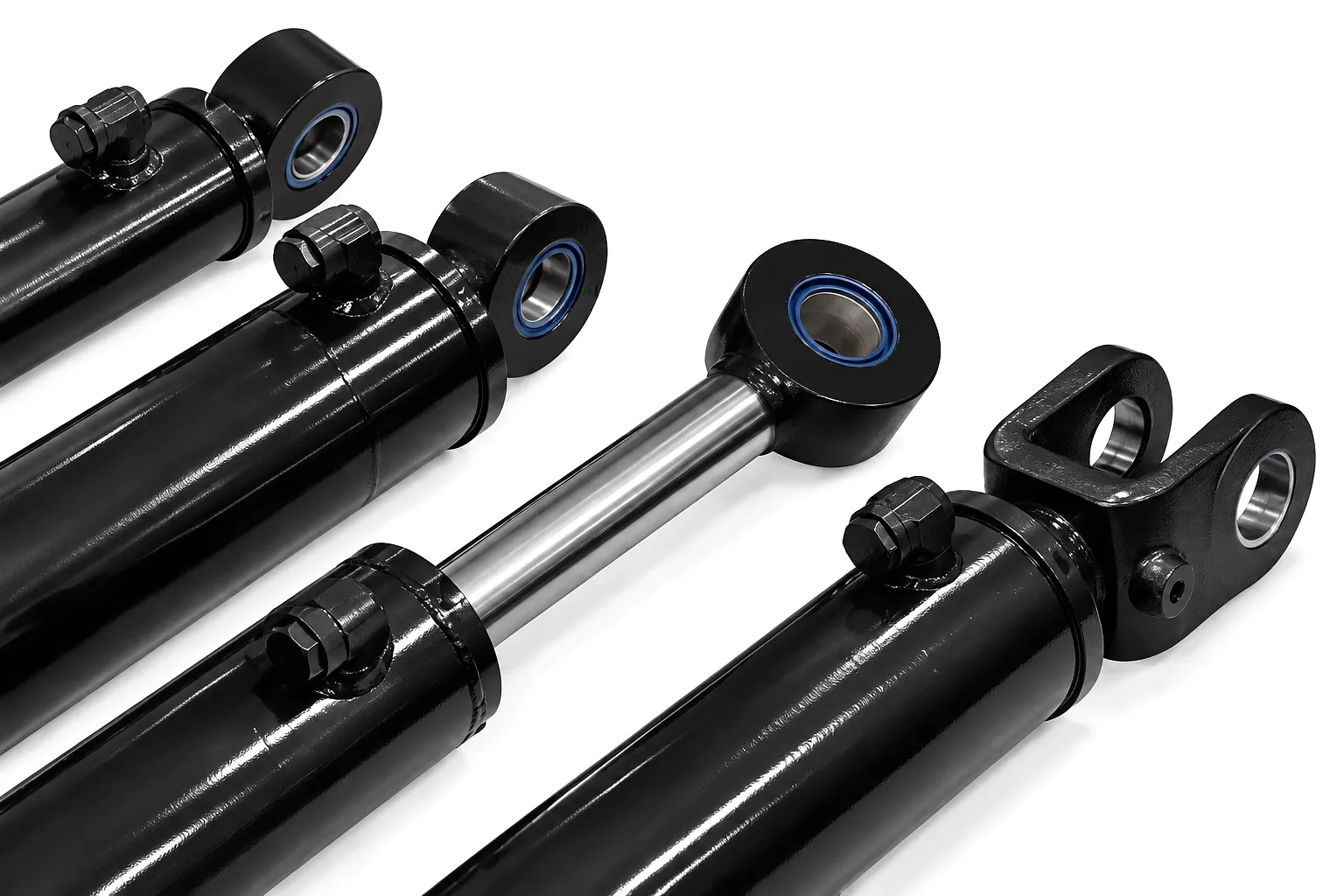
The piston drives the rod through the cylinder head, which is fitted with wiper seals, rod seals, and a bronze or composite guide bearing that centres the rod and prevents metal-to-metal contact during side-load events. As the rod extends, it transmits force through its end connection — typically a clevis pin, eye-end, or threaded stud — to the boom structure. This connection geometry is critical to alignment: angular misalignment between the rod axis and the load path introduces bending moments that can permanently deflect the rod or crack the weld zone at the cylinder cap. Properly designed mounting brackets, like those specified by Ever Power engineers for each custom order, eliminate this risk.
Retraction Cycle
When the operator commands retraction, the DCV reverses its routing: high-pressure oil now enters the rod-end port, acting on the annular piston area (full bore area minus the rod cross-section). Because this effective area is smaller than the full bore face, retraction force is always lower than extension force at equal pressure — a fundamental hydraulic characteristic that machine designers must account for when sizing cylinders. Oil expelled from the cap-end chamber returns to the reservoir or is routed through a regenerative circuit to boost retraction speed. The hydraulic boom cylinder is now ready to repeat the cycle, potentially thousands of times per shift in high-demand applications like UK aggregate processing plants.
Position Holding and Load Lock
In many UK boom applications — aerial work platforms operating on construction sites in Leeds, or timber handling cranes in the Scottish Highlands — the cylinder must hold a loaded position for extended periods without drift. This is achieved through counterbalance valves (CBVs) mounted directly on the cylinder ports, which prevent uncontrolled load-induced motion if a hose bursts or the DCV leaks. The CBV only opens to allow retraction when a pilot signal from the active extension circuit is present, ensuring the load cannot descend unexpectedly. This load-holding functionality is a legal safety requirement under UK PSSR 2000 regulations for pressurised systems supporting elevated loads.
Material Science Behind Every Boom Cylinder
Core Material Selection
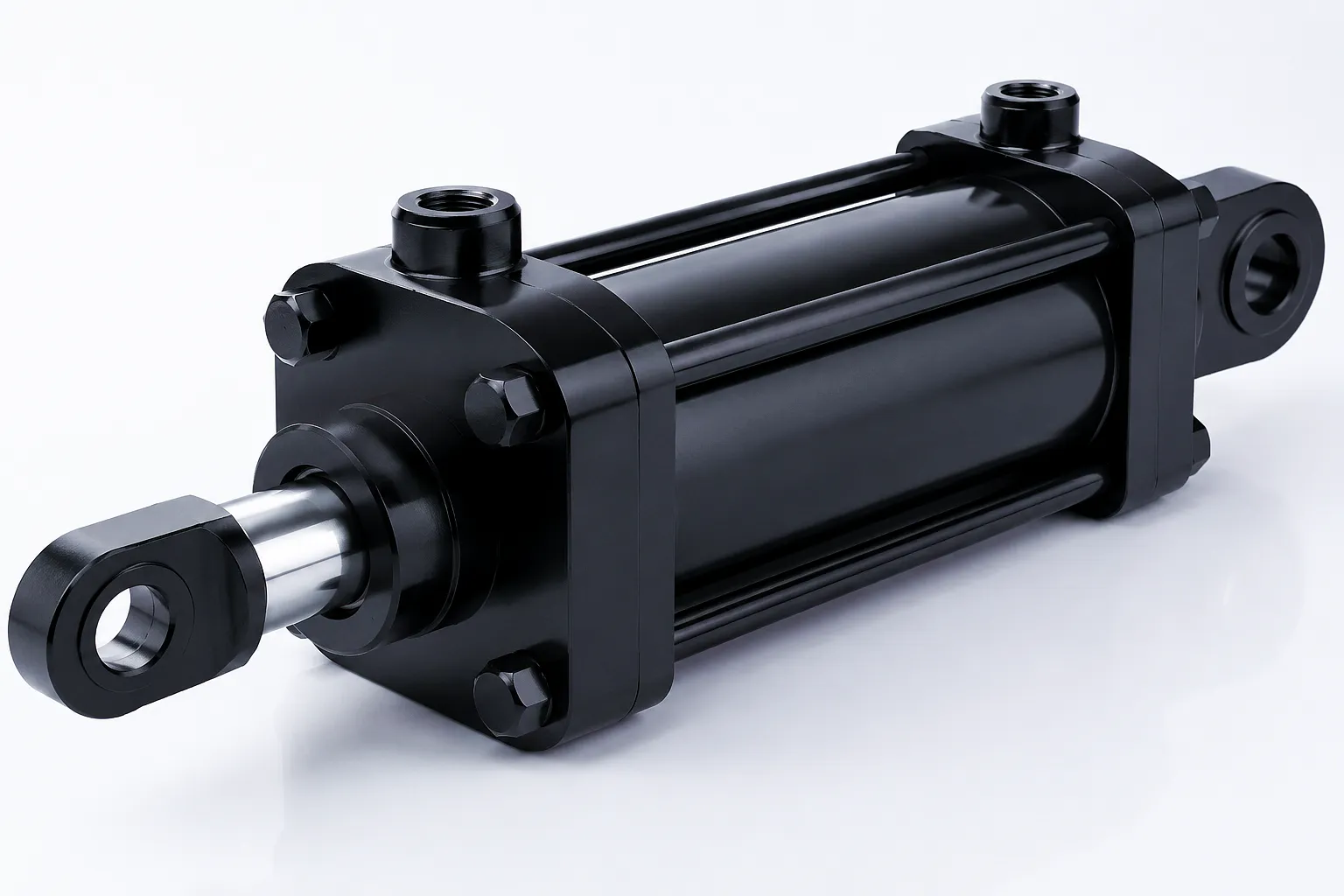
Core Technical Advantages
Why Specification Engineers Choose Premium-Grade Boom Cylinders
⚙
High Force-to-Size Ratio
Hydraulic boom cylinders deliver extraordinary force output relative to their physical dimensions. A 100 mm bore cylinder weighing under 40 kg can generate extension forces exceeding 200 kN — a ratio simply unachievable with electric actuators or pneumatic cylinders at the same physical envelope. This density of power is what makes hydraulics irreplaceable in mobile plant equipment where machine weight, geometry, and boom reach are tightly constrained by design requirements and road transport regulations applicable across the UK road network.
🔨
Inherent Stall Capability
Unlike electric motors that overheat when stalled, a hydraulic boom cylinder can maintain full force output at zero velocity indefinitely — so long as system pressure is maintained. This characteristic makes them ideal for holding heavy loads in position during pauses in the work cycle. On a Birmingham demolition site, an excavator boom might hold a concrete breaking head pressed against a wall for minutes at a time; the cylinder sustains full clamp force throughout without heat buildup or component degradation. Pressure relief valves cap the system force to prevent structural overload.
⚔
Precise Speed Controllability
By varying the flow rate through the directional valve, operators can modulate cylinder speed from millimetres per second to metres per second within the same design. This featherweight control is critical for precision tasks — positioning a glass facade panel on a Manchester high-rise, or aligning a steel beam in a Teesside structural steelwork shop. Modern load-sensing hydraulic systems adjust pump output to match exactly the flow demanded by the cylinder, drastically reducing energy waste compared to fixed-displacement systems that spill excess flow over a relief valve as heat.
🛡
Long Service Life with Planned Maintenance
A well-specified and properly maintained hydraulic boom cylinder routinely achieves 15,000 to 25,000 operating hours before requiring seal replacement — the only wear-related maintenance item in normal service. This translates to many years of productive operation on typical UK plant equipment working patterns. Sealing kits are standardised within Ever Power’s product range, enabling site maintenance teams to perform seal replacement on-machine without specialist tooling, reducing downtime and avoiding expensive full-unit exchange. Bore honing as a refurbishment option can restore cylinders to original specification at a fraction of new unit cost.
🎯
Wide Environmental Tolerance
Hydraulic boom cylinders perform across a far broader environmental envelope than competing linear actuator technologies. Operating temperatures from -30°C to +120°C, full submersion in muddy water (as experienced by cylinders on tidal-zone piling rigs along the Thames Estuary), exposure to hydraulic fire-resistant fluids, and resistance to high-frequency vibration from rock-breaking attachments — premium cylinders handle all of these without performance compromise when correctly specified. External paint systems, zinc-manganese phosphate pretreatment, and stainless steel port plugs further protect against the corrosive coastal and maritime environments common across UK port infrastructure projects.
📈
Integration with Modern Hydraulic Systems
Today’s boom cylinders are not isolated components — they are nodes in sophisticated electro-hydraulic control architectures. Integrated position sensors (magnetostrictive or Hall-effect linear transducers) provide real-time rod position feedback to machine controllers, enabling automated work functions, anti-collision logic, and telematics data that UK fleet managers use to optimise machine utilisation and schedule preventive maintenance. The Custom Hydraulic Power Unit from Ever Power is designed to interface seamlessly with these digital control systems, supplying precisely regulated pressure and flow that maximises cylinder response accuracy and minimises energy consumption across the full duty cycle.
Technical & Performance Specification Table
Hydraulic Boom Cylinder — Standard & Custom Range
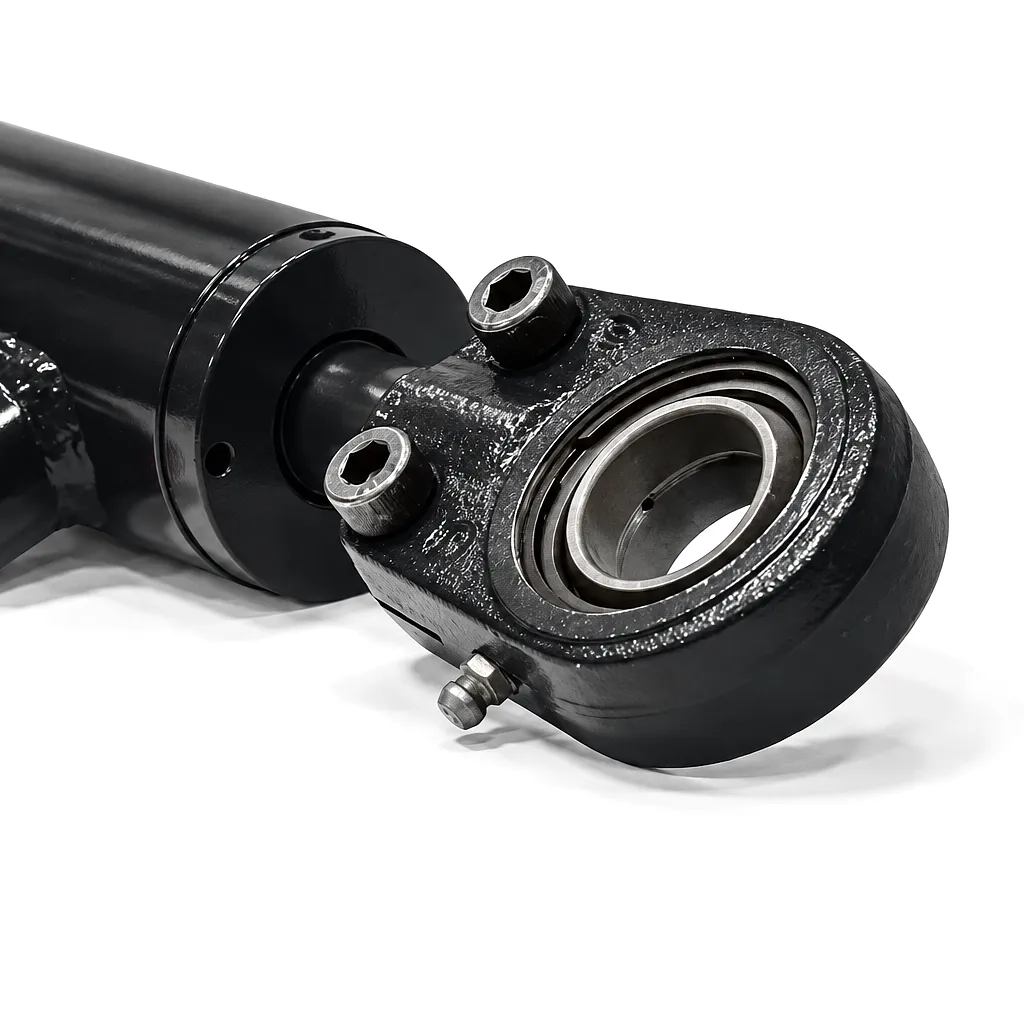
Industrial Application Scenarios
Where Hydraulic Boom Cylinders Operate Across UK Industry
Excavator Boom Arms — UK Construction Sites
The single largest application for hydraulic boom cylinders in the UK is earthmoving and demolition. Every tracked excavator on projects from HS2 civil works in the East Midlands to commercial development in Canary Wharf uses at least two or three boom cylinders — one for the main boom, one for the dipper arm, and one for the bucket crowd function. These cylinders typically operate 2,000–3,000 hours per year, exposed to impact shocks from rock, submersion in groundwater, and the abrasive dust generated by concrete crushing and aggregate screening. Bore diameters on 20-tonne class excavators typically range from 100 mm to 140 mm with working pressures up to 350 bar. The Hydraulic Rotary Actuator Steering Cylinder complements boom systems where articulated steering is part of the machine architecture.
Mobile Cranes & Telehandlers — Logistics and Ports
Mobile cranes operating at Southampton Container Terminal and Tilbury Docks rely on hydraulic boom cylinders to slew, luff, and extend their booms under loads that can exceed 100 tonnes in the heaviest lifting configurations. These cylinders must hold position without drift while the crane operator repositions lifting gear — a safety-critical function ensured by integrated counterbalance valves. Telehandlers used across UK agricultural holdings and construction sites use compact boom cylinders, typically 60–90 mm bore, to extend their booms to heights of 12–18 metres while carrying rated loads. The cylinder must resist significant bending moments as the extended load creates a cantilever force far higher than the vertical component alone.
Agricultural Boom Equipment — UK Farmland
Self-propelled sprayers operating across the arable fields of Lincolnshire and the grain belts of East Anglia use hydraulic boom cylinders to fold, unfold, tilt, and level crop-protection boom assemblies extending up to 36 metres wing-to-wing. The cylinders in these machines must cycle rapidly — a boom fold-unfold sequence may complete in under 30 seconds — and must deliver precisely repeatable positions to avoid over-application at headlands. Front loader arms on tractors from Yorkshire farms to Welsh upland grazings rely on dual boom cylinders for bucket and bale handling. Cylinder sealing must resist the aggressive phosphate and chemical fertiliser residues that contaminate the rod surface during field operations.
Tipper Trucks & Skip Loaders — UK Waste & Haulage
The UK skip hire and bulk haulage sector — particularly the 8×4 tipper fleets operating out of quarries in the Pennines and coastal aggregates operations in South Wales — represents one of the highest-cycle hydraulic boom cylinder applications in existence. A single-stage or multi-stage telescopic cylinder raises a 20-tonne payload body from 0° to 50° and back in under 90 seconds, potentially completing this cycle 40–60 times per shift. These extreme duty requirements demand cylinders manufactured from high-strength tube, with full-circumference piston rod buckling analysis performed at the design stage to prevent rod column failure under combined compression and lateral load during high-angle discharge on uneven ground.
Offshore & Marine Handling — North Sea Operations
Knuckle-boom cranes on North Sea platform supply vessels and crane pedestal assemblies on fixed offshore installations use hydraulic boom cylinders engineered specifically for salt atmosphere environments. These cylinders typically specify stainless steel port fittings, cadmium-free high-build epoxy paint systems meeting NORSOK M-501 surface treatment standards, and seal materials resistant to fire-resistant hydraulic fluid (HWBF/HFD types) mandated by offshore safety regulations. The 24/7 operational demands of offshore lifting — where cylinder failure means the halt of supply operations and potential safety critical incidents — demand 100% proof pressure testing and dimensional verification of every unit before shipment. Ever Power exports direct to Aberdeen-based offshore service companies, with DDP (Delivered Duty Paid) freight terms available.
Steel & Foundry Handling — Sheffield & West Midlands
Sheffield’s specialty steels sector and the West Midlands precision engineering and foundry cluster make heavy use of hydraulic boom cylinders in charging machines, ladle transfer cars, and billet manipulators. These applications introduce extreme radiant heat — temperatures around the cylinder can reach 80°C ambient — necessitating high-temperature seals, heat shields, and Armaflex insulation wrapping of hydraulic hose assemblies. Cylinders in ladle tippers may handle loads exceeding 50 tonnes while tilting at slow, precisely controlled speeds to avoid molten metal splashing. The reliability demanded in these environments is absolute — a cylinder failure in a melt shop carries consequences beyond downtime alone, making quality documentation, material certification, and operational validation records non-negotiable procurement requirements.
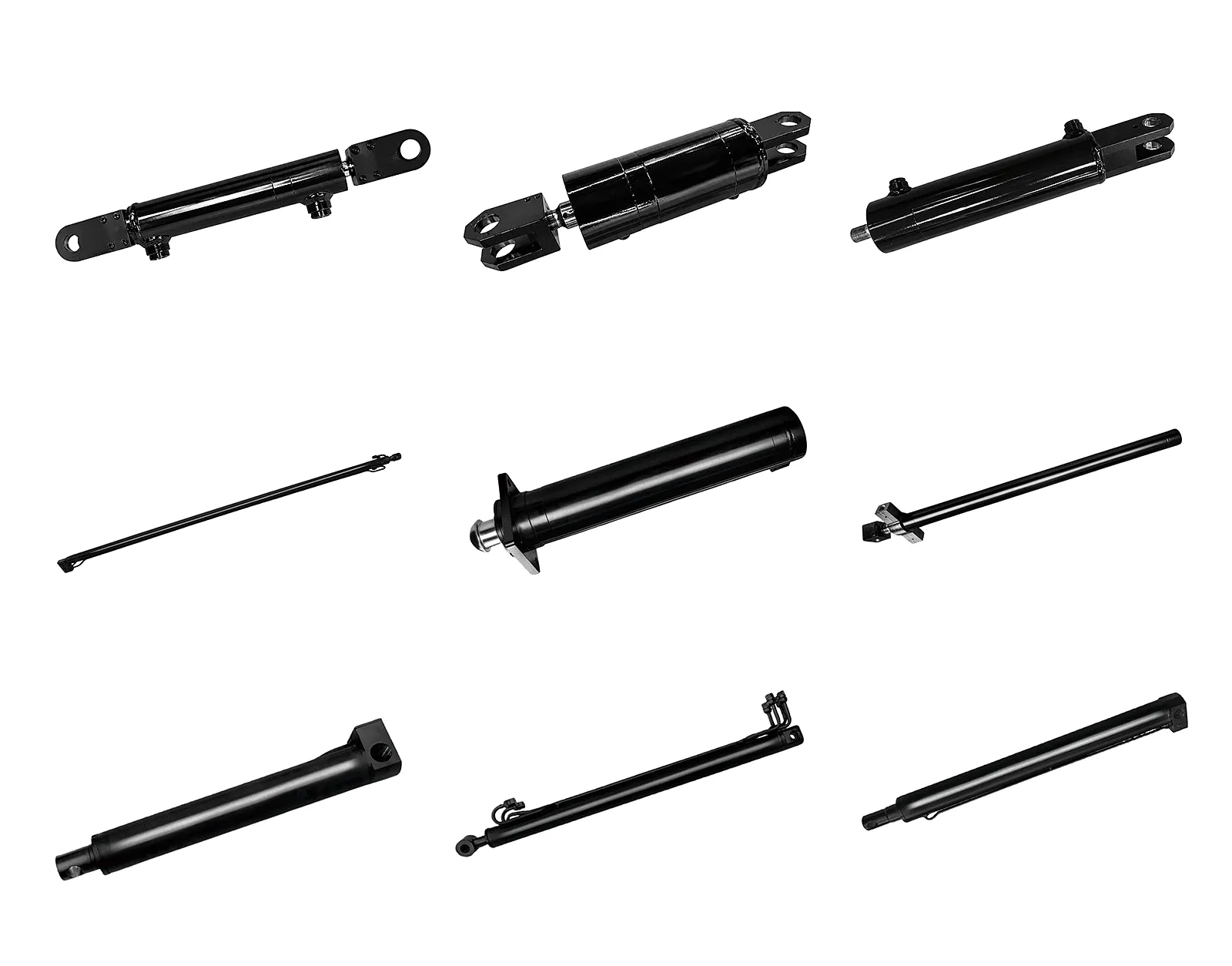
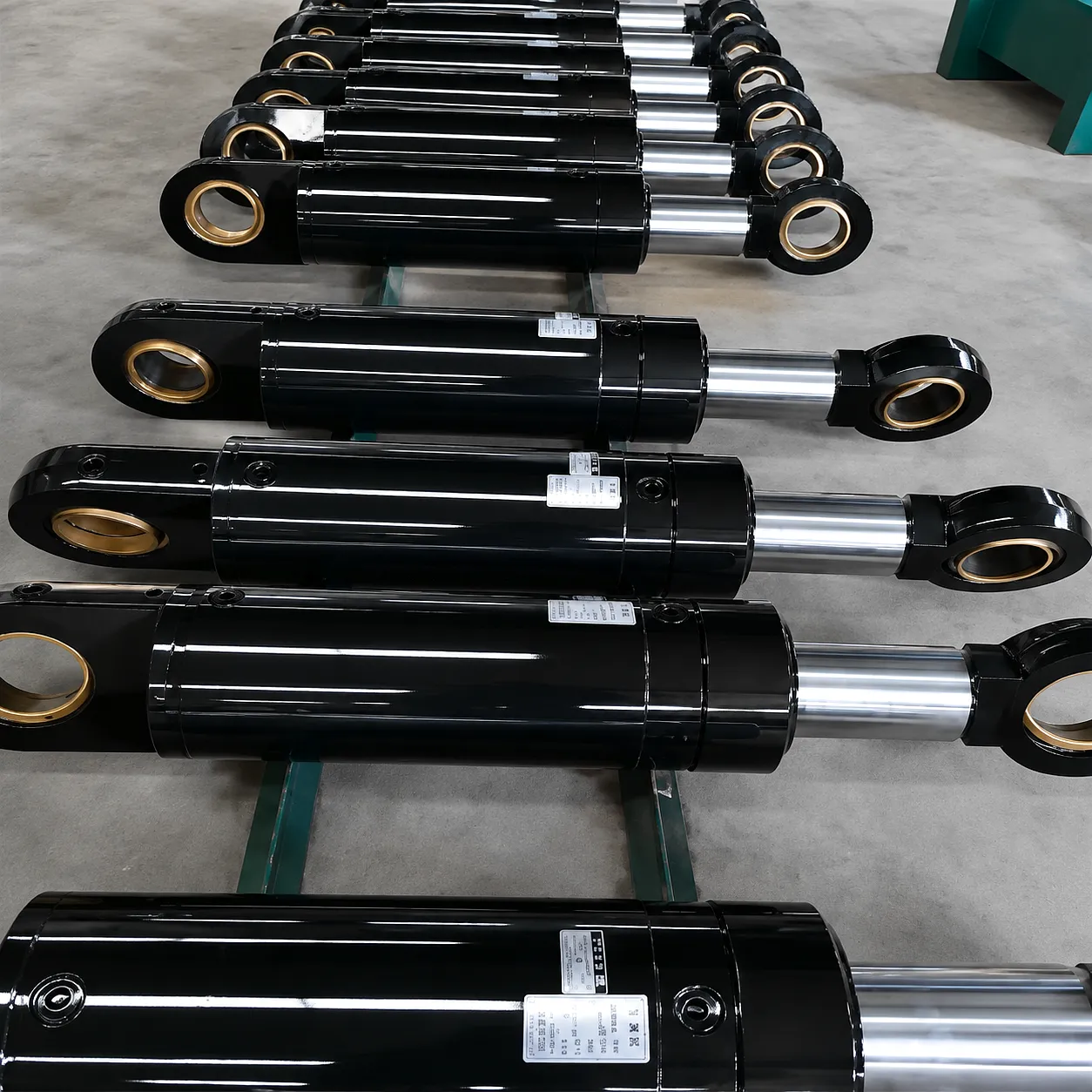
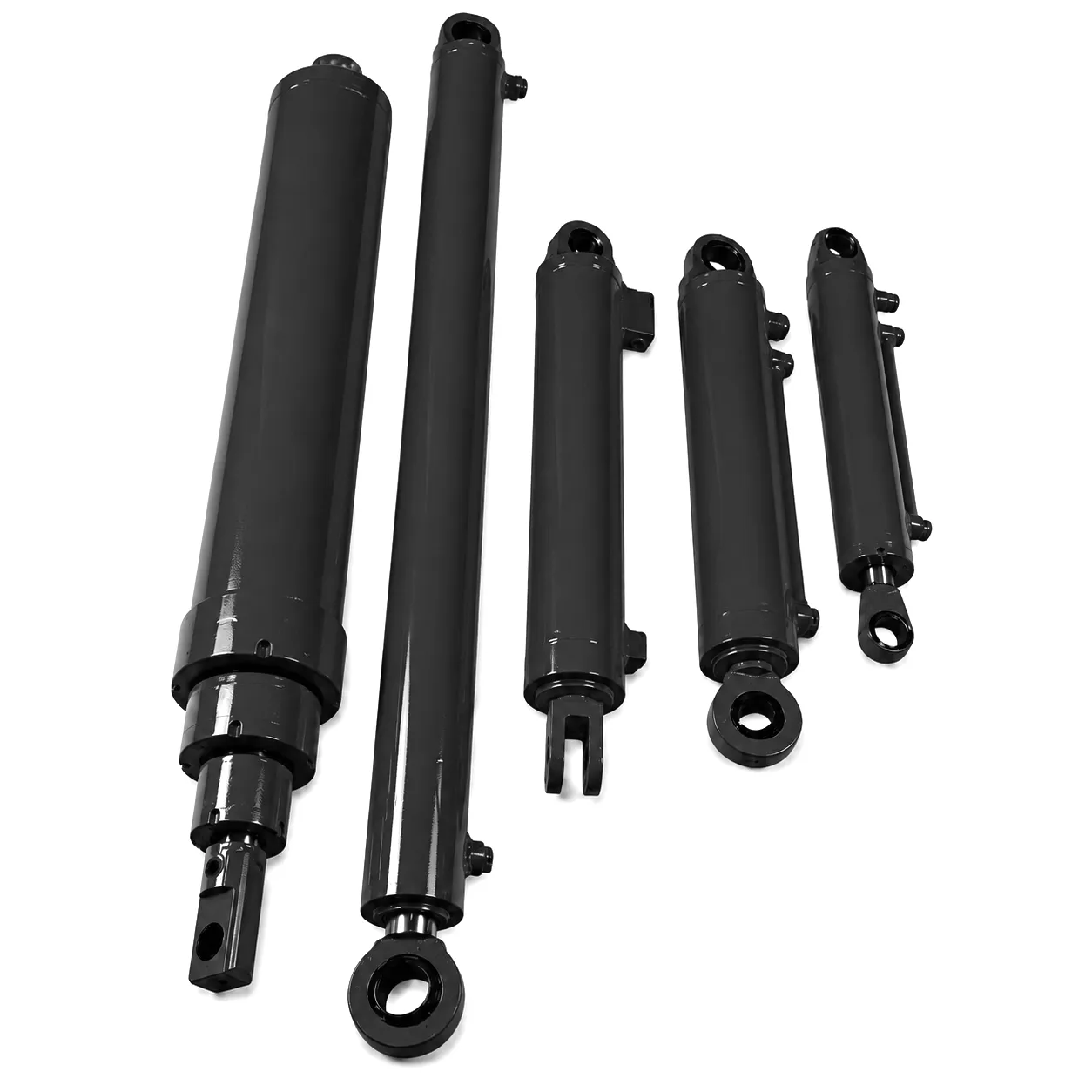
Ever Power complete hydraulic boom cylinder product range — standard and custom configurations
Ever Power — Precision Manufacturing & Custom Engineering
Factory Capability | Customisation | Supply Chain
CNC Precision Manufacturing Floor
Ever Power operates a purpose-built manufacturing facility equipped with multi-axis CNC turning and machining centres, dedicated deep-hole boring and honing lines, and an automated surface treatment shop. Bore honing is performed in-house using CBN (cubic boron nitride) honing stones that achieve the sub-Ra 0.4 µm finish required for long-seal life. All critical dimensions — bore diameter, rod diameter, concentricity, perpendicularity of ports, and mounting face flatness — are verified on temperature-controlled coordinate measuring machines (CMM) to ISO GPS tolerancing standards. The machine shop maintains process capability indices (Cpk) above 1.67 for critical parameters, meaning less than 0.6 defects per million opportunities. This level of process control is what separates Ever Power product from lower-cost commodity alternatives.
Δυνατότητα Βαθιάς Προσαρμογής
Customisation at Ever Power begins with a technical dialogue, not a catalogue page. UK buyers submitting application data — machine type, load requirements, stroke length, operating pressure, mounting geometry, fluid type, ambient temperature range, and any applicable standards (CE, PSSR, DNV, Lloyds) — receive a preliminary engineering proposal within 48 hours, including bore and rod diameter calculation, buckling analysis for long-stroke cylinders, seal material recommendation, and port specification. From prototype stage through to serial supply, every custom cylinder design is documented in a Manufacturing Control Plan (MCP) that freezes all process parameters and ensures batch-to-batch consistency. Prototypes are typically delivered within 15–20 working days; serial supply lead times are 25–35 days depending on specification complexity.
Supply Chain Reliability for UK Buyers
Ever Power operates a dedicated UK export logistics programme, with consolidated container departures twice monthly from Ningbo to Felixstowe and Southampton — the two primary gateway ports serving British industrial buyers. CIF (Cost, Insurance, Freight) and DDP pricing options are available, removing customs clearance complexity for procurement teams unfamiliar with direct import. All shipments include full documentation packs: commercial invoice, packing list, bill of lading, certificate of origin, material test certificates, dimensional inspection records, and hydraulic test pressure reports. For UK buyers requiring ongoing stock availability, Ever Power offers a bonded stock arrangement where agreed buffer quantities are held in our partner UK warehouse in Coventry, with same-day dispatch on call-off orders.
Ready to specify a custom hydraulic boom cylinder for your UK application?
Send your technical requirements directly to our export engineering team. We respond within one working day.
Customer Success Story
Sheffield Structural Steelwork — Boom Cylinder Replacement Programme
Case Background
A mid-scale structural steelwork fabricator based in Sheffield — operating a 4,500 m² fabrication shop producing heavy steel sub-assemblies for UK civil engineering contractors — had been experiencing chronic hydraulic boom cylinder failures on their dual 25-tonne capacity overhead gantry cranes. The original equipment cylinders, which controlled the luffing and reach extension of the boom arms used for positioning large steel sections under the welding bays, were failing at intervals of 8–14 months due to premature rod seal failure. The failures were traced to a combination of rod chrome delamination (caused by welding spatter impacting the rod surface at 7–12 metres distance) and thermal cycling shock from the ambient temperature swings between summer welding bays (+40°C) and unheated bay sections in winter (-5°C). Each failure cost the company an estimated £8,500 in lost production, crane hire to cover downtime, and repair labour.
The procurement engineering team contacted Ever Power after being referred by a fellow BCSA (British Constructional Steelwork Association) member who had successfully sourced replacement cylinders for a Teesside bridge project. Ever Power’s application engineering team reviewed the failure analysis report, the original OEM cylinder drawings, and the thermal environment data provided by the Sheffield fabricator. The solution involved redesigning the rod surface specification from standard industrial chrome to HVOF-applied tungsten carbide coating — delivering a surface hardness of 1,200 HV compared to the 850 HV of hard chrome — combined with an upgraded seal package using HNBR (hydrogenated nitrile) primary lip seals rated to -35°C/+150°C, backed by PTFE anti-extrusion rings with tighter back-clearance tolerances to prevent extrusion during the thermal expansion cycles.
Additionally, Ever Power supplied stainless steel rod protection sleeves — a custom fabrication developed specifically for the welding environment — that shield the exposed rod from spatter when the cylinder is in the extended position. Ten replacement cylinders were supplied under a prototype validation batch, and after 18 months of operation without a single seal failure, the Sheffield fabricator placed a standing order for four replacement units per year as scheduled life-cycle exchanges. The total cost saving versus the previous failure pattern was calculated at approximately £62,000 over three years, accounting for both direct repair savings and the elimination of production interruptions. Ever Power now holds the company’s preferred supplier approval and supplies the full UK dispatch lead time within 22 working days per order.
Τι λένε οι πελάτες μας στο Ηνωμένο Βασίλειο
★★★★★
“The tungsten carbide rod coating has completely changed the picture for us. We ran 22 months before our first routine seal check — not a failure, just a check — and the seals still had good life in them. In this welding environment, that is remarkable. The Ever Power team understood our problem from the first conversation and didn’t just sell us a standard product.”
— James H., Maintenance Engineering Manager, Sheffield Structural Fabricator
★★★★★
“What impressed me most was the documentation package. Material certs, CMM inspection reports, hydraulic test records — everything we needed for our CE technical file and PED compliance folder arrived with the units. As a UK manufacturer supplying into the European market, this is not optional. Ever Power delivered without us having to chase it.”
— Sandra P., Procurement Director, Birmingham OEM Manufacturer
★★★★★
“We source boom cylinders for five self-propelled sprayers in our hire fleet. Ever Power gave us a price that was genuinely competitive with anything we could source domestically, but the quality of the bore finish and the seal kit design is noticeably better than what we had before. Delivery to our depot in Lincolnshire was 28 days from order — faster than some UK distributors managing their own stock.”
— Richard T., Fleet Manager, Agricultural Equipment Hire, Lincolnshire
Συχνές ερωτήσεις
Voice-Search Friendly — UK Industry B2B
How does a hydraulic boom cylinder actually work to lift heavy loads on an excavator?
A hydraulic boom cylinder converts fluid pressure into linear mechanical force. When pressurised hydraulic oil enters the cap-end of the cylinder bore, it pushes against the piston face. Because pressure acts uniformly across the full bore area, even a moderately sized cylinder generates enormous force — a 120 mm bore unit at 250 bar produces approximately 28 tonnes of push. That force travels through the piston rod to the boom arm structure, lifting the attached load. The control valve determines whether the cylinder extends, retracts, or holds position, giving the operator precise command over boom movement throughout the work cycle.
What is the typical price or cost of a custom hydraulic boom cylinder for a UK construction plant supplier?
Pricing depends heavily on bore diameter, stroke length, pressure rating, surface coating specification, and quantity. For standard-range cylinders (40–160 mm bore, up to 2,000 mm stroke, chrome rod), UK buyers typically see FOB pricing from a few hundred pounds for smaller units to several thousand for heavy-duty configurations. Bespoke designs — such as those with HVOF rod coatings, special seal packages, or integrated position sensors — carry a premium reflecting the additional engineering and processing steps. For an accurate current quote specific to your application, contact Ever Power’s export team directly at [email protected] with your bore, stroke, and pressure requirements.
Which hydraulic cylinder supplier in the UK or internationally can I get a reliable custom quote from for offshore North Sea applications?
For North Sea offshore applications, you need a supplier who understands NORSOK M-501 paint requirements, DNV or Lloyds certification paths, fire-resistant fluid compatibility, and the documentation expectations of offshore operators. Ever Power has supplied Aberdeen-based offshore service companies with cylinders meeting these standards, shipped CIF to Aberdeen and delivered DDP to offshore fabrication yards on the Tyne. Sending your specification to [email protected] triggers a technical review by our offshore application engineers who can confirm material choices, surface treatment, and certification options before pricing.
How do I know when my hydraulic boom cylinder needs replacing versus resealing, and where in Birmingham can I get this done?
The decision between reseal and replacement comes down to the condition of the bore and rod. If you see oil weeping from the rod seal area but the rod itself shows no corrosion pitting, chrome delamination, or scoring, a seal replacement using a quality seal kit is entirely viable and cost-effective. If the rod is pitted, the bore has scoring visible on inspection, or the cylinder has developed a side-load-induced bend in the rod, replacement or professional reconditioning is the better investment. Ever Power supplies seal kits with full fitment instructions that Birmingham-based hydraulic service centres can use directly, and our export team can arrange direct supply of replacement units with short lead times.
What working pressure rating should I specify when ordering a replacement hydraulic boom cylinder for a 20-tonne excavator in the UK?
Most 20-tonne class excavators operate main hydraulic systems at 320–350 bar maximum relief setting, with boom circuit relief typically set 10–15% lower to protect the boom structure from overload. You should specify your replacement cylinder to at least the original OEM working pressure — never downgrade this rating. The cylinder’s test pressure will be 1.5× the working pressure per standard practice, and the burst pressure should be at minimum 4× working pressure. If the OEM specification is unknown, the safest approach is to contact Ever Power with the machine make, model, and year, and our technical team will cross-reference the likely bore/stroke/pressure combination and propose a suitable replacement specification.
When is the best time to inspect and service hydraulic boom cylinders on agricultural machinery in the UK farming calendar?
The natural window for hydraulic maintenance on UK farm machinery falls between the end of the autumn drilling season and the start of spring fieldwork — typically December to February. Inspecting boom cylinders at this time allows any seal replacement or rod refinishing to be completed before the intensive spring and summer workload of planting, spraying, and harvesting. Check the rod for chrome condition, inspect for oil film or active leaks around the gland, look for any rod misalignment that would indicate bent rod or worn guide bearings, and verify that the end pin bushes are not worn to the point of allowing angular play. Catching these issues in the off-season avoids the far greater cost of a failure during peak season.
Ever Power — Precision Hydraulic Boom Cylinders | UK Export Specialists
επεξεργασία από gzl
 Greek
Greek  English
  Italian
  Portuguese
  Dutch
Dutch  Swedish
  Danish
  Finnish
  Polish
  Hindi
Hindi  Kazakh
  Turkish
  Ukrainian
  Romanian
  Spanish
  German
  Russian
  Korean
  Japanese
  Vietnamese
  Thai
Thai  Indonesian
  Malay
Malay  French