
Descripción del Producto
| Part Name | Auto Spare Parts Clutch Master Cylinder for SCANIA 115712 1114685 1361136 |
| OEM Number | 115712 1114685 1361136 |
| Hole diameter: 31.75mm
Braking system: FTE Thread size: 14 x 1.5 Material: Cast Iron |
Diameter: 25.40mm
Axle distance: 60mm Thread size: 12X1.5 Material: Cast Aluminum Drive type: Hydraulic |
| Quality Warranty | 12 Months |
| Brand | SI, PPB, or customized |
| Packing | Neutral, SI, PPB brand packing or customized |
| OEM/ODM service | Yes |
| Manufacture place | ZHangZhoug, China |
| Production Capacity | 30000PCS |
| Inspection | 100% |
| Certificate | ISO9001:2015 TS16949 |
| Payment | T/T, PayPal, West Union |
OEM
|
SCANIA : 1 105 332 SCANIA : 1 105 332-9 SCANIA : 1 114 685 SCANIA : 1 114 685-9 SCANIA : 1 358 801 SCANIA : 1 361 136 SCANIA : 360 824 |
REFERENCE
|
BREMBO : C C2 003 FERODO : FHC5141 FTE : KG250004.0.2 |
LPR : 7004 LPR : 7005 PNEUMATICS : CP-502 |
Packing and Delivery
Work shop
Exhibition
Our Advantages
| More than 20 years of manufacturing and exporting experience OEM manufacturing available Full range, large stock Quickly feedback One year warranty One-stop service On-time delivery |
Preguntas frecuentes
Q1.What is your shipping logistic?
Re: DHL, TNT, FedEx express, by air/sea/train.
Q2:What’s the MOQ?
Re: For the wheel hub assembly. The MOQ is always 50 sets. If ordering together with other models, small quantities can be organized. But need more time due to the production schedule.
Q3. What are your goods of packing?
Re: Generally, our goods will be packed in Neutral white or brown boxes for the hub bearing unit. Our brand packing SI & CHINAMFG are offered. If you have any other packing requests, we shall also handle them.
Q4. What is your sample policy?
Re: We can supply the sample if we have ready parts in stock.
Q5. Do you have any certificates?
Re: Yes, we have the certificate of ISO9001:2015.
Q6:Any warranty of your products.
Re: Sure, We are offering a guarantee for 12 months or 40,000-50,000 km for the aftermarket.
Q7: How can I make an inquiry?
Re: You can contact us by email, telephone, WhatsApp, , etc.
Q8: How long can reply inquiry?
Re: Within 24 hours.
Q9: What’s the delivery time?
Re: Ready stock 10-15 days, production for 30 to 45 days.
Q10: How do you maintain our good business relationship?
Re: 1. Keep stable, reliable quality, competitive price to ensure our customer’s benefit;
2. Optimal lead time.
3. Keep customers updated about the new goods.
4. Make customers satisfaction as our main goal.
Q11: Can we visit the company & factory?
Re: Yes, welcome for your visit & business discussion.
| Servicio posventa: | One Year |
|---|---|
| Garantía: | Yes |
| Part: | Clutch Master Cylinder |
| Material: | Aluminium |
| Classification: | Hydraulic Clutch |
| Proceso de dar un título: | ISO/TS16949:2002 |
| Samples: |
US$ 50/Piece
1 Piece(Min.Order) | |
|---|
| Personalización: |
Disponible
|
|
|---|
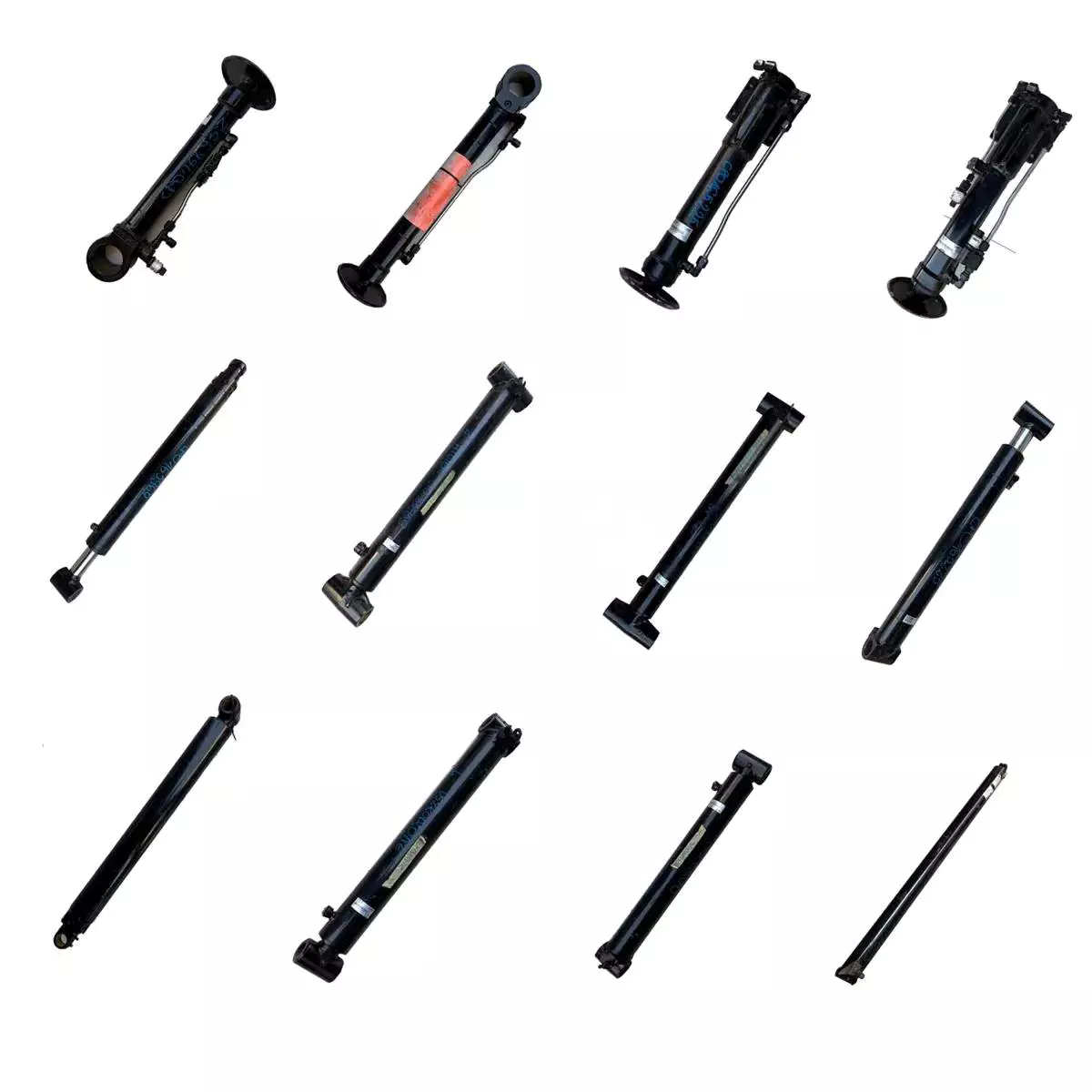
¿Cómo afrontan los cilindros hidráulicos los retos del posicionamiento y el control precisos?
Los cilindros hidráulicos están diseñados para afrontar los desafíos del posicionamiento y control precisos mediante una combinación de principios de ingeniería y sistemas de control avanzados. Estos desafíos suelen presentarse en aplicaciones que requieren movimientos precisos y controlados, como en la automatización industrial, la construcción y la manipulación de materiales. A continuación, se ofrece una explicación detallada de cómo los cilindros hidráulicos superan estos desafíos:
1. Control de potencia fluida:
Los cilindros hidráulicos utilizan el control de potencia fluida para lograr un posicionamiento y control precisos. El sistema hidráulico consta de una bomba hidráulica, válvulas de control y fluido hidráulico. Al regular el flujo de fluido hidráulico dentro y fuera del cilindro, los operadores pueden controlar la velocidad, la dirección y la fuerza ejercida por este. El control de potencia fluida permite movimientos suaves y precisos, posibilitando un posicionamiento exacto del cilindro hidráulico y la carga acoplada.
2. Válvulas de control:
Las válvulas de control desempeñan un papel crucial en la gestión de los desafíos del posicionamiento y control precisos. Estas válvulas son responsables de dirigir el flujo del fluido hidráulico dentro del sistema. Pueden ser operadas manualmente o controladas electrónicamente. Las válvulas de control permiten a los operadores ajustar el caudal del fluido hidráulico, controlando así la velocidad de movimiento del cilindro. Al modular el flujo, los operadores pueden lograr un control preciso del posicionamiento del cilindro hidráulico, lo que permite movimientos exactos y precisos.
3. Control proporcional:
Los cilindros hidráulicos pueden equiparse con sistemas de control proporcional, que ofrecen mayor precisión en el posicionamiento y el control. Estos sistemas utilizan algoritmos de control y retroalimentación electrónica para regular con precisión el caudal y la presión del fluido hidráulico. Proporcionan un control preciso y proporcional del movimiento del cilindro, permitiendo un posicionamiento exacto en distintos puntos de su recorrido. El control proporcional mejora la capacidad del cilindro para realizar tareas complejas que requieren movimientos y control precisos.
4. Sensores de retroalimentación de posición:
Para lograr un posicionamiento preciso, los cilindros hidráulicos suelen incorporar sensores de retroalimentación de posición. Estos sensores proporcionan información en tiempo real sobre la posición del vástago del pistón del cilindro. Entre los tipos más comunes de sensores de retroalimentación de posición se incluyen potenciómetros, transformadores diferenciales variables lineales (LVDT) y sensores magnetostrictivos. Al monitorizar continuamente la posición, los sensores de retroalimentación permiten un control de lazo cerrado, lo que posibilita un posicionamiento y control precisos del cilindro hidráulico. La información de retroalimentación se utiliza para ajustar el flujo del fluido hidráulico y alcanzar la posición deseada con exactitud.
5. Sistemas de control servo:
Los sistemas hidráulicos avanzados emplean servocontrol para gestionar los desafíos del posicionamiento y control precisos. Estos sistemas combinan control electrónico, sensores de retroalimentación de posición y válvulas de control proporcional para lograr altos niveles de precisión y capacidad de respuesta. El servocontrol compara continuamente la posición deseada con la posición real del cilindro hidráulico y ajusta el flujo del fluido hidráulico para minimizar cualquier error de posicionamiento. Este mecanismo de control de lazo cerrado permite que el cilindro hidráulico mantenga un posicionamiento y control precisos, incluso bajo cargas variables o perturbaciones externas.
6. Automatización integrada:
Los cilindros hidráulicos pueden integrarse en sistemas automatizados para lograr un posicionamiento y control precisos. En estas configuraciones, los cilindros hidráulicos se controlan mediante controladores lógicos programables (PLC) u otros controladores de automatización. Estos controladores reciben señales de entrada de diversos sensores y utilizan lógica preprogramada para controlar los movimientos del cilindro hidráulico. La integración de los cilindros hidráulicos en sistemas automatizados permite un posicionamiento y control precisos y repetibles, lo que posibilita la ejecución de secuencias de movimientos complejas con alta precisión.
7. Algoritmos de control avanzados:
Los avances en los algoritmos de control también han contribuido al posicionamiento y control precisos de los cilindros hidráulicos. Estos algoritmos, como el control PID (Proporcional-Integral-Derivativo), el control adaptativo y el control basado en modelos, permiten implementar estrategias de control sofisticadas. Dichos algoritmos consideran factores como las variaciones de carga, la dinámica del sistema y las condiciones ambientales para optimizar el control de los cilindros hidráulicos. Mediante el uso de algoritmos de control avanzados, los cilindros hidráulicos pueden compensar las perturbaciones y lograr un posicionamiento y control precisos en un amplio rango de condiciones de funcionamiento.
En resumen, los cilindros hidráulicos superan los desafíos del posicionamiento y control precisos mediante el uso de control de potencia fluida, válvulas de control, control proporcional, sensores de retroalimentación de posición, sistemas de servocontrol, automatización integrada y algoritmos de control avanzados. Al combinar estos elementos, los cilindros hidráulicos logran movimientos precisos y controlados, lo que permite un posicionamiento y control exactos en diversas aplicaciones. Estas capacidades son esenciales para industrias que requieren alta precisión y repetibilidad en sus operaciones, como la automatización industrial, la robótica y la manipulación de materiales.
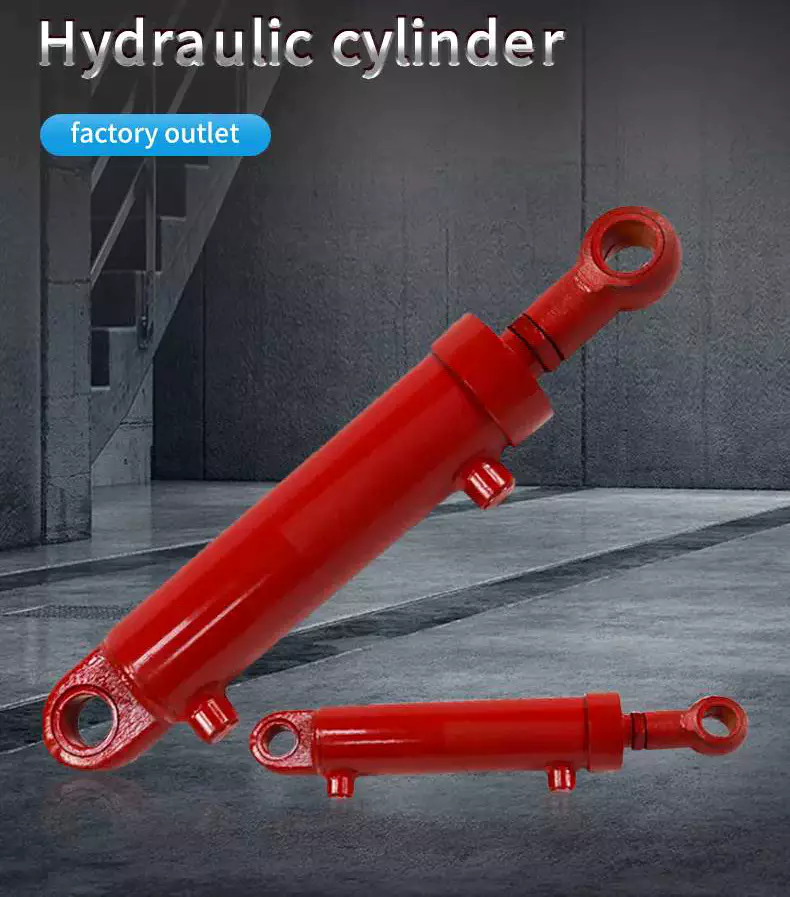
Impact of Hydraulic Cylinders on Overall Productivity of Manufacturing Operations
Hydraulic cylinders play a crucial role in enhancing the overall productivity of manufacturing operations. These versatile devices are widely used in various industrial applications due to their ability to generate powerful and controlled linear motion. Let’s explore how hydraulic cylinders impact the overall productivity of manufacturing operations:
- Powerful Force Generation: Hydraulic cylinders are capable of generating high forces, which enables them to handle heavy loads and perform demanding tasks. By providing the necessary force, hydraulic cylinders facilitate efficient and effective operation of machinery and equipment in manufacturing processes. This ability to exert substantial force contributes to increased productivity by enabling the handling of larger workpieces, enhancing process efficiency, and reducing manual labor requirements.
- Precision and Control: Hydraulic cylinders offer precise control over the movement of loads, allowing for accurate positioning, alignment, and repetitive tasks. The smooth and controlled linear motion provided by hydraulic cylinders ensures precise operation in manufacturing processes, such as assembly, material handling, and machining. This precision and control minimize errors, rework, and scrap, leading to improved productivity and higher-quality output.
- Speed and Efficiency: Hydraulic cylinders can operate at high speeds, enabling rapid movement and cycle times in manufacturing operations. The combination of high force and speed allows for faster operation of machinery and equipment, reducing production cycle times and increasing overall throughput. By optimizing the speed and efficiency of manufacturing processes, hydraulic cylinders contribute to improved productivity and output.
- Flexibility and Adaptability: Hydraulic cylinders are highly flexible and adaptable to different manufacturing applications. They can be customized to meet specific requirements, such as load capacity, stroke length, and mounting options. This versatility allows hydraulic cylinders to be integrated into a wide range of machinery and equipment, accommodating diverse manufacturing needs. The ability to adapt to different tasks and environments enhances overall productivity by enabling efficient utilization of resources and facilitating process optimization.
- Reliability and Durability: Hydraulic cylinders are known for their robustness and durability, making them suitable for demanding manufacturing environments. Their ability to withstand heavy loads, repeated use, and harsh operating conditions ensures reliable performance over extended periods. Minimizing downtime due to cylinder failure or maintenance requirements contributes to increased productivity and uninterrupted manufacturing operations.
In summary, hydraulic cylinders have a significant impact on the overall productivity of manufacturing operations. Their powerful force generation, precision and control, speed and efficiency, flexibility and adaptability, as well as reliability and durability, contribute to optimized processes, increased throughput, improved quality, and reduced labor requirements. By leveraging the capabilities of hydraulic cylinders, manufacturers can enhance productivity, streamline operations, and achieve greater efficiency in their manufacturing processes.
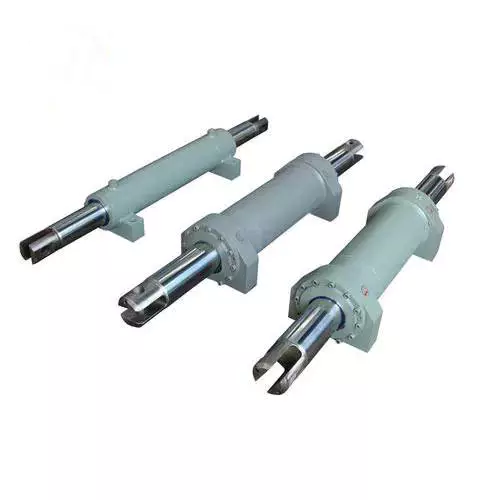
How do hydraulic cylinders ensure precise and controlled movement in equipment?
Hydraulic cylinders are widely used in various equipment and machinery to provide precise and controlled movement. They utilize hydraulic fluid and mechanical components to achieve accurate positioning, smooth operation, and reliable control. Here’s a detailed explanation of how hydraulic cylinders ensure precise and controlled movement in equipment:
1. Hydraulic Principle:
– Hydraulic cylinders operate based on Pascal’s law, which states that pressure exerted on a fluid is transmitted equally in all directions. The hydraulic fluid is contained within the cylinder, and when pressure is applied, it acts on the piston, generating force. By controlling the pressure and flow of hydraulic fluid, the movement of the cylinder can be precisely regulated, allowing for accurate and controlled motion.
2. Force and Load Management:
– Hydraulic cylinders are designed to handle specific loads and forces. The force generated by the hydraulic cylinder depends on the hydraulic pressure and the surface area of the piston. By adjusting the pressure, the force output can be controlled. This allows for precise management of the load and ensures that the cylinder can handle the required force without exerting excessive or insufficient force. Proper load management contributes to the precise and controlled movement of the equipment.
3. Control Valves:
– Control valves play a crucial role in regulating the flow and direction of hydraulic fluid within the cylinder. These valves allow operators to control the extension and retraction of the cylinder, adjust the speed of movement, and stop or hold the cylinder at any desired position. By manipulating the control valves, precise and controlled movement can be achieved, enabling operators to position equipment accurately and perform specific tasks with precision.
4. Flow Control:
– Hydraulic cylinders incorporate flow control valves to manage the rate of hydraulic fluid flow. These valves control the speed of the cylinder’s extension and retraction, allowing for smooth and controlled movement. By adjusting the flow rate, operators can precisely control the speed of the cylinder, ensuring that it moves at the desired rate without sudden or erratic movements. Flow control contributes to the overall precision and control of the equipment’s movement.
5. Position Sensing:
– To ensure precise movement, hydraulic cylinders can be equipped with position sensing devices such as linear transducers or proximity sensors. These sensors provide feedback on the position of the cylinder, allowing for accurate position control and closed-loop control systems. By continuously monitoring the position, the equipment’s movement can be controlled with high accuracy, enabling precise positioning and operation.
6. Proportional Control:
– Advanced hydraulic systems utilize proportional control technology, which allows for precise and fine-tuned control of the hydraulic cylinder’s movement. Proportional valves, often operated by electronic control systems, provide variable flow rates and pressure adjustments. This technology enables precise control of speed, force, and position, resulting in highly accurate and controlled movement of the equipment.
7. Cushioning and Damping:
– Hydraulic cylinders can incorporate cushioning and damping mechanisms to ensure smooth and controlled movement at the end of the stroke. Cushioning features, such as adjustable cushions or shock absorbers, reduce the impact and decelerate the cylinder before reaching the end of the stroke. This prevents abrupt stops and minimizes vibrations, contributing to precise and controlled movement.
8. Load Compensation:
– Some hydraulic systems utilize load compensation mechanisms to maintain precise movement even when the load varies. Load-sensing systems monitor the load demand and adjust the hydraulic pressure and flow accordingly to meet that demand. This compensation ensures that the equipment’s movement remains accurate and controlled, regardless of changes in the applied load.
In summary, hydraulic cylinders ensure precise and controlled movement in equipment through the application of hydraulic principles, force and load management, control valves, flow control, position sensing, proportional control, cushioning and damping mechanisms, and load compensation. These features and technologies allow operators to achieve accurate positioning, smooth operation, and reliable control, enabling equipment to perform tasks with precision and efficiency. The combination of hydraulic power and careful design considerations ensures that hydraulic cylinders deliver precise and controlled movement in a wide range of industrial applications.


editor by CX 2023-10-29
 Spanish
  English
  Italian
  Portuguese
  Dutch
Dutch  Swedish
  Danish
  Finnish
  Polish
  Hindi
Hindi  Kazakh
  Turkish
  Ukrainian
  Romanian
  German
  Russian
  Korean
  Japanese
  Vietnamese
  Thai
Thai  Indonesian
  Malay
Malay  French
  Greek
Greek