
Ever Power · Hydraulic Engineering · UK Industrial Series
Montaje con horquilla frente a montaje con muñón: explicación de la fijación del cilindro hidráulico
A technical deep-dive for UK engineers and procurement teams — comparing the two dominant hydraulic cylinder mounting systems across performance, load type, installation geometry, and industrial application.
Clevis Mount
Trunnion Mount
UK Manufacturing
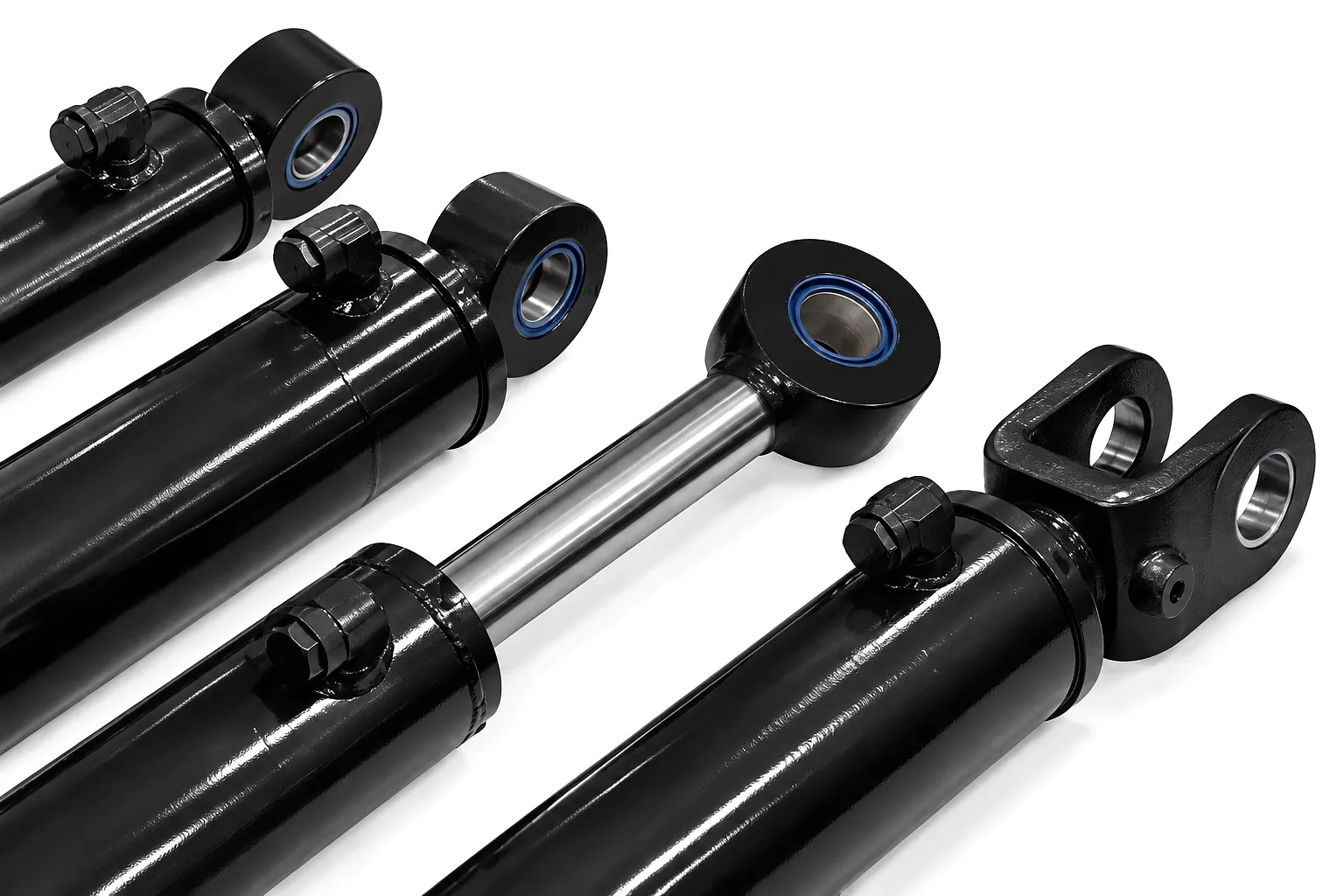 Choosing the wrong mounting method for a hydraulic cylinder is not simply a matter of minor inconvenience — it can lead to premature seal failure, structural fatigue at the mounting bracket, misalignment stress on the rod, and in worst cases, catastrophic system failure under load. For engineers working across the UK’s manufacturing heartland, from the steel fabrication shops of Sheffield to the heavy plant assembly lines of Birmingham and the offshore equipment suppliers based in Aberdeen, understanding the mechanical principles behind clevis and trunnion mounts is fundamental to specifying hydraulic actuators correctly. These two attachment configurations represent the most widely used methods for anchoring hydraulic cylinders in industrial machinery, and while both serve the same essential purpose — holding the cylinder in place during extension and retraction cycles — they operate on entirely different mechanical philosophies and suit very different application environments. Getting the choice right at the engineering stage dramatically reduces maintenance costs, extends cylinder service life, and improves the reliability of the overall machine or structure in which the cylinder operates.
Need a Custom Hydraulic Cylinder?
Talk to Ever Power’s engineering team today.
What a Clevis Mount Actually Does — and Why It Works
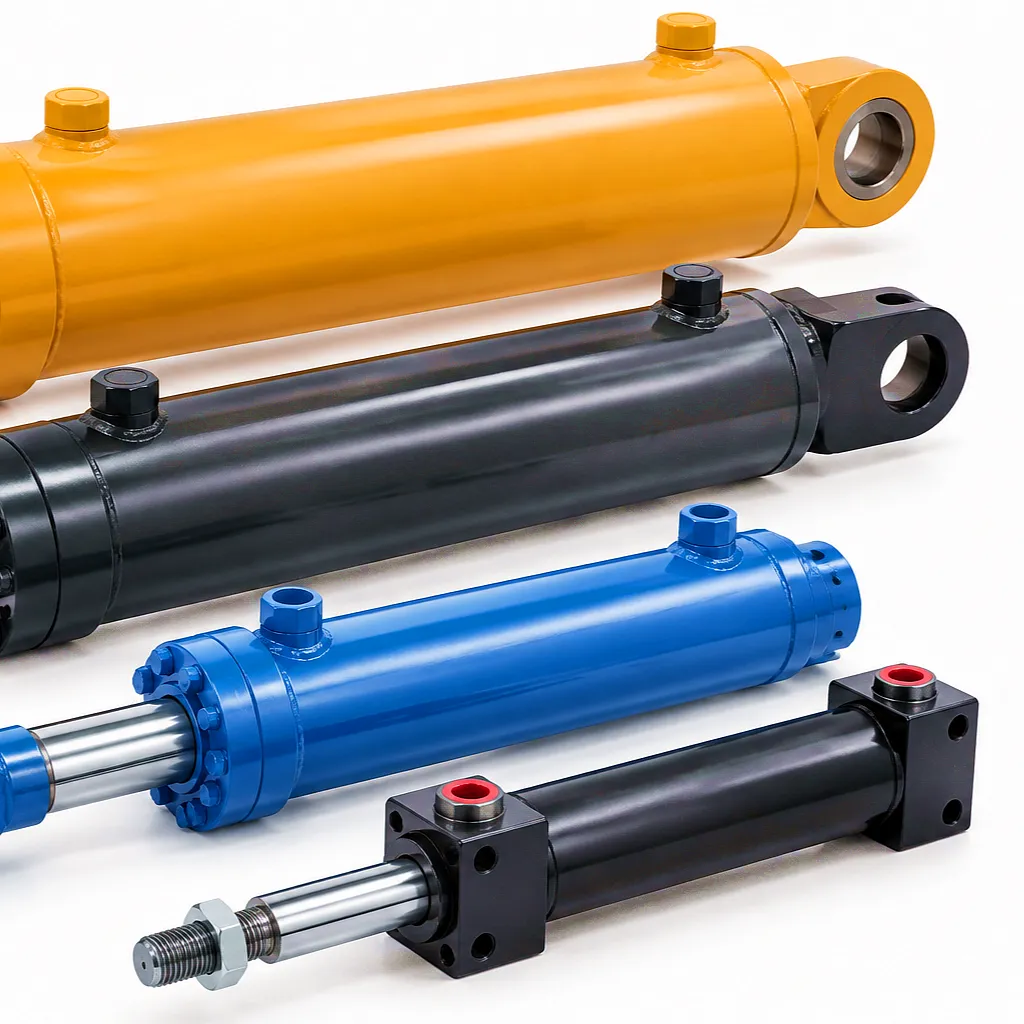
A clevis mount attaches the hydraulic cylinder at either the cap end (rear clevis) or the rod end (front clevis, though this is less common as a primary mount) using a U-shaped bracket secured through a pin. The pin passes through aligned holes in both the clevis and the mating bracket on the machine frame or load arm, creating a pivoting connection that allows the cylinder to swing freely in a single plane of rotation. This pivoting action is the defining characteristic that sets clevis-mounted cylinders apart — the cylinder body itself is not rigidly fixed to the structure. Instead, it can articulate as the mechanism moves, which makes this configuration essential for applications where the geometry changes during operation: think of a tipping truck body, a loader arm on agricultural machinery, or a press brake that describes an arc as its tooling descends. The pin and bushing arrangement must be engineered to handle the shear loads imposed by the full hydraulic force, and the bore diameter of the clevis pin holes, pin material, and surface hardness are all critical design parameters. In UK fabrication environments, particularly in the Midlands where bespoke hydraulic systems are commonly manufactured for agricultural and construction OEMs, clevis mounts are often specified with grease nipples on the pin housing to allow lubrication in service, extending wear life significantly in high-cycle applications.
Pivot Freedom
Allows angular movement in a single plane — ideal for mechanisms where the load path changes direction during the stroke.
Simple Installation
Pin-and-bracket assembly can be fitted and removed quickly on site, which reduces maintenance downtime in field conditions.
Load Concentration Risk
Force is transmitted through the clevis pin, so pin shear is the primary failure mode — proper pin sizing to bore ratio is non-negotiable.
Trunnion Mounting: When Rigidity and Load Distribution Take Priority
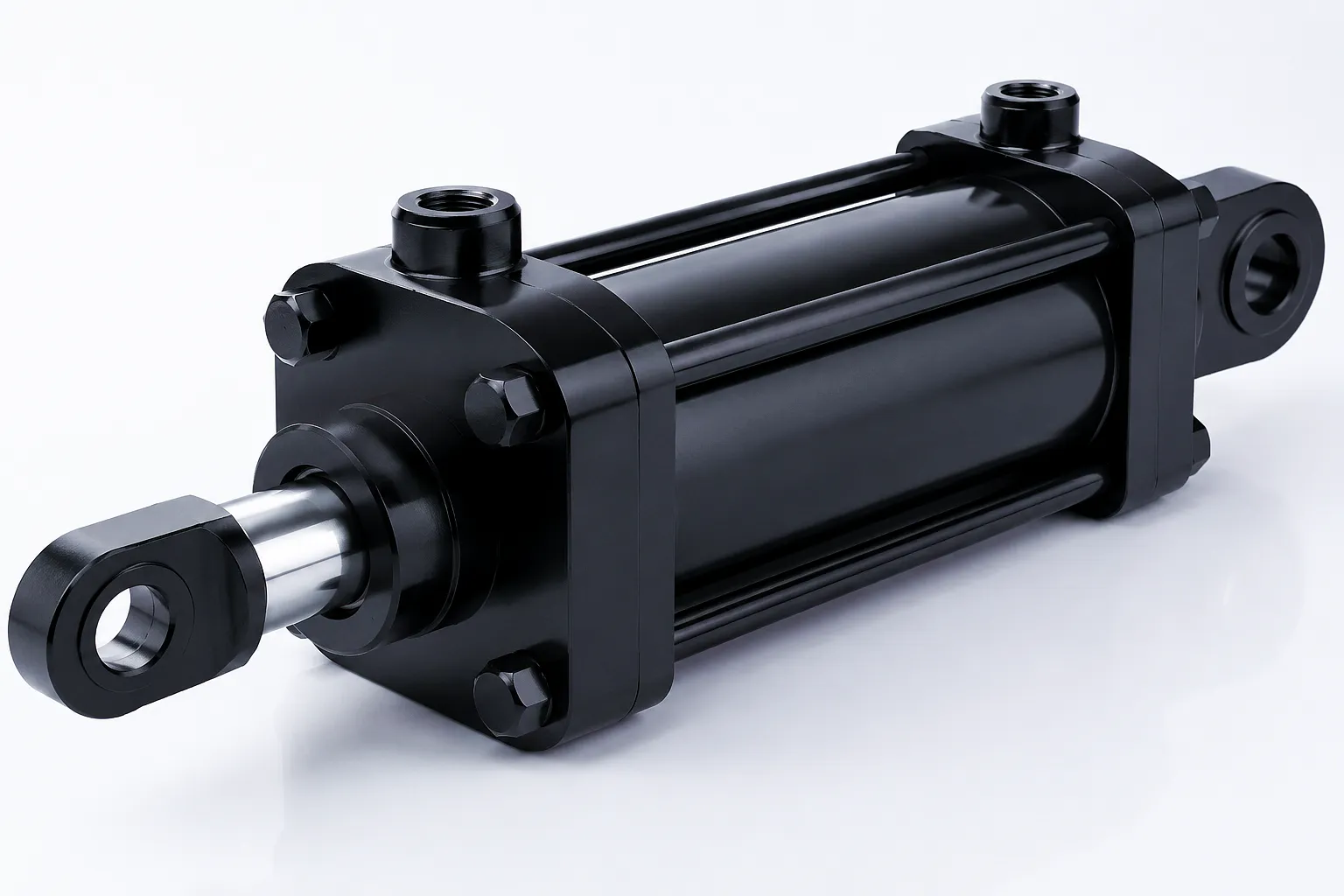 A trunnion mount secures the hydraulic cylinder by means of cylindrical pins — trunnions — that project outward from the cylinder body itself, typically from the mid-body, front flange, or rear cap. These trunnions seat into matching bearing blocks or yoke supports bolted to the machine structure, allowing the entire cylinder to rotate about the trunnion axis while the mounting hardware absorbs the side loads and bending moments generated during operation. The critical advantage of this arrangement is the load distribution geometry: rather than concentrating all mechanical force through a single end attachment point as a clevis does, trunnion supports distribute loading along the cylinder barrel at the point of contact with the bearing blocks. This is mechanically significant in high-force applications where the magnitude of side loading — forces acting perpendicular to the cylinder’s axial thrust direction — would overstress a clevis pin and bracket system. In heavy industrial settings across the UK, such as the forge shops of the West Midlands and the shipbuilding and naval equipment operations in Barrow-in-Furness or the Clyde, trunnion-mounted hydraulic cylinders are routinely found in large press frames, steel rolling mill adjusting systems, and marine winch drives. The trunnion configuration also lends itself to long-stroke cylinders where barrel deflection under load would otherwise impose lateral stress on the mounting points. Specifying the correct trunnion diameter, bearing bush material, and support span is every bit as critical as selecting the cylinder bore and operating pressure — and in demanding cycle applications, bronze or PTFE-lined bearing bushes are preferred for their wear resistance and self-lubricating properties.
Mid-body Support
Distributes force along the barrel wall, reducing bending stress — critical for long strokes and high side-load conditions.
Stable Arc Rotation
Pivot occurs at the trunnion bearing, allowing smooth, predictable arc motion with full structural support maintained throughout.
Higher Initial Cost
More complex machining for trunnion journals and bearing blocks, but this upfront investment pays back in extended service intervals and reduced downtime.
Working Principle: How Force Transfers Through Each Mounting System
Clevis Mount — Force Mechanics
When hydraulic pressure acts on the piston face inside the cylinder bore, it generates a linear thrust force along the cylinder axis. In a clevis-mounted cylinder, this axial thrust is transferred directly through the cylinder cap into the clevis body, then through the pin into the mating bracket on the machine frame or the load arm being driven. The clevis pin operates entirely in shear — the material of the pin must resist the transverse cutting forces imposed by the misaligned load paths on either side of the clevis flanges. For this reason, pins are invariably manufactured from high-tensile alloy steel, often heat-treated to achieve surface hardness values of 58–62 HRC while maintaining a tougher core to resist shear fracture under impact loading. The angular freedom provided by the pin joint also absorbs minor geometric misalignment, which is why rear-clevis mounts are nearly always paired with a spherical or female rod eye at the rod end — the two pivot points allow the cylinder to track the actual path of the mechanism rather than binding and imposing damaging side loads on the rod and seal assembly.
Trunnion Mount — Force Mechanics
In a trunnion-mounted cylinder, the generated thrust force travels through the rod to the load, while the reaction forces — the equal and opposite push-back forces acting on the cylinder body — are absorbed by the trunnion pins and their bearing housings. The distribution of this reaction load across two bearing contact zones (one on each side of the cylinder) produces a mechanically balanced support condition that is inherently more suited to sustaining large side loads and bending moments than a single-point clevis attachment. The trunnion bearing contact area is also considerably larger than a clevis pin cross-section, which reduces unit bearing pressure and extends the life of the bearing material in continuous-duty applications. A mid-trunnion arrangement is particularly effective for long-stroke cylinders, as the support point is located closer to the centre of mass of the extended assembly, minimising deflection under gravity and the cantilever bending that would otherwise be imposed on the rod bearing and front seal assembly during the extended stroke.
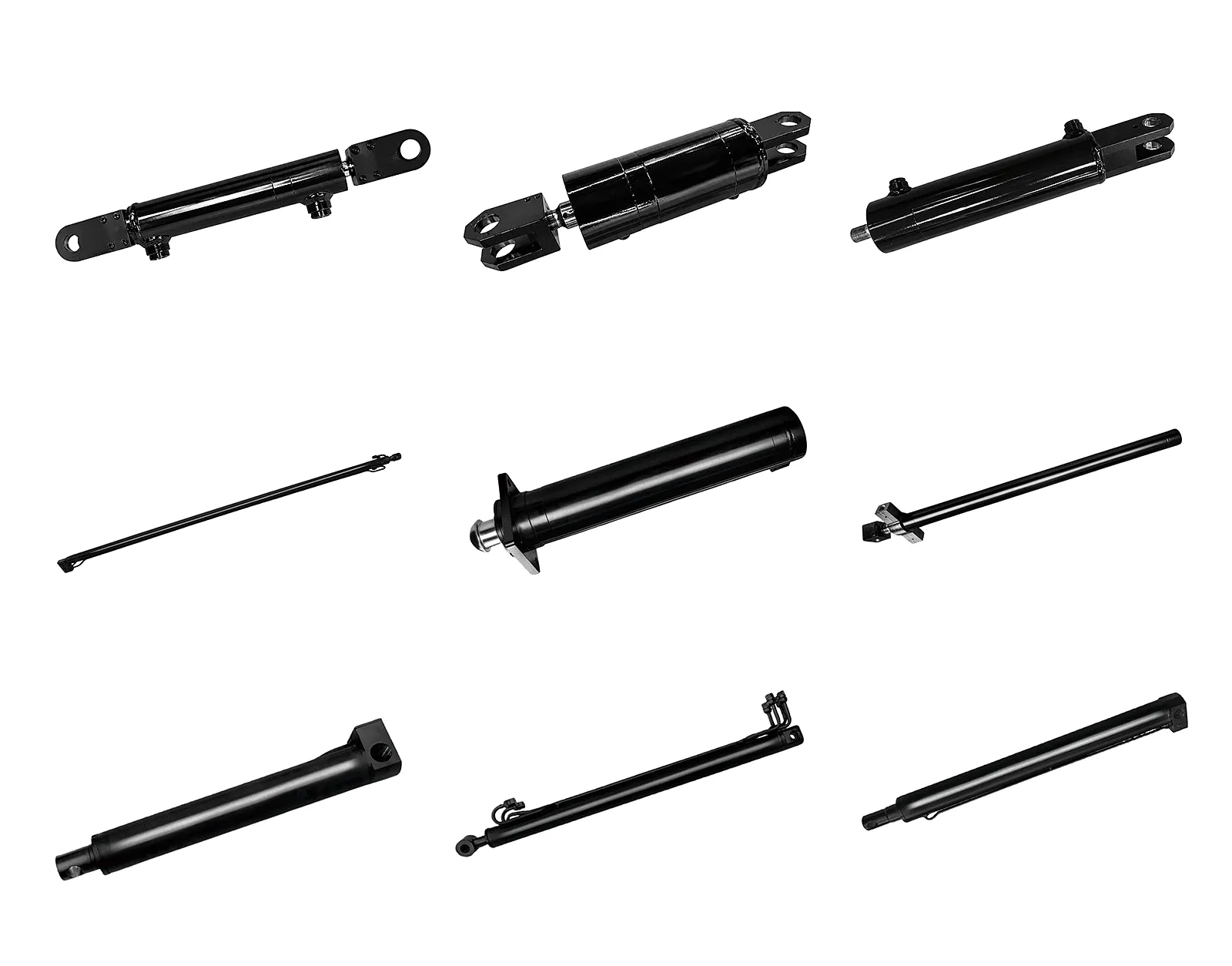
Core Materials: Clevis Pins, Trunnion Journals, and Bearing Interfaces
Material selection for both mounting systems is inseparable from the operating environment and duty cycle of the cylinder. For clevis components, the pin itself is the highest-stressed individual component, and the overwhelming majority of industrial clevis pins are machined from EN36 or EN40B case-hardening alloy steel, carburised and hardened to provide a wear-resistant surface with a tough, impact-resistant core microstructure. The clevis body — whether welded to the cylinder cap or machined integrally — is typically made from EN8 or EN24 steel, with the bore holes line-bored to H7 tolerance to ensure correct pin running fit. Where corrosion is a concern, particularly on outdoor agricultural or marine-adjacent applications along the British coast, hot-dip zinc coating or electroplated zinc-nickel finishes are applied to both the pin and the clevis body, with stainless steel grades 316 or 17-4 PH specified for the most severe salt-laden environments. For trunnion components, the trunnion journal itself is machined from the same cylinder barrel material — typically 45# seamless steel tube or equivalent EN-specified tubing — before being heat-treated and ground to a journal tolerance of h6. Bearing bushes that receive the trunnion are most commonly bronze (CuSn8 or CuAl10 alloy), or in modern high-performance applications, injection-moulded PTFE-lined steel-backed bushes that require no external lubrication and maintain low friction coefficients even under high unit loads. The combination of journal surface finish (Ra 0.4 µm or better) and bush bore geometry is critical to achieving the specified bearing clearance that allows free rotation without excessive play.
Clevis Pin Steel
EN36 / EN40B — case-hardened, 58–62 HRC surface, tough shear-resistant core
Clevis Body
EN8 / EN24 medium carbon or alloy steel, bore H7 tolerance for pin fit
Trunnion Journal
45# seamless steel tube or EN equivalent, ground to h6, Ra 0.4 µm or better
Trunnion Bearing Bush
Bronze (CuSn8 / CuAl10) or PTFE-lined steel-backed; maintenance-free options available
Corrosion Protection
Zn-Ni plating, hot-dip zinc, or 316/17-4 PH stainless steel for marine and outdoor environments
Product Technical and Performance Parameters — Clevis vs Trunnion
| Parameter | Clevis Mount | Trunnion Mount |
|---|---|---|
| Pivot Axis | Single plane (pin axis) | Single plane (trunnion axis) |
| Force Transfer Point | Cap end (rear) or rod end (front) | Cylinder body mid / front / rear |
| Bore Range (typical) | 25 mm – 320 mm | 50 mm – 500 mm+ |
| Operating Pressure | Up to 350 bar | Up to 450 bar (heavy-duty) |
| Rod Diameter | 18 mm – 220 mm | 35 mm – 360 mm |
| Stroke Length | 50 mm – 3,000 mm | 100 mm – 5,000 mm+ |
| Trunnion / Pin Material | EN36 / EN40B hardened steel | 45# / EN equivalent, ground h6 |
| Bearing Interface | Pin bore H7 / bush in bracket | Bronze or PTFE-lined steel-backed bush |
| Side Load Tolerance | Moderate — limited by pin shear capacity | High — distributed over bearing area |
| Angular Misalignment Tolerance | High — self-correcting via pin pivot | Low-moderate — requires precise alignment |
| Seal Life Under Misalignment | Long — rod eye absorbs misalignment | Shorter if mounting is imprecise |
| Installation Complexity | Low — pin and bracket assembly | Medium-high — bearing block alignment critical |
| Maintenance Interval | Regular pin lubrication required | Long; PTFE bush variants are maintenance-free |
| Surface Finish (Rod) | Ra 0.2–0.4 µm, chrome-plated | Ra 0.2–0.4 µm, chrome or nickel-chrome plated |
Industrial Application Scenarios Across UK Sectors
Agricultural Machinery — Lincolnshire and Yorkshire Farming Operations
Rear-clevis hydraulic cylinders dominate in agricultural equipment built and maintained across the farming regions of Lincolnshire and the Yorkshire Wolds. Combine harvesters, large round bale wrappers, tipper trailers, and slurry tanker drawbars all utilise rear-clevis mounts for their primary lifting and tilting cylinders precisely because field operation subjects the attachment geometry to constant, unpredictable variation. As a machine travels over uneven ground, the angle between the cylinder centreline and the load arm changes continuously — the pivoting clevis pin accommodates this movement without transmitting lateral stress into the cylinder seals. The Cilindros hidráulicos para cosechadora from Ever Power are a prime example of engineering these clevis configurations to handle high-vibration, multi-directional loading in real agricultural field conditions, where service accessibility and pin replaceability are as important as the raw mechanical specification.
Steel Pressing and Forging — Sheffield and the West Midlands
Sheffield’s steel industry and the forge shops of the West Midlands represent the natural home of trunnion-mounted hydraulic cylinders. In hydraulic forging presses, die-cushion systems, and rolling mill roll-gap adjustment actuators, the forces involved can reach tens of meganewtons — well beyond the practical capacity of clevis-pin arrangements for anything but very large cross-sections. Trunnion mounts, with their balanced two-point bearing support and large contact areas, handle these magnitudes while maintaining the angular articulation needed as press platens and forming tooling describe their operational geometry. In Sheffield’s remaining specialty steel production facilities, trunnion cylinders are specified for quench press tooling adjusters where operating pressures reach 400 bar and the stroke cycle frequency makes continuous-duty bearing performance the primary design criterion.
Lifting Platforms and Material Handling — Logistics Hubs Across the UK
Scissor lifts, vehicle inspection platforms, loading dock levellers, and warehouse goods lifts across the UK’s major logistics corridors — from the East Midlands gateway facilities to the large distribution parks on the M1 and M6 corridors — depend on both mounting configurations. Single-acting telescopic cylinders in dock levellers typically use clevis mounts for their compactness and service friendliness, while double-acting telescopic systems in heavy vehicle lifts and aircraft ground support equipment favour trunnion arrangements for their superior load stability during the extended and partially-extended stroke positions where lateral instability is most significant. Ever Power’s Custom Double Acting Telescopic Hydraulic Cylinders For Lifting Platform are engineered with mounting geometry that addresses both the static and dynamic load cases encountered in these demanding material handling environments.
Marine and Offshore Equipment — Aberdeen, Portsmouth, and Tyneside
The UK’s marine engineering industry — from the supply vessel operators out of Aberdeen to the naval equipment manufacturers on Tyneside and the naval dockyard work in Portsmouth — frequently combines both mounting styles within a single hydraulic system. Hatch cover actuators and mooring winch drives commonly employ trunnion mounts for their main cylinders, while the smaller trim and steering-assist cylinders on deck equipment use clevis pin arrangements for their ease of disconnection and replacement during scheduled dry-dock maintenance. The harsh salt-air environment demands stainless steel or heavily zinc-nickel-coated components throughout, and Ever Power’s material selection capabilities — including 316 stainless steel clevis assemblies and PTFE-lined trunnion bushes — specifically address the corrosion and maintenance requirements of this sector.
Construction Plant and Excavators — National Infrastructure Projects
Excavator boom, dipper, and bucket cylinders remain among the highest-volume applications for clevis-pin-style attachments in the United Kingdom’s construction plant fleet. The kinematic requirement for these cylinders — each must track the arc of a linkage as the machine digs, reaches, and dumps — makes the pivoting pin connection fundamental to their design. Despite the clevis format’s apparent simplicity, excavator boom hydraulic cylinders routinely operate at pressures between 280 and 350 bar, with rod diameters up to 130 mm, and they endure shock loads during rock breaking or frozen ground excavation that would destroy a rigid-body mounting arrangement in short order. The ongoing investment in UK infrastructure — road and rail programmes in the North of England, utility corridor work across Greater Manchester, and major civil engineering contracts nationwide — keeps demand for high-quality replacement and OEM hydraulic cylinder supply consistently strong for UK-based procurement teams.
Core Technical Advantages of Precision-Matched Mounting Systems
⚙️
Seal Life Optimisation
When mounting geometry is correctly matched to kinematics, lateral rod loading is eliminated. This single factor extends rod seal life by 40–60% compared to mismatched or rigid mounting configurations, reducing hydraulic fluid loss and unplanned maintenance stops.
🔩
Structural Load Distribution
Trunnion mounts distribute reaction loads over twin bearing contact zones, dramatically reducing peak stress at any single point in the machine frame. This enables lighter structural design of the host machine without compromising fatigue life at the mounting interface.
🛡️
Misalignment Absorption
Clevis-pin systems absorb angular misalignment between the cylinder axis and the load axis in real time. In agricultural and construction applications where ground conditions continuously alter machine geometry, this compliance protects the cylinder rod and bearing from fatigue cracking caused by bending stress.
📐
Installation Flexibility
Clevis configurations can be retrofitted to existing machine frames without precision-machined bearing housings, while trunnion arrangements allow the cylinder to be replaced independently without disturbing the machine frame bearings — both offering distinct service advantages depending on the maintenance strategy of the facility.
🏭
Custom Geometry Matching
Ever Power’s manufacturing programme covers both mounting systems across the full range of bore and stroke combinations. Clevis pin diameters, trunnion journal lengths and diameters, and bearing bush specifications are all configurable to match the exact dimensional requirements of the host machine design without adapters or compromise spacers.
Ever Power Manufacturing — Custom Capability and Supply Chain Strength
Ever Power operates a vertically integrated hydraulic cylinder manufacturing facility with in-house deep-hole boring, honing, hard chrome plating, and precision CNC machining across the full component range — from raw tube to finished assembly. This level of vertical integration means that both the clevis components and the trunnion journals are manufactured, heat-treated, and inspected within a single quality management system rather than being sourced from multiple external sub-suppliers, which is one of the principal reasons Ever Power maintains dimensional consistency across large batch orders and multi-year supply contracts. For UK engineering teams placing technically demanding orders — replacement cylinders for ageing machine lines, first-off samples for new machinery programmes, or multi-SKU catalogue programmes — Ever Power’s responsiveness to detailed technical drawings and its willingness to engage in design dialogue before manufacture commences represents a material advantage over off-the-shelf catalogue suppliers.
Customisation is not treated as an exceptional service by Ever Power — it is the standard mode of operation. Clevis dimensions, pin bore diameters, clevis eye widths, and thread specifications on rod ends are all drawn to customer-supplied data. Trunnion journal diameters, lengths, and positional location along the barrel can be specified independently of the cylinder bore and stroke. Seal packages are selected from a range of materials — standard nitrile, polyurethane, PTFE composite, Viton for elevated temperature environments — and tested to the specified operating pressure at the factory before despatch. Lead times for custom cylinder programmes are typically 15–25 working days for standard specifications, with expedited schedules available for urgent replacement requirements. Shipping to UK ports — including direct delivery to Birmingham, Manchester, or Sheffield via established freight forwarding arrangements — is handled by Ever Power’s logistics team.
Full Custom Mounting Geometry
Clevis and trunnion dimensions supplied to customer drawing — no adapters, no compromises.
In-House Honing and Chrome Plating
Controlled bore finish Ra 0.2–0.4 µm and hard chrome rod to Ra 0.2 µm for long seal life.
Certificado de prueba de presión
Each cylinder hydrostatically tested to 1.5x rated pressure before despatch — documentation supplied with delivery.
UK Freight Logistics
Established forwarding to UK ports with typical 15–25 working day lead on custom orders; urgent programmes handled on request.
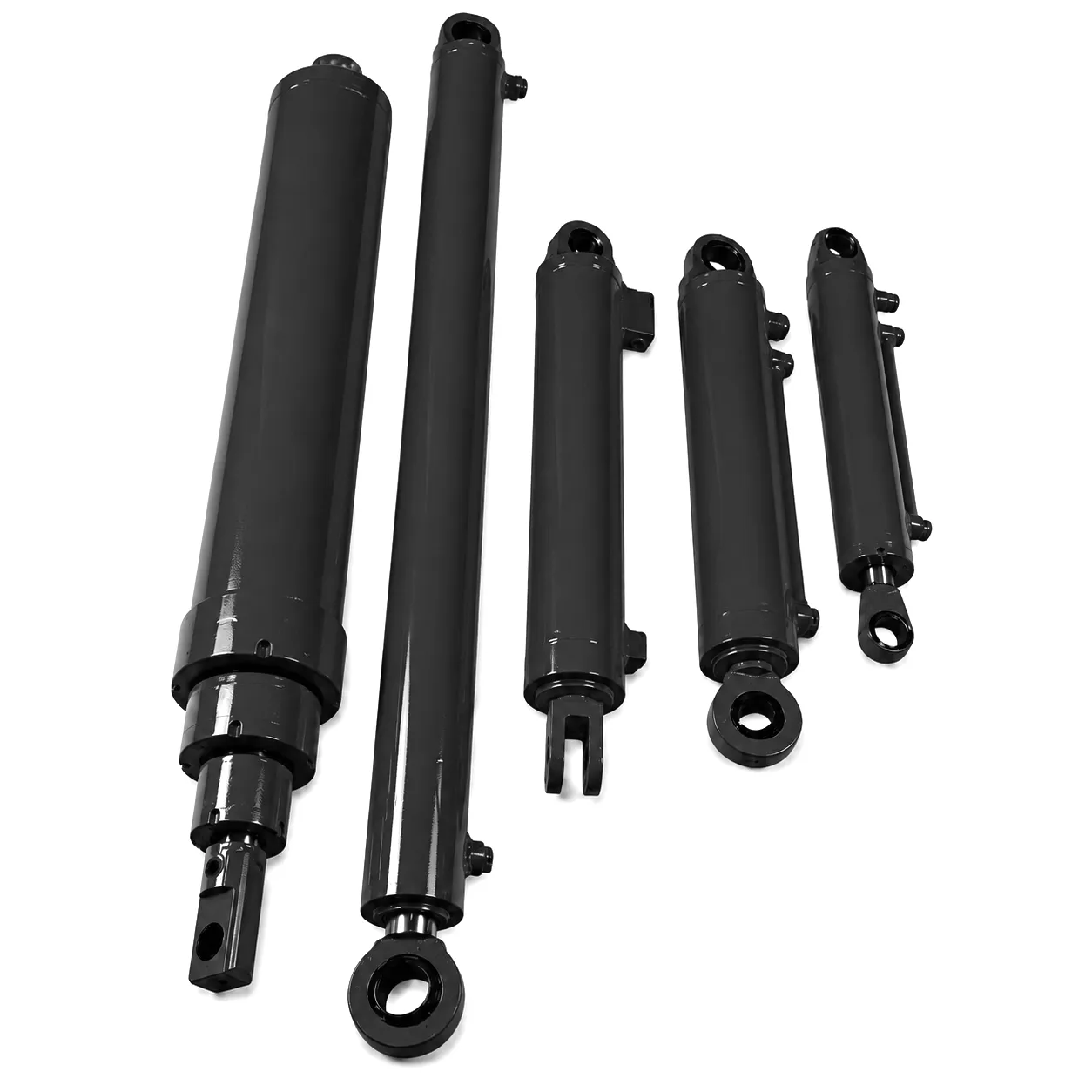
Ready to specify your hydraulic cylinder mounting configuration with Ever Power?
Customer Success — Precision Mounting Solutions for a Sheffield Forgemaster
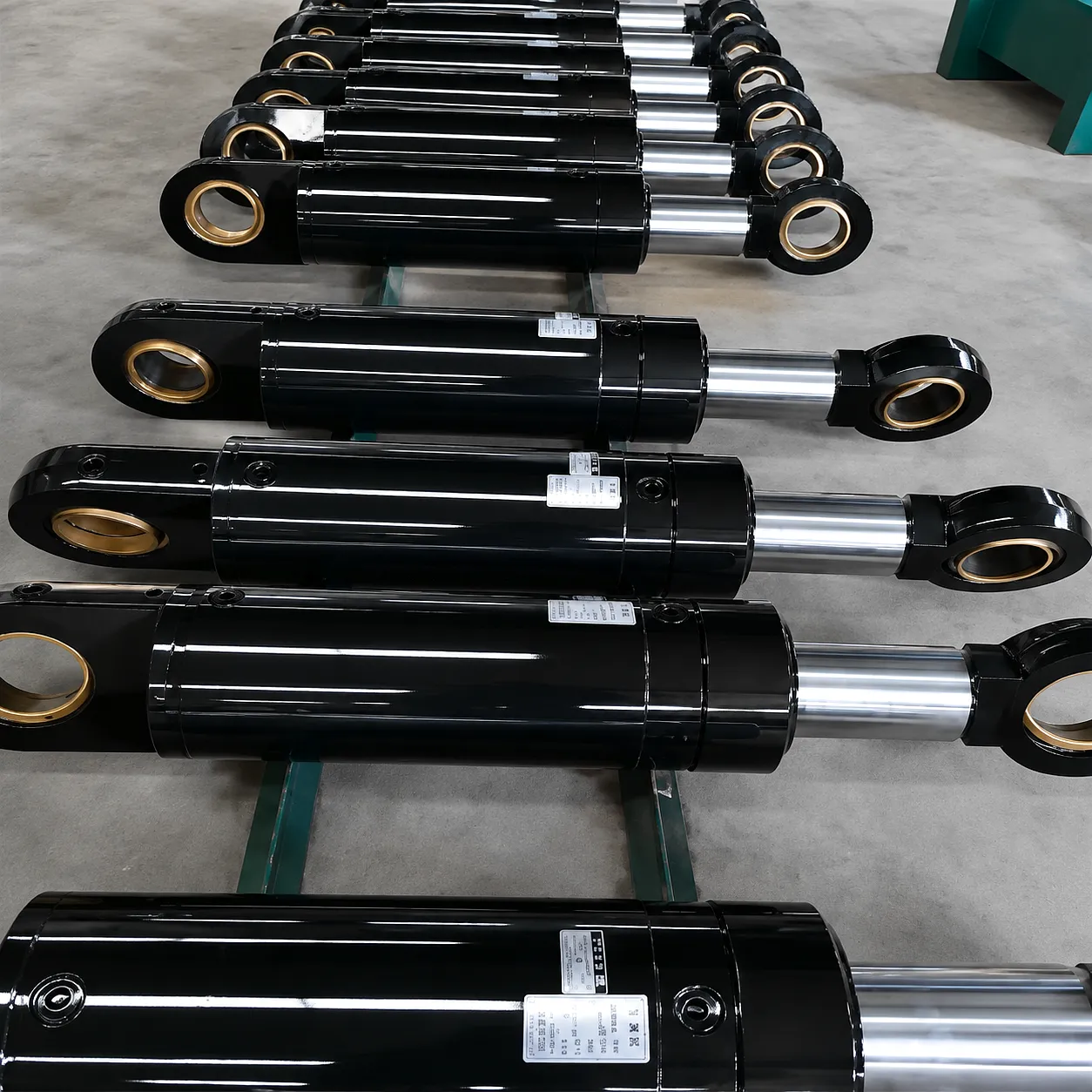 A specialist open-die forging operation based on the outskirts of Sheffield had been operating a set of hydraulic forging press actuators that were now several years past their original intended service life. The existing cylinders used a mid-trunnion mounting arrangement with 200 mm bore diameter and 1,800 mm stroke, operating at a continuous working pressure of 380 bar during forging cycles that reached three strokes per minute on lighter billets. The trunnion journals had worn beyond the specified clearance tolerance, and the original bronze bearing bushes had reached the end of their service life — resulting in a noticeable audible knock during direction reversal that signalled accelerating wear. The procurement team had contacted three UK-based catalogue hydraulic suppliers and found that none stocked cylinders with these exact trunnion dimensions, and none were willing to supply to drawing in the lead time the forge’s maintenance window permitted.
Ever Power’s technical sales team received the drawing package on a Wednesday and returned a detailed technical confirmation with material selections and lead time commitment within 48 hours. The proposal specified EN-equivalent seamless steel tube bores honed to Ra 0.25 µm, chrome-plated 160 mm rods ground to Ra 0.2 µm, and trunnion journals machined to the customer’s specified h6 tolerance with PTFE-lined steel-backed bearing bushes selected in preference to the original bronze — a recommendation based on the duty cycle data the Sheffield team provided, which projected a bush life extension of approximately 2.5 to 3 times compared to bronze in this application. Both replacement cylinders were manufactured, pressure-tested to 570 bar (1.5x rated), and delivered to the Sheffield facility within 21 working days. Installation and commissioning were completed within a single planned maintenance shift, and the forge returned to full production without further incident.
The maintenance team subsequently placed a forward-order programme with Ever Power for a further set of replacement cylinders to be held as on-site spares, eliminating the lead time risk from any future unplanned failures and providing confidence for the press line’s continued operation through the forge’s growing order book.
What UK Engineering Teams Say About Ever Power Hydraulic Cylinders
“We specified trunnion dimensions that no UK supplier would take on at our timescale. Ever Power came back within two days with a full technical confirmation and hit the 21-day delivery. The cylinders went straight in — trunnion journals and bush fit were exactly as drawn. We’ve had zero issues in eight months of continuous pressing.”
— Maintenance Engineering Manager, open-die forge, Sheffield
“Our agricultural equipment line uses clevis-pin cylinders that see a lot of shock loading during straw bale handling. Ever Power’s clevis pins are hardened correctly — we had pin shear failures twice per season with our previous supplier. Since switching, we’ve run two full harvest seasons without a single pin failure. The grease nipple arrangement they machined in was our idea, and they just did it without any fuss.”
— Design Engineer, agricultural machinery OEM, Lincolnshire
“We source double-acting cylinders with a combined clevis and mid-trunnion spec for our dock leveller programme — a configuration that nobody holds off the shelf. Ever Power handle this as a standard production item for us now. The PTFE-lined trunnion bushes they recommended have cut our lubrication maintenance requirements significantly, and the pressure test certificates they supply meet our quality approval process without any additional documentation requests.”
— Procurement Lead, hydraulic equipment distributor, Birmingham
Frequently Asked Questions — Hydraulic Cylinder Mounting Types (UK Engineers)
What is the main difference between a clevis mount and a trunnion mount on a hydraulic cylinder used in UK industrial machinery?▾
A clevis mount attaches the cylinder at its cap end or rod end using a U-shaped bracket and a removable pin, allowing the cylinder to pivot freely in one plane as the mechanism moves. A trunnion mount fixes cylindrical stub shafts — the trunnions — to the barrel of the cylinder, which then sit in bearing housings bolted to the machine frame, distributing the reaction forces across two bearing contact points. The clevis system is suited to applications with changing geometry; the trunnion system is preferred where large side loads or heavy structural reaction forces need to be absorbed over a larger bearing area.
How do I know which hydraulic cylinder mounting type I should be specifying for my press or heavy plant in Birmingham or the West Midlands?▾
For press applications in Birmingham and the Midlands where the cylinder operates essentially in a straight line and side loads are high — as in hydraulic forging presses, stamping lines, or die-cushion systems — a trunnion mount is almost always the correct specification. If your machine geometry changes during the operating stroke — the cylinder must swing or track an arc — then a rear clevis with a matching rod eye at the rod end is the more appropriate solution. If you are unsure, send Ever Power’s technical team your machine drawing or kinematic data and they will confirm the correct mounting specification for your application.
Where can I get a price and lead time for custom trunnion-mounted hydraulic cylinders supplied to a UK manufacturing facility with specific bore and stroke dimensions?▾
Ever Power accepts custom trunnion cylinder specifications directly by email — send your dimensional drawing, operating pressure, stroke, bore, and any specific material or surface finish requirements to [email protected]. The technical team will respond with a full quotation including price, material specification, and lead time within 48 working hours. For UK facilities, established freight forwarding arrangements cover delivery to Birmingham, Sheffield, Manchester, and all major logistics hubs.
What causes premature wear on clevis pins in hydraulic cylinders used on agricultural machinery, and how can I extend service life in Yorkshire field conditions?▾
Clevis pin wear in agricultural cylinders in Yorkshire field conditions is most often caused by three overlapping factors: insufficient pin hardness (surface hardness below 55 HRC accelerates abrasive wear from fine contamination entering the pin bore), inadequate lubrication (pin bores without grease nipples cannot be serviced in the field and run dry after the first season), and oversized pin-to-bore clearance from wear that creates impact loading at direction reversal. Specifying pins to EN36 or EN40B with surface hardness of 58–62 HRC, bronze or polymer bushes in the bracket bore, and adding a grease nipple to the clevis housing during manufacture significantly extends pin and bore life in high-cycle agricultural applications.
Which supplier in the UK or internationally can provide hydraulic cylinders with both a rear clevis and mid-trunnion mounting configuration to a custom engineering drawing?▾
Combined rear-clevis and mid-trunnion mounting configurations are not a catalogue item for most standard cylinder suppliers, but they fall squarely within Ever Power’s custom manufacturing programme. The combined configuration is used in dock levellers, some agricultural press applications, and specialised lifting equipment where both pivoting attachment and distributed body support are required simultaneously. Ever Power produces these hybrid-mount cylinders to customer drawings with the same quality and lead time as their standard custom range — contact the technical team at [email protected] with your dimensional requirements.
How much does a custom trunnion-mounted hydraulic cylinder cost compared to a standard clevis-mount cylinder for an industrial press in Sheffield?▾
Trunnion-mounted cylinders carry a higher unit cost than equivalent clevis designs at the same bore and stroke, reflecting the additional machining required for the trunnion journals, the precision bearing housings, and the bearing bush components. The premium varies with bore size and configuration but typically runs 20–40% above a comparable clevis cylinder. For high-force press applications in Sheffield where a trunnion mount is the correct engineering choice, the total cost of ownership — factoring in extended bearing and seal life — almost always favours the trunnion specification. For accurate pricing on your specific bore, stroke, and pressure combination, request a quote from Ever Power at [email protected].
When should I use a front trunnion versus a mid trunnion versus a rear trunnion configuration for a long-stroke hydraulic cylinder in a UK heavy industry application?▾
Trunnion position along the barrel is determined by the centre of gravity of the extended cylinder assembly and the available mounting points on the machine structure. A mid-trunnion minimises cantilever bending on long-stroke cylinders and is the most common choice for large press actuators. A rear trunnion is preferred when the machine structure has support at the back of the cylinder envelope and the stroke is relatively short relative to the bore. A front trunnion (at or near the head end) is occasionally used in compact machine envelopes where a mid-body bearing would obstruct other components. Ever Power’s engineering team can recommend the optimal trunnion position based on your stroke-to-bore ratio and installed mass distribution.
Ever Power · Custom Hydraulic Cylinder Specialists
Specify your clevis or trunnion cylinder — and get it made right, first time.
Send your drawing, operating pressure, bore, stroke, and mounting requirements. Our engineering team responds within 48 working hours.
Editado por gzl
 Spanish
  English
  Italian
  Portuguese
  Dutch
Dutch  Swedish
  Danish
  Finnish
  Polish
  Hindi
Hindi  Kazakh
  Turkish
  Ukrainian
  Romanian
  German
  Russian
  Korean
  Japanese
  Vietnamese
  Thai
Thai  Indonesian
  Malay
Malay  French
  Greek
Greek