HYDRAULIC ENGINEERING · UK INDUSTRIAL GUIDE
Custom Hydraulic Cylinder vs Standard Catalogue Cylinder: When the Price Premium Is Worth It
Every procurement manager eventually faces the same question: is the extra investment in a custom hydraulic cylinder genuinely justified, or is a catalogue unit simply repackaged at a higher price? This guide cuts through that uncertainty with hard engineering facts, real-world application analysis, and a framework built specifically for UK industrial buyers.
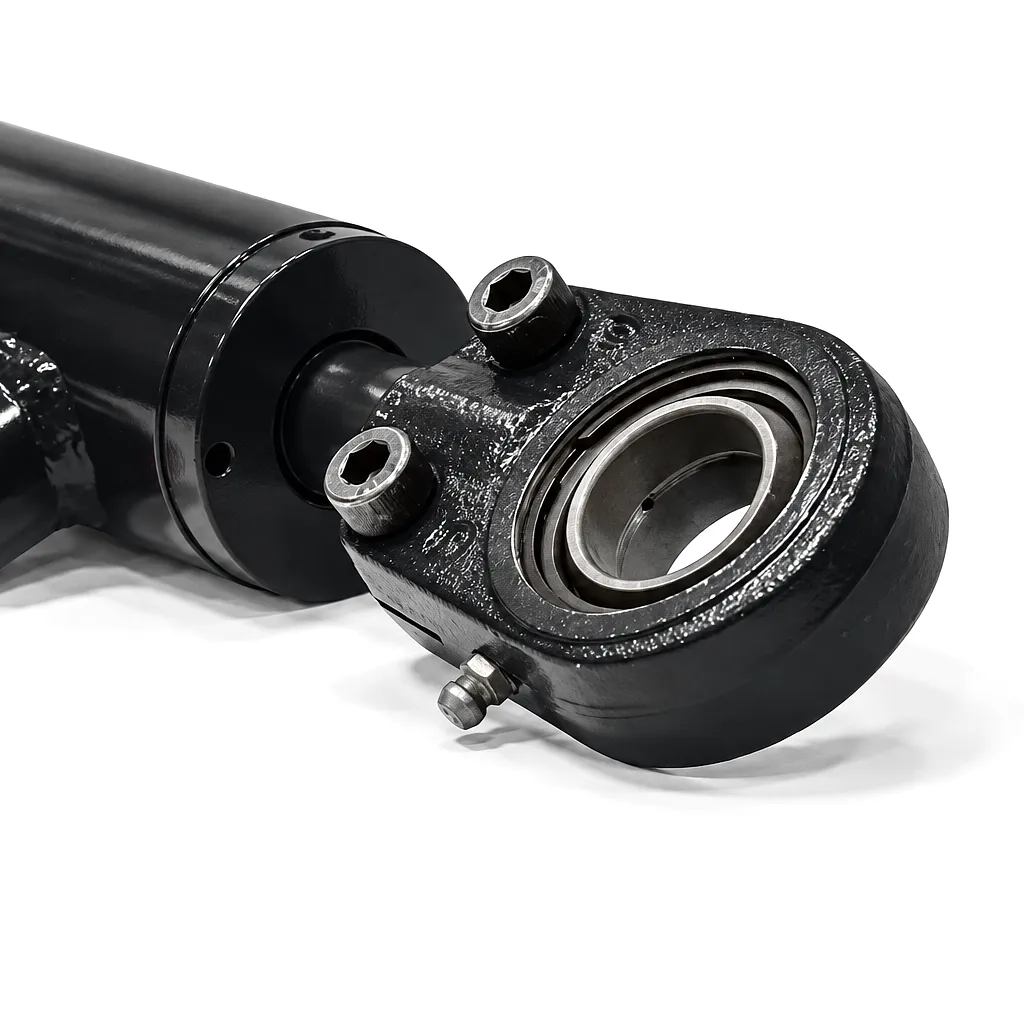 Hydraulic cylinders are the linear force backbone of nearly every heavy machine operating across the UK’s manufacturing corridors — from the forging shops of Sheffield to the automotive assembly lines of Birmingham and the offshore fabrication yards of Aberdeen. The decision between pulling a standard unit from a supplier catalogue or commissioning a custom hydraulic cylinder from a specialist manufacturer carries real financial and operational weight. Catalogue cylinders offer obvious advantages in lead time and unit cost. Yet in industries where bores, strokes, mounting geometries, and operating pressures fall outside textbook ranges, that catalogue unit can quietly become the most expensive component on the machine — through repeated downtime, accelerated seal wear, and structural mismatch that no amount of shimming or adaptor plating fully corrects. Understanding precisely where the cost lines cross is the practical task this article sets out to complete.
How a Hydraulic Cylinder Converts Fluid Power Into Linear Motion
▶
A hydraulic cylinder operates on Pascal’s law: pressure applied to a confined fluid acts equally in all directions. When a hydraulic pump delivers pressurised oil — typically between 100 bar and 350 bar in industrial applications — into the bore of the cylinder, that pressure acts on the cross-sectional area of the piston face and generates a pushing or pulling force. The rod extends or retracts depending on which chamber receives flow, controlled by a directional valve upstream in the circuit. Force output is simply pressure multiplied by piston area; a 100mm bore cylinder running at 200 bar generates roughly 15.7 kN of thrust. Velocity depends on flow rate divided by the effective bore area. The elegance of this mechanism is its directness — there are no gears, levers, or cranks converting rotary motion, only a straight conversion of fluid energy into linear displacement.
⚙
Where the hydraulic cylinder design becomes genuinely complex is in the sealing system and surface finish of the piston rod. The rod must maintain a surface roughness of Ra 0.2–0.4 µm across its entire stroke length to allow the rod seal lips to track consistently without generating heat or allowing micro-leakage. The end caps must be concentrically bored and threaded to tolerances that prevent eccentric loading on the piston seal. The cylinder barrel bore must achieve an ovality of no greater than 0.02 mm along its entire length or the piston seal will experience differential compression at every stroke. In a standard catalogue hydraulic cylinder these parameters are met for generic load conditions. In a custom hydraulic cylinder they are dialled in for the specific side-loading, temperature cycling, and duty cycle the machine will actually impose.
Core Materials That Define Long-Term Cylinder Performance
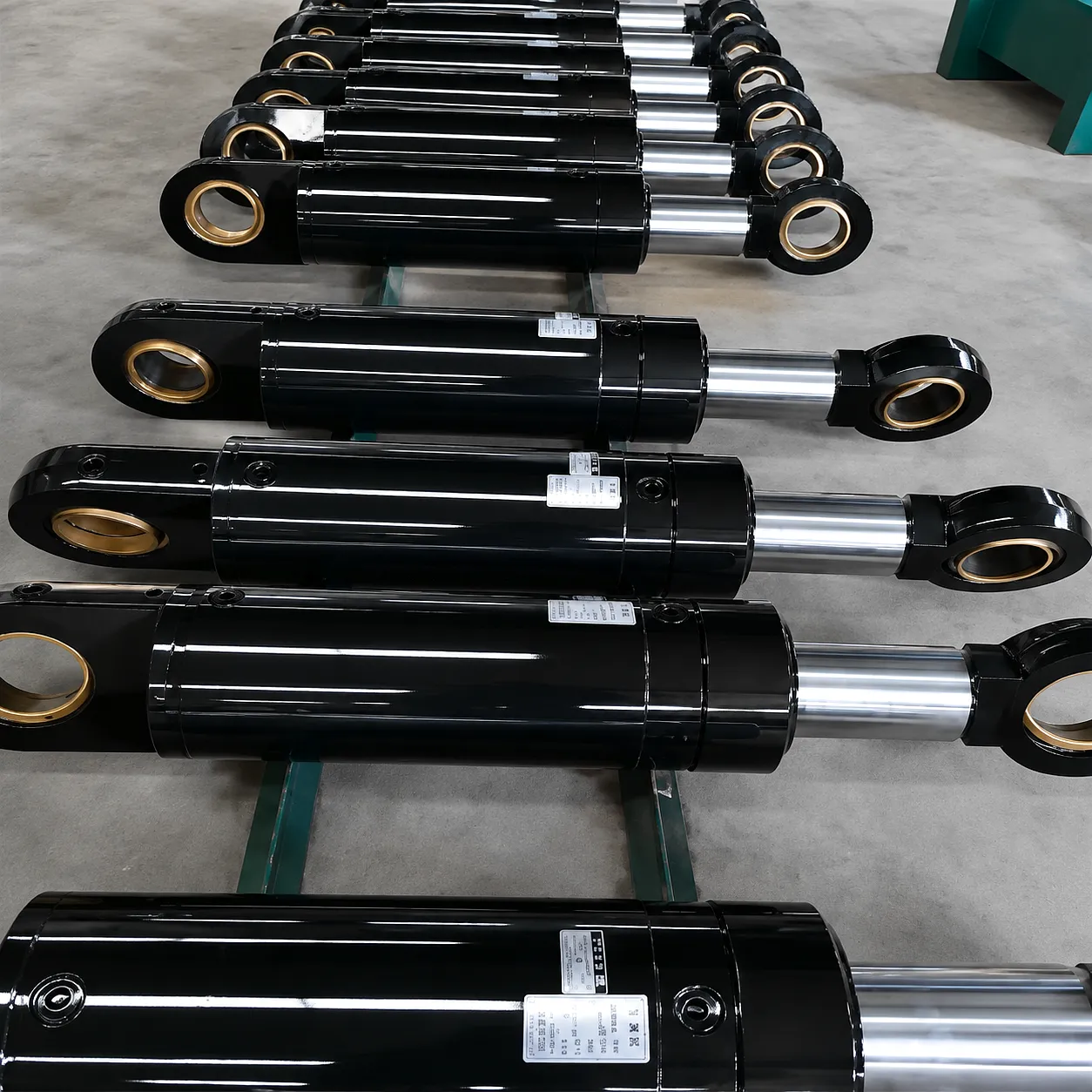
The material specification of a hydraulic cylinder is not a cost-saving afterthought — it is the single most consequential engineering decision in the cylinder’s design life. Procurement teams sourcing standard catalogue cylinders rarely see the full material data sheet. Custom hydraulic cylinder orders, by contrast, open a direct dialogue between the application engineer and the manufacturer about exactly which alloys, surface treatments, and seal compounds are appropriate for the operating environment.
Cylinder Barrel
Cold-drawn seamless steel tube, typically EN 10305-1 E355+SR or CK45 honed steel. Wall thickness calculated for working pressure plus a safety factor of 2.5–4:1. Custom orders can specify 42CrMo4 alloy for elevated-temperature service or stainless steel grade 316L for offshore and food-grade environments.
Piston Rod
High-tensile CK45 or 42CrMo4 steel with induction hardening to 54–62 HRC, then hard chrome plated to 20–25 µm. For aggressive corrosive environments — common on coastal sites in Wales and Scotland — ceramic composite coating or Armoline HIP-treated rods extend service intervals dramatically beyond catalogue offerings.
Seal Compounds
Polyurethane (PU) rod seals offer high abrasion resistance for construction and earthmoving. PTFE-backed piston seals reduce stick-slip. Viton (FKM) compounds handle operating temperatures from -20°C to +200°C and are mandatory for hot-press and die-casting applications in the West Midlands metalforming sector. Catalogue cylinders typically ship with standard NBR.
End Caps and Mounting
Ductile iron (GGG-40 or EN-GJS-400-15) or carbon steel SG for standard ports. Stainless steel 316 end caps and trunnion mounts are specified on offshore and marine platforms. Clevis mounts, flange mounts, and spherical-bearing rod eyes all require precise custom machining to match the host machine’s pin geometry — rarely achievable through catalogue selection alone.
Product Technical and Performance Parameters
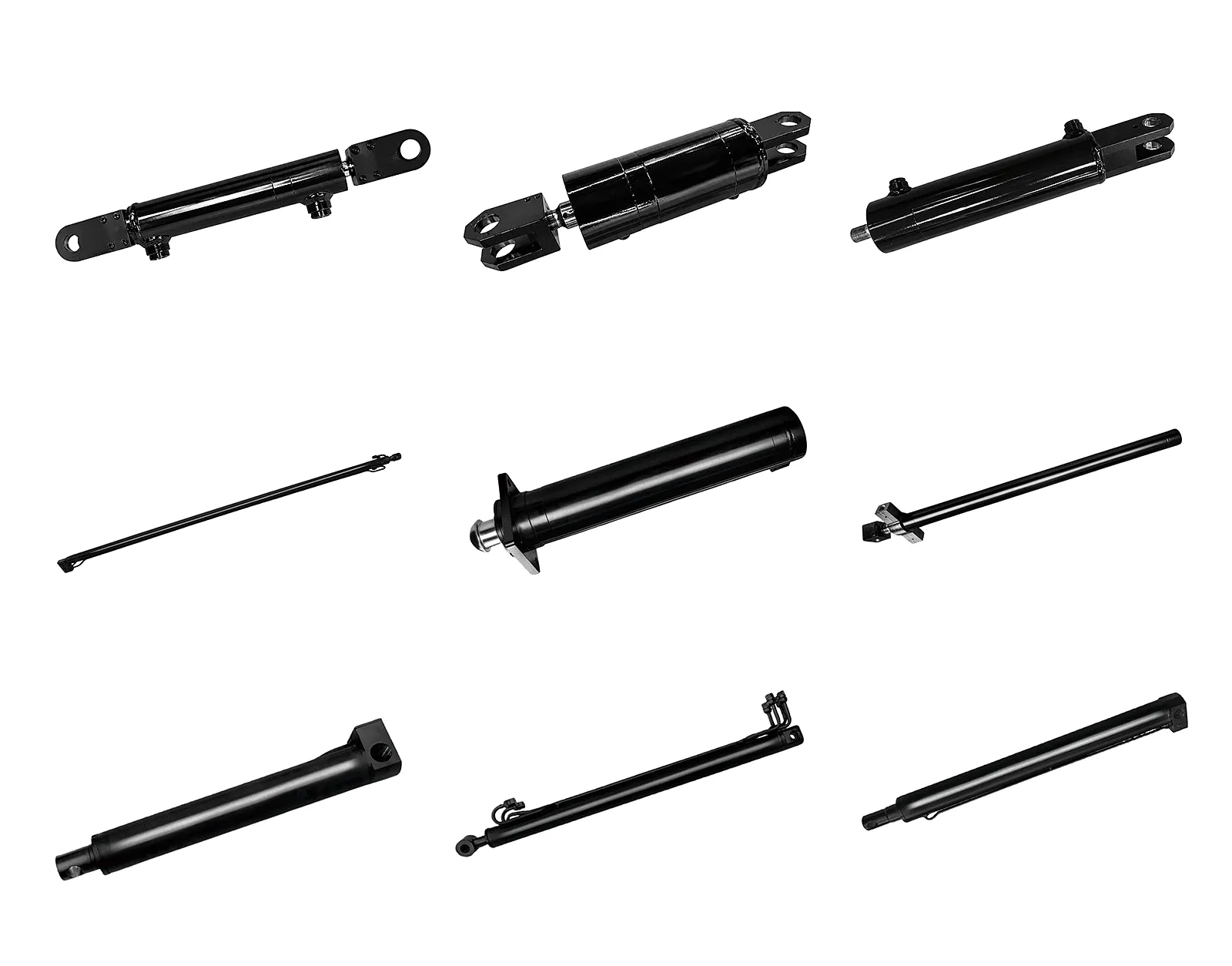
The table below covers the operating envelope within which Ever Power’s custom hydraulic cylinders are routinely engineered. Values represent the achievable custom range, not catalogue catalogue limits. Parameters outside these ranges can often be accommodated on request following a detailed application review.
| Parameter |
Standard Catalogue Range |
Custom Range (Ever Power) |
Unit |
| Bore Diameter |
32 – 250 |
20 – 800 |
mm |
| Stroke Length |
50 – 2000 |
25 – 10 000 |
mm |
| Presión de trabajo |
100 – 200 |
50 – 450 |
bar |
| Test Pressure (proof) |
1.5 × WP |
1.5 – 2.0 × WP |
— |
| Operating Temperature |
-10 to +80 |
-40 to +200 (Viton) |
°C |
| Rod Surface Roughness |
Ra 0.4 – 0.8 |
Ra 0.1 – 0.4 |
µm |
| Barrel Bore Ovality |
≤ 0.05 |
≤ 0.02 |
mm |
| Rod Chrome Thickness |
15 – 20 |
20 – 35 (or ceramic coat) |
µm |
| Cushioning |
Fixed or none |
Adjustable needle-valve, 2-stage |
— |
| Mounting Options |
Clevis, flange (fixed range) |
Trunnion, spherical eye, custom flange, integrated manifold |
— |
Core Technical Advantages of Custom Hydraulic Cylinder Solutions
🎯
Exact Geometric Fit
A custom hydraulic cylinder is dimensioned precisely to the host machine’s bore, stroke, port size, and mounting geometry. There is no shimming, no adaptor plating, no clearance compensation. The result is a cylinder whose centreline of force aligns perfectly with the load path, eliminating off-axis bending moments that are the primary cause of premature rod seal failure in catalogue installations. In large fabrication shops around Leeds and Rotherham, where press tools are rebuilt to specific tonnage requirements, this alignment precision consistently extends planned maintenance intervals from six months to two-plus years.
🔒
Seal System Designed for the Duty Cycle
Standard catalogue hydraulic cylinders use a universal seal kit intended to cover the broadest possible range of applications. Custom hydraulic cylinder orders allow the seal compound, lip geometry, and backup ring configuration to be selected for the exact fluid type, temperature range, and stroke frequency of the application. For high-cycle automated hydraulic presses in Birmingham’s automotive tier-one supply chain — running 400 strokes per hour, 18 hours a day — this optimised sealing translates into a documented reduction in unplanned oil leakage incidents by more than 70% compared with the catalogue alternative previously in service.
⚡
Higher Fatigue Safety Margins
Custom hydraulic cylinder barrels are designed with wall thickness calculated from the actual working pressure, peak surge pressure, and the specific safety factor required by the relevant machinery directive or client specification. Catalogue cylinders use a fixed wall thickness to cover multiple pressure ratings, which means at low pressures the wall is over-engineered and the cylinder is heavier than necessary, while at the upper end of the catalogue’s claimed pressure range the safety margin may be narrower than the installation’s actual load profile warrants. For lifting and positioning equipment subject to UK LOLER regulations, accurate safety margin documentation is a compliance requirement, not an engineering nicety.
📈
Total Cost of Ownership Advantage
The purchase price of a custom hydraulic cylinder is typically 30–80% above an equivalent-bore catalogue unit. However, when total cost of ownership is properly calculated over a five-year operating horizon — factoring maintenance labour, seal replacement kits, hydraulic fluid losses, production downtime, and the cost of an emergency stocking programme for catalogue cylinders that are discontinued — custom cylinders consistently show a lower net cost. For medium and large capital equipment running in three-shift production environments, the crossover point almost always occurs before the end of the second year in service.
Industrial Application Scenarios Across UK Heavy Industry
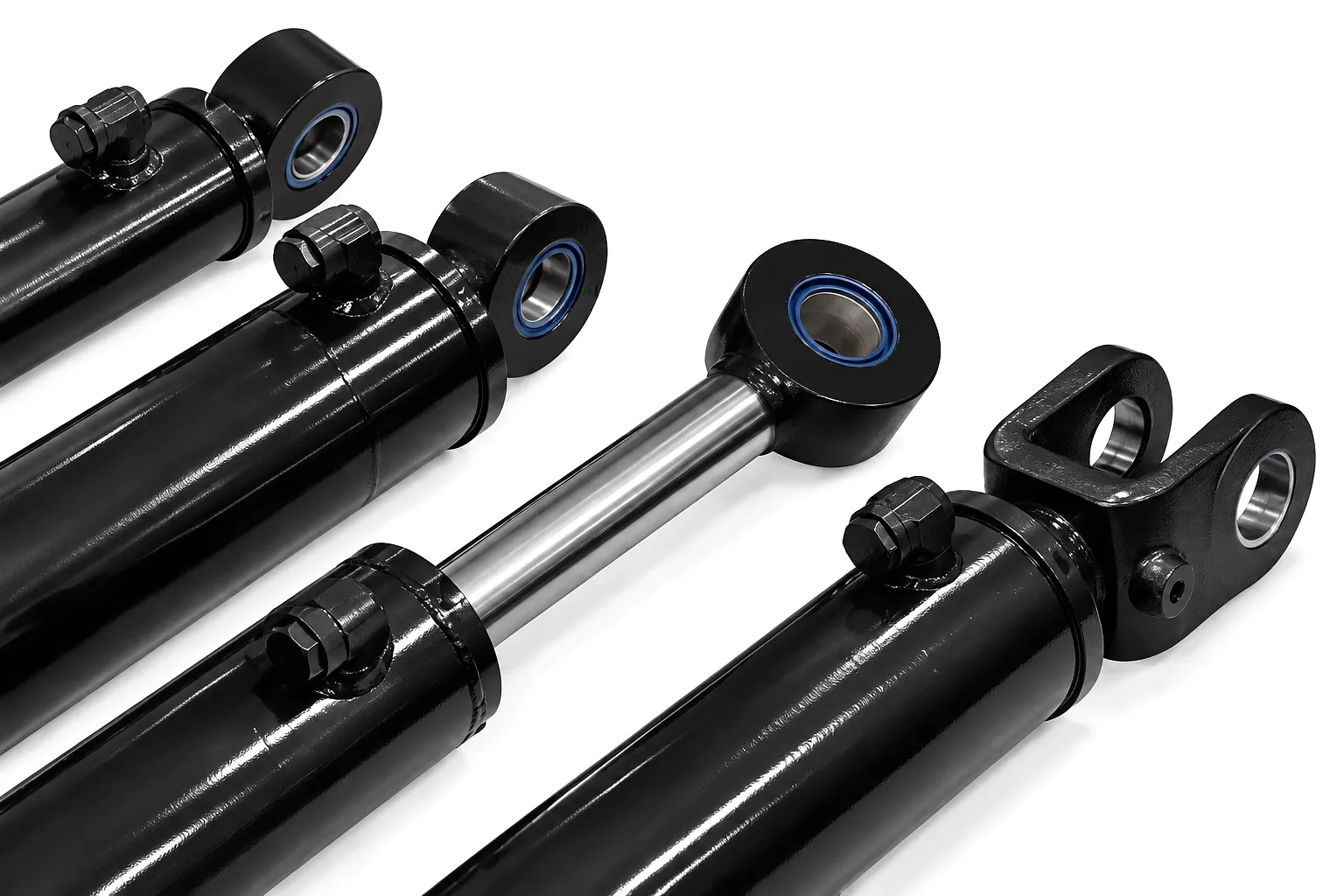
The hydraulic cylinder is the operational heart of equipment operating across nearly every productive sector of British industry. What distinguishes the custom hydraulic cylinder in each of these scenarios is not simply a different dimensional specification — it is a complete rethinking of the product’s design envelope to match what the machinery actually does, where it works, and how often it must perform without intervention.
🏗 Construction & Infrastructure
Excavators operating on UK road and rail contracts experience significant axial and lateral loading on their boom and arm hydraulic cylinders during combined dig-and-swing manoeuvres. Standard catalogue cylinders specified to catalogue bore size frequently exhibit premature piston seal wear within 1,200 operating hours on these combined load profiles. A custom hydraulic cylinder for this application incorporates a larger bore-to-rod-ratio, reinforced spherical-bearing rod eyes, and a wiper seal specifically chosen for UK clay and aggregate soils. Aerial work platforms — critical on infrastructure sites across the Midlands and North — demand hydraulic cylinders with very precise stroke control for safe platform positioning at height. Ever Power’s
Folding Boom Angle Cylinder (1458mm Stroke) is engineered specifically for this duty, delivering smooth angle control under variable dynamic loads.
⛭ Steel & Metal Processing — Sheffield
Sheffield’s special-alloy steel sector operates hydraulic forging presses and rolling mills at working pressures routinely exceeding 280 bar, with fluid temperatures that can reach 95°C under continuous production conditions. Catalogue cylinders rated to 250 bar with NBR seals will fail in service within months in these environments. Custom hydraulic cylinders for Sheffield’s forging and rolling applications are specified with 42CrMo4 barrels, Viton FKM seal systems, and hydraulic ports matched exactly to the manifold interface on the press bed — eliminating the adaptors and deadband volume that reduce circuit responsiveness and add potential leak paths. The precision tonnage control achievable with a properly dimensioned custom hydraulic cylinder also contributes directly to dimensional accuracy in forged components, a quality-critical parameter for aerospace supply chains operating from South Yorkshire.
🚗 Automotive Manufacturing — Birmingham
Birmingham and Coventry’s automotive assembly ecosystem — from body stamping to final vehicle assembly — runs hydraulic clamping, lifting, and transfer systems at cycle rates that simply have no counterpart in the catalogue cylinder duty class. A hydraulic clamping cylinder on a body welding jig may complete 500,000 cycles per year. Catalogue cylinders designed for general industrial service are tested to 100,000 cycles at standard parameters. Custom hydraulic cylinders for this environment undergo fatigue testing to 2,000,000 cycles with full pressure loading, and are manufactured with polished, ground bore geometry and proprietary low-friction piston seal profiles that reduce the hydraulic circuit’s energy consumption by 12–18% compared with standard catalogue components — a measurable contribution to the facility’s energy efficiency targets under UK industrial energy obligations.
⚓ Offshore & Marine — Aberdeen
North Sea platform deck equipment, subsea handling systems, and marine crane outfitting from Aberdeen’s offshore services sector represent the most demanding corrosion environment in British industry. A hydraulic cylinder deployed on a deck crane or riser tensioner faces continuous salt spray, operational temperature cycling from -10°C in winter to +70°C in summer hydraulic fluid temperatures, and regulatory inspection requirements under DNV or Lloyd’s Register approval. Custom hydraulic cylinders for offshore service are manufactured from 316L stainless steel end caps, Armoline or ceramic-coated piston rods, and fluorocarbon seal systems. Whilst a catalogue hydraulic cylinder may nominally carry an IP67 rating, the corrosion protection of a purpose-built offshore-grade cylinder exceeds catalogue specifications by a substantial margin, with paint systems compliant to NORSOK M-501 rev 6 applied as standard.
FEATURED PRODUCT
Aerial Platform Main Boom Angle Cylinder — 555mm Stroke
Engineered for precise angle articulation on aerial work platforms, this cylinder delivers smooth, consistent motion control across the full operating envelope. Bore geometry and seal selection are optimised for the combined static and dynamic load profile of main boom positioning at working height, making it a purpose-built alternative to catalogue units that approximate this duty.
View Product Specification →
The Six Decision Points: When the Price Premium Is Genuinely Worth It
Procurement decisions around custom versus catalogue hydraulic cylinders rarely come down to a single factor. The following framework identifies the conditions under which the investment in a custom hydraulic cylinder will reliably pay back over a normal capital equipment horizon.
1. Non-standard Stroke or Bore
If the required stroke falls between two catalogue sizes — say 1,050mm in a range that jumps from 800mm to 1,200mm — a catalogue unit cannot be used without adapting the host machine structure. The cost and risk of that mechanical modification almost always exceeds the premium for a correctly stroked custom hydraulic cylinder.
2. Continuous High-Cycle Duty
Any application exceeding 200,000 annual cycles warrants custom specification of the seal system and surface finish. Below this threshold a quality catalogue cylinder with correct sizing will typically serve its rated life without issue.
3. Fluid Temperature Above 70°C
NBR seals, standard in catalogue cylinders, begin to harden and develop micro-cracking above continuous exposure at 70–75°C. Custom FKM or PTFE-compound seal systems extend reliable operation to 200°C without affecting pressure rating. This single material upgrade — unavailable in catalogue form — resolves the most common failure mode in press, foundry, and heat treatment equipment.
4. Side Load or Eccentric Mounting
Machines where the load is not perfectly axially aligned with the cylinder rod — a common condition in linkage systems, agricultural machinery, and vehicle body tilters — impose a bending moment on the rod that only a custom-engineered cylinder with the appropriate rod diameter and bearing length can sustain without accelerated wear.
5. Regulatory Compliance Requirement
LOLER (Lifting Operations and Lifting Equipment Regulations), PSSR (Pressure Systems Safety Regulations), and offshore DNV/Lloyd’s classification rules require documentary evidence of design calculation, material certification, and test records that catalogue cylinder data sheets rarely provide at the required level of detail. Custom cylinders come with full material traceability, design calculations, and test certificates as standard.
6. OEM Long-Term Supply Commitment
For OEMs building 50 or more machines per year, standardising on a custom hydraulic cylinder specification — with a dedicated tooling programme and an agreed manufacturing schedule — creates supply chain certainty that catalogue buying cannot offer. Catalogue units are subject to discontinuation, specification changes, and delivery variability from distributor stock cycles that can disrupt assembly schedules.
Ever Power — Custom Hydraulic Cylinder Manufacturing and Supply
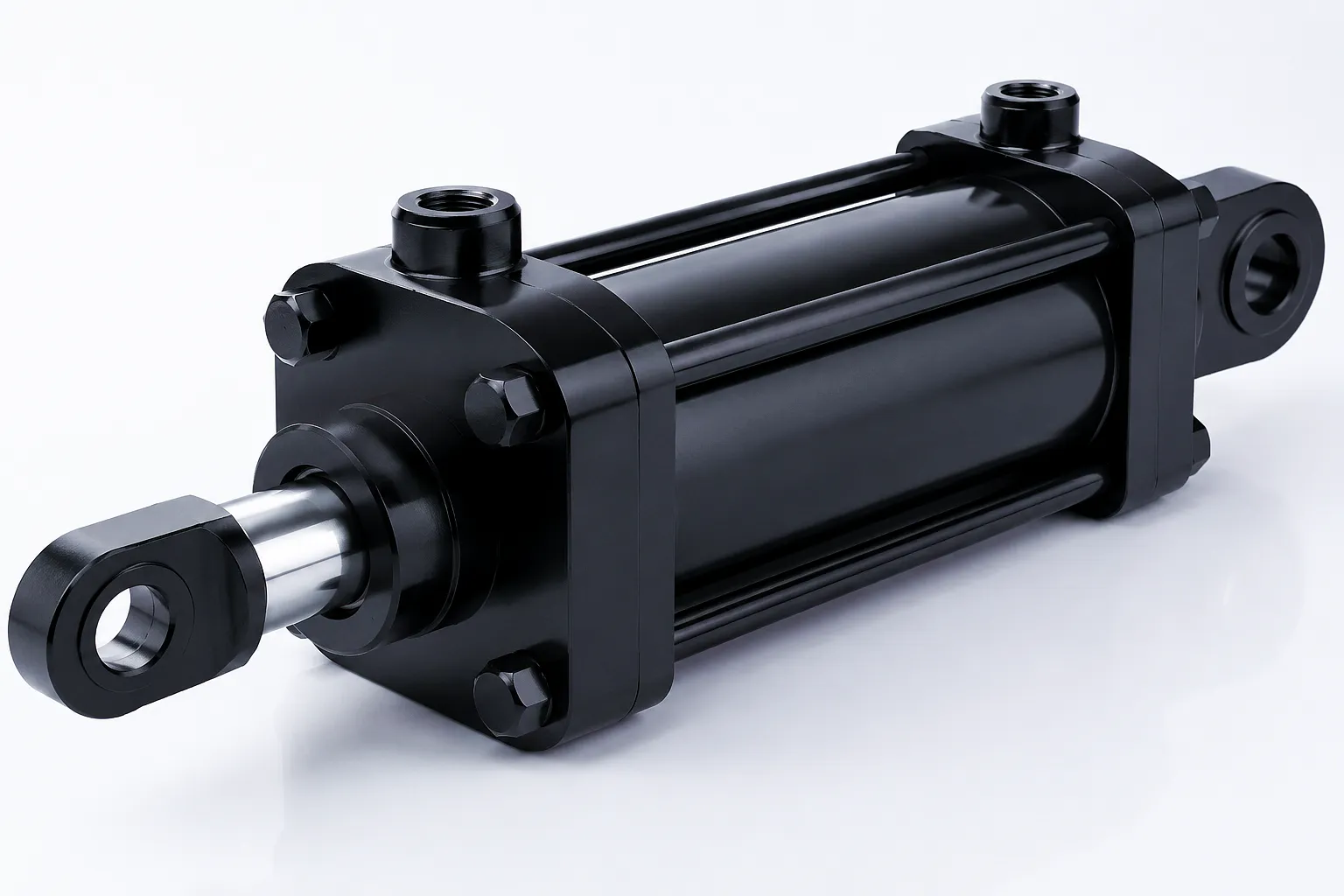 Ever Power operates a specialist hydraulic cylinder manufacturing facility equipped with CNC deep-hole boring machines capable of maintaining H7 bore tolerances in barrels up to 800mm diameter and 10,000mm long. Our honing department operates multi-stage honing lines producing bore finishes to Ra 0.1–0.2 µm with cylindricity within 0.01 mm — surface quality standards that determine seal performance across the full operating life of the cylinder. Every piston rod is subject to 100% optical straightness inspection before hard chrome plating, with straightness tolerance held to 0.15 mm per 1,000 mm of rod length.
Our customisation capability covers the complete specification envelope: bore diameter from 20mm to 800mm, stroke length from 25mm to 10,000mm, working pressures to 450 bar, custom port configurations, integrated position sensing, ATEX-compliant assembly for hazardous area installations, and certification support for LOLER, PSSR, DNV, and Lloyd’s Register requirements. We serve OEMs requiring structured supply programmes of 50 to 5,000 units annually and project-based buyers requiring single units or small batches with short confirmed lead times — typically 4–8 weeks from drawing approval to despatch for custom hydraulic cylinders in the 50–250mm bore range.
800mm
Diámetro máximo del orificio
450 bar
Max Working Pressure
4–8 wks
Typical Lead Time
2M+
Fatigue Cycles Tested
Customer Success: Precision Press Operations, Sheffield Steel Component Manufacturer
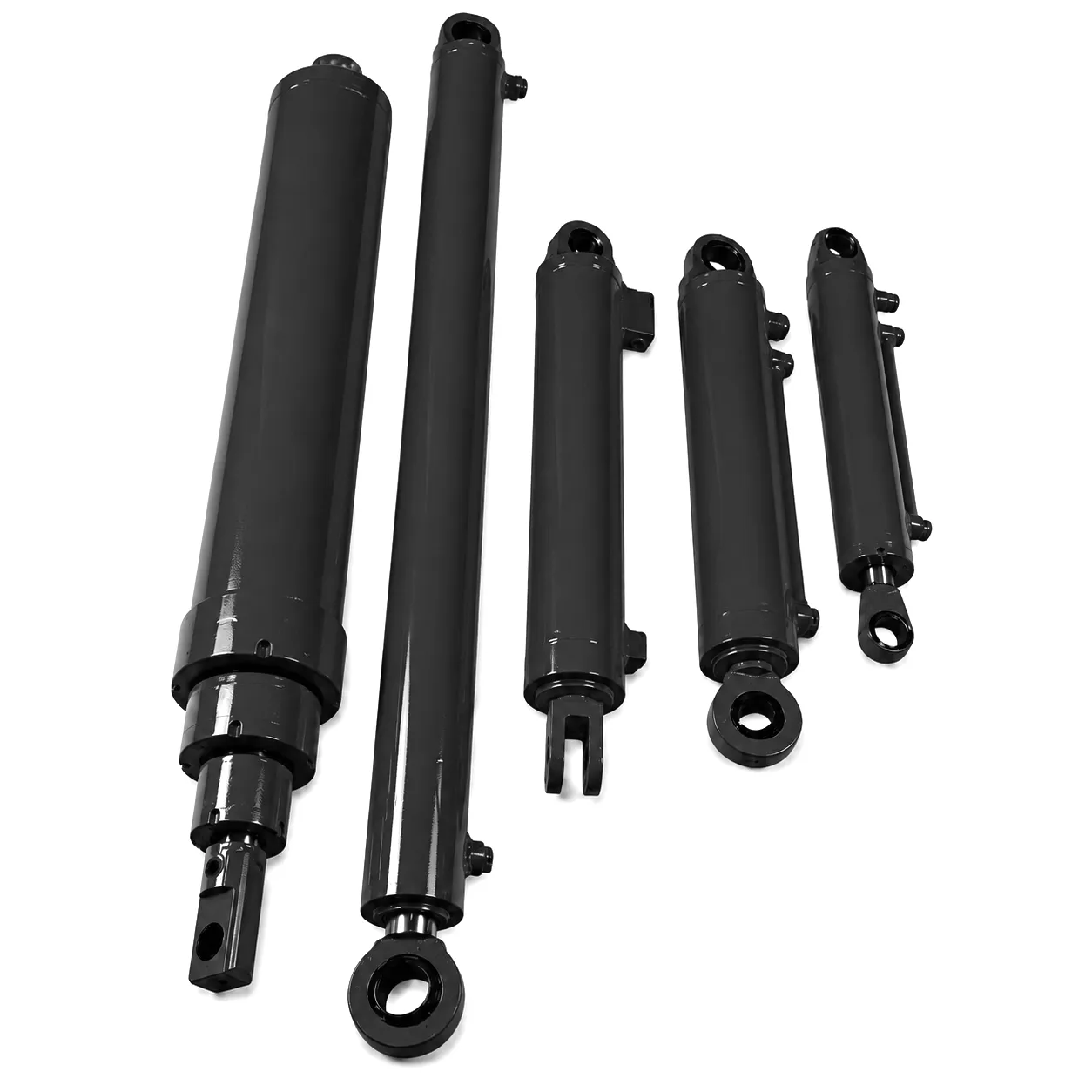 A precision steel component manufacturer in Sheffield — supplying machined structural parts to the UK rail and nuclear construction sectors — operates a bank of eight hydraulic forming presses rated between 250 and 800 tonne. The presses run three shifts, five days per week, producing tight-tolerance stainless and alloy steel components that require consistent hydraulic force delivery to achieve the dimensional specifications demanded by their clients’ quality plans.
Before engaging with Ever Power, the facility had been running catalogue hydraulic cylinders sourced from a European distributor. The cylinders were specified at the upper end of the catalogue pressure range — 250 bar — but the presses frequently generated surge pressures of 280–310 bar during the forming stroke. Seal failures were occurring on average every 14 weeks per cylinder, each requiring a production stoppage of 4–6 hours for seal replacement. Annual maintenance cost for the cylinder bank was in excess of £80,000, with lost production estimated at a further £120,000 per year.
Ever Power’s engineering team conducted a full application review, logging actual hydraulic circuit pressure traces over a two-week production period. The data confirmed surge pressures up to 320 bar at stroke reversal. Ever Power designed a custom hydraulic cylinder programme for all eight presses: 42CrMo4 barrels rated to 350 bar working pressure with a proof test to 525 bar, FKM Viton seal systems selected for the measured temperature range of 18–92°C, and adjustable two-stage cushioning to reduce surge pressures at stroke end by absorbing kinetic energy progressively rather than abruptly. Rod ceramic coating replaced standard hard chrome to provide corrosion resistance appropriate to the coolant mist environment on the press floor.
Following commissioning, the Sheffield facility reported zero unplanned seal failures over the subsequent 18 months of operation. Scheduled maintenance intervals were extended to 24 months. The facility’s maintenance manager attributed an estimated combined saving of £190,000 in the first year to the switch to custom hydraulic cylinders — a figure that comfortably covered the full cost of the custom programme within the first 14 months.
What Our Clients Say
★★★★★
“The Ever Power engineering team actually analysed our circuit pressure traces before quoting — not just a bore and stroke order form. The custom cylinders they designed have been running 18 months without a seal change. The ROI case wrote itself.”
— Maintenance Engineering Manager, Precision Steel Components, Sheffield
★★★★★
“We needed a hydraulic cylinder for a non-standard bore-and-stroke combination to fit our new transfer press without modifying the bed tooling. Ever Power confirmed the deliverable specification and had the unit to our Birmingham facility within six weeks. Fit, performance — both exactly as designed.”
— Capital Equipment Project Engineer, Automotive Tier-1 Supplier, Birmingham
★★★★★
“Our offshore deck cranes in the North Sea require full material traceability and third-party inspection records that catalogue cylinders simply cannot provide. Ever Power delivered custom 316L stainless cylinders with DNV cert documentation and NORSOK-compliant coating. Exactly what we needed for the re-certification survey.”
— Lifting Equipment Superintendent, Marine Crane Operator, Aberdeen
Custom vs Standard Catalogue Hydraulic Cylinder — Direct Comparison
| Factor |
Catalogue Cylinder |
Custom Cylinder (Ever Power) |
| Purchase Price |
Lower |
30–80% higher unit cost |
| Geometric Fit |
Approximate — adaptors often needed |
Exact to drawing — zero adaptor requirement |
| Seal Specification |
Universal NBR kit |
Application-specific PU/FKM/PTFE |
| Material Traceability |
Generic batch cert |
Full melt heat traceability per component |
| Regulatory Documentation |
Data sheet only |
Design calc, test cert, DNV/Lloyd’s on request |
| 5-Year Maintenance Cost |
High on demanding duties |
Lower — TCO advantage from year 2 |
| Lead Time |
Ex-stock or 1–3 weeks |
4–8 weeks from drawing approval |
| Supply Continuity |
Subject to catalogue changes / obsolescence |
Dedicated tooling programme — supply guaranteed |
Ready to Specify the Right Hydraulic Cylinder for Your Application?
Send your bore, stroke, pressure, and duty cycle data to Ever Power’s engineering team. We will review the application and provide a written technical recommendation and price quotation within 48 hours.
📧 Get Your Custom Quote — [email protected]
Editado por gzl

 Spanish
  English
  Italian
  Portuguese
  Dutch
Dutch  Swedish
  Danish
  Finnish
  Polish
  Hindi
Hindi  Kazakh
  Turkish
  Ukrainian
  Romanian
  German
  Russian
  Korean
  Japanese
  Vietnamese
  Thai
Thai  Indonesian
  Malay
Malay  French
  Greek
Greek