
Description du produit
Products Description
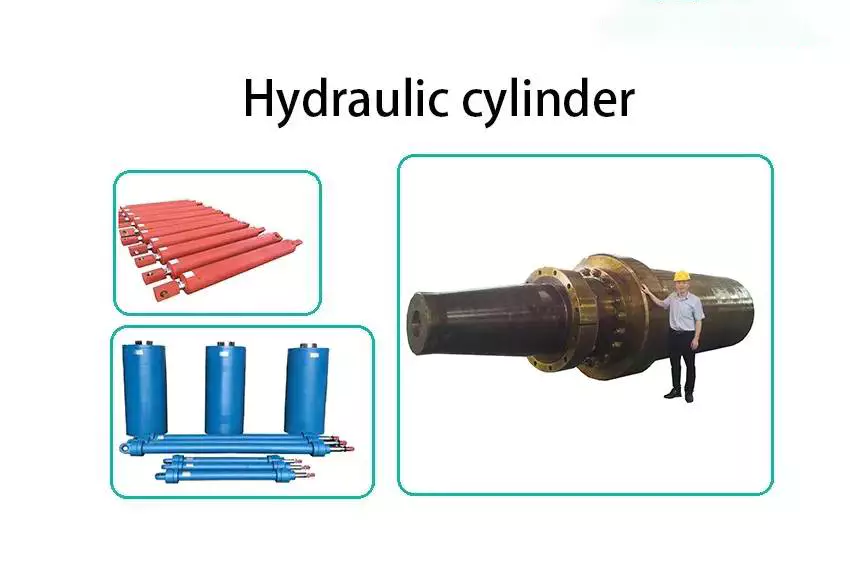
Product Name | HSG Series Hydraulic Cylinder | |||
Work Press | 7/14/16/21/31.5MPa 37.5/63MPa Can be Customized | |||
Matériel | Aluminum,Cast Iron,45mnb Steel,Stainless Steel | |||
Bore Size | 40mm–320mm,Customizable | |||
Shaft Diameter | 20mm–220mm,Customizable | |||
Stroke Length | 30mm–14100mm,Customizable | |||
Rod Surface Hardness | HRC48-54 | |||
Paint Color | Black,Yellow,Blue,Brown,Customizable | |||
Montage | Boucle d'oreille, bride, chape, pied, tourillon, personnalisable | |||
Garantie | 1 Year | |||
MOQ | 1 Piece | |||
Delivery Time | 7-15 Days,Also depands on specific demands | |||
Certification | ISO9001,CE | |||
Company Profile
QIANGLIN HYDRAULIC MACHINERY CO., LTD
| QiangLin is a professional hydraulic equipment manufacturer, mainly engaged in hydraulic system design, manufacture, installation, transformation, sales, and technical services. Our manufacturing facilities are certified to the ISO 9001 standard. We are an approved supplier to many equipment manufacturers in China. We are also partners with many customers from America, Canada, Australia, Germany, England, and other European Countries. Product quality, shorter delivery time, and customer satisfaction are our long-term commitments to our CHINAMFG customers. Hope to be your partner. |
FAQ :
Q1: Are you a trading company or a manufacturer?
A: We have our own factory.
Q2: Are you able to make Non-standard or customized products?
A: Yes, we can.
Q3: How long is your delivery time?
A: Normally, the delivery time is 7 days if we have stock, 15-30 working days if we don’t. but it
also depends on the product
requirements and quantity.
Q4: Do you provide samples? are the samples free or not?
A: Yes, we can provide samples, but they are not free of charge.
Q5: What are your payment terms?
A: 30% deposit T/T or Irrevocable L/C at sight, If you have any questions, please feel free to
contact us.
Q6: What are your After-sales services?
A: Before shipment, Each individual product will be strictly inspected on our factory QC Process
System. In addition, We have a
Customer Service team to respond to customers’ questions within 12 hours. Being helpful in
solving customers’ problems is always our goal.
| Certification: | CE, ISO9001 |
|---|---|
| Pressure: | High Pressure |
| Work Temperature: | Normal Temperature |
| Customization: | Available |
|
|---|
.shipping-cost-tm .tm-status-off{background: none;padding:0;color: #1470cc}
| Shipping Cost: Estimated freight per unit. | about shipping cost and estimated delivery time. |
|---|
| Payment Method: |
|
|---|---|
| Initial Payment Full Payment |
| Currency: | US$ |
|---|
| Return&refunds: | You can apply for a refund up to 30 days after receipt of the products. |
|---|
Can hydraulic cylinders be used for precise operations like CNC machining or molding?
Yes, hydraulic cylinders can be used for precise operations like CNC machining or molding. While hydraulic systems are commonly associated with heavy-duty applications, they can also provide the necessary precision and control required for precise operations in CNC machining and molding processes. Here’s a detailed explanation of how hydraulic cylinders can be utilized for such precise operations:
1. Force and Control:
– Hydraulic cylinders are capable of generating substantial force, which is essential for precise operations in CNC machining and molding. By using hydraulic pressure, the cylinders can deliver the required force to cut or shape materials accurately or exert pressure for molding operations. The hydraulic system allows precise control over the force applied, ensuring consistent and reliable performance.
2. Adjustable Speed and Positioning:
– Hydraulic cylinders offer adjustable speed and precise positioning capabilities, making them suitable for precise operations. By controlling the flow of hydraulic fluid, the speed of the cylinder’s movement can be adjusted according to specific requirements. This adaptability allows for fine-tuning the machining or molding process, achieving the desired precision in material removal or shaping. Hydraulic systems also enable accurate positioning of tools or molds, ensuring precise operations.
3. Integrated Feedback Systems:
– Advanced hydraulic systems can incorporate feedback sensors and control mechanisms to enhance precision in CNC machining and molding. These sensors provide real-time information about the position, speed, and force exerted by the hydraulic cylinders. The control system processes this data and adjusts the flow of hydraulic fluid accordingly, allowing for precise and accurate control over the operations. The feedback systems help maintain consistent performance and compensate for any deviations, ensuring high precision.
4. Damping and Vibration Control:
– Hydraulic cylinders can be equipped with damping mechanisms to minimize vibrations and ensure stability during CNC machining or molding operations. Vibrations can negatively impact precision by causing tool chatter or material deformation. By incorporating cushioning or damping features, hydraulic cylinders help absorb shocks and suppress vibrations, resulting in smoother and more accurate operations.
5. Customization and Adaptability:
– Hydraulic cylinders can be customized and adapted to meet the specific requirements of CNC machining or molding processes. Engineers can design cylinders with unique dimensions, stroke lengths, mounting options, and sealing arrangements to fit into equipment or systems with precise specifications. Customized hydraulic cylinders ensure optimal performance and compatibility for precise operations, enabling seamless integration into CNC machines or molding equipment.
6. Energy Efficiency:
– Hydraulic systems can be designed to be energy-efficient, contributing to cost savings in CNC machining or molding operations. By utilizing variable speed pumps, efficient control valves, and well-designed hydraulic circuits, energy consumption can be optimized. This efficiency reduces heat generation, leading to improved stability and precision in operations while minimizing energy costs.
7. Maintenance and Calibration:
– Regular maintenance and calibration of hydraulic systems are essential to maintain their precision in CNC machining or molding applications. Proper lubrication, inspection of seals, and replacement of worn-out components help ensure optimal performance. Regular calibration of control systems and feedback sensors ensures accurate readings and reliable operation, contributing to precision in machining or molding processes.
In summary, hydraulic cylinders can be effectively used for precise operations like CNC machining or molding. Their ability to generate substantial force, adjustable speed and positioning, integration with feedback systems, damping and vibration control, customization and adaptability, energy efficiency, and proper maintenance contribute to achieving the required precision in these operations. By leveraging the strengths of hydraulic systems, manufacturers can enhance the accuracy and reliability of CNC machining or molding processes, resulting in high-quality products and improved productivity.
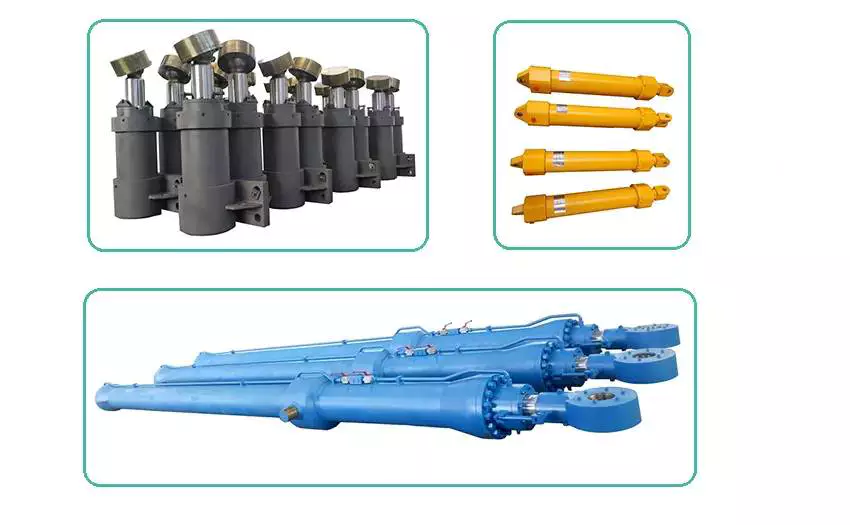
Contribution of Hydraulic Cylinders to the Efficiency of Agricultural Tasks like Plowing
Hydraulic cylinders play a significant role in enhancing the efficiency of agricultural tasks, including plowing. By providing power, control, and versatility, hydraulic cylinders enable agricultural machinery to perform tasks more effectively and with greater precision. Let’s explore how hydraulic cylinders contribute to the efficiency of plowing and other agricultural tasks:
- Powerful Force Generation: Hydraulic cylinders are capable of generating high forces, making them ideal for tasks that require substantial power, such as plowing. The hydraulic system provides pressurized fluid to the cylinders, which convert this hydraulic energy into mechanical force. This force is then utilized to drive plow blades through the soil, overcoming resistance and facilitating efficient soil penetration.
- Adjustable Working Depth: Hydraulic cylinders allow for easy and precise adjustment of plow working depth. By controlling the extension or retraction of the hydraulic cylinder, the depth of the plow blades can be adjusted according to soil conditions, crop requirements, or the farmer’s preferences. This adjustability enhances efficiency by ensuring optimal soil tillage and minimizing unnecessary energy expenditure.
- Responsive Control: Hydraulic systems offer highly responsive control, enabling farmers to make quick adjustments during plowing operations. Hydraulic cylinders respond rapidly to changes in hydraulic pressure and valve settings, allowing for immediate modifications in the plow’s position, depth, or angle. This responsiveness enhances efficiency by facilitating on-the-go adjustments based on soil variations, obstacles, or changing field conditions.
- Implement Versatility: Hydraulic cylinders enable the attachment of various implements to agricultural machinery, expanding their functionality and versatility. In the case of plowing, hydraulic cylinders allow for the attachment and detachment of plow blades or other tillage implements. This versatility enables farmers to adapt their equipment to different soil types, field sizes, or specific plowing requirements, enhancing efficiency by maximizing the utility of the machinery.
- Efficient Time Management: Hydraulic cylinders contribute to time efficiency in agricultural tasks like plowing. With hydraulic systems, farmers can operate plows at higher speeds while maintaining control and precision. The responsive nature of hydraulic cylinders allows for efficient turning, maneuvering, and repositioning of plows, minimizing downtime and optimizing field coverage. This time efficiency translates into increased productivity and reduced overall operational costs.
In summary, hydraulic cylinders significantly contribute to the efficiency of agricultural tasks like plowing. Through powerful force generation, adjustable working depth, responsive control, implement versatility, and efficient time management, hydraulic systems equipped with cylinders enhance the performance and productivity of agricultural machinery. These contributions allow farmers to accomplish plowing tasks more effectively, optimize field operations, and achieve improved overall efficiency in their agricultural practices.
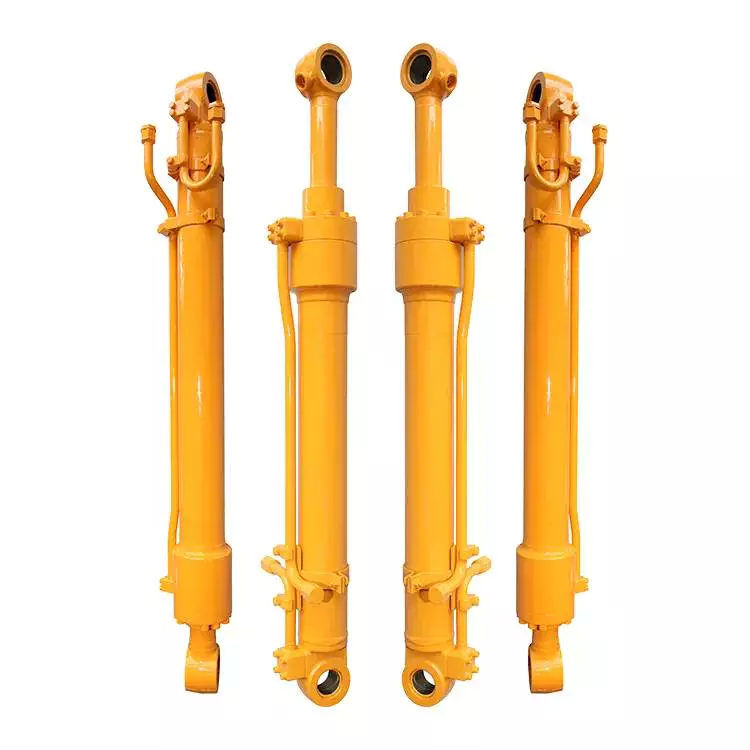
Quelles sont les pratiques de maintenance essentielles pour prolonger la durée de vie des vérins hydrauliques ?
L'entretien des vérins hydrauliques est essentiel pour prolonger leur durée de vie et garantir des performances optimales. Un entretien régulier permet de prévenir l'usure prématurée, les dommages et les pannes, réduisant ainsi les temps d'arrêt et les coûts. Voici quelques pratiques d'entretien essentielles à adopter pour prolonger la durée de vie des vérins hydrauliques :
1. Inspections régulières :
Effectuez des inspections visuelles régulières des vérins hydrauliques afin de déceler tout signe de dommage, de fuite ou d'usure. Inspectez le corps du vérin, la tige de piston, les joints et les points de fixation. Recherchez les fuites de fluide, la rouille, les bosses ou toute usure anormale. La détection précoce des problèmes permet d'effectuer les réparations ou les remplacements nécessaires en temps opportun, évitant ainsi d'autres dommages et prolongeant la durée de vie du vérin.
2. Propreté :
Maintenez un environnement propre autour des vérins hydrauliques afin d'éviter toute contamination du système. La poussière, la saleté et les débris peuvent endommager les joints et autres composants internes, entraînant une usure prématurée et une baisse de performance. Nettoyez régulièrement le vérin et ses alentours pour minimiser les risques de contamination.
3. Lubrification adéquate :
Une lubrification adéquate est essentielle au bon fonctionnement et à la longévité des vérins hydrauliques. Respectez les intervalles de lubrification préconisés par le fabricant et utilisez le lubrifiant approprié. Lubrifiez les pièces mobiles du vérin, notamment la tige de piston, afin de réduire les frottements et l'usure.
4. Entretien des joints :
Les joints d'étanchéité jouent un rôle essentiel dans la prévention des fuites d'huile hydraulique et le maintien des performances du vérin. Inspectez et remplacez rapidement les joints usés ou endommagés. Assurez-vous que les joints sont correctement installés et lubrifiés. Nettoyez régulièrement les gorges des joints afin d'éliminer tout débris susceptible de compromettre leur étanchéité.
5. Contrôles de pression :
Contrôlez régulièrement la pression du système hydraulique afin de vous assurer qu'elle se situe dans la plage de fonctionnement recommandée. Une pression excessive peut endommager le vérin et ses composants, entraînant une usure prématurée. Surveillez les niveaux de pression et effectuez les ajustements nécessaires pour éviter toute surcharge du vérin.
6. Entretien des vannes de régulation :
– Entretenir et inspecter les distributeurs qui régulent le débit et la direction du fluide hydraulique. S’assurer de leur bon fonctionnement et de l’absence de contraintes excessives ou de surpressions dans le vérin. Nettoyer ou remplacer les distributeurs endommagés ou défectueux.
7. Alignement des cylindres :
Un alignement correct des vérins hydrauliques est essentiel à leur longévité. Un mauvais alignement peut engendrer des contraintes latérales excessives, provoquant une usure irrégulière et des dommages potentiels. Assurez-vous que le vérin est correctement aligné avec les autres composants et que les points de fixation sont bien serrés.
8. Prévention des surcharges :
Évitez de soumettre les vérins hydrauliques à des charges supérieures à leur capacité nominale. Une surcharge peut entraîner des dommages internes, une défaillance des joints et une réduction de leur durée de vie. Assurez-vous que la charge requise est compatible avec les capacités du vérin et envisagez l'utilisation de dispositifs de sécurité tels que des systèmes de protection contre les surcharges, le cas échéant.
9. Formation et sensibilisation des opérateurs :
– Dispenser une formation adéquate aux opérateurs d'équipement sur l'utilisation et la manipulation correctes des vérins hydrauliques. Les opérateurs doivent connaître les limites des vérins, les procédures d'utilisation sécuritaires et l'importance d'un entretien régulier. Promouvoir une culture de maintenance préventive et inciter les opérateurs à signaler rapidement tout problème potentiel.
10. Documentation et tenue des registres :
– Conserver une documentation détaillée de toutes les interventions de maintenance, y compris les inspections, les réparations et les remplacements. Tenir un registre des échéances de lubrification, des contrôles de pression et de toute intervention de maintenance effectuée sur les vérins hydrauliques. Cette documentation permet de suivre l'historique des vérins, d'identifier les problèmes récurrents et de planifier efficacement la maintenance future.
En respectant ces pratiques d'entretien, la durée de vie des vérins hydrauliques peut être prolongée, garantissant ainsi leur fiabilité et réduisant les risques de pannes inattendues. Des inspections régulières, la propreté, une lubrification adéquate, l'entretien des joints, les contrôles de pression, la maintenance des distributeurs, l'alignement des vérins, la prévention des surcharges, la formation des opérateurs et la documentation contribuent à la longévité et au fonctionnement optimal des vérins hydrauliques.


editor by CX 2023-10-20
 French
  English
  Italian
  Portuguese
  Dutch
Dutch  Swedish
  Danish
  Finnish
  Polish
  Hindi
Hindi  Kazakh
  Turkish
  Ukrainian
  Romanian
  Spanish
  German
  Russian
  Korean
  Japanese
  Vietnamese
  Thai
Thai  Indonesian
  Malay
Malay  Greek
Greek