
Description du produit
Solutions Provider of Hydraulic Cylinder
Description du produit
As the professional manufacturer of hydraulic cylinder in China, we can offer you custom products to fulfill every requirement for the hydraulic cylinder market.
-Customized Sizes
-Customized Colors
-Customized Designs
-Customized Packages
-More Requirements Available
The objectives of our business are to provide high quality products and services at a cost effective price.
Seal | Parker, Merkel, NOK, Hallite,etc. | Helps Links To get a free sample, please click here |
Paint | Red, Grey, Yellow, Black, etc. | |
Matériel | ST52, CK45, 4140, Duplex2205, | |
Certificate | ABS, Lloyds, SGS, etc. | |
Core components | Bearing, Pressure vessel, Pump | |
Non-standard | Yes | |
Structure | Piston Type, Plunger Type, Telescopic Type | |
Power | Hydraulic & Pneumatic | |
Brand | Guoyue | |
Sample | Available |
Contact the experts at Guoyue today for all your cylinder requirements.
Our Advantages
We have many advantages that will help a lot to your business, including but not limited to:
1. Equipped with State-of-the-art Production Lines
Guoyue has introduced and absorbed advanced hydraulic design and production technologies from European (such as German) and American countries, ensuring that its design and manufacturing capabilities are consistently aligned with international advanced hydraulic cylinder technology.
2. Strict QC Process Before Shipping
The company emphasizes strict quality control, with each production process following standardized operating procedures, and comprehensive management systems in place to ensure that every product is processed to perfection.
3. Success in Many Projects
We have served clients with a diverse range of cylinder requirements, including construction projects, waste management, food industry, mining, infrastructure repairs, metal production, marine, agriculture, oil & gas and more applications.
4. Professional Support in Design, Samples and Bulk Order
As we have our own factories, the more benefits you can get from us:
—–We can get the production done based on the designs, reference pictures, even your drafts.
—–There is no limit of minimum order quantity, and we never refuse the small order, even 1 unit.
—–We can offer you the free samples to check if you buy it in large quantites.
Successful Projects
As the leader in custom hydraulic cylinder design and manufacturing, we have been successful in lot of projects, including
- Aerospace industry: Particularly for such devices as landing gears and CHINAMFG flaps
- Aerial Work Platforms (AWP)
- Agricultural: Small spraying equipment as well as harvesters, loaders and tractors
- Automotive
- Civil Engineering: Bulldozers, excavators, trenchers as well as attachments
- Construction: Concrete pumps and paving applications
- Energy: Flow controls for water gates
- Food, production and manufacturing
- Forestry and logging
- Motorway repairs and maintenance
- Mining
- Materials handling: Single acting hydraulic cylinders for sale are commonly employed in such equipment
- Mechanical engineering: Operation for feeding devices as well as automated production lines, plastic forming machines and transportation devices
- Oil and gas industries
- Recycling plants: Compressing scrap metal and other materials
- Shipbuilding: Steering devices
Company Profile
Guoyue Hydraulic Equipment Manufacturing (ZheJiang ) Co., Ltd., is a high-technology enterprise that integrates research, design, development, production, operation, and service, specializing in the production of hydraulic cylinders, including single acting cylinders, double acting Cylinders, nested cylinders, rotating cylinder, low height cylinders, high tonnage cylinders, tie-rod cylinders and more.
With a registered capital of 50 million Chinese Yuan, the company covers an area of 10, 000 sqft, with more than 100 employees. Also, certified with ISO 9001/ISO 14001/ISO 45001 and many own patents, our products have been approved by clients all over the world, including USA, Europe, Middle East, Middle Asia, Southeast Asia and more countries & areas.
As the leader in custom hydraulic cylinder design and manufacturing, Guoyue serves Original Equipment Manufacturers (OEMs) with custom and innovative hydraulic cylinder solutions. The team at Guoyue liaises closely with each customer to engineer and produce cylinders for machinery, equipment or projects that incorporate cylinders into their hydraulic systems.
We work directly with engineers, business owners, procurement teams, project managers, and technical specialists who often require a custom approach to their cylinder specifications – in terms of fit, function, and overall performance.
Also, Guoyue has introduced and absorbed advanced hydraulic product design and production technologies from Germany and other European and American countries, ensuring that its design and manufacturing capabilities are consistently aligned with international advanced hydraulic cylinder technology.
We have served clients with a diverse range of cylinder requirements. We have extensive experience working within many industries and the unique needs of each – including construction projects, waste management, food Industry, mining, infrastructure repairs, metal production, marine, agriculture, oil & gas and more applications.
Guoyue employees are at the heart of our operations. It is through the dedication of our team at Guoyue that we can consistently deliver the exact services and products required by every client.
Contact the experts at Guoyue today for all your cylinder requirements.
/* January 22, 2571 19:08:37 */!function(){function s(e,r){var a,o={};try{e&&e.split(“,”).forEach(function(e,t){e&&(a=e.match(/(.*?):(.*)$/))&&1
| Certification: | GS, RoHS, CE, ISO9001 |
|---|---|
| Pressure: | 1MPa |
| Work Temperature: | All Available |
| Acting Way: | All Available |
| Working Method: | All Available |
| Adjusted Form: | All Available |
| Customization: | Available |
|
|---|
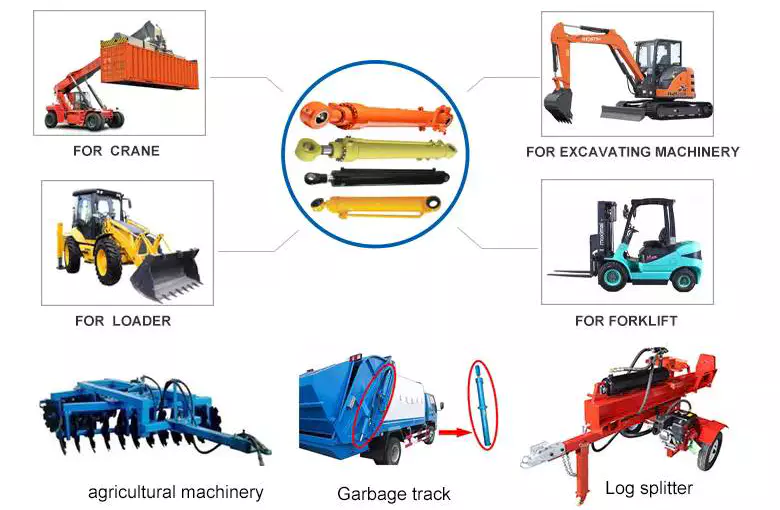
Are there any emerging trends in hydraulic cylinder technology, such as smart features?
Yes, there are several emerging trends in hydraulic cylinder technology, including the integration of smart features. As industries continue to adopt advanced technologies and seek greater efficiency, hydraulic cylinders are being equipped with innovative capabilities to enhance their performance and provide additional benefits. Here are some of the emerging trends in hydraulic cylinder technology:
1. Sensor Integration:
– One of the significant trends in hydraulic cylinder technology is the integration of sensors. Sensors can be embedded within the hydraulic cylinder to monitor various parameters such as pressure, temperature, position, and load. These sensors provide real-time data, allowing for condition monitoring, predictive maintenance, and improved operational control. By collecting and analyzing data, operators can optimize the performance of hydraulic systems, detect potential issues in advance, and prevent failures, resulting in increased reliability and reduced downtime.
2. Connectivity and IoT:
– Hydraulic cylinders are being integrated into the Internet of Things (IoT) ecosystem, enabling connectivity and data exchange. By connecting hydraulic cylinders to a network, operators can remotely monitor and control their performance. IoT-enabled hydraulic cylinders facilitate features such as remote diagnostics, performance optimization, and predictive maintenance. The connectivity aspect allows for better integration with overall equipment systems and enables data-driven decision-making for improved efficiency and productivity.
3. Energy-Efficient Designs:
– With the increasing focus on sustainability and energy efficiency, hydraulic cylinder technology is evolving to incorporate energy-saving features. Manufacturers are developing hydraulic cylinders with improved sealing technologies, reduced friction, and optimized fluid flow dynamics. These advancements minimize energy losses and increase overall system efficiency. Energy-efficient hydraulic cylinders contribute to reduced power consumption, lower operating costs, and a smaller environmental footprint.
4. Advanced Materials and Coatings:
– The use of advanced materials and coatings is another emerging trend in hydraulic cylinder technology. Manufacturers are exploring lightweight materials, such as composites and alloys, to reduce the overall weight of hydraulic cylinders without compromising strength and durability. Furthermore, specialized coatings and surface treatments are being applied to improve corrosion resistance, wear resistance, and lifespan. These advancements enhance the longevity and reliability of hydraulic cylinders, particularly in demanding environments.
5. Intelligent Control Systems:
– Hydraulic cylinder technology is embracing intelligent control systems that optimize performance and enable advanced functionalities. These systems utilize algorithms, machine learning, and artificial intelligence to automate processes, adapt to changing conditions, and optimize hydraulic cylinder movements. Intelligent control systems can adjust parameters in real-time, ensuring precise and efficient operation. This trend allows for increased automation, improved productivity, and enhanced safety in hydraulic system applications.
6. Predictive Maintenance:
– Predictive maintenance is gaining prominence in hydraulic cylinder technology. By utilizing data collected from sensors and monitoring systems, predictive maintenance algorithms can analyze the condition and performance of hydraulic cylinders. This analysis helps to identify potential failures or degradation in advance, enabling proactive maintenance actions. Predictive maintenance reduces unplanned downtime, extends the lifespan of hydraulic cylinders, and optimizes maintenance schedules, resulting in cost savings and improved equipment availability.
7. Enhanced Safety Features:
– Hydraulic cylinder technology is incorporating enhanced safety features to improve operator and equipment safety. These features include integrated safety valves, load monitoring systems, and emergency stop functionalities. Safety systems in hydraulic cylinders help prevent accidents, protect against overloads, and ensure reliable operation. The integration of advanced safety features contributes to safer working environments and compliance with stringent safety regulations.
These emerging trends in hydraulic cylinder technology demonstrate the industry’s focus on innovation, performance optimization, and sustainability. The integration of smart features, connectivity, advanced materials, and predictive maintenance capabilities enables hydraulic cylinders to operate more efficiently, provide real-time insights, and enhance overall system performance. As technology continues to advance, hydraulic cylinder technology is expected to evolve further, offering increased functionality and efficiency for various industries and applications.
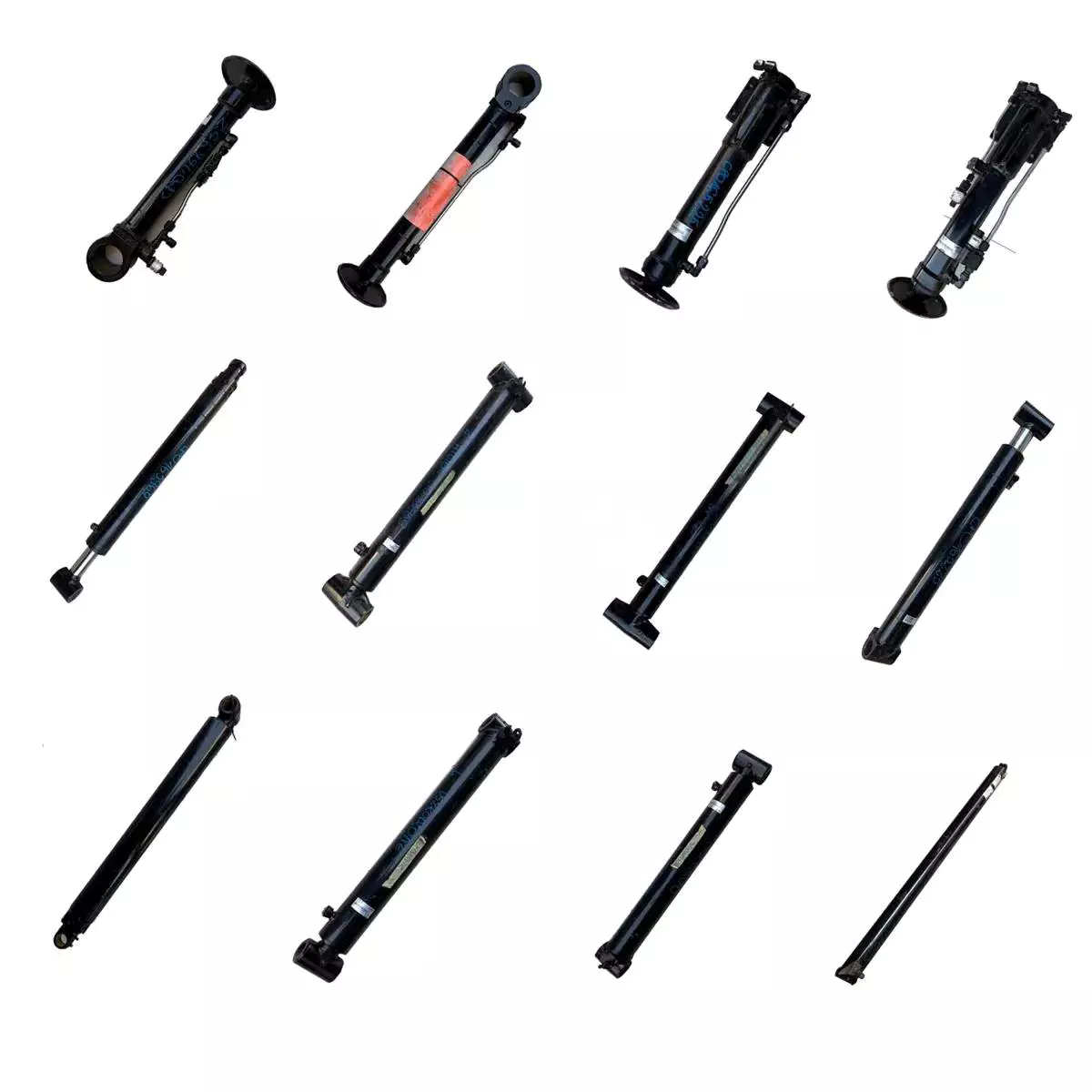
Ensuring Controlled and Safe Force Application in Heavy Machinery with Hydraulic Cylinders
Hydraulic cylinders play a critical role in heavy machinery by ensuring controlled and safe force application. The ability to exert and control high forces is essential for heavy machinery operations, such as lifting, pressing, pushing, or pulling heavy loads. Let’s explore how hydraulic cylinders ensure controlled and safe force application in heavy machinery:
- Force Control: Hydraulic cylinders provide precise force control capabilities. The hydraulic system’s pressure can be adjusted to regulate the force exerted by the cylinder. This control allows operators to apply the necessary force for a specific task while ensuring it remains within safe limits. By accurately controlling the force, hydraulic cylinders help prevent excessive force that could damage the machinery or compromise the safety of the operation.
- Load Balancing: In heavy machinery, multiple hydraulic cylinders are often used in conjunction to distribute and balance the applied force. By using multiple cylinders, the load can be evenly distributed across the machinery, minimizing stress concentrations and ensuring controlled force application. This load balancing approach enhances the stability and safety of the machinery, preventing uneven loading that could lead to structural issues or instability.
- Safety Valves: Hydraulic systems in heavy machinery are equipped with safety valves to protect against excessive force or overloading. Safety valves are designed to release hydraulic fluid from the cylinder when the force exceeds a predetermined threshold. This prevents the force from reaching dangerous levels, safeguarding the machinery and preventing potential accidents or damage. Safety valves provide an additional layer of safety and ensure controlled force application even in unexpected circumstances.
- Pressure Relief Systems: Hydraulic cylinders incorporate pressure relief systems to further enhance safety. These systems are designed to relieve excess pressure in the hydraulic system, which could occur due to factors such as thermal expansion or system malfunctions. By relieving excess pressure, the pressure relief systems prevent sudden and uncontrolled force surges, maintaining safe and controlled force application in heavy machinery.
- Structural Integrity: Hydraulic cylinders are designed to withstand the high forces and loads associated with heavy machinery applications. The cylinders are constructed using robust materials, such as high-strength steel, and undergo rigorous testing to ensure their structural integrity. This ensures that the cylinders can safely handle the forces applied during heavy machinery operations without experiencing failures or deformations that could compromise the safety and controlled force application.
In summary, hydraulic cylinders ensure controlled and safe force application in heavy machinery through force control, load balancing, safety valves, pressure relief systems, and robust structural design. These features and design considerations enable operators to exert the necessary force while maintaining safety and preventing excessive loads or force surges. By incorporating hydraulic cylinders into heavy machinery, manufacturers can achieve controlled force application, enhance operational safety, and protect the machinery from damage or failure.
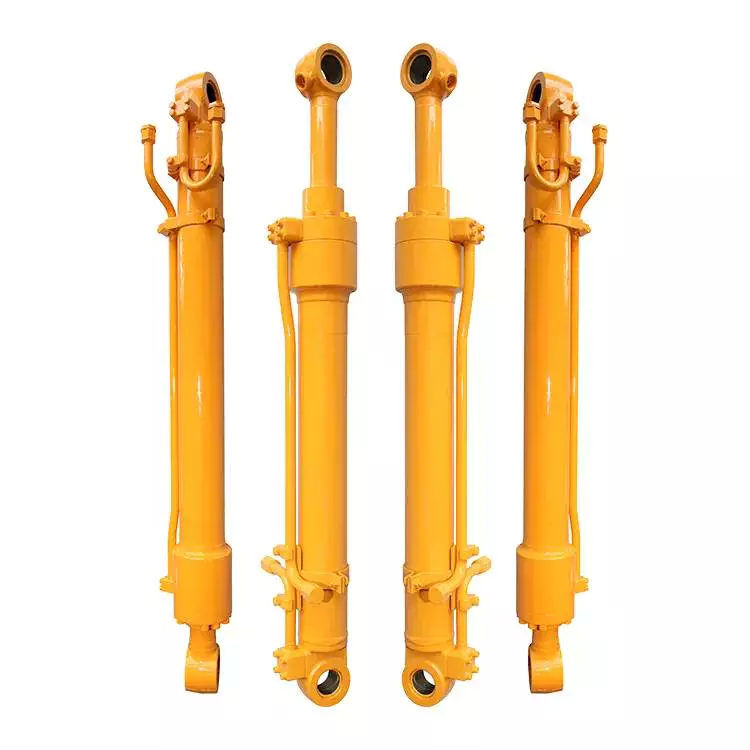
Quelles sont les pratiques de maintenance essentielles pour prolonger la durée de vie des vérins hydrauliques ?
L'entretien des vérins hydrauliques est essentiel pour prolonger leur durée de vie et garantir des performances optimales. Un entretien régulier permet de prévenir l'usure prématurée, les dommages et les pannes, réduisant ainsi les temps d'arrêt et les coûts. Voici quelques pratiques d'entretien essentielles à adopter pour prolonger la durée de vie des vérins hydrauliques :
1. Inspections régulières :
Effectuez des inspections visuelles régulières des vérins hydrauliques afin de déceler tout signe de dommage, de fuite ou d'usure. Inspectez le corps du vérin, la tige de piston, les joints et les points de fixation. Recherchez les fuites de fluide, la rouille, les bosses ou toute usure anormale. La détection précoce des problèmes permet d'effectuer les réparations ou les remplacements nécessaires en temps opportun, évitant ainsi d'autres dommages et prolongeant la durée de vie du vérin.
2. Propreté :
Maintenez un environnement propre autour des vérins hydrauliques afin d'éviter toute contamination du système. La poussière, la saleté et les débris peuvent endommager les joints et autres composants internes, entraînant une usure prématurée et une baisse de performance. Nettoyez régulièrement le vérin et ses alentours pour minimiser les risques de contamination.
3. Lubrification adéquate :
Une lubrification adéquate est essentielle au bon fonctionnement et à la longévité des vérins hydrauliques. Respectez les intervalles de lubrification préconisés par le fabricant et utilisez le lubrifiant approprié. Lubrifiez les pièces mobiles du vérin, notamment la tige de piston, afin de réduire les frottements et l'usure.
4. Entretien des joints :
Les joints d'étanchéité jouent un rôle essentiel dans la prévention des fuites d'huile hydraulique et le maintien des performances du vérin. Inspectez et remplacez rapidement les joints usés ou endommagés. Assurez-vous que les joints sont correctement installés et lubrifiés. Nettoyez régulièrement les gorges des joints afin d'éliminer tout débris susceptible de compromettre leur étanchéité.
5. Contrôles de pression :
Contrôlez régulièrement la pression du système hydraulique afin de vous assurer qu'elle se situe dans la plage de fonctionnement recommandée. Une pression excessive peut endommager le vérin et ses composants, entraînant une usure prématurée. Surveillez les niveaux de pression et effectuez les ajustements nécessaires pour éviter toute surcharge du vérin.
6. Entretien des vannes de régulation :
– Entretenir et inspecter les distributeurs qui régulent le débit et la direction du fluide hydraulique. S’assurer de leur bon fonctionnement et de l’absence de contraintes excessives ou de surpressions dans le vérin. Nettoyer ou remplacer les distributeurs endommagés ou défectueux.
7. Alignement des cylindres :
Un alignement correct des vérins hydrauliques est essentiel à leur longévité. Un mauvais alignement peut engendrer des contraintes latérales excessives, provoquant une usure irrégulière et des dommages potentiels. Assurez-vous que le vérin est correctement aligné avec les autres composants et que les points de fixation sont bien serrés.
8. Prévention des surcharges :
Évitez de soumettre les vérins hydrauliques à des charges supérieures à leur capacité nominale. Une surcharge peut entraîner des dommages internes, une défaillance des joints et une réduction de leur durée de vie. Assurez-vous que la charge requise est compatible avec les capacités du vérin et envisagez l'utilisation de dispositifs de sécurité tels que des systèmes de protection contre les surcharges, le cas échéant.
9. Formation et sensibilisation des opérateurs :
– Dispenser une formation adéquate aux opérateurs d'équipement sur l'utilisation et la manipulation correctes des vérins hydrauliques. Les opérateurs doivent connaître les limites des vérins, les procédures d'utilisation sécuritaires et l'importance d'un entretien régulier. Promouvoir une culture de maintenance préventive et inciter les opérateurs à signaler rapidement tout problème potentiel.
10. Documentation et tenue des registres :
– Conserver une documentation détaillée de toutes les interventions de maintenance, y compris les inspections, les réparations et les remplacements. Tenir un registre des échéances de lubrification, des contrôles de pression et de toute intervention de maintenance effectuée sur les vérins hydrauliques. Cette documentation permet de suivre l'historique des vérins, d'identifier les problèmes récurrents et de planifier efficacement la maintenance future.
En respectant ces pratiques d'entretien, la durée de vie des vérins hydrauliques peut être prolongée, garantissant ainsi leur fiabilité et réduisant les risques de pannes inattendues. Des inspections régulières, la propreté, une lubrification adéquate, l'entretien des joints, les contrôles de pression, la maintenance des distributeurs, l'alignement des vérins, la prévention des surcharges, la formation des opérateurs et la documentation contribuent à la longévité et au fonctionnement optimal des vérins hydrauliques.


editor by CX 2024-03-23
 French
  English
  Italian
  Portuguese
  Dutch
Dutch  Swedish
  Danish
  Finnish
  Polish
  Hindi
Hindi  Kazakh
  Turkish
  Ukrainian
  Romanian
  Spanish
  German
  Russian
  Korean
  Japanese
  Vietnamese
  Thai
Thai  Indonesian
  Malay
Malay  Greek
Greek