
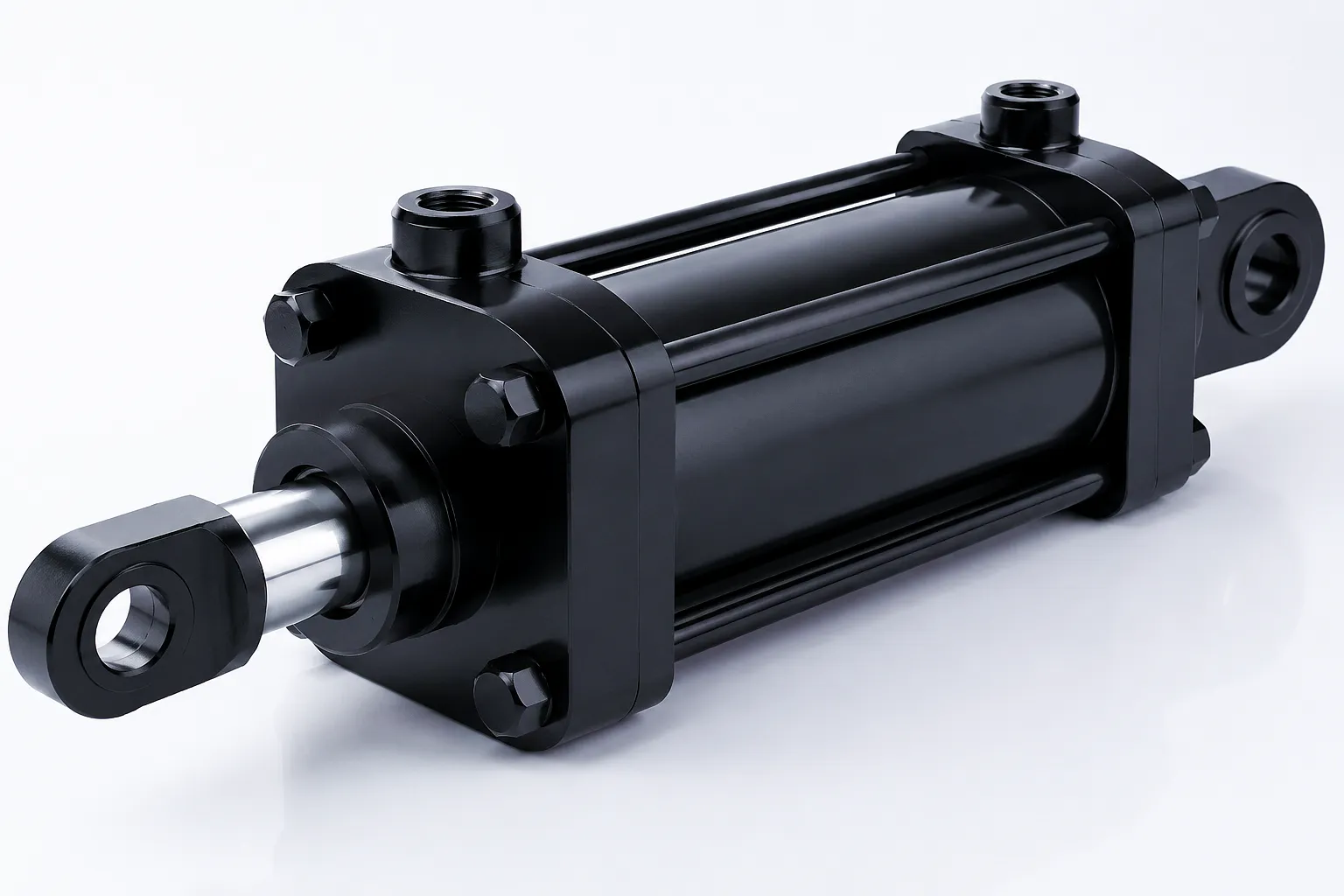
 Every excavator depends on its hydraulic boom cylinder to translate fluid pressure into the raw mechanical force that lifts, lowers, and positions the boom arm. That relationship sounds straightforward until you are standing in a plant yard in Sheffield trying to decide between a 120 mm bore and a 140 mm bore, or debating whether a chrome-plated rod or a stainless steel rod is the right call for the salty coastal conditions of a Thames Estuary infrastructure project. The hydraulic boom cylinder is not a commodity part you can select by price alone — its bore diameter, stroke length, operating pressure rating, seal grade, and mounting geometry must align precisely with the host machine’s hydraulic circuit and duty cycle. Getting this wrong does not just cause premature cylinder failure; it can void OEM warranties, trigger Health and Safety Executive (HSE) reportable incidents, and bring a jobsite in Birmingham or Manchester to a standstill while replacement lead times stretch to weeks.
This guide walks through every decision layer — from first-principles force calculations to real-world UK procurement considerations — so that plant engineers, fleet managers, and OEM procurement teams can make selections that are technically grounded and commercially sound. Whether you are repairing a 5-tonne mini excavator or specifying cylinders for a new line of 30-tonne long-reach machines destined for quarry work in the Peak District, the framework here applies equally.
How a Hydraulic Boom Cylinder Actually Works
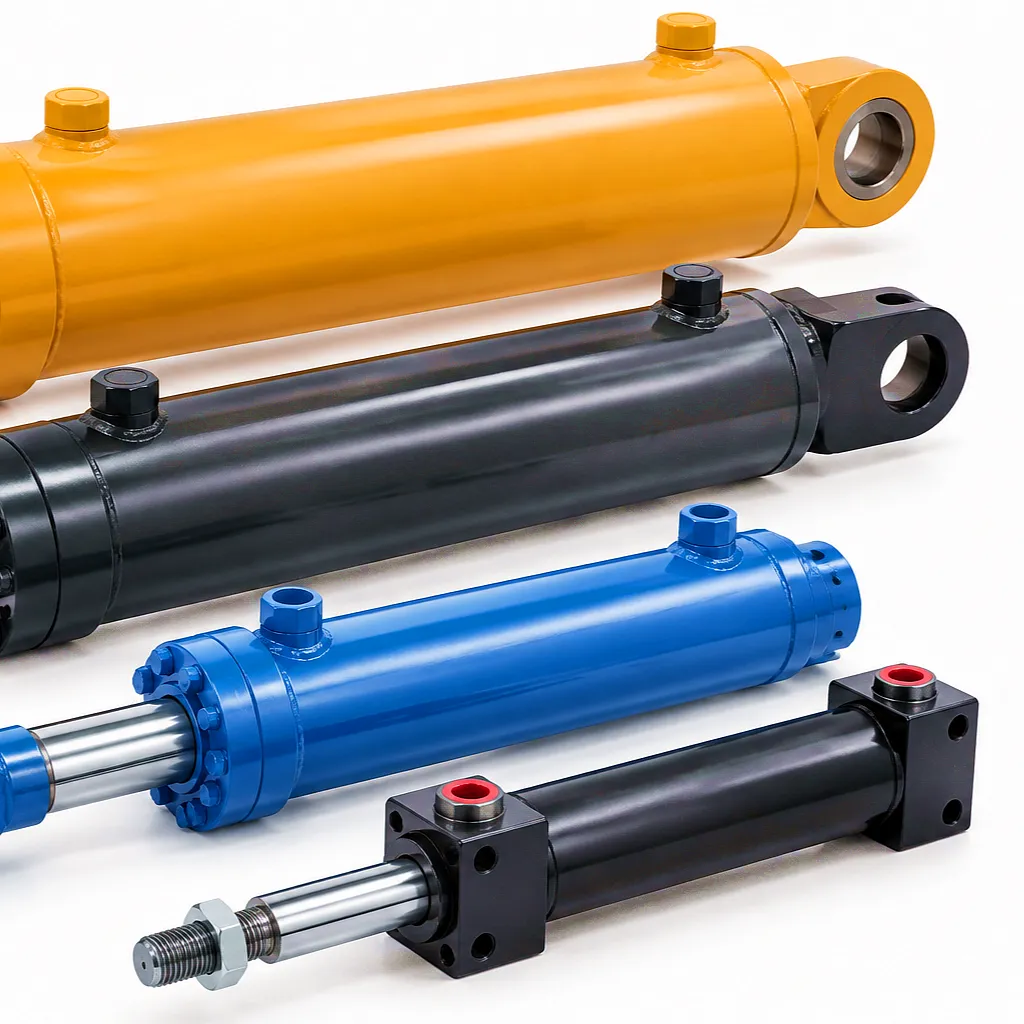 At its core, a hydraulic boom cylinder is a double-acting linear actuator. Pressurised hydraulic fluid — typically mineral oil meeting ISO VG 46 or VG 68 specification — enters either the cap-end port or the rod-end port, driving the piston in the corresponding direction. On the cap-end stroke, the full bore area of the piston is exposed to pressure, generating the maximum extension force. On the rod-end stroke, the effective area is reduced by the cross-section of the piston rod, producing a proportionally lower retraction force from the same system pressure. This difference in force between extension and retraction is not a design flaw; it is an inherent geometric reality of single-rod cylinders, and the excavator’s boom kinematics are engineered to work with it rather than against it.
The hydraulic force equation is F = P × A, where F is the output force in Newtons, P is the system pressure in Pascals, and A is the effective piston area in square metres. For a 140 mm bore cylinder operating at 350 bar — a typical working pressure for a 20-tonne excavator — the extension force calculates to approximately 539 kN, or about 55 tonnes-force. That number alone illustrates why bore size is the single most influential design parameter: doubling the bore area quadruples the force output for the same system pressure. Getting bore sizing right means modelling the peak load the boom experiences at its worst leverage angle, applying a safety factor of at least 1.5, and working backwards to the required bore diameter from the machine’s hydraulic pump pressure ceiling.
Inside the cylinder tube, the piston carries a set of high-pressure seals — typically a combination of a main energised PTFE lip seal and a secondary O-ring back-up — that prevent fluid transfer between the two working chambers. At the rod end, a wiper seal strips contamination from the chrome rod surface before it can enter the barrel, and a rod seal assembly maintains the internal pressure differential. The cushioning arrangement at each end of the stroke — either adjustable needle valves or fixed orifice cushions — absorbs kinetic energy as the piston decelerates, preventing metal-to-metal impact and the associated shock loads that can fracture welds or damage the host machine’s boom pivot pins.
Core Materials That Define Long-Term Performance
Material specification is where good cylinder design separates from mediocre cylinder design. Every component — barrel, rod, piston, end caps, seals — must be matched to the operating pressure, temperature range, fluid chemistry, and environmental exposure the cylinder will experience over its service life. For UK excavator applications, that means considering everything from the high-humidity winters on a Birmingham construction site to the chloride-laden atmosphere of a port project in Felixstowe or Southampton.
Precision cold-drawn seamless steel tube (ST52-3 or equivalent EN10305-1) with honed internal bore finish Ra 0.2–0.4 µm. The seamless construction eliminates weld seams that could propagate fatigue cracks under cyclic loading. Wall thickness is calculated using Lamé’s equation with a minimum burst pressure factor of 4:1 against working pressure.
CK45 carbon steel or 42CrMo4 alloy steel, ground to h6 tolerance and hard chrome plated to a minimum depth of 25 µm (typically 50–100 µm for demanding duty). The chrome layer is ground to Ra 0.1–0.2 µm to extend wiper and rod seal life. For coastal or chemically aggressive environments, induction-hardened stainless steel (SUS304/316) rod is specified instead.
Nodular cast iron (GGG-40) or ductile iron pistons carry grooves for the dynamic sealing system. Standard seal sets use fabric-reinforced polyurethane or PTFE-based compound seals rated to 400 bar peak. For temperatures below -20°C — a real concern for winter plant operation in northern England and Scotland — low-temperature HNBR or FKM seals are required to prevent brittleness and bypass leakage.
External cylinder bodies receive either electrostatic powder coating (60–80 µm DFT) or two-pack epoxy primer plus polyurethane topcoat for outdoor plant applications. Exposed steel surfaces on the body are phosphated before painting to enhance adhesion and corrosion resistance. Mounting eyes and pins are typically zinc-plated and chromate-passivated or cadmium-free alternative-plated per REACH compliance.
The Five Parameters That Determine the Right Cylinder
Experienced plant engineers have a saying in the industry: “specify in haste, replace at leisure.” A hydraulic boom cylinder that is over-specified wastes budget and adds dead weight to the machine; one that is under-specified fails prematurely and causes dangerous loss of control. The selection process must be systematic, and it must begin with five fundamental parameters before any product catalogue is opened.
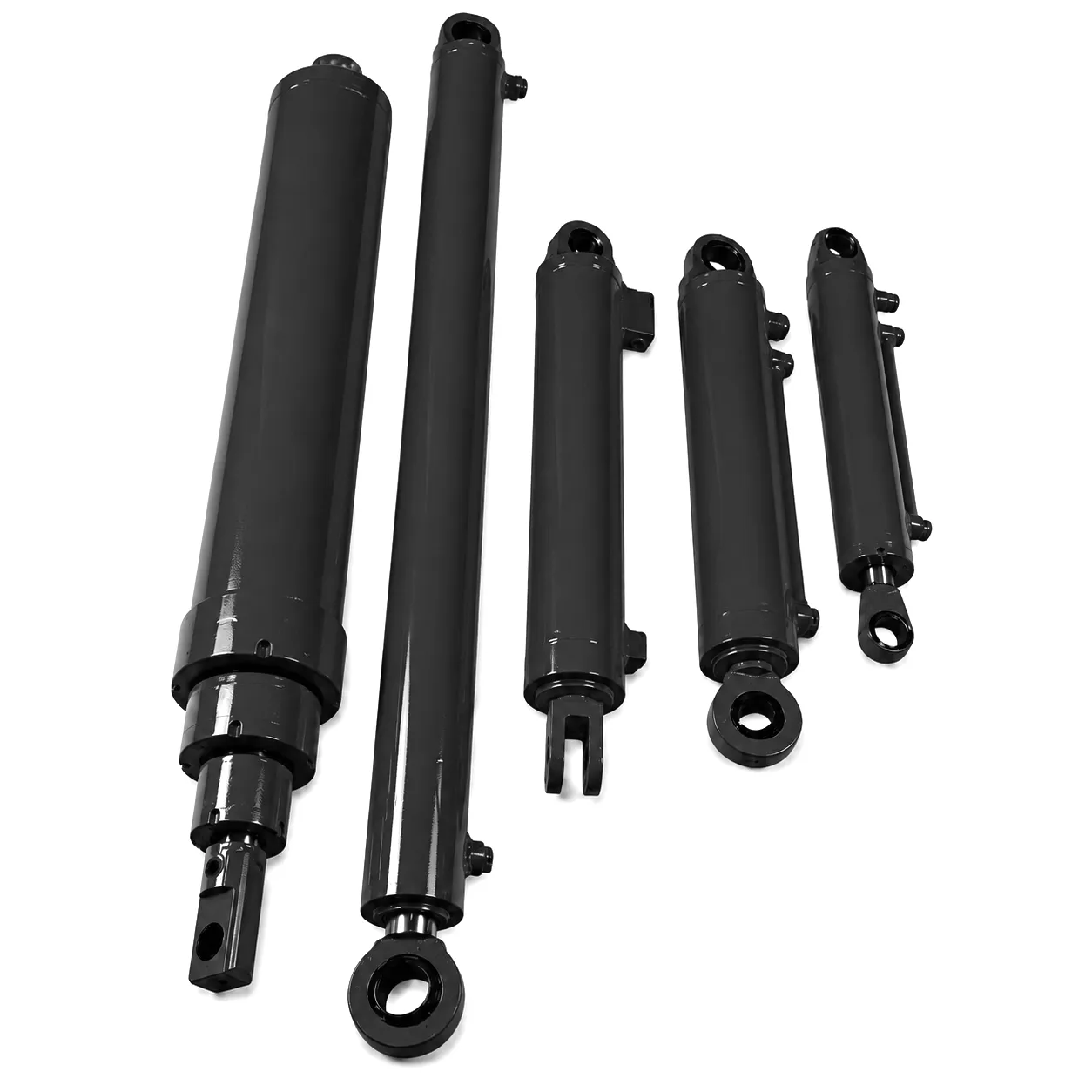
Calculated from required extension force and available system pressure. Standard excavator boom cylinders range from 80 mm to 220 mm bore. Mini excavators (1–5 t) typically use 80–100 mm; 20-tonne machines use 130–160 mm; large mining excavators may exceed 200 mm.
Defined by the boom’s required angular travel and the pivot geometry. Incorrect stroke length produces either inadequate boom reach or end-of-stroke cushion override, both of which accelerate wear. Always specify from the OEM’s kinematic data rather than approximating.
Working pressure (typically 250–380 bar for modern excavators) drives wall thickness calculation and seal selection. Proof pressure (1.5× working) and burst pressure (4× working) must be verified against the cylinder’s certificate of conformity — a mandatory document for UK plant operators under PSSR 2000.
Slender rod cylinders are vulnerable to Euler buckling under compressive boom loads. Rod diameter must be checked against Euler’s critical load formula (Pcr = π² × E × I / L²) for the maximum extended-stroke length, with appropriate end-condition factor for the actual pivot arrangement.
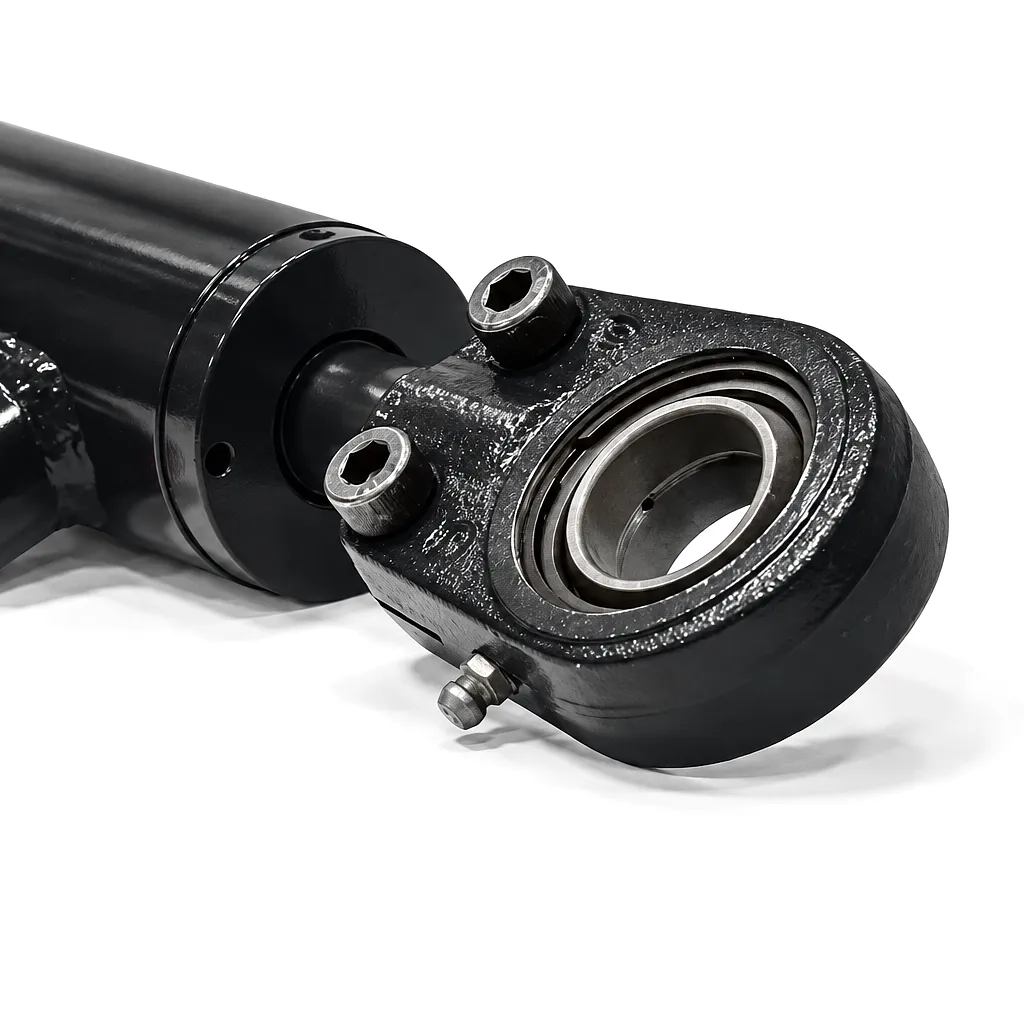
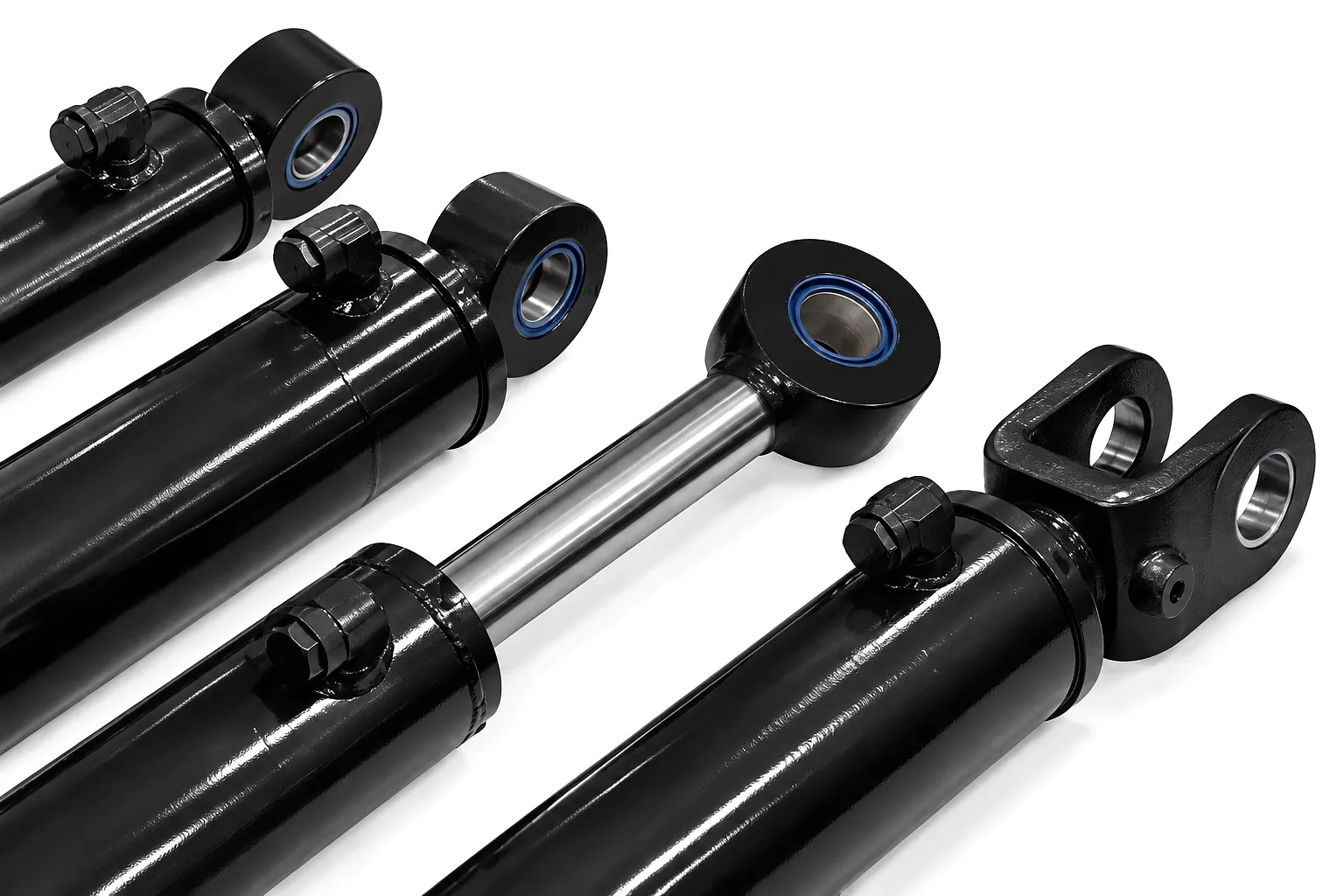
Boom cylinders mount through clevis-pin arrangements at both cap and rod ends. Pin diameter, hole tolerance (typically H7/h6), lug width, and centre-to-centre distance must match the boom fabrication precisely. Even 2 mm off in lug spacing can introduce side loading that destroys rod seals within weeks.
Hydraulic Boom Cylinder — Technical Performance Parameters
The table below summarises the standard performance envelope for Ever Power’s hydraulic boom cylinders across the excavator weight class range. All figures represent typical production values; custom specifications are available for non-standard duty cycles. Certificates of Conformity, material test reports, and third-party inspection documentation are available upon request for UK plant operators and hire fleet managers.
| Paramètre | Mini (1–5 t) | Mid (6–15 t) | Standard (16–30 t) | Large (30–60 t) |
|---|---|---|---|---|
| Bore Diameter (mm) | 80–100 | 100–130 | 130–160 | 160–220 |
| Rod Diameter (mm) | 45–60 | 60–80 | 80–110 | 110–160 |
| Stroke Length (mm) | 400–800 | 700–1,200 | 1,000–1,600 | 1,400–2,400 |
| Working Pressure (bar) | 200–280 | 250–320 | 280–380 | 300–420 |
| Max Extension Force (kN) | 100–220 | 200–430 | 390–770 | 640–1,600 |
| Cylinder Body Material | ST52-3 / EN10305-1 Cold-Drawn Seamless Steel | |||
| Rod Chrome Thickness | 25 µm min / 50–100 µm standard | |||
| Température de fonctionnement | -20°C to +80°C (std) / -40°C to +120°C (option) | |||
| Seal Type (Standard) | PU / PTFE Composite (Hallite, Parker, or equivalent) | |||
| Bore Finish (Ra) | 0.2–0.4 µm (honed, precision ground) | |||
| Amortissement | Adjustable needle valve cushion (both ends), fixed orifice optional | |||
| Mount Style | Clevis–Clevis (standard) / Spherical Bearing Eye option | |||
| Test Standard | ISO 10100, EN 14952, PSSR 2000 (UK) | |||
Core Technical Advantages You Should Expect from a Quality Boom Cylinder
A hydraulic boom cylinder worth specifying into a professional plant application delivers more than raw force numbers. The best cylinders in the market combine precision manufacturing tolerances with intelligent design features that reduce total cost of ownership over the machine’s working life. When evaluating competing products — whether from a UK-based distributor, a direct-import source, or an OEM replacement catalogue — the following performance characteristics should be non-negotiable.
✦
A honed bore at Ra 0.2–0.4 µm ensures seal lip contact pressure is distributed evenly around the full 360-degree circumference, eliminating the localised high-pressure regions that cause premature seal extrusion and internal leakage. Cylinders with ground rather than honed bores should be rejected for dynamic boom applications.
✦
A minimum 50 µm hard chrome deposit on the rod surface, polished to Ra 0.1 µm, is the first line of defence against fluid contamination, corrosion, and seal wear. On UK plant operating in muddy conditions — think groundworks in the Midlands or utility trenching in urban London — this surface is constantly challenged by fine silica particles that the wiper seal strips away. Thicker chrome layers extend the interval between rod replacement or re-chroming service events.
✦
End-of-stroke cushioning is not optional on boom cylinders — it is a safety and longevity feature. Adjustable needle valve cushions allow the service engineer to fine-tune the deceleration profile for the actual machine speed and load, rather than accepting a factory-set orifice that may be mismatched to an unusual duty cycle. This matters particularly for long-reach boom configurations common on waterfront projects at ports like Southampton or Tilbury, where the extended stick creates higher inertia loads.
✦
UK plant operators working on publicly procured civil infrastructure — rail, highways, utilities — are increasingly required to produce documentation proving that pressure-containing components meet the Pressure Systems Safety Regulations 2000 (PSSR). This means Certificate of Conformity (CoC), hydrostatic test records at 1.5× working pressure, and material test reports (MTRs) for the cylinder body and rod. A cylinder supplier who cannot produce these documents on request is not suitable for professional UK civil contracting work.
Industrial Application Scenarios Across the UK
Hydraulic boom cylinders serve a remarkably broad range of industries across the United Kingdom, each placing distinct demands on the cylinder’s pressure rating, duty cycle, environmental resistance, and service accessibility. Understanding which scenario your application most closely resembles is the starting point for precise specification.
Ever Power: Precision Manufacturing & Customisation Capability
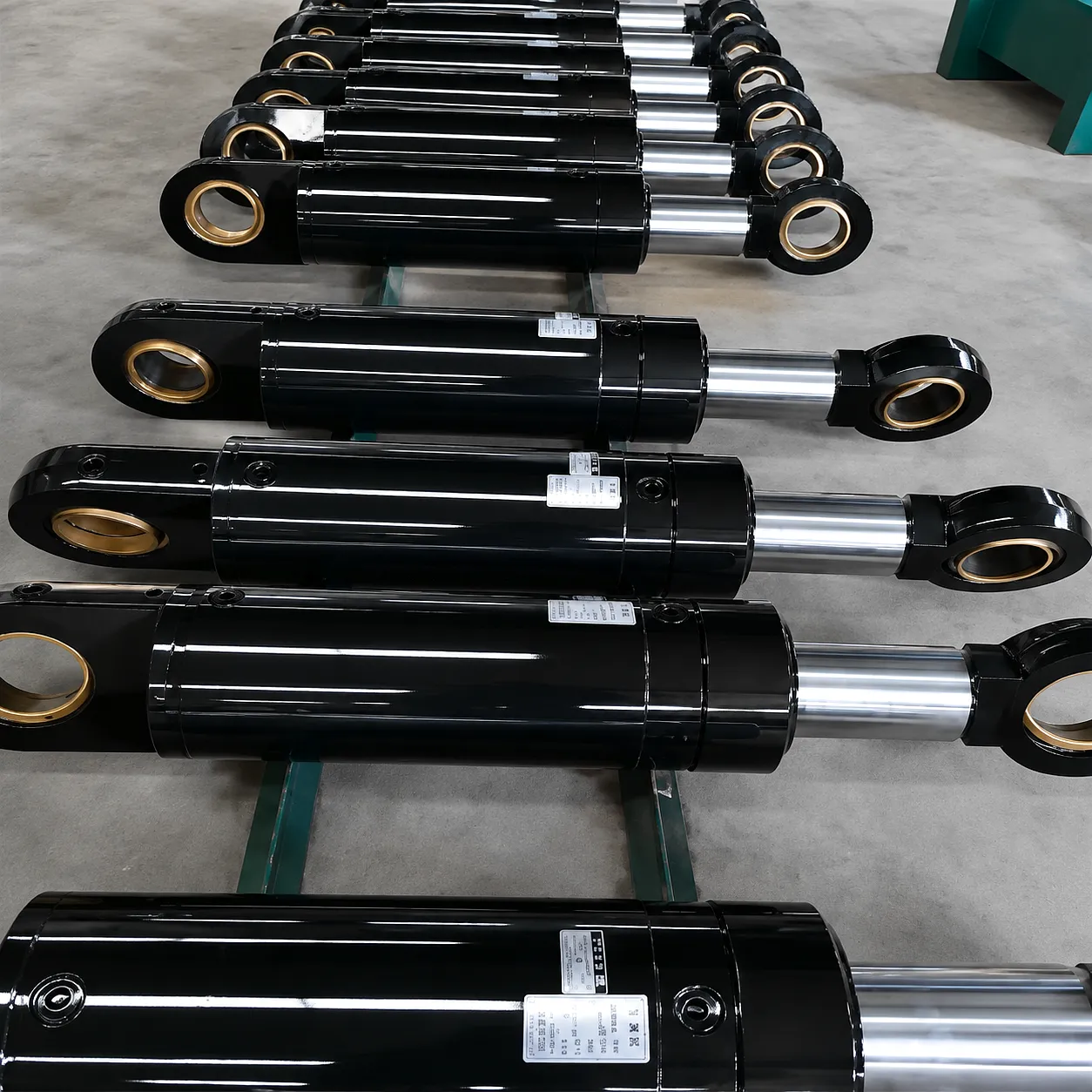 Ever Power operates a dedicated hydraulic cylinder manufacturing facility equipped with automated precision honing lines, CNC turn-mill centres, robotic chrome plating bath control, and a purpose-built cleanliness-controlled assembly bay. The manufacturing floor holds ISO 9001:2015 quality management certification, and a dedicated quality assurance team performs CMM dimensional inspection on every bore, rod, and end-cap component before cylinder assembly begins. Hydrostatic proof testing at 1.5× rated working pressure is conducted on 100% of units shipped — not on a sample basis.
What genuinely sets Ever Power apart in the B2B hydraulic cylinder supply chain is the depth of customisation capability the engineering team can offer UK buyers. Non-standard bore diameters, unusual lug widths, extended rod lengths beyond conventional catalogue ranges, custom port thread forms (BSP, NPT, ORFS, metric DIN), and alternative seal compound specifications can all be accommodated within a production lead time of 3–6 weeks for initial orders. Repeat orders of established custom designs run on a 2–3 week cycle with full traceability to the original design approval record, ensuring consistent interchangeability across a customer’s plant fleet.
Customer Success Story: Nottingham Groundworks Fleet Transformation
 Midland Groundforce Ltd, a civil groundworks contractor based in Nottingham with a fleet of 18 excavators ranging from 5-tonne compacts to a pair of 25-tonne machines, approached Ever Power in late 2024 facing a recurring maintenance crisis. Their two largest machines — deployed on a long-running highway drainage contract west of the A52 — were consuming boom cylinders at a rate of one replacement per machine per quarter. The failure mode was consistent: internal leakage caused by rod seal extrusion, attributable to the abrasive clay and sandstone ground conditions generating contaminant ingress past the wiper seal.
Ever Power’s engineering team conducted a remote specification review using the original OEM cylinder drawings supplied by Midland Groundforce’s plant manager. The diagnosis identified two root causes: the original chrome rod surface finish was below the Ra 0.15 µm threshold required for the abrasion load in that particular ground condition, and the standard PU wiper seal was undersized for the rod-end contamination level generated by intermittent groundwater ingress. Ever Power proposed a custom replacement specification: 80 µm chrome depth (versus the OEM’s 40 µm), rod polished to Ra 0.08 µm, and a Hallite 800-series heavy-duty wiper seal replacing the standard item.
Midland Groundforce took delivery of four custom cylinders within 28 working days — two fitted immediately, two held as bonded stock. Measured against the previous 90-day failure interval, the Ever Power units completed 11 months of continuous operation without seal replacement at the first service inspection. The annual maintenance cost saving on those two machines alone was estimated at £18,400 by the fleet manager, accounting for cylinder cost, labour, and productivity loss during unplanned downtime. Midland Groundforce subsequently standardised their entire fleet replacement programme through Ever Power, converting 12 additional machines to the custom specification across 2025.
What UK Plant Operators Say About Ever Power Cylinders
“We’ve been through three different cylinder suppliers in the past five years, and Ever Power is the first one where we’ve actually made it past twelve months without a seal failure on the boom. The heavier chrome rod specification made a genuine difference in our Nottinghamshire clay conditions — that’s not marketing language, that’s what our service records show.”
“The documentation package that came with our cylinders for the Network Rail contract was exactly what we needed — CoC, MTRs, hydrostatic test certificates, all properly formatted for the contract’s quality plan. No chasing, no reissuing, it all arrived with the delivery. For a plant procurement manager dealing with a Stage 3 infrastructure project, that level of paperwork discipline is worth as much as the cylinder specification itself.”
“We run a mixed fleet of long-reach machines out of our Sheffield depot doing demolition and remediation work. Ever Power understood straight away that we needed FKM seals and a heavier cushion setting because of the impact loads in demolition applications — we didn’t have to explain it twice. The custom quote came back within 24 hours and the cylinders were with us in under four weeks. That’s the kind of responsiveness you need in a supplier when machine downtime costs you £2,000 a day.”
Foire aux questions
Send Ever Power your machine details, OEM part number, or existing cylinder measurements. We’ll come back with a technically verified, fully documented quotation within one working day.
📧 Demandez un devis — [email protected]
 French
  English
  Italian
  Portuguese
  Dutch
Dutch  Swedish
  Danish
  Finnish
  Polish
  Hindi
Hindi  Kazakh
  Turkish
  Ukrainian
  Romanian
  Spanish
  German
  Russian
  Korean
  Japanese
  Vietnamese
  Thai
Thai  Indonesian
  Malay
Malay  Greek
Greek