
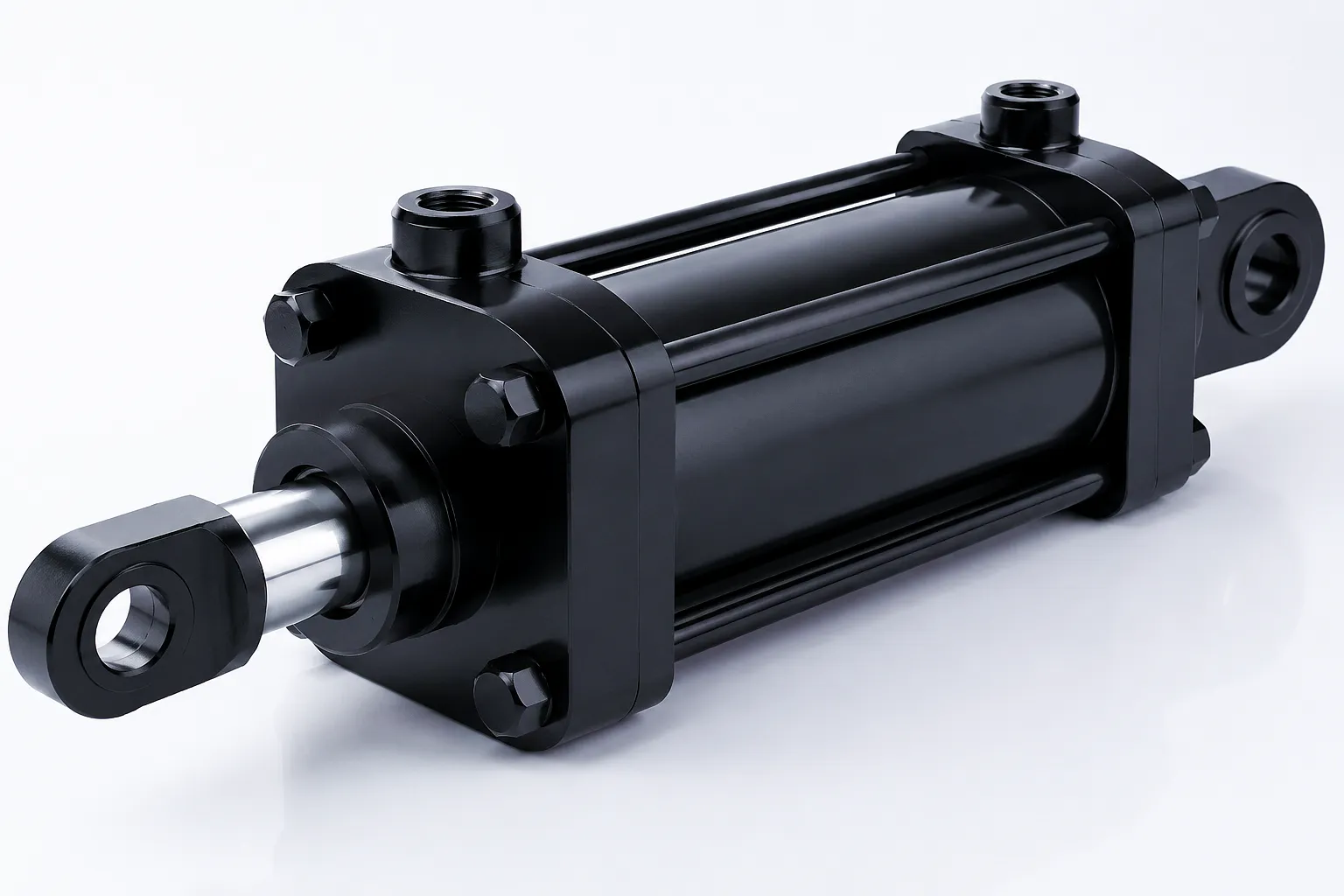
 Every time a JCB arm extends over a trench on a Birmingham infrastructure project, or a Liebherr crane lifts a steel beam above a Sheffield fabrication yard, a boom cylinder is doing the hard work. These hydraulic components convert fluid pressure into the linear force that moves booms, dippers, and attachments across excavators, cranes, aerial work platforms, and a vast range of heavy plant machinery. When one of them fails or reaches the end of its service life, the procurement conversation that follows is rarely simple. The question is almost always the same: do you go back to the original equipment manufacturer for a factory replacement, or do you source an aftermarket boom cylinder that promises comparable performance at a lower price?
For UK plant operators managing tight maintenance budgets under the pressure of rising energy costs and post-pandemic parts shortages, the OEM versus aftermarket debate has never been more commercially significant. The right choice depends on a layered set of factors: the age and warranty status of the machine, the duty cycle it runs, the criticality of the application, the availability of technical documentation, and the credibility of the supplier you are dealing with. Getting this decision wrong can mean expensive downtime on a construction site in Manchester or a premature cylinder failure that voids a machine warranty — neither of which any fleet manager wants on their record.
This guide cuts through the marketing noise on both sides of the argument. It examines the engineering fundamentals that separate a premium boom cylinder from a budget one, lays out the true cost picture across the full ownership cycle, and gives you a structured framework for making the right call depending on your specific operating context. Whether you run a single machine or a fleet of fifty, the analysis here is designed to help you spend confidently and avoid the failures that come from making a procurement decision based on purchase price alone.
What a Boom Cylinder Actually Does — And Why Build Quality Matters So Much
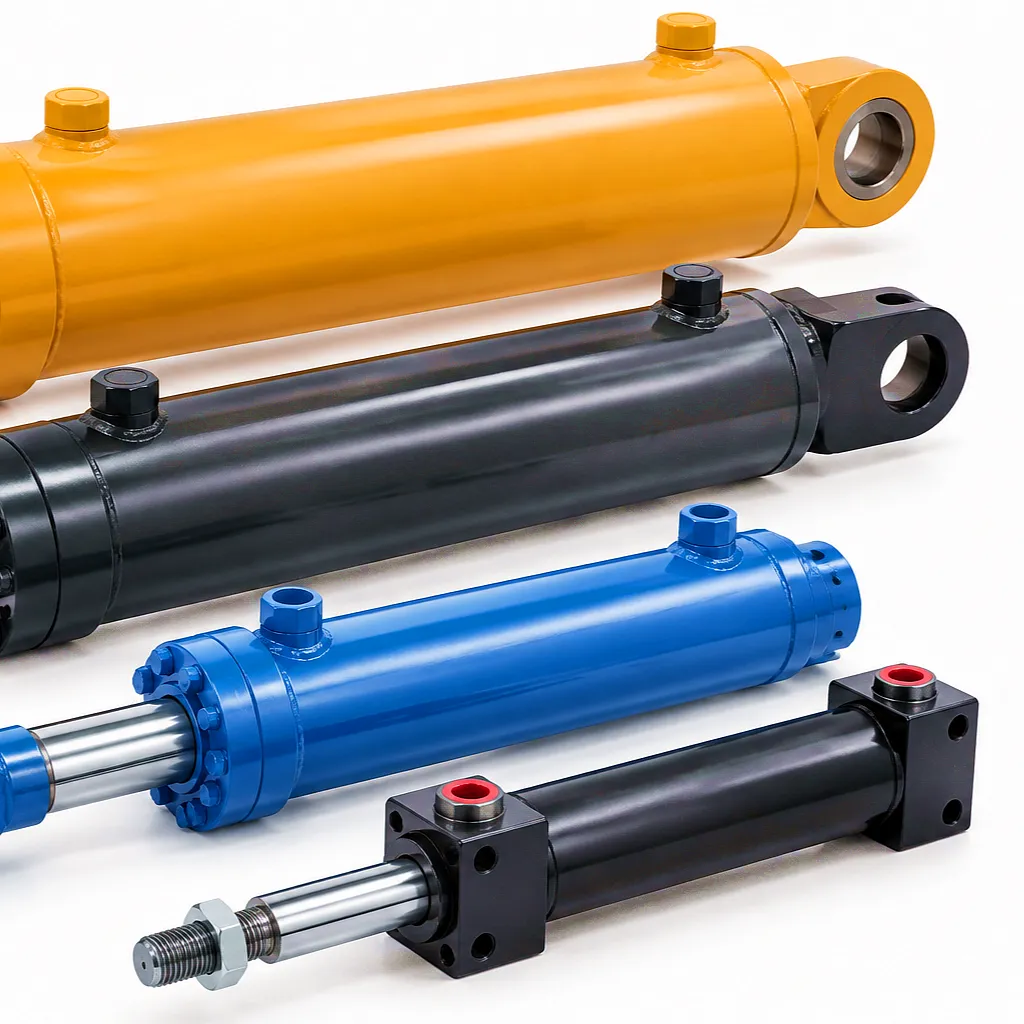
A boom cylinder is a double-acting hydraulic cylinder mounted between the machine’s upper carriage and the boom arm. Pressurised hydraulic fluid enters one port to extend the piston rod, pushing the boom upward or outward, and enters the opposite port to retract it. The forces involved are enormous. On a 30-tonne excavator, the boom cylinders may be working against loads of 150 kN or more during digging, and the pressure spikes that occur when a bucket strikes buried rock can momentarily push system pressure well above the relief valve setting. A cylinder that is not engineered for this level of dynamic loading will fail — and the consequences range from a hydraulic oil leak that contaminates the ground to a catastrophic rod buckle that puts an operator at risk.
The engineering challenge is compounded by operating conditions that are hostile by any measure. Construction sites expose cylinders to abrasive dust, fine silica, clay slurry, and temperature swings from below freezing on a January morning in Leeds to well over 80°C at the cylinder port during prolonged high-cycle operation. Seal materials that perform adequately in a laboratory at 20°C may harden and crack at low temperatures or extrude past the wiper ring at high temperatures. Chrome plating on the piston rod must be hard enough to resist scoring from grit, yet applied with sufficient thickness and adhesion to stay bonded under bending loads. These are the details that separate a genuinely well-engineered boom cylinder from one that merely looks the part on a supplier’s data sheet.
Understanding this engineering baseline is the essential first step before any OEM versus aftermarket comparison. When we talk about cylinder quality, we are really talking about a cluster of material and process decisions: the grade of steel used for the barrel and rod, the hardness and depth of the chrome layer, the specification of the seal package, the precision of bore honing, the tolerances on end cap threads, and the quality control procedures that verify all of these before a cylinder leaves the factory. An OEM cylinder is designed to meet these specifications as defined by the machine manufacturer. An aftermarket cylinder should, in principle, replicate them. Whether it actually does depends entirely on the aftermarket supplier, and that variability is the heart of the OEM versus aftermarket debate.
OEM Boom Cylinders: The Case for Paying the Premium
Application: Warranty-Active Machines, Safety-Critical Construction Sites, Long-Term Fleet Assets
Guaranteed Fit and Function
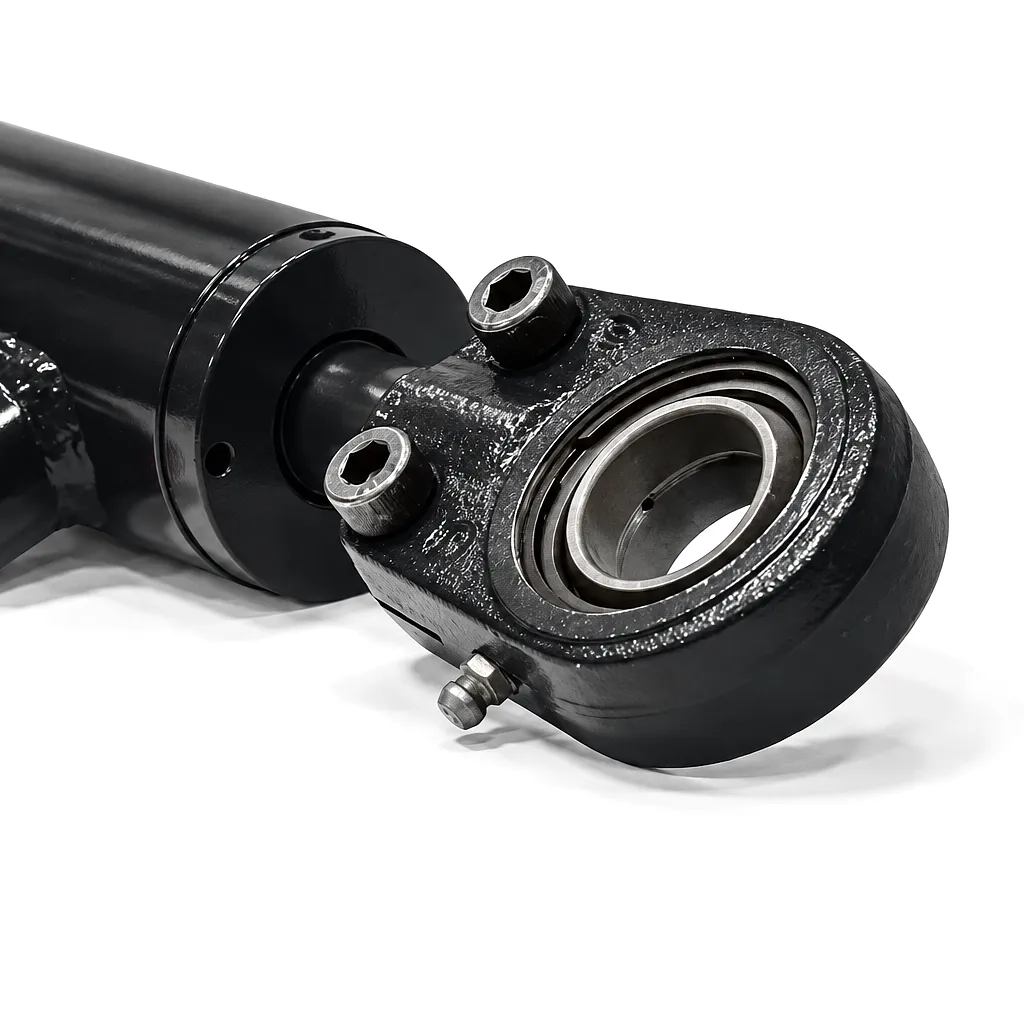
OEM boom cylinders are manufactured to the exact dimensional and performance specifications of the host machine. Mount dimensions, port thread standards, stroke length, and operating pressure ratings are all verified against the machine’s own hydraulic schematic. On a Doosan DX225 or a Komatsu PC210 working out of a depot in Nottingham, this means a drop-in replacement with no shimming, no improvised fittings, and no risk of mismatch. For fleet managers who need a machine back in service within a shift window, this certainty has real commercial value.
Warranty Preservation
For machines within their manufacturer warranty period — typically the first 12 to 24 months or the first 2,000 operating hours on most major brands — fitting a non-OEM boom cylinder can invalidate the warranty. This is not a hypothetical risk. UK Caterpillar, Volvo CE, and Hitachi dealers are all clear in their warranty documentation that components affecting the hydraulic system must meet OEM specification. The cost of voiding a warranty on a machine worth £200,000 or more is not a number you want to be explaining to a board of directors after a hydraulic failure on site.
Long Service Life in High-Duty Cycles
When a cylinder is doing 1,500 or more full working cycles per day on a quarry face or a high-frequency demolition application, the material specification of every component contributes to the eventual mean time between failures. OEM cylinders in these applications routinely achieve 8,000 to 12,000 operating hours before requiring seal replacement, and barrel life can extend well beyond that. The premium purchase price, amortised across that service interval, often works out to a lower cost per operating hour than a cheaper cylinder that requires more frequent attention or earlier replacement.
The principal drawback of the OEM route is price. OEM boom cylinders typically carry a 40% to 120% price premium over quality aftermarket equivalents. Lead times through authorised dealers can extend to four to eight weeks for less common machine models, which is commercially painful for a hire company or contractor who is losing day rate revenue on a static machine. The parts are also rarely available in the spot market — you are dealing through a dealer network, which adds a layer of price control and limits your negotiating room.
Aftermarket Boom Cylinders: Where the Savings Come From — and the Risks
Application: Out-of-Warranty Machines, Secondary Fleet Units, Cost-Constrained Operations, Specialist Modifications
The Commercial Logic of Aftermarket
Aftermarket boom cylinders exist because the OEM parts supply chain carries significant inherent cost. Dealer margins, intellectual property licencing, centralised warehouse structures, and brand overheads all add to the price of an OEM part without adding engineering value. A quality aftermarket manufacturer who has reverse-engineered the cylinder, sourced equivalent materials, and operates a lean manufacturing model can produce a functionally equivalent component at a genuinely lower cost. For a machine that is five years old and out of warranty, running on a secondary site in a light-duty application, the aftermarket route can save 40% to 60% on the part cost with no meaningful performance penalty.
The Risk Tier Problem
The aftermarket for boom cylinders is not a homogeneous market. At the top tier sit manufacturers with ISO 9001 certification, full material traceability, FEA-validated designs, and documented test procedures including pressure testing to 1.5 times working pressure. At the bottom sit distributors who source from low-cost foundries with no inspection regime, sell on purchase price alone, and have no engineering capability to answer a technical query about the product they are selling. The performance gap between these tiers is enormous, and the marketing language used by suppliers at both ends often looks indistinguishable on a data sheet. Knowing how to tell them apart is a core procurement skill that UK plant managers are increasingly being expected to demonstrate.
The aftermarket route also opens up possibilities that the OEM supply chain cannot offer. When a machine has been modified for a specialist application — a long-reach excavator working on a Manchester canal dredging project, for instance, or a custom-boom crane built for a Sheffield steel plant — the original cylinder specification may no longer be appropriate. A quality aftermarket manufacturer can design and produce a boom cylinder to a modified specification: different stroke length, reinforced barrel wall, upgraded seal package for contaminated fluid environments, or alternative port positioning that suits a modified hydraulic circuit. This customisation flexibility is something the OEM channel simply does not offer, and for specialist operators it has significant value.
Featured Product
For applications requiring precise directional control alongside linear boom movement, the Hydraulic Rotary Actuator Steering Cylinder combines rotary actuation with robust engineering standards, making it an excellent choice for specialist mobile plant and marine crane applications where both force and directional precision are critical.
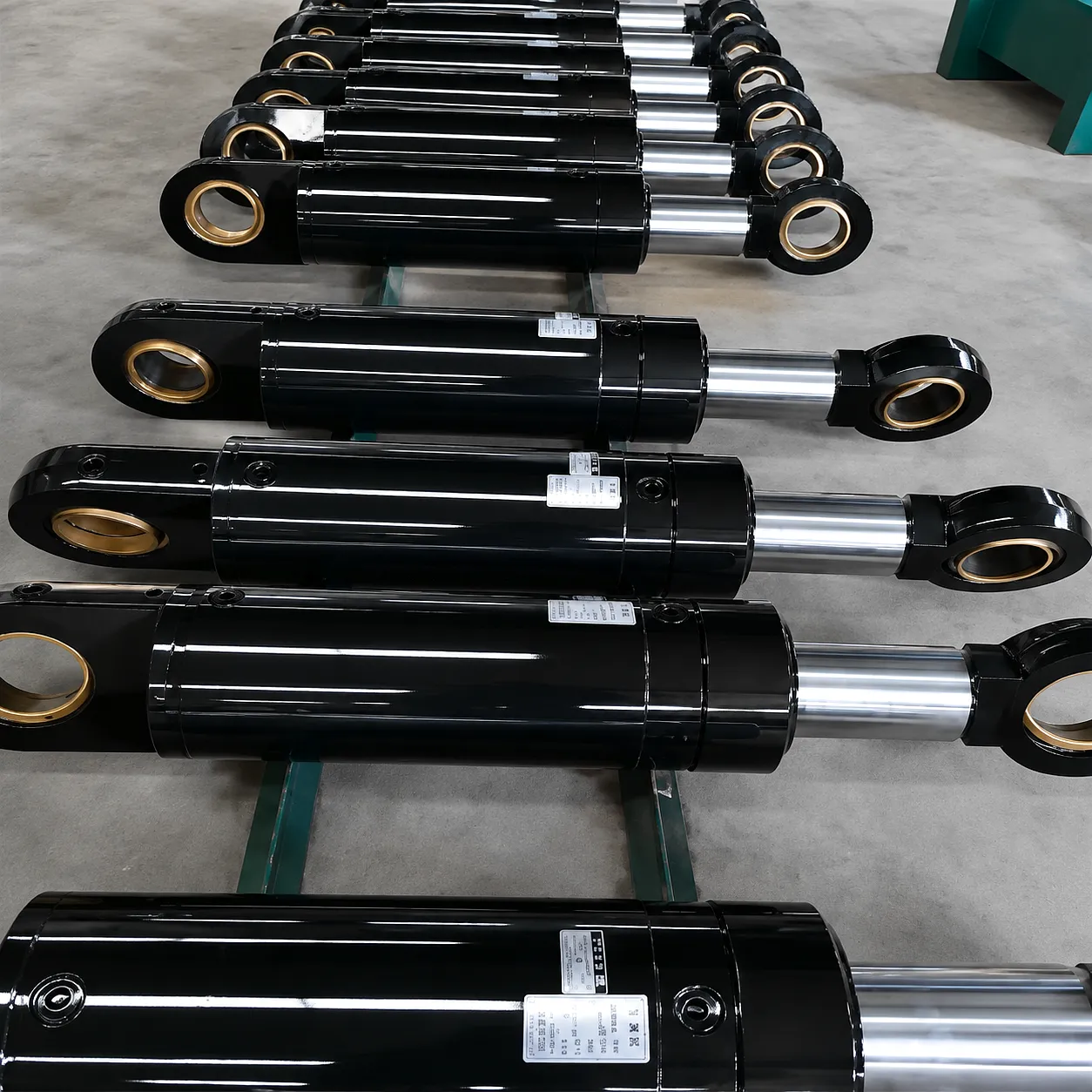
Product Technical and Performance Comparison: OEM vs. Aftermarket Boom Cylinders
| Paramètre | OEM Cylinder | Premium Aftermarket | Budget Aftermarket |
|---|---|---|---|
| Matériau du fût | ST52 / E470 cold-drawn steel | ST52 / equivalent certified | Unspecified / uncertified |
| Rod Chrome Hardness | 800–1000 HV (min 25 µm) | 800–950 HV (min 20 µm) | Variable, often <600 HV |
| Operating Pressure Rating | 250–400 bar (tested to 1.5x) | 250–350 bar (tested to 1.5x) | Rated, often not tested |
| Seal Package | Proprietary, polyurethane / PTFE composite | Parker / Trelleborg / equivalent | Generic, undocumented grade |
| Bore Honing Tolerance | Ra 0.2–0.4 µm | Ra 0.3–0.5 µm | Ra 0.8–2.0 µm (typically) |
| Stroke Length Range | Fixed to machine model spec | Standard + custom available | Standard sizes only |
| Plage de diamètres d'alésage | 40–200 mm (model-specific) | 40–250 mm (customisable) | 50–120 mm (limited range) |
| Expected Service Life | 8,000–15,000 hours | 6,000–12,000 hours | 1,000–4,000 hours |
| Temperature Range | -30°C to +120°C | -25°C to +110°C | 0°C to +80°C (estimated) |
| Quality Certification | OEM proprietary + ISO 9001 | ISO 9001 / CE marked | Often uncertified |
| Typical Price Index (100 = OEM) | 100 | 45–65 | 20–35 |
| Lead Time (UK, typical) | 3–8 weeks | 5–15 working days | 2–6 weeks (import) |
Core Materials and Manufacturing Processes That Define Cylinder Performance
Barrel Steel: The Pressure Vessel Foundation
The cylinder barrel is the pressure vessel, and its material defines the ceiling of what the whole assembly can safely withstand. ST52.3 (now designated S355J2 under EN 10025) cold-drawn seamless steel is the industry benchmark. Its minimum yield strength of 355 N/mm2 and good weldability make it appropriate for boom cylinders working at pressures up to 350 bar. For higher-pressure applications, 45Mn2 or 27SiMn alloyed steels may be specified. The critical point is traceability: a credible manufacturer will provide mill certificates confirming the grade, heat number, and mechanical test results for every batch of barrel material. Absence of this documentation is a red flag regardless of what the supplier’s specification sheet says.
Chrome Plating: The Rod’s Defence Against Grit
Hard chrome plating on the piston rod serves three simultaneous functions: it provides a wear-resistant surface that resists scoring from abrasive particles dragged past the wiper seal; it provides a corrosion-resistant barrier against the moisture, salt spray, and hydraulic fluid contamination that a UK construction site presents; and it provides the low-friction, high-surface-quality sliding surface that the piston seals need to maintain a reliable dynamic seal without excessive stick-slip or extrusion damage. Specification requirements include a minimum chrome thickness of 20 to 25 micrometres for standard-duty applications, hardness in the range of 800 to 1,000 Vickers, and surface roughness of Ra 0.1 to 0.3 micrometres after grinding and polishing. Thin, poorly-adherent chrome lifts under bending loads, creating localised rod scoring that bypasses the piston seal within weeks of installation.
Seal Engineering: Where Most Aftermarket Failures Begin
The seal package in a modern boom cylinder is a carefully engineered stack of elements: a primary rod seal (typically a polyurethane U-cup), a secondary backup ring (often PTFE), a wiper or scraper seal to exclude external contamination, a buffer seal to absorb pressure spikes, and static O-rings at port connections and end caps. Each element is specified for a specific compound, geometry, and durometer appropriate to the operating temperature, fluid type, and pressure cycle of that application. Generic seal kits sold on low-cost platforms may use seals of the right approximate geometry but manufactured from inferior compounds that harden prematurely in cold conditions or swell and extrude at operating temperature. The result is a cylinder that leaks within months under the same duty cycle that an original seal pack would have handled for several years.
The Real Cost Comparison: Purchase Price Is Only the Beginning
The framing of the OEM versus aftermarket debate as a simple price comparison is one of the most persistent and costly misunderstandings in the plant maintenance world. A UK plant manager comparing two boom cylinder options on part price alone is missing approximately 70% of the relevant financial picture. The components of total ownership cost that are invisible in a purchase price comparison include: labour for installation and re-installation if the first part fails early; downtime costs while the machine is off-hire or off-contract; potential damage to the hydraulic pump and control valves from contaminated fluid released by a failed cheap seal; and the compounding administrative cost of managing an unplanned breakdown rather than a scheduled service event.
Scenario A: Budget Aftermarket on a Working Excavator in Leeds
Part cost: £380. Failure at 2,200 hours. Replacement labour: £280. Machine downtime (3 days lost hire at £450/day): £1,350. Potential pump contamination assessment: £200. Total real cost at failure: £2,210. Cost per operating hour: £1.00/hour.
Scenario B: Premium Aftermarket on the Same Machine
Part cost: £680. Service life: 9,500 hours before seal replacement (not full cylinder failure). Seal reseal cost: £180. No unplanned downtime incidents attributable to the cylinder. Total cost across 9,500 hours: £860. Cost per operating hour: £0.09/hour — approximately 11 times lower than the budget alternative.
Scenario C: OEM on a Warranty-Active Machine in Birmingham
Part cost: £1,050. Warranty protection maintained. Service life: 12,000+ hours. Lead time via dealer: 4 weeks (machine was taken out of service at scheduled service window). No downtime premium. Total cost across 12,000 hours: £1,050. Cost per operating hour: £0.09/hour. Warranty value preserved: potentially £8,000–£20,000 in avoided warranty-claim disputes.
Industrial Application Scenarios: Matching the Right Cylinder to the Right Context
Civil Infrastructure: HS2 Enabling Works, Midlands
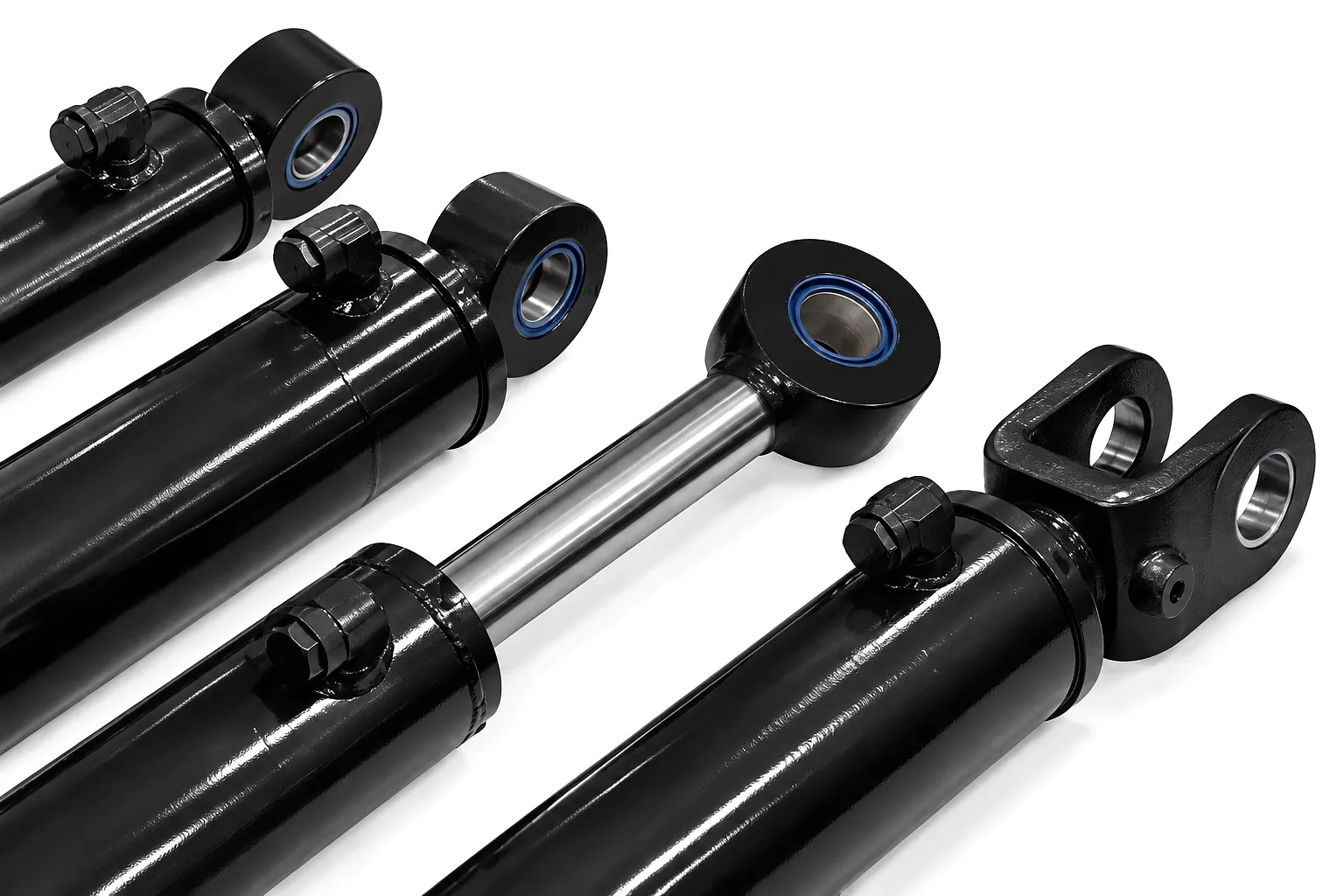
On large-scale rail enabling works running across the Midlands corridor, fleets of 20-tonne to 50-tonne excavators are running double shifts, six days a week, for project durations of 12 to 36 months. Boom cylinder replacements here are planned maintenance events, not reactive breakdowns. Premium aftermarket cylinders with documented test certification and a lead time of 10 working days or less are the optimal choice: they deliver OEM-comparable performance at a cost that makes sense when buying in fleet quantities, and the suppliers who serve this market are typically UK-based distributors with technical support and next-day parts availability.
Port and Logistics: Southampton Dockside Crane Maintenance
Port handling equipment at facilities like the Port of Southampton operates in a marine environment where salt-laden air and constant moisture exposure make corrosion the dominant failure mode for cylinder rods. For these applications, standard hard chrome may be supplemented or replaced with HVOF (high-velocity oxy-fuel) tungsten carbide coatings or nickel-chrome plating to extend rod life in the aggressive coastal environment. A quality aftermarket supplier who can engineer to this elevated specification, and who stocks common bore and stroke sizes for short-notice replacement, provides genuine operational value over the OEM channel, which rarely offers corrosion-specific rod treatments as a service option.
Steel and Metals: Sheffield Fabrication Plant Material Handling
Sheffield’s metals and fabrication sector continues to operate significant hydraulic press and lifting equipment where boom and linear actuator cylinders are central to material handling. The thermal environment in a steel-processing facility — where ambient temperatures near furnaces can exceed 60°C — demands seal compounds rated for sustained operation at elevated temperature. Standard polyurethane seals may soften and extrude in these conditions. Nitrile (NBR) or Viton (FKM) seals are the appropriate specification. A quality aftermarket supplier will offer this seal upgrade as standard; many OEM channels will not, because the machine was not originally designed for this secondary application environment.
Waste and Recycling: Environmental Services Vehicles, Glasgow
Compactor vehicles and material recovery facility equipment operating in the Scottish climate are exposed to a particularly corrosive combination of mechanical loading, moisture, road salt from gritted roads, and biological contamination from processed waste streams. Boom cylinders on these vehicles are typically out of OEM warranty within 18 months of initial service, and the machines themselves have a design life of 10 to 15 years. For this application, the aftermarket is the natural and economically sensible solution, provided the supplier can deliver cylinders with appropriate corrosion-resistant surface treatments and a seal package validated for the operating environment.
Agricultural Equipment: Telescopic Handler Maintenance, East Anglia
Telescopic handlers and agricultural loading equipment working the grain harvest season in Lincolnshire and East Anglia operate at high duty cycles for concentrated seasonal periods and then stand partially idle for months. This pattern of use — intense seasonal stress followed by extended storage — creates specific seal challenges: seals that are not regularly exercised can take a flat set and lose their spring tension, leading to weeping when the machine is returned to service. Aftermarket seal kits with PTFE-enhanced formulations that resist compression set are particularly valuable in this context, and a quality aftermarket cylinder supplier servicing the agricultural sector will understand and stock for this specific requirement.
For Forklift and Warehouse Applications
For forklift tilt and mast cylinder replacement in UK warehouse and distribution operations, the Double-Acting Forklift Tilt Cylinder delivers precision-engineered double-acting performance designed specifically for the high-cycle demands of commercial logistics environments. Available with short lead times for UK supply.
How to Assess an Aftermarket Boom Cylinder Supplier Without Getting Burned
01
Ask for Material Certificates
A genuine manufacturer will provide EN 10204 3.1 or 3.2 material certificates for barrel steel and rod steel on request. If a supplier cannot or will not provide these, walk away regardless of price. Material traceability is a basic quality management requirement, not an advanced ask.
02
Request Pressure Test Reports
Every hydraulic cylinder should be proof-tested to 1.5 times its maximum working pressure before dispatch. Ask for the test certificate, which should include the cylinder serial number, the test pressure, the hold time (minimum 30 seconds at pressure), and the result. Batch testing rather than individual unit testing is an acceptable practice for standard production runs, but the testing regime must be documented.
03
Verify ISO 9001 Certification
ISO 9001 certification does not guarantee quality, but it does verify that a documented quality management system exists. Ask for the current certificate scope — the scope statement should explicitly cover hydraulic cylinder design and manufacture, not just trading or assembly. A certificate that covers only warehousing operations provides no assurance about manufacturing quality.
04
Evaluate Technical Responsiveness
Send a technical enquiry with a specific question about seal compounds or chrome specification and measure the quality of the response. A genuine manufacturer’s technical team will answer accurately and with detail. A distributor reselling imported product will either not respond to technical questions or will send a generic data sheet. The quality of technical engagement before the sale is the best predictor of the support you will receive after it.
Ever Power: Precision Manufacturing and Custom Cylinder Solutions for UK Industry
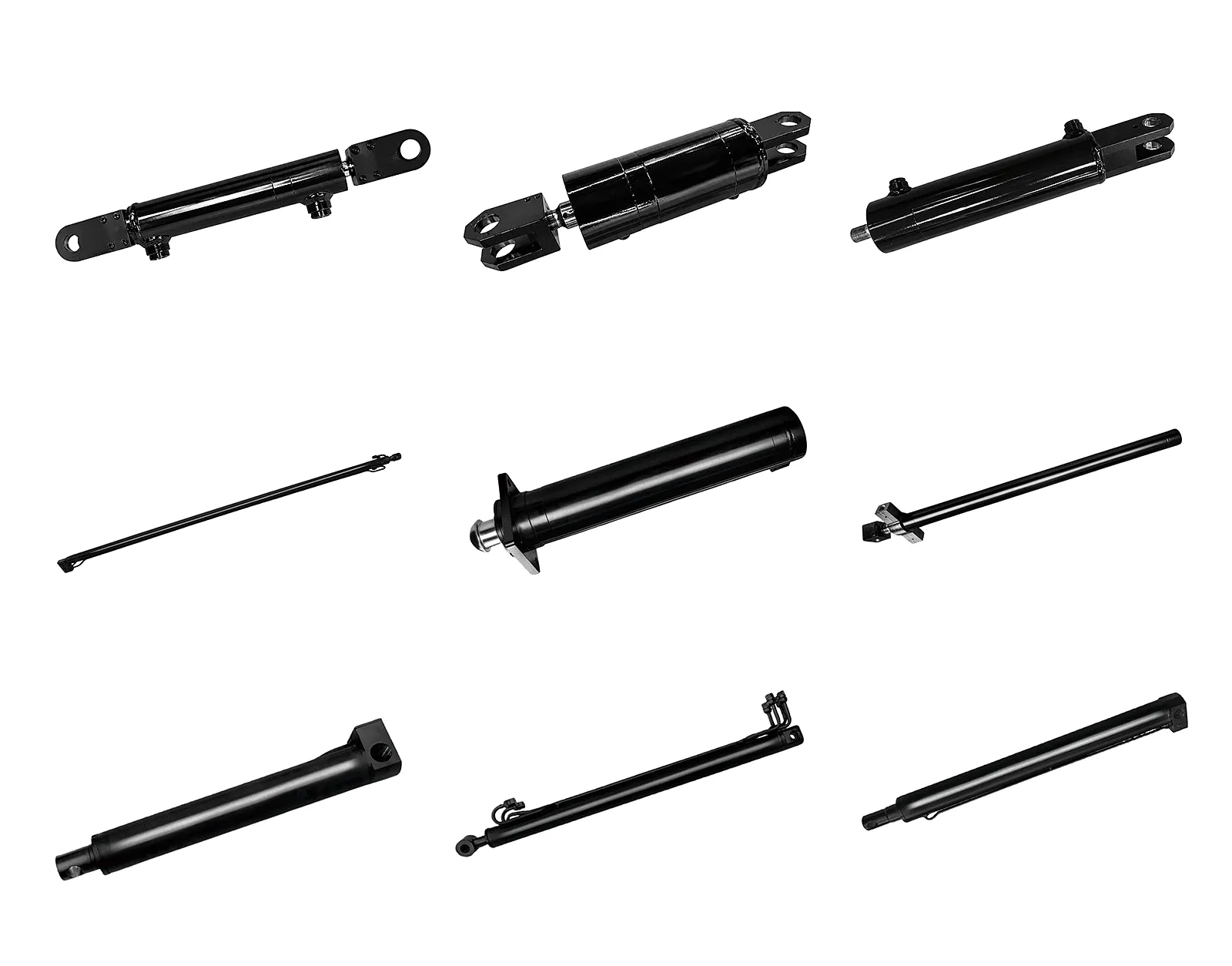
Ever Power operates as a specialist manufacturer of precision hydraulic cylinders and actuators, with a design and manufacturing capability that spans the full range from standard catalogue boom cylinders to fully engineered custom solutions for demanding UK industrial applications. Where catalogue suppliers stop at standard bore and stroke combinations, Ever Power’s engineering team works from your machine’s hydraulic schematic, mounting dimensions, and operating duty cycle to produce a cylinder that is genuinely designed for your application — not adapted from a close-enough standard part.
Customisation Capability
Bore diameters from 20 mm to 500 mm, strokes from 50 mm to 12,000 mm, operating pressures to 700 bar, and alternative rod surface treatments including HVOF tungsten carbide and hard nickel chrome. Mounting configurations to any customer drawing. Custom seal packages for elevated temperature, low temperature, bio-hydraulic fluid, or fire-resistant fluid applications.
Manufacturing Quality Standards
ISO 9001:2015 certified quality management. EN 10204 3.1 material certificates available for all structural steel. Individual pressure testing to 1.5x working pressure as standard. Bore honing to Ra 0.2–0.4 µm. Chrome plating hardness verified by Vickers testing with batch records. Full dimensional inspection before dispatch with measurement report available on request.
UK Supply Chain and Lead Times
Standard catalogue cylinders: 5–10 working days to UK mainland. Modified standard cylinders: 10–15 working days. Fully engineered custom cylinders: 3–6 weeks from drawing approval. Expedited production available for urgent breakdowns. UK freight via pallet network with next-day delivery to all major industrial centres including Birmingham, Manchester, Glasgow, Leeds, Sheffield, and Bristol.
Technical Support
Dedicated application engineering team available to review your cylinder requirement, analyse failure modes on returned cylinders, and recommend specification upgrades. Failure analysis reports available for quality assurance and insurance purposes. Technical data sheets, installation guides, and maintenance schedules provided with every cylinder shipment.
Ready to discuss your boom cylinder requirement? Our technical team responds to all UK enquiries within one working day.
Customer Success Story: Resolving a Chronic Cylinder Failure Problem on Dockside Cranes in Bristol
Client: Avonside Cargo Handling Ltd, Bristol Docks
Sector: Port cargo handling and crane operations | Application: 25-tonne and 40-tonne harbour mobile cranes
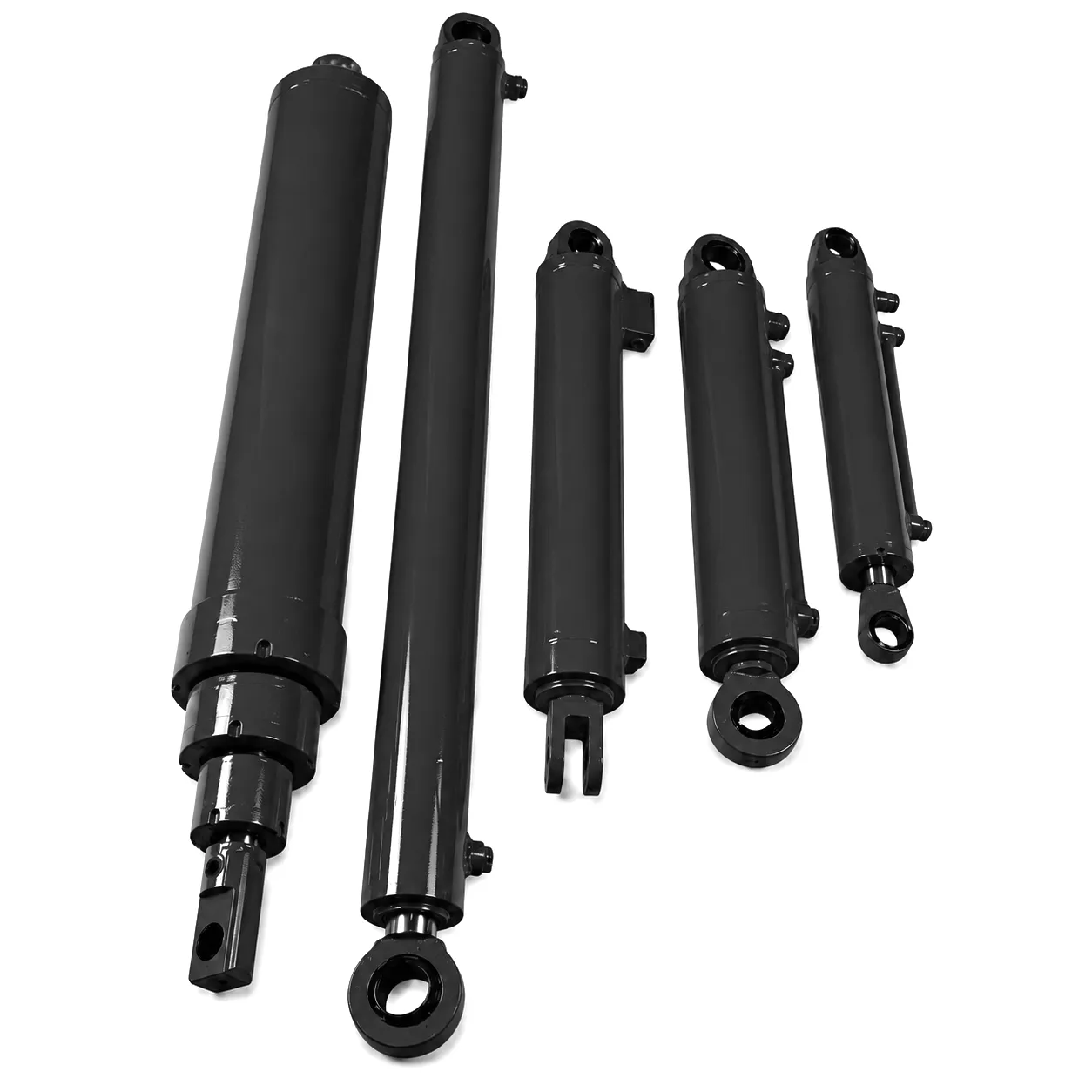 Avonside Cargo Handling operates a fleet of eight harbour mobile cranes at Bristol’s Royal Portbury Dock, handling timber, steel coil, and general cargo across a 24-hour shift pattern. The company had been purchasing OEM boom cylinders through the crane manufacturer’s dealer network at significant cost, but was experiencing a pattern of early seal failures — typically occurring between 2,800 and 3,500 operating hours — well below the 8,000 hours their maintenance records suggested should be achievable. The resulting unplanned breakdowns were disrupting berth scheduling and attracting penalty clauses from shipping line clients.
Their maintenance manager, having reviewed the failure pattern, contacted Ever Power’s application engineering team. A technical review of the returned cylinders identified that the rod seal extrusion was occurring in the pressure-spike zone — the brief, high-amplitude pressure spikes generated when the crane swings a loaded hook across a gusty Severn Estuary wind load. The OEM seal package used a standard polyurethane U-cup rated for the nominal working pressure of 250 bar, but not engineered for the dynamic spike loads that were pushing momentary pressure to over 320 bar.
Ever Power designed a replacement cylinder with an upgraded seal stack incorporating a PTFE anti-extrusion back-up ring and a polyurethane buffer seal between the primary rod seal and the piston. The rod chrome specification was upgraded from standard 25-micrometre chrome to 35-micrometre chrome with a HVOF overlay on the rod tip — the zone most exposed to corrosion from salt spray in the Bristol Channel environment. Six cylinders were manufactured and delivered to the client’s dockside maintenance facility within 18 working days of the initial enquiry.
Eighteen months after installation, all six cylinders are performing at or beyond the 8,000-hour seal life target. The total procurement cost for the six Ever Power custom cylinders was 38% lower than the equivalent OEM supply, and the client has eliminated all unplanned downtime attributable to cylinder failure across the fleet. The company has since transitioned the remaining two cranes to Ever Power cylinders at their next scheduled maintenance interval.
“We had been fighting chronic seal failures on our harbour cranes for two years. Ever Power’s engineers actually looked at the failure mode rather than just quoting a standard replacement. The upgraded seal stack they specified has completely resolved the problem. Eighteen months in and not one pressure-related failure.”
— Tom Hartley, Maintenance Manager, Avonside Cargo Handling Ltd, Bristol
“The custom bore and extended stroke specification was handled without any back-and-forth on the technical side. The drawing approval process was smooth and the cylinders arrived within the promised 15-working-day window. Quality of finish on the rod and end caps is noticeably superior to what we were getting from the previous supplier. Will be using Ever Power for our next procurement cycle.”
— Diane Colquhoun, Procurement Lead, Northern Fabrications Ltd, Glasgow
“We run a mixed fleet across three sites in Yorkshire and we needed consistent boom cylinder supply with full documentation for our insurance audits. Ever Power provides pressure test certificates and material certificates as standard with every order, which has simplified our compliance reporting significantly. Lead times are reliable and the technical team actually picks up the phone.”
— Mark Svensson, Fleet Technical Director, Dales Plant Hire, Harrogate
Foire aux questions
Get Expert Advice and a Fast Quote from Ever Power
Whether you need a standard replacement, a modified specification, or a fully custom boom cylinder engineered for your specific application — Ever Power’s UK team is ready to help. All enquiries acknowledged within one working day.
© Ever Power Industrial Hydraulics | edit by gzl
 French
  English
  Italian
  Portuguese
  Dutch
Dutch  Swedish
  Danish
  Finnish
  Polish
  Hindi
Hindi  Kazakh
  Turkish
  Ukrainian
  Romanian
  Spanish
  German
  Russian
  Korean
  Japanese
  Vietnamese
  Thai
Thai  Indonesian
  Malay
Malay  Greek
Greek