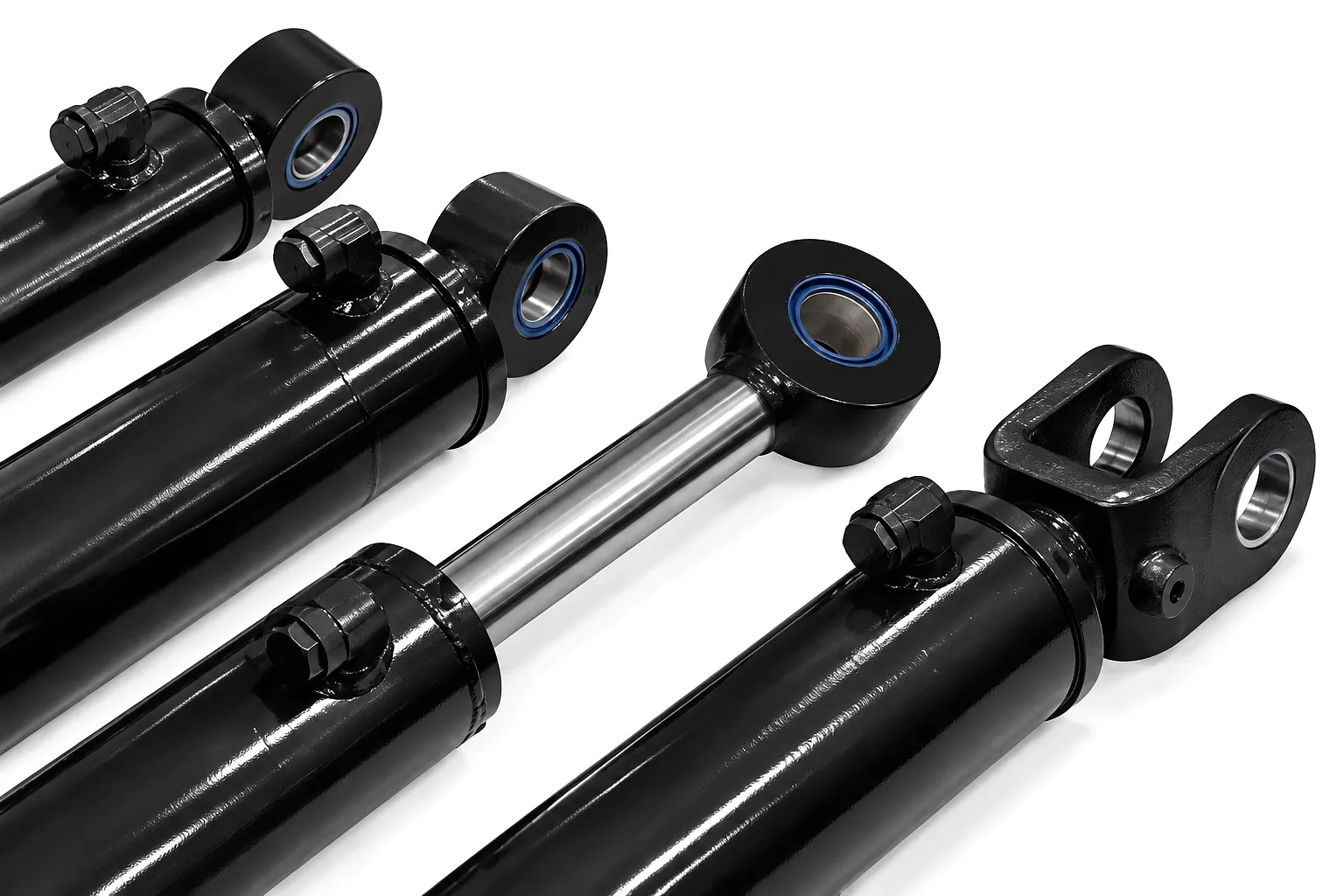
Technical Guide · Hydraulic Systems

How to Detect and Fix Hydraulic Cylinder Internal Bypass Without Disassembly

A field-proven troubleshooting approach for UK industrial maintenance teams — from early warning signs to non-invasive corrective methods.

Ever Power Engineering
UK Market · B2B Technical
2,800+ Words Deep Dive

Hydraulic cylinder internal bypass detectionInternal bypass in a hydraulic cylinder is one of those slow-burning faults that rarely announces itself with a bang. Instead, it creeps in — a slightly sluggish actuator here, a barely perceptible drift under load there — until one day a critical press in a Sheffield stamping plant refuses to hold position, or a Birmingham-based aggregate facility finds its sorting arm dropping mid-cycle. At that point the operational cost is already significant, yet the root cause is still invisible from the outside. Understanding how to identify and address this failure mode without stripping the cylinder apart is a skill that separates reactive maintenance shops from genuinely proactive engineering teams.

Hydraulic cylinder internal bypass occurs when the seal assembly between the piston and the cylinder bore deteriorates enough to permit fluid to cross from the high-pressure side to the low-pressure side without moving the piston rod. The energy is dissipated as heat, the actuator loses mechanical authority, and the hydraulic power unit compensates by working harder — consuming more electricity, generating more heat, and accelerating wear in every connected component. The economic argument for catching it early is overwhelming, and the good news is that modern diagnostic thinking gives maintenance engineers several powerful non-invasive tools to do exactly that.

What Exactly Is Hydraulic Cylinder Internal Bypass and Why Does It Matter

🔧
The Core Mechanism

A hydraulic cylinder converts fluid pressure into linear mechanical force. The piston — sealed within the bore — is the critical dividing line between the extending side and the retracting side of the circuit. When piston seals remain intact, every unit of pressure acts on the full piston face area and drives the rod. When those seals degrade, high-pressure fluid bleeds past the piston to the opposing chamber, reducing the net force available and causing load-holding failure. The bore surface condition, fluid contamination level, operating temperature range, and the quality of the original seal compound all determine how quickly this degradation takes hold. In UK heavy industry — particularly in the foundries around Wolverhampton and the marine fabrication yards along the Tyne — equipment often runs around the clock, and the time between seal replacement cycles can stretch well beyond original design parameters.

⚠️
Why It Goes Undetected

Unlike an external leak, which leaves a visible puddle and triggers an immediate response, internal bypass leaves no external trace. The fluid simply moves from one sealed chamber to another. Operators may notice that a machine is cycling slightly slower, or that a clamping fixture seems to need more frequent pressure top-ups, but these observations are easy to attribute to ambient temperature changes, fluid viscosity shifts, or upstream pump wear. By the time symptoms become unmistakable — a cylinder that visibly drifts under static load, a press that cannot hold tonnage — the piston seal and in many cases the bore surface itself have sustained damage that makes simple seal replacement insufficient. The downstream cost of reactive repair in a Sheffield steel processing environment, for example, can easily reach five figures when you factor in lost production time, emergency engineering callouts, and potential tooling damage.

📊
Bypass vs. Other Cylinder Faults

It is important to distinguish internal bypass from other common cylinder conditions before committing to a diagnostic path. Rod seal failure produces external leakage along the rod and is immediately visible. Cushion seal deterioration creates impact at the end of stroke but does not generally cause load drift. Cylinder bore scoring — often caused by contaminated fluid — can accelerate seal wear and contribute to bypass but is a separate root cause requiring different remediation. Relief valve drift within the directional valve stack can mimic bypass symptoms precisely: the load drifts not because the cylinder is leaking internally but because the system is venting pressure back to tank through a sticking relief. Confirming which fault you are actually dealing with before ordering replacement seals or, worse, scheduling a cylinder pull-out is what the non-invasive diagnostic process described in this article is designed to achieve.
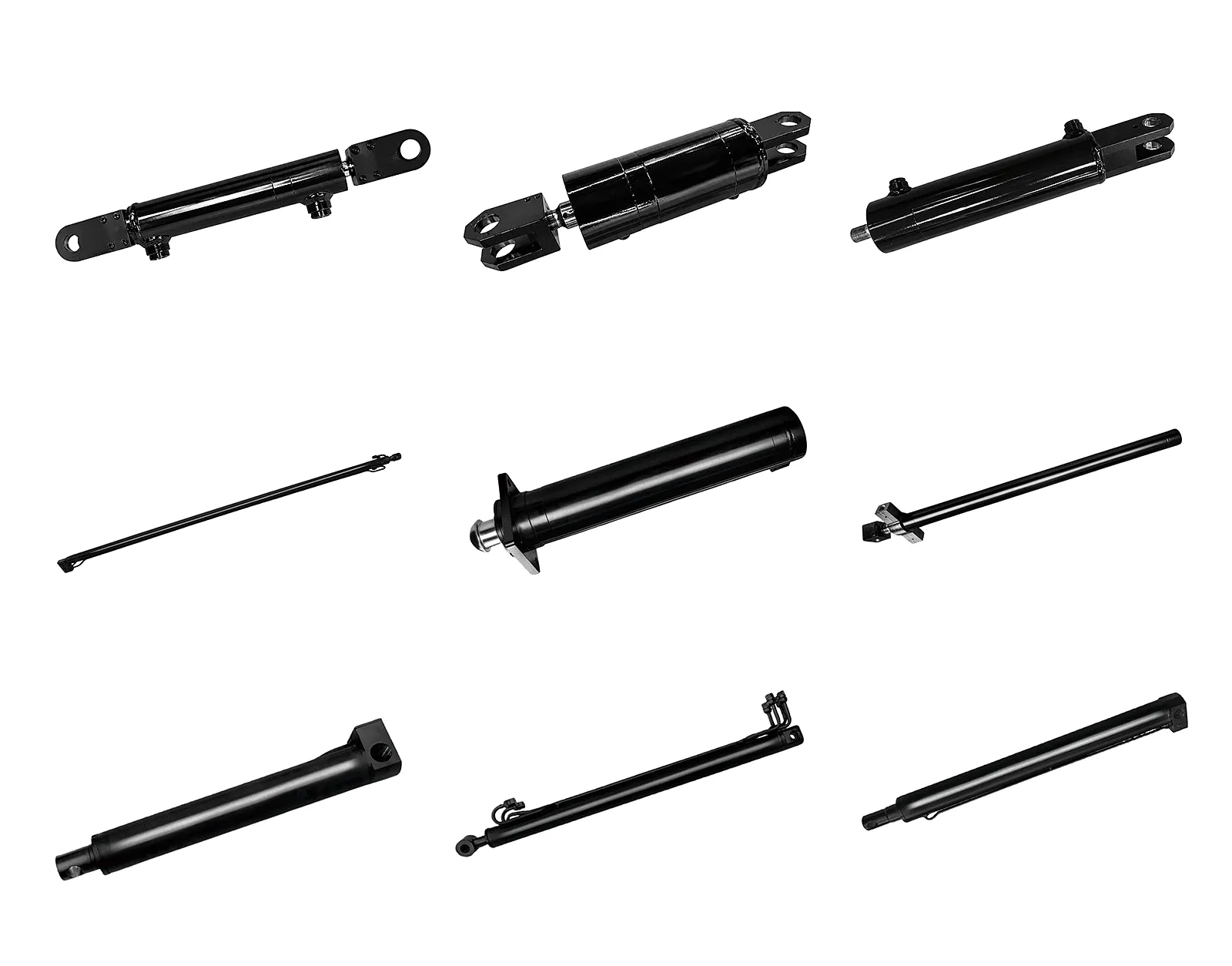
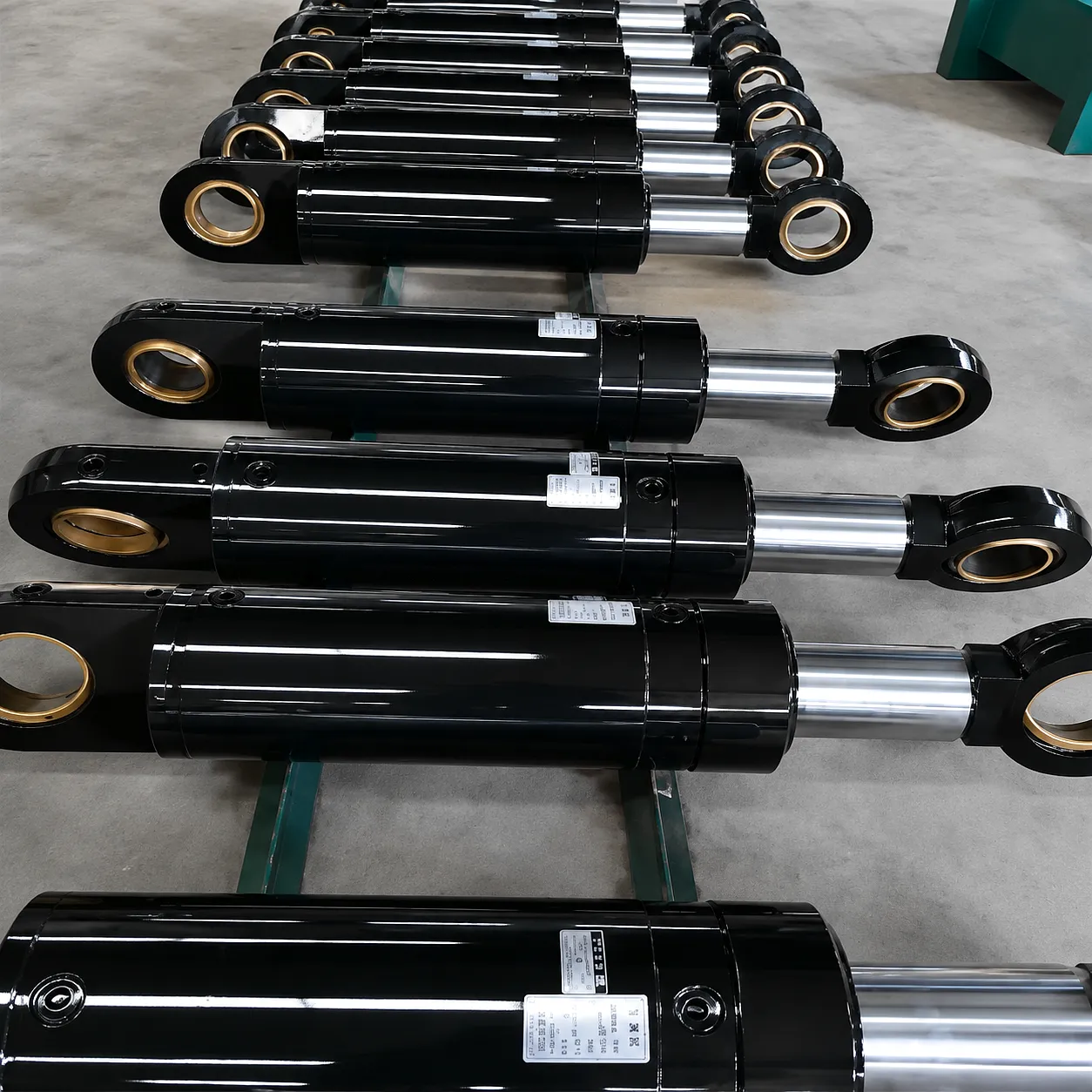
Ever Power Hydraulic Cylinder Range

Ever Power hydraulic cylinder product range

Early Warning Signs: What Your Hydraulic System Is Trying to Tell You

The body language of a bypassing hydraulic cylinder is subtle but consistent once you know what to look for. Maintenance engineers who have worked in demanding environments — the bulk materials handling operations around Bristol Docks, the automotive press shops in Coventry, the offshore module fabrication yards in Aberdeen — develop an intuitive sense for when a cylinder is beginning to underperform. Translating that intuition into a structured checklist is the first step toward systematic non-invasive diagnosis.

🌡️
Rising Oil Temperature

Bypassing fluid dissipates energy as heat. A reservoir temperature that creeps above normal operating range — particularly on systems that run well within their rated pressure — is a key early indicator. Monitor trends over several weeks rather than single readings.

📉
Velocity Reduction Under Load

A healthy cylinder at rated pressure moves at a predictable speed regardless of load within its design envelope. If a clamping cylinder in a Birmingham press shop takes 15% longer to close under a full work load than it did six months ago, bypass is a primary suspect — especially if the pump output and system pressure remain unchanged.

↕️
Static Load Drift

This is the most direct symptom of internal bypass. When directional valves are centred and the cylinder is commanded to hold position under a suspended or compressed load, a bypassing piston allows the load to creep. On a platform lift in a Leeds fabrication shop, even a few millimetres of drift per minute is operationally unacceptable and often triggers safety interlocks.

Increased Pump Motor Draw

The hydraulic power unit compensates for bypass losses by working harder. Current monitoring on the pump drive motor — easily implemented with a clamp-on ammeter or a smart drive reading — can reveal a steady upward trend in energy draw over weeks or months, providing a quantitative lead indicator that is entirely independent of operator observation.
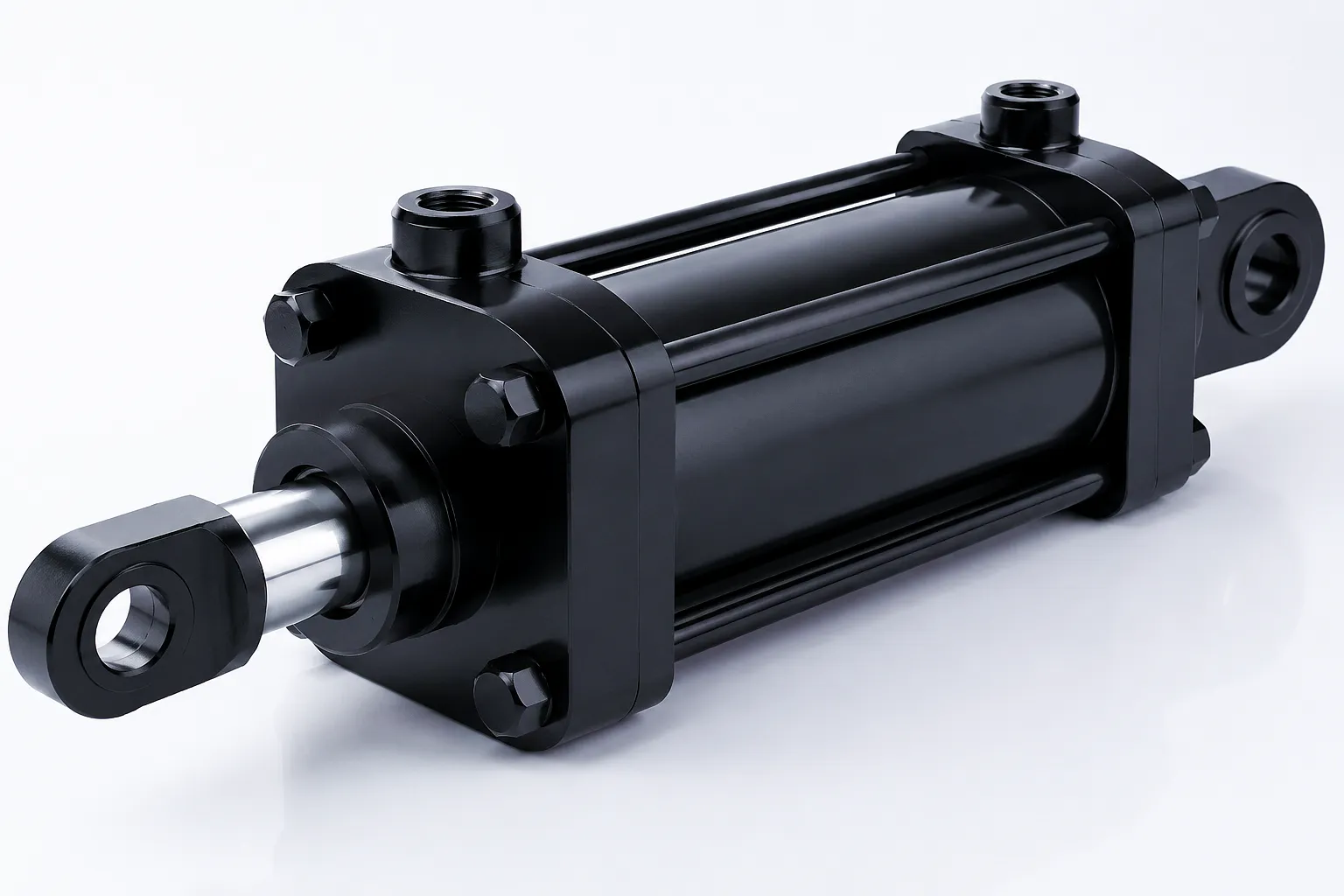
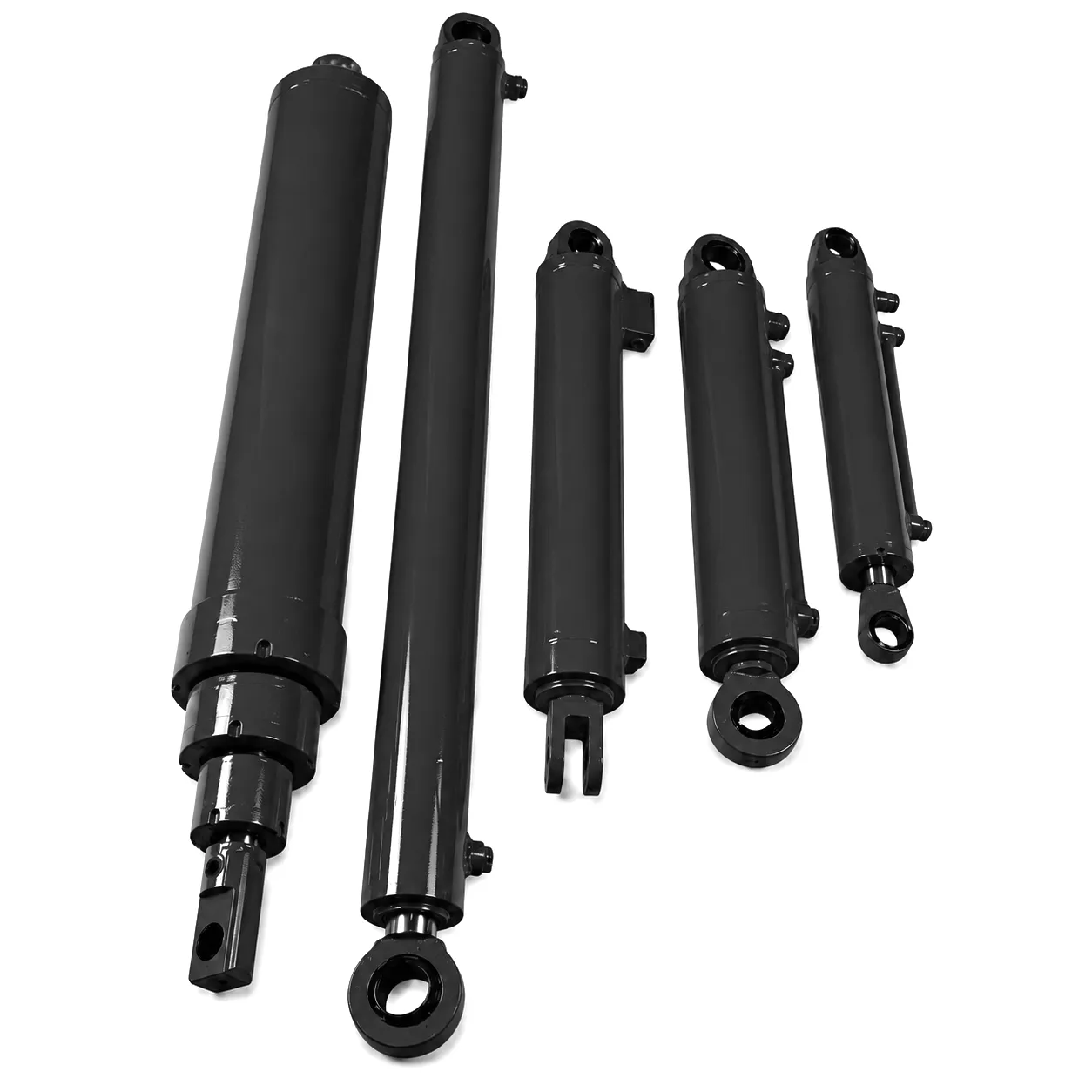
Heavy duty hydraulic cylinders

Five Non-Invasive Methods to Confirm Internal Bypass in the Field

1
The Static Drift Test — Load Holding Under Isolated Conditions

The most direct non-invasive test requires nothing more than a steel rule, a stopwatch, and a means of isolating the circuit. With the cylinder fully extended or retracted to its mid-stroke position and the directional valve centred (or manually blocked with a needle valve on each port), apply a representative load and observe rod position over a 10-minute window. Mark the rod position with a fine-tipped marker at the gland wiper. Any perceptible movement — even 0.5 mm per minute — under a load that the cylinder is rated to hold is diagnostic of internal bypass rather than external leakage, since the rod seal is intact and dry. Document the drift rate in mm per minute at a recorded system pressure; this becomes your baseline for monitoring deterioration or confirming improvement after intervention. For cylinders on critical lifting equipment — a common requirement in the structural steel assembly yards around Scunthorpe — this test should be part of a weekly pre-shift checklist.

2
Return-Port Temperature Differential Measurement

When fluid bypasses the piston under high differential pressure, it undergoes a throttling process that converts pressure energy into heat — precisely the same thermodynamic principle that makes a relief valve warm to the touch. By fitting calibrated contact thermometers or infrared thermometry to both the A and B ports of the suspect cylinder while it holds a static load, you can measure the temperature differential between the two sides of the piston. A healthy cylinder in static hold will show near-identical temperatures at both ports. A bypassing cylinder will show the return-side port measurably warmer — typically 3°C to 8°C above the supply side in a moderate bypass condition, and potentially 12°C or more in a severe case. This method requires no hydraulic disconnections, no circuit modifications, and no specialist tools beyond a decent infrared thermometer or thermocouple set. It is particularly effective in multi-cylinder systems where a direct comparison between a known-healthy cylinder and a suspect unit is possible within the same hydraulic circuit.

3
Pressure Decay Testing Using Blocked Port Isolation

This method requires fitting calibrated pressure gauges — or preferably digital data loggers — to both the extend and retract ports of the cylinder, then blocking both ports with needle valves while the cylinder holds a pressure equivalent to its typical working load. With flow to and from the cylinder completely isolated, system pressure on the high-pressure side should remain stable indefinitely if the seals are intact. A cylinder with internal bypass will show a decay on the high-pressure side and a corresponding rise on the low-pressure side as fluid transfers across the piston. Record pressure at 1-minute intervals over 15 minutes. A high-side decay rate of more than 2 bar per minute under a 150 bar initial pressure, combined with a matching low-side rise, is a reliable quantitative indicator of meaningful internal bypass. This test is borrowed from pneumatic cylinder testing practice and adapted for hydraulic systems — it is non-destructive, repeatable, and produces documented data that can justify planned maintenance scheduling to production management in language they find credible.

4
Flow Meter Measurement at the Return Line

Inserting a portable ultrasonic flow meter on the return line of the circuit while the cylinder is stationary under load provides a direct readout of bypass flow volume. A cylinder that is holding position should theoretically produce zero return flow — all fluid is static on both sides of the sealed piston. Any measurable return flow when no valve is open and the cylinder is not moving is definitively bypass flow. Modern clamp-on ultrasonic flow meters require no pipe cutting or fittings — they attach externally to the hydraulic line and read flow ultrasonically through the pipe wall. The technique is used by maintenance contractors across UK process industries from the chemical plants around Teesside to the food production facilities in Yorkshire, precisely because it requires no system modification, generates an immediate numerical result, and can be applied while the machine remains in standby mode without disrupting production further.

5
Oil Particle Count Trending and Spectroscopic Analysis

Seal degradation generates particles. Piston seal material — whether PTFE, polyurethane, or nitrile rubber — breaks down progressively, and the microscopic fragments enter the hydraulic fluid. An oil sample taken from the return line header and sent for particle count analysis and spectroscopic wear metal assessment will reveal elevated levels of the specific polymers or elastomers used in the cylinder’s seal package, often before drift becomes noticeable at the machine level. Many UK-based hydraulic maintenance programmes now include quarterly oil analysis as standard — laboratories in Manchester, Leeds, and Southampton offer next-day turnaround on ISO 4406 particle count reports. Comparing particle count trends over successive quarters is one of the most powerful leading indicators available for seal condition, and it costs a fraction of an unplanned breakdown call-out in any industrial sector.

Diagnostic Method Performance and Specification Comparison

Diagnostic MethodEquipment RequiredSystem DowntimeSensitivityData OutputTypical Cost (UK)
Static Drift TestSteel rule, stopwatch, marker10–20 minModerateQualitative / mm per min~£0 (in-house)
Port Temperature DifferentialIR thermometer or thermocouple5–10 minGood°C differential reading£30–£120 (tool cost)
Pressure Decay TestPressure gauges / data loggers, needle valves15–30 minHighQuantitative bar/min decay rate£150–£400 (equipment hire)
Ultrasonic Flow MeteringClamp-on ultrasonic flow meterMinimal (standby mode)Very HighL/min bypass flow rate£200–£800/day (hire)
Oil Particle AnalysisSample bottles, lab submissionNone (sample while running)Very High (leading indicator)ISO 4406 particle count + spectrograph£40–£90 per sample

Remediation Without Disassembly: When It Works and When It Does Not

✅ Cases Where Non-Invasive Correction Is Viable

Where bypass is caused by seal swelling reduction — often triggered by a fluid change to an incompatible base oil that caused the original seals to shrink — switching back to the correct fluid specification and flushing thoroughly can restore a degree of seal competence. This is more common than maintenance teams realise in UK industries that have recently transitioned from mineral oil to biodegradable hydraulic fluids without verifying seal compatibility.

Conditioner additives — seal swelling compounds — are available from specialist hydraulic fluid suppliers and can temporarily swell degraded nitrile seals back toward their original interference fit. These should be viewed as a bridge solution only: effective for buying time until planned maintenance during a scheduled shutdown, not as a permanent fix. Operating pressure reduction combined with these additives can extend the useful service life of a cylinder with early-stage bypass by several weeks in a non-critical circuit.

❌ Situations That Require Cylinder Removal

Where bore scoring is confirmed — typically evidenced by metallic particles in the oil analysis alongside elevated bypass rates — no surface treatment applied externally can address the underlying damage. The bore surface finish specification for a well-manufactured हायड्रॉलिक सिलेंडर is typically Ra 0.2–0.4 µm. Once scoring breaches this surface and creates a bypass channel, seal replacement alone is insufficient; the bore itself requires honing or, in severe cases, sleeving.

Cylinders operating in safety-critical circuits — press brakes, lifting equipment under the Lifting Operations and Lifting Equipment Regulations 1998 (LOLER), or load-holding applications in the construction sector — must not be operated once bypass has been confirmed, regardless of the severity. UK health and safety obligations are unambiguous in this regard. The correct course of action is to quarantine the cylinder, replace or exchange the unit, and conduct a full engineering review before returning the circuit to service.
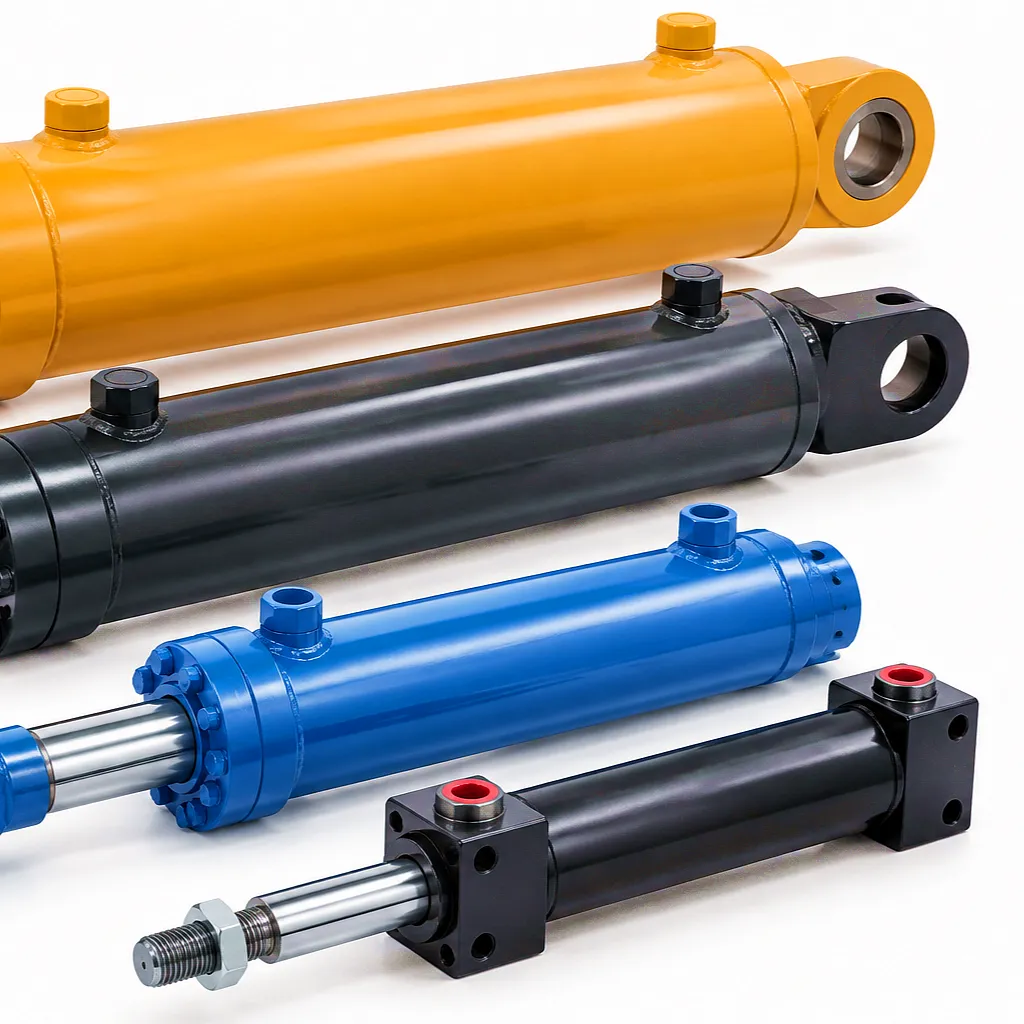
Hydraulic cylinder components

Industrial Application Scenarios: Where Internal Bypass Causes the Highest Impact

Metal Pressing and Stamping — West Midlands

Press brake and deep draw tooling cylinders in the Midlands automotive supply chain operate at high cyclic rates under sustained tonnage. Internal bypass in a blankholder cylinder produces inconsistent material draw depth, scrapped components, and tooling damage. The closed-die environment means that a drift of even 0.8 mm from the intended shut height can destroy a set of precision tooling worth tens of thousands of pounds. Non-invasive diagnosis here pays for itself on the first successful catch.

Offshore and Marine Construction — Aberdeen and the North Sea

Deck-mounted lifting and positioning cylinders on semi-submersible platforms and pipe-laying vessels are among the most demanding applications for hydraulic cylinder seal integrity. Salt spray, temperature cycling, and contaminated return fluid create the perfect environment for accelerated seal degradation. Internal bypass in a mooring tensioner or a riser tensioner cylinder at depth is a safety-critical event. Regular port temperature checks and quarterly oil sampling are standard practice at many Aberdeen-based marine engineering contractors, driven precisely by the cost and risk profile of offshore hydraulic failure.

Agricultural Machinery and Harvesting Equipment — East Anglia and Yorkshire

Combine harvester header cylinders, bale wrapper actuators, and grain auger lift cylinders in the broad farming belt of East Anglia and Yorkshire face particularly harsh operating conditions during harvest season — high ambient temperatures, dusty environments, and fluid contamination from ingested crop material all accelerate piston seal wear. A bypassing header height cylinder on a John Deere or Claas combine operating at peak harvest will reduce cutting efficiency, increase grain loss, and potentially cause ground damage on uneven terrain. Ever Power supplies specialised hydraulic cylinders for agricultural applications with enhanced seal packages rated for these conditions.

Lifting Platforms and Material Handling — Distribution Centres

The rapid expansion of e-commerce distribution infrastructure across the UK — large-scale facilities in the East Midlands logistics corridor, in the Vale of Glamorgan, and in the Thames Gateway — means that thousands of hydraulic dock levellers, scissor lifts, and goods lifts are in continuous operation across three shifts per day. Internal bypass in a scissor lift cylinder creates an uneven platform descent under load, which is both a product damage risk and a personnel safety hazard. LOLER compliance assessments in these environments now routinely include hydraulic cylinder condition checks, and the ability to run a non-invasive diagnostic during a brief production window is operationally essential. The telescopic hydraulic cylinder range from Ever Power is specifically designed for such lifting platform applications.
Manufacturing Partner

Ever Power: Precision Cylinder Manufacturing Built for Demanding UK Applications

When a cylinder fails in service due to internal bypass, the conversation eventually arrives at the same questions: was the bore surface finish within specification from the outset? Was the seal compound matched to the actual fluid and operating temperature? Were the seal groove dimensions cut to tolerance? These are questions that Ever Power answers with precision manufacturing data, not assurances. Our factory operates under a documented quality management system with dimensional traceability at every stage of the manufacturing process — from raw tube inspection through bore honing to final assembly and test.

🏭
Bore Surface Finish
CNC-honed bores achieving Ra 0.2–0.4 µm finish — the critical parameter that determines seal service life under dynamic pressure cycling.
🔬
Seal Selection Engineering
Application-specific seal compound selection — FKM, PTFE-backed HNBR, and polyurethane options available to match your fluid specification, operating temperature range, and duty cycle.
⚙️
Full Custom Engineering
Non-standard bore diameters, stroke lengths, mounting configurations, and port positions manufactured to drawing — with 2D/3D CAD submission accepted and design review included in the quotation process.
🚢
UK Supply Chain
Consolidated freight routing via Felixstowe and Southampton with standard 3–5 week lead time for custom orders. Express manufacturing available for breakdown replacement requirements.

Customer Success: Sheffield Steel Processing — Resolving Chronic Press Cylinder Bypass

Case Study · Sheffield, South Yorkshire · Steel Fabrication
How a Sheffield Steel Fabricator Eliminated £280,000 in Annual Unplanned Downtime by Switching to Purpose-Built Ever Power Cylinders

Hydraulic cylinder manufacturing

A structural steel fabrication business operating three 800-tonne press brakes on a 24-hour, five-day production schedule in Sheffield’s Lower Don Valley had been experiencing a recurring problem for nearly two years: press brake blankholder cylinders on two of the three machines were requiring seal replacement every four to five months rather than the twelve-to-eighteen-month service intervals specified by the original equipment manufacturer.

Each seal replacement required an eight-hour production stoppage, specialist hydraulic engineering attendance, and a recalibration of the press shut height — at a combined cost of approximately £6,500 per event across five to six events per year. Beyond the direct maintenance cost, scrap rates on the affected machines were running approximately 3.4% above the plant average due to inconsistent blankholder pressure caused by progressive bypass between replacement intervals. On high-value alloy plate sections, this scrap uplift alone represented a significant annual materials cost.

After conducting a port temperature differential analysis that confirmed active bypass on both machines, the maintenance engineering team reviewed the original cylinder specification and identified that the OEM cylinders had been fitted with standard nitrile piston seals despite the hydraulic circuit running on a phosphate ester fire-resistant fluid — a combination known to cause nitrile seal degradation through incompatible chemical interaction. The fluid change had been made three years earlier as a fire safety upgrade, but the cylinder seal specification had never been reviewed.

Ever Power was engaged to manufacture direct replacement cylinders with FKM piston seals and FKM rod seals, correctly specified for phosphate ester compatibility. The bore finish specification was tightened to Ra 0.25 µm and confirmed by surface roughness measurement on delivery. Following installation — coordinated during a planned three-day Christmas shutdown to eliminate production impact — neither cylinder has required unscheduled maintenance in the fourteen months since commissioning. Scrap rates returned to plant average within the first production quarter.

★★★★★

“The seal specification issue had been in front of us for years and we’d missed it completely. Ever Power not only manufactured the replacement cylinders quickly but took the time to explain exactly why the original seals were failing. Fourteen months without a single bypass event speaks for itself.”

— Engineering Manager, Steel Fabrication Plant, Sheffield
★★★★★

“We had quotes from three UK hydraulic suppliers, and Ever Power was the only one that came back with a specific bore finish guarantee and a test certificate showing the Ra measurement. That level of traceability is what we need for our quality records — it’s not something you get from a standard catalogue supplier.”

— Maintenance Contracts Manager, Heavy Press Facility, West Midlands
★★★★★

“We operate combine harvesters across about 4,000 acres in Lincolnshire and the header cylinder bypass issue during harvest is genuinely crippling when it happens. Ever Power’s agricultural cylinder package with the upgraded dust seal and contaminated-environment piston seal has run for two full harvest seasons now. The technical support during the specification process was excellent.”

— Operations Director, Agricultural Contracting Business, Lincolnshire

अक्सर पूछे जाने वाले प्रश्नों

How can I tell whether my hydraulic cylinder is internally bypassing without taking it apart or calling out a specialist engineer?+
The simplest method is a static drift test — mark the rod position with the cylinder under load and directional valve centred, then observe over ten minutes. Any rod movement without commanded flow is indicative of bypass. Combine this with port temperature measurement and you can confirm the diagnosis without disconnecting anything. Pressure decay testing with blocked ports gives quantitative data and requires only needle valves and pressure gauges, tools most maintenance teams already carry.
What is the typical cost of getting a replacement hydraulic cylinder supplied and delivered to a manufacturing facility in Birmingham or Sheffield, and how long does it usually take?+
For standard catalogue bore-and-stroke combinations, lead time is typically two to four weeks to UK destinations via consolidated sea freight. Custom-specification cylinders — non-standard bore diameters, extended strokes, or bespoke mounting arrangements — typically run four to six weeks. Pricing varies significantly by bore size, stroke, operating pressure rating, and material specification. Contact Ever Power at [email protected] with your drawing or specification sheet for a detailed quotation — the team can usually respond with pricing within 24 working hours.
Which hydraulic cylinder seal material is best suited to UK offshore applications where salt spray and temperature cycling are a constant concern?+
FKM (Viton) remains the material of choice for offshore hydraulic cylinder piston seals due to its exceptional resistance to both chemical degradation and the wide temperature range experienced on North Sea platforms. PTFE-backed HNBR is an excellent alternative where budget is a constraint and operating temperatures remain below 120°C. Rod seals in offshore applications should always include a dedicated wiper seal with stainless steel reinforcement to exclude salt-contaminated moisture from the gland area. Ever Power can supply fully specified offshore seal packages on request — provide your fluid specification, temperature range, and operating pressure and the engineering team will recommend the appropriate compound combination.
How do LOLER regulations in the UK affect what I am allowed to do when I suspect internal bypass in a load-holding hydraulic cylinder on a lifting platform?+
Under the Lifting Operations and Lifting Equipment Regulations 1998 (LOLER), any lifting equipment that shows evidence of inability to maintain load position must be taken out of service immediately and inspected by a competent person before return to use. Internal bypass confirmed by a static drift test meets the threshold for this requirement. Documenting your diagnostic findings — drift rate, pressure decay measurements, oil sample results — creates the evidence base needed to support the LOLER competent person’s assessment and demonstrates due diligence on the part of the dutyholder.
Where can I find a reliable hydraulic cylinder supplier in the UK who offers custom specifications, fair pricing, and a quoted lead time I can actually plan around?+
Ever Power supplies custom and standard hydraulic cylinders to UK industrial customers across sectors including steel fabrication, agricultural machinery, marine engineering, and lifting equipment manufacturing. The team at [email protected] can review your specification — drawing, sketch, or existing cylinder measurements — and provide a detailed quotation with a committed lead time. Consolidated freight from the manufacturing facility means competitive shipping costs compared to buying from European distributors, and custom bore and stroke combinations are a standard capability rather than a special service. Reach out directly and the technical team will respond within one working day.

Bypass Confirmed? Time to Specify a Better Cylinder.

Send Ever Power your existing cylinder drawing or a set of measurements and receive a full application review, seal specification recommendation, and competitive price within one working day.

Hydraulic cylinder bore

📧 Email [email protected]

जीजेडएल द्वारा संपादित

hi_INHindi