
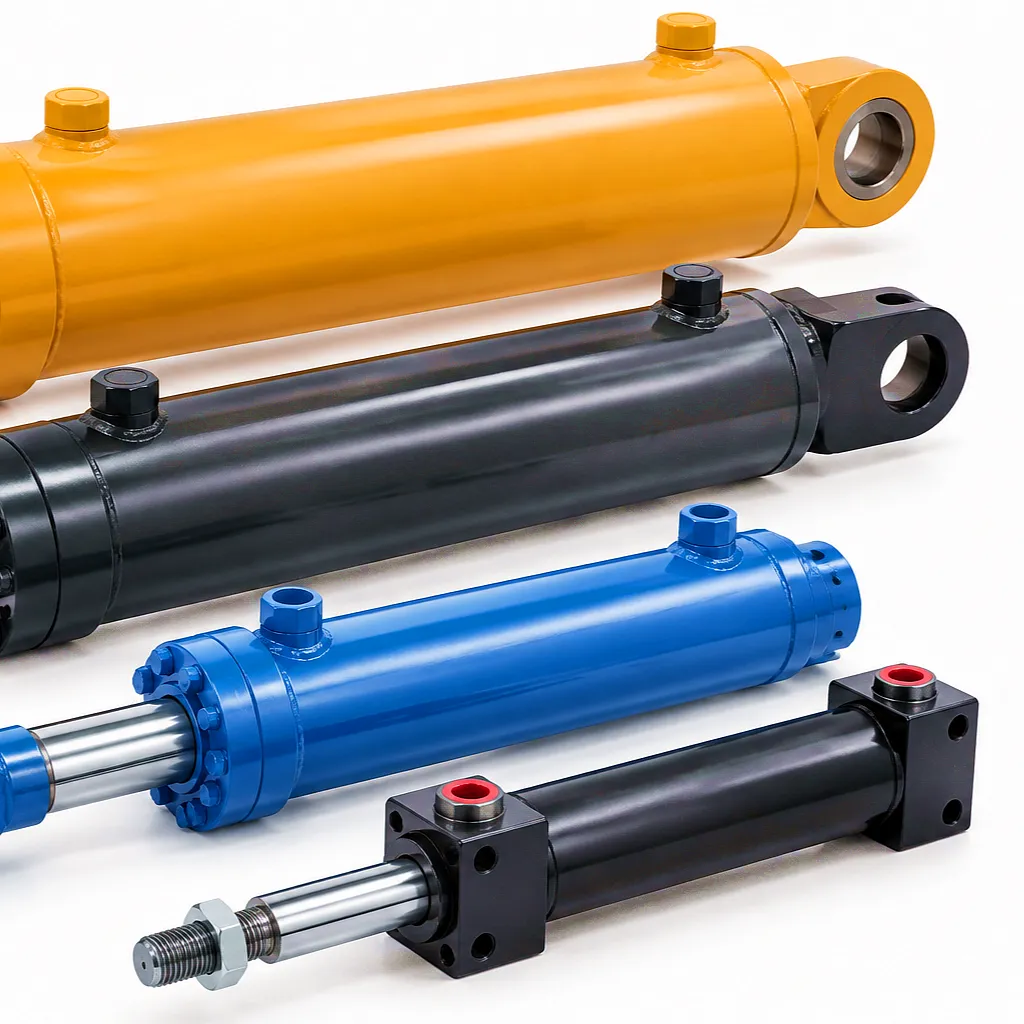
 In heavy industry, the cylinder is far more than a commodity component. It is the mechanical heartbeat of any hydraulic system — the element that converts fluid pressure into controlled linear force. Yet the decision between a telescopic hydraulic cylinder and a standard single- or double-acting cylinder is one that many procurement teams and plant engineers still approach without a structured framework. That gap in decision-making leads to over-engineered systems, undersized cylinders, premature wear, and in severe cases, system failures that disrupt production lines across Birmingham’s automotive plants, Sheffield’s steel fabrication facilities, and the port logistics operations running along the Humber Estuary. The goal of this guide is to close that gap definitively — drawing on core engineering principles, real-world UK application data, and the deep customisation expertise that Ever Power brings to each project. Whether you are specifying for a new agricultural machine, a refuse compaction vehicle, or a heavy dump trailer, the following pages will give you the technical confidence to make the right choice.
Understanding What Each Cylinder Type Actually Does
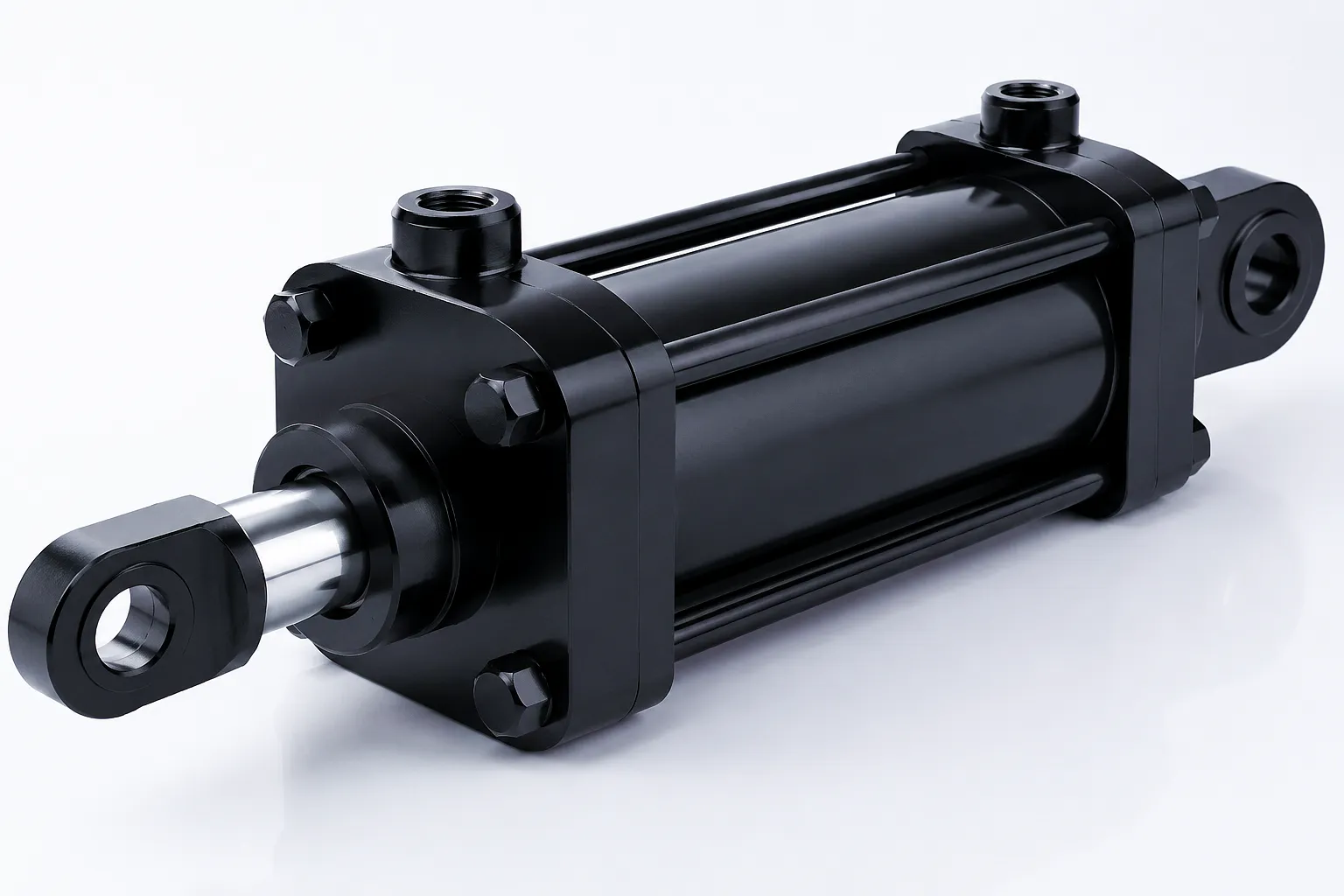
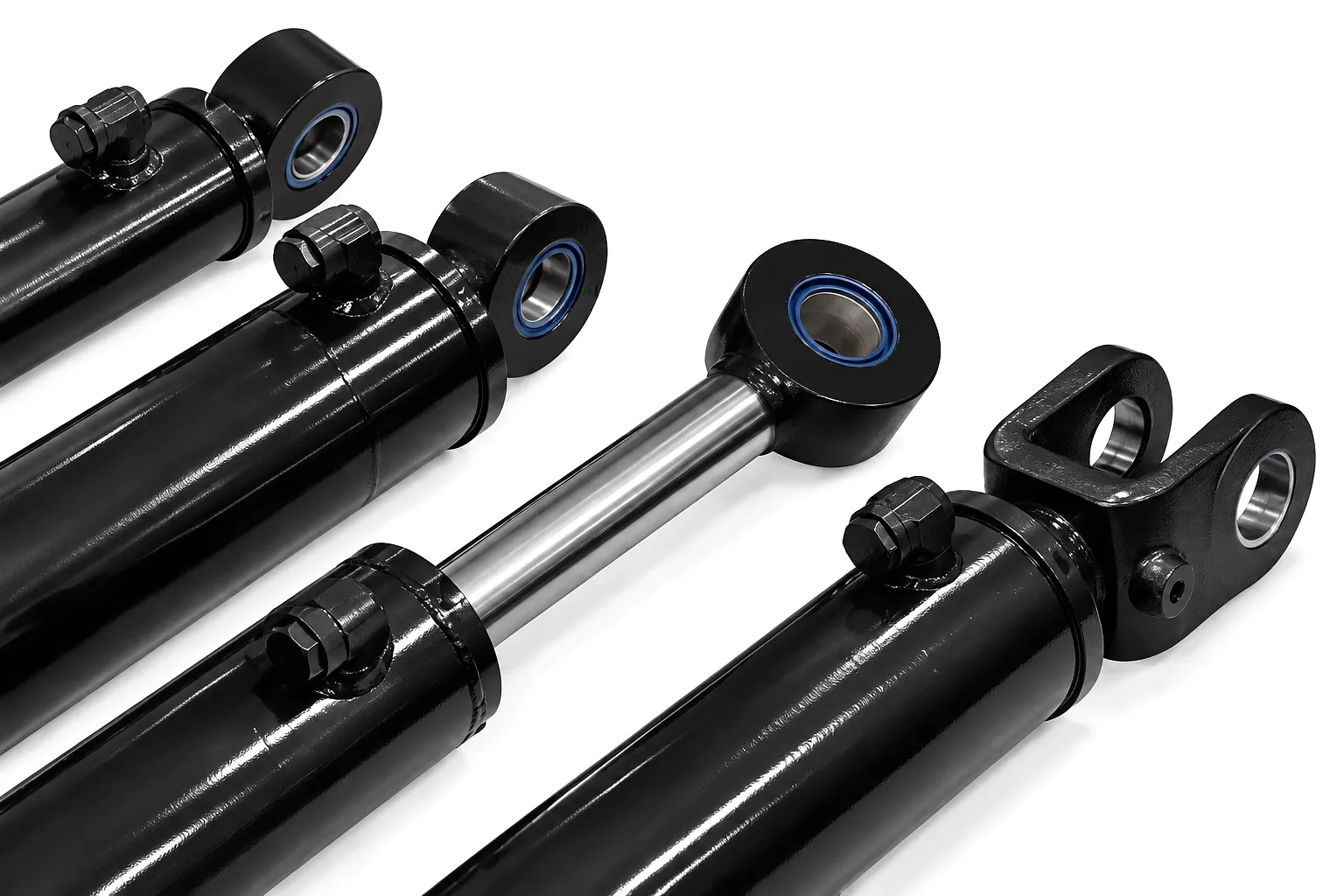 A standard hydraulic cylinder — also called a conventional or mono-stage cylinder — consists of a single barrel housing one piston rod. When pressurised fluid enters the cylinder, the rod extends to a fixed stroke length. It is straightforward, robust, and highly predictable under load. The engineering beauty of the standard cylinder is its simplicity: fewer internal seals, lower manufacturing complexity, and a proven fatigue lifespan that can exceed twenty years under controlled operating conditions. These qualities make it the default choice wherever the required stroke length is modest relative to the collapsed length of the assembly.
A telescopic hydraulic cylinder, by contrast, deploys two or more nested stages — often referred to as sleeves or sections — that extend in sequence. The outermost stage moves first, followed by progressively narrower inner stages, much like the sections of an extending radio antenna. This architecture allows a telescopic unit to achieve a stroke-to-collapsed-length ratio that can reach 2.5:1 or even 3:1 in multi-stage designs, making it indispensable in installations where retracted package size is a hard engineering constraint. Dump trucks, refuse vehicles, agricultural tipping trailers, and aerial working platforms are among the most common settings where engineers across the UK reach for a telescopic solution — because the alternative would be a standard cylinder too long to fit within the vehicle or machine chassis when retracted.
How Telescopic Hydraulic Cylinders Work: The Engineering Principle
The operating principle of a telescopic cylinder hinges on differential area mechanics. In a single-acting telescopic design, fluid pressure is applied only to the annular (ring-shaped) area at the base of the outermost sleeve. As that sleeve reaches its maximum travel, a port or passage transfers pressurised oil into the next stage, extending it outward. This sequential pressure hand-off continues until all stages are fully deployed. Retraction in single-acting units is achieved by gravity or mechanical load — which is precisely why they dominate tipping applications on heavy goods vehicles (HGVs) travelling between logistics hubs in the West Midlands and the distribution parks around Northampton.
Double-acting telescopic cylinders add an additional hydraulic circuit, enabling powered retraction. This matters enormously in applications where gravity cannot reliably return the load — for instance in overhead lifting platforms used in facility maintenance across Manchester’s industrial estates, or in the undercarriage cylinders of marine dock-levelling equipment along the Mersey. The trade-off is internal complexity: each stage requires its own set of internal seals, bearing surfaces, and porting passages. Fluid management becomes more critical, and contamination tolerance narrows. Understanding this distinction is the first layer of the cylinder selection decision, and it shapes every subsequent specification choice, from bore diameter to seal compound to working pressure rating.
Standard cylinders, operating on the same hydraulic principles but within a single barrel, produce a perfectly linear force output across the entire stroke — a characteristic that designers of precision presses, clamping jigs, and injection moulding machines rely on without compromise. Their force output is directly calculable using the formula F = P × A, where F is the force in Newtons, P is the system pressure in Pascals, and A is the effective piston area in square metres. For a telescopic unit, the effective area changes with each stage transition, meaning force output varies across the stroke — a nuance that must be fully accounted for in the structural design of any tipping or lifting mechanism.
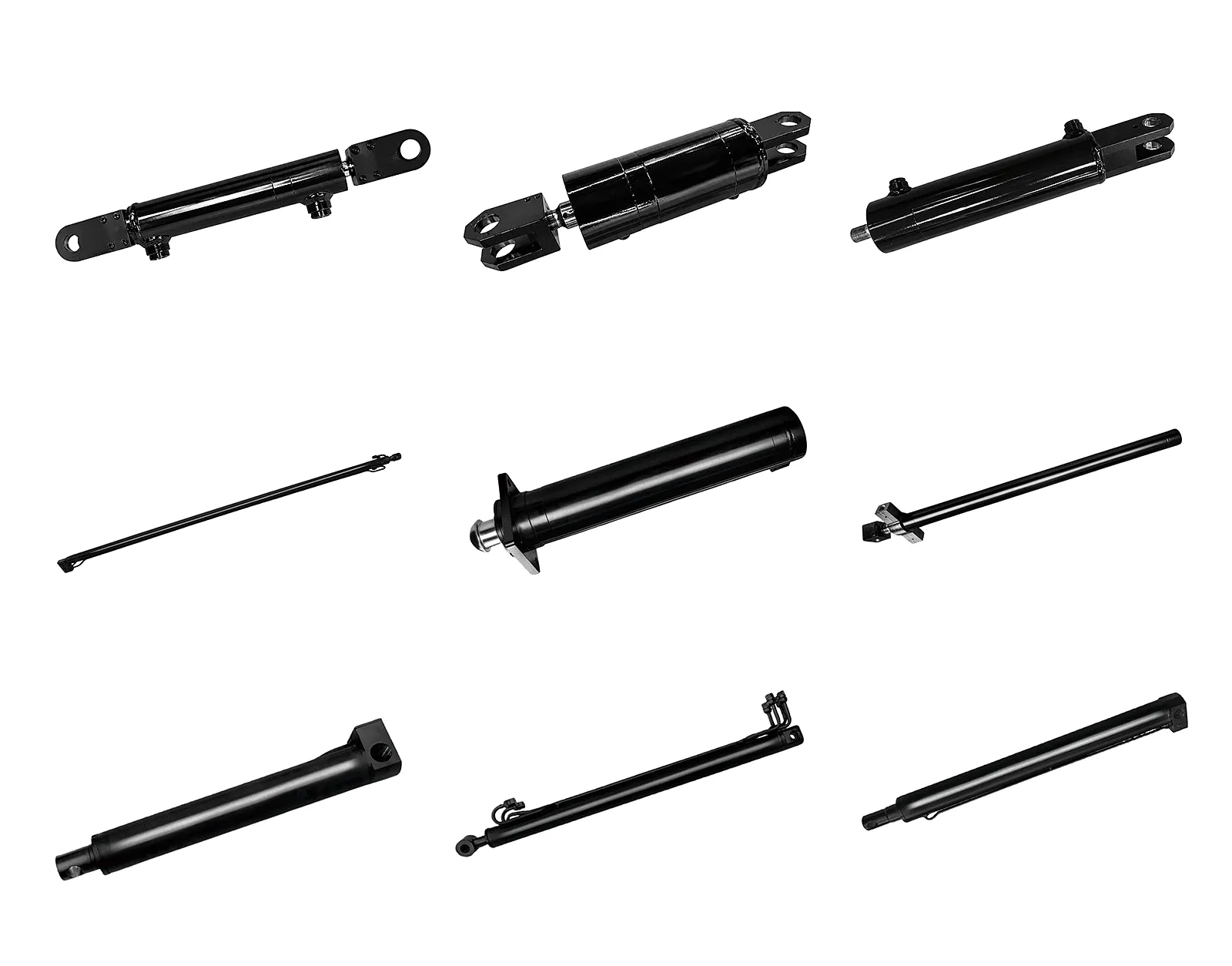
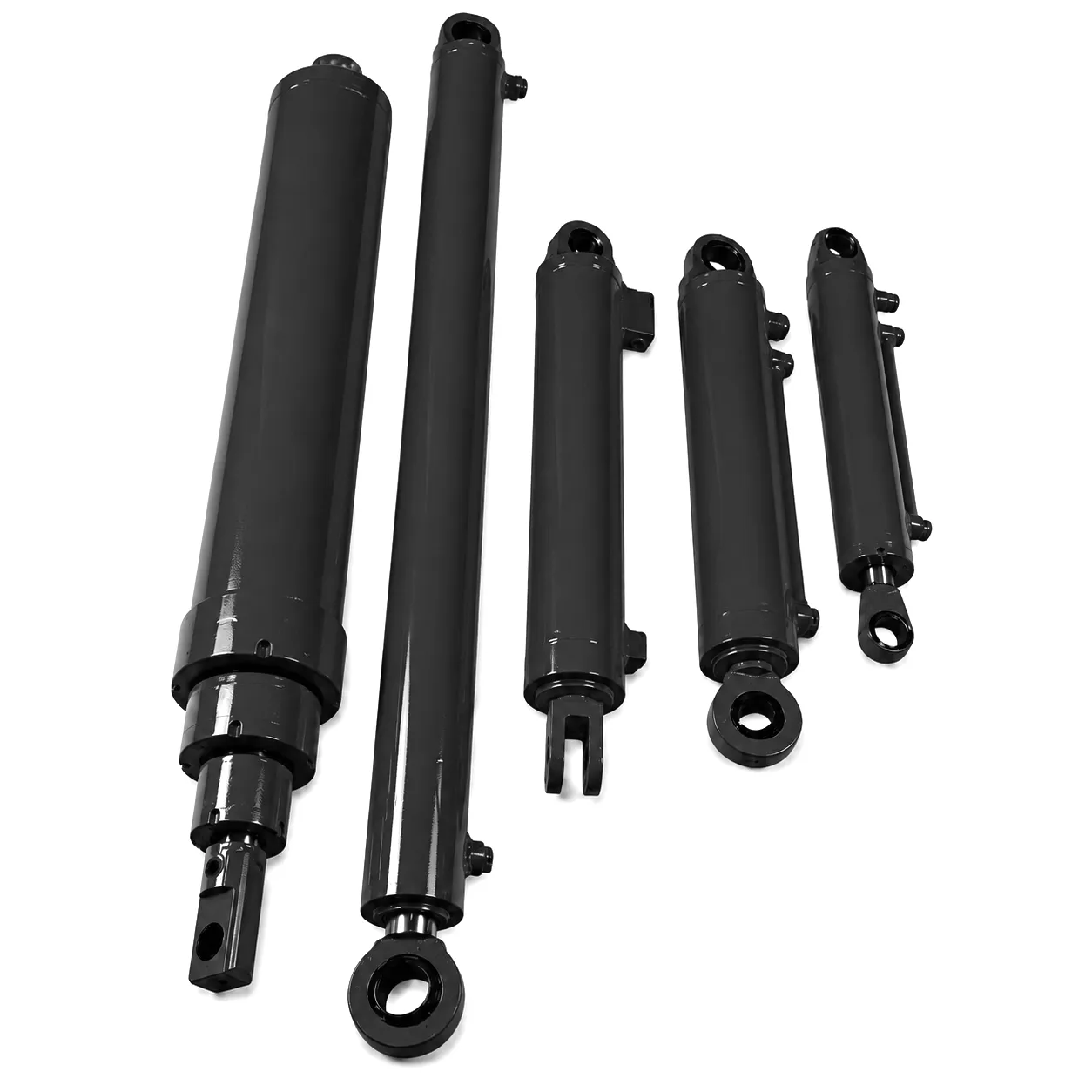
Ever Power hydraulic cylinder product range — engineered for UK and global industrial applications
Core Materials Behind Long-Service Hydraulic Cylinders
Material selection is not secondary to design — it is design. The barrel of a standard or telescopic cylinder is almost universally produced from cold-drawn seamless steel tube (CDST), specified to EN 10305-1 in the UK and European markets. Cold drawing refines the grain structure of the steel, producing a bore surface with a roughness (Ra) value typically between 0.2 µm and 0.4 µm — smooth enough to maintain seal integrity over hundreds of thousands of cycles without excessive wear. For aggressive environments such as marine construction along the Thames Estuary or mineral extraction in Welsh quarries, stainless steel grades (304, 316L) are specified for the sleeve outer surfaces to resist salt spray and acidic groundwater intrusion.
Piston Rods
Typically CK45 or 42CrMo4 alloy steel, hard chrome plated to 20–25 µm depth. Meets BS EN ISO 6945 for surface protection in UK plant environments.
Seals
Polyurethane (PU) for general use, PTFE-coated for high-pressure telescopics, and HNBR or FKM for high-temperature environments exceeding 100 °C.
End Caps & Clevises
Ductile iron (GJS-500-7) or forged steel. Machined to H8/f7 tolerances for precision pin-bore fits in agricultural machinery clevis mounts.
Surface Treatments
Nickel-chrome plating, zinc phosphating, or Hard Anodising for aluminium bodies. Paint finish to Qualicoat Class 2 on exterior sleeve surfaces for HGV duty.
The bearing surfaces within a telescopic cylinder — the guide rings and wear bands — are machined from filled PTFE or bronze-impregnated nylon composites. These materials offer a low dynamic coefficient of friction (typically 0.05–0.10) while tolerating the slight lateral loading that arises as multi-stage sleeves travel at non-zero angles. This is a detail that separates a long-service cylinder from one that develops a rocking motion and accelerated bore wear within its first year of operation on a rough-terrain vehicle. Getting the material specification right is not optional for demanding UK applications — it is the foundation of total cost of ownership.
Why Telescopic Cylinders Outperform in Specific Scenarios: Core Advantages
Extended Stroke in Minimal Retracted Length
A 3-stage telescopic cylinder delivering 2,400 mm of stroke can collapse to just 900 mm — fitting neatly within the subframe of a tipping semi-trailer where no standard cylinder could go.
Reduced Vehicle Centre of Gravity
The low retracted height of a telescopic assembly allows mounting beneath the payload — rather than alongside it — preserving vehicle stability and complying with DVSA width and height regulations on UK motorways.
High Force-to-Weight Ratio in Large-Bore Designs
The outermost stage of a large-bore telescopic unit can develop considerably higher push force than the inner stages, which is exactly what tipping bodies need at the start of their cycle when load is greatest and angle is lowest.
Versatile Mounting Options
Telescopic cylinders accept front flange, rear clevis, trunnion, and base-mount configurations — offering the same mounting flexibility as standard cylinders while delivering far greater stroke range for chassis-constrained OEM designs.
Adaptable Across Fluid Types
Telescopic cylinders can be configured for mineral oil, biodegradable hydraulic fluid (HEES), and water-glycol solutions — enabling compliance with Environment Agency requirements in ecologically sensitive UK operating zones.
Lower System Pressure Requirements in Some Cycles
Because the initial extension stage presents a large working area to the fluid, a telescopic cylinder often requires lower pump pressure to develop the same opening force — an energy efficiency advantage in mobile hydraulic systems running from a vehicle PTO.
Explore our Custom Double Acting Telescopic Hydraulic Cylinders for Lifting Platforms — precision-engineered for demanding UK industrial and construction applications requiring controlled powered retraction.
When to Choose a Telescopic Cylinder Over a Standard Design
The decision becomes clear once you map your application’s constraints against the performance profile of each cylinder type. The telescopic option earns its place when three or more of the following conditions are present simultaneously: the required stroke length exceeds 60% of the available retracted envelope; the cylinder must mount sub-frame or below-deck; the machine must meet legal road dimensions when the cylinder is retracted; and the application involves large-volume, gravity-assisted return cycles — as is the case in over 80% of UK tipper and skip-loader configurations.
Standard cylinders remain the superior choice when consistent force output across the entire stroke is non-negotiable — such as in hydraulic press brakes and deep-draw stamping tools used extensively in the West Midlands metalworking cluster. Standard units also win on precision positioning tasks: a single-stage design with a magnetostrictive linear position transducer fitted to the rod end delivers sub-millimetre repeatability that multi-stage telescopic units cannot economically match. For clamping, pressing, injection, or any cycle where force linearity and positional accuracy are design requirements, the standard cylinder should be specified without hesitation.
A third consideration is maintenance environment. Standard cylinders are serviced in the field by any competent hydraulic technician — seals are accessible from the rod end gland, and the barrel can be honed and re-sleeved without specialist tooling. Multi-stage telescopic cylinders, particularly designs with internal porting, benefit from factory-level service access. If the machine operates in a remote location — a wind turbine foundation site on the Scottish mainland or an offshore platform support vessel — the simpler serviceability of a standard cylinder may outweigh any packaging advantage the telescopic design would otherwise bring.
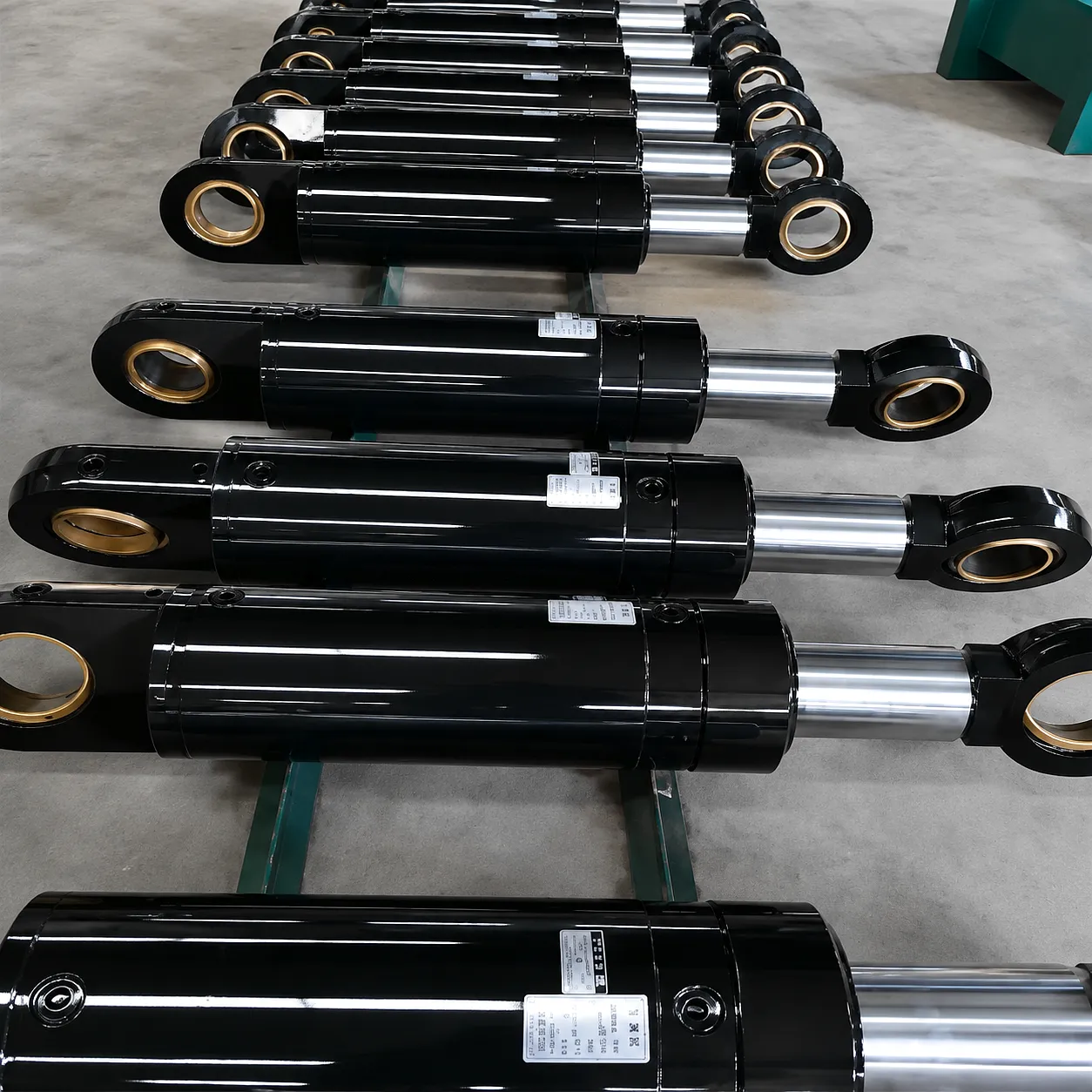
Product Technical and Performance Parameters Table
| Parameter | Telescopic Cylinder | Standard Cylinder |
|---|---|---|
| Bore Diameter Range | 50 mm – 400 mm (per stage) | 20 mm – 500 mm |
| Stroke Range | Up to 8,000 mm (multi-stage) | Up to 6,000 mm (single stage) |
| Number of Stages | 2 – 6 stages standard; 7+ custom | 1 stage (piston rod) |
| कार्य का दबाव | Up to 250 bar (350 bar heavy-duty) | Up to 350 bar (standard); 500 bar (special) |
| Stroke-to-Collapsed Ratio | 2:1 to 3:1 (typical) | 1:1 (stroke ≈ closed length) |
| Barrel Material | CDST (EN 10305-1), 304/316L SS option | CDST (EN 10305-1), SS, Aluminium |
| Rod/Sleeve Surface | Hard chrome 20–25 µm; Ra 0.2–0.4 µm | Hard chrome 20–40 µm; Ra 0.2–0.4 µm |
| Seal Compounds | PU, PTFE, FKM, HNBR | PU, NBR, PTFE, FKM, EPDM |
| Operating Temperature | -20 °C to +120 °C (seal dependent) | -30 °C to +150 °C (seal dependent) |
| Actuation Type | Single-acting (gravity return) or Double-acting | Single-acting or Double-acting |
| Typical Applications | Tippers, skip loaders, lifting platforms, harvesters | Presses, clamping, injection moulding, steering |
| Positional Accuracy | ±2–5 mm (stage transition variability) | ±0.05–0.5 mm (with position sensor) |
| Typical Push Force (100 mm bore, 200 bar) | ~157 kN (first stage); reduces per stage | ~157 kN (constant through stroke) |
Industrial Application Scenarios: Where Each Cylinder Type Earns Its Keep
🚙 Tipper Trucks and HGV Body Tipping — Transport & Logistics, UK
This is the canonical telescopic cylinder application. UK-registered tippers carrying aggregates, demolition waste, or topsoil from quarries near Buxton to construction sites in Greater London require a cylinder that can raise a 6-metre body by 1,800 mm or more — yet retract to a package short enough to clear the subframe during road travel. A three-stage single-acting cylinder with a front-eye or rear-clevis mount handles this cycle thousands of times per year. At Ever Power, our tipper-grade telescopic cylinders are designed to BS ISO 10100 dimensional standards, with chrome-lined outer sleeves that withstand the abrasive dust and road grit endemic to UK aggregate transport operations.
🌾 Agricultural Machinery — Tipping Trailers & Combine Harvesters, UK Farmland
Across the arable flatlands of East Anglia and the Lincolnshire Fens, agricultural tipping trailers and grain chasers rely on telescopic cylinders to empty large-capacity bodies rapidly during harvest windows where hours matter commercially. Our Hydraulic Cylinders for Combine Harvester Machines are purpose-built for agricultural duty cycles, with HEES-compatible seals, external dust wipers, and galvanised outer sleeve surfaces that resist the corrosive fertiliser residues present on UK arable farmland. The combination of fast-cycling, high-force extension under load and clean gravity retraction makes the telescopic design the natural fit for this sector.
🏗 Skip Loaders and Refuse Collection Vehicles — Municipal Waste, England
Municipal fleets operated by councils across England — from Leeds City Council’s waste management operations to Bristol’s kerbside recycling programme — depend on robust telescopic cylinders to lift and empty skip bodies or compactor sections multiple times per shift. The duty cycle is punishing: high cycle frequency, variable load, and exposure to leachate from domestic waste streams. Double-acting telescopic cylinders with NBR seals rated for mild chemical exposure and stainless steel external hardware provide the service life that reduces fleet downtime and keeps contract performance on target. Standard cylinders simply cannot provide the stroke-to-package ratio these chassis require.
🛠 Lifting Platforms and Aerial Work Platforms — Construction, UK
Scissor lifts, boom lifts, and column-type vehicle lifts used in construction sites across Birmingham and Manchester’s city-centre regeneration zones use double-acting telescopic cylinders to achieve the vertical travel range their operators require. Powered retraction is non-negotiable in overhead applications where gravity cannot safely return the platform under all load conditions. Ever Power supplies Custom Telescopic Hydraulic Cylinders for Lifting Platforms with integrated cushioning at both end positions, reducing shock loads that would otherwise fatigue the scissor mechanism frame over thousands of operating cycles.
⚙ Press Brakes and Metal Forming — Manufacturing, Sheffield & West Midlands
This is where standard hydraulic cylinders demonstrate their clear advantage. CNC press brakes in Sheffield’s advanced manufacturing corridor and Birmingham’s metalworking SME cluster require precisely repeatable force delivery across the full stroke — bending steel sheet to tolerances of ±0.1 mm demands nothing less. Synchronised dual-cylinder configurations with proportional control valves achieve this with standard double-acting units. Telescopic cylinders would introduce force variation at each stage transition — an unacceptable quality risk in precision sheet metal fabrication. The right cylinder type, matched to the right process, is the difference between a profitable operation and a scrap-rate problem.
🚢 Marine Dock Levellers and Offshore Support Vessels — Ports, UK
Dock levellers at ports including Southampton, Felixstowe, and the Humber complex use double-acting telescopic cylinders rated for saltwater-adjacent environments — full stainless steel external hardware, epoxy-coated barrel exteriors, and Viton seal compounds that resist the hydraulic fluid degradation caused by marine temperature cycling. Standard cylinders remain in use for the linear rams on hatch cover actuators aboard RoRo vessels, where their predictable force curve and compact construction suit the tight below-deck machinery spaces that naval architects preserve for cargo volume.
Ever Power: Precision Manufacturing and Customisation Capabilities
Ever Power operates a vertically integrated hydraulic cylinder manufacturing facility equipped for precision turning, deep-hole boring, honing, and hard chrome plating within a single production campus. This integration eliminates the quality risks inherent in outsourced sub-assembly — every barrel bore is honed on-site to Ra 0.2–0.4 µm, every piston rod chrome plated under ISO 6945-controlled bath conditions, and every seal assembly pressure-tested to 1.5 times working pressure before despatch. For UK customers, this means a clearly auditable supply chain and a single point of contact for technical specification, manufacture, inspection, and delivery logistics.
Customisation capability is where Ever Power’s manufacturing depth truly differentiates. Our engineering team regularly handles non-standard specifications including: asymmetric bore-to-rod ratios for specialised force profiles; custom port positions for below-deck or chassis-integrated hydraulic routing; multi-stage cylinders with individual stage travel stops for controlled partial-extension positioning; and integrated velocity fuses or counterbalance valves for load-holding safety in lifting applications that must comply with LOLER (Lifting Operations and Lifting Equipment Regulations 1998) requirements across the UK. We produce cylinders with bore sizes from 40 mm to 800 mm, strokes from 100 mm to 8,000 mm, and working pressures from 100 bar to 500 bar — all built-to-order with lead times that keep your project schedule intact.
40mm–800mm
Bore Range
100–8,000mm
Stroke Range
500 bar
Max Working Pressure
7 Stages
Max Standard Telescopic Stages
Need single-acting heavy-duty performance? View our Heavy Duty Single Acting Hydraulic Cylinders — built for tipping, lifting, and load-control applications across UK industry.
Customer Success Story: Sheffield Steel Fabricator Eliminates Cylinder Downtime
Heavy Industrial Tipping — Sheffield, South Yorkshire, UK
Hadfield Bulk Materials Ltd, a bulk steel-slag processing and aggregate supply business operating two sites near Rotherham and Sheffield city centre, had been running a fleet of eight semi-tipper trailers fitted with standard single-stage cylinders. The combination of heavy slag loads (peak body weight exceeding 22 tonnes) and the abrasive, high-silica dust environment of steel processing was causing premature chrome pitting on rod surfaces and seal degradation within 14 months of service — well below the three-year target lifecycle. The resulting maintenance costs and unplanned downtime were eroding fleet profitability on an already tight margin operation.
After a technical consultation with Ever Power’s UK-facing application engineering team, the decision was made to respecify all eight trailers with custom three-stage telescopic cylinders featuring 250 mm outer bore, 350-bar rated barrels machined from EN 10305-1 CDST, and 25 µm hard chrome sleeves with a sealed dust-exclusion collar at each stage interface. The inner seals were upgraded from standard PU compounds to HNBR — selected specifically for its superior resistance to aromatic contamination from slag dust and residual process oils carried in the aggregate loads.
After eighteen months of operation, none of the eight cylinders had required an unplanned service intervention. Chrome surface condition remained within manufacturer tolerances across all units. Hadfield’s maintenance manager reported a 68% reduction in hydraulic-related fleet downtime and a calculated saving of approximately £47,000 over the period relative to the previous standard-cylinder configuration. The longer retracted length of the original standard cylinders had also been creating a secondary problem — interference with the trailer’s rear underrun protection bar during coupling operations. The more compact retracted package of the Ever Power telescopic units resolved this structural conflict at no additional modification cost to the trailer frames.
★★★★★
“After two years on our slag tippers, the chrome hasn’t missed a beat. The HNBR seal upgrade Ever Power recommended was exactly right for our dust conditions. We haven’t had a single cylinder swap since the retrofit — that speaks for itself.”
— Operations Director, Bulk Aggregate Fleet, Sheffield
★★★★★
“The fact that Ever Power could do a completely bespoke bore, port position, and seal compound — in a single order, with a two-week lead time — saved our project timeline. Other suppliers wanted twelve weeks minimum. Technical response was clear and the delivered cylinders matched the drawing exactly.”
— Procurement Manager, Lifting Platform OEM, West Midlands
★★★★★
“We switched to Ever Power telescopic cylinders on our combine tipping trailer fleet three harvests ago. Zero seal failures across 22 units. The galvanised outer sleeves have handled East Anglian field conditions — including the 2024 wet season — without showing any corrosion. Would not consider changing supplier.”
— Fleet Engineer, Agricultural Contracting, Lincolnshire
Frequently Asked Questions About Telescopic Hydraulic Cylinders in the UK
How much does a custom telescopic hydraulic cylinder cost from a UK supplier, and what factors affect the price?
The cost of a telescopic hydraulic cylinder depends primarily on bore size, number of stages, working pressure, material specification, and order quantity. A standard two-stage unit in 150 mm bore for agricultural tipping will sit in a significantly different price bracket from a six-stage 300 mm bore marine-grade cylinder with stainless external hardware. Ever Power provides obligation-free quotes with detailed technical breakdown within 24 hours for most standard specifications. Contact [email protected] with your bore, stroke, pressure, and mounting requirements for an accurate price.
What is the best telescopic hydraulic cylinder supplier in Birmingham for heavy-duty industrial tipper applications?
For heavy-duty tipper and skip-loader applications serving Birmingham and the wider West Midlands industrial area, suppliers need to offer both catalogue and custom-built units with rapid despatch. Ever Power ships bespoke telescopic cylinders globally, including UK freight services to Birmingham, Wolverhampton, and Coventry, with full material certifications and pressure test documentation. Our engineering team handles LOLER-compliance documentation for lifting-rated applications on request.
When should I choose a double-acting telescopic cylinder over a single-acting design for a UK lifting platform project?
Choose a double-acting telescopic cylinder whenever powered retraction is required — that is, when gravity or mechanical load cannot reliably and safely return the cylinder to its retracted position. This applies to all overhead or non-vertical lifting applications, any platform where the load may be removed while extended (leaving no return force), and applications that must comply with LOLER requirements for controlled descent. Tipping bodies on HGVs typically use single-acting units because the tipping body’s own weight provides reliable gravity return. Lifting platforms, aerial work platforms, and dock-levellers generally require double-acting configurations.
How long does it take to get a custom telescopic hydraulic cylinder quote and delivery to Sheffield or Leeds in the UK?
Ever Power typically returns technical quotes within 24 hours for standard specifications and within 48–72 hours for complex custom requirements. Manufacturing lead times for custom telescopic cylinders vary by complexity: straightforward two- or three-stage units in standard bores are generally completed within 15–20 working days from drawing approval. More complex multi-stage designs with specialised sealing or surface treatments may require 25–35 working days. UK freight from our despatch facility to Sheffield, Leeds, or any other UK location typically adds 2–4 working days using standard pallet courier services.
Which type of seal compound should I specify for a telescopic hydraulic cylinder working in agricultural environments across the UK?
For agricultural applications in the UK — where cylinders are exposed to fertiliser residues, crop acids, soil moisture, and seasonal temperature extremes — HNBR (Hydrogenated Nitrile Butadiene Rubber) or FKM (Viton) seals offer the best combination of chemical resistance and service life. For machines that must use biodegradable hydraulic fluid (HEES) to meet Environment Agency or stewardship programme requirements, PTFE-lip seals or EPDM compounds are specified. Ever Power’s application engineers will recommend the correct seal compound based on your specific fluid type, temperature range, and operating environment — always ask for a material datasheet comparison as part of your quote process.
Where can I get a reliable price comparison between telescopic and standard hydraulic cylinders for a skip loader application in Manchester or the North West of England?
The most reliable way to compare pricing across cylinder types for a specific application is to submit a single technical enquiry that covers both options. At Ever Power, our quotation response includes a side-by-side comparison of telescopic versus standard cylinder options where both are technically feasible — covering price, lead time, maintenance interval expectations, and a note on long-term total cost of ownership. For skip loader applications in Manchester, Salford, or anywhere across the North West, contact [email protected] with your body dimensions, maximum load, cycle frequency, and chassis constraints for a complete comparison quotation.
Ready to specify?
Get Technical Guidance and a Custom Cylinder Quote from Ever Power
Our engineers are available to review your application requirements — bore, stroke, pressure, mounting, environment, and duty cycle — and return a full technical proposal including material certifications and test documentation.
जीजेडएल द्वारा संपादित
 Hindi
Hindi  English
  Italian
  Portuguese
  Dutch
Dutch  Swedish
  Danish
  Finnish
  Polish
  Kazakh
  Turkish
  Ukrainian
  Romanian
  Spanish
  German
  Russian
  Korean
  Japanese
  Vietnamese
  Thai
Thai  Indonesian
  Malay
Malay  French
  Greek
Greek