
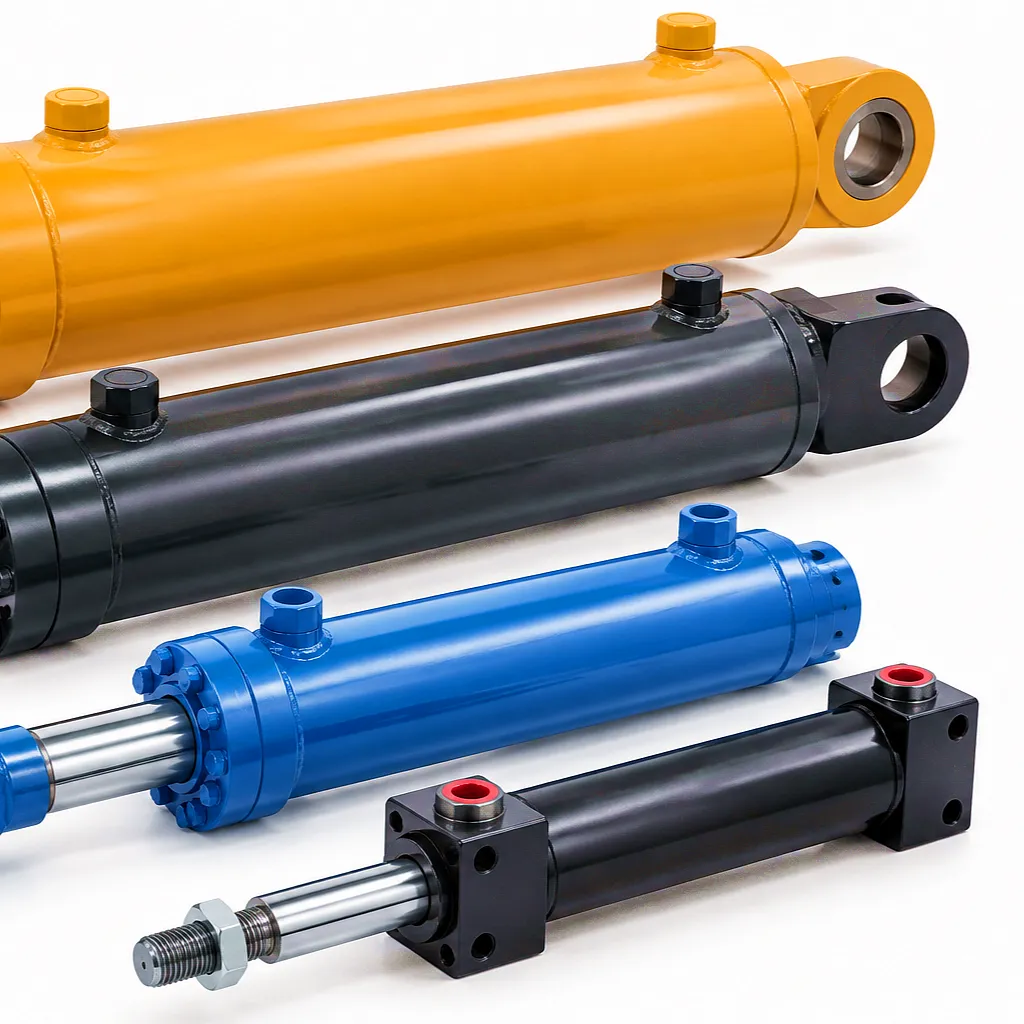
 Walk through any major construction site from Birmingham to Aberdeen and you will find boom cylinders doing some of the heaviest, most precise work on the machine. These are the hydraulic actuators mounted along crane arms, excavator booms, and telescoping loader masts — the components that translate pressurised fluid into controlled, powerful linear motion. Despite carrying enormous loads day after day, they rarely receive the detailed engineering attention they deserve during the specification stage. That oversight can lead to premature seal failure, cylinder drift, and costly unplanned downtime on projects where every idle hour carries a financial penalty. Understanding what a hydraulic boom cylinder actually is — how it generates force, which configurations suit which duties, and which material and performance parameters define quality — is the starting point for making a better procurement decision. This article breaks it all down in plain engineering language, with performance tables and UK industry context built in throughout.
The Core Engineering Definition of a Boom Cylinder
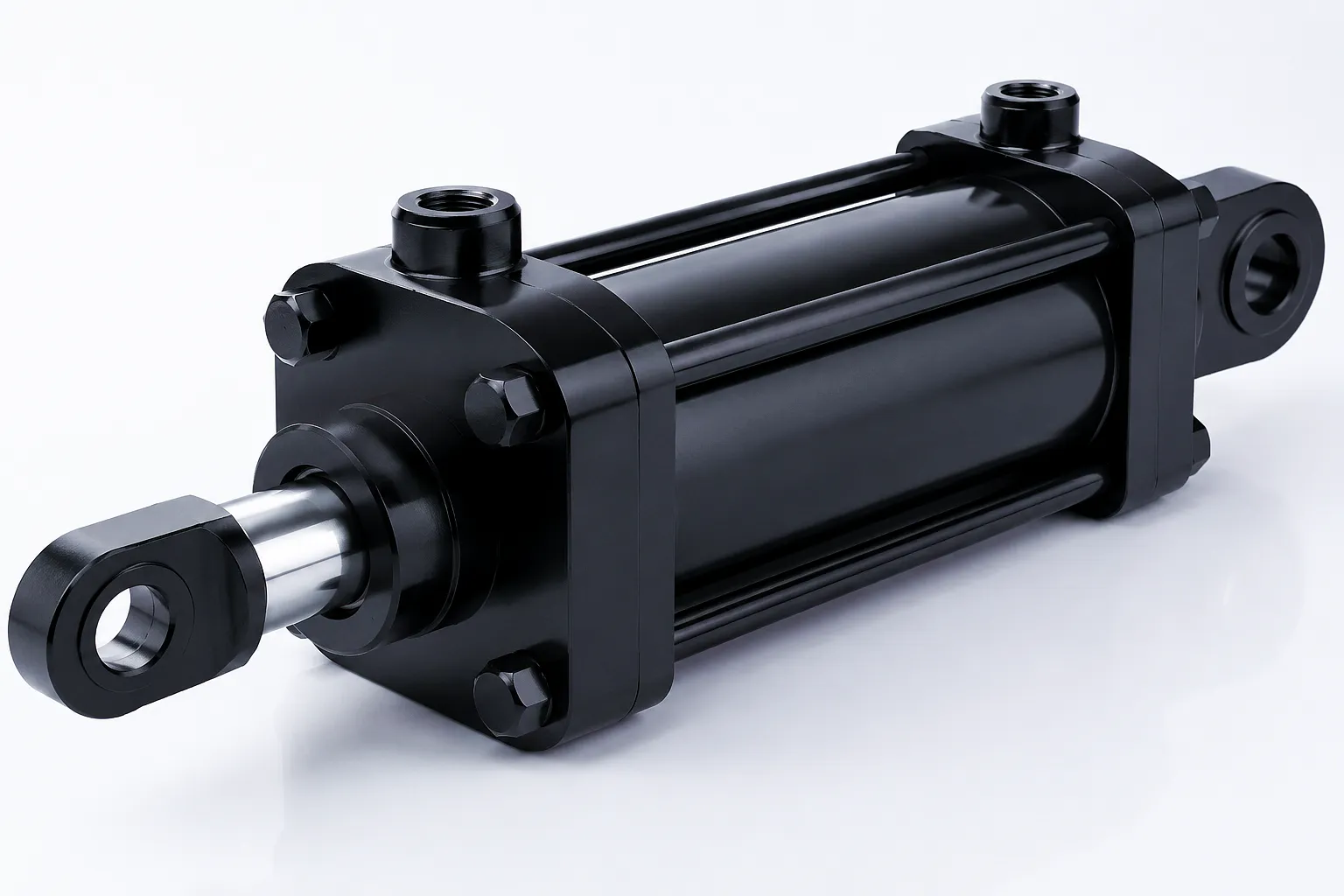
A hydraulic boom cylinder is a linear actuator engineered specifically for use on the boom arm of heavy equipment — most commonly excavators, cranes, aerial work platforms, and material handlers. Unlike a standard tie-rod cylinder designed for stationary industrial machinery, a boom cylinder is optimised for dynamic, high-cycle operation under constantly shifting angular loads. It converts hydraulic pressure, typically ranging from 200 to 350 bar in modern mobile equipment, into a pulling or pushing force that raises, lowers, or extends the boom assembly. The bore diameter, rod diameter, and stroke length together determine how much force the cylinder delivers and over what range of travel. Getting these three parameters right — and matching them to the operating pressure and duty cycle of the host machine — is the fundamental engineering challenge that separates a well-specified boom cylinder from one that will fail long before its intended service life is reached. The cylinder’s mounting style, whether clevis, flange, or trunnion, further determines how it handles the side-loading forces that constantly act on a boom arm during real-world operation.
How a Hydraulic Boom Cylinder Generates Force
The working principle is elegantly straightforward. Hydraulic fluid from the machine’s pump is routed under pressure into one of two ports on the cylinder body. When pressure enters the cap-end port, fluid fills the full bore area behind the piston, pushing the rod outward and extending the boom. When the control valve switches and pressure enters the rod-end port instead, fluid acts on a reduced annular area — the bore cross-section minus the rod cross-section — and the piston retracts, pulling the boom back. Force is simply pressure multiplied by the effective piston area: F = P × A. In practice this means a 250 mm bore cylinder operating at 250 bar generates an extension force of approximately 122 tonnes — enough to raise a fully loaded 30-tonne excavator bucket and arm in a fraction of a second.
The speed of extension and retraction is governed by the flow rate delivered by the hydraulic pump. Because the retraction stroke acts on the smaller annular area, it is inherently faster than extension at the same flow rate — a characteristic that boom cylinder designers deliberately exploit when specifying machines for fast-cycle applications such as demolition or high-frequency lifting. Between the piston and the barrel, precision-ground seals maintain the pressure differential that makes force generation possible. Any degradation in these seals — caused by contamination, wrong fluid grade, thermal cycling, or simply age — creates internal bypass leakage that reduces effective force and causes the boom to drift under load, a visible and immediately dangerous symptom in crane and excavator operations.
350 bar
Max operating pressure in modern mobile hydraulics
F = P × A
The fundamental force equation governing all hydraulic actuators
1M+ cycles
Designed service life for premium-grade boom cylinders
Types of Hydraulic Boom Cylinders and Their Applications
Each configuration is engineered for a specific operating envelope — matching type to application is as important as matching pressure rating.
Double-Acting Welded Cylinders
The dominant configuration in excavator and crane boom circuits. Hydraulic pressure is applied alternately on both sides of the piston, giving full powered control of both extension and retraction. The welded barrel construction eliminates the bolted end caps found on tie-rod designs, reducing the risk of end-cap leakage under the vibration typical of demolition or rock-breaking duty. Bore sizes on production excavator boom cylinders typically run from 100 mm to 320 mm, with strokes from 800 mm to over 2,000 mm. The welded design also allows a shorter overall collapsed length, critical when packaging cylinders into tight boom structures on compact urban machines of the type increasingly common on city-centre projects in London and Manchester.
Telescopic Multi-Stage Cylinders
When an application demands a very long stroke from a physically short collapsed length — tipper lorry bodies, aerial platforms, and certain crane jibs are the classic cases — a telescopic cylinder is the answer. Two to five nested tube stages extend sequentially, each stage a smaller diameter than the previous one, and the combined stroke can reach four to five times the collapsed length. Single-acting telescopic cylinders retract under gravity or load; double-acting variants use hydraulic pressure for both directions and are preferred for overhead work platforms where controlled retraction is a safety requirement. Sheffield’s steel fabrication sector has long used telescopic boom cylinders on handling rigs that must reach over furnace walls without the bulk of a multi-link extension arm.
Differential / Regenerative Cylinders
A differential connection reroutes return oil from the rod end back into the cap end during extension, effectively adding the rod-end flow to the pump flow and dramatically increasing extension speed. This arrangement — common on high-cycle forestry and recycling processing equipment — halves or more the time needed to extend the boom, but produces proportionally reduced force during the differential phase. The circuit usually switches to a conventional connection automatically when the load increases above a preset threshold, restoring full force. Operators working recycling transfer stations around Birmingham or large timber yards in the Scottish Highlands benefit from cycle-time reductions of 30 to 40 per cent on sorting and stacking machines using this cylinder type.
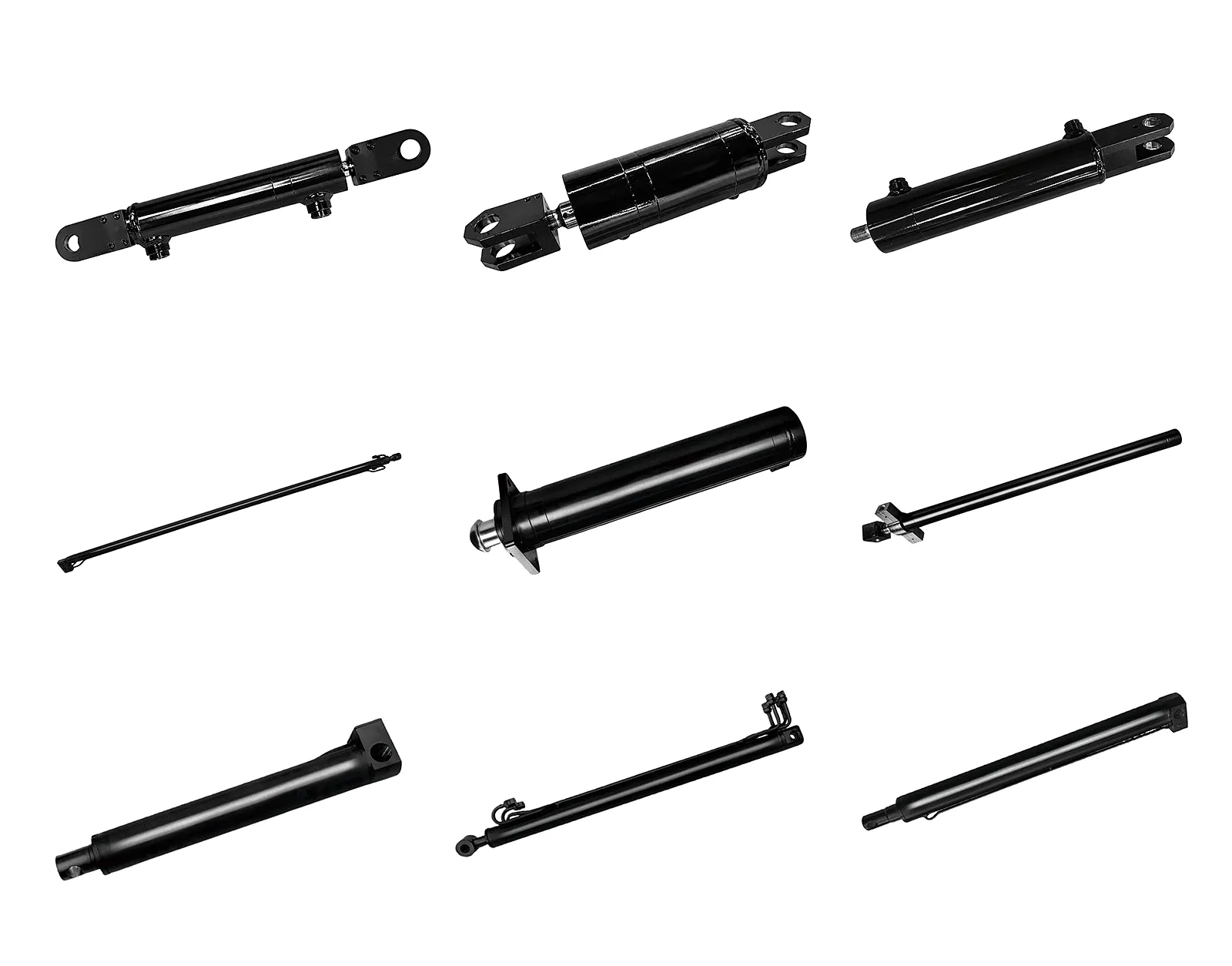
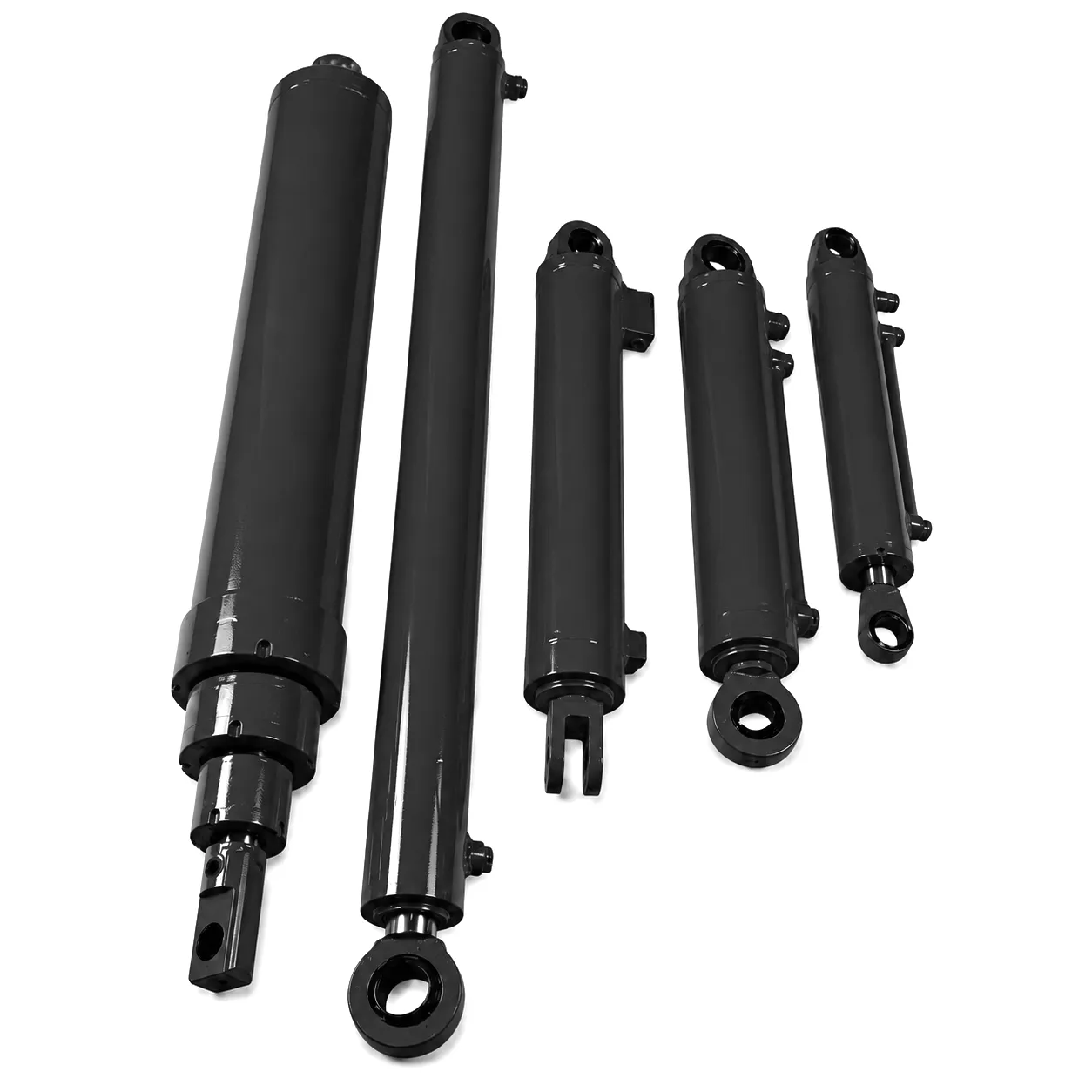
Ever Power — Hydraulic Boom Cylinder Product Range
Core Materials: What Separates a Quality Boom Cylinder
Cylinder Barrel — Honed Steel Tube
The barrel is cold-drawn seamless steel tube, typically to ST52 or E355 specification, honed to a surface finish of Ra 0.2 to 0.4 µm. That mirror-smooth bore surface is the most important manufacturing variable in the entire cylinder — it determines how well the piston seal maintains contact, how low internal bypass leakage remains throughout the cylinder’s life, and how resistant the bore is to scoring if contaminated fluid enters the system. Precision honing removes the micro-peaks left by the drawing process while creating a characteristic cross-hatch pattern that retains a thin film of hydraulic fluid, keeping the seal lubricated during high-speed stroking. Any deviation outside tolerance at this stage cannot be corrected downstream and will compromise seal life from the first pressurised cycle.
Piston Rod — Chrome-Plated or Induction-Hardened
The piston rod sees the most abuse of any component — it protrudes from the cylinder during extension, exposing the working surface to mud, grit, saltwater spray, and abrasive dust. Standard production rods are manufactured from cold-drawn 42CrMo4 or 40Cr alloy steel, ground to h6 tolerance, and then hard-chrome-plated to a depth of 20 to 30 µm. That chrome layer, with a surface hardness of 800 to 1,000 HV, resists scoring and corrosion while presenting the dimensionally precise surface the rod-end seal needs to function correctly. For offshore marine applications — relevant to UK North Sea support equipment — laser-cladded stainless steel overlay or electroless nickel plating provides greater corrosion resistance than chrome in chloride-rich environments without sacrificing dimensional accuracy.
Seals — Polyurethane and PTFE Composite
Modern boom cylinder seal kits combine multiple polymer families, each contributing a specific property to the overall system performance. Polyurethane piston seals provide the primary pressure containment, tolerating pressures up to 400 bar and operating temperatures from -35°C to +100°C — important for plant operating in Scottish winters as much as Middle Eastern summers. PTFE-filled guide rings at the piston and rod-end gland maintain concentricity without metallic contact, eliminating barrel scoring under side-load conditions. Wiper seals at the rod-end entry point are the last line of defence against contamination ingress: a worn or incorrectly specified wiper allows abrasive particles to ride in on the rod surface, destroying the primary rod seal and polluting the entire hydraulic system far downstream of the cylinder itself.
Related Products from Ever Power
▶ Custom Hydraulic Power Unit
Purpose-built hydraulic power packs matched to your boom cylinder circuit specifications, with bespoke reservoir sizing, flow rates, and filtration levels for UK site conditions.
▶ Hydraulic Rotary Actuator Steering Cylinder
Compact rotary actuators for steering circuits on articulated machines and cranes where a conventional boom cylinder geometry is not feasible.
Technical and Performance Specifications
The table below covers the standard production parameter range for Ever Power hydraulic boom cylinders. Custom configurations — including non-standard bore/rod ratios, special stroke lengths, and application-specific seal compounds — are available on request.
| Parameter | Standard Range | Custom / Max | Notes |
|---|---|---|---|
| Bore Diameter | 50 mm – 320 mm | Up to 500 mm | Per ISO 6020/6022 |
| Rod Diameter | 35 mm – 220 mm | Custom ratio | 42CrMo4 / chrome-plated |
| Stroke Length | 200 mm – 3,000 mm | Up to 6,000 mm | Telescopic stages available |
| Operating Pressure | 100 bar – 250 bar | 350 bar | Test pressure: 1.5 × WP |
| Peak Pressure | Up to 350 bar | 420 bar (special) | Shock loading considered |
| Operating Temperature | -20°C to +80°C | -40°C to +120°C | Arctic or high-heat seals |
| Barrel Material | ST52 / E355 seamless tube | Stainless / Duplex | Honed Ra 0.2–0.4 µm |
| Rod Surface Hardness | 800 – 1,000 HV | Laser cladding available | Hard chrome standard |
| Seal Material | PU + PTFE composite | FKM / HNBR special | For HF fire-resistant fluids |
| Mounting Styles | Clevis / Flange / Trunnion | Custom weldment | Per DIN / ISO / JIS |
| Cushioning | Adjustable end-cushions | Two-stage cushioning | Reduces end-stroke shock |
| Service Life | 500,000 cycles (standard) | 1,000,000+ cycles | With correct fluid maintenance |
Why Engineers Specify Hydraulic Boom Cylinders Over Alternatives
Exceptional Force-to-Size Ratio
Hydraulic cylinders deliver more force per unit of cross-sectional area than any other practical linear actuator technology. A 200 mm bore boom cylinder operating at 250 bar produces a push force of approximately 78 tonnes — from a component barely larger than a domestic drainpipe. No electric linear actuator, pneumatic cylinder, or mechanical screw can approach this power density at scale, which is precisely why hydraulic boom cylinders remain the irreplaceable choice for heavy lifting and heavy-cycle digging in civil engineering, mining, and port handling operations. This compact power density also means boom structures can be designed with slimmer profiles, improving visibility from the operator cab and reducing the aerodynamic profile of cranes working at height.
Infinite Position Hold Under Load
A correctly sealed hydraulic boom cylinder holds position indefinitely under static load without consuming power, because incompressible hydraulic oil trapped between a closed valve and the cylinder piston prevents motion in either direction. This property is critical for crane operations where a lifted load must be held stationary for minutes or hours while rigging work is completed below. Hydraulic lock-out valves — pilot-operated check valves mounted directly on the cylinder ports — reinforce this capability and provide the safety-critical over-pressure protection required under UK LOLER (Lifting Operations and Lifting Equipment Regulations 1998) provisions for crane and hoist systems used on commercial construction projects.
Smooth Variable Speed Control
By adjusting the flow rate from the hydraulic pump, an operator can vary boom cylinder speed infinitely from a slow, feather-light creep to a full-speed power stroke — all within the same component without changing mechanical settings. This gives skilled operators on excavators the ability to perform both rough bulk digging and precise trim grading with a single set of controls, a versatility that is simply not achievable with electric screws or pneumatic cylinders. In modern load-sensing hydraulic systems, electronic control units monitor boom position and load and modulate pump displacement automatically, giving proportional control accuracy comparable to servo-electric drives while retaining the raw power output only hydraulics can deliver.
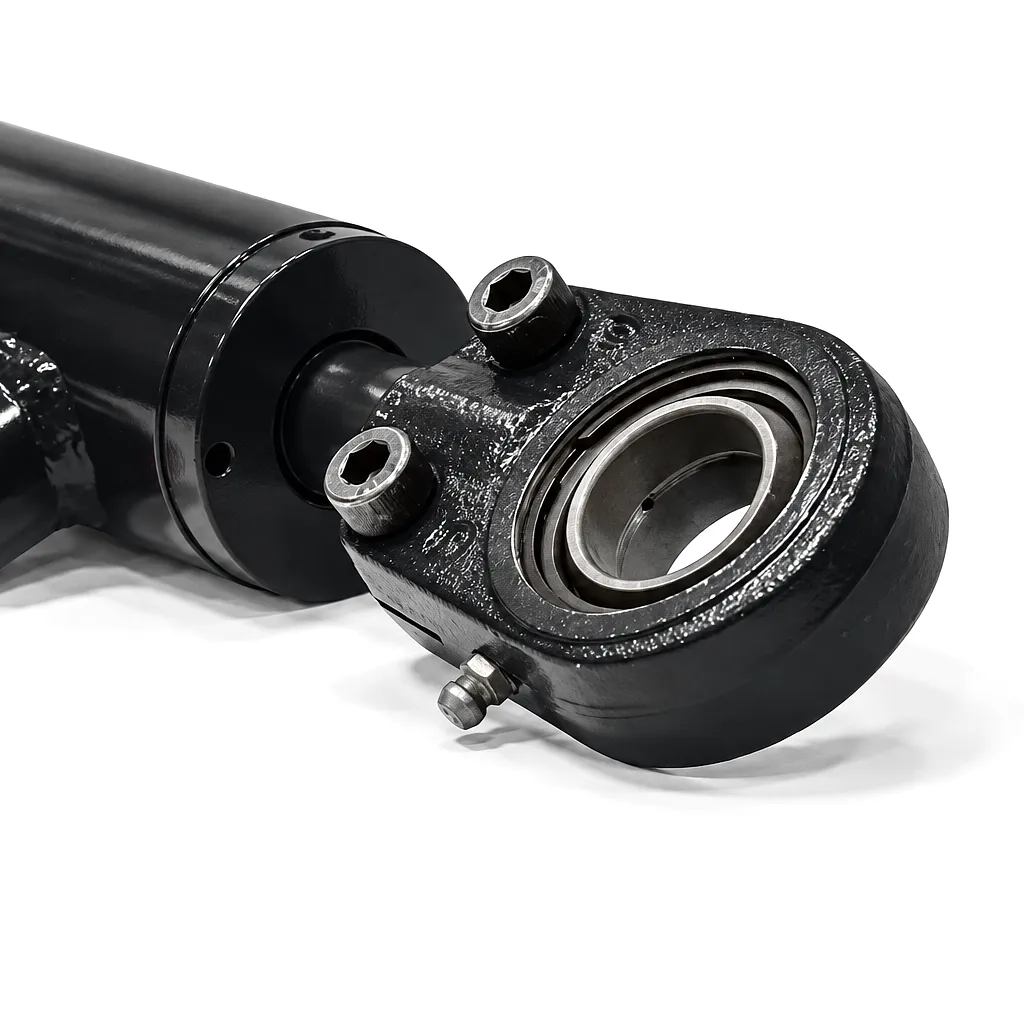
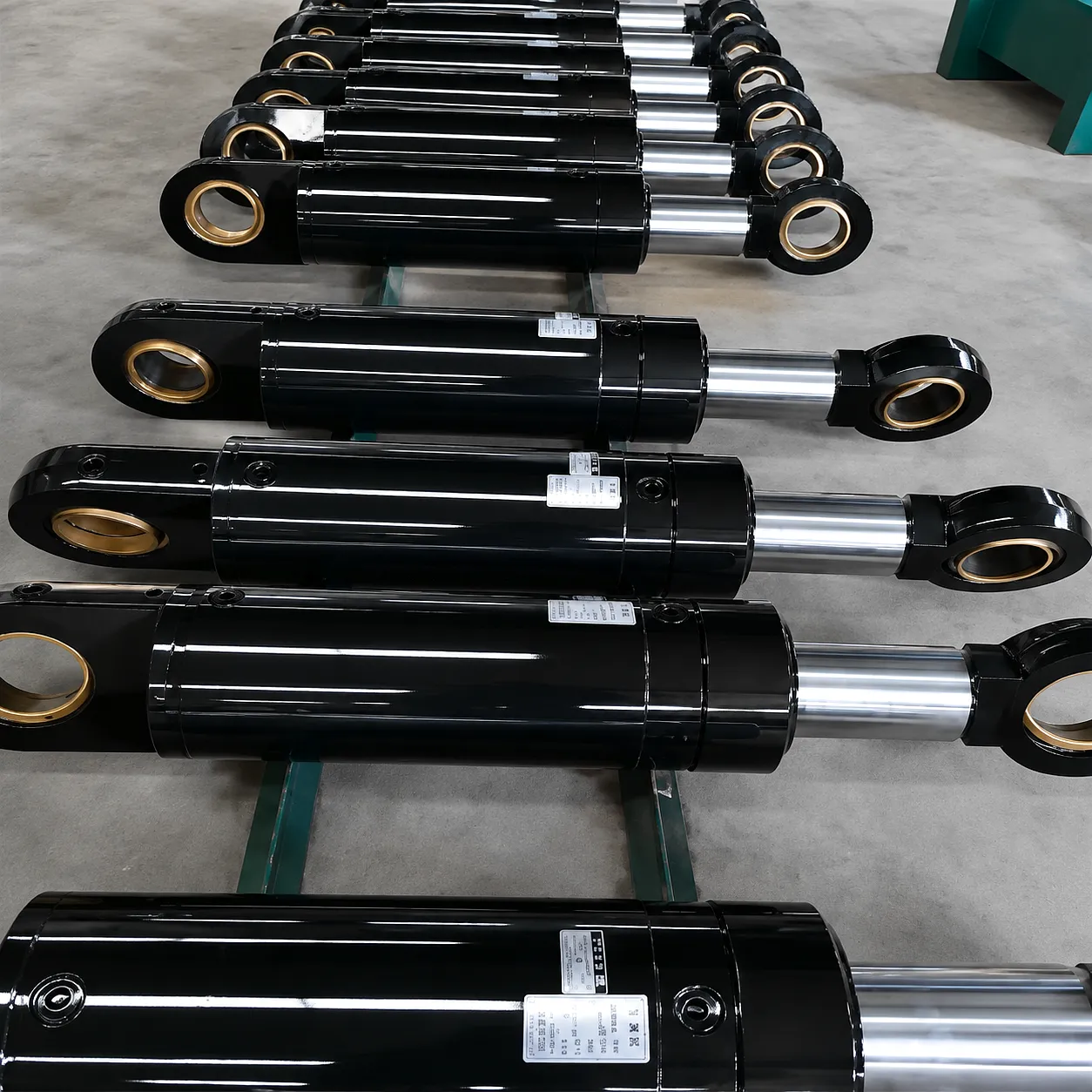
Industrial Application Scenarios: Where Boom Cylinders Do Their Work
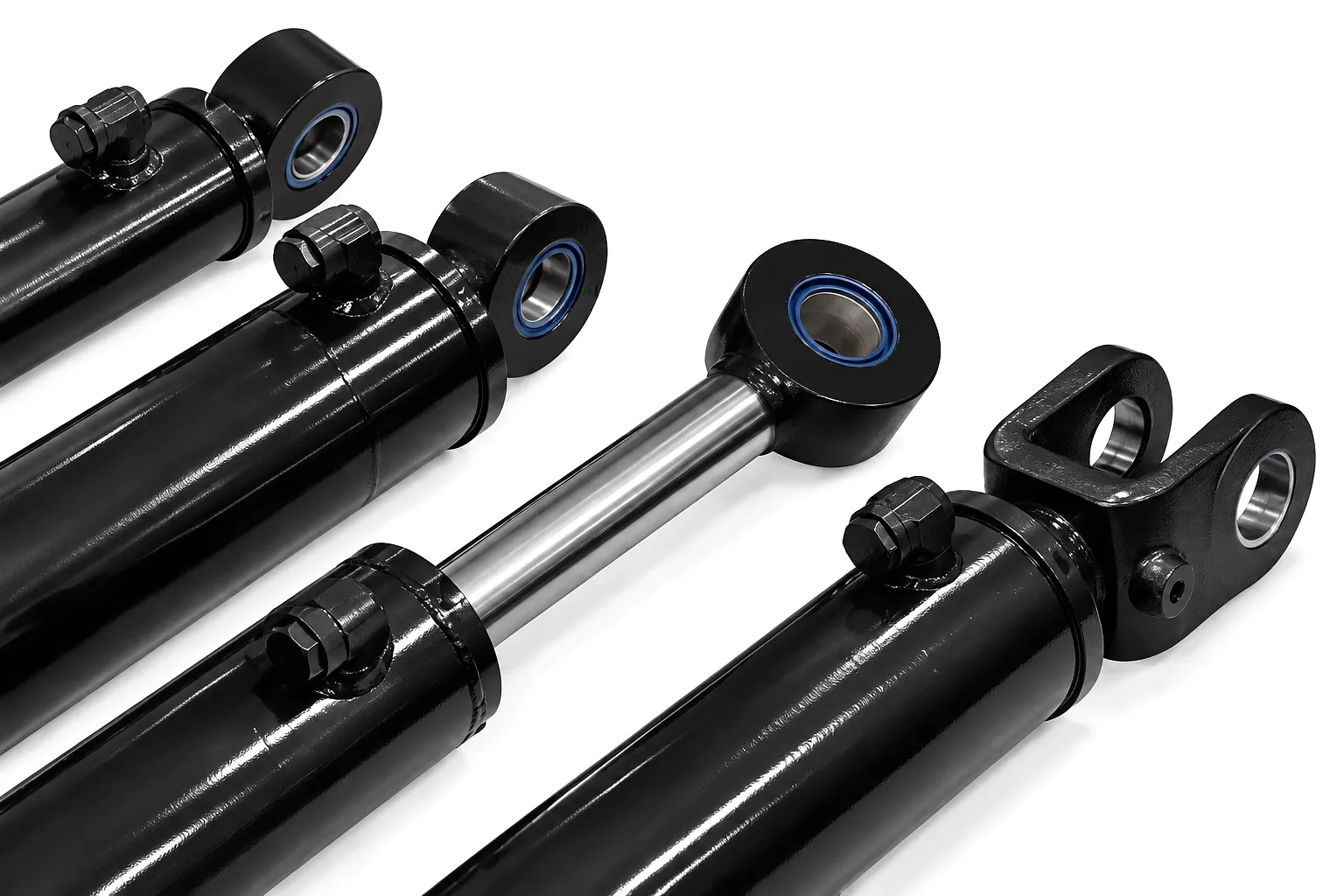
Manufacturing Excellence
Ever Power: Precision-Engineered Boom Cylinders, Custom to Your Specification
Ever Power operates a vertically integrated hydraulic cylinder manufacturing facility equipped with CNC deep-hole boring machines, precision honing lines calibrated to Ra 0.2 µm, and robotic hard-chrome plating baths with continuous bath chemistry monitoring. The manufacturing process begins with raw seamless steel tube inspection using ultrasonic testing to identify inclusions before any machining investment is made — a step that eliminates costly scrap at later stages and ensures every barrel that leaves the honing line is metallurgically sound. Our engineering team uses FEA (Finite Element Analysis) to validate cylinder barrel wall thickness and piston rod buckling resistance against the specific load cases submitted by each customer, rather than relying on catalogue standard designs that may be over- or under-specified for the actual duty. This analysis-first approach is particularly valued by UK plant manufacturers and equipment rebuilders who need to document design validation under BS EN 13135 and related machinery safety frameworks.
Customisation at Ever Power covers the full parameter space: bore diameters from 40 mm to 500 mm, strokes to 6,000 mm, operating pressures to 350 bar with peak proof-test to 525 bar, and any combination of clevis, front/rear flange, trunnion, or welded boss mountings. Seal kits are specified per application — standard PU/PTFE for most construction and agricultural duties, FKM for high-temperature or fire-resistant fluid environments, HNBR for biofuel-compatible agricultural systems, and FDA-approved materials for food and beverage handling equipment. Surface protection is equally flexible: standard two-coat epoxy, hot-dip galvanising, electroless nickel, or stainless steel clad rods for marine and offshore applications. All cylinders ship with a material test report, dimensional inspection certificate, and pressure test report as standard — documentation sets that satisfy UK and EU machinery directive traceability requirements without requiring additional requests from the customer side.
500 mm
Max custom bore diameter
6,000 mm
Max stroke available
350 bar
Max rated working pressure
7 days
Sample lead time for standard specs
Ready to specify your next hydraulic boom cylinder?
Our engineering team responds to technical enquiries within 24 hours. Share your bore, stroke, pressure, and mounting requirements — we handle the rest.
Case Study
Rotherham Steel Handling: 340,000 Cycles Without Unplanned Downtime
Background
A specialist steel service centre operating two bar mill lines in Rotherham, South Yorkshire, contacted Ever Power in late 2023 after experiencing persistent hydraulic boom cylinder failures on their overhead billet handling cranes. The original OEM cylinders — 200 mm bore, 1,400 mm stroke, operating at 210 bar — were failing seal systems at approximately 80,000 cycles, creating unplanned downtime averaging four hours per event and disrupting billet scheduling for downstream cold-drawing operations. With each hour of downtime carrying an estimated direct cost of £3,800 and an indirect reputational cost to delivery commitments with Sheffield-based component manufacturers, the operations director initiated a formal sourcing review.
Ever Power Solution
Ever Power’s engineering team received the customer’s CAD drawings, operating pressure logs, and failure analysis report. The root causes were identified as inadequate seal specification for ambient temperature peaks of 95°C near the furnace area, and barrel bore geometry outside tolerance on the OEM units. Ever Power proposed a direct-replacement cylinder retaining the 200 mm bore and 1,400 mm stroke but re-specifying with FKM piston and rod seals rated to 130°C, a barrel honed to Ra 0.25 µm with 100% ultrasonic inspection of the raw tube stock, and an induction-hardened piston rod with Cr-III compliant hard chrome to a depth of 28 µm. Port-mounted cushion valves were also added to reduce end-stroke impact energy by approximately 60%. A batch of eight replacement cylinders was manufactured, tested to 315 bar (1.5 × working pressure), and delivered ex-works within 14 days of order confirmation — a lead time compatible with a planned maintenance shutdown the customer already had scheduled.
Results After 18 Months
Eighteen months after installation, the Ever Power cylinders have accumulated over 340,000 cycles across both mill lines with zero unplanned downtime attributable to cylinder failure. The first scheduled seal inspection at 300,000 cycles showed no measurable wear on the FKM piston seals and rod surface roughness within 8% of the original hone finish — a result the customer’s maintenance manager described as notably better than anything seen from the previous supplier across four years of operation. The operations team have since extended the scope of their Ever Power supply agreement to cover two additional gantry crane systems on the site’s downstream wire processing line, and are evaluating hydraulic boom cylinder specifications for a new billet charging crane under capital purchase for installation in Q2 2026.
Customer Reviews
★★★★★
“We had been through three different suppliers over four years trying to solve the seal failures on our billet crane. Ever Power’s engineers came in, actually read our failure data, and designed a solution rather than just quoting a catalogue part. The FKM seal cylinders have not missed a beat through a full steelworks summer cycle — that’s our toughest operating period.”
— James Whitmore, Plant Engineering Manager, Rotherham
★★★★★
“The 14-day delivery on a custom 220 mm bore cylinder with non-standard trunnion centres was genuinely impressive. We had looked at three UK-based alternatives and nobody could get below six weeks. The test certificates and material reports that came with the delivery satisfied our quality audit team without any back-and-forth — everything was documented to the level our ISO 9001 supplier approval process requires.”
— Sarah Kendall, Procurement Lead, Leeds-based Port Equipment Supplier
★★★★★
“We switched our telehandler boom cylinder supply to Ever Power two seasons ago and the difference in field returns has been clear. We’ve had zero customer warranty claims on cylinder-related failures since the change — previously we were averaging two to three seal failures per season across our fleet. The HNBR seal specification for B20 biodiesel compatibility was specifically recommended by their technical team and it has absolutely solved the issue we were seeing with our previous seal chemistry.”
— David Chen, Technical Director, Agricultural Machinery Distributor, East Anglia
Expert Q&A
अक्सर पूछे जाने वाले प्रश्नों
Ever Power — Hydraulic Boom Cylinders Built to Your Specification
UK enquiries welcome. Engineering support, custom quotations, and rapid despatch from our production facility. Contact us today.
📧 Get a Quote — [email protected]
जीजेडएल द्वारा संपादित
 Hindi
Hindi  English
  Italian
  Portuguese
  Dutch
Dutch  Swedish
  Danish
  Finnish
  Polish
  Kazakh
  Turkish
  Ukrainian
  Romanian
  Spanish
  German
  Russian
  Korean
  Japanese
  Vietnamese
  Thai
Thai  Indonesian
  Malay
Malay  French
  Greek
Greek