
विवरण
Aerial Work Platform · Hydraulic Cylinders · UK Supply
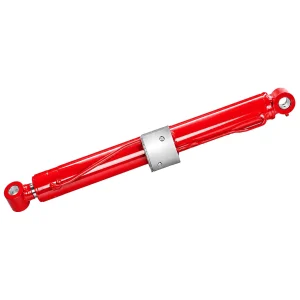
Aerial Platform Main Boom Angle Cylinder — 506mm Stroke
Engineered for demanding heights. The HCYY11112005 main boom angle cylinder delivers precision lift control in aerial work platforms, scissor lifts, and telescopic boom vehicles operating across the UK’s construction, utilities, and industrial maintenance sectors.
What Is a Main Boom Angle Cylinder — and Why Does Stroke Length Matter?
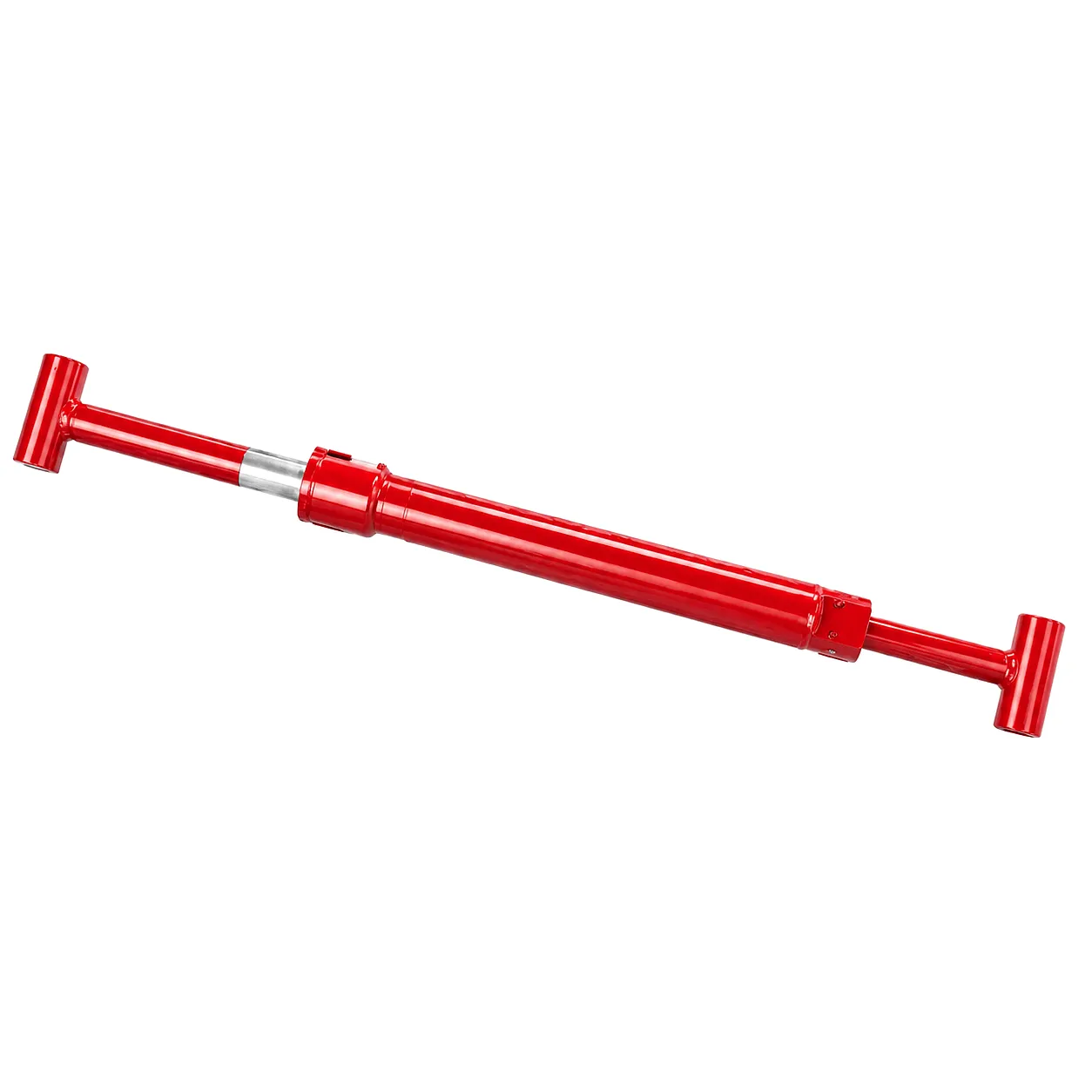
The main boom angle cylinder is the hydraulic actuator responsible for raising and lowering the primary boom arm of an aerial work platform (AWP), cherry picker, or telescoping boom lift. Without precise angle control delivered by a well-engineered boom cylinder, operators cannot position a work basket reliably at height — an unacceptable risk on UK construction sites, wind-farm maintenance gantries, and building-façade access projects. The 506mm stroke of the HCYY11112005 positions it squarely in mid-range boom-lift geometry, covering the elevation arc required by vehicle classes used most widely across Britain’s infrastructure and facilities-management sectors.
Unlike generic tie-rod cylinders, an aerial platform main boom angle cylinder must sustain continuous cyclic loading — boom up, boom down, platform repositioning — throughout a working shift that may exceed ten hours. The cylinder body, rod seal assembly, and clevis pin interfaces are all sized to handle not just peak hydraulic pressure but the torsional side-loads that arise when an elevated basket carries an asymmetric load or encounters wind. Getting these proportions right is where experience becomes the decisive factor.
With 18+ years designing and manufacturing hydraulic cylinders for aerial equipment OEMs, our engineering team understands the exact service conditions these components face in British working environments — from coastal humidity in Aberdeen to the dense urban scaffold-free zones of central London. The HCYY11112005 reflects that accumulated knowledge in every machined surface and seal specification.
Why This Cylinder Outperforms on UK Job Sites
Verified 21 MPa Working Pressure
Rated at 21 MPa working pressure with a 26.5 MPa burst threshold, this cylinder handles the full output of modern AWP hydraulic power units without approaching its safety margin — critical for platforms subject to sudden load shifts.
Precision-Ground Bore (Φ55mm) & Rod (Φ50mm)
The bore-to-rod ratio is deliberately calibrated to limit internal velocity differentials that cause premature seal wear, a common failure mode in rental-fleet cylinders that are cycled heavily by multiple operators every week.
Compact Installation at 1259.7mm CTC
The centre-to-centre installation distance of 1259.7mm fits within the structural envelope of the most common mid-range boom lift chassis widths used in the UK, avoiding the need for platform re-engineering or custom mounting brackets.
Weight-Optimised at 32 kg
At 32 kg, the HCYY11112005 hits the sweet spot between structural robustness and unsprung mass. Lower cylinder weight translates directly into reduced chassis fatigue and extended structural life — a meaningful cost factor for fleet owners managing 20+ platforms.
UK-Compatible Documentation
Every unit ships with full technical data sheets in English, dimensional drawings in SI units, and material certification on request — simplifying compliance with PSSR 2000 and LOLER requirements for UK lift operators and inspection bodies.
Custom Seal & Port Options Available
Our factory team handles non-standard seal compounds, port thread conversions (BSP / SAE), and surface treatment upgrades including hard chrome or ceramic coating — all executed against a documented engineering change order with dimension verification before despatch.
तकनीकी निर्देश
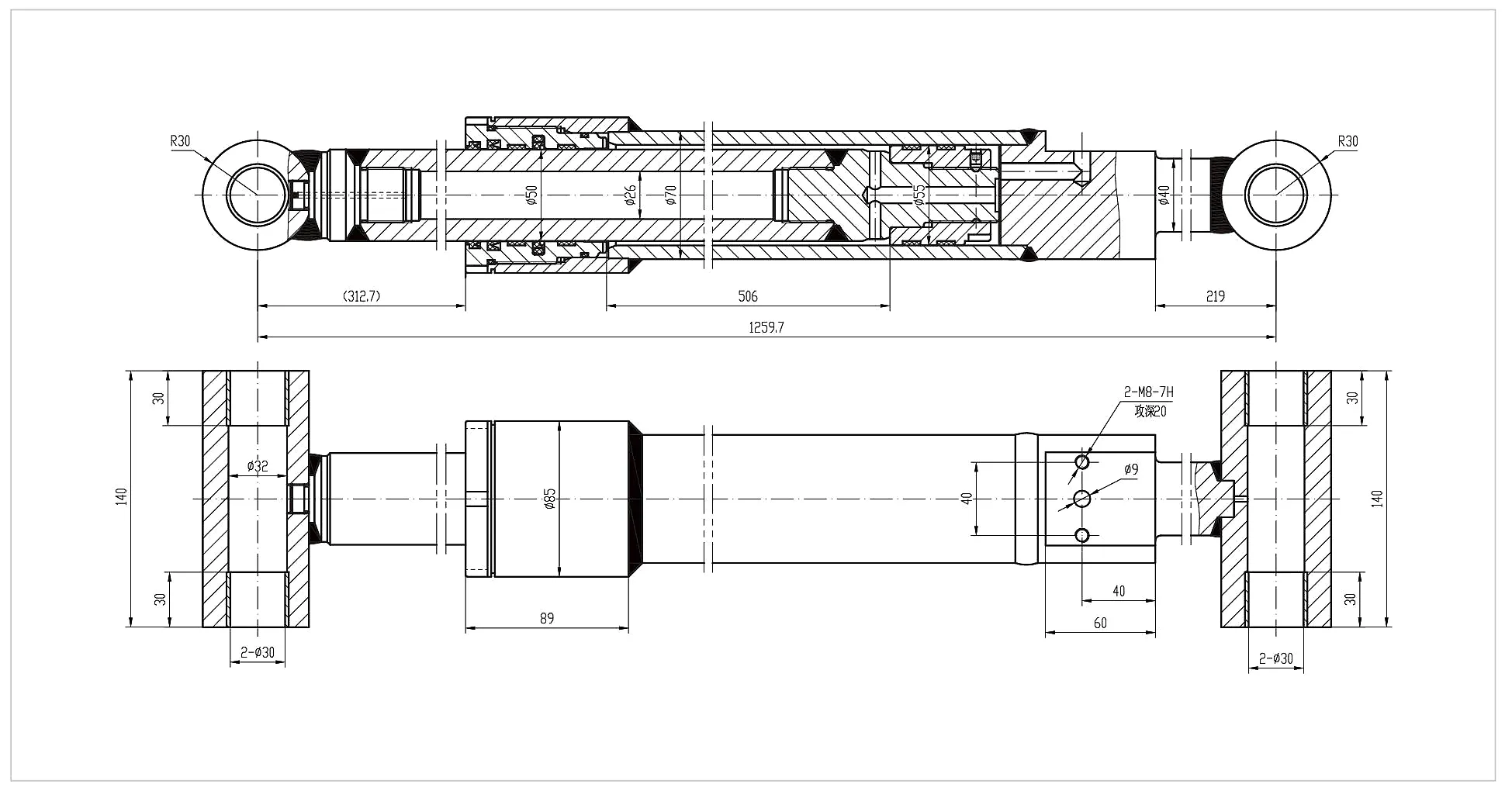
How the Cylinder Works — Principle, Materials, and Operating Scenarios
Operating Principle
The main boom angle cylinder operates as a double-acting hydraulic actuator. Pressurised hydraulic fluid enters the cap-end port to extend the rod, lifting the boom arm through its angular range. Flow reversal directs fluid into the rod-end port for retraction, lowering the boom. A pilot-operated check valve (fitted at the platform level) locks the cylinder in position whenever the control valve is in neutral, preventing drift that could destabilise an elevated work basket. Smooth, proportional flow control at the valve determines how gently the boom can be feathered into position — a detail that operators on precision maintenance tasks, such as highway lighting column work or overhead railway electrification in the UK, value highly.
सामग्री और निर्माण
The cylinder barrel is machined from seamless cold-drawn steel tube, honed internally to Ra 0.4 or better. The piston rod is turned and ground from 45# steel, then hard-chrome plated to a minimum of 25 microns for corrosion resistance in British outdoor working conditions — particularly relevant in coastal and estuary environments. End caps are ductile iron or steel, threaded and retained with full-thread engagement. Seals are polyurethane-based dynamic elements with PTFE wear rings, selected for low-temperature performance down to -20°C so that cylinder response remains predictable during early-morning winter start-up on UK construction sites.
Typical Application Scenarios
- Telescoping boom aerial work platforms (up to ~18m working height)
- Articulating boom lifts used for bridge inspection across UK motorway networks
- Mast climbers and façade-access platforms on commercial building refurbishment
- Rail-mounted maintenance elevating vehicles on Network Rail infrastructure
- Offshore wind turbine nacelle access platforms (North Sea installations)
- Utility vehicle-mounted platforms for street lighting and overhead power networks
संबंधित फोर्कलिफ्ट अटैचमेंट सिलेंडर
Forklift Attachment Cylinder — Φ90mm, 265mm Stroke
Heavy-duty forklift tilt and attachment cylinder with 90mm bore, rated for high-force clamping and rotating attachment circuits.
Forklift Attachment Cylinder — Φ70mm, 250mm Stroke
Mid-range bore attachment cylinder suited to sideshift carriages, fork positioners, and paper roll clamps on 3–5 tonne forklift trucks.
हवाई कार्य वाहनों के लिए सिलेंडर श्रृंखला

Our aerial work vehicle cylinder range covers every actuation point in the lift geometry — boom angle, boom extension, jib angle, platform levelling, and outrigger stabilisation — with consistent quality standards and interchangeable port configurations across the series.
Customer Success Cases
🇬🇧 United Kingdom — Utility Infrastructure
Northern Power Grid Fleet Replacement Programme — Yorkshire & Humberside
Northern Power Grid, responsible for electricity distribution across Yorkshire, the North East, and northern Lincolnshire, operates a mixed fleet of aerial work platforms for overhead-line maintenance. During a scheduled boom-cylinder overhaul of 34 articulating AWPs, the engineering team identified a recurring failure pattern in the original OEM cylinders — rod seal degradation after approximately 900 working hours, driven by a combination of outdoor temperature cycling and road-transported vibration between depots. The fleet manager approached us to evaluate the HCYY11112005 as a replacement cylinder for the main boom angle position across their 12–16m working-height units. After a 90-day evaluation on six platforms, the replacement cylinders recorded zero seal failures at the 1,200-hour mark. The procurement team subsequently ordered 62 units for the full fleet refresh, citing reduced downtime, simpler seal-kit sourcing, and responsive technical support from our UK-based account team as decisive factors in the supplier decision.
62 units fleet-wide
30% downtime reduction
“We were sceptical about moving away from the OEM cylinder, but the engineering data was solid and the lead time was far shorter than our usual supplier. Eighteen months in, no issues. The cylinders have gone through a full Scottish winter without complaint.”
James Whitfield
Fleet Engineering Manager — Plant hire company, Aberdeen
“The documentation package made our LOLER inspection straightforward — material certs, dimensional drawings, everything in one folder. Our inspector commented it was better prepared than most UK-sourced components. Strong recommendation.”
Rachel Stokes
Procurement Lead — Facilities management contractor, Birmingham
“We ordered 16 cylinders across two bore sizes for our boom lift overhaul contract on a railway depot in the Midlands. The response to our technical queries was fast, the price was competitive versus European alternatives, and the delivery hit our project window exactly.”
Tom Harding
Hydraulic Systems Engineer — Rail infrastructure contractor, Coventry
Our Manufacturing Capability & Custom Engineering Services
Our manufacturing facility spans over 28,000 m² and houses a dedicated hydraulic cylinder production line running multi-shift operations. CNC honing machines maintain bore tolerances to IT7 grade across production batches, and every completed cylinder passes a full-pressure test on calibrated test benches before release. The factory holds ISO 9001 quality system certification and runs an ongoing process-audit programme.
Product customisation is a core capability, not an afterthought. Our engineering team handles the following on a regular basis for B2B customers across Europe and the UK: non-standard bore and rod diameters, extended or shortened stroke lengths outside the catalogue range, alternative port positions or thread forms (BSP, NPT, ORFS, SAE straight), custom mounting configurations (trunnion, flange, clevis variations), alternative seal compounds for specific fluid types (fire-resistant HFA/HFC, biodegradable ester-based), and special surface treatments. Lead times for modified variants depend on batch size but are typically four to eight weeks from drawing sign-off — a timeline that can be accommodated within most scheduled-maintenance or new-build procurement programmes.
Serving the UK’s Aerial Equipment Sector
Construction & Civils: Boom lift cylinders for London, Manchester, Birmingham, and regional infrastructure projects — including HS2 enabling works and urban regeneration schemes.
Energy & Utilities: Cylinders for AWPs operating on wind farm service roads, offshore support vessels, and UK electricity distribution network maintenance programmes.
Rail & Transport: Boom angle cylinders for track-maintenance vehicles and station-canopy access platforms operated by Network Rail and train operating companies.
Plant Hire: Replacement and fleet-upgrade cylinders for UK access equipment rental companies requiring fast delivery, consistent specification, and competitive OEM-alternative pricing.
अक्सर पूछे जाने वाले प्रश्नों
Ready to Source the Right Boom Cylinder for Your Fleet?
Our technical team can match any aerial platform application — standard replacement or bespoke variant — with the right specification. Get in touch today.
जीजेडएल द्वारा संपादित

 Hindi
Hindi  English
  Italian
  Portuguese
  Dutch
Dutch  Swedish
  Danish
  Finnish
  Polish
  Kazakh
  Turkish
  Ukrainian
  Romanian
  Spanish
  German
  Russian
  Korean
  Japanese
  Vietnamese
  Thai
Thai  Indonesian
  Malay
Malay  French
  Greek
Greek