
Deskripsi Produk
| Hydraulic steering cylinder /silinder hidrolik kemudi | |||
| Part number | Tube dia mm | Rod dia mm | Stroke mm |
| 205-63-57100 | 120 | 85 | 1285 |
| 206-63-57100 | 120 | 85 | 1285 |
| 205-63-57160 | 120 | 85 | 1285 |
| 205-63-57120 | 135 | 95 | 1490 |
| 203-63-57130 | 125 | 85 | 1120 |
| 203-63-57131 | 125 | 85 | 1120 |
| 205-63-57130 | 125 | 85 | 1120 |
Spesifikasi
1.Supply to USA,Europe,and Australia, Russia.
2.Material:Stainless Steel
3.Professional performance excavator parts supplier
4. High quality and low price
FAQ
Q1: Are you Manufacture or Trade Company?
A1: We are manufacture,we have 20 years experience for supply Metal material and products in domestic.
Q2: How can we guarantee quality?
A2: Always a pre-production sample before mass production;Always final Inspection before shipment;
Q3: What is your terms of payment ?
A3: 1.T/T: 30% deposit in advance, the balance 70% paid before shipment
2.30% down payment, the balance 70% paid against L/C at sight
3.CHINAMFG negotiation
Q4: Can you provide Certificates for aluminum materials ?
A4:Yes,we can supply MTC-Material Test Certificate.
Q5: Can you provide sample?
A5: Yes, we can provide you sample, but you need to pay for the sample and freight firstly. We will return the sample fee after
you make an order.
| Sertifikasi: | GS, RoHS, CE, ISO9001 |
|---|---|
| Tekanan: | Medium Pressure |
| Suhu Kerja: | Suhu Normal |
| Acting Way: | Double Acting |
| Working Method: | Piston Cylinder |
| Adjusted Form: | Switching Type |
| Kustomisasi: | Tersedia |
|
|---|
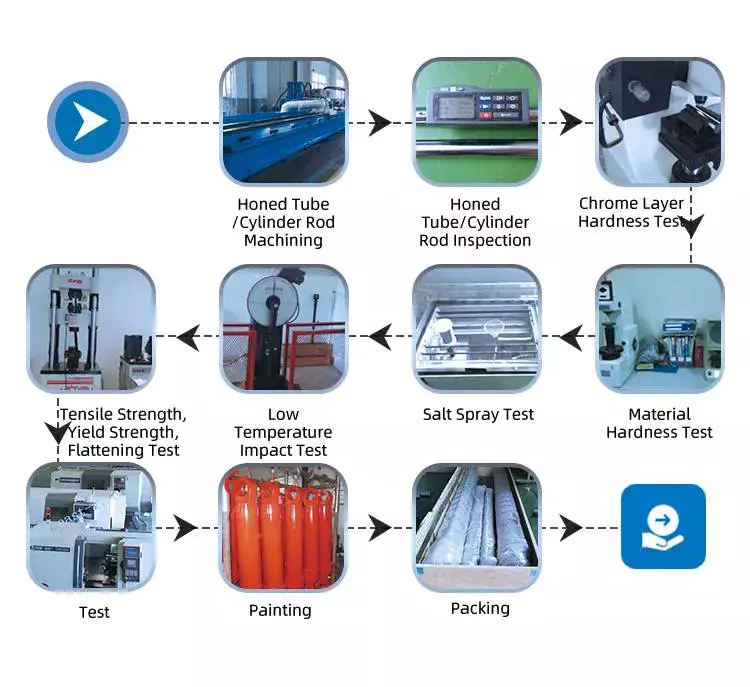
How do hydraulic cylinders handle variations in temperature and harsh operating environments?
Hydraulic cylinders are designed to handle variations in temperature and harsh operating environments by incorporating specific features and materials that ensure their durability, reliability, and performance. The ability of hydraulic cylinders to withstand extreme temperatures, corrosive environments, and other harsh conditions is crucial for their successful operation in a wide range of applications. Here’s a detailed explanation of how hydraulic cylinders handle variations in temperature and harsh operating environments:
1. Temperature Range:
– Hydraulic cylinders are designed to operate within a specified temperature range. The materials used in their construction, such as cylinder barrels, pistons, seals, and lubricants, are selected to withstand the anticipated temperature variations. Specialized seals and O-rings made from materials like nitrile, Viton, or polyurethane are used to maintain their sealing properties over a wide temperature range. Heat-resistant coatings or thermal insulation may be applied to certain components to protect them from high temperatures.
2. Thermal Expansion:
– Hydraulic cylinders are designed to accommodate thermal expansion and contraction that occurs with temperature changes. The materials used in their construction have different coefficients of thermal expansion, allowing the cylinder components to expand or contract at a similar rate. This design consideration prevents excessive stress, binding, or leakage that could result from thermal expansion or contraction.
3. Heat Dissipation:
– In applications where hydraulic cylinders are subjected to high temperatures, heat dissipation mechanisms are employed to prevent overheating. Cooling fins or heat sinks may be incorporated into the cylinder design to increase the surface area for heat transfer. In some cases, external cooling methods such as air or liquid cooling systems can be used to maintain optimal operating temperatures.
4. Corrosion Resistance:
– Hydraulic cylinders used in harsh operating environments are constructed from materials that exhibit excellent corrosion resistance. Stainless steel, chrome-plated steel, or other corrosion-resistant alloys are commonly used for cylinder components exposed to corrosive substances or environments. Additionally, surface treatments such as coatings, plating, or specialized paints can provide an extra layer of protection against corrosion.
5. Sealing Systems:
– Hydraulic cylinders employ sealing systems that are specifically designed to withstand harsh operating environments. The seals used in hydraulic cylinders are selected based on their resistance to temperature extremes, chemicals, abrasion, and other environmental factors. Specialized seal designs, such as wiper seals, rod seals, or high-temperature seals, are utilized to maintain effective sealing and prevent contamination of the hydraulic fluid.
6. Lubrication:
– Proper lubrication is essential for the smooth operation and longevity of hydraulic cylinders, particularly in harsh operating environments. Lubricants are selected based on their ability to withstand high temperatures, resist oxidation, and provide effective lubrication under extreme conditions. Regular maintenance and lubrication practices ensure that the cylinder components continue to operate smoothly and reduce the effects of wear and friction.
7. Robust Construction:
– Hydraulic cylinders designed for harsh operating environments are built with robust construction techniques to withstand the rigors of such conditions. The cylinder barrels, rods, and other components are manufactured to meet strict quality and durability standards. Welded or bolted construction methods are employed to ensure the structural integrity of the cylinders. Reinforcements, such as flanges or tie rods, may be added to enhance the cylinder’s strength and resistance to external forces.
8. Environmental Protection:
– Hydraulic cylinders can be equipped with additional protective features to shield them from harsh operating environments. Protective covers, boots, or bellows can be used to prevent contaminants, debris, or moisture from entering the cylinder and compromising its performance. These protective measures help extend the service life of hydraulic cylinders in demanding conditions.
9. Compliance with Standards:
– Hydraulic cylinders manufactured for specific industries or applications often comply with industry standards or regulations related to operating temperature ranges, environmental conditions, or safety requirements. Compliance with these standards ensures that hydraulic cylinders are designed and tested to meet the specific demands of their intended operating environments.
In summary, hydraulic cylinders are designed to handle variations in temperature and harsh operating environments by incorporating suitable materials, thermal expansion considerations, heat dissipation mechanisms, corrosion-resistant components, specialized sealing systems, proper lubrication, robust construction techniques, protective features, and compliance with industry standards. These design considerations and features enable hydraulic cylinders to operate reliably and effectively in a wide range of demanding applications and environmental conditions.
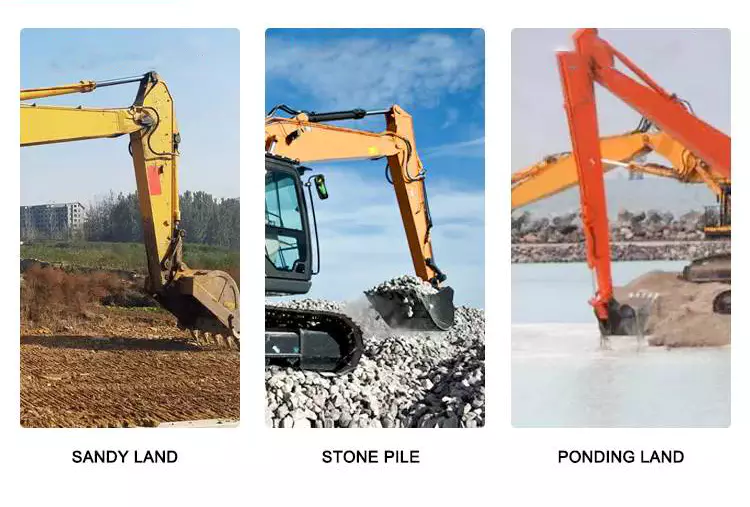
Bisakah Anda memberikan contoh nyata mesin yang sangat bergantung pada silinder hidrolik?
Silinder hidrolik banyak digunakan di berbagai industri dan aplikasi karena kemampuannya untuk memberikan gerakan linier yang kuat dan presisi. Silinder hidrolik memainkan peran penting dalam memungkinkan pengoperasian mesin berat yang membutuhkan gaya dan gerakan yang terkontrol. Berikut beberapa contoh nyata mesin yang sangat bergantung pada silinder hidrolik:
1. Peralatan Konstruksi:
– Silinder hidrolik banyak digunakan pada mesin konstruksi, seperti ekskavator, buldoser, loader, dan derek. Mesin-mesin ini bergantung pada silinder hidrolik untuk melakukan tugas-tugas seperti mengangkat beban berat, memperpanjang dan menarik kembali lengan, memiringkan bucket, dan mengendalikan pergerakan berbagai komponen. Silinder hidrolik memberikan daya dan presisi yang dibutuhkan untuk menangani kondisi yang menuntut dan beban berat yang dihadapi dalam proyek konstruksi.
2. Mesin Pertanian:
– Banyak mesin pertanian, termasuk traktor, mesin pemanen gabungan, dan alat penyemprot, menggunakan silinder hidrolik untuk operasi penting. Silinder hidrolik digunakan untuk mengontrol pergerakan alat tambahan, seperti loader depan, backhoe, dan bajak. Silinder ini memungkinkan fungsi seperti mengangkat dan menurunkan alat, menyesuaikan ketinggian pemotongan, dan mengontrol posisi peralatan panen. Silinder hidrolik meningkatkan efisiensi dan produktivitas dalam operasi pertanian.
3. Peralatan Penanganan Material:
– Silinder hidrolik merupakan komponen integral dari peralatan penanganan material, seperti forklift, dongkrak palet, dan derek. Mesin-mesin ini bergantung pada silinder hidrolik untuk mengangkat dan menurunkan beban, memiringkan platform atau garpu, dan mengontrol pergerakan mekanisme pengangkat. Silinder hidrolik memberikan kekuatan dan presisi yang diperlukan untuk menangani beban berat dan memastikan operasi penanganan material yang aman dan efisien.
4. Mesin Industri:
– Berbagai mesin dan peralatan industri sangat bergantung pada silinder hidrolik untuk fungsi-fungsi penting. Contohnya termasuk mesin pres hidrolik, mesin cetak injeksi, mesin pembentuk logam, dan robot bertenaga hidrolik. Silinder hidrolik memungkinkan kontrol gaya dan gerakan yang presisi dalam aplikasi ini, sehingga memungkinkan proses pembentukan, pengepresan, dan perakitan yang akurat.
5. Peralatan Pertambangan:
– Silinder hidrolik banyak digunakan dalam mesin dan peralatan pertambangan. Mesin pertambangan bawah tanah, seperti mesin penambang kontinu dan mesin pemotong longwall, menggunakan silinder hidrolik untuk operasi pemotongan, penggeseran, dan penyangga atap. Peralatan pertambangan permukaan, termasuk sekop hidrolik, dragline, dan truk pengangkut, mengandalkan silinder hidrolik untuk tugas-tugas seperti pergerakan bucket, perpanjangan boom, dan suspensi kendaraan.
6. Industri Otomotif:
– Industri otomotif banyak menggunakan silinder hidrolik dalam berbagai aplikasi. Silinder hidrolik digunakan dalam sistem suspensi kendaraan, sistem kemudi power steering, atap mobil konvertibel, dan sistem rem hidrolik. Silinder ini memungkinkan pergerakan yang halus dan terkontrol, kemudi yang presisi, dan pengereman yang efisien pada mobil.
7. Dirgantara dan Penerbangan:
– Silinder hidrolik digunakan dalam aplikasi kedirgantaraan dan penerbangan, seperti sistem roda pendaratan pesawat, flap sayap, dan peralatan penanganan kargo. Silinder hidrolik memberikan gaya dan kendali yang diperlukan untuk memperpanjang dan menarik kembali roda pendaratan, menyesuaikan flap sayap, dan mengoperasikan pintu kargo, sehingga memastikan operasi pesawat yang aman dan andal.
8. Industri Kelautan dan Lepas Pantai:
– Silinder hidrolik merupakan komponen penting dalam peralatan kelautan dan lepas pantai, termasuk derek kapal, kerekan, dan sistem jangkar bertenaga hidrolik. Silinder ini memungkinkan pengangkatan, penurunan, dan penempatan beban berat, serta pengendalian berbagai peralatan kelautan.
Ini hanyalah beberapa contoh mesin dan industri yang sangat bergantung pada silinder hidrolik. Fleksibilitas, daya, dan kontrol presisi yang ditawarkan oleh silinder hidrolik menjadikannya sangat diperlukan dalam berbagai aplikasi, di mana gerakan linier dan gaya yang terkontrol sangat penting.
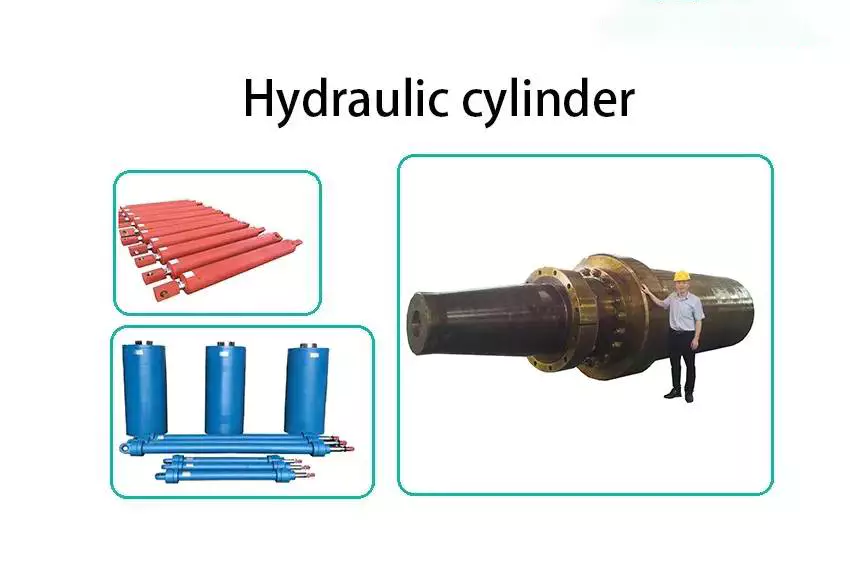
Can you explain the role and significance of hydraulic cylinders in machinery?
Hydraulic cylinders play a crucial role in machinery across various industries. They are essential components that provide controlled and powerful linear motion, enabling the operation of heavy equipment and facilitating numerous tasks. The role and significance of hydraulic cylinders in machinery can be explained in detail as follows:
Role of Hydraulic Cylinders:
– Conversion of Hydraulic Energy: Hydraulic cylinders convert hydraulic energy, typically in the form of pressurized hydraulic fluid, into linear force and motion. This conversion allows machinery to perform tasks such as lifting, pushing, pulling, clamping, tilting, and controlling various mechanisms.
– Generation of Linear Motion: Hydraulic cylinders generate linear motion by utilizing the principles of Pascal’s law. When hydraulic fluid is directed into one side of the cylinder, it applies pressure on the piston, resulting in linear movement of the piston and the attached piston rod. This linear motion can be used to actuate other components within the machinery or directly perform the required task.
– Force Generation: Hydraulic cylinders are capable of generating high forces due to the hydraulic pressure applied to the piston. The force output of a hydraulic cylinder depends on the surface area of the piston and the pressure of the hydraulic fluid. This force allows machinery to exert significant power for lifting heavy loads, applying pressure, or overcoming resistance.
– Precise Control: Hydraulic cylinders offer precise control over the linear motion and force exerted. By regulating the flow of hydraulic fluid, the speed and direction of the cylinder’s movement can be accurately adjusted. This level of control is crucial in machinery that requires precise positioning, delicate movements, or synchronization of multiple cylinders.
– Integration with Hydraulic Systems: Hydraulic cylinders are integral parts of hydraulic systems used in machinery. They work in conjunction with hydraulic pumps, valves, and actuators to create a complete hydraulic circuit. This integration allows for efficient power transmission, control, and coordination of various machine functions.
Significance of Hydraulic Cylinders:
– Heavy Equipment Operation: Hydraulic cylinders are vital in heavy machinery used in construction, mining, agriculture, material handling, and other industries. They enable the lifting and movement of heavy loads, the operation of attachments, and the performance of tasks that require high force and precision.
– Versatility and Adaptability: Hydraulic cylinders are versatile components that can be designed and tailored to meet specific machinery requirements. They can be integrated into various types of equipment and customized based on factors such as force capacity, stroke length, speed, and mounting options. This adaptability makes hydraulic cylinders suitable for diverse applications.
– Durability and Reliability: Hydraulic cylinders are built to withstand rigorous operating conditions, including high pressures, heavy loads, and continuous use. They are designed with robust materials, precise machining, and effective sealing systems to ensure durability and reliability over extended periods of operation.
– Safety and Load Control: Hydraulic cylinders provide safe and controlled operation in machinery. They offer overload protection mechanisms, such as relief valves, to prevent damage caused by excessive force or pressure. Additionally, hydraulic cylinders allow for precise load control, minimizing the risk of accidents during lifting, lowering, or positioning of heavy loads.
– Compact Design: Hydraulic cylinders offer a high power-to-size ratio, allowing for compact machinery design. Their relatively small size compared to the forces they can generate makes them suitable for applications where space is limited or weight restrictions apply.
– Energy Efficiency: Hydraulic cylinders contribute to energy efficiency in machinery. The use of hydraulic systems allows for the transfer of power over long distances without significant power losses. Additionally, hydraulic cylinders can incorporate energy-saving features such as load-sensing technology and regenerative circuits, reducing energy consumption.
Overall, hydraulic cylinders play a vital role in machinery by providing controlled and powerful linear motion. Their significance lies in their ability to convert hydraulic energy, generate high forces, offer precise control, integrate with hydraulic systems, and facilitate the operation of heavy equipment across various industries. Hydraulic cylinders contribute to increased productivity, safety, and efficiency in machinery applications, making them indispensable components in modern-day engineering.


editor by CX 2023-10-26
 Indonesian
  English
  Italian
  Portuguese
  Dutch
Dutch  Swedish
  Danish
  Finnish
  Polish
  Hindi
Hindi  Kazakh
  Turkish
  Ukrainian
  Romanian
  Spanish
  German
  Russian
  Korean
  Japanese
  Vietnamese
  Thai
Thai  Malay
Malay  French
  Greek
Greek