
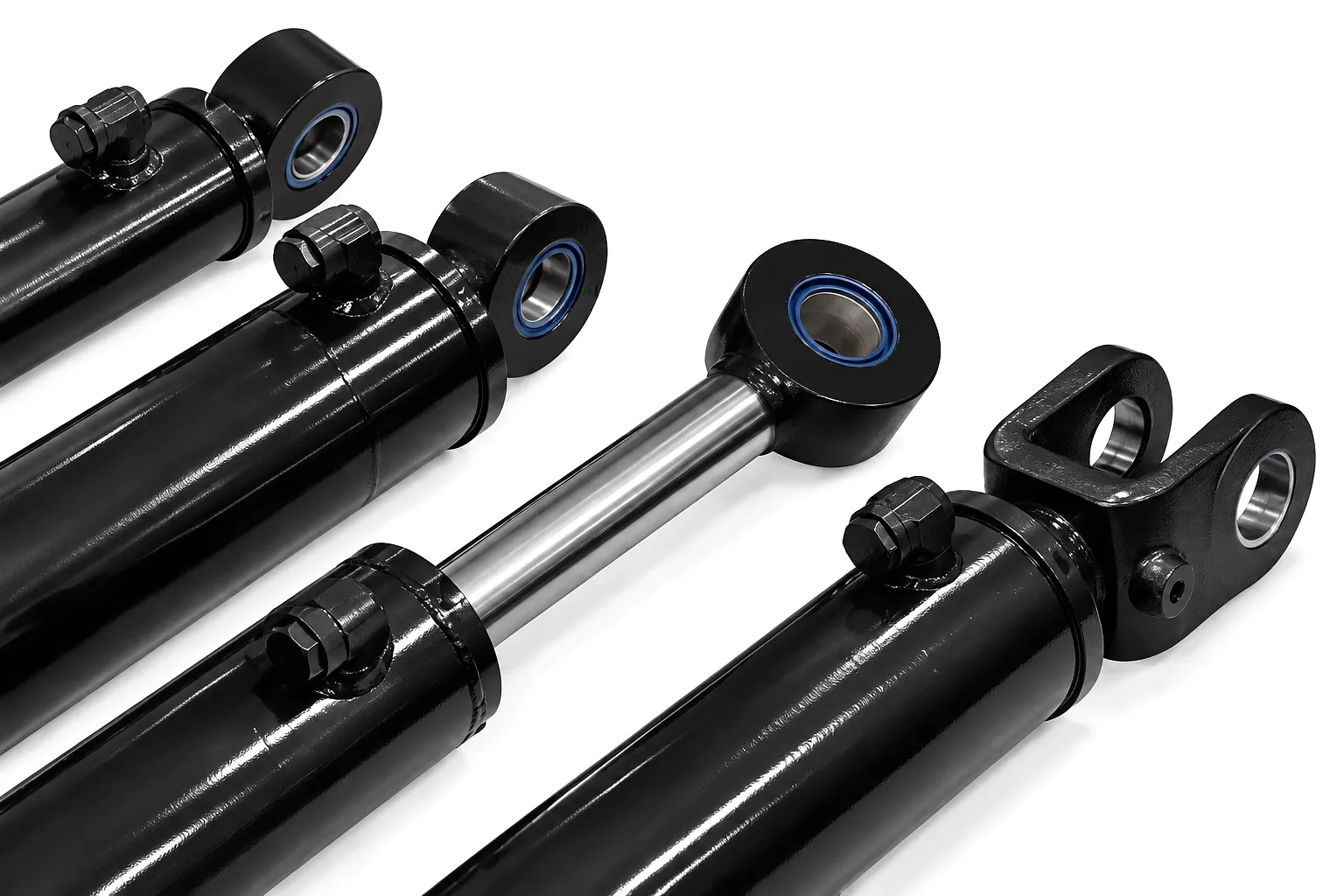
 Hydraulic cylinders are among the most mechanically demanding components in any industrial machine — they translate pressurised fluid energy into controlled linear force, operating under extreme loads, continuous duty cycles, and harsh environmental conditions. For UK manufacturers, plant engineers, and procurement specialists working in sectors from steel processing in Sheffield to agricultural equipment manufacture in Yorkshire, selecting a hydraulic cylinder that simply “works” is not enough. What matters is whether that cylinder has been designed, built, and verified against a recognised international framework — and that framework is defined primarily by ISO 6020 and ISO 6022.
ISO standards for hydraulic cylinders are not bureaucratic formalities. They set the dimensional conventions, pressure ratings, testing protocols, sealing requirements, and mounting configurations that allow cylinders from different manufacturers to be interchangeable, serviceable, and reliably safe in service. For B2B buyers specifying hydraulic systems in the UK — whether for offshore lifting equipment, construction machinery, or food-grade processing plant — understanding what these standards mean in practical engineering terms is the foundation of intelligent procurement.
What ISO 6020 and ISO 6022 Actually Mean for Hydraulic Cylinder Design
ISO 6020 is the foundational international standard governing the dimensions, tolerances, and mounting configurations of hydraulic cylinders used in general industrial applications. Published under the International Organization for Standardization’s fluid power technical committee (ISO/TC 131), ISO 6020 is structured across several parts that address cylinder bores ranging from 25 mm to 200 mm, nominal pressures up to 160 bar (16 MPa) and 250 bar (25 MPa) depending on series designation, and the precise geometric relationships between bore, piston rod diameter, and end-fitting geometry. For procurement engineers at UK facilities — particularly those operating within automotive supply chains in the West Midlands or heavy fabrication shops in the North East — ISO 6020 compliance means that a replacement cylinder from any compliant manufacturer will fit the same mounting hardware and perform within the same force envelope as the original specification. This interoperability is commercially significant: it reduces lead times, simplifies stock holding, and eliminates the need for custom adaptor fabrication in emergency maintenance scenarios.
While ISO 6020 defines the hydraulic performance characteristics and bore-to-rod geometry, ISO 6022 specifically addresses the standardised mounting interface dimensions that allow cylinders to be fitted to machine frames, tooling plates, and structural brackets in a consistent and predictable manner. ISO 6022 covers clevis mounts, flange mounts, trunnion mounts, and foot mounts, specifying the hole patterns, pin diameters, and positional tolerances for each configuration. In practical terms for a plant engineer in Birmingham specifying a new press or conveyor actuation system, ISO 6022 compliance guarantees that a cylinder from Ever Power — or any other compliant supplier — will bolt into the designed mounts without field modification. This matters enormously when machine downtime is costed at thousands of pounds per hour, and replacement lead times cannot accommodate bespoke fabrication. The standard also integrates with EN ISO 6022, which aligns with European CE marking requirements under the Machinery Directive, an important consideration for UK manufacturers still exporting to EU markets post-Brexit.
Working Principle: How ISO-Compliant Hydraulic Cylinders Convert Pressure to Force
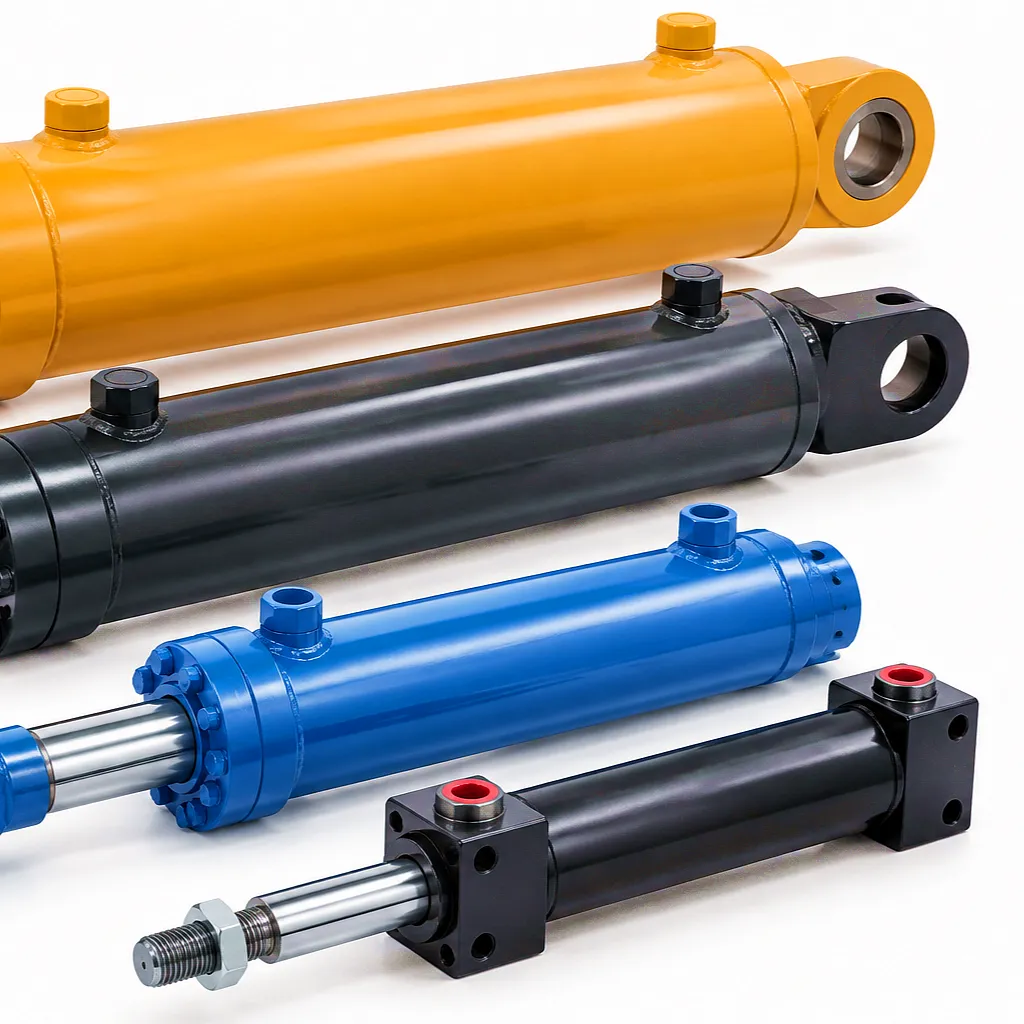 A hydraulic cylinder operates on Pascal’s Law — pressure applied to a confined fluid is transmitted equally in all directions, and when that pressure acts on a defined cross-sectional area (the piston face), it generates a proportional axial force. In a double-acting cylinder conforming to ISO 6020, pressurised hydraulic oil enters the cap-end port during the extension stroke, acting on the full bore area and pushing the piston rod outward. On the retraction stroke, oil is directed to the rod-end port and acts on the annular area between the bore and the rod, generating a lower retraction force at the same working pressure — a critical design relationship that ISO 6020 formalises through its bore-to-rod diameter ratios.
The cylinder body, or barrel, must withstand both the working pressure and the proof pressure test (typically 1.5 times the rated working pressure under ISO 6020 testing protocols). Sealing integrity between the piston and barrel, and between the rod and the rod seal, is validated through specific leakage and endurance test regimes defined within the standard — tests that cover both static hold pressure and dynamic cycling over defined stroke lengths and duty cycles. For UK buyers in sectors such as offshore oil and gas in Aberdeen, or marine engineering at Teesside ports, these test protocols are often a contractual requirement from the end-user client.
Single-acting variants, where hydraulic pressure acts in one direction only and a return spring or gravity provides the retraction force, are also covered within the ISO 6020 framework, with dimensional conventions adapted accordingly. Ever Power manufactures both configurations to full ISO compliance, with in-house pressure testing equipment calibrated to traceable international standards.
Core Materials Specified in ISO-Compliant Hydraulic Cylinder Manufacturing
ISO 6020 specifies that cylinder barrels must be manufactured from seamless drawn steel tube with a honed internal bore surface finish of Ra 0.2–0.4 µm. At Ever Power, we source EN 10305-1 grade E355 cold-drawn seamless tube, offering a minimum yield strength of 355 MPa. The precision honing process maintains bore cylindricity within 0.015 mm and ensures consistent oil film thickness across the full stroke length, which directly governs seal longevity and leakage performance over the product’s service life. For UK engineers in Birmingham’s precision engineering sector, this material specification provides confidence that the cylinder will withstand rated pressure without deformation of the bore geometry.
The piston rod bears both the tensile and compressive axial forces, as well as any bending moments introduced by misalignment or off-axis loading. ISO 6020 defines minimum rod diameter-to-bore ratios to guard against buckling under compressive load. Ever Power uses 45# carbon steel or 42CrMo4 alloy steel depending on the stroke length and duty classification, with a hard chrome plating of 20–30 µm applied to the bearing surface. The chrome layer achieves a hardness of 850–1000 HV and a surface roughness of Ra 0.1–0.2 µm, which is essential for maintaining dynamic seal integrity over the cylinder’s rated cycle life. For applications in Sheffield’s steel processing environment, where ambient contamination is a constant risk, a hard chrome rod surface is the baseline requirement rather than an upgrade option.
Seal selection under ISO 6020 is governed by the working fluid type, operating temperature range, and pressure differential. Ever Power’s standard seal kits use a polyurethane (PU) rod seal and piston seal assembly rated to -30°C to +110°C, with optional PTFE-based wiper rings for dusty environments and NBR (nitrile butadiene rubber) O-ring profiles where mineral oil compatibility is the primary requirement. For applications involving fire-resistant hydraulic fluids (HF type) — common in foundries and smelting operations around Rotherham — we can supply EPDM or Viton seal compounds on request, with no lead-time premium when ordered through Ever Power’s UK-stocked seal programme.
End caps (both rod-end and cap-end) and pistons are manufactured from either EN-GJS-400-15 ductile iron or forged carbon steel, selected based on bore diameter and peak pressure requirement. ISO 6020’s dimensional standards specify the thread forms and face seating for both components, ensuring consistent clamp loads and preventing joint relaxation under cyclic pressure loading. Pistons are machined to a h6 or H7 interference-fit tolerance against the bore, with precision-machined seal grooves conforming to ISO 5597 geometry — a related standard that defines the exact seal gland dimensions used in conjunction with ISO 6020 cylinder designs.
Product Technical & Performance Parameters — ISO 6020 / ISO 6022 Hydraulic Cylinders
| Parameter | Series 1 (ISO 6020-1) | Series 2 (ISO 6020-2) | Heavy Duty (Custom) |
|---|---|---|---|
| Bore Diameter Range | 25 – 200 mm | 25 – 200 mm | 200 – 600 mm |
| Nominal Working Pressure | 160 bar (16 MPa) | 250 bar (25 MPa) | 350 bar (35 MPa) |
| Proof Test Pressure | 240 bar (1.5× WP) | 375 bar (1.5× WP) | 525 bar (1.5× WP) |
| Rod Diameter Options | Per ISO 6020-1 table | Per ISO 6020-2 table | Custom (30–400 mm) |
| Panjang Langkah | Up to 4,000 mm | Up to 4,000 mm | Up to 8,000 mm |
| Bahan Laras | E355 seamless steel | E355 seamless steel | ST52 / 27SiMn alloy |
| Permukaan Batang | Hard chrome, Ra 0.2 µm | Hard chrome, Ra 0.1 µm | Nickel+chrome / HVOF |
| Suhu Operasional | -30°C to +110°C | -30°C to +110°C | -40°C to +150°C |
| Bore Honing Tolerance | H8 | H8 | H7 (precision) |
| Mounting Configurations (ISO 6022) | Flange, Foot, Clevis | Flange, Foot, Trunnion | All types + custom |
| Internal Leakage (max, ISO test) | 0.5 mL/min per 100mm bore | 0.3 mL/min per 100mm bore | Zero-leak (PTFE seals) |
| Cycle Life Rating | 500,000 cycles min. | 1,000,000 cycles min. | Per application spec |
Core Technical Advantages of ISO-Certified Hydraulic Cylinders from Ever Power
ISO 6020 and ISO 6022 compliance means cylinders can be replaced across different manufacturers’ catalogues without bespoke engineering, dramatically reducing maintenance downtime and inventory complexity for UK plant operators managing multi-vendor equipment fleets.
Every cylinder undergoes ISO-specified proof pressure testing at 1.5 times the rated working pressure prior to despatch. This is not a sampling exercise — it is 100% hydrostatic testing, with test certificates available for CE-marked machinery applications and insurance or warranty submissions.
The ISO 5597-compliant seal gland geometry, combined with Ever Power’s precision honing tolerance of Ra 0.2–0.4 µm, results in measurably longer dynamic seal life compared to non-standard designs. In high-cycle applications such as injection moulding and stamping presses, this translates directly into reduced planned maintenance intervals and lower total cost of ownership.
For UK manufacturers who export to EU markets, incorporating ISO 6020 / ISO 6022 hydraulic cylinders into machinery design supports compliance with EN ISO harmonised standards referenced by the Machinery Directive. Ever Power provides full material traceability documentation and test records suitable for Technical File compilation under the relevant conformity assessment procedures.
Standardised bore-to-rod diameter ratios make hydraulic force calculations precise and repeatable during the design phase. System designers at engineering consultancies across Manchester, Bristol, and Glasgow can use published ISO tables to specify cylinders with confidence that the manufactured product will match modelled performance, eliminating costly on-site load testing in most applications.
ISO-standardised cylinders require no special import documentation or re-engineering when sourced internationally. For UK procurement teams managing supply chains that include both domestic and overseas component sources, working to ISO 6020/6022 specifications creates a consistent commercial and technical baseline that simplifies ordering, quality inspection, and supplier qualification at every stage of the purchasing process.
Industrial Application Scenarios for ISO 6020 / ISO 6022 Hydraulic Cylinders in the UK
In agricultural equipment manufactured and operated across Yorkshire’s arable belt and the flat fenland fields of East Anglia, hydraulic cylinders conforming to ISO 6020 are the primary actuation technology for header lift, reel adjustment, and draper deck control on combine harvesters. The ISO mounting standard means that a farmer or contractor using hydraulic cylinders for combine harvester machines can replace a failed cylinder with a compliant Ever Power unit sourced through UK agricultural distributors, fitting directly to the original pin and clevises without fabrication. The demanding seasonal duty cycle — high-intensity use over a compressed harvest window — makes ISO cycle-life ratings particularly significant in this sector.
Birmingham’s construction and materials-handling equipment sector relies heavily on telescopic and double-acting hydraulic cylinders for platform lifts, skip loaders, and mobile elevated work platforms (MEWPs). ISO 6022 mounting standardisation means that cylinder replacement during refurbishment programmes — a significant activity within Birmingham’s busy plant hire and refurbishment industry — can be completed in the field without custom engineering. Ever Power’s custom double-acting telescopic hydraulic cylinders for lifting platforms are engineered to ISO dimensions with stroke-length customisation, allowing precise matching to existing platform geometry while maintaining full ISO 6020 pressure rating compliance.
Sheffield’s steel and special metals processing facilities — ranging from rolling mills to heat treatment lines — operate hydraulic cylinders in some of the most demanding thermal and contamination environments found in UK manufacturing. ISO 6020 Series 2 cylinders rated at 250 bar are widely used for clamping, positioning, and load-testing applications in these facilities. The combination of standardised bore dimensions, replaceable seal kits conforming to ISO 5597, and chrome-plated rods rated to 1000 HV hardness makes these cylinders serviceable in-house by Sheffield plant engineering teams with standard tooling, reducing external maintenance costs significantly compared to bespoke non-standard designs.
The UK’s offshore oil and gas sector, centred on Aberdeen and served by Teesside’s marine fabrication facilities, demands hydraulic cylinders that combine ISO dimensional compliance with corrosion-resistant material options for saline and humid environments. ISO 6020 cylinders with stainless steel or electroless nickel-plated rod and barrel options are specified for subsea skid components, riser tensioners, and wellhead connection tools. The standardised port thread forms specified within ISO 6020 align with BSPP and metric pipe thread conventions used throughout UK hydraulic system design, eliminating thread-form compatibility issues during integration with UK-sourced control valve assemblies and manifold systems.
Hydraulic presses in Coventry’s automotive stamping sector and the Black Country’s metal forming industry cycle at high frequency throughout multi-shift production runs. ISO 6020 Series 2 cylinders with zero-leakage PTFE seal assemblies are used for press cushion, ejector pin, and blank-holder actuation in tool sets where positional repeatability within 0.05 mm is required across millions of cycles. The standardised cylinder geometry allows press OEMs to source replacement cylinders from multiple ISO-compliant suppliers during tool refurbishment cycles, maintaining design pedigree while introducing competitive supply chain options — a procurement advantage that Ever Power actively supports through UK stock availability and rapid despatch logistics.
Ever Power — Precision Manufacturing & Custom Hydraulic Cylinder Capabilities
Ever Power operates a fully integrated hydraulic cylinder manufacturing facility equipped with CNC deep-hole boring and honing lines, precision turning centres, and automated hard chrome plating lines — all calibrated to ISO 6020 dimensional requirements. Our manufacturing floor holds material traceability from raw bar stock through to finished tested product, with inspection data captured against each serial-numbered assembly. For UK buyers who need to demonstrate supply chain traceability to customers such as aerospace primes, automotive OEMs, or government infrastructure contractors, this level of documentation is not an add-on service — it is built into our standard manufacturing process.
Customisation is a core competency at Ever Power, not an exception process. We regularly supply cylinders with non-standard bore-to-stroke ratios, integrated position sensors (LVDT and magnetostrictive types), corrosion protection packages including HVOF tungsten carbide rod coatings, and special seal compounds for compatibility with phosphate-ester, water-glycol, or synthetic ester hydraulic fluids. All custom designs are validated against ISO 6020 test protocols before despatch, and all documentation is in English with UK standard measurement conventions throughout.
Our logistics partners provide direct UK delivery from our international manufacturing base, with standard lead times of 3–6 weeks for catalogue products and 6–10 weeks for full custom designs. For UK customers with urgent maintenance requirements, our UK-stocked cylinder and seal-kit programme covers the most common bore sizes in both ISO 6020 Series 1 and Series 2, available for next-business-day despatch.
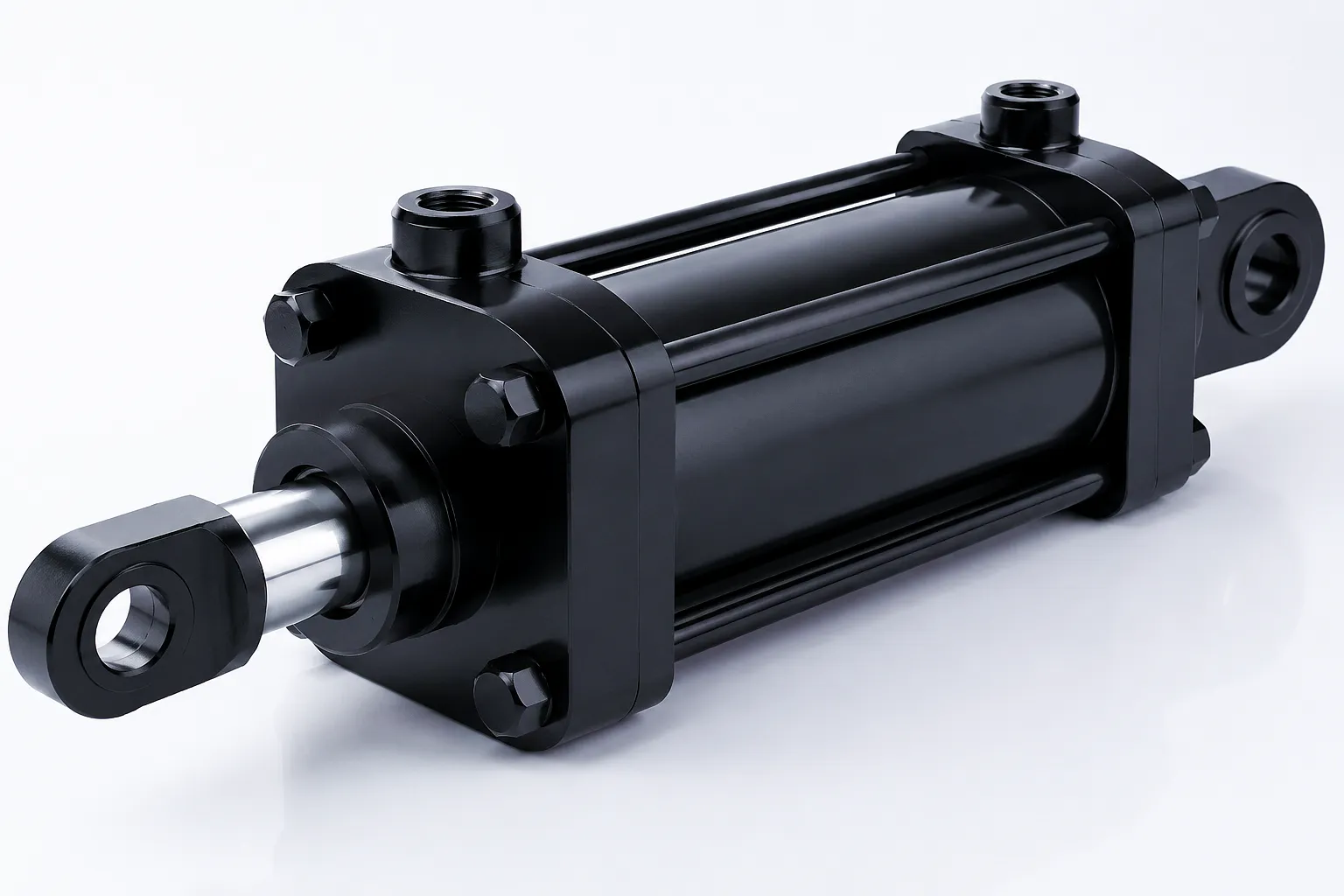
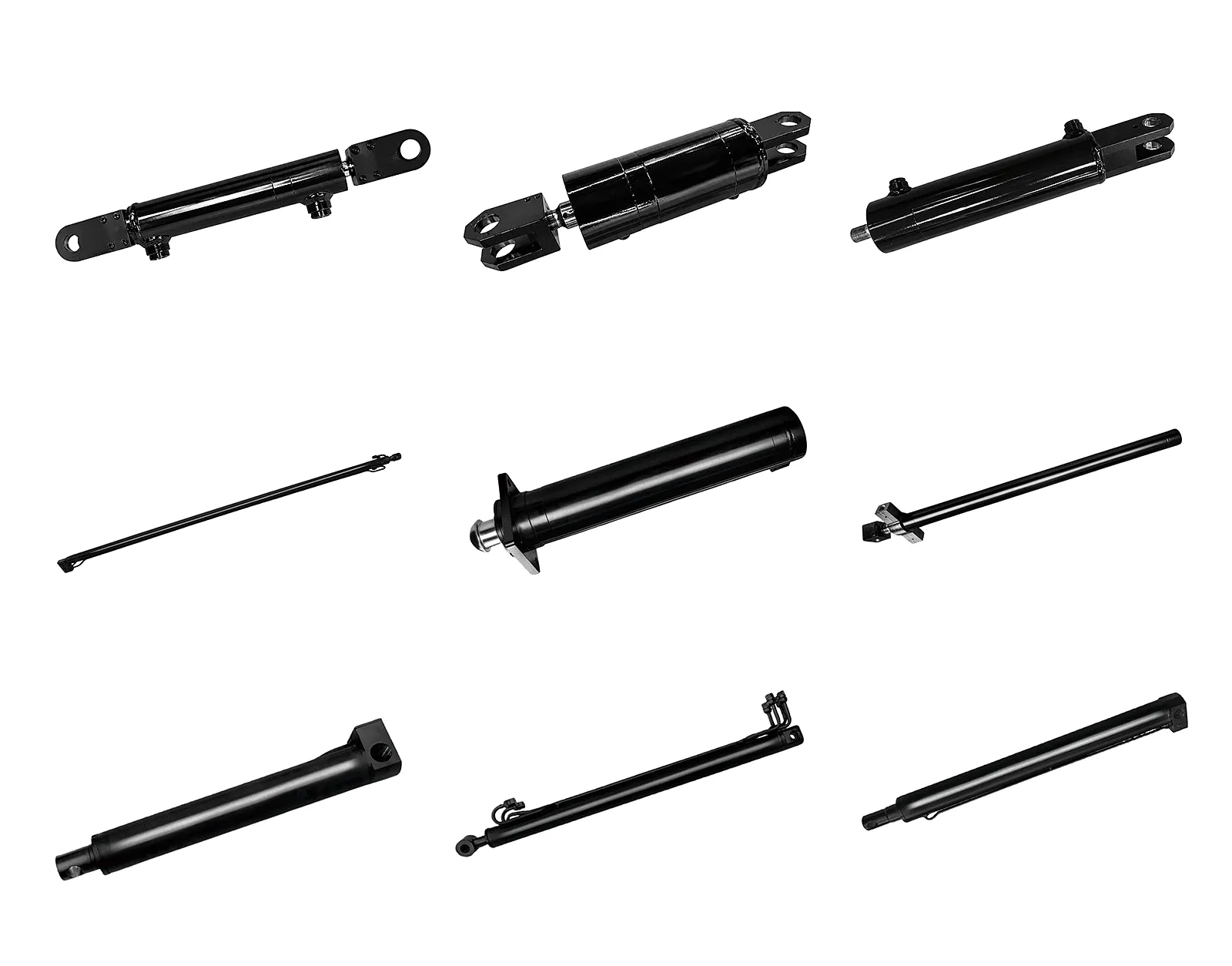
Customer Success Story: Sheffield Steel Processor Resolves Cylinder Failure Crisis
✓ Custom ISO 6020 S2 cylinder: 140mm bore, 80mm rod
✓ Bespoke Viton seal package for mill scale environment
✓ 350 bar proof test certificate supplied
✓ Ongoing supply agreement in place
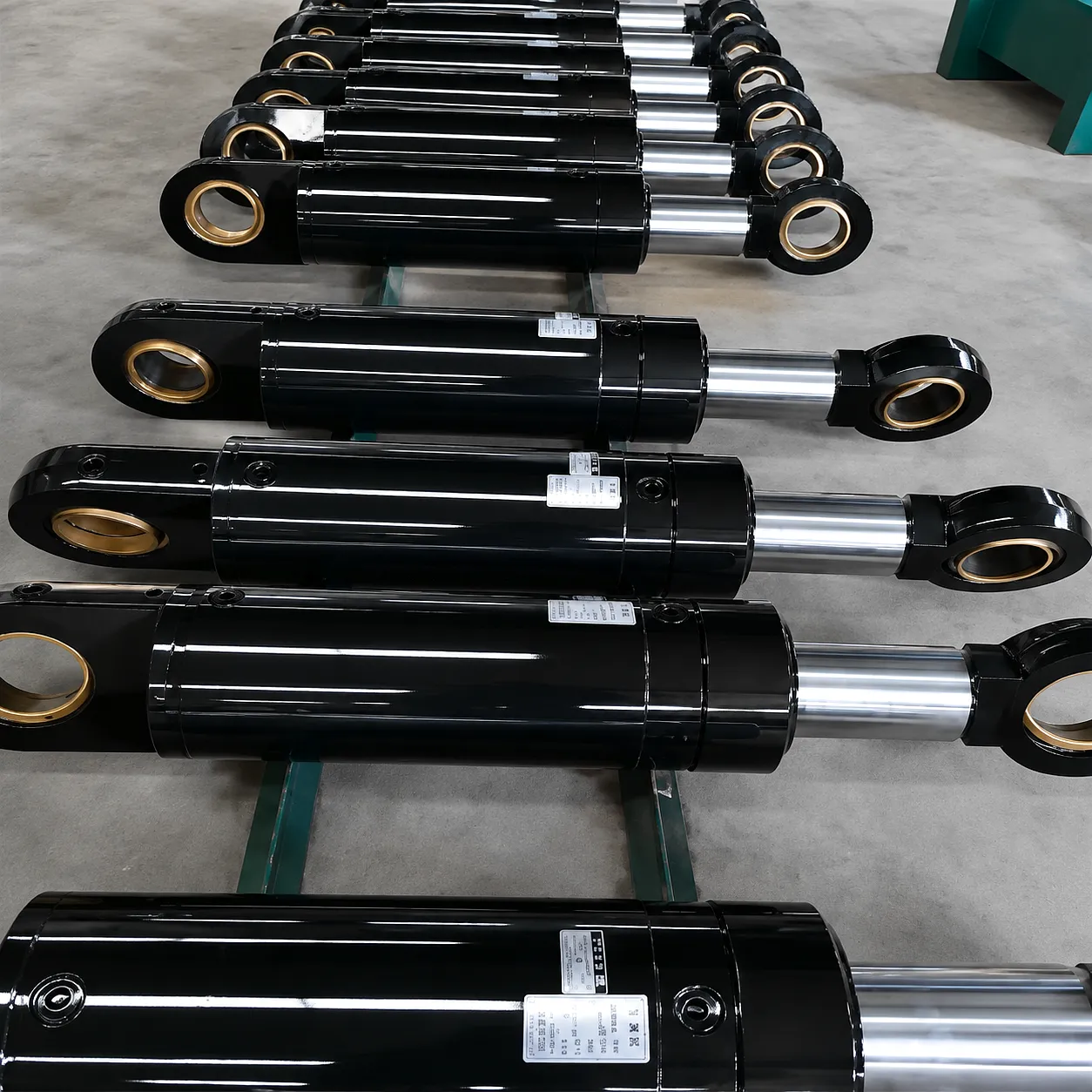
When the primary screwdown cylinder on Hallamshire Forge’s No.3 rolling mill failed during a production run of 42CrMo4 special bar, the plant’s engineering team faced a critical situation: the original cylinder had been supplied by a now-discontinued European manufacturer, and the dimensional drawings were no longer traceable. Standard replacement options from UK distributors did not match the bore, stroke, or mounting configuration.
Hallamshire’s chief engineer contacted Ever Power with dimensional information taken from the failed cylinder itself. Ever Power’s technical team was able to match the bore and stroke to an ISO 6020 Series 2 standard configuration (140mm bore, 80mm rod, 900mm stroke) and identify the mounting interface as ISO 6022 Type MF2 (rectangular flange, cap-end). The non-standard element was the seal compound: the mill’s hydraulic system runs at 90°C with a synthetic ester fluid, requiring Viton (FKM) seal chemistry rather than standard polyurethane.
Ever Power manufactured and despatched the custom-specified cylinder within 11 working days, including 100% hydrostatic proof testing at 375 bar and a full material test certificate for the barrel tube. The cylinder was installed and the rolling line returned to production on schedule, avoiding a contractual delivery penalty on a batch of aerospace-grade alloy bar for a Midlands prime contractor. Hallamshire has since placed a standing order with Ever Power for two spare cylinders to be held as on-site insurance stock.
“Ever Power matched our failed cylinder to ISO 6020 Series 2 from a phone call and three measurements. The quality of the chrome rod finish was notably superior to the original — no scoring after six months of continuous rolling duty. The hydrostatic test certificate was exactly what our quality department needed for the Technical File.”
“We’ve run Ever Power ISO 6020 cylinders on our agricultural baler line for two seasons now — over 2.3 million actuation cycles at last count. Not a single seal failure or leakage event. The interchangeability with our existing ISO-mount frames made fitting straightforward, and the Viton option for our outdoor storage conditions was the right call. We won’t go back to our previous supplier.”
“Our procurement team specified Ever Power cylinders for the lifting platform refurbishment at our Birmingham facility. The cylinders arrived with full material traceability documentation, which cleared our ISO 9001 incoming inspection in one pass. The bore tolerances were spot-on — we measured them ourselves — and the mounting bolt patterns aligned perfectly with our ISO 6022 frames. Commercial terms were also competitive for the volume we ordered.”
Single-Acting and Heavy-Duty Configurations Within the ISO 6020 Framework
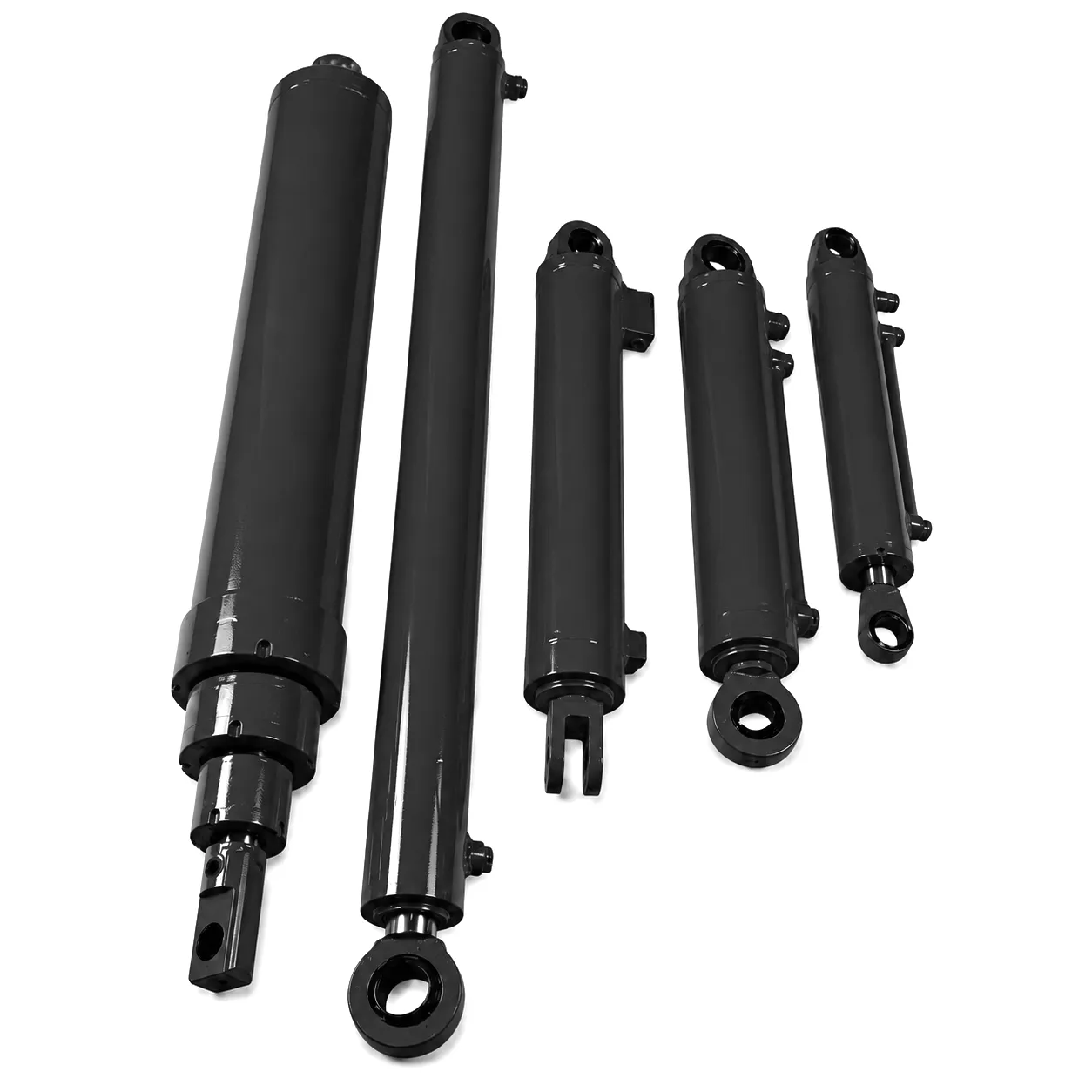
While double-acting cylinders represent the majority of ISO 6020 applications, single-acting variants play a critical role in safety-relevant actuations where a spring return provides a fail-safe default position. Clamp actuators in automotive assembly jigging, hold-down tools in CNC machining centres, and die-cushion systems in stamping presses across Coventry and the Black Country all use single-acting ISO cylinders where loss of hydraulic pressure must produce a defined and predictable mechanical response.
For the heaviest industrial applications — large-scale offshore lifting, hydraulic presses above 1,000 tonnes, and specialist civil engineering actuators — Ever Power produces heavy-duty cylinders engineered beyond the standard ISO 6020 bore ceiling, incorporating the mounting interface logic of ISO 6022 at an expanded scale. These products are individually designed and validated, with FEA structural analysis available to support customer engineering approval processes.
Frequently Asked Questions — ISO Hydraulic Cylinders for UK Industrial Buyers
Serving UK industrial buyers with precision-manufactured, fully certified hydraulic cylinders. Custom engineering. Fast UK delivery. Full documentation.
📧 Get a Quote — [email protected]
 Indonesian
  English
  Italian
  Portuguese
  Dutch
Dutch  Swedish
  Danish
  Finnish
  Polish
  Hindi
Hindi  Kazakh
  Turkish
  Ukrainian
  Romanian
  Spanish
  German
  Russian
  Korean
  Japanese
  Vietnamese
  Thai
Thai  Malay
Malay  French
  Greek
Greek