
Descrizione del prodotto
Products Description
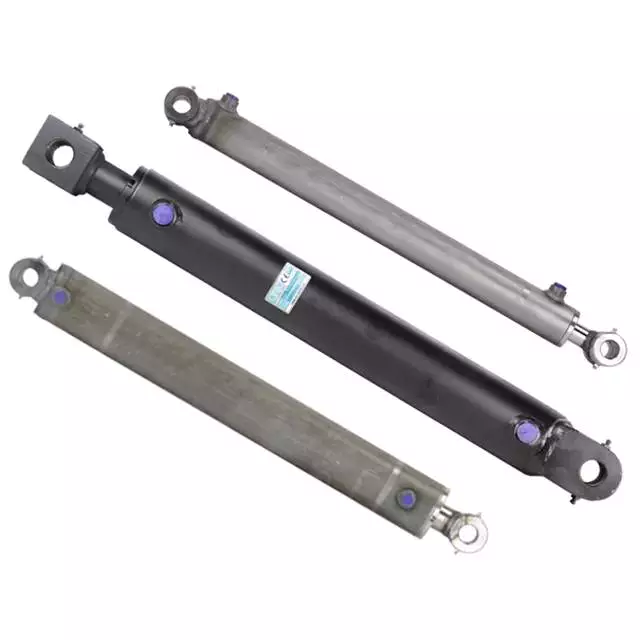
Product Name | HSG Series Hydraulic Cylinder | |||
Work Press | 7/14/16/21/31.5MPa 37.5/63MPa Can be Customized | |||
Materiale | Aluminum,Cast Iron,45mnb Steel,Stainless Steel | |||
Bore Size | 40mm–320mm,Customizable | |||
Shaft Diameter | 20mm–220mm,Customizable | |||
Stroke Length | 30mm–14100mm,Customizable | |||
Rod Surface Hardness | HRC48-54 | |||
Paint Color | Black,Yellow,Blue,Brown,Customizable | |||
Montaggio | Orecchino, flangia, forcella. Piede, perno, personalizzabile | |||
Garanzia | 1 Year | |||
MOQ | 1 Piece | |||
Delivery Time | 7-15 Days,Also depands on specific demands | |||
Certificazione | ISO9001,CE | |||
Profilo Aziendale
QIANGLIN HYDRAULIC MACHINERY CO., LTD
| QiangLin is a professional hydraulic equipment manufacturer, mainly engaged in hydraulic system design, manufacture, installation, transformation, sales, and technical services. Our manufacturing facilities are certified to the ISO 9001 standard. We are an approved supplier to many equipment manufacturers in China. We are also partners with many customers from America, Canada, Australia, Germany, England, and other European Countries. Product quality, shorter delivery time, and customer satisfaction are our long-term commitments to our CHINAMFG customers. Hope to be your partner. |
Domande frequenti:
Q1: Are you a trading company or a manufacturer?
A: We have our own factory.
Q2: Are you able to make Non-standard or customized products?
A: Yes, we can.
Q3: How long is your delivery time?
A: Normally, the delivery time is 7 days if we have stock, 15-30 working days if we don’t. but it
also depends on the product
requirements and quantity.
Q4: Do you provide samples? are the samples free or not?
A: Yes, we can provide samples, but they are not free of charge.
Q5: What are your payment terms?
A: 30% deposit T/T or Irrevocable L/C at sight, If you have any questions, please feel free to
contact us.
Q6: What are your After-sales services?
A: Before shipment, Each individual product will be strictly inspected on our factory QC Process
System. In addition, We have a
Customer Service team to respond to customers’ questions within 12 hours. Being helpful in
solving customers’ problems is always our goal.
| Certificazione: | CE, ISO9001 |
|---|---|
| Pressione: | High Pressure |
| Temperatura di esercizio: | Normal Temperature |
| Personalizzazione: | Disponibile |
|
|---|
.shipping-cost-tm .tm-status-off{background: none;padding:0;color: #1470cc}
| Shipping Cost: Estimated freight per unit. | about shipping cost and estimated delivery time. |
|---|
| Payment Method: |
|
|---|---|
| Initial Payment Full Payment |
| Currency: | US$ |
|---|
| Return&refunds: | You can apply for a refund up to 30 days after receipt of the products. |
|---|
What role do hydraulic cylinders play in optimizing power distribution and efficiency?
Hydraulic cylinders play a significant role in optimizing power distribution and efficiency in various applications. They are widely used in industries such as construction, manufacturing, agriculture, and transportation, where efficient power transmission and precise control are essential. Here’s a detailed explanation of the role hydraulic cylinders play in optimizing power distribution and efficiency:
1. Power Transmission:
– Hydraulic cylinders serve as a means of power transmission in hydraulic systems. They convert the hydraulic fluid’s pressure and flow into linear mechanical force, allowing for controlled movement of loads. Hydraulic cylinders efficiently transmit power from an energy source, such as a hydraulic pump, to the working components of the system. The ability to transmit power over long distances with minimal energy losses makes hydraulic cylinders an efficient choice for various applications.
2. High Power Density:
– Hydraulic cylinders offer high power density, meaning they can generate significant force relative to their size. This characteristic enables compact and lightweight hydraulic systems while delivering substantial power output. Hydraulic cylinders can produce high forces even at low operating speeds, making them suitable for heavy-duty applications. The high power density of hydraulic cylinders contributes to the optimization of power distribution by maximizing the force output while minimizing the system’s overall size and weight.
3. Load Handling and Control:
– Hydraulic cylinders provide precise load handling and control capabilities, contributing to power distribution optimization. By adjusting the flow of hydraulic fluid to the cylinder, operators can control the speed, force, and direction of the cylinder’s movement. This level of control allows for accurate positioning and smooth operation of loads, reducing energy waste and improving overall system efficiency. Hydraulic cylinders enable precise load handling and control, leading to optimal power distribution and improved energy efficiency.
4. Variable Force and Speed:
– Hydraulic cylinders offer the advantage of variable force and speed control. By regulating the flow of hydraulic fluid, the force exerted by the cylinder can be adjusted as needed. This flexibility enables hydraulic systems to adapt to different load requirements, optimizing power distribution. Hydraulic cylinders can operate at varying speeds, allowing for efficient power distribution across different stages of an operation. The ability to vary force and speed according to the application’s demands enhances energy efficiency and overall system performance.
5. Energy Recovery:
– Hydraulic cylinders can contribute to energy efficiency through energy recovery mechanisms. In certain applications, hydraulic systems utilize accumulators to store and release energy. Hydraulic cylinders can store energy during deceleration or when the load is lowering, and then release it to assist in subsequent movements. This energy recovery process reduces the overall energy consumption of the system, optimizing power distribution and improving efficiency. The ability to recover and reuse energy enhances the sustainability and cost-effectiveness of hydraulic systems.
6. Integrated Control Systems:
– Hydraulic cylinders can be integrated into advanced control systems, such as servo control or proportional control systems. These systems utilize electronic feedback, sensors, and control algorithms to optimize power distribution and efficiency. By continuously monitoring and adjusting the flow of hydraulic fluid, the control systems ensure that the cylinder operates at the most efficient operating point, minimizing energy losses and maximizing power distribution. Integrated control systems enhance the overall energy efficiency of hydraulic systems and contribute to power optimization.
7. System Efficiency Improvement:
– Hydraulic cylinders, when combined with other components in a hydraulic system, contribute to overall system efficiency improvement. The integration of efficient hydraulic pumps, valves, and actuators helps minimize energy losses, pressure drops, and heat generation. By optimizing the design and configuration of the hydraulic system, including the selection of appropriate cylinder sizes, operating pressures, and control strategies, power distribution can be optimized, leading to improved energy efficiency. Proper system design and component selection are critical for achieving optimal power distribution and efficiency.
In summary, hydraulic cylinders play a crucial role in optimizing power distribution and efficiency in various applications. They enable efficient power transmission, offer high power density, provide precise load handling and control, allow for variable force and speed control, facilitate energy recovery, can be integrated into advanced control systems, and contribute to overall system efficiency improvement. By leveraging the capabilities of hydraulic cylinders, industries can achieve better power utilization, reduced energy consumption, and improved system performance.
Impact of Hydraulic Cylinders on Overall Productivity of Manufacturing Operations
Hydraulic cylinders play a crucial role in enhancing the overall productivity of manufacturing operations. These versatile devices are widely used in various industrial applications due to their ability to generate powerful and controlled linear motion. Let’s explore how hydraulic cylinders impact the overall productivity of manufacturing operations:
- Powerful Force Generation: Hydraulic cylinders are capable of generating high forces, which enables them to handle heavy loads and perform demanding tasks. By providing the necessary force, hydraulic cylinders facilitate efficient and effective operation of machinery and equipment in manufacturing processes. This ability to exert substantial force contributes to increased productivity by enabling the handling of larger workpieces, enhancing process efficiency, and reducing manual labor requirements.
- Precision and Control: Hydraulic cylinders offer precise control over the movement of loads, allowing for accurate positioning, alignment, and repetitive tasks. The smooth and controlled linear motion provided by hydraulic cylinders ensures precise operation in manufacturing processes, such as assembly, material handling, and machining. This precision and control minimize errors, rework, and scrap, leading to improved productivity and higher-quality output.
- Speed and Efficiency: Hydraulic cylinders can operate at high speeds, enabling rapid movement and cycle times in manufacturing operations. The combination of high force and speed allows for faster operation of machinery and equipment, reducing production cycle times and increasing overall throughput. By optimizing the speed and efficiency of manufacturing processes, hydraulic cylinders contribute to improved productivity and output.
- Flexibility and Adaptability: Hydraulic cylinders are highly flexible and adaptable to different manufacturing applications. They can be customized to meet specific requirements, such as load capacity, stroke length, and mounting options. This versatility allows hydraulic cylinders to be integrated into a wide range of machinery and equipment, accommodating diverse manufacturing needs. The ability to adapt to different tasks and environments enhances overall productivity by enabling efficient utilization of resources and facilitating process optimization.
- Reliability and Durability: Hydraulic cylinders are known for their robustness and durability, making them suitable for demanding manufacturing environments. Their ability to withstand heavy loads, repeated use, and harsh operating conditions ensures reliable performance over extended periods. Minimizing downtime due to cylinder failure or maintenance requirements contributes to increased productivity and uninterrupted manufacturing operations.
In summary, hydraulic cylinders have a significant impact on the overall productivity of manufacturing operations. Their powerful force generation, precision and control, speed and efficiency, flexibility and adaptability, as well as reliability and durability, contribute to optimized processes, increased throughput, improved quality, and reduced labor requirements. By leveraging the capabilities of hydraulic cylinders, manufacturers can enhance productivity, streamline operations, and achieve greater efficiency in their manufacturing processes.
In che modo i cilindri idraulici si adattano alle variazioni di lunghezza della corsa e di forza richiesta?
I cilindri idraulici sono progettati per adattarsi a variazioni di lunghezza della corsa e di forza richiesta, offrendo flessibilità e adattabilità a diverse applicazioni. Possono essere personalizzati per soddisfare esigenze specifiche considerando fattori quali il diametro del pistone, il diametro dello stelo, la pressione idraulica e il design del cilindro. Ecco una spiegazione dettagliata di come i cilindri idraulici si adattano alle variazioni di lunghezza della corsa e di forza richiesta:
1. Dimensioni e design del cilindro:
I cilindri idraulici sono disponibili in diverse dimensioni e configurazioni per adattarsi a differenti lunghezze di corsa e requisiti di forza. Il diametro del cilindro, l'area del pistone e il diametro dello stelo sono fattori chiave che determinano la forza erogata. Diametri del cilindro e aree del pistone maggiori possono generare una forza maggiore, mentre diametri minori sono adatti ad applicazioni che richiedono una forza inferiore. Selezionando le dimensioni e la configurazione del cilindro appropriate, è possibile soddisfare efficacemente le diverse lunghezze di corsa e i requisiti di forza.
2. Configurazioni di pistone e biella:
I cilindri idraulici possono essere progettati con diverse configurazioni di pistone e stelo per adattarsi alle variazioni di lunghezza della corsa. I cilindri a semplice effetto hanno un solo pistone e possono fornire una corsa in una sola direzione. I cilindri a doppio effetto hanno un pistone su entrambi i lati, consentendo corse in entrambe le direzioni. I cilindri telescopici sono costituiti da più stadi che possono estendersi e ritrarsi, fornendo una lunghezza di corsa maggiore rispetto ai cilindri standard. Selezionando la configurazione di pistone e stelo appropriata, è possibile ottenere la lunghezza di corsa desiderata.
3. Pressione e portata idraulica:
La pressione idraulica e la portata fornite al cilindro svolgono un ruolo cruciale nell'adattarsi alle variazioni di forza richieste. L'aumento della pressione idraulica incrementa la forza erogata dal cilindro, consentendogli di gestire forze maggiori. Regolando la pressione e la portata tramite valvole e pompe idrauliche, è possibile controllare la forza erogata e adattarla alle specifiche esigenze dell'applicazione.
4. Personalizzazione e sartorialità:
I cilindri idraulici possono essere personalizzati e adattati per soddisfare specifici requisiti di corsa e forza. I produttori offrono un'ampia gamma di dimensioni, corse e capacità di forza tra cui scegliere. Inoltre, è possibile realizzare cilindri progettati su misura per applicazioni particolari con esigenze specifiche di corsa e forza. Collaborando a stretto contatto con i produttori di cilindri idraulici, è possibile ottenere cilindri che corrispondano esattamente ai requisiti di corsa e forza richiesti.
5. Cilindri multipli e sincronizzazione:
– Nelle applicazioni che richiedono forze elevate o corse più lunghe, è possibile utilizzare più cilindri idraulici in combinazione. Sincronizzando il movimento di più cilindri attraverso il sistema idraulico, è possibile aumentare efficacemente la corsa e la forza erogata. La sincronizzazione può essere ottenuta tramite collegamenti meccanici, controlli elettronici o circuiti idraulici, garantendo un movimento coordinato e una distribuzione uniforme della forza tra i cilindri.
6. Rilevamento del carico e controllo della pressione:
– I sistemi idraulici possono integrare meccanismi di rilevamento del carico e di controllo della pressione per adattarsi alle variazioni dei requisiti di forza. I sistemi di rilevamento del carico monitorano la richiesta di carico e regolano di conseguenza la pressione idraulica, garantendo che il cilindro eroghi la forza richiesta senza esercitare una forza eccessiva. Le valvole di controllo della pressione regolano la pressione all'interno del sistema idraulico, consentendo un controllo e una regolazione precisi della forza erogata in base alle esigenze dell'applicazione.
7. Considerazioni sulla sicurezza:
– Quando si devono gestire variazioni nella lunghezza della corsa e nei requisiti di forza, è essenziale considerare i fattori di sicurezza. I cilindri idraulici devono essere selezionati e progettati con un margine di sicurezza adeguato per gestire carichi imprevisti o variazioni nelle condizioni operative. È possibile integrare meccanismi di sicurezza come valvole di protezione da sovraccarico e valvole di sicurezza per prevenire danni o guasti in situazioni in cui i limiti di forza vengono superati.
Considerando fattori quali dimensioni e design del cilindro, configurazioni di pistone e stelo, pressione e portata idraulica, opzioni di personalizzazione, sincronizzazione, rilevamento del carico, controllo della pressione e considerazioni di sicurezza, i cilindri idraulici possono adattarsi efficacemente alle variazioni di lunghezza della corsa e di forza richiesta. Questa flessibilità consente di personalizzare i cilindri idraulici per soddisfare le esigenze specifiche di un'ampia gamma di applicazioni, garantendo prestazioni ed efficienza ottimali.


editor by CX 2023-11-03
 Italian
  English
  Portuguese
  Dutch
Dutch  Swedish
  Danish
  Finnish
  Polish
  Hindi
Hindi  Kazakh
  Turkish
  Ukrainian
  Romanian
  Spanish
  German
  Russian
  Korean
  Japanese
  Vietnamese
  Thai
Thai  Indonesian
  Malay
Malay  French
  Greek
Greek