
Descrizione del prodotto
Descrizione del prodotto
Single Acting Hydraulic Cylinder
Single acting hydraulic cylinder with the most extensive range of stroke length and lifting capacity, is the best choice for maintenance, produce, manufacture, architecture and other operations . Neck thread can withstand full load, the unique double guide ring technology can easily absorb partial load, reduce wear, prolong service life. Outer ring thread, most models with plunger thread and bottom mounting hole, making use of positioning more convenient.
Features
* Single acting, heavy-duty return springs
* High strength alloy steel for durability.
* Plated steel plungers.
* Stop ring to prevent the plunger over stro ke , the piston top standard antiskid saddle
* Collar threads, plunger threads and base mounting holes enable easy fixturing .
* Baked enamel finish for increased corrosion resistance.
* Removable strap handles for unobstructed fixturing .
* Plunger wiper reduces contamination, extending cylinder life
* 3/8 “- 18NPT coupler and dust cap included on all models.
Details lmages
Product Specifications
| Item No | Capacity
(T) | Max. Working Pressure
(MPa) | Closed Height A (mm) | Colpo
(mm) | Oil Capacity
(cm3) | Weight
(kg) |
| SOV-RC-51 | 5 | 70 | 110 | 25 | 16 | 1 |
Recommend Products
Profilo Aziendale
SOV Hydraulic Technoloy (ZheJiang ) Co., Ltd. is a professional manufacturing in hydraulic tools and products, we have been in the industry for more than 20 years. Since the establishment in 1995, we successfully transformed from OEM manufacturer to create our own brand SOV, and our factory has been approved by CE, ISO9001:2008 consecutively. Our Products have been widely used in petrochemical, cement, shipbuilding, steel plant and heavy constructions areas, etc.
We produce and supply Hydraulic tools, such as:
* Hydraulic cylinders, jacks (5-1000ton), single acting and double acting, hollow plunger;
* Hydraulic/ electric /pneumatic torque wrench (100-72000Nm);
* Hydraulic bolt tensioner (100-11486NM);
* Hydraulic pumps, manual and electric type (max up to 3000bar);
* Integrated hydraulic lifting system solutions ( 4-72 points lifting system for house translation or leveling, bridge supporting and tank welding supporting)
* Hydraulic nut and couplings. (M50-Tr1000)
FAQ
Q1: How can contact sales ?
A1: Please click the contact find our website and email address.
Q2: How can I buy CHINAMFG products in my country?
A2: Please send us an inquiry or email , we will reply to your if there is distributor in your country.
Q3: Can I have CHINAMFG products catalog and price list ?
A3: Please send us an email for price list
Q4: How long does it take to get the product If I place an order?
A4: If products stock available, after confirmation of your payment or advance payment , we will pack and deliver in 3-7 days. If you select international parcel service, it can be arrived in 3-7 days. If it is by sea shipment, it will take 15-45 days depending on different locations
Q5: How to make payment ?
A5: First send us an inquiry, and we will reply you quotation, if our price suits you, we will prepare proforma invoice with our banking details.
Q6: Manufacturing time?
A6: Please send us an inquiry for stock condition, if we don’t have stock, and it is our standard products (refer to our model), it can be produced in 10-20 days. If it is customized, not our standard products, it will take 20-45 days to produce.
WHY CHOOSE US
Our Services:
* 24 hours online service;
* One year warranty, repair and service for the whole life;
* Question report will be replied in 48 hours;
* Quality guaranteed.
Packaging:
* All products will be packed with wooden case.
Shipping:
* Small quantity: by international exress, such as DHL, TNT, FEDEX, UPS, etc. depending on the customers’ choice. Goods will arrive within 7 days in normal cicumstances;
* Large quantity: by sea transportation. Goods will arrive in 10~45 days, according to the diatance.
| After-sales Service: | Video Online Instructions |
|---|---|
| Warranty: | 1 Year |
| Type: | Pistons |
| Application: | Lifting |
| Certificazione: | CE, ISO9001: 2000 |
| Condition: | New |
| Personalizzazione: | Disponibile |
|
|---|
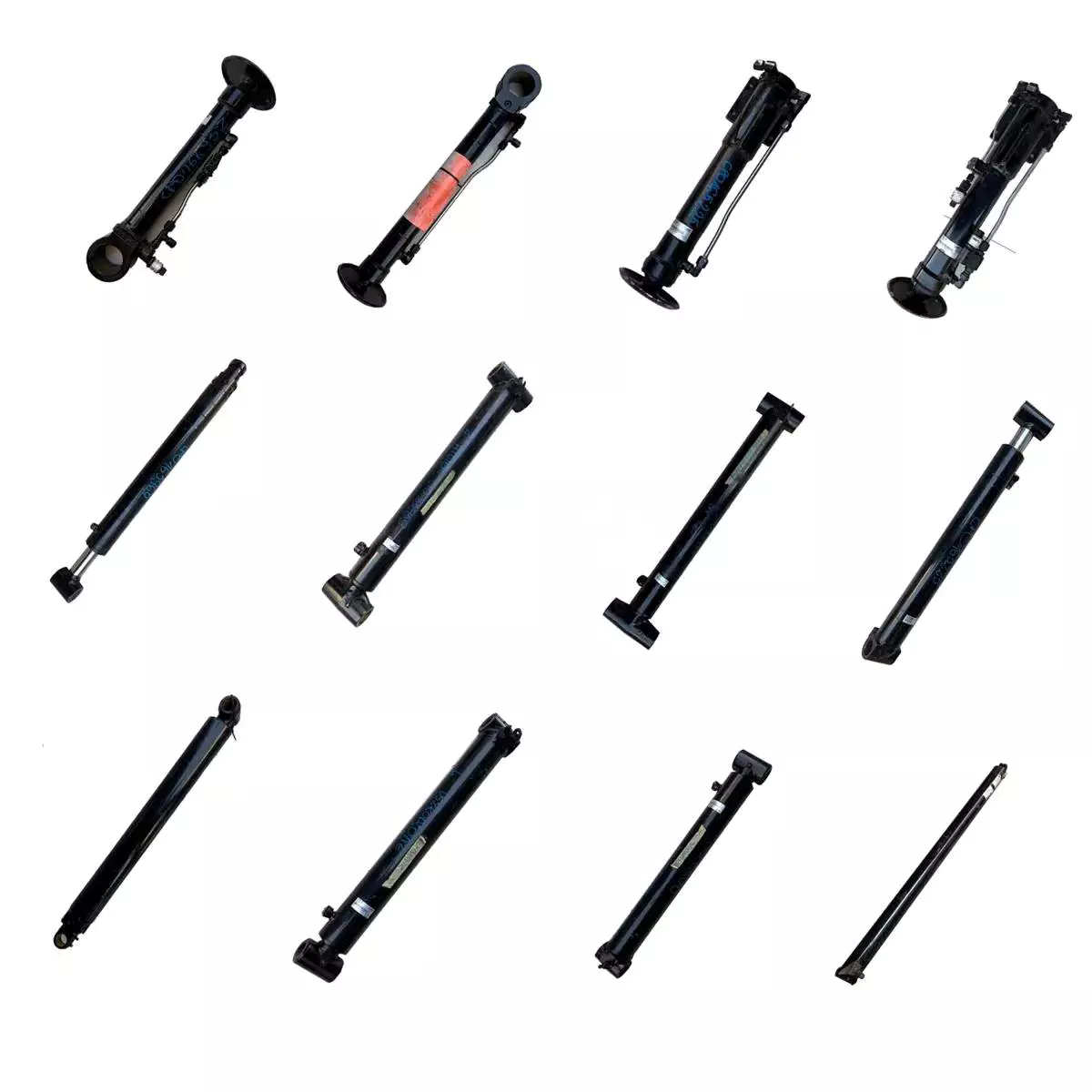
How do hydraulic cylinders handle the challenges of precise positioning and control?
Hydraulic cylinders are designed to handle the challenges of precise positioning and control with a combination of engineering principles and advanced control systems. These challenges often arise in applications where accurate and controlled movements are required, such as in industrial automation, construction, and material handling. Here’s a detailed explanation of how hydraulic cylinders overcome these challenges:
1. Fluid Power Control:
– Hydraulic cylinders utilize fluid power control to achieve precise positioning and control. The hydraulic system consists of a hydraulic pump, control valves, and hydraulic fluid. By regulating the flow of hydraulic fluid into and out of the cylinder, operators can control the speed, direction, and force exerted by the cylinder. The fluid power control allows for smooth and accurate movements, enabling precise positioning of the hydraulic cylinder and the attached load.
2. Control Valves:
– Control valves play a crucial role in handling the challenges of precise positioning and control. These valves are responsible for directing the flow of hydraulic fluid within the system. They can be manually operated or electronically controlled. Control valves allow operators to adjust the flow rate of the hydraulic fluid, controlling the speed of the cylinder’s movement. By modulating the flow, operators can achieve fine control over the positioning of the hydraulic cylinder, enabling precise and accurate movements.
3. Proportional Control:
– Hydraulic cylinders can be equipped with proportional control systems, which offer enhanced precision in positioning and control. Proportional control systems utilize electronic feedback and control algorithms to precisely regulate the flow and pressure of the hydraulic fluid. These systems provide accurate and proportional control over the movement of the hydraulic cylinder, allowing for precise positioning at various points along its stroke length. Proportional control enhances the cylinder’s ability to handle complex tasks that require precise movements and control.
4. Position Feedback Sensors:
– To achieve precise positioning, hydraulic cylinders often incorporate position feedback sensors. These sensors provide real-time information about the position of the cylinder’s piston rod. Common types of position feedback sensors include potentiometers, linear variable differential transformers (LVDTs), and magnetostrictive sensors. By continuously monitoring the position, the feedback sensors enable closed-loop control, allowing for accurate positioning and control of the hydraulic cylinder. The feedback information is used to adjust the flow of hydraulic fluid to achieve the desired position accurately.
5. Servo Control Systems:
– Advanced hydraulic systems employ servo control systems to handle the challenges of precise positioning and control. Servo control systems combine electronic control, position feedback sensors, and proportional control valves to achieve high levels of accuracy and responsiveness. The servo control system continuously compares the desired position with the actual position of the hydraulic cylinder and adjusts the flow of hydraulic fluid to minimize any positional error. This closed-loop control mechanism enables the hydraulic cylinder to maintain precise positioning and control, even under varying loads or external disturbances.
6. Integrated Automation:
– Hydraulic cylinders can be integrated into automated systems to achieve precise positioning and control. In such setups, the hydraulic cylinders are controlled by programmable logic controllers (PLCs) or other automation controllers. These controllers receive input signals from various sensors and use pre-programmed logic to command the hydraulic cylinder’s movements. The integration of hydraulic cylinders into automated systems allows for precise and repeatable positioning and control, enabling complex sequences of movements to be executed with high accuracy.
7. Advanced Control Algorithms:
– Advancements in control algorithms have also contributed to the precise positioning and control of hydraulic cylinders. These algorithms, such as PID (Proportional-Integral-Derivative) control, adaptive control, and model-based control, enable sophisticated control strategies to be implemented. These algorithms consider factors such as load variations, system dynamics, and environmental conditions to optimize the control of hydraulic cylinders. By employing advanced control algorithms, hydraulic cylinders can compensate for disturbances and achieve precise positioning and control over a wide range of operating conditions.
In summary, hydraulic cylinders overcome the challenges of precise positioning and control through the use of fluid power control, control valves, proportional control, position feedback sensors, servo control systems, integrated automation, and advanced control algorithms. By combining these elements, hydraulic cylinders can achieve accurate and controlled movements, enabling precise positioning and control in various applications. These capabilities are essential for industries that require high precision and repeatability in their operations, such as industrial automation, robotics, and material handling.
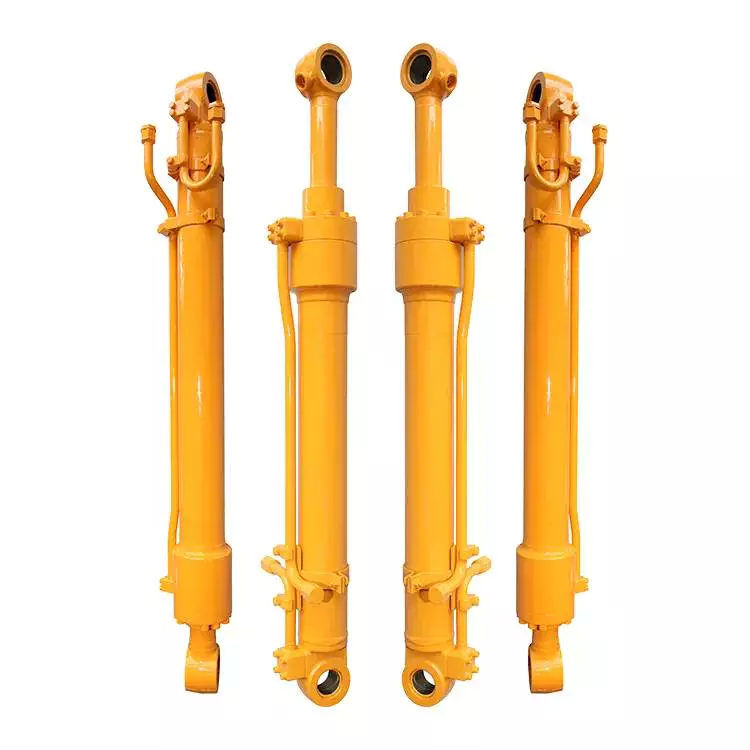
Utilizzo di cilindri idraulici in combinazione con fonti di energia alternative
I cilindri idraulici possono effettivamente essere utilizzati in combinazione con fonti di energia alternative. La versatilità dei sistemi idraulici consente di integrarli con diverse tecnologie per le energie alternative, migliorandone l'efficienza, il controllo e la produzione di energia. Vediamo alcuni esempi di come i cilindri idraulici possono essere impiegati insieme alle fonti di energia alternative:
- Accumulo di energia idraulica: I cilindri idraulici possono essere impiegati in sistemi di accumulo di energia che utilizzano fonti energetiche alternative come le energie rinnovabili (ad esempio, solare o eolica) o il recupero di energia dai rifiuti. Questi sistemi convertono l'energia in eccesso in energia potenziale idraulica pompando un fluido in un accumulatore ad alta pressione. Quando l'energia è necessaria, il fluido pressurizzato viene rilasciato, azionando il cilindro idraulico e generando energia meccanica.
- Conversione dell'energia delle onde e delle maree: I cilindri idraulici possono essere utilizzati nei sistemi di conversione dell'energia delle onde e delle maree. Questi sistemi sfruttano la potenza delle onde oceaniche o delle correnti di marea e la convertono in energia utilizzabile. I cilindri idraulici, insieme alle pompe e alle valvole associate, possono essere impiegati per catturare e controllare l'energia delle onde o delle maree, azionando i cilindri e generando energia meccanica o producendo elettricità.
- Produzione di energia idroelettrica: I cilindri idraulici svolgono un ruolo cruciale nella produzione tradizionale di energia idroelettrica. Tuttavia, anche approcci alternativi come i sistemi idroelettrici su piccola scala o micro-idroelettrici possono trarre vantaggio dai cilindri idraulici. Questi sistemi utilizzano flussi d'acqua naturali o artificiali per azionare turbine collegate a cilindri idraulici, che a loro volta convertono l'energia idraulica in energia meccanica o elettrica.
- Attuazione idraulica nelle turbine eoliche: I cilindri idraulici possono essere impiegati nelle turbine eoliche per migliorarne le prestazioni e il controllo. Ad esempio, i sistemi di controllo idraulico del passo delle pale utilizzano cilindri idraulici per regolare l'angolo di inclinazione delle pale, ottimizzandone le prestazioni aerodinamiche in base alle condizioni del vento. Ciò consente una produzione di energia efficiente e una protezione contro carichi di vento eccessivi.
- Estrazione di energia geotermica: L'estrazione di energia geotermica consiste nell'utilizzare il calore naturale proveniente dall'interno della Terra per generare energia elettrica. I cilindri idraulici possono essere impiegati nei sistemi geotermici per controllare e regolare il flusso dei fluidi, consentendo un'estrazione e un utilizzo efficienti dell'energia geotermica. Possono essere utilizzati anche nelle pompe di calore geotermiche per applicazioni di riscaldamento e raffreddamento.
In sintesi, i cilindri idraulici possono essere efficacemente utilizzati in combinazione con fonti di energia alternative per migliorare l'accumulo, la generazione e il controllo dell'energia. Che si tratti di sistemi di accumulo di energia idraulica, conversione dell'energia delle onde e delle maree, generazione di energia idroelettrica, azionamento idraulico nelle turbine eoliche o estrazione di energia geotermica, i cilindri idraulici offrono soluzioni versatili ed efficienti per sfruttare e utilizzare le fonti di energia alternative.
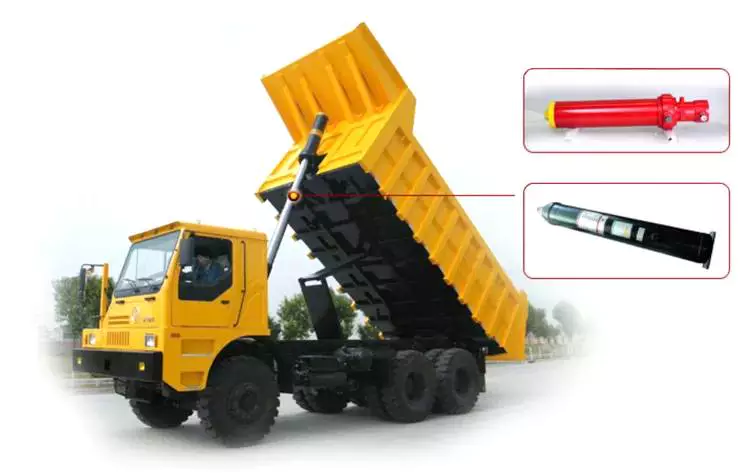
Can hydraulic cylinders be customized for specific equipment or attachment needs?
Yes, hydraulic cylinders can be customized to meet specific equipment or attachment needs. Hydraulic cylinder manufacturers often offer customization options to ensure that the cylinders meet the unique requirements of different applications. Here’s a detailed explanation of how hydraulic cylinders can be customized for specific equipment or attachment needs:
1. Size and Configuration:
– Hydraulic cylinders can be customized in terms of size and configuration to fit specific equipment or attachment requirements. The dimensions of the cylinder, such as bore size, rod diameter, and stroke length, can be tailored to match the available space and the desired force or movement requirements. Additionally, the mounting style and orientation of the cylinder can be customized to ensure proper integration with the equipment or attachment.
2. Operating Pressure and Force:
– The operating pressure and force capabilities of hydraulic cylinders can be customized to suit the specific equipment or attachment needs. Different applications may require different force outputs, and hydraulic cylinder manufacturers can design and manufacture cylinders with the appropriate piston area and pressure ratings to meet those requirements. Customization in this aspect ensures optimal performance and efficiency for the particular equipment or attachment.
3. Stroke Length:
– The stroke length of a hydraulic cylinder refers to the distance the piston can travel from fully retracted to fully extended. Customization of the stroke length allows the hydraulic cylinder to accommodate the specific range of motion required by the equipment or attachment. By adjusting the stroke length, the cylinder can be tailored to deliver the necessary extension and retraction capabilities for efficient operation.
4. Mounting Options:
– Hydraulic cylinders can be customized with various mounting options to facilitate easy installation and integration with specific equipment or attachments. Different applications may require different mounting styles, such as flange mounts, trunnion mounts, or clevis mounts. Manufacturers can provide customized mounting options to ensure proper alignment, stability, and functionality when the cylinder is connected to the equipment or attachment.
5. Sealing and Material Options:
– The sealing system of a hydraulic cylinder is crucial for preventing fluid leakage and maintaining the cylinder’s integrity. Hydraulic cylinder manufacturers offer customization options for sealing materials, such as different types of seals and seal configurations, to suit specific equipment or attachment needs. Additionally, customization of cylinder materials, such as selecting corrosion-resistant materials or specialized coatings, can enhance the cylinder’s durability and performance in specific operating environments.
6. Integration with Control Systems:
– In certain applications, hydraulic cylinders may need to be integrated with sophisticated control systems or automation technologies. Customization can involve incorporating sensors, position feedback devices, or other control elements into the hydraulic cylinder design to enable seamless integration with the overall equipment or attachment control system. This customization ensures precise control, monitoring, and synchronization of the hydraulic cylinder’s movements within the specific application.
7. Specialized Features or Accessories:
– Hydraulic cylinder customization can also involve incorporating specialized features or accessories to meet unique equipment or attachment needs. This may include the integration of safety features, such as pressure relief valves or load-holding valves, or the addition of specific ports or fittings for auxiliary functions or attachments. Customization allows hydraulic cylinders to be tailored to the specific requirements and functionalities of the equipment or attachment.
By offering customization options, hydraulic cylinder manufacturers can provide solutions that precisely match the needs of different equipment or attachment applications. Customized hydraulic cylinders ensure optimal performance, efficiency, and integration, enhancing the overall functionality and productivity of the equipment or attachment. It is important to work closely with experienced manufacturers or hydraulic system specialists to determine the specific customization requirements and ensure the successful implementation of customized hydraulic cylinders.


editor by CX 2023-11-22
 Italian
  English
  Portuguese
  Dutch
Dutch  Swedish
  Danish
  Finnish
  Polish
  Hindi
Hindi  Kazakh
  Turkish
  Ukrainian
  Romanian
  Spanish
  German
  Russian
  Korean
  Japanese
  Vietnamese
  Thai
Thai  Indonesian
  Malay
Malay  French
  Greek
Greek