
Descrizione del prodotto
Descrizione del prodotto
Metallurgy hydraulic cylinder:
Due to Metallurgy hydraulic cylinder the use in bad environment, The operation is frequent and high load, Work environment is always by high temperature, In the event of failure will affect production.
So we will considering the factors in above when we design of this kind of hydraulic cylinder, To check the each parts of the hydraulic cylinder strength, stability. Etc.
And select the suitable seal form, prevent leakage problems, And set up the buffering mechanism, to ensure the stationarity of hydraulic cylinder when running, To improve the hydraulic cylinder series problem due to design.
Our products have applications in:
- Industrial;
- Furnace;
- Molding;
- Rolling;
- Mills;
- Continuous casting machine;
- Etc.
Parametri del prodotto
| Materiale | Carbon steel, Alloy steel, Stainless steel |
| Honed tube | 20-2500mm, Heat treatment, honing, rolling |
| Piston rod | 10-2000mm ,tempering, plated nickel, Chromium or ceramic |
| Pressione di lavoro | 5-300Mpa |
| Seals | Parker,Merkel,Hallite |
| Technology | Bosch CHINAMFG and Parker |
| Coating | Sandblasting, primer, middle paint, finish paint |
| Temperature range | -40ºC to +300ºC |
| Work medium | Hydraulic Oil |
| Piston speed | maximum 2m/s |
| Mounting style | Earrings, flange, foot mounting, screw thread. |
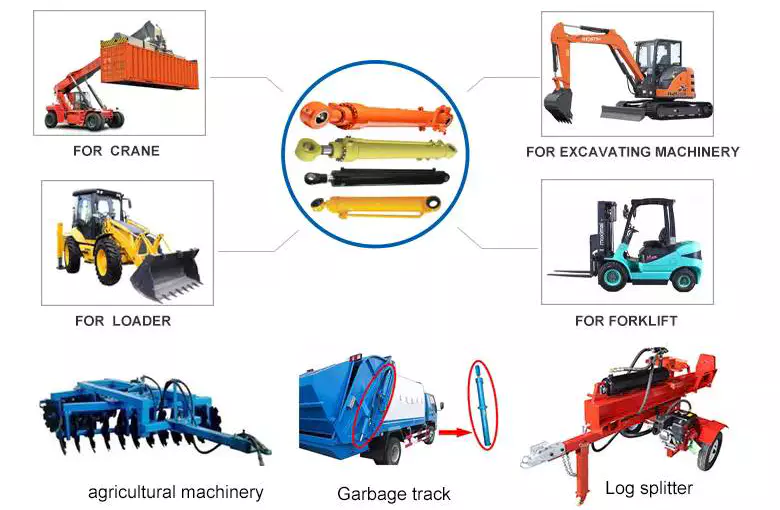
Product Application
Company Show
HETLOCK is a professional manufacturer of hydraulic cylinders in China, Founded in 1998, located in the international city of ZheJiang . Our plant is nearly 20000 square meter& We have 135 Employees including 11 experienced engineers and technical staff,More than 1800 type of hydraulic cylinder designed in every year. We can produce various kinds of hydraulic cylinders according to customer requirements.
The inside diameter of hydraulic cylinders can achieve the maximum 2500mm;
The hydraulic cylinders operating pressure can achieve the maximum 300MPa.
FAQ
Q1:Are you a manufacturer or trading company?
A: We are a manufacturer.
Q2: How many years of production experience do you have?
A: We have over 20 years of production experience.
Q3: Can it be customized?
A: Both standard and non-standard products can be customized.
Q4: How to ensure product quality?
A: We strictly follow the quality process for production and 100% inspection of each batch of products.
Q5: What services can you provide?
A: According to customer requirements, we can provide a one-stop solution from design, production, and delivery to meet their needs.
/* 22 gennaio 2571 19:08:37 */!function(){function s(e,r){var a,o={};try{e&&e.split(“,”).forEach(function(e,t){e&&(a=e.match(/(.*?):(.*)$/))&&1
| Certificazione: | CE, ISO9001 |
|---|---|
| Pressione: | High Pressure |
| Temperatura di esercizio: | High Temperature |
| Modo di agire: | Double Acting |
| Metodo di lavoro: | Straight Trip |
| Modulo modificato: | Regulated Type |
| Personalizzazione: | Disponibile |
|
|---|
What advancements in hydraulic cylinder technology have improved sealing and reliability?
Advancements in hydraulic cylinder technology have continuously contributed to improving sealing and reliability in hydraulic systems. These advancements aim to address common challenges such as leakage, wear, and failure of seals, ensuring optimal performance and longevity. Here are several key advancements that have significantly improved sealing and reliability in hydraulic cylinders:
1. High-Performance Sealing Materials:
– The development of advanced sealing materials has greatly improved the sealing capabilities of hydraulic cylinders. Traditional sealing materials like rubber have been replaced or enhanced with high-performance materials such as polyurethane, PTFE (polytetrafluoroethylene), and various composite materials. These materials offer superior resistance to wear, temperature, and chemical degradation, resulting in improved sealing performance and extended seal life.
2. Enhanced Seal Designs:
– Advancements in seal designs have focused on improving sealing efficiency and reliability. Innovative seal profiles, such as lip seals, wipers, and scrapers, have been developed to optimize fluid retention and prevent contamination. These designs provide better sealing performance, minimizing the risk of fluid leakage and maintaining system integrity. Additionally, improved seal geometries and manufacturing techniques ensure tighter tolerances, reducing the potential for seal failure due to misalignment or extrusion.
3. Integrated Seal and Bearing Systems:
– Hydraulic cylinders now incorporate integrated seal and bearing systems, where the sealing elements also serve as bearing surfaces. This design approach reduces the number of components and potential failure points, improving overall reliability. By integrating seals and bearings, the risk of seal damage or displacement due to excessive loads or misalignment is minimized, resulting in enhanced sealing performance and increased reliability.
4. Advanced Coatings and Surface Treatments:
– The application of advanced coatings and surface treatments to hydraulic cylinder components has significantly improved sealing and reliability. Coatings such as chrome plating or ceramic coatings enhance surface hardness, wear resistance, and corrosion resistance. These surface treatments provide a smoother and more durable surface for seals to operate against, reducing friction and improving sealing performance. Moreover, specialized coatings can also provide self-lubricating properties, reducing the need for additional lubrication and enhancing reliability.
5. Sealing System Monitoring and Diagnostic Technologies:
– The integration of monitoring and diagnostic technologies in hydraulic systems has revolutionized seal performance and reliability. Sensors and monitoring systems can detect and alert operators to potential seal failures or leaks before they escalate. Real-time monitoring of pressure, temperature, and seal performance parameters allows for proactive maintenance and early intervention, preventing costly downtime and ensuring optimal sealing and reliability.
6. Computational Modeling and Simulation:
– Computational modeling and simulation techniques have played a significant role in advancing hydraulic cylinder sealing and reliability. These tools enable engineers to analyze and optimize seal designs, fluid flow dynamics, and contact stresses. By simulating various operating conditions, potential issues such as seal extrusion, wear, or leakage can be identified and mitigated early in the design phase, resulting in improved sealing performance and enhanced reliability.
7. Systematic Maintenance Practices:
– Advances in hydraulic cylinder technology have also emphasized the importance of systematic maintenance practices to ensure sealing and overall system reliability. Regular inspection, lubrication, and replacement of seals, as well as routine system flushing and filtration, help prevent premature seal failure and optimize sealing performance. Implementing preventive maintenance schedules and adhering to recommended service intervals contribute to extended seal life and enhanced reliability.
In summary, advancements in hydraulic cylinder technology have led to significant improvements in sealing and reliability. High-performance sealing materials, enhanced seal designs, integrated seal and bearing systems, advanced coatings and surface treatments, sealing system monitoring and diagnostics, computational modeling and simulation, and systematic maintenance practices have all played key roles in achieving optimal sealing performance and increased reliability. These advancements have resulted in more efficient and dependable hydraulic systems, minimizing leakage, wear, and failure of seals, and ultimately improving the overall performance and longevity of hydraulic cylinders in diverse applications.
Integration of Hydraulic Cylinders with Equipment Requiring Rapid and Dynamic Movements
Hydraulic cylinders can indeed be integrated with equipment that requires rapid and dynamic movements. While hydraulic systems are generally known for their ability to provide high force and precise control, they can also be designed and optimized for applications that demand fast and dynamic motion. Let’s explore how hydraulic cylinders can be integrated with such equipment:
- High-Speed Hydraulic Systems: Hydraulic cylinders can be part of high-speed hydraulic systems designed specifically for rapid and dynamic movements. These systems incorporate features such as high-flow valves, optimized hydraulic circuitry, and responsive control systems. By carefully engineering the system components and hydraulic parameters, it is possible to achieve the desired speed and responsiveness, enabling the equipment to perform rapid movements.
- Valve Control: The control of hydraulic cylinders plays a crucial role in achieving rapid and dynamic movements. Proportional or servo valves can be used to precisely control the flow of hydraulic fluid into and out of the cylinder. These valves offer fast response times and precise flow control, allowing for rapid acceleration and deceleration of the cylinder’s piston. By adjusting the valve settings and optimizing the control algorithms, equipment can be designed to execute dynamic movements with high speed and accuracy.
- Optimized Cylinder Design: The design of hydraulic cylinders can be optimized to facilitate rapid and dynamic movements. Lightweight materials, such as aluminum alloys or composite materials, can be used to reduce the moving mass of the cylinder, enabling faster acceleration and deceleration. Additionally, the cylinder’s internal components, such as the piston and seals, can be designed for low friction to minimize energy losses and enhance responsiveness. These design optimizations contribute to the overall speed and dynamic performance of the equipment.
- Accumulator Integration: Hydraulic accumulators can be integrated into the system to enhance the dynamic capabilities of hydraulic cylinders. Accumulators store pressurized hydraulic fluid, which can be rapidly released to supplement the flow from the pump during high-demand situations. This stored energy can provide an extra boost of power, allowing for faster and more dynamic movements. By strategically sizing and configuring the accumulator, the system can be optimized for the specific rapid and dynamic requirements of the equipment.
- System Feedback and Control: To achieve precise and dynamic movements, hydraulic systems can incorporate feedback sensors and advanced control algorithms. Position sensors, such as linear potentiometers or magnetostrictive sensors, provide real-time position feedback of the hydraulic cylinder. This information can be used in closed-loop control systems to maintain precise positioning and execute rapid movements. Advanced control algorithms can optimize the control signals sent to the valves, ensuring smooth and dynamic motion while minimizing overshooting or oscillations.
In summary, hydraulic cylinders can be integrated with equipment that requires rapid and dynamic movements by utilizing high-speed hydraulic systems, employing responsive valve control, optimizing cylinder design, integrating accumulators, and incorporating feedback sensors and advanced control algorithms. These measures enable hydraulic systems to deliver the speed, responsiveness, and precision necessary for equipment operating in dynamic environments. By leveraging the capabilities of hydraulic cylinders, manufacturers can design and integrate systems that meet the requirements of applications demanding rapid and dynamic movements.
Come gestiscono i cilindri idraulici le variazioni di carico, pressione e velocità?
I cilindri idraulici sono progettati per gestire efficacemente le variazioni di carico, pressione e velocità. Incorporano caratteristiche e componenti che consentono loro di adattarsi alle mutevoli condizioni operative e di mantenere prestazioni ottimali. Ecco una spiegazione dettagliata di come i cilindri idraulici gestiscono le variazioni di carico, pressione e velocità:
Variazioni del carico:
I cilindri idraulici sono in grado di gestire variazioni di carico regolando la forza che esercitano. La forza erogata da un cilindro idraulico è determinata dalla pressione idraulica e dalla superficie del pistone. Quando il carico aumenta, la pressione nel sistema idraulico può essere regolata per generare una forza maggiore. Questa regolazione si ottiene controllando il flusso del fluido idraulico nel cilindro tramite valvole di controllo. Controllando la pressione e il flusso, i cilindri idraulici possono adattarsi a diverse esigenze di carico, garantendo che la forza applicata sia sufficiente a gestire il carico, evitando al contempo una forza eccessiva che potrebbe causare danni.
Variazioni di pressione:
I cilindri idraulici sono progettati per gestire le variazioni di pressione all'interno del sistema idraulico. Sono dotati di guarnizioni e altri componenti in grado di resistere ad alte pressioni. Quando la pressione all'interno del sistema idraulico fluttua, il cilindro idraulico si adatta di conseguenza per mantenere le proprie prestazioni. Le guarnizioni impediscono le perdite di fluido e assicurano che la pressione idraulica venga trasmessa efficacemente al pistone, consentendo al cilindro di generare la forza necessaria. Inoltre, i sistemi idraulici spesso incorporano valvole di sicurezza e altri meccanismi di protezione per salvaguardare il cilindro e l'intero sistema da condizioni di sovrapressione.
Variazioni di velocità:
I cilindri idraulici possono gestire variazioni di velocità controllando il flusso del fluido idraulico. La velocità di estensione o retrazione di un cilindro idraulico è determinata dalla portata del fluido idraulico in entrata e in uscita dal cilindro. Regolando la portata tramite valvole di controllo del flusso, è possibile controllare la velocità di movimento del cilindro. Ciò consente un controllo preciso della velocità, permettendo agli operatori di adattarsi alle diverse esigenze di velocità in base al compito o al carico specifico. Inoltre, i sistemi idraulici possono integrare valvole di controllo del flusso con orifizi di dimensioni regolabili per una messa a punto precisa della velocità di movimento del cilindro.
Tecnologia di rilevamento del carico:
I sistemi idraulici avanzati possono integrare la tecnologia di rilevamento del carico per migliorare ulteriormente la capacità dei cilindri idraulici di gestire le variazioni di carico, pressione e velocità. I sistemi di rilevamento del carico monitorano la richiesta di carico e regolano di conseguenza la pressione e la portata idraulica per soddisfare tale richiesta. Questa tecnologia garantisce che il cilindro idraulico fornisca la forza necessaria ottimizzando al contempo l'efficienza energetica. I sistemi di rilevamento del carico sono particolarmente vantaggiosi nelle applicazioni in cui i requisiti di carico possono variare in modo significativo, consentendo ai cilindri idraulici di adattarsi in tempo reale e di mantenere un controllo preciso su forza e velocità.
Accumulatori:
– I sistemi idraulici possono anche utilizzare accumulatori per gestire le variazioni di carico, pressione e velocità. Gli accumulatori immagazzinano fluido idraulico sotto pressione, che può essere rilasciato quando necessario per integrare il flusso e la pressione nel sistema. In caso di improvvisi aumenti di carico o di pressione, gli accumulatori possono fornire fluido aggiuntivo al cilindro idraulico, garantendo un funzionamento regolare e prevenendo cali di pressione. Allo stesso modo, gli accumulatori possono contribuire a mantenere una velocità costante compensando le fluttuazioni della portata. Agiscono come una fonte di energia supplementare, aiutando i cilindri idraulici a rispondere efficacemente alle variazioni delle condizioni operative.
In sintesi, i cilindri idraulici gestiscono le variazioni di carico, pressione e velocità attraverso diversi meccanismi e componenti. Sono in grado di regolare la forza erogata per adattarsi alle diverse esigenze di carico, controllando la pressione idraulica. Le guarnizioni e i componenti interni dei cilindri idraulici consentono loro di resistere alle variazioni di pressione all'interno del sistema idraulico. Controllando il flusso del fluido idraulico, i cilindri idraulici possono regolare la velocità del loro movimento. Tecnologie avanzate come i sistemi di rilevamento del carico e l'utilizzo di accumulatori migliorano ulteriormente l'adattabilità dei cilindri idraulici alle mutevoli condizioni operative. Queste caratteristiche e meccanismi consentono ai cilindri idraulici di mantenere prestazioni ottimali e di fornire un controllo affidabile della forza e del movimento in un'ampia gamma di applicazioni.


editor by Dream 2024-05-13
 Italian
  English
  Portuguese
  Dutch
Dutch  Swedish
  Danish
  Finnish
  Polish
  Hindi
Hindi  Kazakh
  Turkish
  Ukrainian
  Romanian
  Spanish
  German
  Russian
  Korean
  Japanese
  Vietnamese
  Thai
Thai  Indonesian
  Malay
Malay  French
  Greek
Greek