
Descrizione del prodotto
Products Details
Profilo Aziendale
Established in 1988, HangZhou LD Machinery Co, Ltd. is a leading manufacturer specializing in the design, research, development, manufacture and marketing in the hydraulic industry.
Being one of major suppliers of customized components and cylinders
for manufacturers spreaded all over the world, the company is committed to offer high quality products with competitive prices and excellent service worldwide.
More than 36 years experience in machining industry, with over 10 experienced technical engineers and 250 skilled workers, LD has a senior engineering technical team with special skills and rich experience in product design, casting, forging, and CNC machining, can handle special material, structure, defect and processing, meet the evolving needs, and provide optimal solution and real one-stop service to customers.
FAQ
Q1. What is LD product’s quality assurance?
100% inspection for each product before shipping with inspection rereport for tracking.
Q2: How long is the warranty on LD products?
The warranty is 2 years for general products since the date of shipment.
Q3: How LD deal with the quality problem during warranty period?
1. LD will take the corresponding cost caused by customer local reparing.
2. LD will provide the product by free if the repair cost is higher than the product value, but the freight involved shall be borne by customer side.
Q4: How to ensure the order can be shipped on time?
LD will send the “production schedule” every week after receiving customers’ orders. If any delays, LD will inform customers 3 weeks in advance, so
as to facilitate the customer to arrange the schedule.
Q5: Does LD offer delivery service?
Yes. LD has deep cooperation with logistics companies all over the world to provide customers with quick and convenient “Door-to-Door services”,including sea, air and express.
Q6: How LD control the product quality?
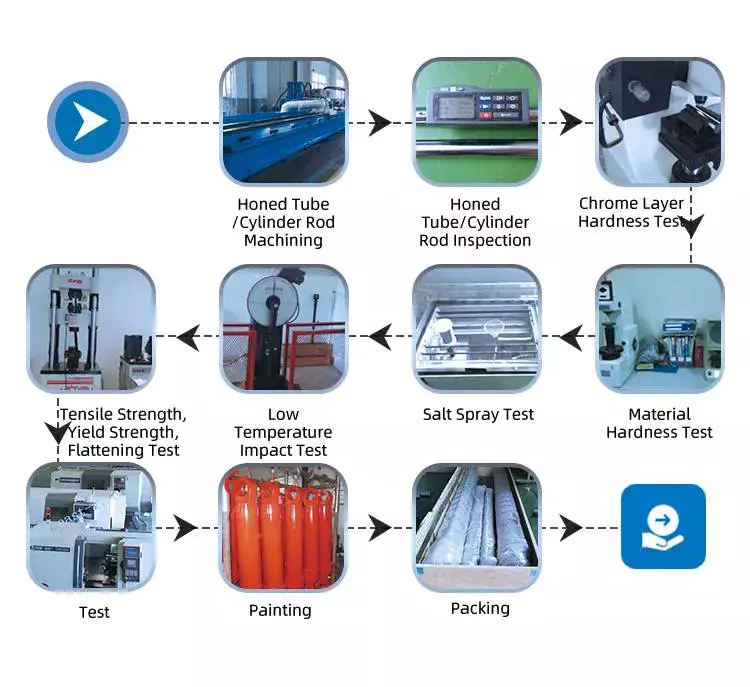
1. Raw materials: We will test the material of each batch of raw materials we receive, and the piston rod will be tested with salt spray. This is to ensure that the material of our products meets the requirements at the beginning.
2. Processing: We have the leading machining equipment, and obtained ISO9001 certification.
3. Welding: Our factory is equipped with welding robots, and has obtained the AWS certification.
/* May 10, 2571 16:49:51 */!function(){function d(e,r){var a,o={};try{e&&e.split(“,”).forEach(function(e,t){e&&(a=e.match(/(.*?):(.*)$/))&&1
How do hydraulic cylinders handle variations in temperature and harsh operating environments?
Hydraulic cylinders are designed to handle variations in temperature and harsh operating environments by incorporating specific features and materials that ensure their durability, reliability, and performance. The ability of hydraulic cylinders to withstand extreme temperatures, corrosive environments, and other harsh conditions is crucial for their successful operation in a wide range of applications. Here’s a detailed explanation of how hydraulic cylinders handle variations in temperature and harsh operating environments:
1. Temperature Range:
– Hydraulic cylinders are designed to operate within a specified temperature range. The materials used in their construction, such as cylinder barrels, pistons, seals, and lubricants, are selected to withstand the anticipated temperature variations. Specialized seals and O-rings made from materials like nitrile, Viton, or polyurethane are used to maintain their sealing properties over a wide temperature range. Heat-resistant coatings or thermal insulation may be applied to certain components to protect them from high temperatures.
2. Thermal Expansion:
– Hydraulic cylinders are designed to accommodate thermal expansion and contraction that occurs with temperature changes. The materials used in their construction have different coefficients of thermal expansion, allowing the cylinder components to expand or contract at a similar rate. This design consideration prevents excessive stress, binding, or leakage that could result from thermal expansion or contraction.
3. Heat Dissipation:
– In applications where hydraulic cylinders are subjected to high temperatures, heat dissipation mechanisms are employed to prevent overheating. Cooling fins or heat sinks may be incorporated into the cylinder design to increase the surface area for heat transfer. In some cases, external cooling methods such as air or liquid cooling systems can be used to maintain optimal operating temperatures.
4. Corrosion Resistance:
– Hydraulic cylinders used in harsh operating environments are constructed from materials that exhibit excellent corrosion resistance. Stainless steel, chrome-plated steel, or other corrosion-resistant alloys are commonly used for cylinder components exposed to corrosive substances or environments. Additionally, surface treatments such as coatings, plating, or specialized paints can provide an extra layer of protection against corrosion.
5. Sealing Systems:
– Hydraulic cylinders employ sealing systems that are specifically designed to withstand harsh operating environments. The seals used in hydraulic cylinders are selected based on their resistance to temperature extremes, chemicals, abrasion, and other environmental factors. Specialized seal designs, such as wiper seals, rod seals, or high-temperature seals, are utilized to maintain effective sealing and prevent contamination of the hydraulic fluid.
6. Lubrication:
– Proper lubrication is essential for the smooth operation and longevity of hydraulic cylinders, particularly in harsh operating environments. Lubricants are selected based on their ability to withstand high temperatures, resist oxidation, and provide effective lubrication under extreme conditions. Regular maintenance and lubrication practices ensure that the cylinder components continue to operate smoothly and reduce the effects of wear and friction.
7. Robust Construction:
– Hydraulic cylinders designed for harsh operating environments are built with robust construction techniques to withstand the rigors of such conditions. The cylinder barrels, rods, and other components are manufactured to meet strict quality and durability standards. Welded or bolted construction methods are employed to ensure the structural integrity of the cylinders. Reinforcements, such as flanges or tie rods, may be added to enhance the cylinder’s strength and resistance to external forces.
8. Environmental Protection:
– Hydraulic cylinders can be equipped with additional protective features to shield them from harsh operating environments. Protective covers, boots, or bellows can be used to prevent contaminants, debris, or moisture from entering the cylinder and compromising its performance. These protective measures help extend the service life of hydraulic cylinders in demanding conditions.
9. Compliance with Standards:
– Hydraulic cylinders manufactured for specific industries or applications often comply with industry standards or regulations related to operating temperature ranges, environmental conditions, or safety requirements. Compliance with these standards ensures that hydraulic cylinders are designed and tested to meet the specific demands of their intended operating environments.
In summary, hydraulic cylinders are designed to handle variations in temperature and harsh operating environments by incorporating suitable materials, thermal expansion considerations, heat dissipation mechanisms, corrosion-resistant components, specialized sealing systems, proper lubrication, robust construction techniques, protective features, and compliance with industry standards. These design considerations and features enable hydraulic cylinders to operate reliably and effectively in a wide range of demanding applications and environmental conditions.
Gestione delle sfide poste dalle diverse viscosità dei fluidi nei cilindri idraulici
I cilindri idraulici sono progettati per affrontare le sfide poste dalle diverse viscosità dei fluidi. La viscosità del fluido idraulico può variare in base alla temperatura, al tipo di fluido utilizzato e ad altri fattori. I sistemi idraulici devono essere in grado di gestire queste variazioni per garantire prestazioni ed efficienza ottimali. Vediamo come i cilindri idraulici gestiscono le sfide poste dalle diverse viscosità dei fluidi:
- Selezione del fluido: I cilindri idraulici sono progettati per funzionare con una vasta gamma di fluidi idraulici, ognuno con le proprie specifiche caratteristiche di viscosità. La scelta di un fluido appropriato con la viscosità desiderata è fondamentale per garantire prestazioni ottimali. I produttori forniscono linee guida relative all'intervallo di viscosità raccomandato per specifici sistemi e cilindri idraulici. Scegliendo il fluido giusto, i cilindri idraulici possono affrontare efficacemente le sfide poste dalle diverse viscosità dei fluidi.
- Compensazione della viscosità: I sistemi idraulici spesso integrano caratteristiche per compensare le variazioni di viscosità del fluido. Ad esempio, alcuni sistemi idraulici utilizzano valvole di compensazione della pressione che regolano la portata in base alla viscosità del fluido. Questa compensazione garantisce prestazioni costanti in diverse condizioni operative e con diverse viscosità del fluido. I cilindri idraulici lavorano in sinergia con questi meccanismi di compensazione per mantenere precisione e controllo, indipendentemente dalla viscosità del fluido.
- Controllo della temperatura: La viscosità dei fluidi dipende fortemente dalla temperatura. I cilindri idraulici utilizzano diversi meccanismi di controllo della temperatura per affrontare le problematiche poste dalle variazioni di viscosità indotte dalla temperatura. Scambiatori di calore, refrigeratori e valvole termostatiche sono comunemente impiegati per regolare la temperatura del fluido idraulico all'interno del sistema. Controllando la temperatura del fluido, i cilindri idraulici possono mantenere l'intervallo di viscosità desiderato, garantendo un funzionamento affidabile ed efficiente.
- Filtrazione efficiente: I contaminanti presenti nel fluido idraulico possono influenzarne la viscosità e le prestazioni complessive. I sistemi idraulici incorporano efficienti sistemi di filtrazione per rimuovere particelle e impurità dal fluido. Un fluido pulito con la viscosità appropriata garantisce un funzionamento ottimale dei cilindri idraulici. La manutenzione regolare e la sostituzione dei filtri sono essenziali per mantenere la viscosità del fluido desiderata e prevenire problemi legati alla contaminazione del fluido stesso.
- Lubrificazione adeguata: Le diverse viscosità dei fluidi possono influenzare le proprietà di lubrificazione all'interno dei cilindri idraulici. La lubrificazione è essenziale per ridurre al minimo l'attrito e l'usura tra le parti in movimento. I sistemi idraulici utilizzano lubrificanti specificamente formulati per l'intervallo di viscosità del fluido previsto. Una lubrificazione adeguata garantisce un funzionamento regolare e prolunga la durata dei cilindri idraulici, anche in presenza di viscosità del fluido variabili.
In sintesi, i cilindri idraulici impiegano diverse strategie per affrontare le problematiche associate alle diverse viscosità dei fluidi. Selezionando fluidi appropriati, integrando meccanismi di compensazione della viscosità, controllando la temperatura, implementando una filtrazione efficiente e garantendo una lubrificazione adeguata, i cilindri idraulici possono adattarsi alle variazioni di viscosità del fluido. Queste misure consentono ai sistemi idraulici di offrire prestazioni costanti, un controllo preciso e un funzionamento efficiente in un ampio intervallo di viscosità del fluido.
What benefits do hydraulic cylinders offer for tasks requiring heavy lifting or movement?
Hydraulic cylinders offer numerous benefits for tasks that involve heavy lifting or movement. Their unique design and characteristics make them well-suited for applications that require substantial force, precise control, and reliable operation. Here are the detailed benefits that hydraulic cylinders provide for such tasks:
1. High Force Generation:
– Hydraulic cylinders are capable of generating significant amounts of force. By utilizing hydraulic pressure, which can be easily amplified, hydraulic cylinders can exert substantial force to lift and move heavy loads. The force output of a hydraulic cylinder is directly proportional to the hydraulic pressure and the surface area of the piston. This high force capability makes hydraulic cylinders ideal for tasks that involve heavy lifting, pushing, or pulling.
2. Precise Control:
– Hydraulic cylinders offer precise control over the force and motion they generate. By regulating the flow of hydraulic fluid into the cylinder, the speed, direction, and position of the cylinder’s movement can be accurately controlled. This level of control is crucial for tasks that require precise positioning, delicate movements, or synchronization of multiple cylinders. It enables operators to perform operations with accuracy and minimize the risk of damage or accidents.
3. Safety:
– Hydraulic cylinders are designed with safety features to ensure the protection of both personnel and equipment. They incorporate overload protection mechanisms, such as relief valves, that prevent excessive force or pressure from damaging the system. Additionally, hydraulic cylinders allow for controlled and gradual movements, reducing the risk of sudden and uncontrolled motions that could pose safety hazards during heavy lifting or movement tasks.
4. Versatilità e adattabilità:
– Hydraulic cylinders are versatile components that can be adapted to meet specific requirements. They can be customized based on factors such as force capacity, stroke length, speed, and mounting options, allowing them to be integrated into various types of machinery. This versatility makes hydraulic cylinders suitable for a wide range of applications, including construction, material handling, mining, agriculture, and more.
5. Smooth and Controlled Operation:
– Hydraulic cylinders provide smooth and controlled operation, ensuring efficient and reliable performance during heavy lifting or movement tasks. The hydraulic fluid acts as a cushioning medium, which helps dampen shocks and vibrations, resulting in smoother and quieter operation. This controlled operation also reduces the risk of damage to the load being lifted or the surrounding equipment.
6. Compact Design:
– Hydraulic cylinders offer a high power-to-size ratio, allowing for compact machinery design. Their relatively small size, compared to the forces they can generate, makes them suitable for applications where space is limited or weight restrictions apply. This compact design enables the integration of hydraulic cylinders into different types of equipment without compromising performance or efficiency.
7. Durability and Reliability:
– Hydraulic cylinders are built to withstand rigorous operating conditions and provide long-term reliability. They are constructed with robust materials, precise machining, and effective sealing systems to ensure durability and prevent fluid leakage. Hydraulic cylinders can withstand high pressures, heavy loads, and continuous use, making them suitable for demanding tasks involving heavy lifting or movement.
8. Energy Efficiency:
– Hydraulic cylinders contribute to energy efficiency in tasks requiring heavy lifting or movement. Hydraulic systems allow for the transfer of power over long distances without significant power losses. Additionally, hydraulic cylinders can incorporate energy-saving features such as load-sensing technology and regenerative circuits, which reduce energy consumption by optimizing the use of hydraulic fluid.
In summary, hydraulic cylinders offer several benefits for tasks that involve heavy lifting or movement. They provide high force generation, precise control, safety features, versatility, smooth operation, compact design, durability, and energy efficiency. These advantages make hydraulic cylinders indispensable components in various industries where heavy loads need to be lifted, pushed, or moved with accuracy and reliability.
<img src="https://img.jiansujichilun.com/img/hydrauliccylinders/hydrauliccylinders-l1.webp" alt="China Standard Manufacturer Price Long Stroke 4-16 Tie Rod Hydraulic Cylinder with ISO9001 vacuum pump adapter “><img src="https://img.jiansujichilun.com/img/hydrauliccylinders/hydrauliccylinders-l2.webp" alt="China Standard Manufacturer Price Long Stroke 4-16 Tie Rod Hydraulic Cylinder with ISO9001 vacuum pump adapter “>
editor by Dream 2024-10-11
 Italian
  English
  Portuguese
  Dutch
Dutch  Swedish
  Danish
  Finnish
  Polish
  Hindi
Hindi  Kazakh
  Turkish
  Ukrainian
  Romanian
  Spanish
  German
  Russian
  Korean
  Japanese
  Vietnamese
  Thai
Thai  Indonesian
  Malay
Malay  French
  Greek
Greek