
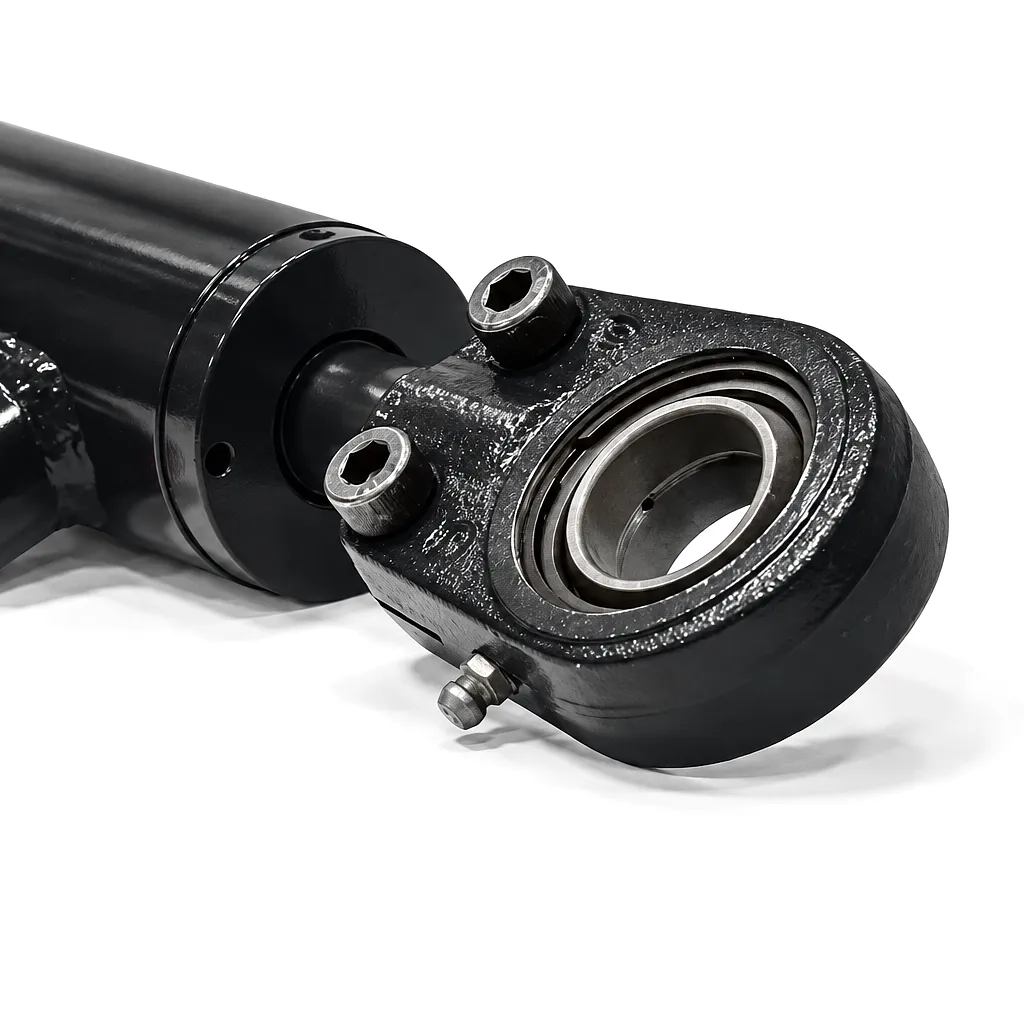
 Every fleet manager running heavy plant across the UK — whether that is construction equipment in Birmingham, agricultural machinery in Yorkshire, or elevated work platforms along the M25 corridor — eventually faces the same inflection point: a hydraulic cylinder has failed, and the clock is running. The temptation to simply swap it for a new unit is understandable when downtime costs are mounting. Yet replacement is not always the most commercially rational choice, and repair is not always the bargain it appears to be at first glance. The real skill lies in calculating where the economic crossover sits — the precise break-even point at which the total cost of a complete hydraulic cylinder replacement becomes cheaper than restoring the existing unit to full working specification.
Hydraulic cylinders are among the most mechanically stressed components on any mobile or static heavy plant. Operating under pressures routinely between 200 and 350 bar, subjected to side-loading, contamination, temperature cycling, and — particularly in the UK’s wet climate — accelerated seal degradation from moisture ingress, these actuators accumulate wear in ways that are often hidden until a seal fails catastrophically or a chrome rod surface develops scoring beyond polishing tolerance. The consequences of getting the repair-versus-replace decision wrong are real and quantifiable: premature replacement drives up capital expenditure unnecessarily, while a poorly assessed repair that fails again within a short service interval can double the total remediation cost and extend downtime beyond any acceptable threshold.
Need a repair assessment or replacement quote for your fleet’s hydraulic cylinders?
Understanding the True Cost Structure of Cylinder Repair
What fleet managers frequently miss when building the repair case
Direct Repair Costs
The invoice from a hydraulic workshop covers only part of what a repair actually costs your operation. Labour charges in the UK’s engineering heartlands — Sheffield, Wolverhampton, Derby — typically range from £65 to £110 per hour for certified hydraulic technicians. A standard bore re-hone and re-seal on a mid-size double-acting cylinder (bore diameter 80–120 mm, stroke 400–900 mm) will consume between 3 and 8 labour hours depending on contamination severity. Add seal kits — genuine OEM seal packs for quality cylinders run £80 to £250 per unit — and chrome rod polishing or replacement at £150 to £600 depending on rod diameter and damage depth. If the barrel bore has scored beyond the tolerance band for re-honing, a new barrel section alone can represent 40–55% of a new cylinder’s list price, at which point the repair economics frequently invert. Hard-chrome plating on replacement rods has its own lead time: specialist platers operating to BS EN ISO 6158 standards typically require 5 to 12 working days, adding invisible downtime cost that does not appear on any repair invoice but very much appears in your monthly equipment utilisation report.
Hidden Downtime Costs
Downtime costs are rarely assigned to their true causal category in fleet accounting systems. When a hydraulic cylinder fails on a crawler crane at a Midlands civil engineering site, the machine’s standby cost — operator wages, contracted site hire rates, subcontractor delay penalties — can reach £800 to £3,500 per day depending on project criticality. A repair cycle that takes 10 working days generates a downtime liability of £8,000 to £35,000 that never appears on the workshop invoice but is very much real. Contrast this with a direct cylinder replacement sourced from a stock-holding manufacturer: if a compatible specification unit can be delivered and fitted within 48 hours, the downtime liability collapses to £1,600 to £7,000 — a difference that may comfortably justify the higher purchase price of a new unit. Fleet managers who calculate repair attractiveness purely on workshop invoice cost systematically understate the full economic cost of time. Any rigorous break-even model must assign a meaningful daily downtime rate to the cycle time of each option.
Residual Life and Re-failure Risk
A repaired hydraulic cylinder does not return to a new condition. A competently executed re-seal on a cylinder with 12,000 hours of service behind it will extend useful life, but the barrel material, end caps, port threads, and mounting pin bores all carry cumulative fatigue loading that no repair can reverse. In practical terms, a re-sealed cylinder operating in a high-cycle aerial platform application — such as those serving construction projects in London or infrastructure maintenance operations along major UK rail corridors — carries a statistically higher re-failure probability within the following 2,000 to 4,000 service hours than a new-build unit of the same specification. This re-failure risk must be quantified as a probability-weighted additional cost in any break-even model. If the probability of a repeat failure within 12 months is estimated at 25%, and the full downtime-inclusive cost of that failure is £12,000, then the expected additional cost embedded in a repair decision is £3,000 — a figure that should be added directly to the repair option’s total cost for comparison purposes.
Featured Product
Folding Boom Angle Cylinder for Aerial Work Vehicle (1458mm Stroke)
Precision-engineered for high-cycle aerial platform applications. Hardened chrome rod, multi-lip seal package, and full traceability documentation to satisfy UK LOLER compliance requirements.
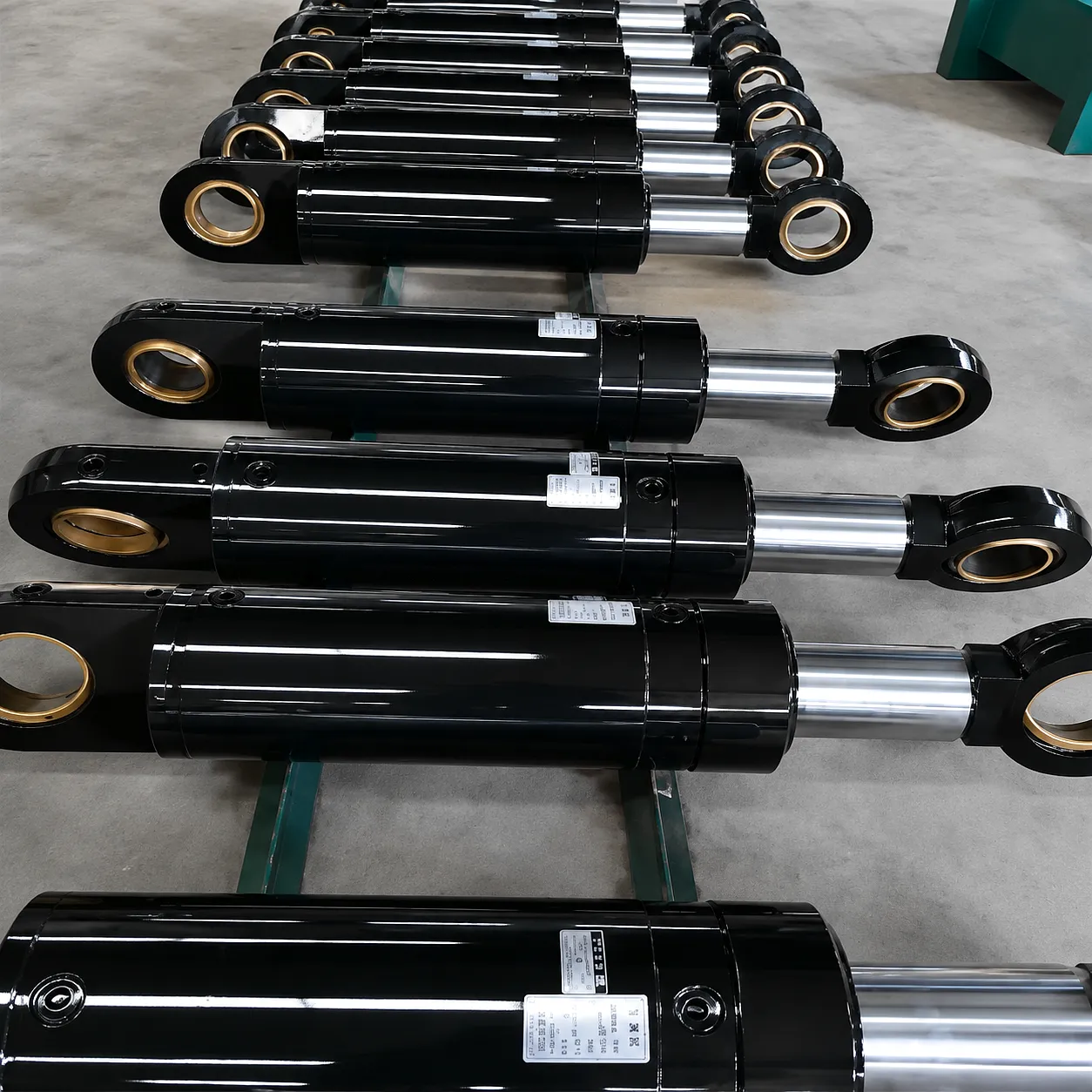
Hydraulic Cylinder Manufacturing — Ever Power Facilities
The Break-Even Calculation: A Step-by-Step Engineering Approach
How to build a defensible cost model that withstands scrutiny from finance teams and procurement departments
The break-even calculation for hydraulic cylinder repair versus replacement is not complicated in principle, but it demands that every cost category be populated with real data rather than estimates or rule-of-thumb figures. The formula that drives the decision is: Total Repair Cost (TRC) ≥ Total Replacement Cost (TReC), where both figures must be calculated on a fully loaded basis inclusive of downtime, re-failure risk weighting, and logistics.
The Core Break-Even Formula
TRC = Workshop Labour + Seal/Parts + Rod Work + Transport + (Cycle Days × Daily Downtime Rate) + (Re-failure Prob. × Full Failure Cost)
TReC = Replacement Unit Price + Fitment Labour + Transport + Commission/Inventory Cost + (Lead Days × Daily Downtime Rate)
When TRC equals or exceeds TReC, the economic case for replacement becomes clear and the decision should proceed to a specification match exercise rather than remaining an open cost debate. When TRC sits materially below TReC — typically when the hydraulic cylinder is less than 40% through its expected service life, when damage is confined to seals and surface finish alone, and when a competent UK workshop can complete the repair within 5 working days — repair represents the stronger commercial position. The difficulty is that many fleet managers apply a fixed rule — “we always repair if the workshop quote is under 60% of new unit cost” — without populating the downtime and re-failure variables that can easily invert that conclusion.
Worked Example: 100mm Bore Boom Cylinder on a 25t Excavator (Birmingham Site)
| Cost Category | Repair Option (£) | Replacement Option (£) |
|---|---|---|
| Workshop Labour (8 hrs @ £90/hr) | 720 | 160 |
| Seal Kit & Parts | 185 | 0 |
| Rod Chrome Work | 420 | 0 |
| New Cylinder Unit Price | 0 | 2,800 |
| Transport & Handling | 85 | 65 |
| Downtime Cost (10 days vs 2.5 days @ £1,200/day) | 12,000 | 3,000 |
| Re-failure Risk (25% × £8,000) | 2,000 | 0 |
| Total Loaded Cost | 15,410 | 6,025 |
In this scenario, replacement is 61% cheaper on a fully loaded basis, yet the workshop invoice alone (£1,410) would have suggested repair as the obvious choice at 50% of new unit cost. This is why the fully loaded model matters.
When the Repair Case Is Genuinely Strong
The conditions under which restoring the existing unit is the correct commercial decision
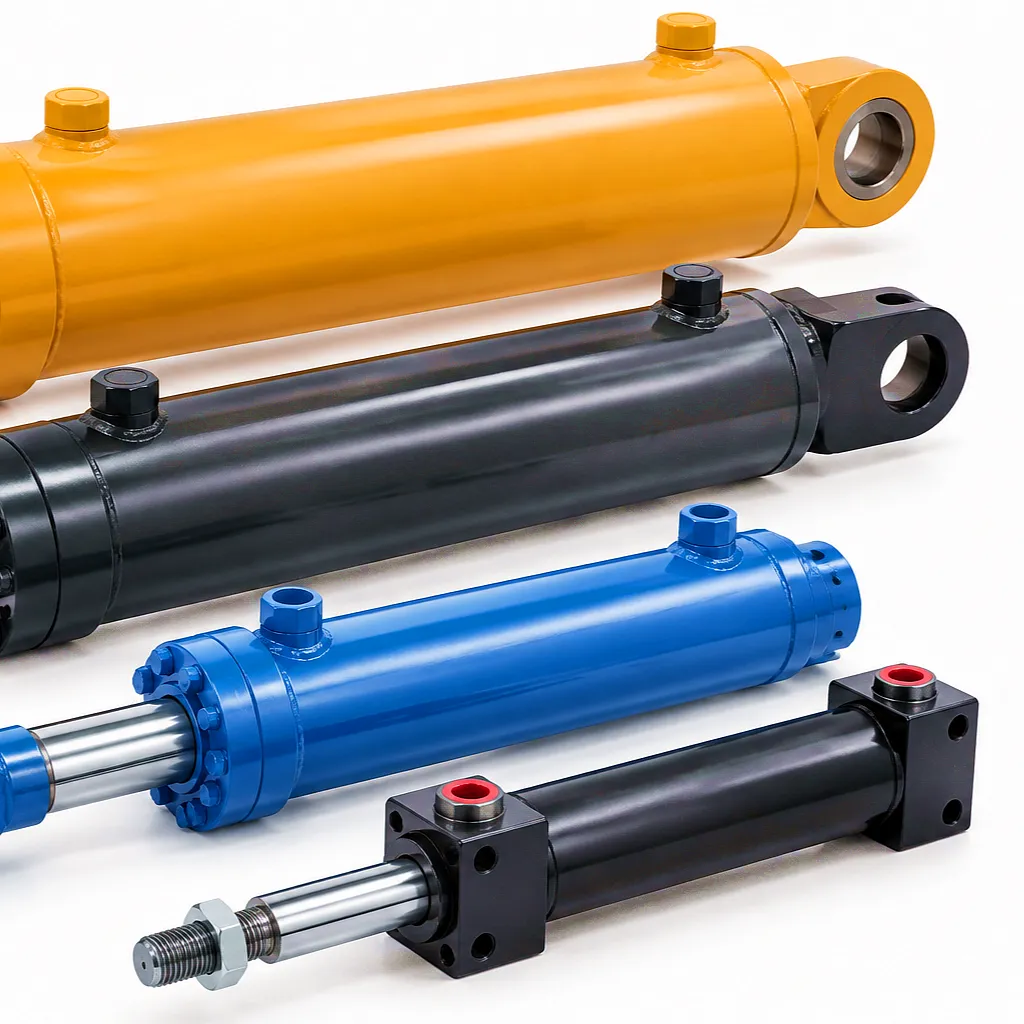 There are genuine operating scenarios where the repair calculation consistently favours restoration over replacement, and fleet managers who understand these conditions can build systematic repair protocols that reduce capital expenditure without increasing operational risk. The strongest repair case emerges when the hydraulic cylinder in question is of premium specification — bore-honed to tight tolerances, barrel material in genuinely good condition with surface hardness confirmed by inspection, and the fault confined entirely to seal degradation or minor rod surface scoring that falls within polishing tolerance. In these cases, the direct repair cost is typically 20 to 35% of new unit cost, the repair cycle can be completed in 3 to 5 days using a well-equipped local hydraulic workshop (Sheffield, Coventry, and Bristol all have mature hydraulic service clusters within the UK’s engineering geography), and the re-failure risk is low because the structural components remain sound.
Repair also presents compelling economics when the cylinder is a non-standard or highly customised specification — extended stroke lengths, non-standard port configurations, bespoke mounting arrangements, or special end cap geometry — where a like-for-like replacement would require a manufacturing lead time of 6 to 14 weeks. In these situations, even a repair cycle that takes 12 working days may represent the faster option, and the downtime arithmetic changes fundamentally. Ever Power’s engineering team frequently encounters UK fleet operators running legacy custom-specification cylinders on older plant that simply cannot be replaced from stock; in these situations, meticulous repair and remanufacturing is the only practical path forward and should be planned accordingly.
Repair-Favourable Indicators
Cylinder age below 40% of design life · Barrel bore within honing tolerance · Damage confined to seals and rod surface · Custom specification with long replacement lead time · Workshop cycle time under 5 days · Daily downtime cost below £500
Replacement-Favourable Indicators
Barrel bore scored beyond honing range · Cylinder beyond 65% of design life · Multiple previous repairs on record · Standard specification available ex-stock · High daily downtime cost (£1,000+) · Critical plant with zero tolerance for re-failure
Also Recommended
Cilindro di inclinazione del braccio principale della piattaforma aerea (corsa 555 mm)
Compact stroke specification designed for main boom angle control on elevated work platforms. Available for rapid despatch to UK sites, with full pressure test certificates and technical documentation supplied as standard.
Ever Power — Full Hydraulic Cylinder Product Range
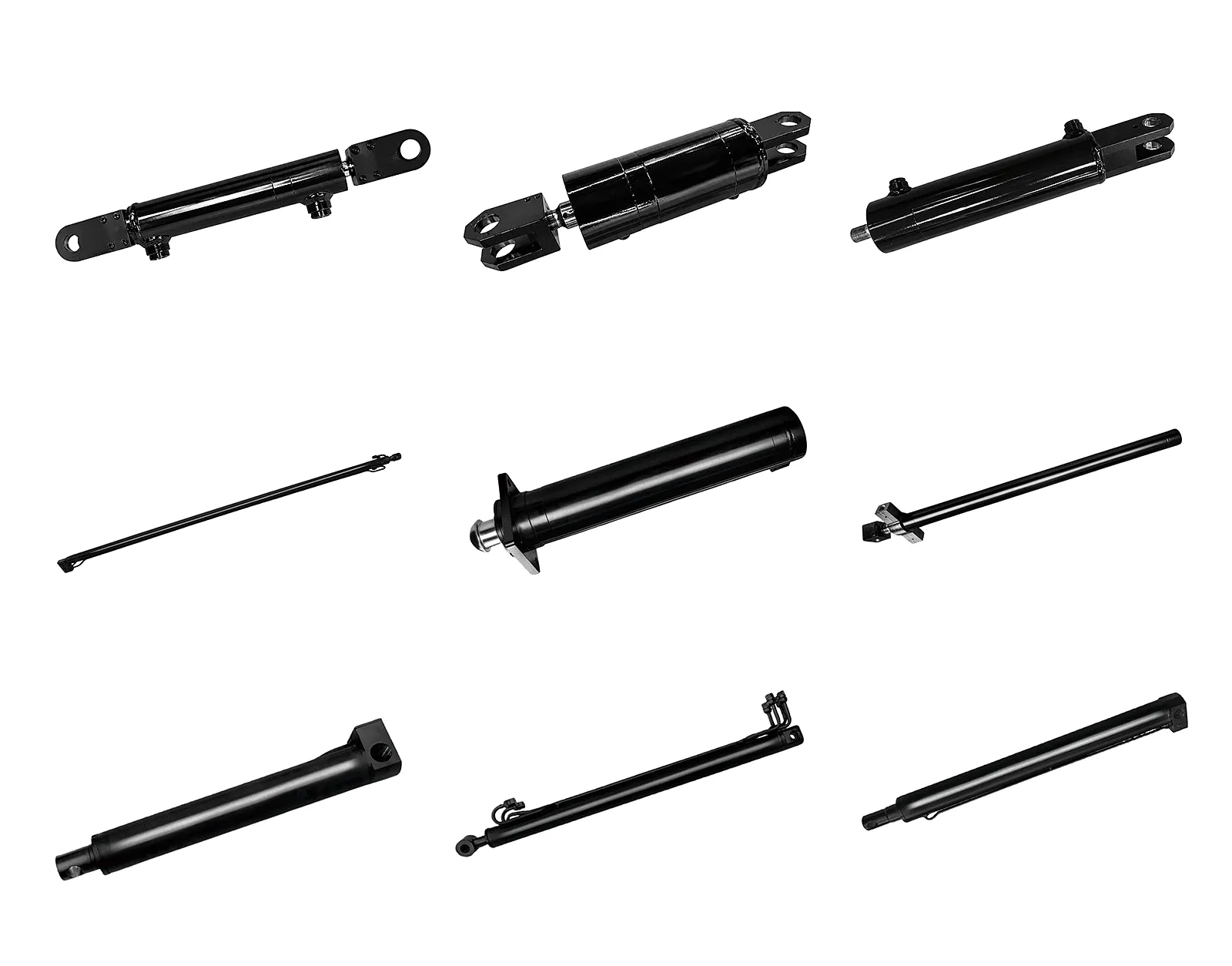
Product Technical & Performance Parameter Reference
Key engineering specifications for Ever Power industrial hydraulic cylinders
| Parametro | Standard Range | Custom Capability | Unit |
|---|---|---|---|
| Bore Diameter | 40 – 320 | Up to 500 | mm |
| Rod Diameter | 25 – 250 | Up to 360 | mm |
| Stroke Length | 100 – 6000 | Project-specific | mm |
| Pressione di lavoro | 200 – 350 | Up to 420 | bar |
| Barrel Material | ST52 / E355 seamless cold-drawn | S690QL high-strength | — |
| Rod Surface Finish | Hard chrome Ra 0.2 – 0.4 µm | HVOF or ceramic coating | Ra µm |
| Temperatura di esercizio | -25 to +80 | -40 to +120 (special seals) | °C |
| Materiale di tenuta | Polyurethane / NBR | FKM, PTFE, EPDM | — |
| Test Pressure | 1.5 × Working Pressure | Per customer spec or DNV/Lloyd’s | — |
| Surface Protection (Body) | Epoxy primer + polyurethane topcoat | Zinc-rich primer, hot-dip galvanising | — |
Industrial Application Scenarios: Where Hydraulic Cylinders Fail — and Where Repair Economics Differ
Application context determines failure mode, repair feasibility, and downtime sensitivity
Aerial Work Platforms — Boom Cylinders
Boom angle cylinders on aerial work platforms operating across UK utility maintenance and construction contracts represent one of the highest-cycle applications in the industry. These hydraulic cylinders may complete 80 to 200 full stroke cycles per shift, generating seal wear that is directly proportional to cycle count rather than calendar age. In many cases, a platform boom cylinder will require seal replacement after 8,000 to 12,000 cycles regardless of elapsed time — sometimes within 18 months on high-utilisation fleets. For operators running hire fleets out of depots in Leeds, Manchester, and Glasgow, the break-even analysis consistently favours rapid replacement using pre-specified units rather than shop repair, because platform downtime losses are captured in daily hire rate forfeiture — typically £350 to £750 per machine per day — and replacement can be coordinated to occur during mandatory LOLER inspection windows with minimal additional downtime impact.
Construction Excavators — Arm and Boom Cylinders
On construction excavators working across large UK civil engineering projects — HS2-related groundworks, Midlands motorway widening schemes, coastal flood defence programmes — boom and arm hydraulic cylinders operate under high intermittent loading with significant side-force components introduced by difficult dig conditions. Contamination is the primary failure driver: hydraulic fluid cleanliness standards slipping below ISO 4406 class 16/14/11 in a working environment contaminated with clay, gravel, or demolition dust will destroy wiper and primary seals within a fraction of the cylinder’s design life. In these settings, the repair-versus-replace decision is strongly influenced by the age of the machine itself. Repairing a cylinder on a machine with 15,000 hours of service commits the operator to a future replacement of the machine — not just the cylinder — within a relatively short horizon, and over-investment in component repair on ageing plant is a systematic budget waste that fleet management software should flag automatically.
Agricultural Machinery — Loader and Implement Cylinders
UK agricultural fleets — particularly those operating in the arable heartlands of East Anglia, the Lincolnshire Fens, and across the Yorkshire Wolds — face a repair-versus-replace dynamic that is shaped heavily by seasonal criticality. A hydraulic cylinder failure on a front loader, telescopic handler, or combined harvester header lift during harvest season in August carries an entirely different downtime cost profile than the same failure in January. During harvest, daily equipment losses on large-scale arable operations can reach £5,000 to £15,000 per day in unharvested crop exposure and contractor penalty costs. During this window, replacement from stock — even at premium courier delivery rates — is almost always the correct decision. Outside of critical seasonal windows, the same cylinder may be an ideal repair candidate, with workshop cycle time easily accommodated within planned winter maintenance schedules.
Heavy Haulage and Tipper Vehicles — Body Hoist Cylinders
Multi-stage telescopic hydraulic cylinders used in heavy tipper vehicles operating out of quarrying and waste management operations across the North West and South Wales are mechanically simpler than boom-mounted units, yet they operate in some of the most contamination-hostile environments in UK industry. Road grit, quarry dust, and cement particles work under the wiper seal and migrate to the primary seal on every extension cycle. The economic case for these cylinders is nuanced: the cylinders themselves are relatively inexpensive (£400 to £900 for standard tipper specifications) making repair viable only when labour costs are modest. Many UK quarry fleet operators have established on-site repair capability for standard tipper cylinders, achieving repair costs of under 30% of new unit price and reducing downtime to within a single shift — making repair the clear winner in this application category.
Manufacturing Partner
Ever Power: Precision Hydraulic Cylinder Manufacturing and Global Supply
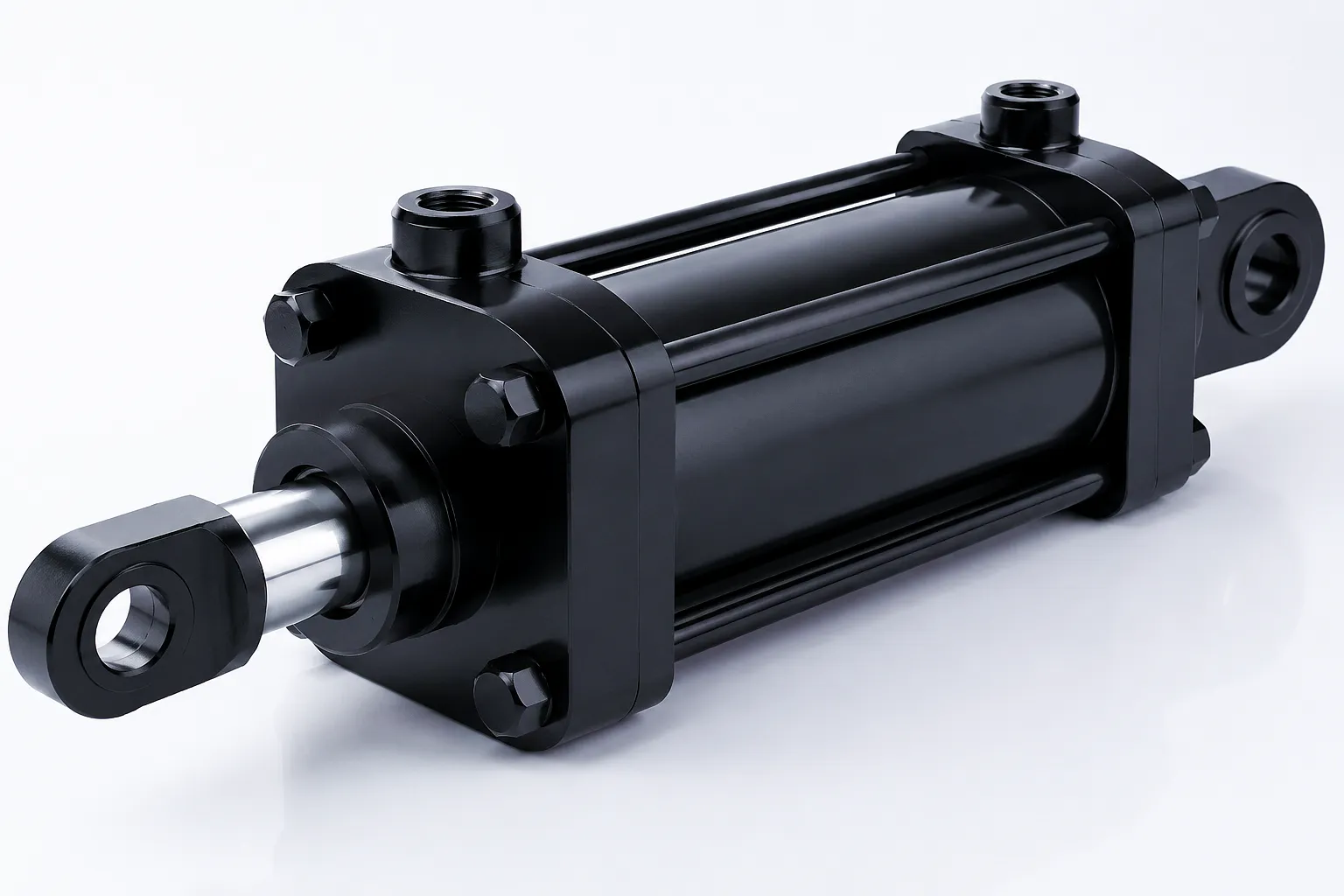 Ever Power operates a dedicated hydraulic cylinder manufacturing facility with over 60 CNC boring machines, deep-hole drilling equipment, and hard-chrome plating lines — all under a single quality management roof certified to ISO 9001:2015. The facility’s manufacturing capability covers bore diameters from 40 mm to 500 mm, stroke lengths from 100 mm to 8,000 mm, and working pressures from standard 200-bar specifications through to ultra-high-pressure 420-bar custom designs for offshore and specialist industrial applications. Every cylinder that leaves the facility carries a full material traceability certificate, pressure test record, and dimensional inspection report — documentation that satisfies the requirements of UK PSSR 2000 regulations and the supply chain due diligence requirements of major UK contractor procurement frameworks.
For fleet managers evaluating replacement as the preferred option following a break-even analysis, Ever Power’s customisation capability removes one of the most common barriers: the lack of an exact specification match in standard catalogues. Our engineering team routinely works from OEM drawings, site-measured dimensions, or even worn cylinders shipped for reference measurement, producing precision replacement units that mount identically to the original equipment and meet or exceed the original hydraulic performance specification. Port thread forms, clevis pin diameters, extended rod end configurations, integrated cushioning valves, and position sensor provisions are all within our standard custom engineering capability — meaning fleet managers are not forced into design compromises that may affect machine performance.
Supply chain reliability for UK customers is supported by our established export logistics network, with regular consolidation shipments to Felixstowe and Southampton serviced by bonded warehousing partners capable of providing UK-local stock holding for high-volume fleet accounts. Lead times for standard catalogue specifications are typically 10 to 18 working days ex-works; custom-engineered units requiring tooling or special material procurement are typically completed within 6 to 10 weeks depending on complexity. For urgent fleet-critical situations, Ever Power’s priority engineering queue can accelerate standard custom designs to within 15 working days in most cases.
Ever Power Manufacturing Capabilities at a Glance
Bore Range
40 mm – 500 mm
Stroke Length
100 mm – 8,000 mm
Max. Pressure
420 bar (custom)
Certificazioni
ISO 9001:2015 | CE | PSSR
Request a customisation consultation or replacement unit quote for your fleet
Customer Success Story: Sheffield Steel Fabrication Fleet — Correct Decision, Measurable Outcome
A documented break-even analysis in practice — Sheffield, South Yorkshire
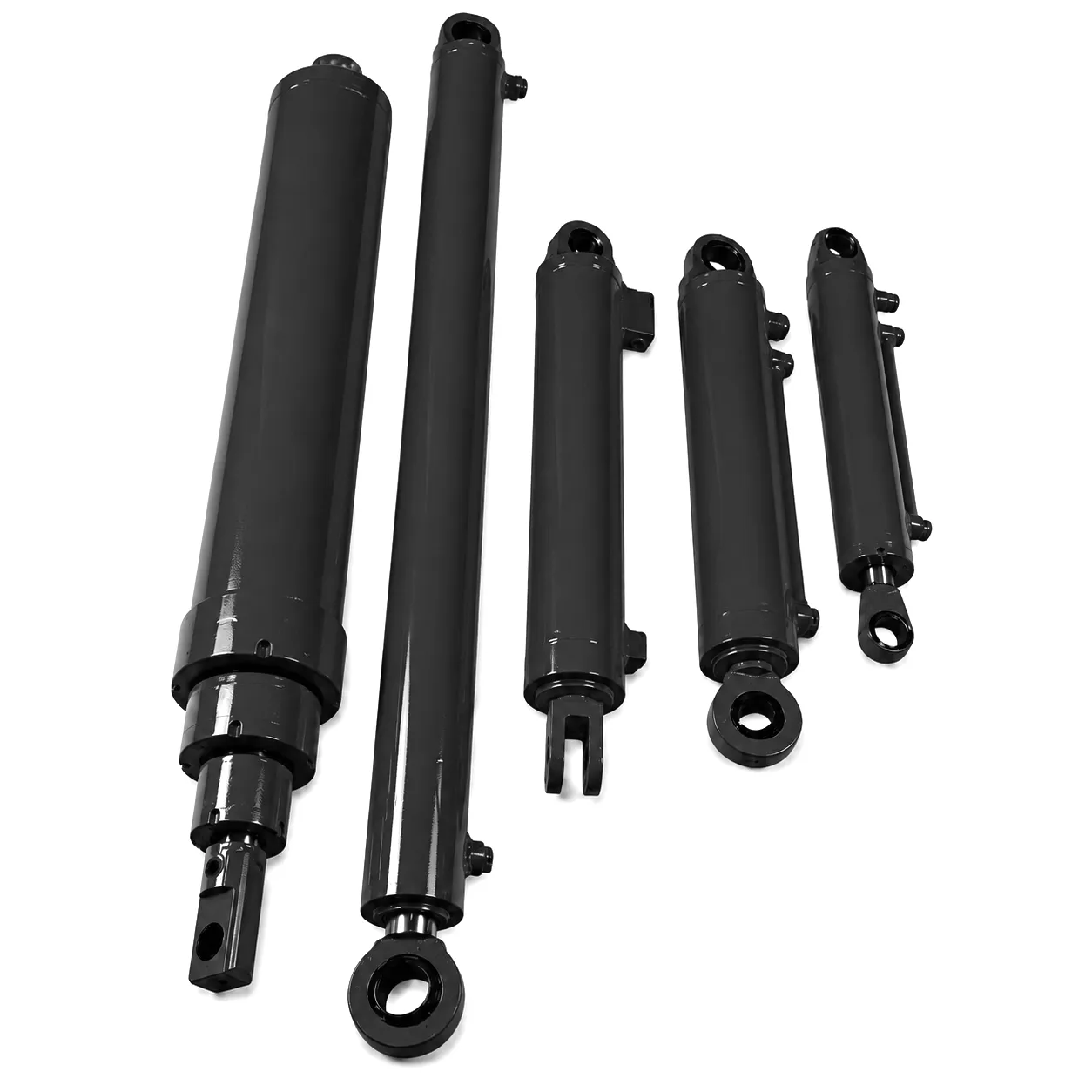 A structural steel fabrication business based outside Sheffield, operating a fleet of 14 heavy-lift overhead crane systems and 6 mobile hydraulic gantry lifts, experienced a pattern of recurring hydraulic cylinder failures on their gantry lift arms during a particularly wet autumn. Over a 6-week period, three separate cylinder seal failures caused an aggregate 22 days of unplanned downtime across the gantry fleet at a calculated daily loss — including delayed customer deliveries and penalty clauses — of £2,200 per day. Total downtime losses reached £48,400 before the pattern was investigated systematically.
The fleet maintenance manager had been sending failed units to a local hydraulic repair shop, receiving re-sealed cylinders within 4 to 6 days at an average invoice cost of £680 per unit. On the face of it, repair appeared economical against a replacement quote of approximately £1,850 per unit. Applying the fully loaded break-even model — incorporating 5 days average downtime at £2,200 per day and a re-failure probability assessed at 30% based on the pattern of repeat failures — the loaded repair cost worked out to £12,240 per event versus a loaded replacement cost of £3,900. The correct decision had been commercially incorrect for six weeks.
The business engaged Ever Power through a UK procurement agent and placed an order for 8 replacement cylinders to exact specification — including a 25% enlargement of the rod wiper seal land to accommodate the contaminated environment in their fabrication shop. The replacement programme was completed in a single planned weekend shutdown, with all 6 gantry lifts returned to full service by Monday morning. In the 9 months following the changeover, the fleet recorded zero hydraulic cylinder failures on the affected units. The total cost of the replacement programme, including logistics, fitment labour, and the custom seal specification premium, was £19,200 — compared to an annualised continuation of the repair cycle that was projected to cost £73,440 over the same period.
What Fleet Operators Say About Ever Power
“We’d been told repeatedly that repair was cheaper, and our old accountant kept pointing at workshop invoices. Ever Power’s engineering team sat down with us and showed us what downtime was actually costing per cylinder event. We switched to a planned replacement programme with Ever Power custom-spec units, and our gantry fleet availability went from 78% to 96% in under a year. The numbers don’t lie.”
— Fleet Maintenance Manager, Structural Steel Fabricator, Sheffield
“The custom seal specification Ever Power designed for our agricultural fleet — specifically the extended wiper land for our slurry handling equipment — has transformed the service interval on those cylinders. We used to budget for two seal repairs per cylinder per season. We’re now 18 months into the first seal cycle with no interventions. That’s a direct saving of around £4,800 per season across our implement fleet, and that figure doesn’t account for the avoided downtime.”
— Workshop Supervisor, Large Arable Farm Operation, Lincolnshire
“When we needed a custom boom angle cylinder for a non-standard aerial platform modification — one of our own engineering team’s designs, not an OEM spec — every domestic supplier we approached said it would take 16 weeks minimum. Ever Power quoted us 5.5 weeks for a fully certified unit with our exact mounting geometry, our port configuration, and a test certificate we could put in front of our LOLER inspector. They delivered in week 5. That kind of reliability changes the commercial calculus completely when you’re pricing a contract.”
— Procurement Director, Aerial Platform Hire Company, Birmingham
Fleet Managers Ask: Hydraulic Cylinder Repair vs Replacement
Frequently asked questions from UK industrial equipment operators
Q
How do I calculate whether it is cheaper to repair or replace a hydraulic cylinder on my construction fleet in Birmingham or Sheffield?
Q
What is the typical price for a custom replacement hydraulic cylinder from a specialist UK supplier, and how long will I wait for delivery?
Q
Which hydraulic cylinder failure types are most cost-effective to repair rather than replace on an aerial work platform operating in the UK?
Q
Where can I find a reliable hydraulic cylinder supplier who can match non-standard specifications for older heavy plant still in service across the UK?
Q
When should a fleet manager operating agricultural machinery in Yorkshire or Lincolnshire choose replacement over repair during the harvest season?
Q
How does re-failure probability factor into the hydraulic cylinder repair cost calculation, and what re-failure rate should I assume for budget planning purposes?
Ready to Optimise Your Fleet’s Hydraulic Cylinder Strategy?
Get Expert Advice and a Competitive Replacement Quote from Ever Power
Our technical sales team works with UK fleet managers and plant hire businesses to develop replacement programmes, specification matches, and supply agreements that reduce total hydraulic cylinder cost of ownership.
modifica a cura di gzl
 Italian
  English
  Portuguese
  Dutch
Dutch  Swedish
  Danish
  Finnish
  Polish
  Hindi
Hindi  Kazakh
  Turkish
  Ukrainian
  Romanian
  Spanish
  German
  Russian
  Korean
  Japanese
  Vietnamese
  Thai
Thai  Indonesian
  Malay
Malay  French
  Greek
Greek