
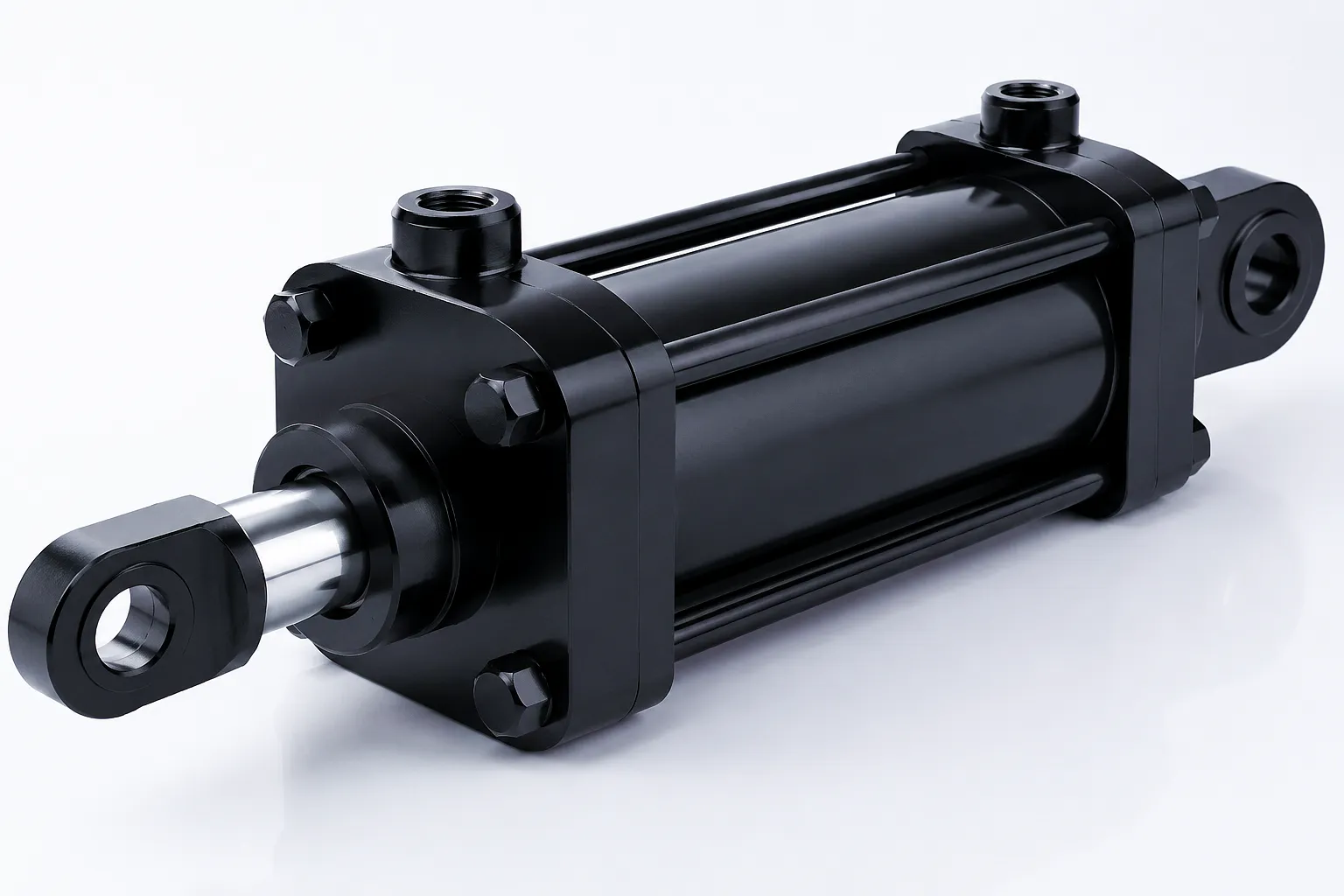
 Every excavator, telehandler, backhoe loader and crane working on UK construction sites depends on one component more than almost any other: the boom cylinder. When one fails mid-project — whether you’re breaking ground on a housing development outside Birmingham or dismantling infrastructure near Sheffield — the knock-on costs can run into thousands of pounds per day. The moment a hydraulic boom cylinder gives out, the conversation turns fast: do you go back to the original equipment manufacturer, or do you source an aftermarket replacement?
What Exactly Is a Boom Cylinder and Why Does It Matter So Much
Working Principle
A boom cylinder is a double-acting hydraulic actuator that converts pressurised hydraulic fluid into controlled linear force. When the operator commands the boom arm to lift, pressurised oil enters the cap-end chamber of the cylinder, pushing the piston and extending the rod. This extends the boom. When the boom needs to descend or retract, oil is directed into the rod-end chamber. The force generated can range from a few tonnes on compact excavators to well over 80 tonnes on large mining shovels, making the integrity of every internal seal, the hardness of every chromium-plated rod and the precision of every bore absolutely critical to safe, reliable operation.
Core Materials
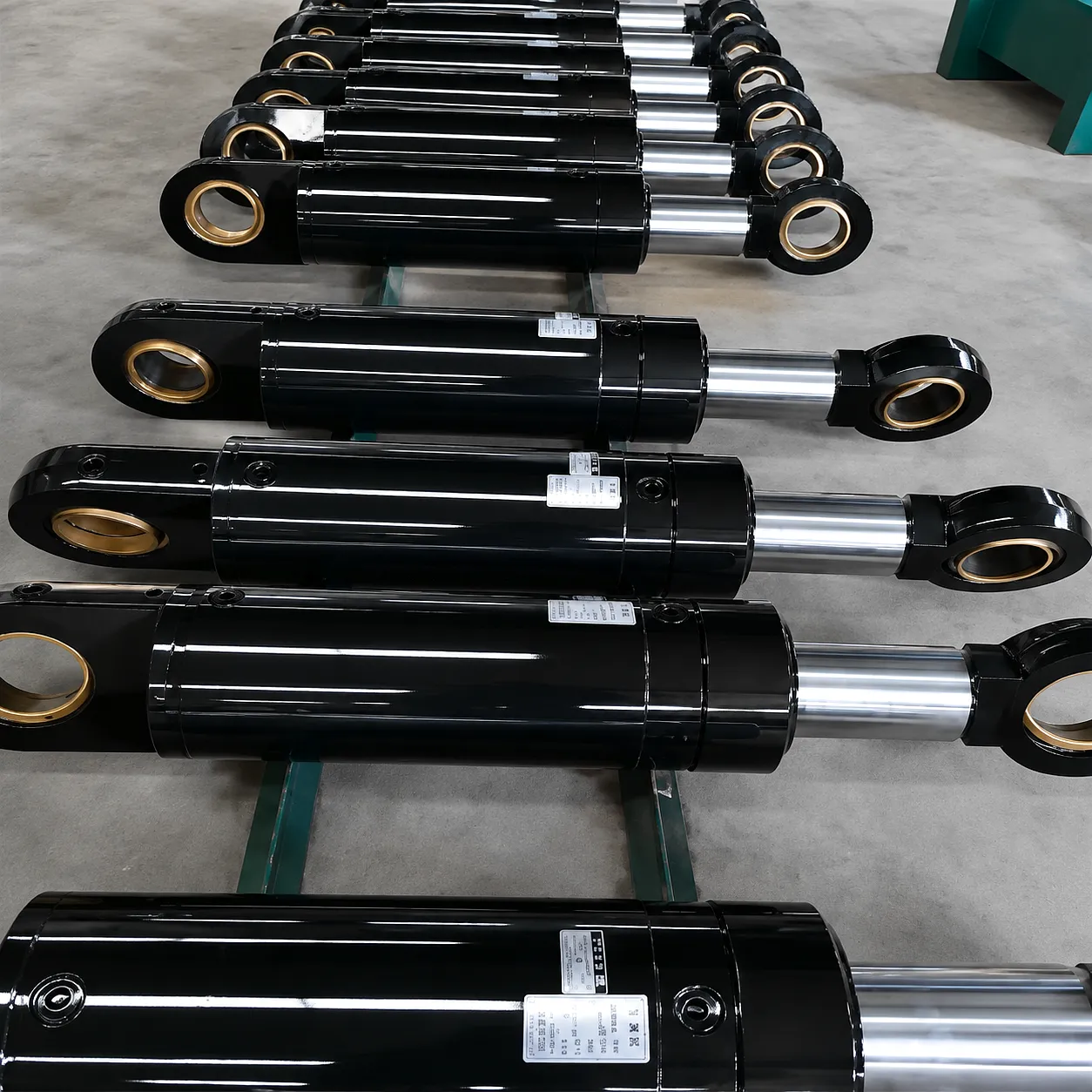
The cylinder barrel is typically manufactured from EN 10305-1 seamless cold-drawn steel tube, honed to a tolerance of H7 or better to ensure seal longevity. The piston rod is generally cold-forged from C45E or 42CrMo4 alloy steel, then hard chrome-plated to a minimum depth of 25 microns for corrosion and wear resistance. Piston seals are usually polyurethane or PTFE-composite compounds rated for pressures between 350 and 450 bar. End caps and clevises are either nodular cast iron or fabricated mild steel, depending on the load rating and the OEM’s design heritage. Premium-grade boom cylinders use induction-hardened rods with chrome thicknesses up to 50 microns, significantly extending service life in abrasive site conditions typical of UK quarrying and land reclamation projects.
Design Variants
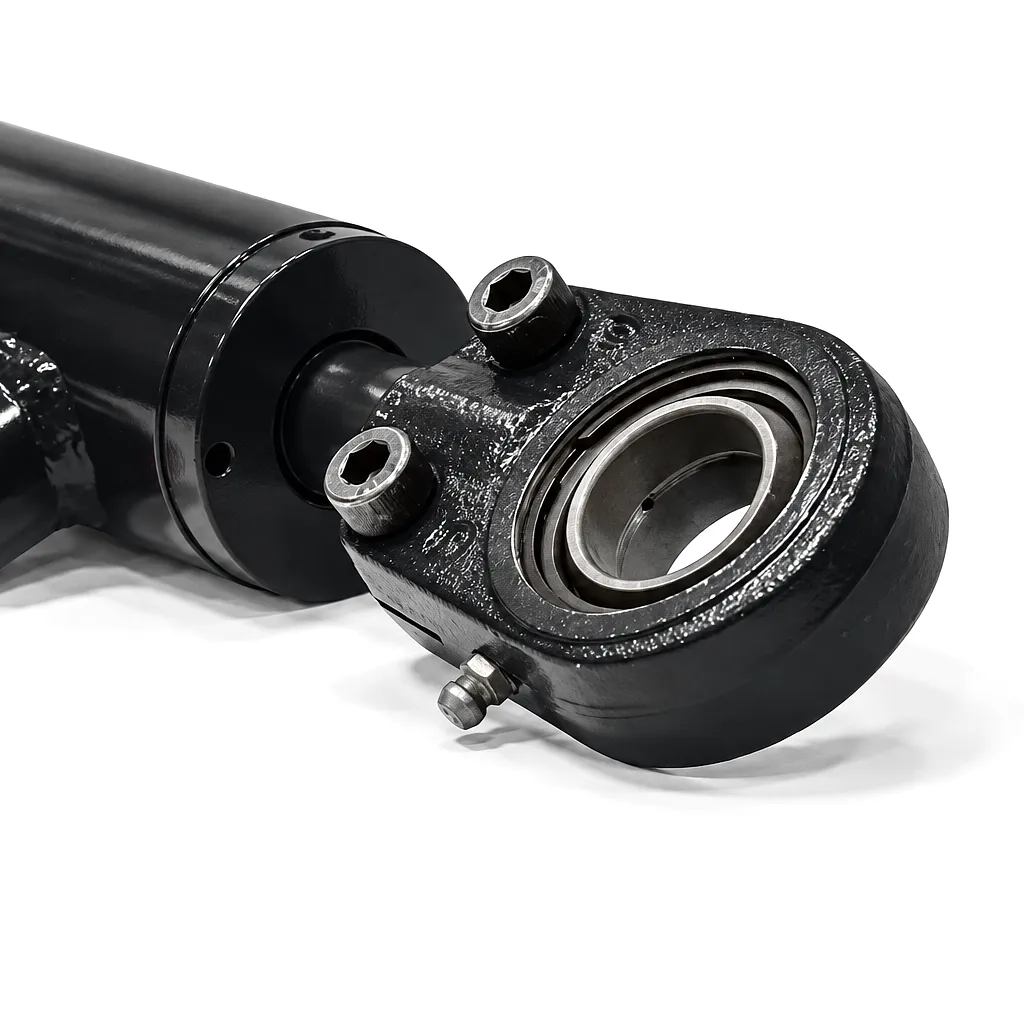
Boom cylinders come in several mounting configurations. The most common across European plant — including the fleets operated by UK civil engineering firms — are the pin-to-pin clevis type and the trunnion-mounted variant. Telescopic boom cylinders appear on certain crane and reach-stacker applications where a very long stroke is needed in a compact retracted length. Each configuration demands different tolerances on the mounting eyes, different seal stack layouts and sometimes different rod materials to manage the bending moments involved. For specialised applications — such as the automated lifting arms used in Sheffield’s advanced manufacturing facilities or the long-reach excavators working on Thames Tideway-type infrastructure — custom-engineered cylinders with non-standard strokes and pressure ratings are common.
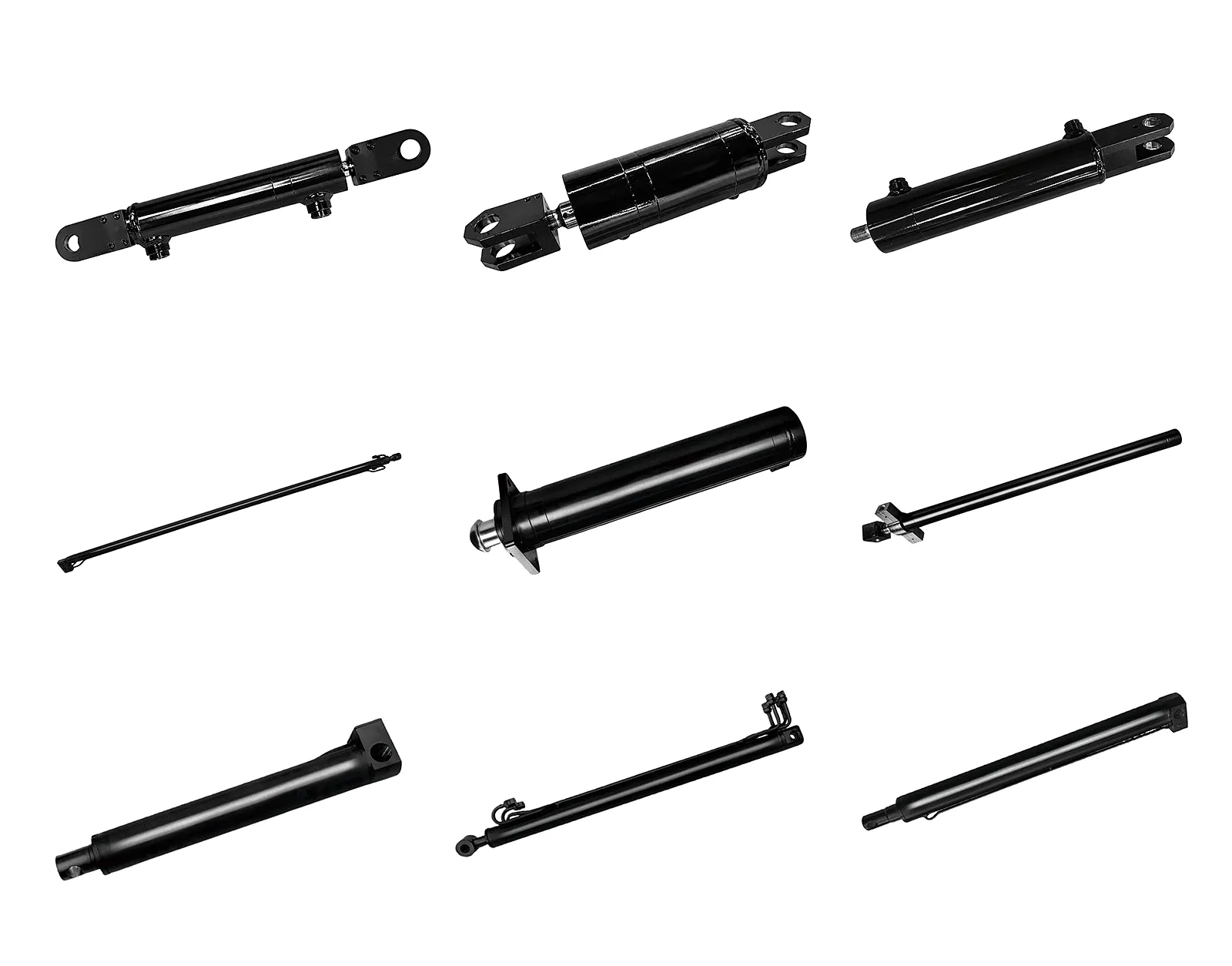
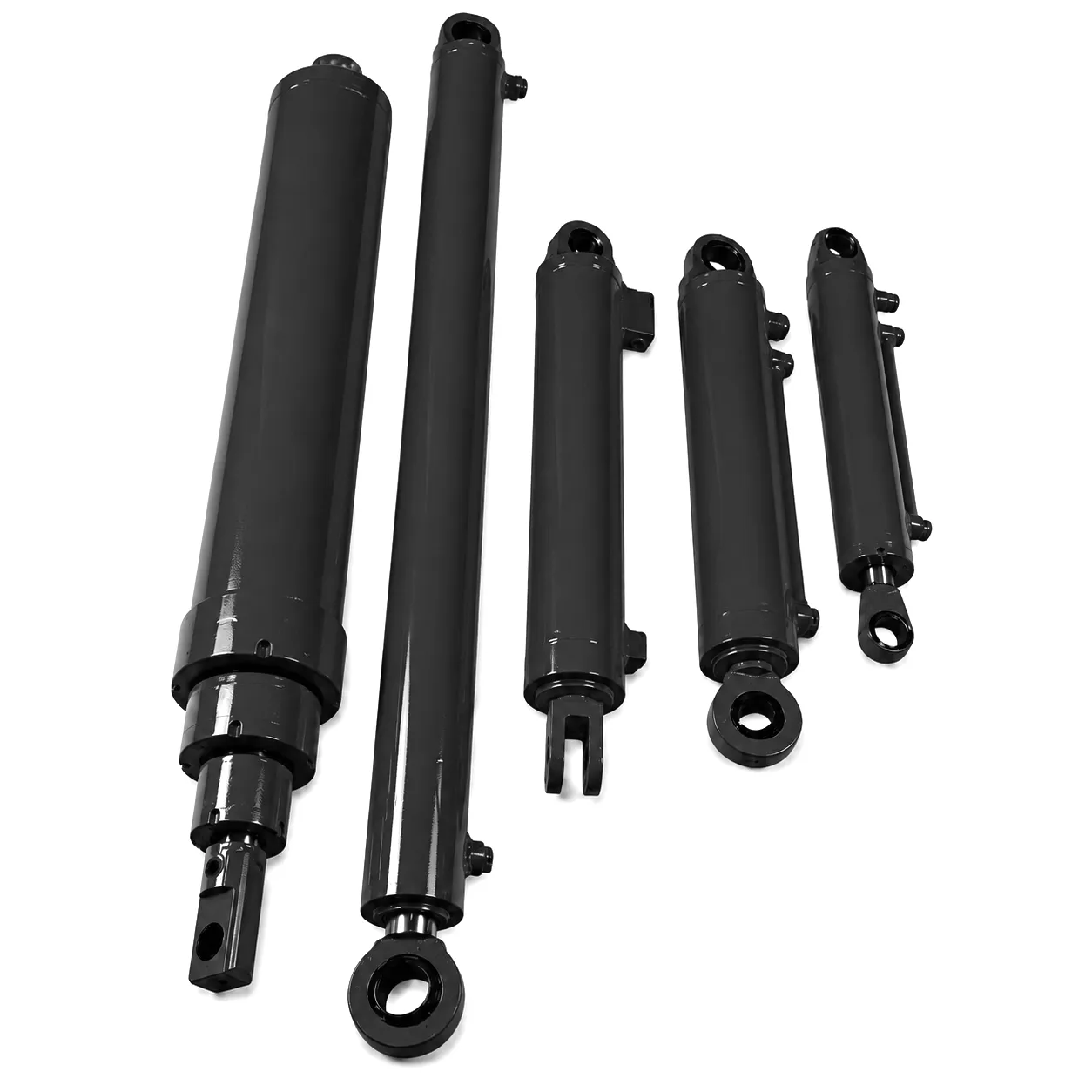
Ever Power Boom Cylinder Product Range — Built for Demanding UK Industrial Applications
OEM Boom Cylinders: Where the Advantages End and the Costs Begin
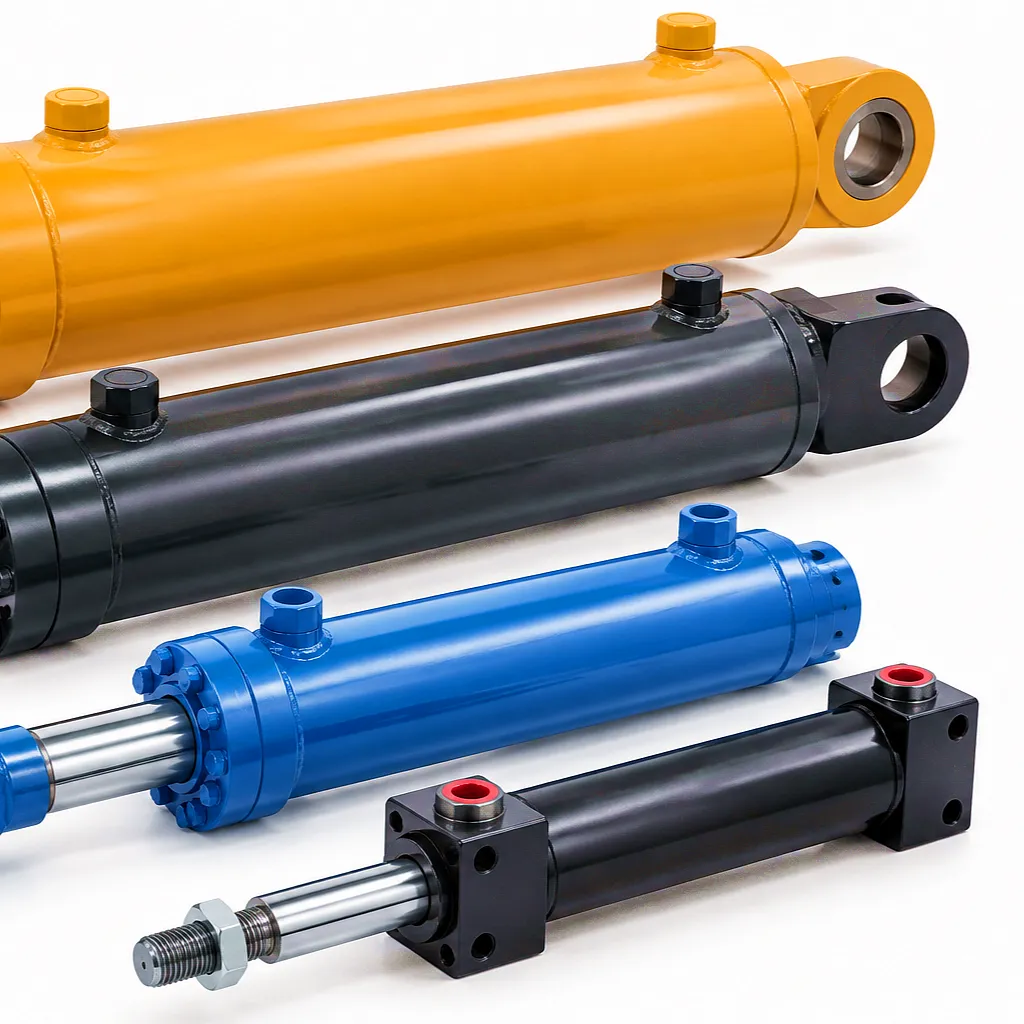 Original equipment manufacturer cylinders are engineered and validated specifically for a given machine model. A Komatsu PC210 boom cylinder from Komatsu’s parts division, or a Caterpillar 320 replacement from Cat’s dealer network, will carry the same dimensional drawings and material certifications as the unit that left the factory with the machine. For UK plant hire companies operating under strict maintenance contracts — particularly those holding ISO 9001 certification or working on public-sector infrastructure contracts with explicit OEM-parts clauses — there is no straightforward alternative. The compliance audit trail matters as much as the part itself.
OEM boom cylinders also benefit from manufacturer warranty alignment. If a replacement cylinder is fitted and a related hydraulic system component fails within the warranty period, the claim process is cleaner when both components carry the same badge. This is a consideration that carries weight with the fleet managers running large excavator pools across the East Midlands or the major earthmoving contractors on the HS2 programme corridor.
The downside is unambiguous: OEM boom cylinders are expensive, often have long lead times through official dealer networks, and offer no flexibility for machines that have been modified, re-rated or repaired outside factory specifications. For a 15-year-old Hitachi ZX300 or a JCB 220X that has been re-bored or fitted with non-standard attachments, the OEM cylinder may not even be the correct fit any longer.
| Aspect | OEM — Advantage | OEM — Disadvantage |
|---|---|---|
| Fitment Accuracy | Guaranteed dimensional match to OEM drawings | No flex for modified or non-standard machines |
| Price | Warranty support simplicity | Typically 40–80% higher than quality aftermarket |
| Lead Time | Factory-stocked for popular models | Older or rare models: 4–12 weeks or discontinued |
| Material Spec | Validated to OEM operating pressures and duty cycles | Fixed spec — no upgrades available |
| Compliance | Meets OEM maintenance contract requirements | Over-specified for lower-duty applications |
Aftermarket Boom Cylinders: The Full Picture Beyond the Price Tag
✅ The Genuine Advantages
Quality aftermarket boom cylinders from established manufacturers — particularly those operating certified production lines with ISO 9001:2015, CE marking and traceable material certificates — can match or exceed the performance of their OEM equivalents at a substantially lower cost. Well-engineered aftermarket cylinders use the same grade of honed steel tube, the same chromium rod specifications and often better seal kits, because they are sourced from specialist hydraulic seal manufacturers rather than bundled into a general parts supply chain. For fleet operators across Birmingham’s construction sector or Glasgow’s infrastructure contractors, this cost differential can represent tens of thousands of pounds in annual savings without any compromise in uptime reliability. Lead times from experienced aftermarket suppliers are frequently shorter too — a stocked boom cylinder for a common Komatsu or Volvo model can ship within 24 to 48 hours, compared to days or weeks through dealer networks.
⚠️ The Real Risks to Understand
The aftermarket is not uniform. At the problematic end, undocumented imports arrive with unverified material certifications, chrome plating that flakes within months and seal compounds that are not rated for the system pressures involved. These parts do not fail slowly — they fail suddenly, often causing collateral damage to the hydraulic pump, control valves and surrounding structural components. The cost of a failed low-grade boom cylinder on an active UK construction site goes far beyond the price of the cylinder itself: it includes crane hire for removal, machine downtime charges, potential HSE investigation if the failure causes a safety incident, and reputational damage. Recognising the difference between a credible aftermarket supplier and a budget importer is one of the most commercially important skills a plant engineer or procurement manager in the UK can develop.
Boom Cylinder Technical & Performance Parameter Table
Reference specifications for standard and heavy-duty boom cylinders supplied into the UK market
| Parametro | Compact Excavator (5–14 t) | Medium Excavator (15–35 t) | Heavy-Duty / Large Excavator (35 t+) |
|---|---|---|---|
| Bore Diameter | 63 – 100 mm | 100 – 160 mm | 160 – 250 mm+ |
| Rod Diameter | 45 – 70 mm | 70 – 120 mm | 120 – 200 mm+ |
| Stroke Length | 500 – 900 mm | 900 – 1,600 mm | 1,600 – 3,000 mm+ |
| Operating Pressure | Up to 250 bar | Up to 350 bar | Fino a 450 bar |
| Rod Material | C45E / hard chrome 20 µm+ | 42CrMo4 / hard chrome 30 µm+ | 42CrMo4 induction-hardened / chrome 50 µm+ |
| Barrel Material | EN 10305 seamless steel tube | EN 10305 seamless, honed to H7 | EN 10305 or equivalent, honed to H6 |
| Tipo di sigillo | PU / NBR composite | Composito PU/PTFE | PTFE / FKM high-temp rated |
| Temperatura di esercizio | -20 °C to +80 °C | -30 °C to +100 °C | -40 °C to +120 °C |
| Mounting Style | Clevis pin-to-pin | Clevis or trunnion | Trunnion / custom flange |
| Typical Push Force (max) | 78 – 196 kN | 275 – 705 kN | 705 – 2,200 kN+ |
| Certificazione | ISO 6020-2, CE | ISO 6020-2, ISO 9001, CE | ISO 9001, PED, project-specific DNV/BV |
Industrial Application Scenarios: Where Boom Cylinders Work Hardest
From urban regeneration in London to offshore support in Aberdeen, boom cylinders operate across the full breadth of UK industry.
Civil Engineering & Infrastructure, Birmingham and the Midlands
The heavy excavators and long-reach machines deployed on major road and rail infrastructure works across the West Midlands depend on boom cylinders rated for continuous multi-shift operation. Replacement procurement for these machines must balance cost with guaranteed compatibility and rapid delivery, as any unplanned downtime on a schedule-critical infrastructure programme has contractual penalty implications. Aftermarket boom cylinders from certified suppliers are increasingly preferred by Tier 1 contractors in this region, provided full material traceability is supplied.
Quarrying & Aggregate Extraction, Sheffield and South Yorkshire
Quarry excavators operating in the Peak District fringe and South Yorkshire work in some of the most abrasive conditions that hydraulic cylinders encounter. Airborne silica, rock-face impacts and wide temperature swings place enormous demands on rod chrome integrity and seal longevity. In these environments, premium aftermarket cylinders with 50-micron chrome rods and PTFE seals often outlast OEM equivalents because the aftermarket option can be specified for the actual operating conditions, rather than being limited to the original OEM design intent.
Port & Marine Operations, Bristol and Liverpool Docks
Material handlers and crane systems operating in port environments are exposed to salt air, high humidity and the mechanical shocks that come with bulk cargo handling. Boom cylinders in these applications require enhanced corrosion protection — nickel-plated or stainless rod options are sometimes specified — and seals formulated for wide ambient humidity ranges. Port operators in Bristol and Liverpool have increasingly moved toward specialist aftermarket suppliers that can offer application-specific configurations not available through standard OEM channels.
Agricultural Machinery, East Anglia and Yorkshire
Telescopic handlers and loader tractors used across the arable farming counties of East Anglia and the Vale of York place boom cylinders under heavy seasonal demand during harvest and silage periods. Agricultural operators, who are typically more cost-conscious than construction contractors and less constrained by OEM maintenance contract clauses, represent one of the clearest use cases for quality aftermarket boom cylinders. Compatibility, not brand, is the primary selection criterion — and here, a supplier offering dimensional cross-reference data and next-day delivery to rural locations holds a clear commercial advantage.
Recycling & Waste Management, Greater Manchester
Material handling excavators and sorting plant in Greater Manchester’s waste processing facilities run multiple shifts per day, often handling contaminated or chemically aggressive materials. Boom cylinders in these environments need seal compounds resistant to hydraulic fluid contamination and wiper seals robust enough to keep fine particulate out of the gland. Standard OEM seals are not always optimised for these conditions. A custom-specified aftermarket boom cylinder, built with upgraded seal packages tailored to the operating environment, can reduce maintenance intervals and extend service life significantly — a compelling case from both a cost and a sustainability standpoint.
Renewable Energy Construction, Scottish Highlands and Offshore
Wind turbine installation and offshore platform support vessels both use boom cylinder-equipped lifting and handling systems in demanding environmental conditions. Scottish Highlands wind farm construction, for example, involves crane and excavator fleets operating in wet, exposed terrain at altitude. Cylinder rods must resist pitting from prolonged moisture contact, and seal systems must handle wide diurnal temperature variation. For these projects, aftermarket boom cylinders paired with enhanced corrosion protection packages can be specified to order through capable manufacturers with custom engineering teams — something OEM dealer networks rarely offer.
Related Hydraulic Products Worth Knowing
A properly matched hydraulic power unit is the foundation of any reliable boom cylinder system. Ever Power’s custom HPUs are engineered to the specific flow, pressure and duty cycle requirements of your application — including bespoke reservoir sizing, pump selection and control valve integration. Click to explore the range and discuss your specification.
Visualizza il prodotto →
For equipment where directional control is as critical as lift force — crawler cranes, telescopic handlers and articulated dumpers — Ever Power’s hydraulic rotary actuator steering cylinders complement boom cylinder systems with precision angular control, robust construction and full compatibility across a wide range of plant makes and models. Engineered for UK site conditions.
Visualizza il prodotto →
How to Evaluate an Aftermarket Boom Cylinder Supplier: A UK Buyer’s Checklist
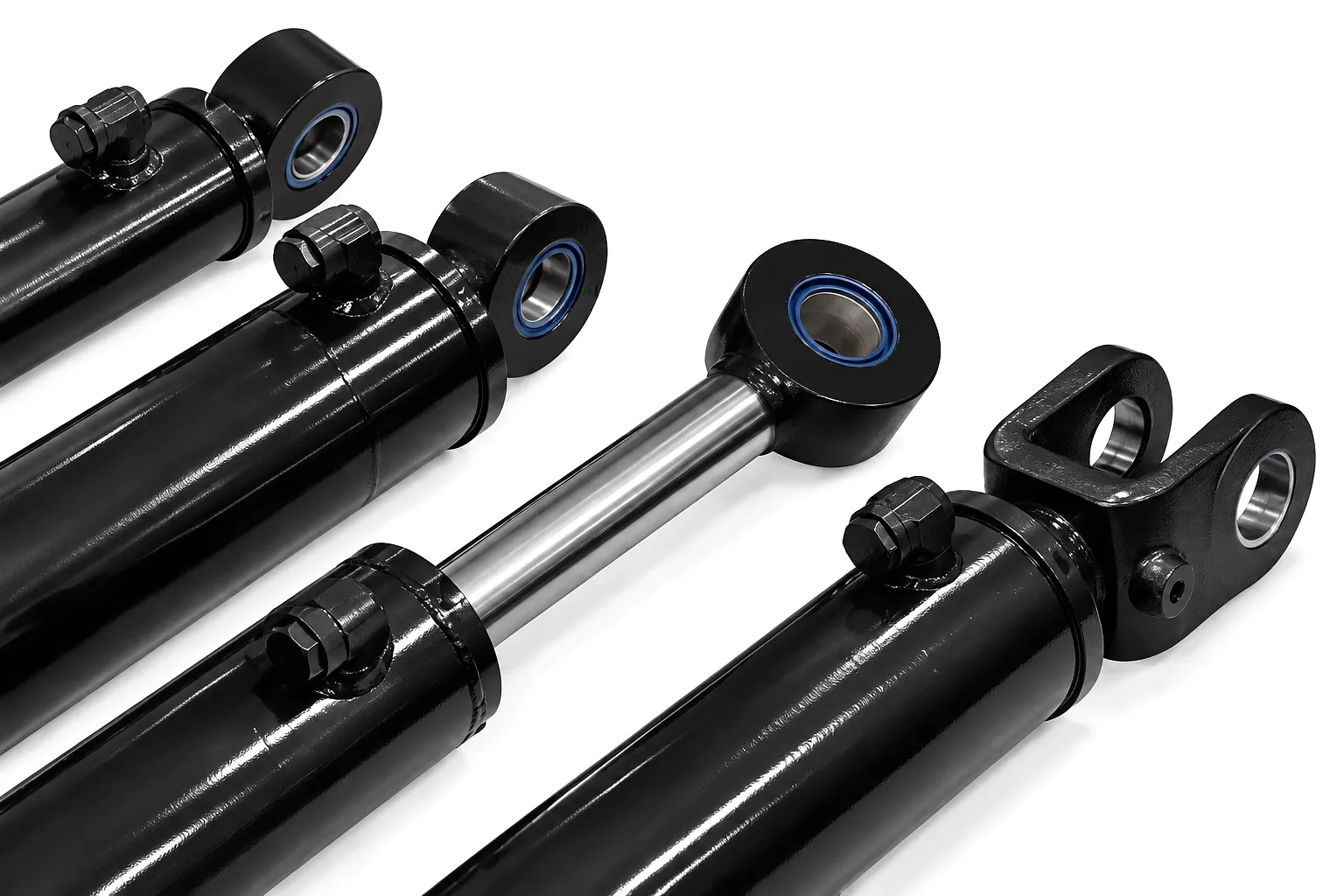
Customer Success Story: Leeds Civil Contracting, West Yorkshire
 Hargreaves Groundworks Ltd had been running a mixed fleet of Komatsu, Volvo and Doosan excavators across West Yorkshire for eleven years when they came to Ever Power. The trigger was a failed OEM boom cylinder on their primary 30-tonne Komatsu during a time-critical basement excavation project in the Leeds city centre regeneration zone. The lead time quoted by the regional Komatsu dealer was seventeen working days — an unacceptable window given the project’s contractual milestones.
Hargreaves’ plant manager contacted Ever Power with the machine model, cylinder serial reference and the measured bore, stroke and pin centre dimensions taken from the failed unit. Within four hours, Ever Power’s engineering team had confirmed a compatible replacement boom cylinder in stock, cross-referenced against the OEM dimensional drawing. The unit shipped the following morning via next-day freight, arrived at the Leeds site depot by 10 am, and was fitted and in operation by early afternoon — returning the excavator to work within 30 hours of the original failure call.
In the twelve months that followed, Hargreaves consolidated their boom cylinder sourcing to Ever Power across their entire fleet. They now hold a standing framework agreement that includes pre-agreed pricing, priority despatch for emergency breakdown calls and quarterly stock reviews to ensure common cylinder sizes are available at short notice. Compared to their previous OEM-only procurement approach, Hargreaves estimates a 38 percent reduction in average per-cylinder cost and a reduction in average downtime-to-part-arrival from over eight days to under two days.
“The speed at which Ever Power turned the specification around and had a cylinder on the road was unlike anything we’d seen from a parts supplier. It didn’t just save a project — it changed how we think about sourcing.” — David Hargreaves, Managing Director
What UK Plant Engineers Say About Ever Power Boom Cylinders
“We fitted an Ever Power boom cylinder to our Volvo EC220 after the OEM unit failed during demolition work in Sheffield. The dimensional fit was perfect out of the crate, the chrome rod finish was visibly superior to the original, and after 800 hours of hard use it hasn’t leaked a drop. The quality stands on its own.”
“Requested a custom stroke length for a long-reach attachment on a Caterpillar 325. Most suppliers said it wasn’t possible without a six-week lead time. Ever Power came back with engineering drawings within 24 hours, confirmed the stroke and port arrangement, and had the cylinder to our Glasgow yard in ten days. That kind of responsiveness is what keeps us coming back.”
“We run a fleet of material handlers at our Birmingham recycling facility — machines that run two-shift, five days a week. Boom cylinder consumption is high. Ever Power’s framework pricing, combined with the quality of the products and the fact that their documentation package is complete every time, has simplified our maintenance management considerably. The ISO 9001 certification and pressure test certs matter for our internal audit process.”
Domande frequenti
Real questions from UK plant engineers, procurement managers and fleet operators.
Talk to Ever Power’s engineering team. Share your specification — bore, stroke, machine model or old part number — and receive a documented quote, usually within one working day.
✉ Get a Free Quote — [email protected]
 Italian
  English
  Portuguese
  Dutch
Dutch  Swedish
  Danish
  Finnish
  Polish
  Hindi
Hindi  Kazakh
  Turkish
  Ukrainian
  Romanian
  Spanish
  German
  Russian
  Korean
  Japanese
  Vietnamese
  Thai
Thai  Indonesian
  Malay
Malay  French
  Greek
Greek