
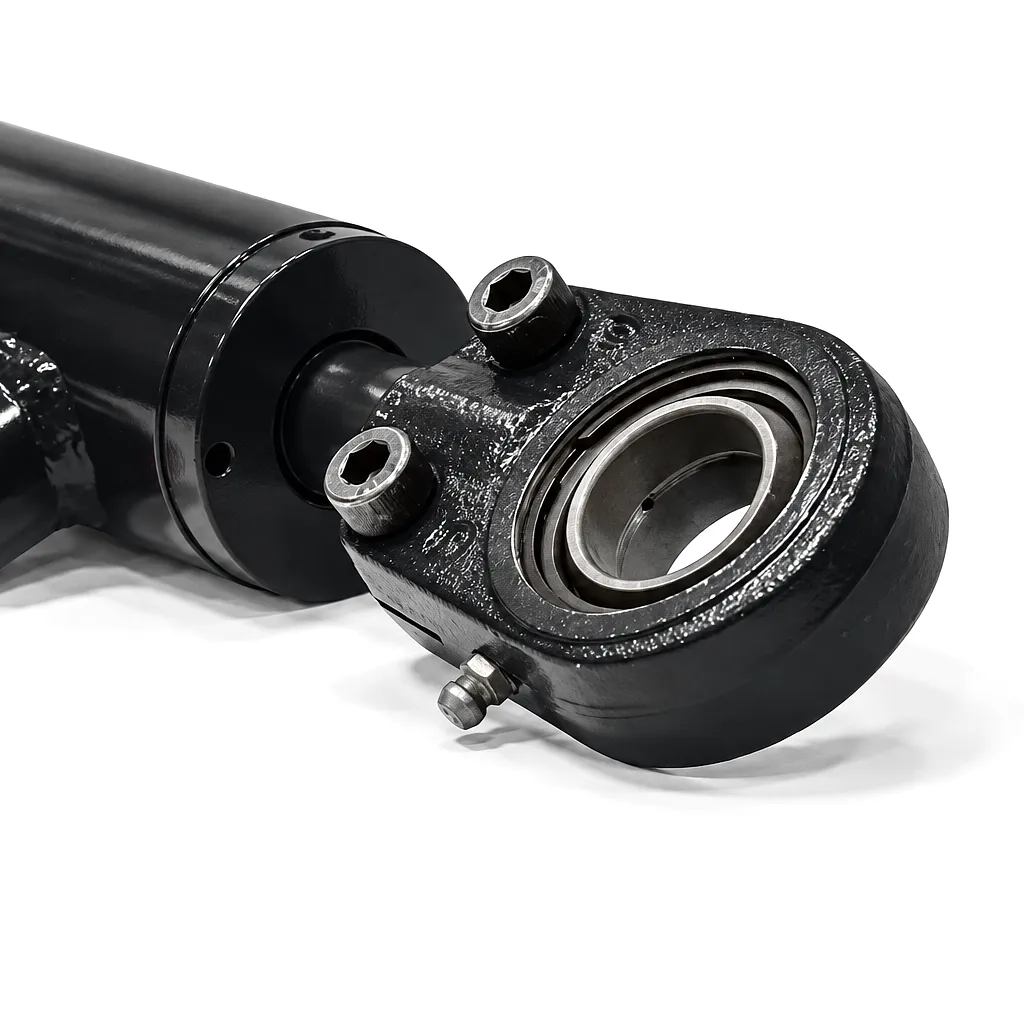
 When engineering teams and procurement managers across the UK sit down to specify a hydraulic cylinder for a new OEM platform or a replacement programme, two names appear on shortlists with unusual regularity: Parker Hannifin and Prince Manufacturing. Both carry weight in the global fluid power market, and both have accumulated decades of field performance data that purchasing teams rightly find reassuring. Yet the two brands serve fundamentally different segments of the market, and conflating them during a specification exercise can lead to cost overruns, lead-time surprises, and performance gaps that only surface after commissioning. The comparison is therefore not merely academic — for OEM buyers in Birmingham’s fabrication corridors, Sheffield’s advanced manufacturing parks, or the agricultural supply chains of East Anglia and Yorkshire, choosing between Parker and Prince cylinders means choosing between different design philosophies, different supply chain commitments, and very different price-value propositions.
Understanding the Two Brands: Market Position and Engineering Heritage
Parker Hannifin, founded in Cleveland, Ohio in 1917, is the world’s largest motion and control technologies company. Its hydraulic cylinder division — operating under the Industrial Cylinder Division and the Hydraulics Group — engineers cylinders for applications ranging from semiconductor manufacturing precision rigs to offshore platform machinery. Parker cylinders are designed around modular platform architectures: the HMI Series, the 2H Series, and the 3H Series are all built to NFPA standards and ISO 6020/6022 compatibility, which gives them broad interchangeability across OEM platforms already standardised to those bore and stroke families. In the UK, Parker’s distribution runs through approved stockists and its own UK-based engineering support centres, making it a genuinely accessible specification for OEM buyers dealing with complex multi-machine fleets. The premium attached to the Parker name reflects not just the product itself but the company’s global engineering support infrastructure, certification portfolio, and 106 years of continuous product development. For regulated sectors — aerospace ground support, defence logistics, or medical capital equipment — that institutional reputation translates directly into procurement approval.
Prince Manufacturing Corporation, based in North Sioux City, South Dakota, occupies a very different market niche. Prince built its reputation supplying hydraulic cylinders and valves primarily to the agricultural OEM sector and the construction equipment aftermarket. Its cylinders are workmanlike, straightforward to install, and priced aggressively — qualities that matter enormously to tractor manufacturers, implement builders, and utility equipment OEMs working with tight product cost targets and broad dealer networks. In the UK, Prince cylinders reach the market through agricultural equipment distributors and hydraulic component specialists, particularly those supplying the East Midlands and Yorkshire farming equipment sectors. Prince cylinders typically use standard clevis and flange mounts, SAE O-ring ports, and chrome-plated steel rods, delivering respectable performance at pressure ratings up to 3000 PSI in the common welded body designs. The brand is not oriented toward the high-specification industrial or aerospace segments that Parker serves, but for mobile hydraulics on tractors, loaders, bale handling equipment, and utility vehicles, Prince’s value proposition is straightforward and well-understood by buyers.
Working Principle: How Parker and Prince Cylinders Generate Linear Force
Both Parker and Prince hydraulic cylinders operate on the same foundational fluid-power principle: hydraulic fluid under pressure is admitted into a sealed cylinder bore, acts upon the cross-sectional area of a piston, and generates a linear thrust force proportional to the product of pressure and area. The output force (F) equals pressure (P) multiplied by the effective bore area (A), expressed as F = P × A. For the extension stroke, the effective area is the full piston face; for the retraction stroke, the rod cross-section is subtracted from the bore area, giving a lower retract force — a physical constant that both manufacturers communicate in their datasheets and that OEM design teams must account for in linkage geometry and load calculations.
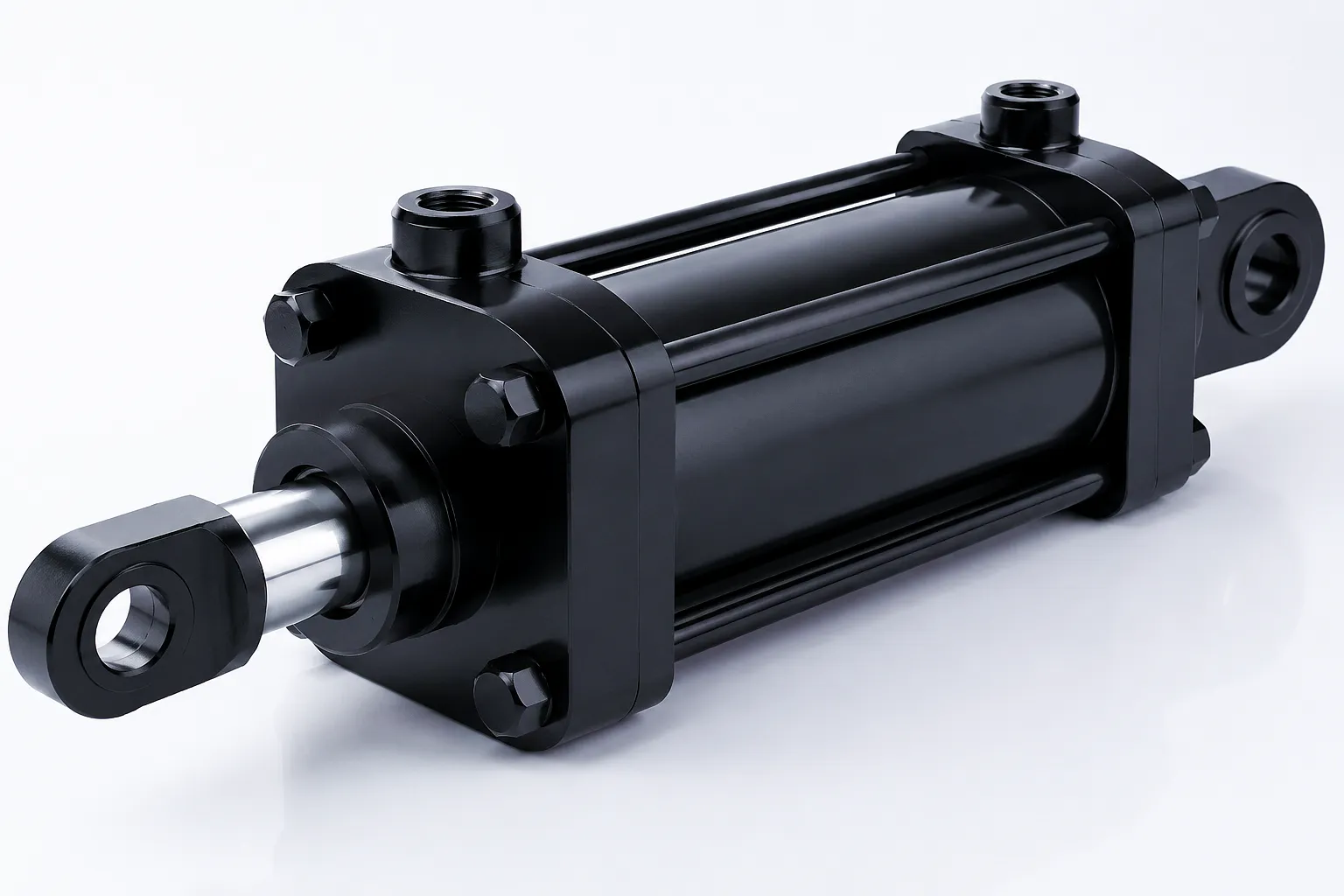
The design divergence between the two brands becomes apparent at the cylinder end cap and seal system level. Parker’s high-specification cylinders — particularly the 3H Series used in industrial pressing and material handling — use multi-piece end caps with Viton or polyurethane seal sets, allowing field replacement of seals without bore damage and delivering rated cycle lives measured in tens of millions of cycles under controlled conditions. Prince welded-body agricultural cylinders use a simpler design: the barrel is welded to the base and rod-end cap, which reduces parts cost and improves resistance to rough-handling in agricultural environments but makes internal seal replacement in the field more laborious, typically requiring specialist press equipment.
Cushioning is another differentiator. Parker offers factory-adjustable cushions on most industrial cylinder variants, allowing deceleration of the piston at end-of-stroke — critical for preventing shock loads on fixtures, frames, and hydraulic plumbing in high-cycle applications. Standard Prince agricultural cylinders typically omit cushioning in favour of simplicity and cost efficiency, which is appropriate for mobile equipment where loads are variable and controlled deceleration is managed at the valve rather than the cylinder.
Core Materials: Construction Quality Across Both Brands
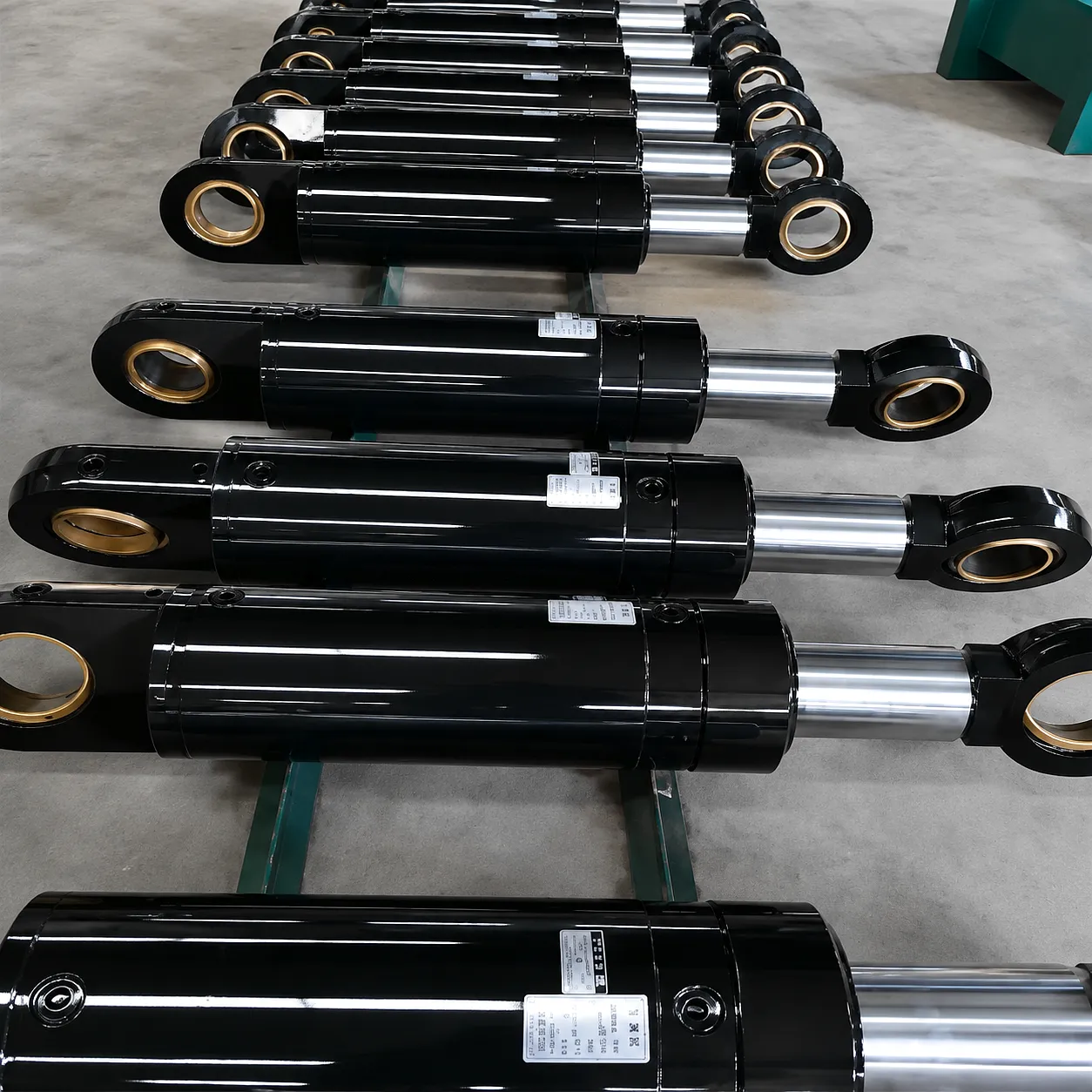
Parker industrial cylinders use cold-drawn seamless carbon steel tubing, honed internally to a surface finish of Ra 0.4 µm or better. This honing finish is critical for seal longevity. Prince agricultural cylinders use drawn-over-mandrel (DOM) tubing, which delivers a good bore finish at lower production cost, and is entirely appropriate for the pressure ratings and cycle counts encountered in farm and construction machinery. Ever Power’s custom cylinders offer both seamless and DOM barrels, with internal honing matched to the rated pressure and required seal type specified by the OEM customer.
Parker specifies 1045 or 1060 induction-hardened steel rod for most industrial applications, with a minimum surface hardness of 55 HRC and a chrome plating thickness of 25 µm or greater, ground and polished to Ra 0.2 µm. This specification supports both corrosion resistance and long rod seal life. Prince agricultural cylinders use chrome-plated steel rod to comparable surface finish standards for the agricultural market, with chrome thickness verified to EN ISO 4520 equivalent standards. For marine and offshore environments, both brands offer optional hard chrome alternatives; Parker extends to electroless nickel and ceramic coating options for the most severe conditions.
Seal material selection is where Parker’s engineering depth is most visible. Its industrial range offers NBR (standard Buna-N) as the baseline, with Viton as the upgrade for high-temperature and chemical-resistance applications, and PTFE-backed seals for the fastest moving, most demanding high-cycle operations. Prince standard cylinders ship with Buna-N seals matched to common hydraulic mineral oils, which covers most agricultural applications adequately. Where vegetable-based bio-oils are specified — as is increasingly common on farming equipment in UK arable regions under environmental stewardship requirements — both Parker and Prince offer compatible seal materials, though Parker’s extended seal kit programme provides a wider range of pre-validated options for less common fluid types.
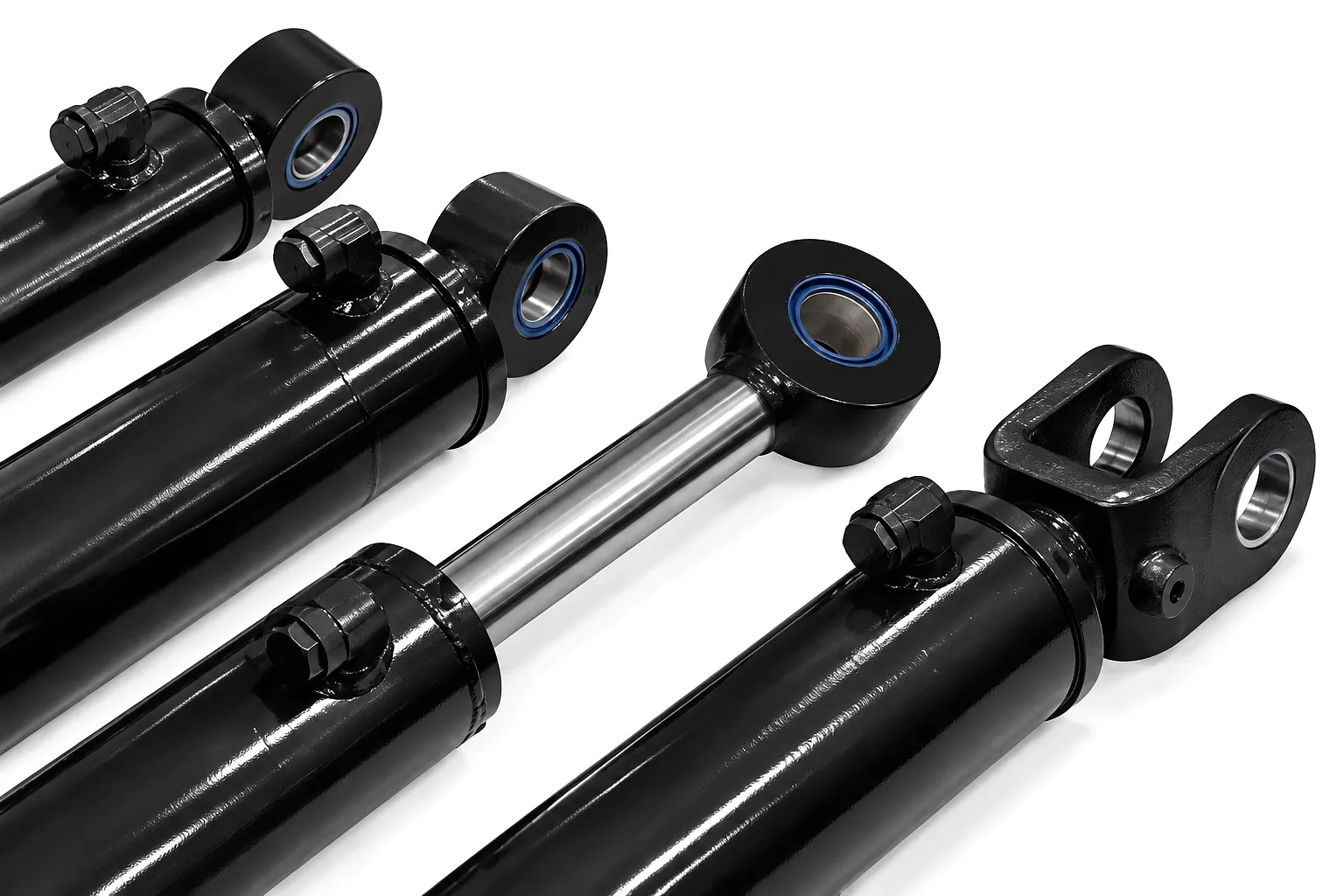
1458mm stroke, engineered for the demanding kinematic requirements of aerial work platforms and articulated boom lifts. This cylinder delivers precise angle control through the full extension arc, with bore and rod dimensions optimised for the load cases encountered in UK construction access and maintenance equipment fleets. Side-load tolerance and end-of-stroke cushioning make it compatible with fast-cycle duty schedules on busy hire-fleet machines.
Technical and Performance Parameter Comparison Table
The table below captures the key engineering parameters across Parker industrial cylinders, Prince agricultural cylinders, and Ever Power custom hydraulic cylinders. OEM procurement teams should use this as a starting framework, cross-referenced against the specific series datasheets relevant to their bore size and application pressure. Parameters marked with a range reflect variability across the respective product families.
Industrial Application Scenarios: Where Each Cylinder Brand Belongs
Price, Lead Time, and Total Cost of Ownership for UK OEM Buyers
 Unit purchase price is only one dimension of the cost equation for OEM buyers, and focusing on it exclusively leads to poor sourcing decisions. Parker hydraulic cylinders in the industrial 2H and 3H series carry a significant price premium over Prince equivalents — sometimes three to five times the cost for comparable bore and stroke dimensions in off-the-shelf configurations. For high-volume OEM production runs, this spread is commercially relevant. But the comparison changes significantly when the full cost of installation, adaptation, maintenance, and downtime is calculated over a five-year fleet operating horizon.
Parker’s longer rated service life in high-cycle industrial environments, combined with its modular seal replacement programme, can substantially reduce the total number of cylinder units consumed over a machine’s planned service life. A Parker industrial cylinder rated for 10 million cycles may outlast three or four Prince agricultural cylinders used in an equivalent (but more demanding) application where the agricultural cylinder’s pressure rating is technically adequate but its lower-grade seal life and bore finish lead to earlier deterioration. Conversely, fitting a Parker premium cylinder to a low-cycle, low-pressure mobile application — where a Prince unit would perform identically — wastes capital budget without delivering any engineering benefit.
Lead time is another dimension where the two brands diverge. Parker’s UK distributor network maintains stock of common bore-and-stroke combinations in the most popular series, enabling next-day despatch for standard configurations. Custom configurations — non-standard strokes, custom port locations, special coatings — typically require four to twelve weeks from Parker’s factory programmes. Prince’s UK supply typically routes through agricultural distributors with good stock on common agricultural sizes, but bespoke configurations follow a similar lead time to Parker’s custom programme. Ever Power’s OEM batch programme, designed around production runs of 50 units or more, consistently delivers within three to eight weeks from order confirmation, supported by direct-from-factory logistics to UK ports and customs-cleared delivery to UK warehouse addresses.
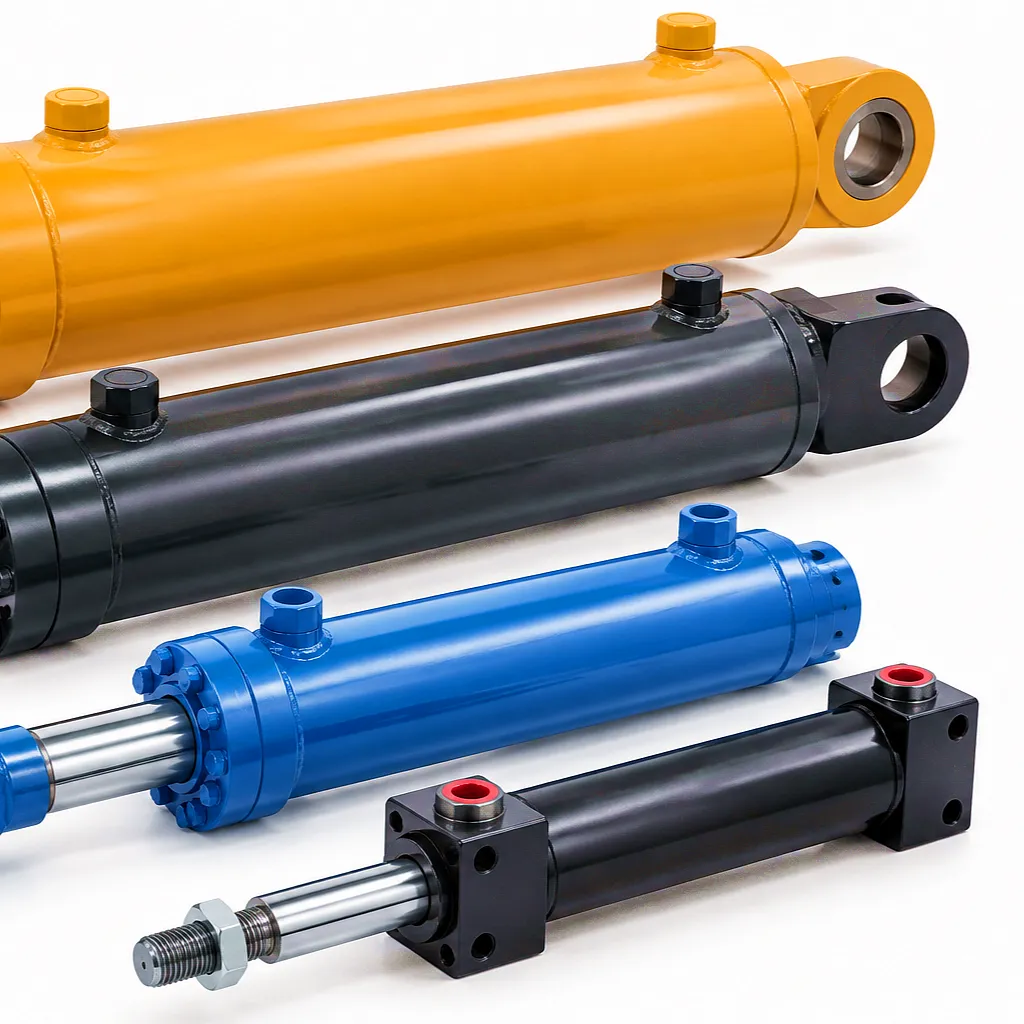
555mm stroke, designed for main boom angle actuation on scissor and articulated aerial work platforms widely used by facilities management, construction, and events companies across the UK. The compact stroke and precision end-of-stroke positioning make this cylinder well-suited to platforms that must operate in constrained indoor environments — manufacturing floors, distribution warehouses, and sports venues — where precise boom angle is critical to both reach and safety system compliance under IPAF and PASMA frameworks.
Ever Power: Custom Hydraulic Cylinder Manufacturing for UK OEM Programmes
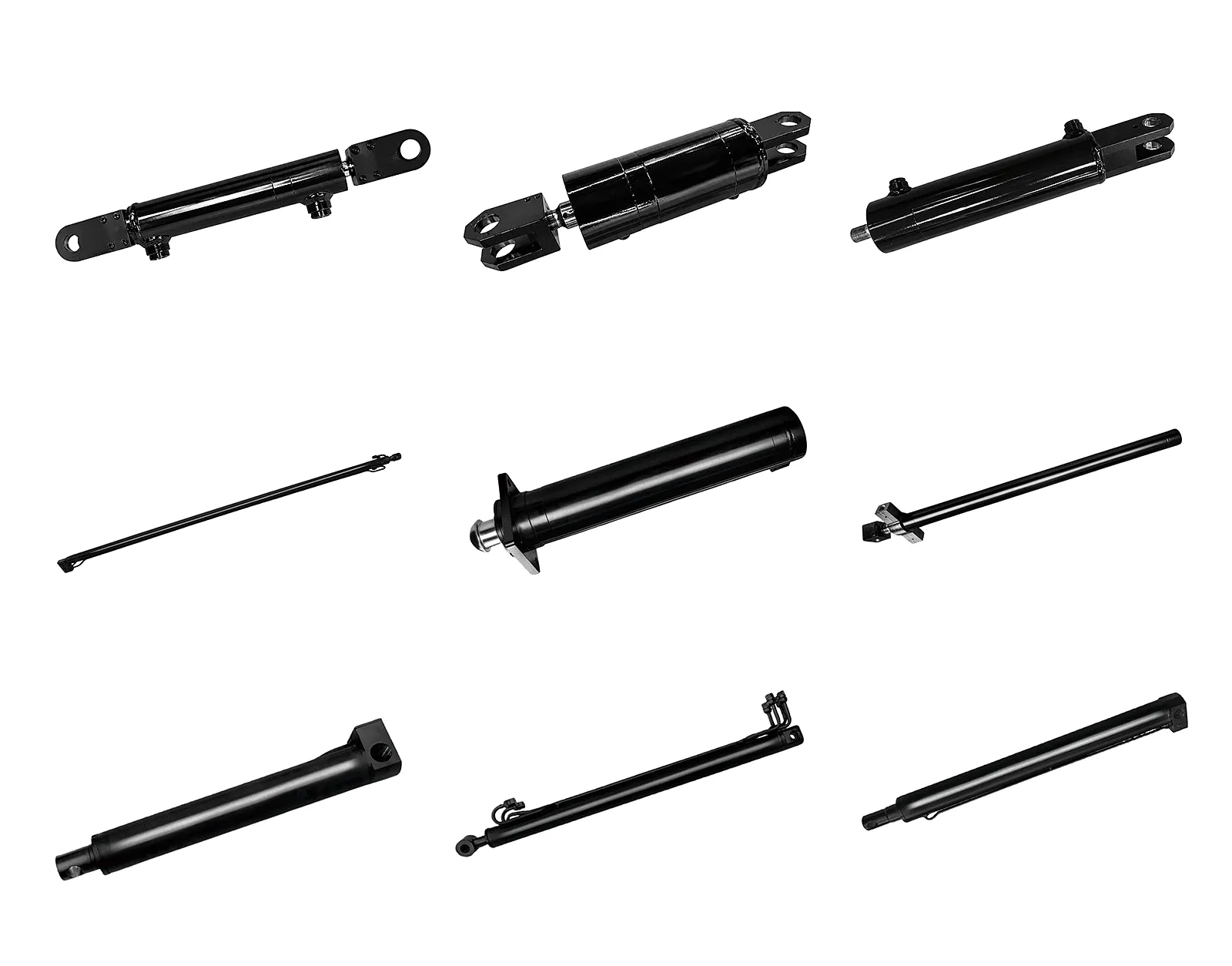
Ever Power’s hydraulic cylinder manufacturing division operates from a modern, purpose-built production facility equipped with CNC honing lines, multi-axis machining centres, and fully automated surface treatment bays. The factory’s production capability spans bore diameters from 20 mm to 500 mm and strokes from 50 mm to 6,000 mm, covering the vast majority of OEM machine specification windows without requiring engineering compromise. Every cylinder produced at the Ever Power facility is built against a controlled manufacturing plan derived from the customer’s technical drawings, with dimensional inspection at each production stage recorded and stored against the batch order number for traceability.
The customisation capability that OEM buyers consistently cite as Ever Power’s primary differentiator includes: non-standard bore and rod diameter combinations, bespoke mounting flange geometries, custom port face configurations for integrated manifold mounting, and surface treatment options from standard industrial primer through to offshore-grade two-coat epoxy or thermal-spray zinc. For aerial work platform manufacturers — a growing sector in the UK as hire-fleet operators expand their equipment ranges to serve the post-pandemic construction and events market — Ever Power’s boom cylinder range offers pre-engineered stroke and cushion configurations that reduce the OEM’s design time while delivering a cylinder that performs precisely within the platform’s kinematic model.
The supply chain behind Ever Power’s cylinder programme is built around long-term relationships with verified raw material suppliers, with incoming steel bar and tube subject to hardness and composition verification before any machining begins. This process discipline reflects the ISO 9001:2015 quality management system that governs all production operations — a certification that UK procurement teams and their quality management functions can independently verify. Logistics from Ever Power’s factory to UK delivery addresses are handled through established freight forwarding relationships, with typical transit times that support OEM production schedules requiring predictable material replenishment.
Bore, stroke, rod diameter, mount style, port face, and flange pattern all specified to OEM drawings — no adaptation hardware required at the machine assembly stage.
Material certificates, dimensional inspection records, and pressure test reports provided per batch, supporting OEM quality system requirements and CE technical file compilation.
Customs-cleared delivery to UK warehouse or direct to assembly line, with shipping documentation and origin certificates aligned to UK import requirements post-Brexit trade framework.
OEM batch pricing starting from 50 units with structured price tiers at 100, 250, and 500+ units, giving programme managers clear cost reduction pathways as production volumes ramp.
Customer Success Story: Coventry Access Platform Manufacturer Cuts Cylinder Lead Times by 60%
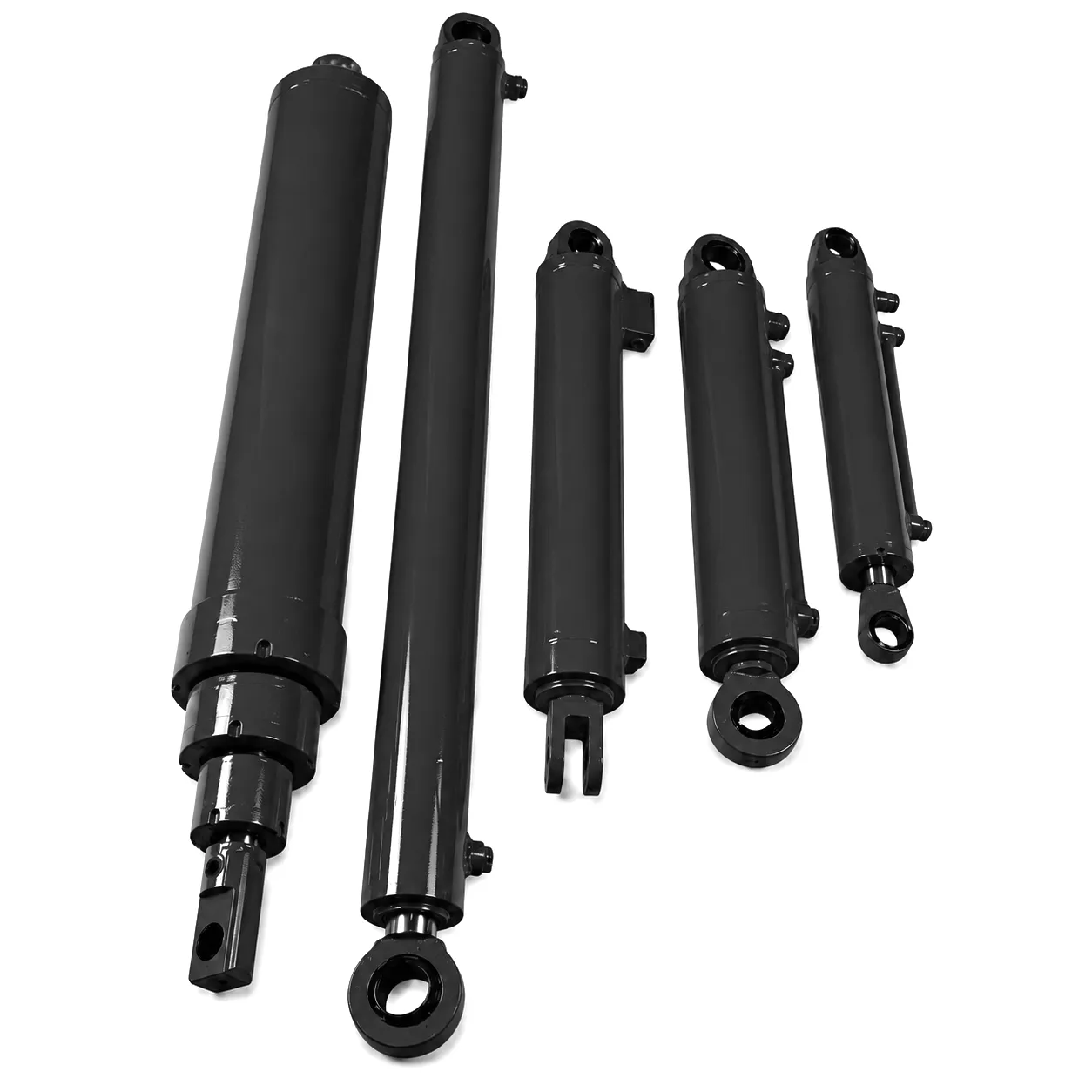 A Coventry-based manufacturer of compact access platforms — supplying both the UK hire market and export customers in Scandinavia and the Benelux region — had been specifying Parker cylinders for its main boom angle and jib actuation systems since its first platform design, launched in 2015. The Parker cylinders performed reliably, but as the company’s production volumes grew from 40 to 280 units per year between 2018 and 2023, the procurement team found itself increasingly constrained by lead times on the custom stroke lengths that the platform’s kinematics required. Parker’s standard ex-stock strokes did not match the platform geometry, meaning every production run required a factory-order from Parker’s custom programme with an eight-to-twelve week lead time that created awkward buffer stock requirements and cash flow pressure on a business scaling quickly.
The engineering director contacted Ever Power in early 2024 after a recommendation from a tier-one hydraulics distributor in the Midlands who had seen similar OEM procurement challenges resolved through Ever Power’s custom programme. Ever Power’s application engineers reviewed the platform’s hydraulic circuit drawings and the dimensional envelope constraints for both the main boom angle cylinder and the jib cylinder, and within three weeks produced a matched sample set for fitment trial. The sample cylinders met the platform’s dimensional spec and pressure test requirements at their first review; material certificates and dimensional reports were supplied with the sample units, expediting the Coventry manufacturer’s internal engineering approval process.
The first production batch of 120 units was delivered to the Coventry assembly facility in six weeks from purchase order, clearing UK customs through the manufacturer’s established import agent without delay. Subsequent batches have consistently arrived within five to six weeks, reducing buffer stock requirements by approximately 65% and releasing working capital previously tied up in cylinder inventory. The unit cost of Ever Power cylinders — at the 120-unit batch level — came in meaningfully below the Parker custom programme equivalent, contributing a per-platform material cost reduction that the manufacturer’s commercial team was able to reinvest in competitive pricing on the export market.
“The stroke tolerance on the Ever Power cylinders is genuinely impressive. We’re running these through a positioning system that demands repeatability within two millimetres at full extension, and after 50,000 cycles on the test rig we haven’t seen any measurable degradation. For a custom cylinder at this price point, that performance is exceptional — it’s given our engineering team confidence that we made the right switch.”
“We’d been on an eight-week minimum lead time with our previous supplier for anything outside their stock strokes. Ever Power got us a sample set in three weeks and had the first production batch at our Coventry facility in six. The documentation pack — material certs, pressure test reports, dimensional records — came through cleanly and our quality team approved the batch without a single query. That is exactly what an OEM programme needs from a cylinder supplier.”
“The chrome finish on the rod is noticeably consistent across the batch — no variation in surface appearance or hardness testing results between units. We put twenty cylinders from the last batch through random hardness checks and they were all within specification. The offshore-grade epoxy coat we requested on the outer body has also held up well through eighteen months of hire-fleet use, which is the toughest environment we have. Ever Power has earned a position on our approved vendor list.”
Domande frequenti
Send your cylinder drawings or specification parameters to our engineering team. We’ll review your application, confirm material and performance fit, and return a priced quotation within three working days.
 Italian
  English
  Portuguese
  Dutch
Dutch  Swedish
  Danish
  Finnish
  Polish
  Hindi
Hindi  Kazakh
  Turkish
  Ukrainian
  Romanian
  Spanish
  German
  Russian
  Korean
  Japanese
  Vietnamese
  Thai
Thai  Indonesian
  Malay
Malay  French
  Greek
Greek