Technical Deep Dive — UK Market
Cilindro idraulico telescopico monostadio o multistadio: quale scegliere per chi acquista un autocarro ribaltabile?
A practical engineering guide for fleet operators, plant hirers, and procurement managers across the UK’s heavy haulage and construction sectors.
⏱ 12 min read
📍 Birmingham · Sheffield · Manchester
🔧 Ever Power Engineering
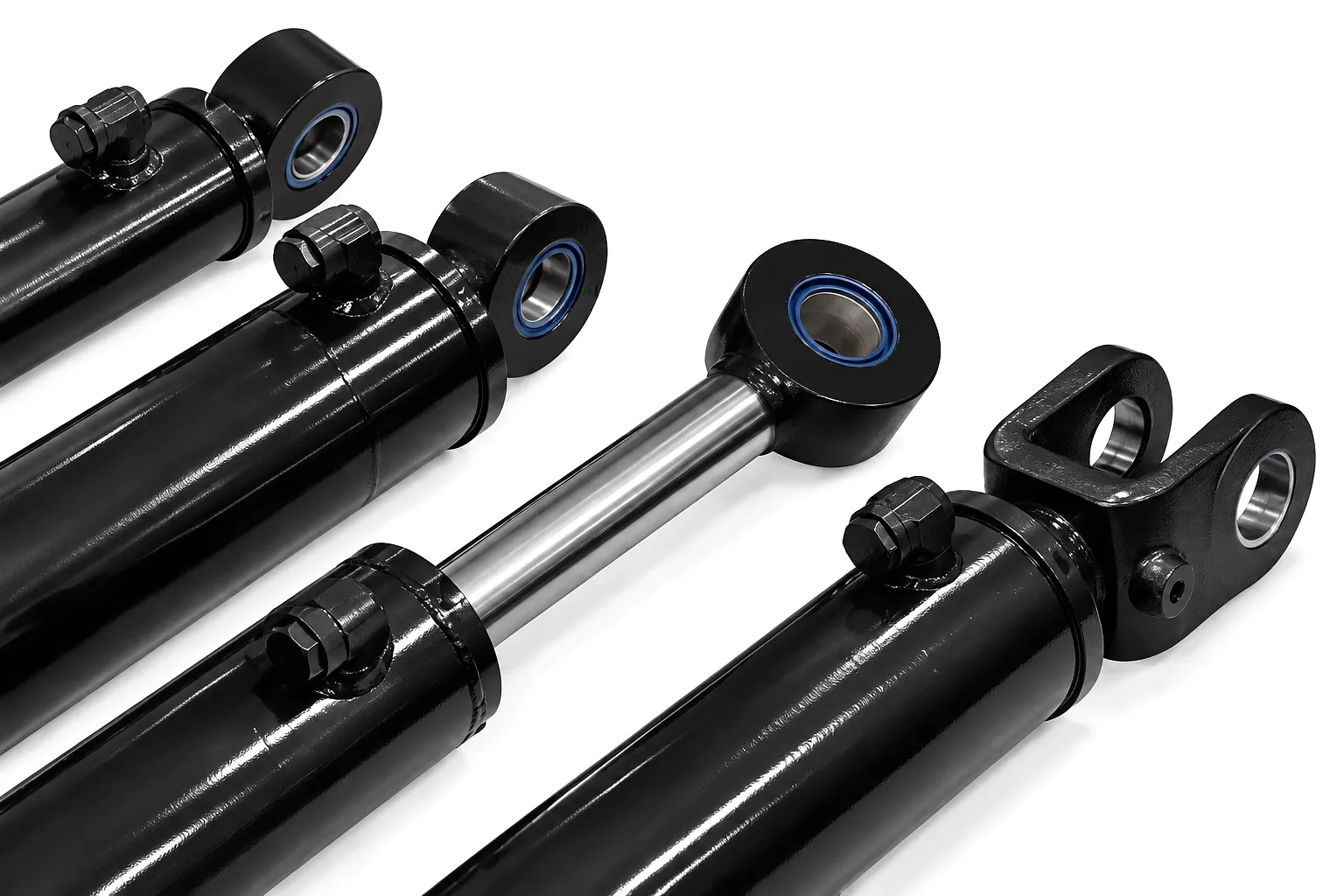 Walk across any active construction site in the West Midlands or peer into one of Sheffield’s surviving steel-handling yards, and the sheer variety of tipper trucks on site tells you something instantly: not all dump trucks are built for the same job, and not all hydraulic cylinders powering their beds are built the same way either. The telescopic hydraulic cylinder — whether single-stage or multi-stage — sits at the mechanical heart of every tipping body, and the wrong choice between the two can mean the difference between a truck that performs flawlessly across a decade of quarry work and one that suffers chronic seal failures and unscheduled downtime within eighteen months.
For fleet procurement managers, plant hire companies, and OEM body-builders operating across the UK, the question of which configuration best suits a given application rarely receives the depth of technical scrutiny it deserves. This article strips the subject back to engineering fundamentals — covering working principles, materials science, performance parameters, and real-world application matching — so that buyers can make confident, cost-justified decisions. Whether you’re speccing a 20-tonne aggregate tipper for operations around Manchester or a heavy-duty 40-tonne construction dump truck serving HS2-adjacent contracts in the East Midlands, the guidance that follows applies directly to your procurement challenge.
How Each Configuration Actually Works
1
Single-Stage Telescopic Cylinder
A single-stage telescopic hydraulic cylinder — sometimes called a single-acting or single-section telescoping ram — consists of one hollow outer barrel housing a single inner plunger tube that extends under hydraulic pressure and retracts either by gravity or spring return, depending on design. Hydraulic fluid is pumped from the truck’s power take-off (PTO)-driven pump into the base of the barrel. The resulting pressure acts uniformly on the piston surface area, pushing the inner tube outward in one smooth, linear movement.
Because the cylinder has only one moving element, the geometry of force transmission is highly predictable. The available stroke is fundamentally limited to slightly less than the barrel’s own length, which means these cylinders suit applications where the load-tip angle and the available chassis mounting depth allow a relatively compact retracted length. The force output is consistent throughout the stroke, since there is no stage-transition that creates a sudden shift in the effective piston area. This consistency is precisely what makes single-stage cylinders so prized in applications demanding steady, controllable lift characteristics, such as smaller aggregate tippers with body lengths up to roughly 5.5 metres.
2+
Multi-Stage Telescopic Cylinder
A multi-stage telescopic hydraulic cylinder nests two, three, four, or — in heavy-duty mining applications — even five concentric tubes of progressively smaller diameter inside one another, like a collapsible radio antenna. When hydraulic pressure is applied, the tubes extend in sequence: the outermost and widest tube moves first, then the second tube, then the third, and so on, until full extension is reached. Because each successive stage has a smaller bore diameter, the effective piston area — and therefore the force output at a given system pressure — changes at each transition point.
This sequential extension mechanism allows a multi-stage cylinder to achieve a total stroke that is many times its retracted length — often three to five times longer — which is indispensable for long-wheelbase tippers and articulated dump trucks with body lengths of 6 to 8 metres or beyond. The trade-off is complexity: more tubes mean more sealing interfaces, more precise bore tolerancing, and greater sensitivity to contamination in the hydraulic fluid. The engineering challenge is managing the force discontinuity that occurs each time a new, smaller-bore stage begins to extend, ensuring this doesn’t cause a jarring or unstable lifting behaviour.
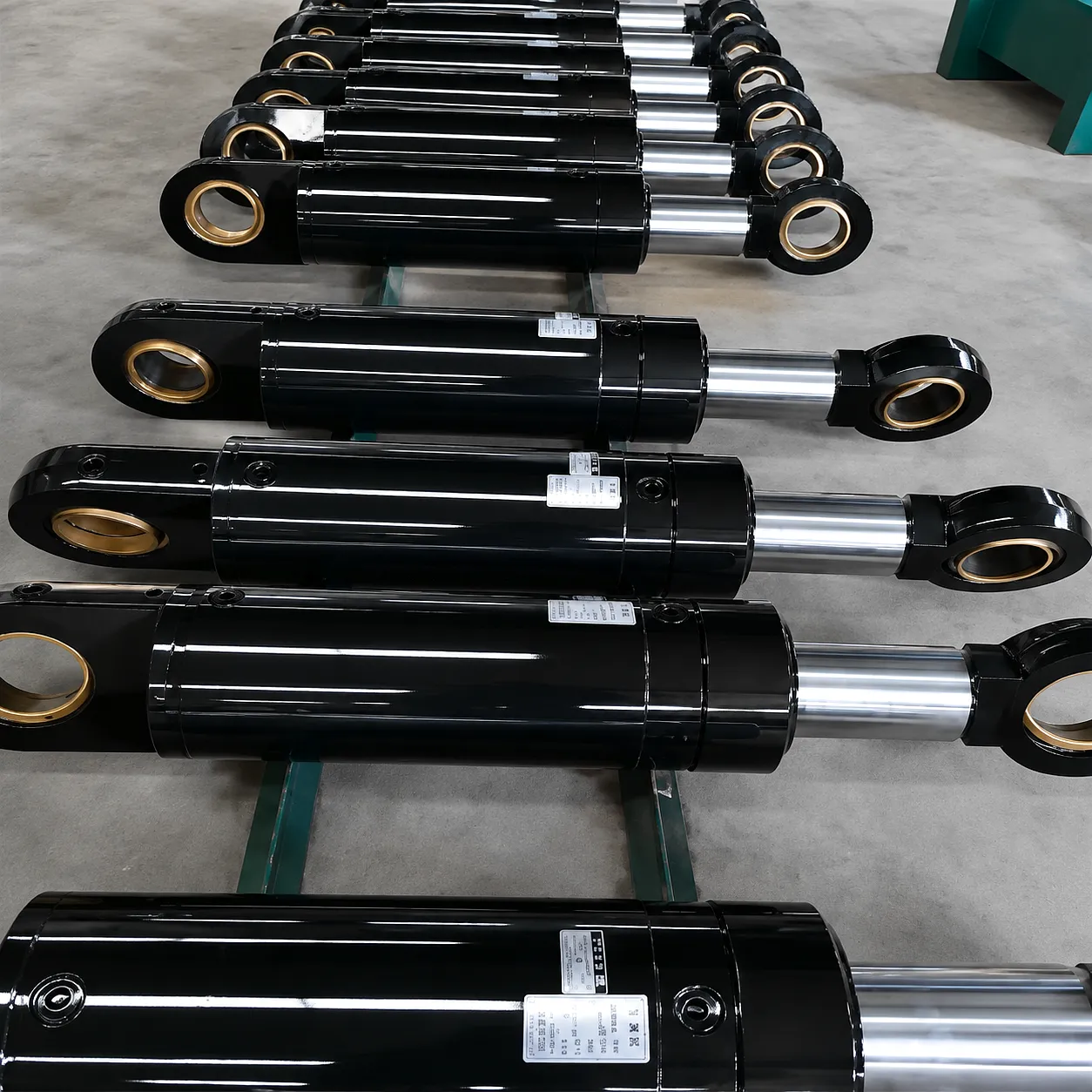
Core Materials: What Separates Long-Life Cylinders from Short-Life Ones
Material selection in a telescopic hydraulic cylinder is not a box-ticking exercise. For UK operators whose trucks may be exposed to road salt spray on Northern motorways, acidic quarry run-off in Welsh aggregate operations, or the abrasive muddy conditions common around East Midlands clay-extraction sites, the metallurgical and surface treatment choices made by the manufacturer have a direct and measurable impact on service life.
● Barrel and Tube Body — Cold-Drawn Seamless Steel
The outer barrel and intermediate stage tubes are typically manufactured from cold-drawn seamless (CDS) steel tubing, most commonly grades equivalent to E355 (formerly St52) or higher-strength variants. Cold drawing refines the grain structure and eliminates the weld seams present in electric resistance welded (ERW) tube, delivering a consistent bore geometry that is critical for seal integrity across thousands of extension cycles. For multi-stage units on heavy-duty tippers operating in demanding UK conditions, some manufacturers — Ever Power among them — specify honed bore finishes to Ra 0.4 µm or finer, reducing seal wear and extending the interval between hydraulic service intervals significantly.
● Piston Rod / Plunger — Chrome-Plated or Induction-Hardened
The exposed inner plunger — the element that makes direct contact with seal lips and is exposed to the environment when retracted — demands a surface that resists both corrosion and abrasion simultaneously. Hard chrome plating to a depth of 25–40 µm over a medium-carbon steel substrate (commonly 45# steel or equivalent) has been the industry standard for decades. Increasingly, however, ceramic composite or HVOF (high-velocity oxygen fuel) thermal spray coatings are being specified by premium manufacturers because they offer superior hardness (1,100+ HV versus chrome’s 850 HV) and eliminate the environmental concerns surrounding hexavalent chromium in plating chemistry. Induction hardening of the rod surface to 58–62 HRC before coating provides an additional toughness buffer against impact scoring.
● Seals and Bearing Rings — Polyurethane and PTFE Composites
Seal selection in a telescopic cylinder deserves far more attention than it typically receives. The guide rings that centre each stage within the next must have a lower coefficient of friction than the seal lips themselves, otherwise stick-slip at the transition from static to dynamic movement causes a jolting, uncontrolled lift. Filled PTFE guide rings, supported by phenolic or PEEK backing in high-load configurations, provide the necessary combination of low friction, dimensional stability across the -20°C to +100°C temperature range common in UK outdoor operations, and resistance to the mineral hydraulic fluids universally used in tipper circuits. Polyurethane rod seals offer better dynamic sealing pressure than nitrile (NBR) compounds and should be standard specification for any cylinder expected to exceed 200 bar system pressure.
● End Fittings — Forged Steel Clevises and Flanges
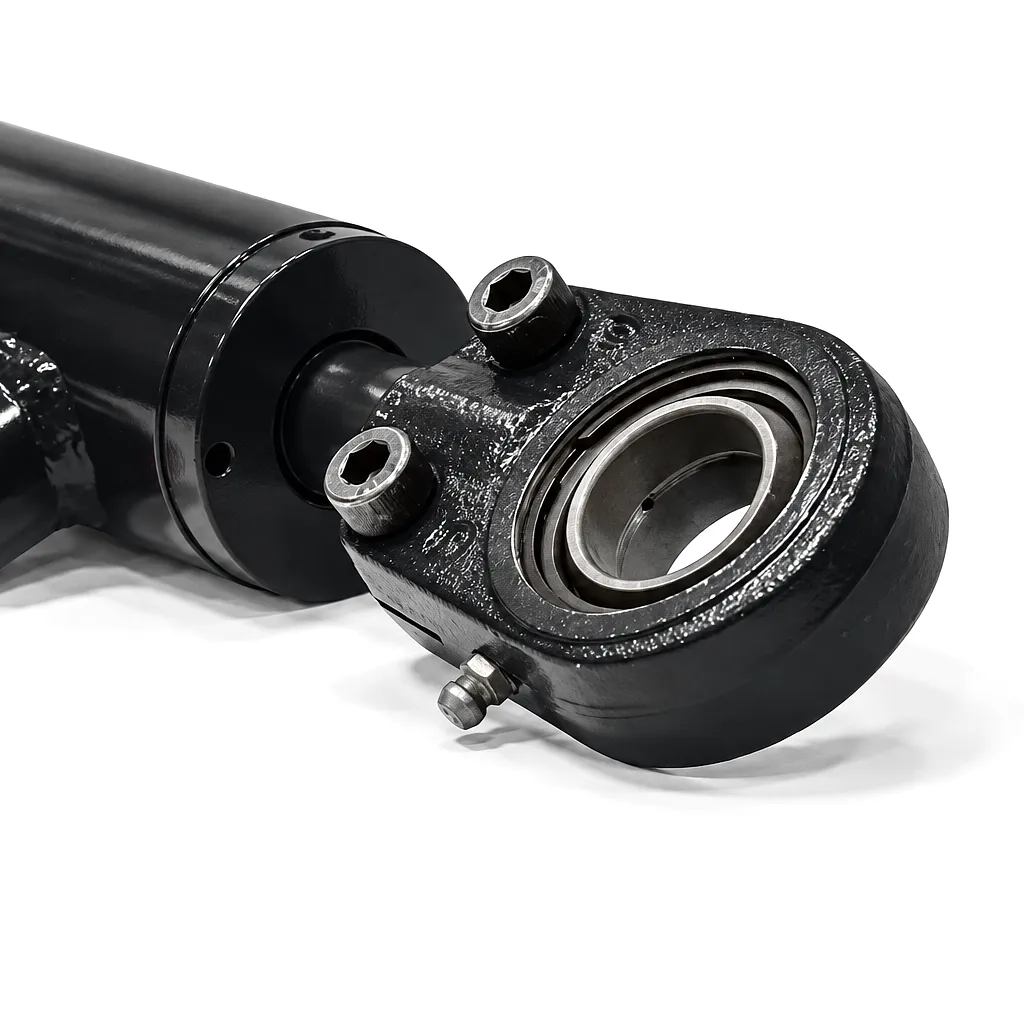
Both the base and head end fittings bear the full combined tensile and bending loads at the moment of tip initiation — the highest-stress event in the cylinder’s duty cycle. Forged steel clevises and flanged heads, machined to H7/h6 tolerance fits on pin bores, are the correct specification for commercial dump truck service. Cast fittings, while cheaper to manufacture, carry microporosity risks that can initiate fatigue cracks under the cyclic loading of a tipper application. Phosphate conversion coating followed by epoxy primer and polyurethane topcoat on all external steel surfaces provides adequate corrosion resistance for the UK operating environment, provided the coating is inspected and touched up at routine service intervals.
Product Technical & Performance Parameter Table
The following reference table covers the principal engineering parameters applicable to both single-stage and multi-stage telescopic hydraulic cylinders in dump truck service. Values represent the standard commercial range available from Ever Power; custom specifications are available upon request.
| Parametro |
Single-Stage |
Multi-Stage (2–5 Stage) |
Typical Unit |
| Bore Diameter (Outer Barrel) |
80 – 250 |
100 – 380 |
mm |
| Maximum Stroke |
800 – 2.500 |
1,500 – 8,000 |
mm |
| Operating Pressure (Rated) |
160 – 250 |
160 – 280 |
bar |
| Peak / Test Pressure |
up to 380 |
up to 420 |
bar |
| Extension Force (1st Stage) |
80 – 1,200 |
200 – 3,500 |
kN |
| Number of Stages |
1 |
2, 3, 4 or 5 |
— |
| Tube Material |
E355 CDS Steel |
E355 / S690Q |
— |
| Finitura della superficie del foro |
Ra 0.4 – 0.8 µm |
Ra 0.2 – 0.6 µm |
µm Ra |
| Rod Surface Hardness |
850 – 950 HV |
850 – 1,100+ HV |
HV |
| Operating Temperature Range |
-25°C to +100°C |
-25°C to +100°C |
°C |
| Seal Material (Standard) |
PU / PTFE |
PU / PTFE / FKM |
— |
| Mounting Options |
Clevis / Flange / Trunnion |
Clevis / Flange / Subframe |
— |
| Retraction Method |
Gravity / Spring / Double-Acting |
Gravity / Double-Acting |
— |
Core Technical Advantages Worth Understanding Before You Buy
The decision between single-stage and multi-stage is not simply about stroke length. Both configurations carry distinct engineering advantages that, when matched to the right application, deliver measurable returns in uptime, fuel efficiency, and total cost of ownership.
⚡
Consistent Force Delivery (Single-Stage)
Because there is only one stage, the full bore area acts throughout the entire stroke. This means no force drop-off as successive tubes engage — the operator experiences a smooth, even lift that is particularly valuable when tipping partially set concrete, wet aggregate, or other loads with variable flow behaviour that could cause stability concerns on side-tipping applications.
📈
Extended Stroke-to-Retracted Ratio (Multi-Stage)
A three-stage cylinder can achieve a total stroke of 3.0 to 4.2 times its collapsed length, enabling the same chassis sub-frame depth to lift a body 60–70% longer than would be possible with a single-stage unit. For long-wheelbase tippers and articulated vehicles common in UK motorway earthworks and aggregate supply chains, this ratio is the enabling factor for longer body designs without resorting to taller sub-frame architectures that compromise centre-of-gravity stability.
⚙
Low Maintenance Profile (Single-Stage)
Fewer sealing interfaces mean fewer potential leak points and fewer consumable items to stock. For fleet operators running tight maintenance schedules from depots in places like the Sheffield or Teesside industrial corridors, a single-stage cylinder can often be maintained on a bi-annual inspection cycle rather than the quarterly inspection regime warranted by a complex five-stage unit serving the same payload class.
🔭
Higher Payload Capacity at Full Stroke (Multi-Stage)
The large-bore first stage of a multi-stage cylinder generates very high thrust force at the start of the stroke — when inertia must be overcome and the body is still nearly horizontal. This force taper, whilst declining as smaller stages engage, closely mirrors the actual load demand profile of a real tipping event, where the hardest work occurs in the first 30° of body rise and progressively less hydraulic force is needed as the load begins to slide. This natural synergy makes multi-stage units inherently more energy-efficient in true heavy-payload tipping applications.
Featured Products
Precision-Engineered Boom Cylinders for Aerial & Lifting Applications
Stroke: 1458mm
Folding Boom Angle Cylinder for Aerial Work Vehicle
High-stroke precision cylinder for folding boom aerial platforms. Engineered for demanding lift-and-angle applications with sealed hydraulic integrity across the full stroke range.
Visualizza il prodotto →
Stroke: 555mm
Aerial Platform Main Boom Angle Cylinder
Compact main boom angle cylinder for aerial work platforms. Precision-machined bore and high-grade seal pack ensure reliable angle control in confined-space and rooftop access operations.
Visualizza il prodotto →
Application Scenarios: Matching the Right Cylinder to the Job
Understanding where each cylinder type excels is more practical than debating specifications in isolation. The following scenarios represent real-world UK procurement decisions.
Scenario 1 — Single-Stage
Short-Haul Aggregate Tipper — Yorkshire Quarries
Aggregate quarries around the Pennines and Yorkshire Dales typically operate 8×4 rigid tippers with body lengths of 4.8 to 5.4 metres, carrying crushed limestone or gritstone loads averaging 22–26 tonnes. The available sub-frame depth on a standard tandem-drive rigid chassis comfortably accommodates a single-stage telescopic cylinder with a stroke in the 1,800–2,200 mm range. At these payload levels and body lengths, a single-stage unit delivers more than adequate lift force throughout the tip arc, gravity retraction is reliable on well-maintained equipment, and the simplified construction means the quarry’s own fitters can replace seal kits without specialist training. The total cost of ownership over a seven-year asset life is typically 15–22% lower than a comparable multi-stage unit in this application class, because seal replacement intervals are longer and the hydraulic fluid contamination risk from multiple stage interfaces is eliminated.
Scenario 2 — Multi-Stage
Long-Wheelbase Construction Tipper — HS2 Corridor & East Midlands Earthworks
Infrastructure projects along the HS2 corridor — from Birmingham northward through Staffordshire and into the East Midlands — have driven significant demand for long-wheelbase 8×4 and 6×4 tippers with body lengths exceeding 6.5 metres, carrying spoil and bulk fill material in payloads up to 36 tonnes. In these configurations, a single-stage cylinder of sufficient stroke length would need to retract to over 3.0 metres, making it geometrically impossible to fit within the standard sub-frame envelope between cab back and rear axle group. A three-stage telescopic cylinder, by contrast, can deliver 5,500–6,200 mm of stroke while retracting to approximately 1,500–1,700 mm — well within the available mounting geometry. The force taper across stages is managed by correct system pressure selection and, on sophisticated truck spec, by a proportional control valve that moderates flow rate during stage transitions, delivering smooth body rise without jerking or body instability at full tip height.
Scenario 3 — Multi-Stage
Articulated Dump Truck — Scottish Highlands Mining & Peat Extraction
Articulated dump trucks (ADTs) operating in remote Scottish Highland mining, peat extraction, and forestry access construction sites present a unique set of challenges for cylinder selection. Body lengths on machines such as the Volvo A40G or Bell B45E range from 7.0 to 8.5 metres, and the oscillating hitch means the cylinder must also accommodate lateral deflection as well as pure axial loading during tipping on uneven ground. A four-stage or five-stage telescopic cylinder is the standard specification here, with the plunger designed to operate at a slight angular offset without seal extrusion. The extreme weather conditions — sub-zero ambient temperatures through a Scottish winter, sustained rain, and abrasive ground conditions — mean that seal compound selection (FKM fluoroelastomer in preference to standard polyurethane for enhanced low-temperature flexibility) and plunger coating choice (HVOF thermal spray over chrome plate) are directly cost-relevant decisions that affect the practical service life of the cylinder by two to three years across a typical 12,000-hour machine life.
Scenario 4 — Single or Dual-Stage
Municipal Waste Collection — Greater Manchester & Birmingham City Fleet
Municipal waste and recycling tipper bodies, as commonly operated by local authorities and their contracted fleet operators across Greater Manchester, Birmingham, and the wider West Midlands Combined Authority area, present a different set of requirements. The payload is relatively light (typically 10–18 tonnes), the tip cycle frequency is extremely high (up to 12–15 tips per shift), and the economic life of the body is expected to match the truck chassis life of 7–10 years with minimal major component replacement. In this context, a single-stage or twin-stage cylinder with a proven, replaceable seal kit and a guaranteed spare parts availability through UK-stocked distribution is the rational choice. The Ever Power range of compact telescopic cylinders, available ex-stock from UK distribution partners or supplied direct with typical lead times of 2–4 weeks from factory to delivered, has proven well-suited to this application class across multiple contracts in the North West and Midlands regions.
Manufacturing Excellence
Ever Power: Precision Manufacturing & Full Customisation Capability
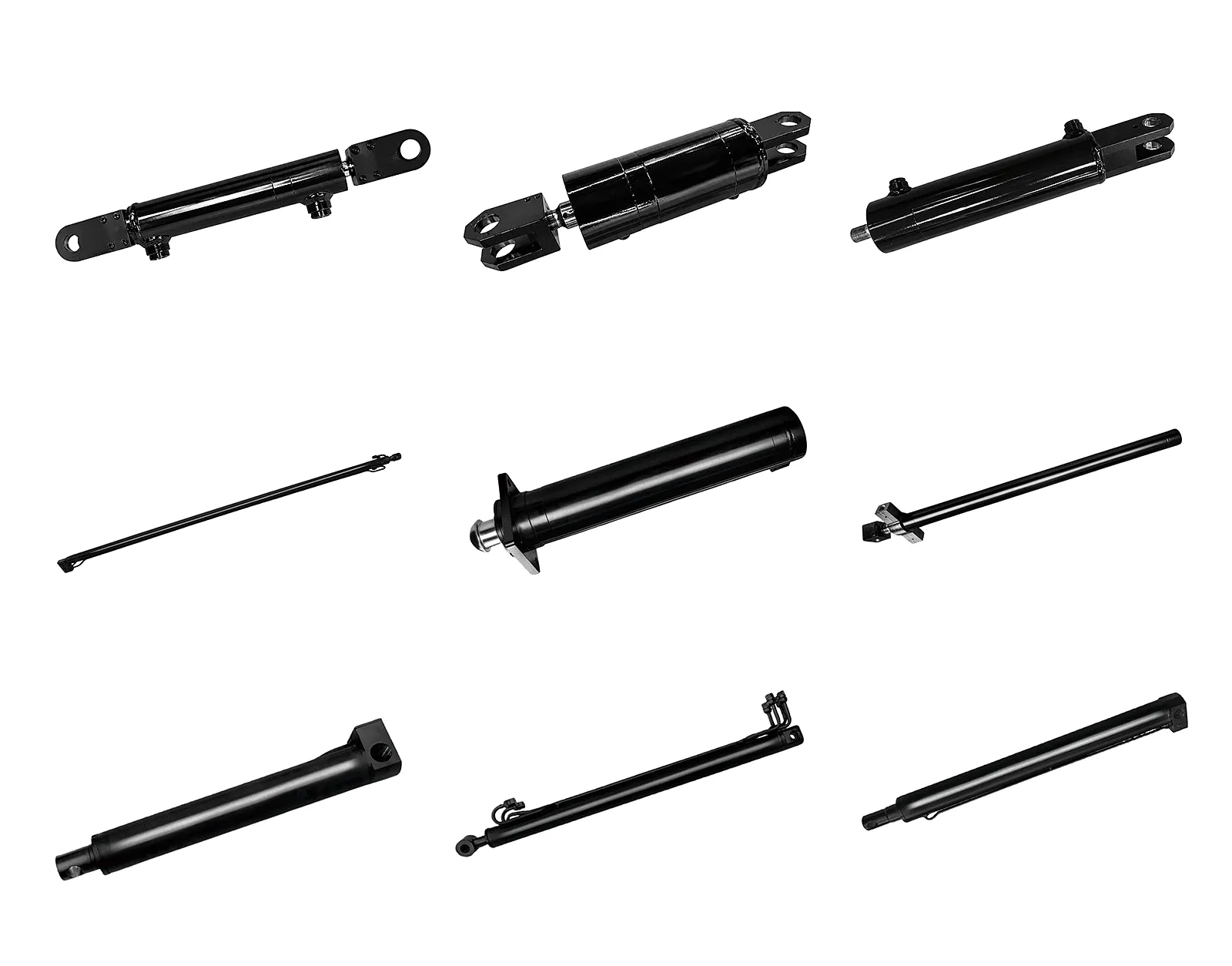
Ever Power operates one of the most versatile hydraulic cylinder manufacturing facilities in the industry, combining deep metallurgical knowledge with modern CNC honing, precision boring, and robotic welding capabilities. For UK buyers who need cylinders that go beyond catalogue specifications — whether matching a legacy truck chassis mounting geometry, upgrading from a failed OEM unit, or speccing an entirely new tipper body design — our customisation service provides a genuine end-to-end engineering partnership rather than a simple parts-supply transaction.
240+
Export domains across global B2B markets
Ra 0.2µm
Achievable bore honing surface finish standard
2–4wk
Typical lead time for standard UK orders ex-factory
5-Stage
Maximum stage count in standard production capability
Our supply chain resilience has been built deliberately over many years of serving demanding markets. Raw material procurement from certified steel mills, in-house heat treatment verification, full dimensional inspection at each machining stage, and hydrostatic pressure testing to 1.5× rated working pressure as standard — these are not exceptional practices at Ever Power; they are the baseline from which every shipment departs. UK buyers can request test certificates, material traceability documentation, and dimensional inspection reports as part of their standard order documentation, supporting compliance with BS EN ISO 4413 and the requirements of UK Statutory Inspection regimes for lifting and tipping equipment.
Customer Success Story: Rotherham Bulk Haulage — A Two-Year Performance Review
🏢
Thornton & Aldis Bulk Logistics, Rotherham, South Yorkshire
Steel Slag & Construction Aggregate Haulage · Fleet of 14 Tippers
 Thornton & Aldis Bulk Logistics is a family-owned haulier based in Rotherham, serving the residual demand from South Yorkshire’s legacy steel processing sites alongside rapidly growing earthworks contracts tied to housing development in the Don Valley corridor. Their fleet of fourteen 8×4 tippers, with body lengths ranging from 5.8 to 7.1 metres, had been experiencing chronic seal failures in the three-stage telescopic cylinders fitted to the longer-body vehicles — a problem costing the business approximately £4,200 in parts and lost tip time per vehicle per year.
Their transport manager, having investigated the root cause through bore inspection and seal analysis, identified that the cylinders from their previous supplier had been manufactured with bore surface finishes coarser than Ra 1.2 µm on the second and third stage tubes — well outside the Ra 0.4–0.6 µm range needed for the polyurethane seals to maintain integrity at the 220 bar operating pressure their hydraulic circuits regularly reached under full-load tip initiation. After approaching Ever Power with the technical data, the company was offered a custom three-stage telescopic cylinder with documented Ra 0.4 µm bore finish across all stages, HVOF-coated inner plunger, and FKM lip seals — specified and manufactured to match the existing chassis mounting geometry precisely, with no modifications to the sub-frame required.
Two years and over 6,000 tip cycles later, across the nine vehicles retrofitted with Ever Power cylinders in the first batch, not a single seal replacement has been required. The five remaining vehicles — still running the previous supplier’s units — have between them required eleven seal kits and two complete cylinder replacements in the same period. Thornton & Aldis are now in the process of standardising the Ever Power three-stage cylinder across their entire fleet and have extended their supply agreement to include an annual inspection and re-certification service, delivered in coordination with their own workshop team using Ever Power-supplied tooling and documentation.
What UK Customers Say About Ever Power Cylinders
★★★★★
“We’ve run hydraulic tipping gear for thirty years and these are without question the most dimensionally consistent cylinders we’ve fitted. The bore finish is noticeably different when you strip one down — you can see it and feel it. Seal life has more than doubled compared to what we were getting before. The custom mounting brackets they drew up matched our sub-frame perfectly, first time. Excellent technical support throughout the order process.”
D. Hinchliffe
Fleet Engineer, Hinchliffe Plant & Haulage Ltd — Sheffield
★★★★★
“We specified a four-stage cylinder for a 7.8-metre ADT body operating on a peat extraction contract in the Scottish Borders. Ever Power’s technical team came back within 48 hours with a full proposal covering bore diameters, stage progression, mounting geometry, and seal compound selection — including an explanation of why FKM was the right call for our low ambient temperature conditions. The cylinder arrived on time, test certs included, and has performed flawlessly through its first season. The price was very competitive for the specification level.”
R. MacAllister
Procurement Manager, MacAllister Ground Services — Edinburgh
★★★★★
“As a municipal fleet operator tendering for a new round refuse tipper contract in the Greater Birmingham area, we needed 22 identical single-stage cylinders with a specific port configuration and phosphate-coated exterior to meet our corrosion specification. Ever Power matched everything, supplied the full traceability documentation we needed for our ISO 9001 audit trail, and delivered in three weeks. The quote process was straightforward — no hidden costs on the freight side, which matters when you’re quoting fixed-price tenders. We’ll be going back.”
J. Perkins
Fleet Assets Director, Perkins Municipal Services Ltd — Birmingham
Domande frequenti
Questions commonly asked by UK fleet managers, procurement leads, and body-builders when specifying telescopic hydraulic cylinders for dump truck and tipper applications.
How do I know whether a single-stage or multi-stage telescopic hydraulic cylinder is the right choice for my UK dump truck application? +
The primary deciding factor is your truck body length relative to your available sub-frame depth. If your body is shorter than approximately 5.5 metres and your chassis allows a retracted cylinder length of 1.4–2.0 metres, a single-stage unit is almost always preferable for its simplicity and lower maintenance cost. If your body exceeds 6.0 metres or your chassis geometry does not allow sufficient retracted length for a single-stage unit of adequate stroke, a multi-stage cylinder is the correct solution. If you are unsure, send Ever Power your chassis datasheet and body specification and our engineering team will recommend the correct configuration and stage count.
What is the typical price range and lead time for a custom multi-stage telescopic hydraulic cylinder supplied to a buyer in Birmingham or the West Midlands? +
Standard catalogue-range single and twin-stage cylinders are available at pricing highly competitive with UK aftermarket suppliers, with lead times of 2–4 weeks ex-factory including sea freight to a UK port. Custom three, four, and five-stage cylinders require a quotation based on your specific bore diameters, stroke, pressure rating, and mounting configuration — contact
[email protected] for a detailed cost and lead time proposal. Volume orders for fleet standardisation typically attract preferential pricing and can be agreed on a consignment or call-off basis.
Which seal material is most suitable for a telescopic hydraulic cylinder operating on a tipper truck in cold UK winter conditions in Scotland or northern England? +
For ambient temperatures regularly below -10°C, FKM (fluoroelastomer) or low-temperature polyurethane compounds rated to -30°C are the recommended specification. Standard NBR nitrile seals become brittle and lose sealing pressure at temperatures below approximately -15°C, which causes slow weeping and — in severe cases — rapid seal extrusion under cold start-up pressure spikes. Ever Power offers FKM seal options as a standard-specification upgrade on any of our telescopic cylinder range; this is strongly recommended for any operator with vehicles working through Scottish winters or in northern Pennine conditions.
Where can I find a reliable UK-based hydraulic cylinder supplier that can provide traceability documentation and test certificates for compliance with BS EN ISO 4413? +
Ever Power supplies full material traceability documentation, dimensional inspection reports, and hydrostatic pressure test certificates as standard with all orders where this is requested at the time of quotation. These documents support compliance with BS EN ISO 4413 (hydraulic fluid power — general rules and safety requirements for systems and their components) and are formatted to be directly usable in ISO 9001 quality management audit trails. Contact our sales team at
[email protected] to specify your documentation requirements at the quoting stage.
How many tip cycles should I expect from a properly specified multi-stage telescopic hydraulic cylinder on a heavy-duty aggregate tipper working out of a Sheffield-area quarry? +
A correctly specified multi-stage telescopic hydraulic cylinder — with appropriate bore honing finish, correct seal compound for the operating temperature, clean hydraulic fluid maintained within ISO 4406 class 16/14/11 or better, and annual wiper seal inspection — should comfortably exceed 250,000 tip cycles before major overhaul is required. In quarry aggregate service in the Sheffield and South Yorkshire region, where tip cycles may average 8–12 per shift across 48 weeks of operation, this equates to a practical service life of 10–14 years before bore reconditioning or tube replacement becomes necessary. Hydraulic fluid cleanliness is the single biggest variable; operators who achieve and maintain ISO 4406 class 15/13/10 consistently typically report tip-cycle life in excess of 300,000 cycles.
What is causing my multi-stage telescopic cylinder to extend unevenly or jerk when the body starts to tip, and how can I fix this on a Manchester waste collection vehicle? +
Uneven or jerky extension in a multi-stage telescopic cylinder almost always indicates one or more of three root causes: stick-slip due to worn or incorrectly specified guide bearing rings; stage sequence reversal caused by partial internal blockage or contaminated hydraulic fluid restricting flow to an inner stage; or insufficient flow rate from the hydraulic pump causing pressure to drop below the cracking pressure of the next stage during extension. On a municipal waste vehicle in Greater Manchester, the first diagnostic step is to sample the hydraulic fluid for particulate contamination and check the reservoir filter condition. If the fluid is within specification, have the cylinder inspected for guide ring wear — on a high-cycle municipal vehicle, guide rings may need replacement at 100,000–150,000 cycles even if the seals are serviceable.
⚙
Ready to Specify the Right Cylinder for Your Fleet?
Send Ever Power your truck specification, body length, payload class, and operating conditions. Our engineering team provides a detailed cylinder recommendation and quotation, typically within 48 hours of receiving your enquiry.
📧 Get a Quote Now — [email protected]
modifica a cura di gzl

 Italian
  English
  Portuguese
  Dutch
Dutch  Swedish
  Danish
  Finnish
  Polish
  Hindi
Hindi  Kazakh
  Turkish
  Ukrainian
  Romanian
  Spanish
  German
  Russian
  Korean
  Japanese
  Vietnamese
  Thai
Thai  Indonesian
  Malay
Malay  French
  Greek
Greek