
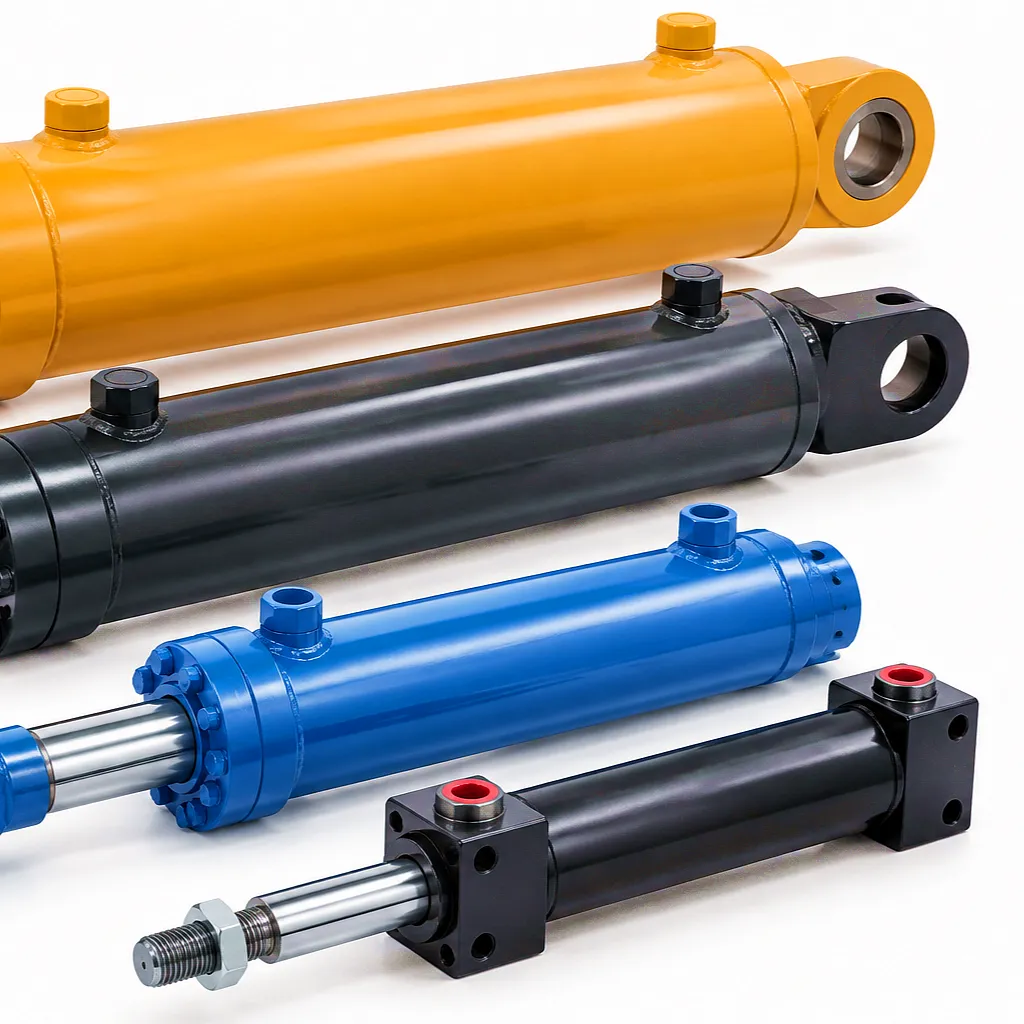
 Inside every hydraulic cylinder, a seemingly modest assembly of rings and lips is quietly doing one of the most demanding jobs in industrial engineering. Seals determine whether a cylinder holds its pressure or bleeds it away, whether a forklift lift platform rises smoothly or staggers, and whether a combine harvester’s boom arm responds crisply or lags. In the UK’s heavy industries — spanning automotive manufacturing in the West Midlands, offshore equipment assembly on the Humber Estuary, and agricultural machinery production across East Anglia — the specification of hydraulic cylinder seals carries direct consequences for uptime, safety, and whole-life operating cost. A seal that costs a few pounds at purchase can, if incorrectly selected or prematurely worn, trigger a cylinder replacement costing thousands and a production stoppage stretching days. Understanding seal types, the materials from which they are made, and the specific functions they serve within the cylinder assembly is therefore not merely technical background knowledge: it is a practical foundation for smarter procurement, more accurate maintenance scheduling, and better engineering decisions at the design stage.
How Hydraulic Cylinder Seals Actually Work
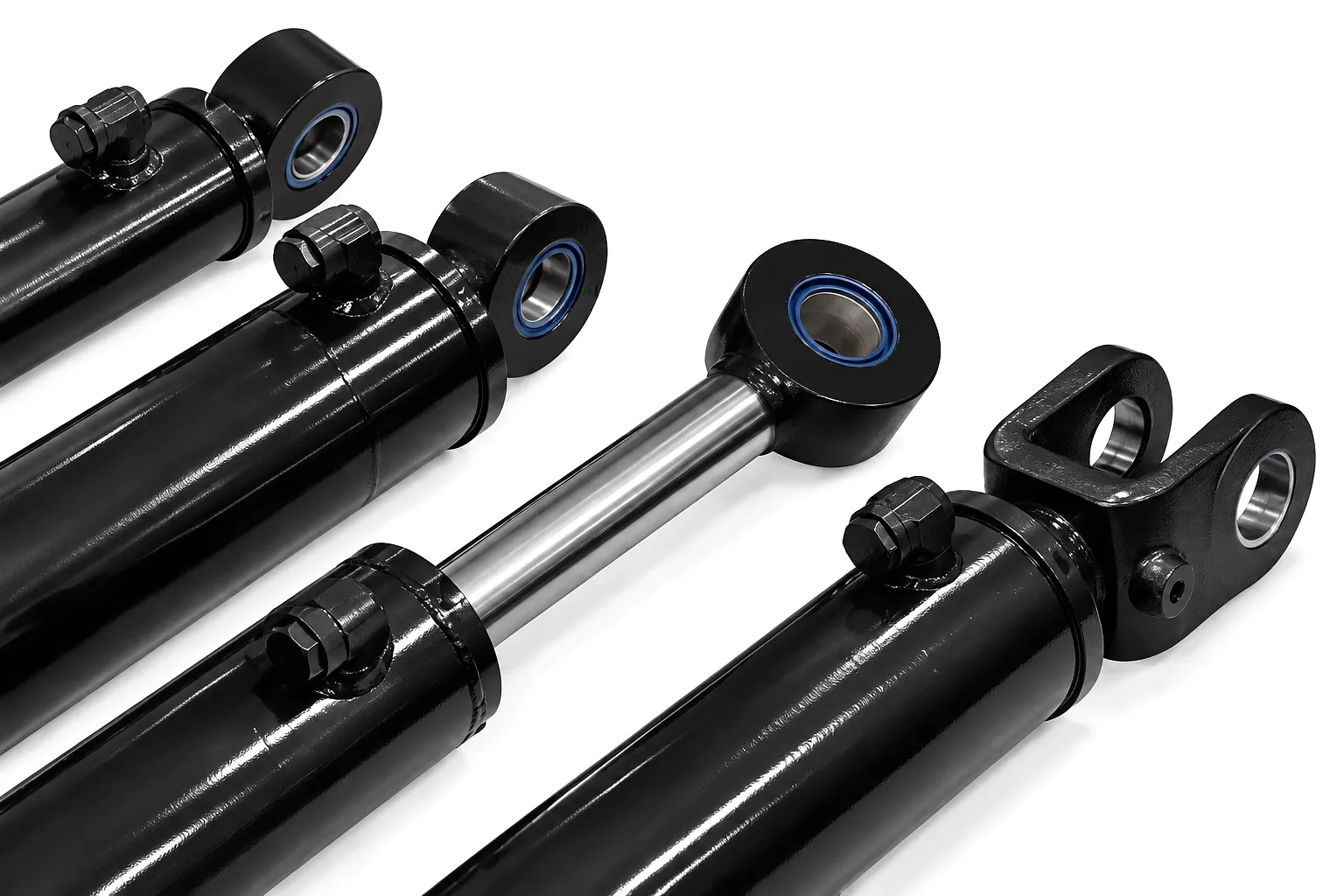 The fundamental operating principle of a hydraulic cylinder seal is elastohydrodynamic contact: under pressure, the seal’s lip or face is loaded against its mating surface — either the cylinder bore wall or the piston rod — with a contact stress that exceeds the fluid pressure trying to push past it. At rest, seals rely on mechanical interference fit to prevent static leakage. During motion, a controlled, microscopically thin film of hydraulic fluid is trapped between the seal face and the running surface. This film serves two purposes: it lubricates the seal to prevent dry-running damage, and it returns to the high-pressure side rather than passing through to the low-pressure zone. The geometry of the seal’s lip — its angle, contact width, and Shore hardness — determines how thick this film becomes and therefore how much fluid is allowed back, versus how much is wiped away on the rod’s return stroke. Too aggressive a lip geometry produces excessive friction, heat, and wear; too relaxed a geometry allows fluid film accumulation and visible external leakage. This balance is engineered into every seal profile, which is why interchanging seal profiles without considering the cylinder’s operating parameters — speed, pressure, temperature, fluid type — frequently leads to premature failure even when the seal’s dimensional specification matches perfectly.
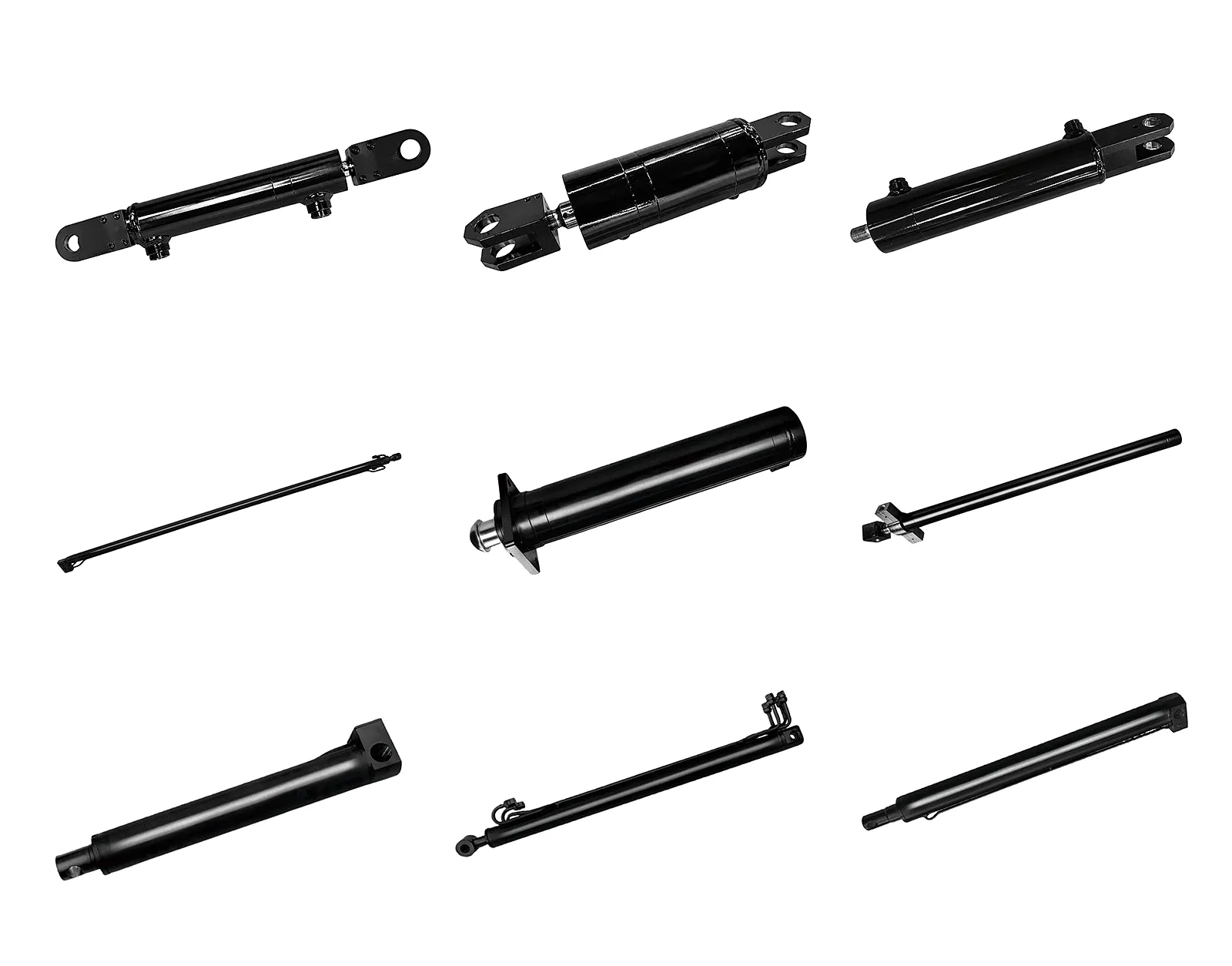
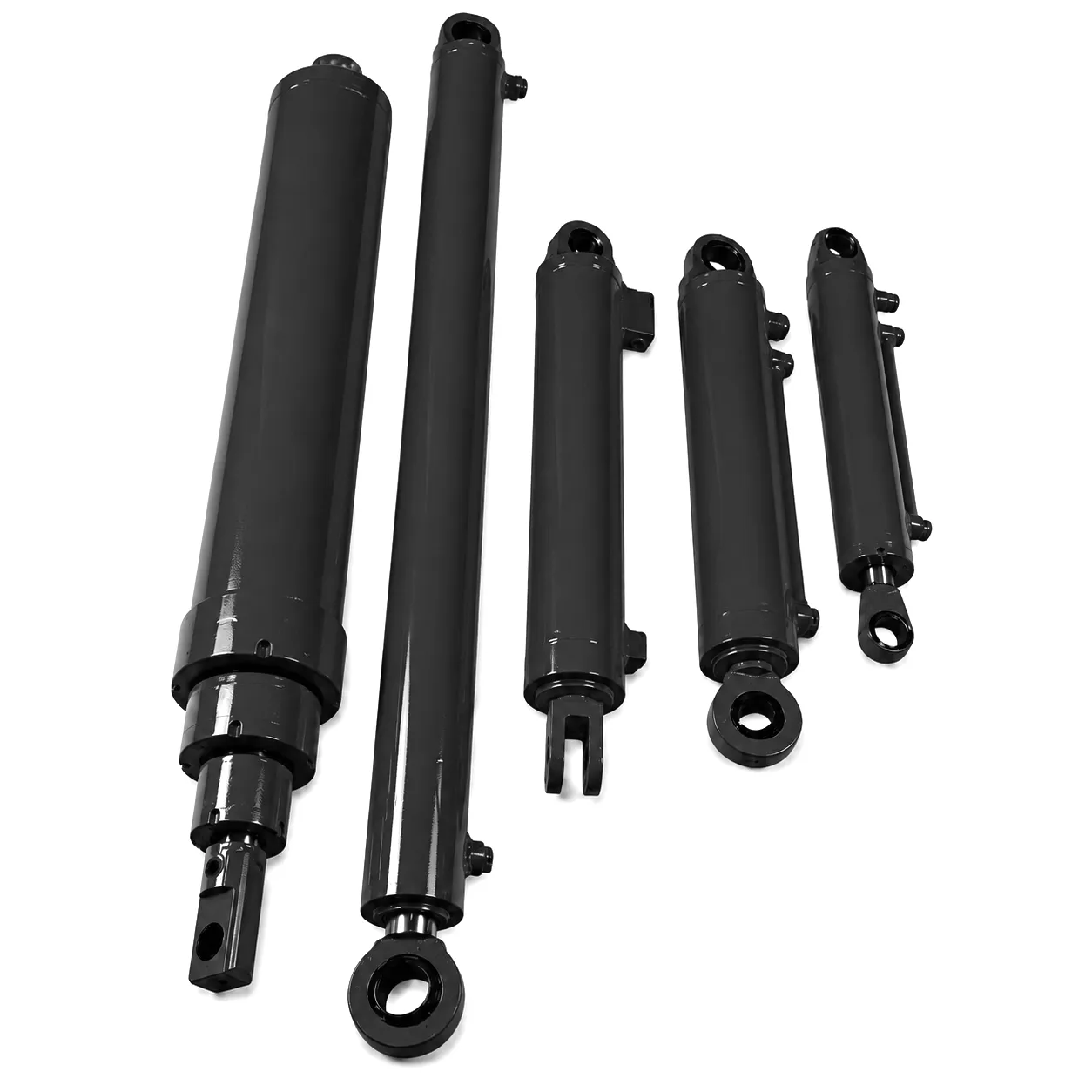
Ever Power Hydraulic Cylinder Product Range — Custom Engineering for Global Industry
Principal Seal Types Found in Hydraulic Cylinders
The Pressure Boundary Keeper
The piston seal sits in grooves machined into the piston head and contacts the bore wall of the cylinder barrel. Its job is to prevent hydraulic fluid from bypassing the piston — that is, from travelling from the high-pressure side of the cylinder to the low-pressure side without doing mechanical work. This bypass, known as internal leakage or slip, directly reduces the cylinder’s effective force output. In a double-acting hydraulic cylinder used on a hydraulic lifting platform or a combine harvester’s header lift circuit, even a modest degree of internal leakage causes the load to drift downward under static hold, creates a spongy, imprecise response during controlled movement, and increases the cycle time needed to complete a full stroke. Piston seals are typically manufactured in a composite configuration: a relatively hard PTFE (polytetrafluoroethylene) bearing element forms the primary sealing face, energised by an elastomeric O-ring or back-up ring sitting behind it. The O-ring maintains contact load as the PTFE wears, extending service life and maintaining sealing integrity without manual adjustment. Some heavy-duty cylinder configurations employ double piston seals in tandem, with a floating mid-ring between them, to handle very high system pressures — common in the hydraulic press circuits found in West Midlands metal-forming facilities operating at pressures above 250 bar.
External Leakage Prevention
Where the piston rod exits the cylinder head, the rod seal assembly creates the barrier between the high-pressure hydraulic environment inside the cylinder and the external atmosphere. External leakage — hydraulic oil visibly weeping down a cylinder rod — is the most immediately obvious sign of seal failure, and in many UK industries it triggers an automatic plant stoppage under environmental and health-and-safety protocols. The rod seal must handle a highly demanding combination of loading conditions: during the extension stroke, it is loaded against the rod by system pressure from behind; during retraction, system pressure is reversed. The seal must maintain effective contact under both conditions while accommodating the thin film of oil that clings to the rod surface as it retracts — managing this film so that it is wiped back into the cylinder rather than expelled as droplets. Rod seal assemblies typically incorporate a primary lip seal — often a polyurethane single-lip or double-lip profile — combined with a buffer seal positioned inboard of it. The buffer seal absorbs pressure spikes before they reach the primary seal, dramatically extending its service life in circuits with pressure transients from valve switching, load impacts, or regenerative braking on mobile machinery. In Sheffield’s precision engineering sector, where hydraulic test rigs operate at very rapid cycle rates, the combination of buffer seal and primary rod seal in a tandem arrangement is standard practice.
Contamination Defence
The wiper seal — also referred to as a scraper or excluder seal — sits at the outermost position in the cylinder head, facing the external environment. Its single mission is to prevent abrasive particulates, moisture, and chemical contaminants from entering the hydraulic circuit as the rod retracts. In the UK agricultural sector, where self-propelled machines work through dense crop residue and throw up soil containing quartz particles with a Mohs hardness of 7, the wiper seal is often the first component to wear. Its failure accelerates the degradation of every other seal in the cylinder because contaminants ingested past it act as a lapping compound on the rod seal and the cylinder bore. High-performance wiper seals used in this environment incorporate a dual-lip design: the primary lip faces outward and sweeps solid material from the rod surface during retraction; a secondary inward-facing lip provides a secondary barrier. Some bespoke cylinders — including those manufactured to specification at Ever Power’s facilities for UK agricultural OEMs — incorporate a metal scraper ring ahead of the elastomeric wiper where the operating environment includes large, rigid debris such as crop stones, and these are increasingly specified for combines harvesting in parts of Lincolnshire and Yorkshire known for flint-heavy soils.
Load-Bearing Alignment
Though guide rings do not seal in the conventional sense — they are not tasked with preventing fluid passage — they are classified within the cylinder’s seal package because they occupy groove positions within the seal stack and are replaced during seal kit changes. Guide rings, also known as wear rings or bearing rings, centre the piston within the bore and the rod within the cylinder head, absorbing the lateral (side) loads that arise when a cylinder is operating under offset loading conditions. Without correctly sized and properly rated guide rings, the piston and rod assemblies would make metal-to-metal contact with the bore wall and cylinder head bore respectively, causing catastrophic scoring of the carefully honed running surfaces — surfaces that cost considerably more to rework than the full original cylinder in some cases. Guide rings are typically manufactured from a filled PTFE compound or a glass-reinforced polymer, chosen for low friction coefficient, dimensional stability at operating temperatures, and resistance to the hydraulic fluids used in the circuit. In heavy-duty single-acting cylinders used in industrial dock levellers and loading bay equipment serving distribution centres across the East Midlands and along the M1 corridor, guide ring specification is particularly critical because the cylinders operate under significant cantilever loading from vehicle ramps.
Seal Materials: What They Are Made From and Why It Matters
The industry standard for the majority of hydraulic cylinder applications where system temperatures remain below 100°C and the hydraulic fluid is a mineral-based oil or water-based emulsion. NBR offers excellent resistance to petroleum-based fluids, good mechanical strength, and a competitive cost profile. It is the default material in standard OEM seal kits supplied for agricultural hydraulic cylinders across the UK. Its limitation is degraded performance with synthetic ester-based fluids and poor resistance above 120°C.
Polyurethane seals offer markedly superior wear resistance compared with NBR, typically delivering two to three times longer service life in dynamic sealing applications. Their high tensile strength and resistance to abrasion make them the preferred rod seal material in cylinders operating in environments where rod surface contamination is unavoidable, such as in waste compaction equipment across municipal fleets in Greater Manchester and roadside recovery equipment. PU seals perform well at pressures up to 500 bar, with typical operating temperature ranges of -30°C to +100°C. Their Achilles heel is susceptibility to hydrolytic degradation when exposed to water-based or high-water-content hydraulic fluids for extended periods.
PTFE’s exceptionally low coefficient of friction — among the lowest of any solid material — makes it the material of choice for piston seals and guide rings in precision cylinders where stick-slip must be eliminated. Stick-slip, the jerky movement caused by the transition between static and dynamic friction, is unacceptable in hydraulic proportional control systems used in machine tool clamping, semiconductor handling, and medical scanning equipment. PTFE alone lacks structural strength; in seal applications it is invariably compounded with fillers — glass fibre, carbon, bronze, or graphite — each filler improving different properties of wear resistance, thermal conductivity, or load-bearing capacity.
Fluoroelastomer (FKM) seals represent the premium tier of hydraulic cylinder sealing in terms of chemical and thermal resistance. Rated for continuous service at temperatures up to 200°C, with peaks to 230°C in short-duration exposure, FKM seals are mandatory in hydraulic circuits handling phosphate ester fire-resistant fluids (used in aircraft ground equipment and steel plant rolling mills), aggressive synthetic lubricants, and in offshore hydraulic systems where biodegradable esters are mandated. UK offshore installations in the North Sea specify FKM seal kits as standard in subsea actuators precisely because replacement in situ is not possible — the seal must run for the full maintenance interval without inspection.
EPDM seals are selected specifically for hydraulic circuits using water-based or phosphate-ester fire-resistant fluids and for applications requiring ozone and weathering resistance. They are incompatible with mineral oil — a critical installation check that catches out maintenance technicians unfamiliar with the material — but in the right fluid environment they offer excellent longevity. Their use in UK mobile elevated work platforms (MEWPs) operating outdoors in the variable British climate has grown significantly as operators seek to reduce fluid leakage incidents on public and construction sites under Environment Agency guidance.
Hydraulic Cylinder Seal: Technical Performance Parameters
| Parametro | NBR | Polyurethane | PTFE (filled) | FKM / Viton | EPDM |
|---|---|---|---|---|---|
| Max Pressure (bar) | up to 400 | up to 500 | up to 350 | up to 400 | up to 250 |
| Temperature Range | -40°C to +100°C | da -30 °C a +100 °C | -70°C to +260°C | -20°C to +200°C | -40°C to +120°C |
| Friction Coefficient | 0.05 – 0.12 | 0.04 – 0.10 | 0.02 – 0.05 | 0.05 – 0.12 | 0.06 – 0.14 |
| Abrasion Resistance | Good | Excellent | Good (filled) | Good | Moderate |
| Mineral Oil Compatibility | ✓ Excellent | ✓ Excellent | ✓ Excellent | ✓ Good | ✗ Incompatible |
| Shore Hardness (typical) | 70 – 90 ShA | 80 – 95 ShA | 55 – 65 ShD | 70 – 90 ShA | 60 – 80 ShA |
| Typical Seal Role | Piston, rod, static | Rod, wiper | Piston, guide ring | Rod, static (high temp) | Water-based circuits |
Featured Hydraulic Cylinder Solutions
Hydraulic Cylinders For Combine Harvester Machine
Purpose-built cylinders designed to withstand the severe contamination environment of grain harvesting. Seal packages include dual-lip wipers suitable for grain dust and crop stone ingestion conditions common across Lincolnshire and East Anglian farms.
Heavy Duty Single Acting Hydraulic Cylinders
High-capacity single-acting cylinders with premium-grade NBR or polyurethane seal packages, rated for continuous-duty press and lifting applications. Widely used in dock leveller equipment serving distribution centres across the East Midlands and Yorkshire logistics corridors.
Industrial Application Scenarios: Where Seal Selection Changes Outcomes
In arable farming across the Vale of York and the Lincolnshire Fens, hydraulic cylinders on grain harvesters, straw balers, and crop handling conveyors operate through seasons that begin in morning dew and end in cloud of harvested dust. Cylinder rod seals in these machines are under continuous attack from fine silica particles that adhere to rod surfaces and are then drawn inward on each retraction stroke. Operators across this region have found that upgrading from standard NBR rod seals to polyurethane lip seals with an integral metal scraper ahead of the elastomeric wiper can extend seal kit service intervals from one harvest season to three, dramatically reducing workshop downtime during the narrow harvest window. For the hydraulic cylinder serving the header tilt and reel height adjustment circuits on a combine harvester — cylinders that make thousands of micro-corrections per field — the combination of a low-friction PTFE piston seal and a PU rod seal represents the practical performance and cost optimum under these conditions.
The special steels sector concentrated in Sheffield and Rotherham represents one of the most demanding environments for hydraulic cylinder seals in any UK industry. Rolling mill presses, forging hammers, and descaling equipment operate with hydraulic systems that reach fluid temperatures of 70°C to 90°C continuously and may spike higher during intensive rolling sequences. In many of these facilities, fire-resistant phosphate ester fluids are mandatory under UK insurance and fire authority requirements. This fluid choice makes FKM the only acceptable elastomer for rod and piston seals — NBR swells dramatically and rapidly fails in phosphate ester environments. Guide rings in these applications are typically specified in carbon-filled PTFE for thermal stability, and seal kits carry traceability documentation to BS EN ISO standards because the mills operate under regulated quality management systems. Cylinder stroke lengths in large forging presses can exceed 2,000 mm, meaning the rod seal must perform reliably over very long wipe lengths at each cycle — a factor that makes buffer seal design critical to prevent the pressure spikes generated by press impact loading from being transmitted directly to the primary rod seal lip.
Telescopic hydraulic cylinders deployed in lifting platforms — whether vehicle-mounted aerial work platforms or fixed dock levellers — impose a particularly challenging operating regime on their seal packages because of the staged bore and rod diameter changes inherent in telescopic design. Each stage of a custom double-acting telescopic hydraulic cylinder carries its own piston and rod seal set, and the system must equalise pressure across stages reliably. Additionally, the extended duration of static hold — a loaded platform held at height for a work shift — places the static O-ring seals under prolonged compression set conditions. NBR O-rings specified without regard to fluid temperature and hold duration can take a permanent set and lose their recovery force, allowing slow static leakage that manifests as platform drift, a safety-critical failure mode covered under LOLER regulations applicable to lifting equipment across UK industry. A properly specified custom telescopic hydraulic cylinder — such as those produced by Ever Power for UK lifting platform OEMs — incorporates O-rings with controlled compression set resistance appropriate to the expected static hold duration, providing platforms that maintain position under load without measurable drift throughout their rated service life. Similarly, the custom telescopic hydraulic cylinder for lifting platforms benefits from carefully selected seal geometry to maintain smooth, controlled descent under varying loads.
Municipal refuse collection vehicles operating across Birmingham’s densely serviced residential boroughs, London’s mixed-use commercial zones, and Glasgow’s high-frequency collection routes subject their hydraulic cylinder seals to conditions that combine rapid cycling, heavy contamination, and wide temperature excursion. Refuse compaction cylinders — the large-bore rams that compress collected waste in the vehicle body — cycle thousands of times per operational day, and the compaction process sprays fermented liquid, grit, and abrasive packaging material across exposed rod surfaces. Polyurethane wiper seals with high-hardness outer lips have established a clear service life advantage over standard NBR wipers in this application. At the same time, the cylinders are parked outdoors overnight across the British winter; the seals must retain their elastic recovery when ambient temperatures have dropped to near freezing, making low-temperature flexibility a critical material parameter alongside the high-abrasion performance needed during daytime cycling. This combination of requirements typically points to a PU primary seal with NBR buffer O-rings, selected for their robust low-temperature compliance, with a polyurethane wiper specified at 92 Shore A — hard enough to scrape effectively, compliant enough to maintain contact at low temperatures without cracking.
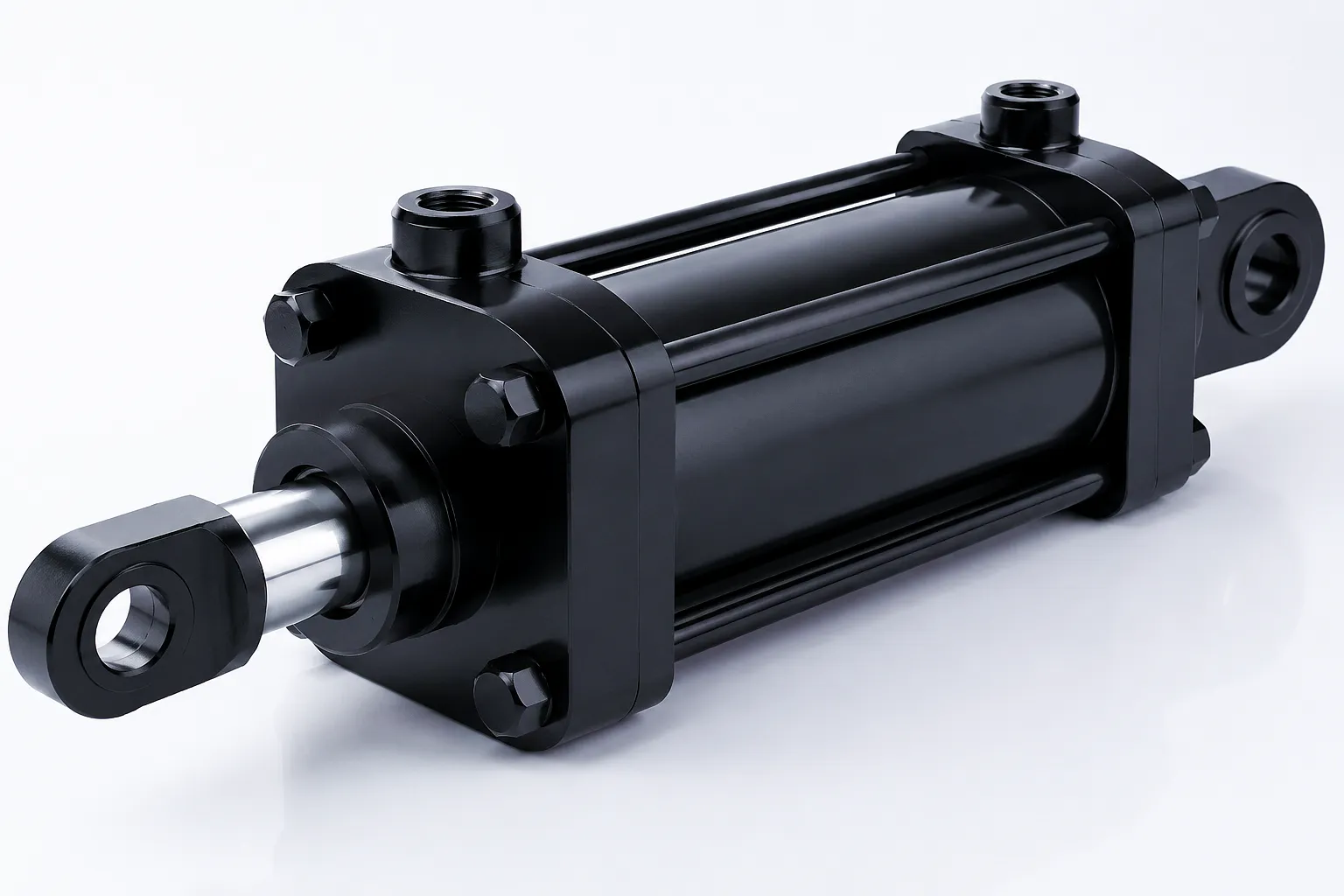
Caso di successo del cliente
Birmingham, West Midlands — Precision Sheet Metal Forming Facility
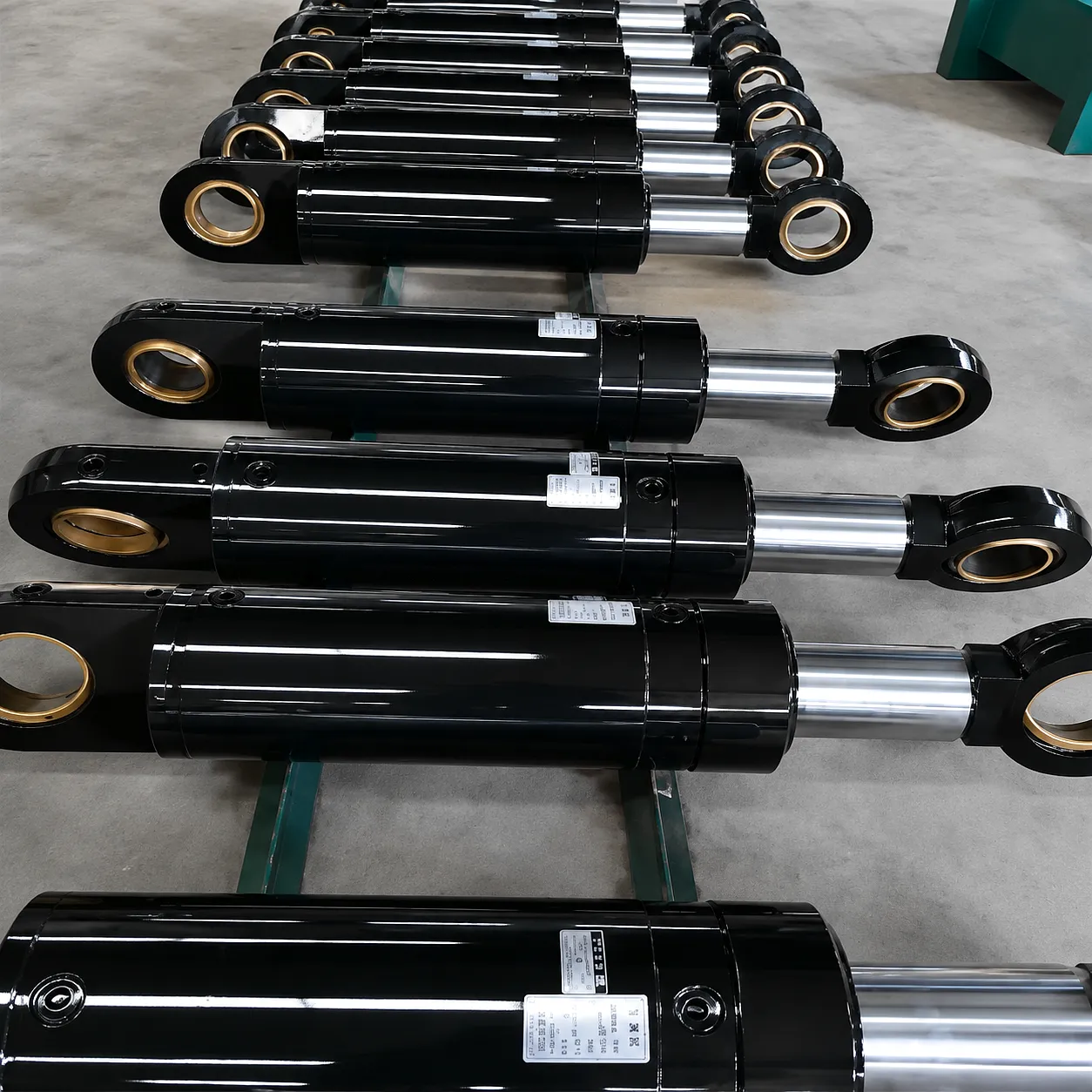 A precision metal forming company operating three progressive die presses in Birmingham’s Bordesley Green manufacturing district had been experiencing an accelerating pattern of hydraulic cylinder rod seal failures across their 60-tonne press bank. The cylinders — running at 280 bar system pressure on a mineral hydraulic oil circuit — were failing rod seals on average every eleven weeks, generating unplanned maintenance interventions that typically cost 14 to 20 hours of press downtime per event. Analysis of the failed seals revealed that the standard NBR rod seals specified in the original cylinder build were being subjected to pressure spikes of 340 to 380 bar during the rapid die-closing phase, well in excess of the seals’ rated operating pressure. The spikes were occurring because the cylinder circuit lacked adequate buffer seal protection between the system pressure and the primary rod seal.
The company contacted Ever Power following a recommendation from their hydraulic system integrator. Ever Power’s engineering team reviewed the cycle data, identified the spike profile, and proposed a replacement rod seal assembly incorporating a 90 Shore A polyurethane primary lip seal energised by a back-up ring, with a compact buffer seal of high-density PU positioned in a second groove machined into the cylinder head during refurbishment. The piston seals were simultaneously upgraded to a PTFE-faced energised profile to reduce friction and eliminate the stick-slip the press operators had been managing with compensatory hydraulic pressure settings. The complete refurbished cylinder package was delivered within twelve working days of the engineering review. The Birmingham facility reports that twelve months after installation, not a single rod seal failure has occurred on the refurbished press bank. Press cycle time has reduced by approximately 4% because the lower-friction piston seals respond more sharply to control inputs. Annual maintenance expenditure attributable to hydraulic cylinder seal replacement has decreased by over 80%.
“The upgrade to polyurethane rod seals and the buffer seal addition completely eliminated the seal failures we’d been living with for two years. Ever Power’s technical team understood our pressure spike problem immediately and engineered a solution rather than just swapping in the same specification. The lead time was genuinely impressive for a custom refurbishment.”
“We specified FKM seal kits from Ever Power for our phosphate ester press circuits after burning through three alternative suppliers’ NBR kits in rapid succession. Ever Power were upfront about material compatibility from the first conversation, documented the spec properly, and the cylinders have now run for 18 months without any seal-related stoppage. That’s the kind of straightforward technical knowledge we need from a supplier.”
“Our combine harvester cylinder seal kits were lasting one season at best in our Lincolnshire operation. After switching to Ever Power’s custom dual-lip wiper and PU rod seal package, we’ve gone through a full harvest and a wet autumn without a single rod seal weep. The cylinders look and feel as tight as when they were new. The price point for a custom kit was also better than we expected.”
Domande frequenti
Voice-search friendly answers for UK procurement and engineering teams
The starting points are system pressure, operating temperature, hydraulic fluid type, and cylinder duty cycle. For standard mineral oil systems below 250 bar and 80°C — the conditions found in most UK agricultural and general industrial cylinders — an NBR seal kit is the baseline choice. If your system runs phosphate ester fluid (common in UK steel mills and aircraft ground equipment), or if temperatures regularly exceed 120°C, FKM is required. If abrasion is the primary concern — as in aggregates, farming, or construction — polyurethane wiper and rod seals will deliver significantly longer service life. Ever Power can review your cylinder specification and recommend the optimal seal package; contact [email protected] with your operating parameters.
Custom seal kit pricing depends primarily on cylinder bore diameter, rod diameter, seal material, and order quantity. Standard NBR seal kits for small-to-medium bore cylinders (50 mm to 100 mm) typically range from £18 to £85 per kit in single quantities, with significant per-unit reductions at production volumes. FKM kits carry a price premium of roughly 3 to 5 times the equivalent NBR kit, reflecting material cost. Ever Power stocks standard-dimension kits in European warehouses for next-day despatch to UK addresses. Custom-dimensioned kits carry a production lead time of 10 to 15 working days. Request a specific price and lead time by sending your cylinder datasheet to [email protected].
Premature rod seal failure on combine harvesters in these regions is almost always caused by abrasive ingestion past the wiper seal. Quartz particles in harvested grain and soil contamination adhere to the rod surface during cylinder extension and are then drawn inward past an inadequately rated wiper on retraction. These particles then abrade the rod seal lip from the inside, causing leakage that worsens progressively. Upgrading from a standard NBR single-lip wiper to a polyurethane dual-lip wiper, or adding a metal scraper ahead of the wiper in high-flint-content soil conditions, resolves this failure mode in the majority of cases. Ever Power supplies custom seal kits with this configuration and can despatch to UK addresses. Send your cylinder dimensions to [email protected] for a same-day quote.
FKM (fluoroelastomer, commercially known as Viton) is the mandatory specification for any elastomeric seal component — rod seals, piston seals, O-rings, and buffer seals — in contact with phosphate ester hydraulic fluids. NBR seals swell and soften rapidly in phosphate ester, typically failing within weeks. EPDM seals offer a lower-cost alternative for static O-ring positions in phosphate ester circuits, but dynamic seals must be FKM. Guide rings and bearing rings can remain PTFE-compound, which is chemically inert to phosphate ester. Ever Power can supply complete FKM seal kits with traceability documentation to ISO standards, suitable for the regulated quality management systems operating in Sheffield and Rotherham steelworks.
Quoting a custom seal kit requires: cylinder bore diameter (mm), piston rod diameter (mm), stroke length (mm), system operating pressure (bar), hydraulic fluid type, and operating temperature range. If you have an existing seal kit with part numbers, or can provide a cylinder datasheet or cross-section drawing, our engineers can typically turn around a written quotation within 24 hours. Send enquiries to [email protected] and include your delivery postcode for freight cost calculation. Volume pricing is available for fleet operators, OEM customers, and maintenance contractors managing multiple sites across the UK.
A buffer seal is a secondary dynamic seal positioned inboard of the primary rod seal in the cylinder head. Its function is to absorb high-pressure spikes — momentary pressure excursions that can exceed normal system pressure by 30% to 50% — before they reach the primary rod seal. These spikes are generated by rapid valve switching, load impacts in press applications, or regenerative braking in mobile machinery. Without a buffer seal, each spike loads the primary rod seal’s lip at a contact stress significantly above its rated design point, accelerating wear and fatigue. Buffer seals are particularly recommended in any UK press application, high-cycle industrial cylinder circuit, or mobile machine with load-sensing hydraulics. They add a modest cost to the cylinder head assembly but typically extend primary seal service life by a factor of two to three in spike-prone circuits.
Ever Power’s engineering team is available to assist UK procurement and engineering professionals with seal selection, custom kit quotation, and technical support.
✉ Get Your Quote — [email protected]
modifica a cura di gzl
 Italian
  English
  Portuguese
  Dutch
Dutch  Swedish
  Danish
  Finnish
  Polish
  Hindi
Hindi  Kazakh
  Turkish
  Ukrainian
  Romanian
  Spanish
  German
  Russian
  Korean
  Japanese
  Vietnamese
  Thai
Thai  Indonesian
  Malay
Malay  French
  Greek
Greek