
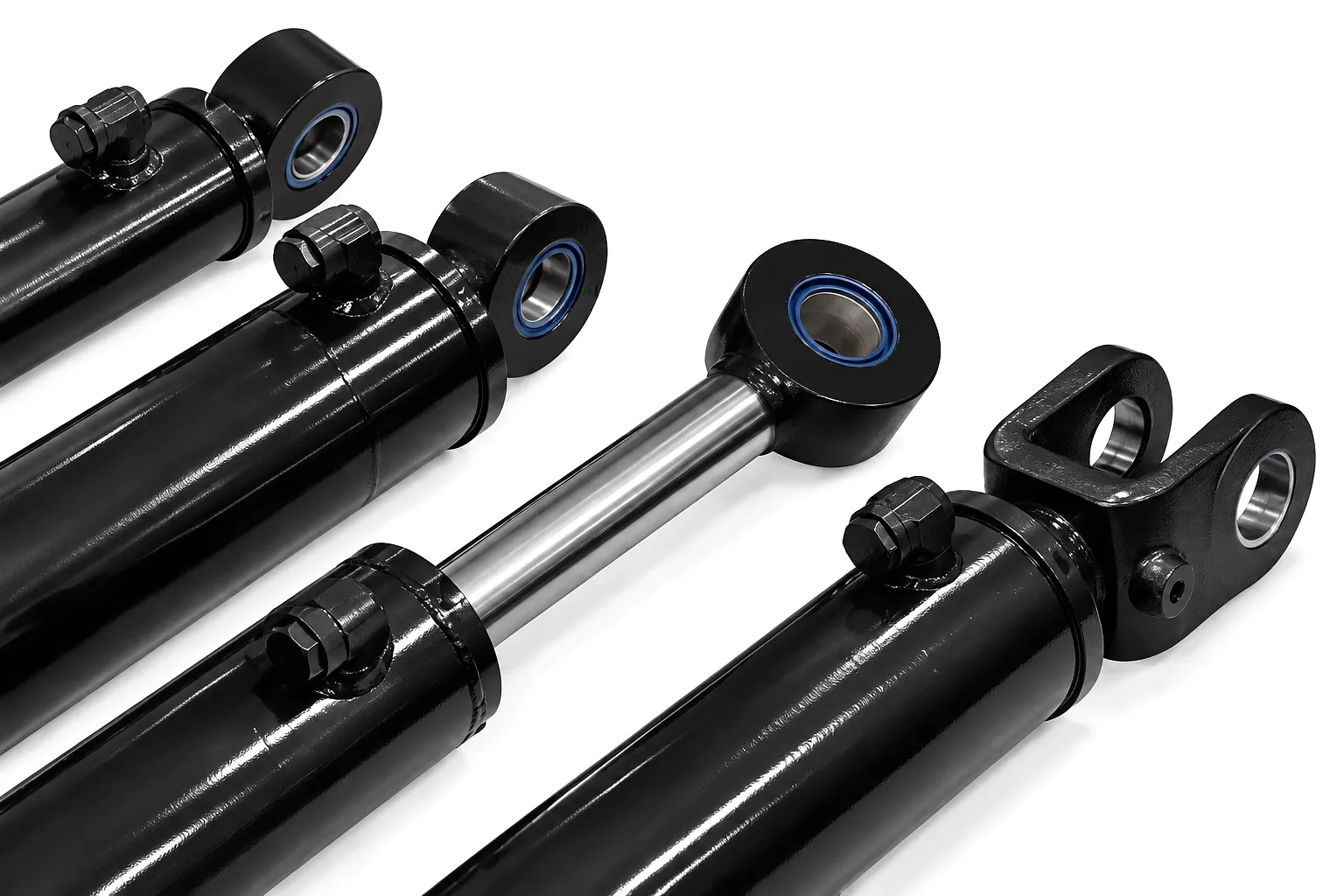
 Walk into any busy logistics hub in Birmingham or Sheffield and look up. Somewhere overhead, a forklift is tilting its mast to stabilise a pallet, while a reach truck’s boom arm is extending outward to place a load on a high shelf. Both actions are powered by hydraulic cylinders — yet the cylinders doing each job are engineered quite differently. The confusion between forklift tilt cylinders and boom cylinders is understandable: they are both linear actuators, both rely on pressurised hydraulic oil, and both serve the same ultimate goal of moving industrial loads. But their design priorities, stroke lengths, mounting configurations, seal specifications, and operating pressures diverge in ways that matter enormously once you start specifying or replacing them. Understanding those differences is not just an academic exercise — choosing the wrong cylinder type causes premature seal failure, mast instability, unsafe boom deflection, and costly unplanned downtime. This guide untangles exactly what each cylinder does, why it is built the way it is, and where Ever Power’s precision hydraulic cylinders fit into real UK industrial operations.
What a Forklift Tilt Cylinder Actually Does
The forklift tilt cylinder sits horizontally between the forklift chassis and the mast assembly. Its entire purpose is to rotate the mast forward or backward by a few degrees — typically between 5° forward and 12° backward — in order to stabilise the load during travel, facilitate pick-up from floor level, or allow a pallet to be slid cleanly from a racking system. This sounds straightforward, but the engineering requirements are quite demanding. The cylinder must generate very high side-load resistance because the mast itself can weigh several hundred kilograms and carries the full rated load of the truck. In Birmingham’s busy automotive parts warehouses, for instance, forklifts routinely handle loads up to 5 tonnes, and the tilt cylinder must resist lateral bending forces throughout its entire stroke. The cylinder bore in a typical counterbalanced forklift ranges from 63 mm to 100 mm, and the operating pressure sits between 150 and 250 bar depending on the truck class. Because this cylinder mounts at both ends with pin-type connections and experiences constant low-frequency oscillation during normal operation, the rod seal specification is especially critical — any weeping causes hydraulic oil contamination in a warehouse environment and triggers a maintenance stop.
What a Boom Cylinder Actually Does
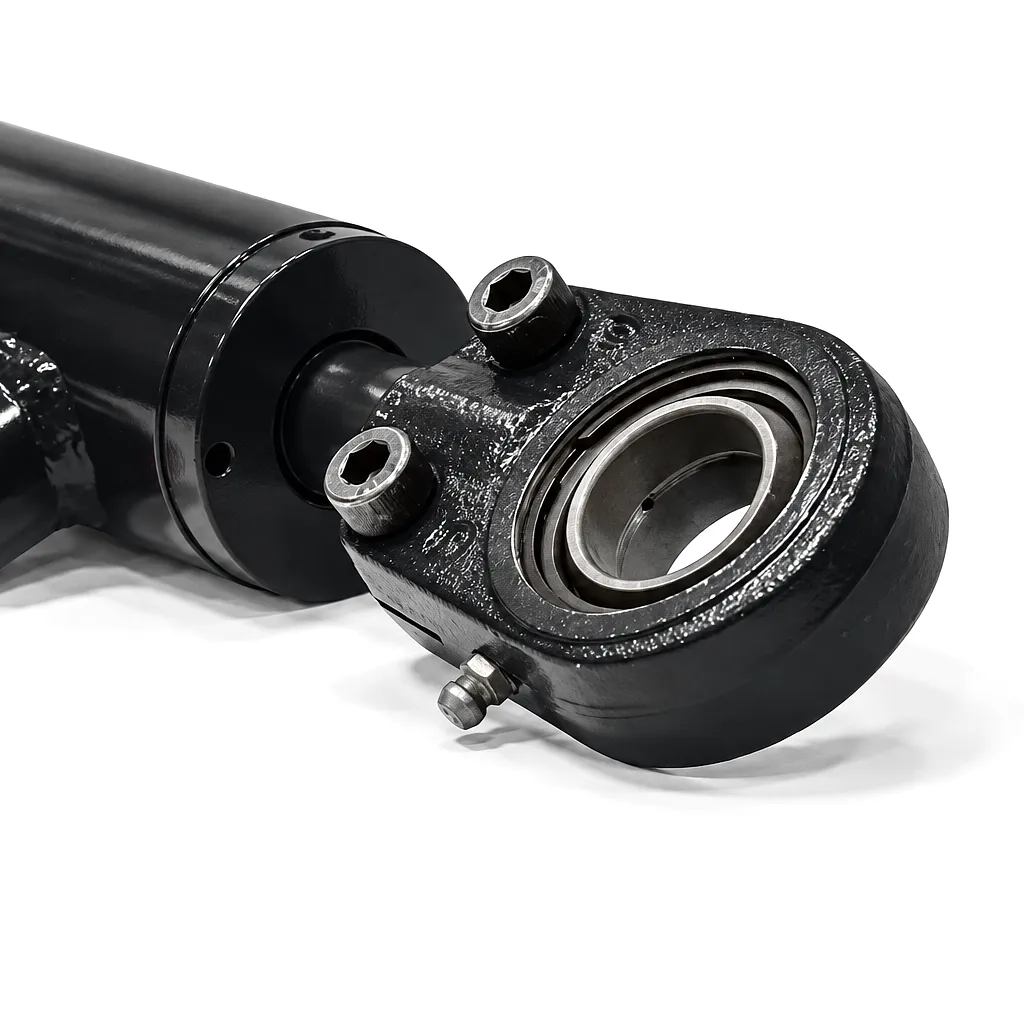
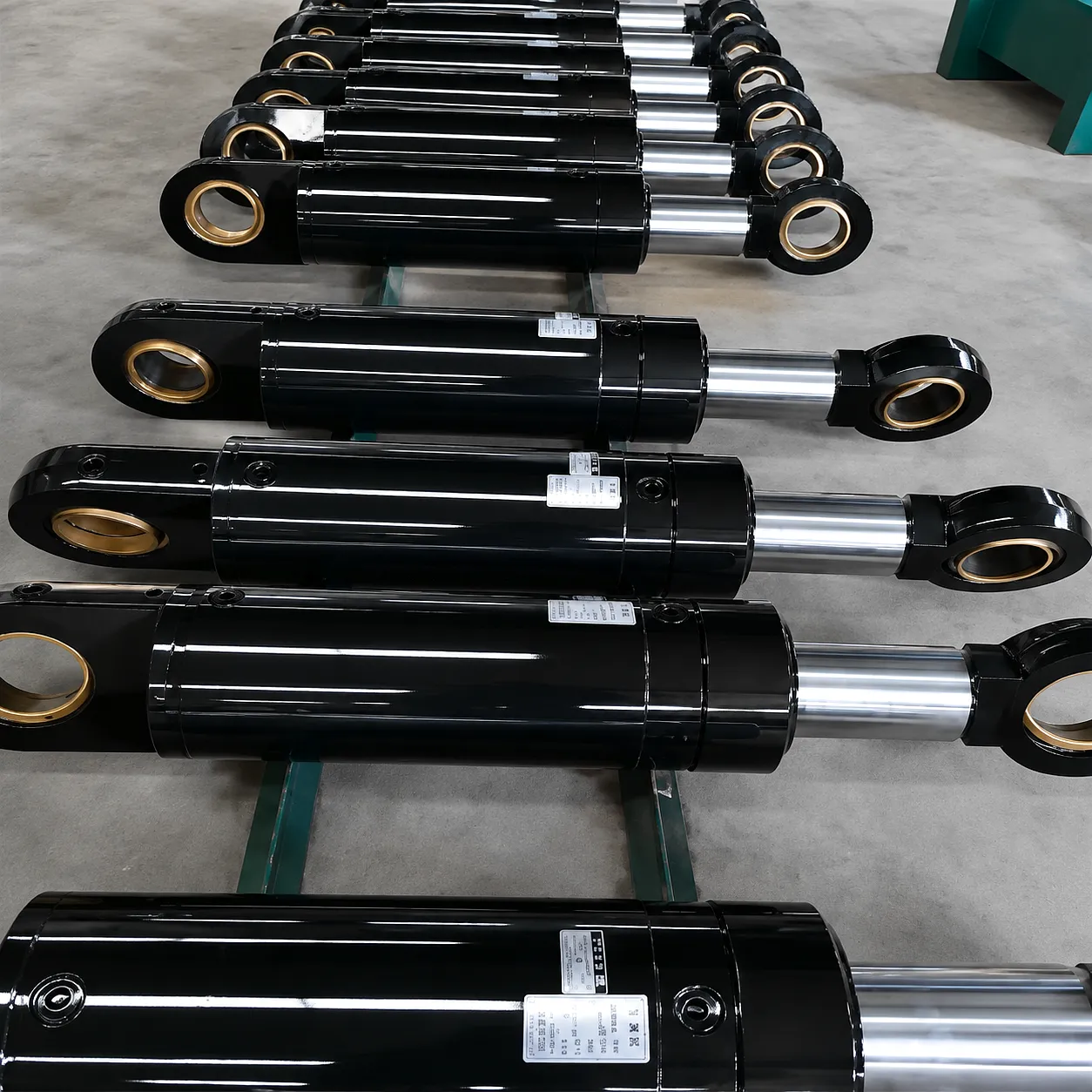
A boom cylinder operates along a fundamentally different geometry. Rather than pivoting a mast by a few degrees, it extends or retracts the full boom arm of a telescopic handler, aerial work platform, excavator, or crane — movements that can span 1.5 to 2.5 metres of stroke in a single axis. The design challenge is entirely different from a tilt cylinder. At full extension, the piston rod is exposed over a long unsupported length, creating a buckling risk that is directly proportional to the fourth power of the rod diameter and inversely proportional to the square of the unsupported length. This is why boom cylinders on telehandlers used across construction sites in Sheffield and Leeds use considerably thicker rods — often 60 to 100 mm diameter — even when the bore is not significantly larger than that of a tilt cylinder. The operating pressures are also higher, typically ranging from 200 to 350 bar, and the cylinder must sustain load-holding ability for extended periods without drift, which demands precision-matched control valves and superior piston seal geometry. A well-engineered boom cylinder, such as those found in modern wind turbine pitch systems, integrates cushioned end caps to absorb the kinetic energy of a heavy boom reaching end-of-stroke, preventing destructive shock loads on the rod end connection.
For applications where rotation control and precise steering response are required alongside linear actuation — such as telescopic boom steering assemblies and articulated material handlers — see the Hydraulic Rotary Actuator Steering Cylinder. This cylinder combines angular actuation with full double-acting control, making it particularly well suited to compact articulated vehicles operating on constrained UK construction sites.
Working Principle: How Each Cylinder Converts Oil Pressure Into Motion
The tilt cylinder operates as a conventional double-acting hydraulic cylinder: pressurised oil enters the cap-end port to extend the rod and push the mast forward, and enters the rod-end port to retract the rod and pull the mast backward. The geometry is designed so that the cylinder’s mechanical advantage is greatest at the mid-tilt position, where the mast encounters the heaviest combined moment load. Because the mast pivots about a fixed point at the forklift frame, the cylinder generates a tangential force component throughout its stroke — meaning that at the extremes of tilt angle (maximum forward or maximum backward), the effective force is slightly reduced, a characteristic that engineers account for during system sizing. A flow-control valve in the hydraulic circuit governs tilt speed, ensuring smooth, controlled movement that does not cause the load to swing. The cylinder body is typically cross-drilled for a trunnion mount, allowing it to rotate freely about its own axis as the mast angle changes, preventing internal bending moments from distorting the barrel.
A boom cylinder may be single-acting (extend under pressure, retract under load and gravity) or double-acting (full hydraulic control in both directions). On a telehandler boom — a common sight on UK farm supply depots and construction sites from Leeds to Bristol — a double-acting configuration is standard because the boom must lower in a controlled manner even when no load assists retraction. The piston rod extends against the full weight of the boom and any attached load, which can exceed 6,000 kg in heavy-duty agricultural telehandlers. The cylinder achieves this using a large-bore barrel, a thick chromed rod that resists both bending and buckling, and a precisely profiled head that incorporates a wiper seal, a primary rod seal, and a secondary backup seal — three independent sealing layers that together prevent any oil bypass even after thousands of full extension cycles. As the boom reaches maximum extension, cushion inserts in the end caps decelerate the piston over the final 20–40 mm of travel, dissipating kinetic energy and protecting the structure from shock.
Core Materials: What These Cylinders Are Made From and Why It Matters
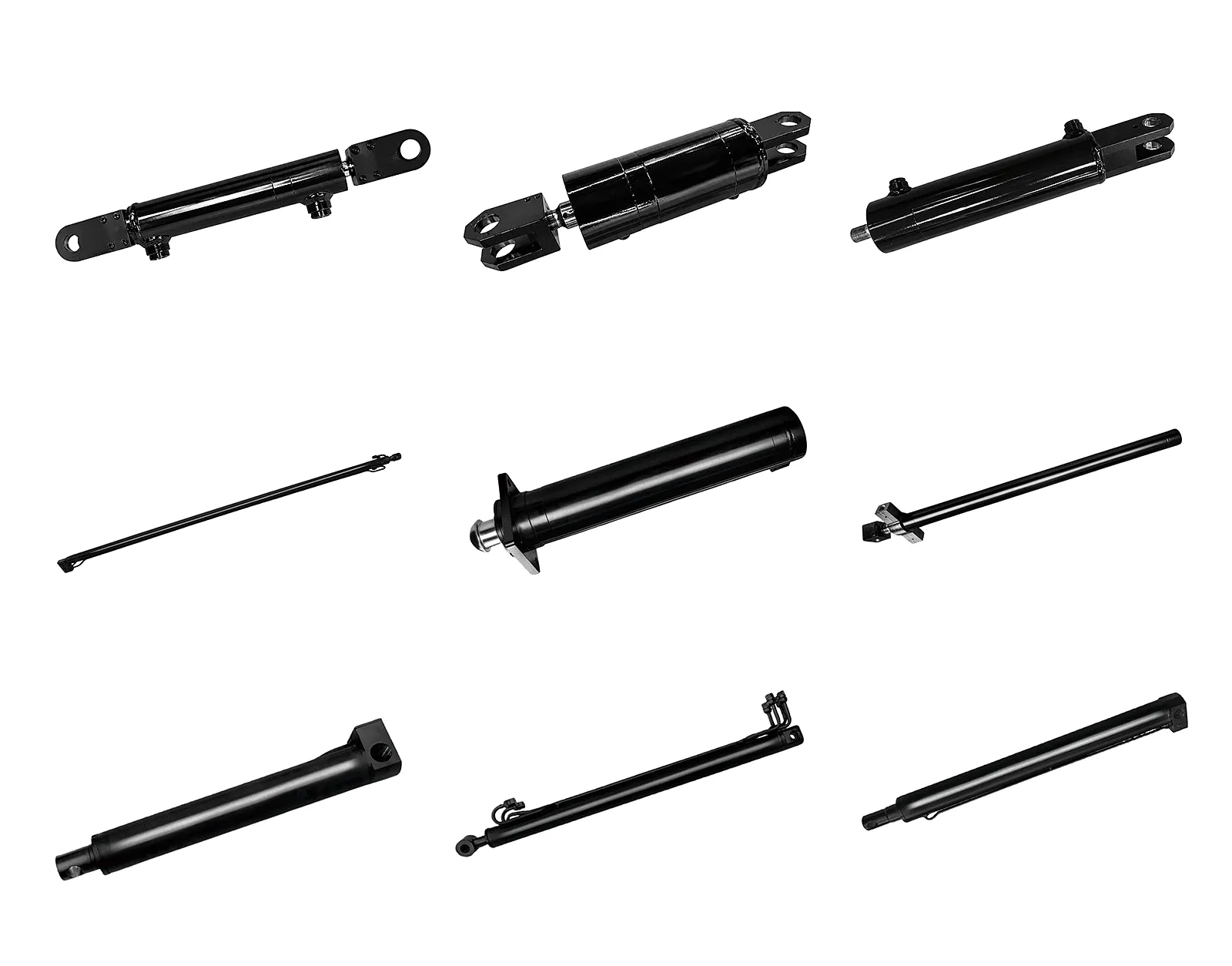
Material selection in hydraulic cylinder manufacturing is not simply a matter of strength. It is a balance between tensile strength, yield strength, machinability, corrosion resistance, fatigue performance under cyclic loading, and cost. For forklift tilt cylinders and boom cylinders operating in UK industrial environments — where ambient humidity, exposure to road salt on transport vehicles, and contact with agricultural chemicals are everyday realities — material choices determine product life in ways that no amount of maintenance can compensate for. Both cylinder types share a common material language, but the specific grades and surface treatments diverge based on the operating conditions each faces.
Cold-drawn seamless steel tubing (typically E355 / ST52.4). Honed internally to Ra 0.2–0.4 µm surface finish to reduce seal friction and maximise service life. Tilt cylinders may use a lighter wall thickness due to shorter stroke; boom cylinders require heavier walls and tighter dimensional tolerances on the bore.
CK45 or 42CrMo4 alloy steel, hard-chrome plated to 0.02–0.03 mm thickness and ground to h6 tolerance. Boom cylinders in aggressive environments (offshore, coastal England) may use a chrome-free induction-hardened rod with a ceramic thermal spray or a stainless steel outer sleeve to resist pitting corrosion from sea salt.
Cast or machined from EN8 or EN24 steel, with critical sealing surfaces ground to H8/h7 fit. Pistons carry a combination of PTFE-loaded bearing rings and polyurethane seals that handle temperatures from -30°C to +120°C — critical for outdoor UK use across winter months.
Polyurethane wiper seals, PTFE guide rings, NBR or Viton O-rings for oil resistance. Boom cylinders frequently use a three-stage seal stack (wiper + primary rod seal + secondary buffer seal) to achieve the zero-drift performance required by Machinery Directive 2006/42/EC applicable throughout the UK.
Product Technical & Performance Parameters
The table below consolidates the key engineering parameters for both cylinder types, covering bore range, stroke, pressure rating, rod diameter, temperature range, and applicable material standards. Engineers specifying replacements or new installations in UK facilities should use these ranges as a primary reference before contacting Ever Power for final dimensional confirmation and custom quotation.
Core Technical Advantages: Why Cylinder Design Precision Pays Off
The engineering case for a well-specified hydraulic cylinder is straightforward: unplanned downtime in a UK distribution or manufacturing facility costs a minimum of £1,200 to £3,800 per hour in lost throughput and labour. A premium-engineered tilt or boom cylinder that costs 15% more up front but delivers twice the service life eliminates several maintenance cycles and pays for the cost differential within the first 12 months of operation. The advantages below reflect this engineering reality rather than marketing generalisations.
Precision honing to Ra 0.2 µm and hard-chrome plating to ISO 6508 standards deliver rod service lives of 2–4 million cycles before seal replacement is required — a significant improvement over standard market alternatives that degrade after 800,000 cycles under similar loading.
Seal compounds rated to -30°C ensure reliable cold-start performance during British winter conditions without the morning weeping or stiction that affects standard NBR seals below 0°C. The same seals remain stable at continuous operating temperatures up to 120°C in high-duty-cycle applications.
Three-stage seal stacks on boom cylinders achieve measurable drift rates below 1 mm per hour under rated load in static hold tests. This meets the UK Lifting Operations and Lifting Equipment Regulations (LOLER) requirement that elevated loads shall not descend unexpectedly during a working shift.
Optional ceramic thermal spray coatings on piston rods pass 1,000-hour salt-spray tests to ISO 9227, making boom cylinders suitable for exposure to coastal Scottish Highland environments, offshore support vessels in the North Sea, and British agricultural operations where fertiliser and agrochemical contamination is unavoidable.
Ever Power maintains a library of OEM-equivalent dimensional databases covering Manitou, JCB, Linde, Toyota, Jungheinrich, and Caterpillar cylinder families. Replacement cylinders can be manufactured to exact pin-to-pin, bore, stroke, and port specifications, enabling direct swap-out without adaptor brackets or hydraulic circuit modification.
Ever Power’s supply chain delivers standard hydraulic cylinders with documented lead times of 7 to 14 working days ex-works, supported by a certified logistics partner with direct weekly road freight services into UK ports. Emergency replacement programmes are available for critical plant breakdowns, with expedited air freight as standard protocol for orders flagged as production-critical by UK buyers.
Application Scenarios: Where Each Cylinder Is Deployed in UK Industry
The application landscape for hydraulic cylinders across UK manufacturing, logistics, agriculture, and construction is broad. Both the tilt cylinder and the boom cylinder appear across multiple sectors, but each occupies a distinct functional niche determined by the geometry and force requirements of the machine it serves. The following scenarios draw on real operating contexts found across England, Scotland, and Wales.
Counterbalanced forklifts operating across Birmingham’s automotive logistics parks — many supplying Jaguar Land Rover’s Castle Bromwich and Solihull facilities — tilt their masts dozens of times per hour as pallets of pressed parts and castings are shuffled between receiving bays, inspection stations, and racking systems. The tilt cylinder on these trucks must resist the moment loads generated by long, asymmetric load profiles (engine assemblies, door panels) that shift the load’s centre of gravity unpredictably. Ever Power tilt cylinders in this application are specified with a reinforced trunnion boss and extended wiper seal to handle the fine metallic dust prevalent in automotive environments.
Indoor forklifts handling chemical drums and IBC totes in Leeds-area facilities and Teesside chemical plants operate in environments where hydraulic oil contamination carries regulatory consequences. The tilt cylinder in these contexts must maintain zero rod seal weepage throughout its service interval to prevent ground contamination under COSHH regulations. Ever Power supplies stainless-steel rod-end caps with double-lip PTFE wiper seals for chemical industry tilt cylinder applications, ensuring compliance with EA permit conditions applicable across these northern England facilities.
Yorkshire’s arable farms and East Midlands grain stores rely on telescopic handlers to stack bales, load trailers, and handle grain-bag pallets at heights up to 8 metres. The boom cylinder on a Manitou or JCB Loadall in this application cycles continuously for 10–14 hours per day during harvest season, extending and retracting under loads that vary from a 250 kg grain bag to a 1,500 kg round bale. Boom cylinders must handle this variable loading without hydraulic shock, and the three-stage seal stack in Ever Power’s agricultural boom cylinder specification prevents the field contamination — dust, chaff, rain, and UV exposure — from penetrating to the rod-seal interface.
Hydraulic pitch cylinders on wind turbines — a growing segment of the UK’s energy infrastructure, with major offshore wind farms across the North Sea and onshore installations across Scotland — must maintain precise positional control of rotor blades under extreme environmental conditions. The Wind Turbine Hydraulic Pitch Cylinder operates in a sealed nacelle environment at temperatures from -25°C to +60°C, cycling through millions of partial strokes as the blade pitch adjusts in response to wind speed changes. The engineering demands overlap significantly with boom cylinder technology: long fatigue life, exceptional seal integrity, and zero-drift load holding are all non-negotiable in an application where a seal failure 80 metres above sea level requires a specialised maintenance vessel and costs upward of £40,000 per turbine intervention.
Urban construction projects across London and Manchester depend on boom-equipped access platforms and mini-cranes to position materials and personnel in confined spaces between existing structures. The boom cylinders in these machines must maintain precise positional control while the platform is fully extended, the base is on uneven ground, and wind loading adds a lateral component to the hydraulic force demand. Ever Power supplies boom cylinders for this market with integrated cushion valves and pilot-operated check valves pre-assembled at the cap end, reducing the number of external hydraulic connections and leak points on the machine.
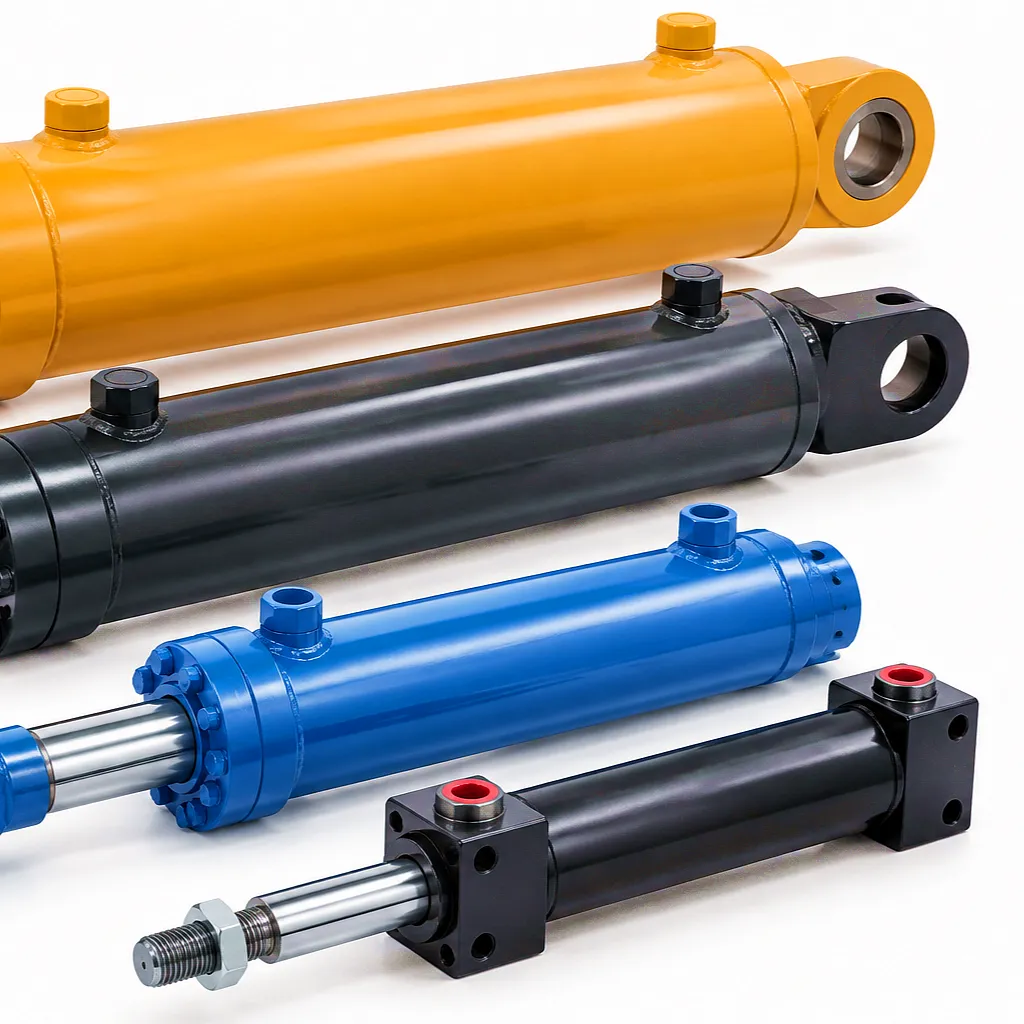
Ever Power: Factory Capability & Custom Hydraulic Cylinder Manufacturing
Ever Power operates a purpose-built hydraulic cylinder manufacturing facility equipped with deep-hole drilling and honing lines capable of processing barrels from 40 mm to 400 mm bore in a single continuous operation. The factory maintains ISO 9001:2015 quality management certification, with in-house dimensional inspection using CMM equipment traceable to UKAS standards — a requirement for customers supplying components to UK defence and nuclear sectors under the Government’s UK MOD procurement framework. Every cylinder leaves the production line with a full pressure test certificate, a dimensional inspection report, and batch-coded traceability documentation that enables root-cause analysis in the unlikely event of a field failure.
Non-standard bore/stroke combinations, special port orientations, integrated cushions, position-sensing options (LVDT, magnetostrictive reed switch), custom paint finishes, and bespoke mounting flanges are all within scope. Ever Power’s engineering team reviews CAD drawings within 48 hours and returns a formal DFM report and quotation within 5 working days.
Deep-hole drilling, precision honing, CNC turning, hard-chrome plating line (30,000-amp rectifiers), cylindrical grinding, and automated assembly with integrated pressure testing. Bore tolerance held to H8, rod to h6 throughout all production batches — not just first-article samples.
Established weekly consolidated freight services to Felixstowe and Tilbury, with optional bonded warehousing in the Midlands for UK customers requiring call-off stock arrangements. Incoterms CIF, DAP, and DDP available, with UK customs clearance handled end-to-end as part of the DAP/DDP service.
Customer Success Story: Sheffield Steel Fabricator Eliminates Repeat Tilt Cylinder Failures
A medium-scale structural steel fabrication business based in Sheffield — operating a fleet of seven 5-tonne counterbalanced forklifts across two fabrication shops and a raw material yard — was experiencing recurring tilt cylinder failures across three of its Linde trucks. The pattern was consistent: the original OEM cylinders would begin seeping hydraulic oil from the rod seal at around 9–12 months, triggering an HSE-reportable contamination incident on two occasions and forcing unscheduled downtime averaging 11 hours per failure event.
The company’s maintenance manager contacted Ever Power after finding the OEM replacement lead time had extended to 6 weeks due to supply chain disruptions. Ever Power’s technical team reviewed the operating data — load cycle frequency, maximum tilt angle, ambient temperature range (the raw material yard is unheated, reaching -8°C in January) — and identified that the OEM cylinder was specced with a standard NBR rod seal compound rated to -5°C, making cold-morning seal stiction and subsequent micro-extrusion the root cause of premature failure.
Ever Power manufactured three direct-replacement tilt cylinders with 42CrMo4 rods, a low-temperature Viton-F compound rod seal stack rated to -35°C, and an additional stainless steel scraper ring behind the standard wiper. All three cylinders were delivered to Sheffield within 11 working days. Eighteen months later, all three remain in continuous service without a single seal intervention. The company subsequently placed a standing order for all seven forklifts’ tilt cylinder inventory, achieving a 34% reduction in hydraulic maintenance cost per truck per annum.
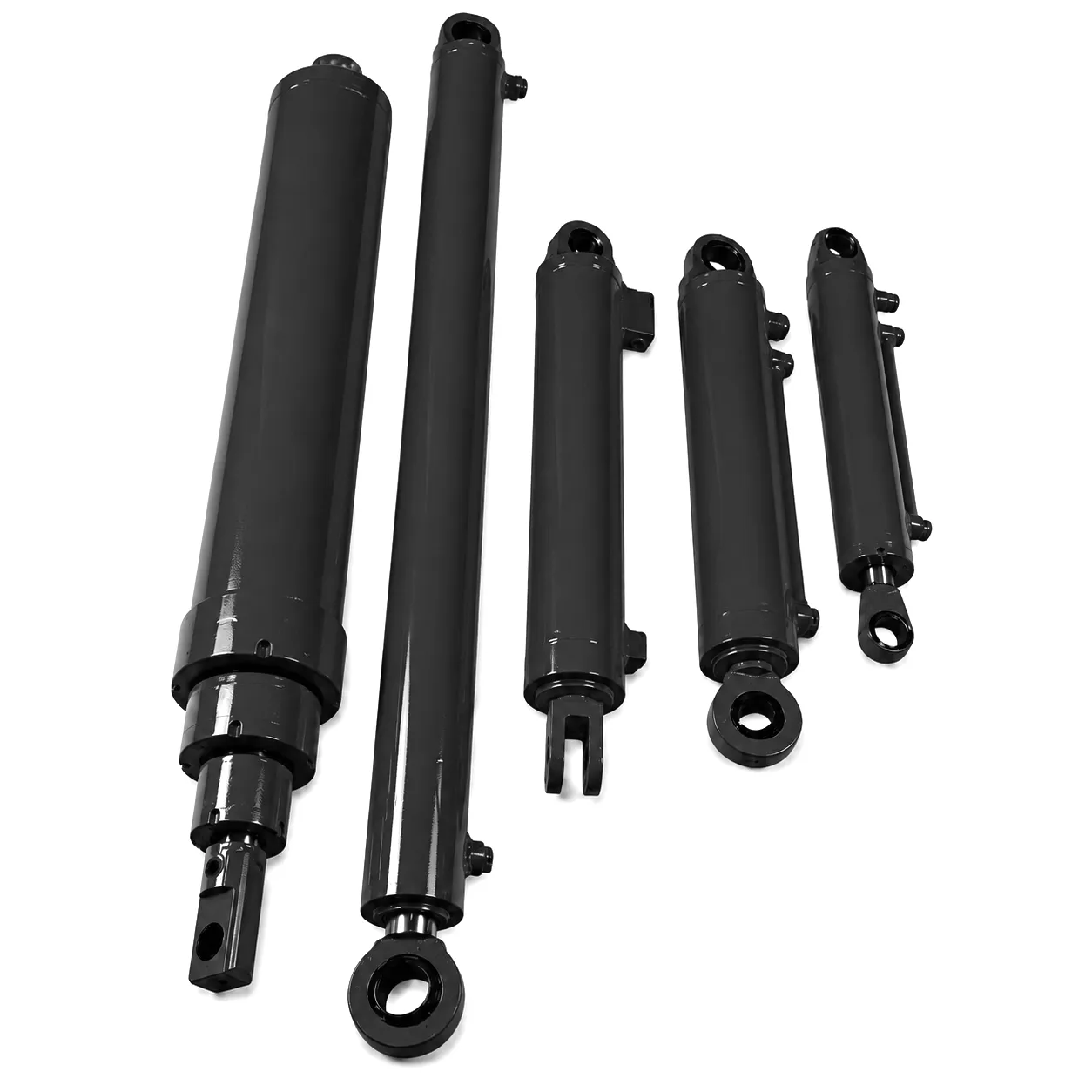
What Our Customers Say
“We’d been burning through tilt cylinders every 10 months on our cold-store forklifts. Ever Power’s low-temp Viton spec has now gone 22 months without a drop. The dimensional match to the Linde originals was exact — no fitting issues whatsoever.”
“The boom cylinder Ever Power made for our JCB 540-170 was quoted, engineered, and shipped faster than anything we’ve ever sourced from Europe. They sent full pressure test documentation and a dimensional report with the delivery — exactly what our safety officer needed for LOLER compliance.”
“We specified 14 custom boom cylinders with integrated cushion valves for a new access platform production run. Ever Power’s application engineer was on a video call within 24 hours of our enquiry, reviewed our circuit diagram, and recommended a port modification that saved us a £420 valve adaptor per unit. Exceptional technical support.”
Жиі қойылатын сұрақтар
What is the difference between a forklift tilt cylinder and a boom cylinder, and how do I know which one my machine needs?
A forklift tilt cylinder controls the backward and forward angle of the mast assembly and typically has a short stroke of 100–350 mm with a horizontal mounting orientation. A boom cylinder extends and retracts the full boom arm on a telehandler, crane, or access platform, with a much longer stroke of 500–2,500 mm and a design that prioritises buckling resistance. To identify which your machine uses, locate the cylinder: if it runs diagonally between the forklift chassis and the back of the mast, it is a tilt cylinder; if it runs along the interior of a telescopic boom arm, it is a boom cylinder.
How much does it typically cost to get a custom hydraulic tilt cylinder or boom cylinder made for a UK buyer, and what lead time should I expect?
Custom hydraulic cylinder pricing depends on bore, stroke, rod diameter, seal specification, and quantity. For a single replacement tilt cylinder in the 63–100 mm bore range, expect pricing in the range of £280–£650 depending on specification and urgency. Custom boom cylinders in the 100–160 mm bore range typically fall between £480 and £1,400 per unit. Standard production lead time is 7–14 working days ex-works; urgent programmes with air freight are available and typically add 30–40% to unit cost. Contact Ever Power at [email protected] for a full itemised quote.
Which hydraulic cylinder supplier in the UK can provide LOLER-compliant boom cylinders for JCB telehandlers operating on construction sites in Sheffield and Manchester?
Ever Power manufactures boom cylinders to ISO 4413 and can supply full pressure test certificates and dimensional inspection reports — the documentation package that UK LOLER inspections require as evidence of fitness for purpose. Cylinders are manufactured to match JCB 540-series and 531-series dimensional specifications directly, avoiding the need for adaptor hardware. Delivery to Sheffield or Manchester is available via established road freight services from UK ports, typically within 2–3 working days of customs clearance.
How do I find a reliable hydraulic cylinder supplier who can deliver replacement forklift tilt cylinders to Birmingham within a two-week lead time and provide proper test documentation?
The key qualification criteria for a reliable hydraulic cylinder supplier are: ISO 9001 certification (confirms documented process control), in-house pressure test capability (ensures every unit is verified before despatch), and an established UK logistics channel. Ever Power meets all three criteria and ships directly to Birmingham via weekly road freight from UK port entry. To place an order or request a sample quote, email [email protected] with the cylinder’s bore, stroke, rod diameter, and port size — and include a photo of the existing cylinder’s identification plate if available.
When should I replace a tilt cylinder on a counterbalanced forklift operating in a UK cold-store environment, and what seal specification should I ask for?
Replace the tilt cylinder at the first sign of rod seal weeping — a visible oil film on the rod surface below the wiper seal — or if the mast begins to drift from its tilted position during a 15-minute static load hold test. For cold-store environments where temperatures fall below 0°C, specify a Viton-F or low-temperature polyurethane rod seal rated to at least -30°C. Standard NBR seals become brittle and lose elasticity below -5°C, causing micro-extrusion and premature failure within a few months of cold-weather operation.
Where can I get a competitive price quote for bulk hydraulic boom cylinders for agricultural telehandlers being used across Yorkshire farms this harvest season?
Ever Power offers volume pricing tiers for bulk hydraulic cylinder orders starting from 5 units, with additional discounts applicable from 20 units upward. For agricultural telehandler boom cylinders, send the make, model, and year of the machines (e.g. Manitou MLT 733 LSU, 2018) to [email protected]. The team will cross-reference the OEM cylinder specification and return a dimensional confirmation and price matrix within 48 hours. Seasonal stock programmes are available for Yorkshire-based agricultural contractors who need cylinders on short call-off during the busy harvest period.
Ever Power Hydraulic Cylinders — Precision Engineering for UK Industrial Markets
ISO 9001:2015 Certified · PSSR 2000 Compliant · LOLER Documentation Supplied · edit by gzl
 Kazakh
  English
  Italian
  Portuguese
  Dutch
Dutch  Swedish
  Danish
  Finnish
  Polish
  Hindi
Hindi  Turkish
  Ukrainian
  Romanian
  Spanish
  German
  Russian
  Korean
  Japanese
  Vietnamese
  Thai
Thai  Indonesian
  Malay
Malay  French
  Greek
Greek