
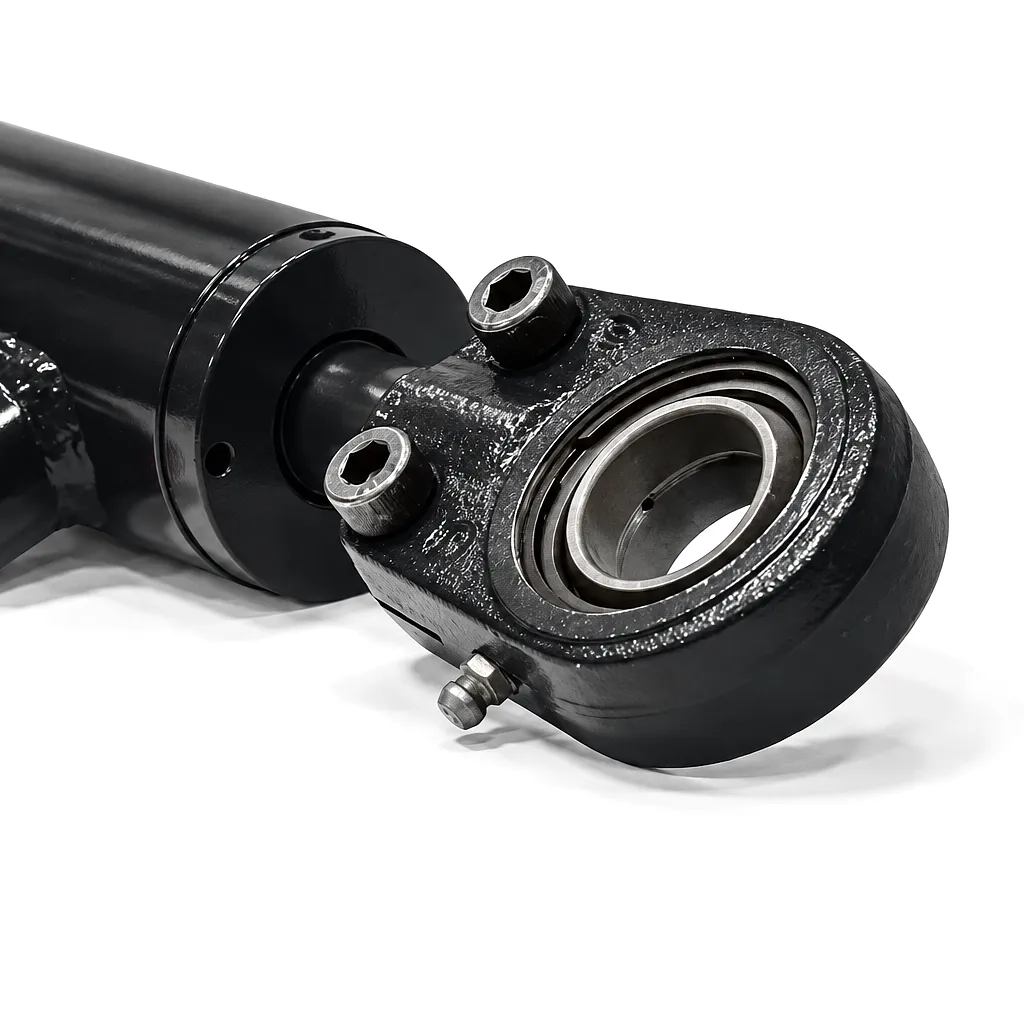
 When a hydraulic cylinder extends beyond a moderate stroke length, the rod transitions from a pure tensile-or-compressive member into something structurally analogous to a slender column. That shift in behaviour brings with it a failure mode that pressure ratings and seal specifications simply cannot predict: lateral buckling. Engineers working in heavy plant across Birmingham’s fabrication yards, Sheffield’s steel processing lines, and the offshore supply vessels docking at Aberdeen have learned—sometimes after costly incidents—that a cylinder’s rated load capacity at short stroke bears little resemblance to its safe working load at full extension.
Why Long-Stroke Cylinders Are Vulnerable to Column Buckling
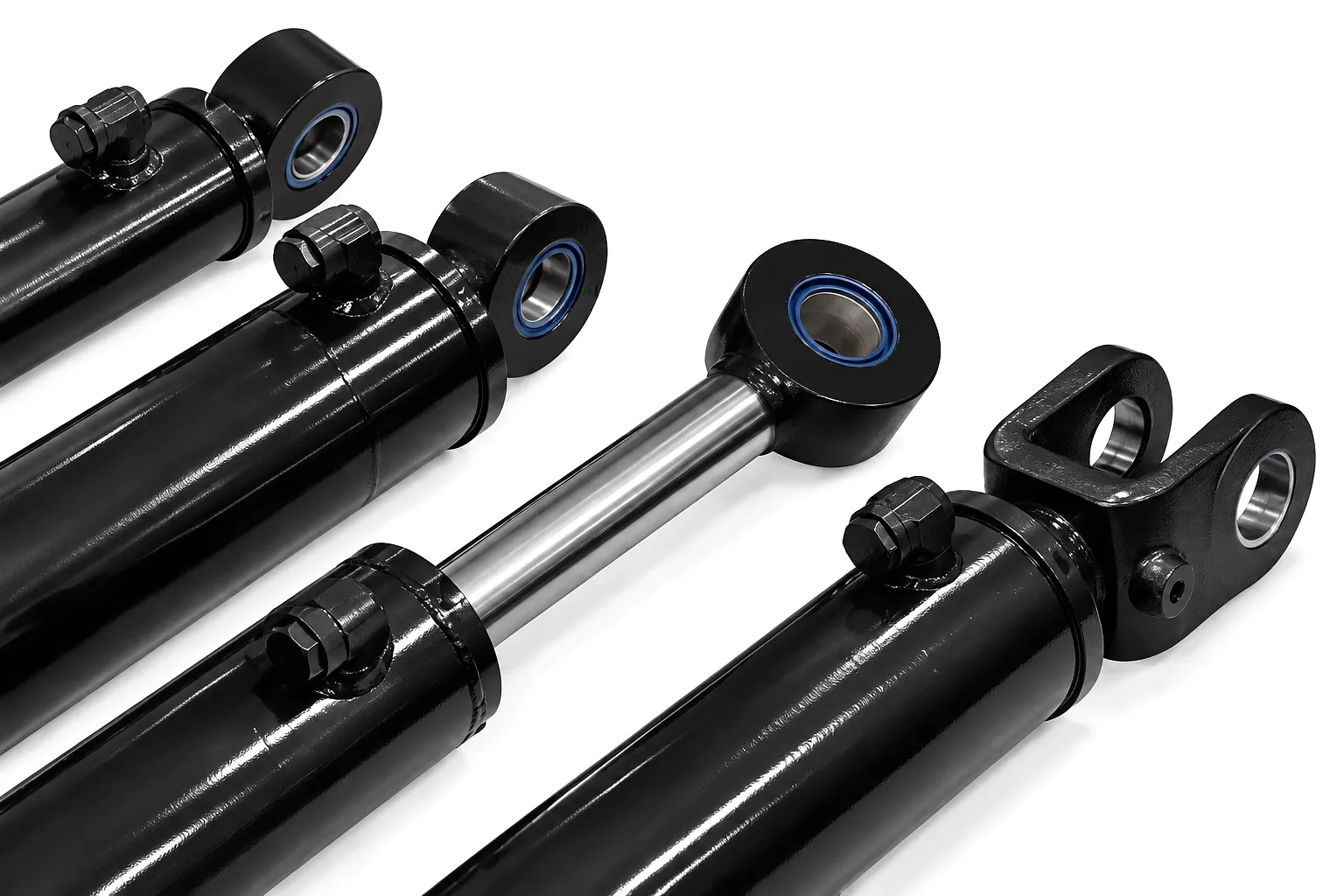
A hydraulic cylinder rod under compression behaves identically to a structural column of the same material and cross-section. When the compressive load reaches a critical threshold, even a geometrically perfect rod with no lateral eccentricity will deflect sideways. This deflection is sudden and is not preceded by yielding, which means a cylinder can fail catastrophically while its internal pressure is still within rated limits. The phenomenon is governed by the ratio of rod length to radius of gyration — the slenderness ratio — and Euler’s formula quantifies precisely where that threshold lies.
The practical consequence is that two cylinders with identical bore diameters, identical rod diameters, and identical working pressures can have radically different safe compressive loads if one has a 400 mm stroke and the other has a 1,600 mm stroke. The shorter one is rod-strength limited; the longer one may be buckling-limited at a fraction of that value. UK machinery designers specifying cylinders for conveyor lifts, press frames, agricultural implements, and construction equipment frequently encounter this contrast — and the appropriate engineering response is a structured Euler analysis before manufacture.
Euler’s Critical Load Formula: The Core Calculation Explained
F_cr = (π² × E × I) / (L_eff)²
F_cr
Critical buckling load (Newtons) — the maximum axial compressive force before lateral instability occurs
E
Young’s Modulus of the rod material (Pa). For steel: approximately 200–210 GPa
I
Second moment of area of the rod cross-section (m⁴). For a solid circular rod: I = π × d⁴ / 64
L_eff
Effective (buckling) length (m) — depends entirely on the end-condition mounting arrangement
The formula tells engineers that critical load scales with the fourth power of rod diameter (through I) and inversely with the square of the effective length. Doubling the rod diameter increases the buckling resistance by a factor of sixteen. Doubling the stroke roughly halves the critical load. These relationships are not linear, and they are why even experienced technicians can underestimate how rapidly load capacity drops as stroke increases beyond 800 mm in typical rod sizes.
In practice, a safety factor — typically 3.5 to 4.0 for industrial hydraulics in the UK engineering sector — is applied to F_cr to arrive at the permissible compressive load F_perm. Only loads below F_perm are considered safe for sustained operation. The mounting arrangement determines L_eff through an end-condition factor, and choosing the wrong end condition can lead to a critical error in the final calculation.
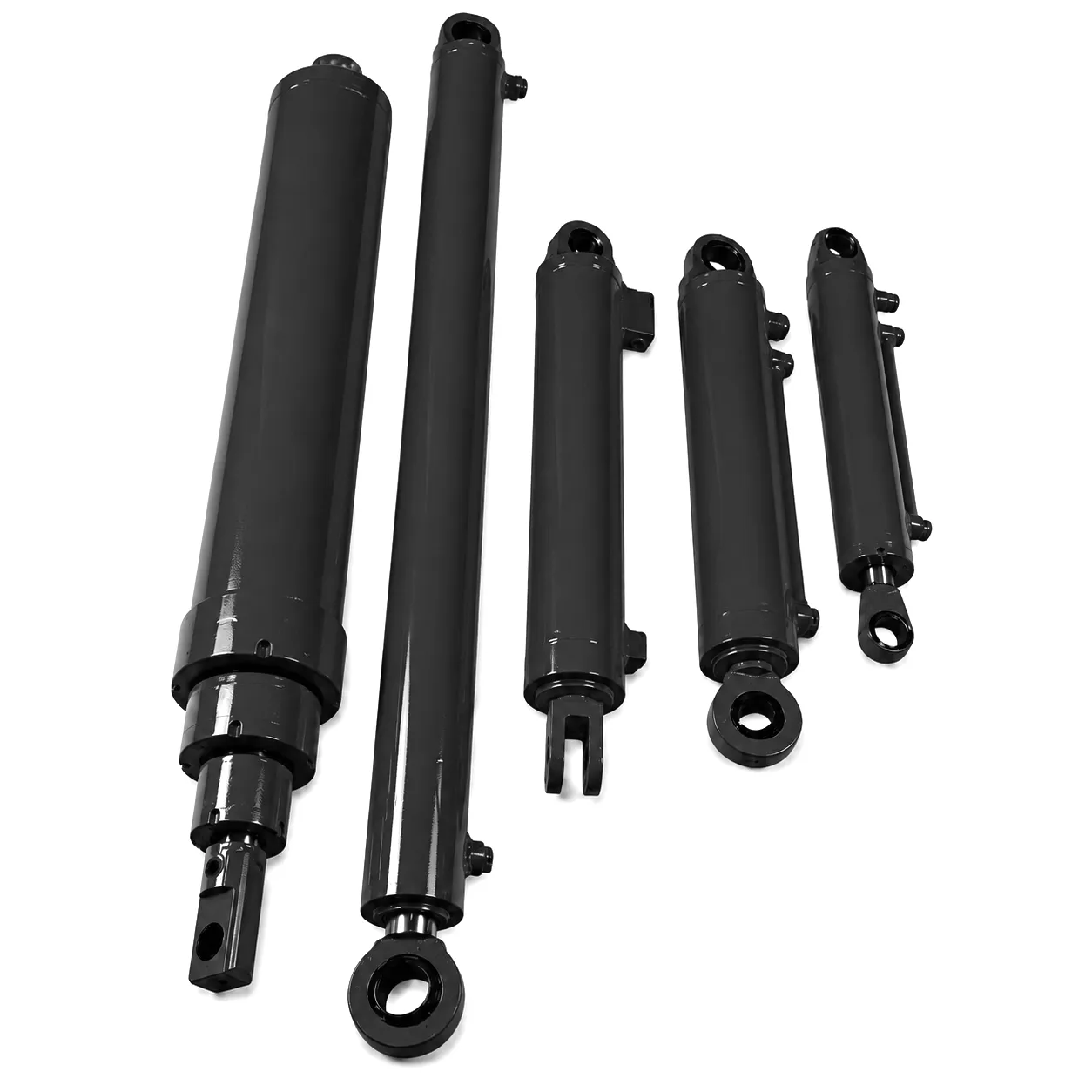
Mounting End Conditions and Effective Length Factors
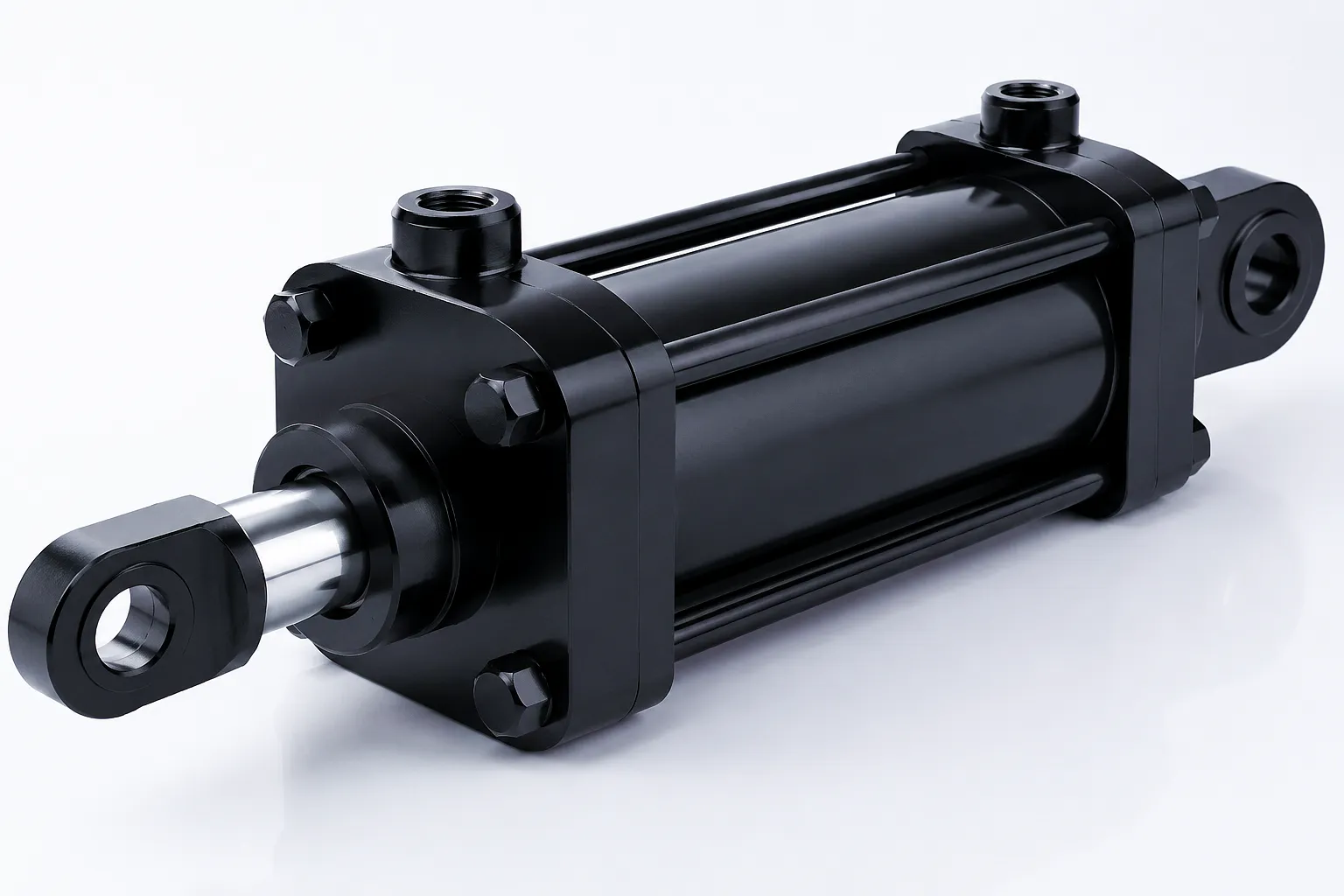
The effective length L_eff is derived by multiplying the actual free buckling length by an end-condition coefficient, commonly written as the K-factor. ISO 10100 and British Standard BS EN ISO 4413 both acknowledge four primary end conditions for hydraulic cylinder installations. The choice between them is not aesthetic — it is a direct function of the physical mounting hardware, the rigidity of the attachment points, and the degree to which the cylinder body and the rod end are constrained against rotation and lateral movement. Misidentifying the end condition is one of the most frequent sources of error in field buckling assessments.
| Mounting Case | K-Factor | L_eff Formula | Typical UK Application |
|---|---|---|---|
| Case 1: Both ends pinned (free rotation) | 1.0 | L_eff = L | Clevis-to-clevis agricultural machinery, bale press cylinders in Yorkshire |
| Case 2: One end fixed, one end free (cantilever) | 2.0 | L_eff = 2L | Flange-mounted cylinders in Birmingham press tooling with unguided rod ends |
| Case 3: One end fixed, one end pinned | 0.7 | L_eff = 0.7 × L | Trunnion-mounted cylinders in steel rolling mills, Sheffield plate lifting rigs |
| Case 4: Both ends fully fixed (no rotation) | 0.5 | L_eff = 0.5 × L | Rigidly guided tie-rod cylinders in tunnel boring rigs and bridge maintenance equipment |
Case 2 — one fixed, one free — is the most conservative and the most commonly applied when any uncertainty exists about how rigid the rod-end attachment genuinely is. A clevis pin that appears constrained under normal operating loads may rotate freely under eccentric loading, effectively converting a Case 3 or Case 4 situation into Case 1 or Case 2. For this reason, UK plant engineers often default to Case 2 as the conservative assumption during initial sizing, and use linear rod guides or intermediate supports when Case 1 or Case 3 conditions can be positively confirmed.
Worked Calculation Example: 1,200 mm Stroke Cylinder
Given Parameters
- Rod diameter (d)70 mm
- Free stroke (L)1,200 mm
- Material (rod)42CrMo4 steel
- Young’s Modulus (E)206 GPa
- End conditionCase 1 (K=1.0)
Step-by-Step Calculation
// Step A: Moment of Inertia
I = π × (0.070)⁴ / 64
I = 1.179 × 10⁻⁶ m⁴
// Step B: Effective Length
L_eff = 1.0 × 1.200 = 1.200 m
// Step C: Critical Load
F_cr = (π² × 206×10⁹ × 1.179×10⁻⁶) / (1.200)²
F_cr ≈ 1,669 kN
Safety-Factored Result
Critical Buckling Load
1,669 kN
Permissible Load (SF = 3.5)
477 kN
Any compressive load exceeding 477 kN at this stroke must be addressed by increasing rod diameter, adding intermediate guidance, or redesigning the mounting geometry.
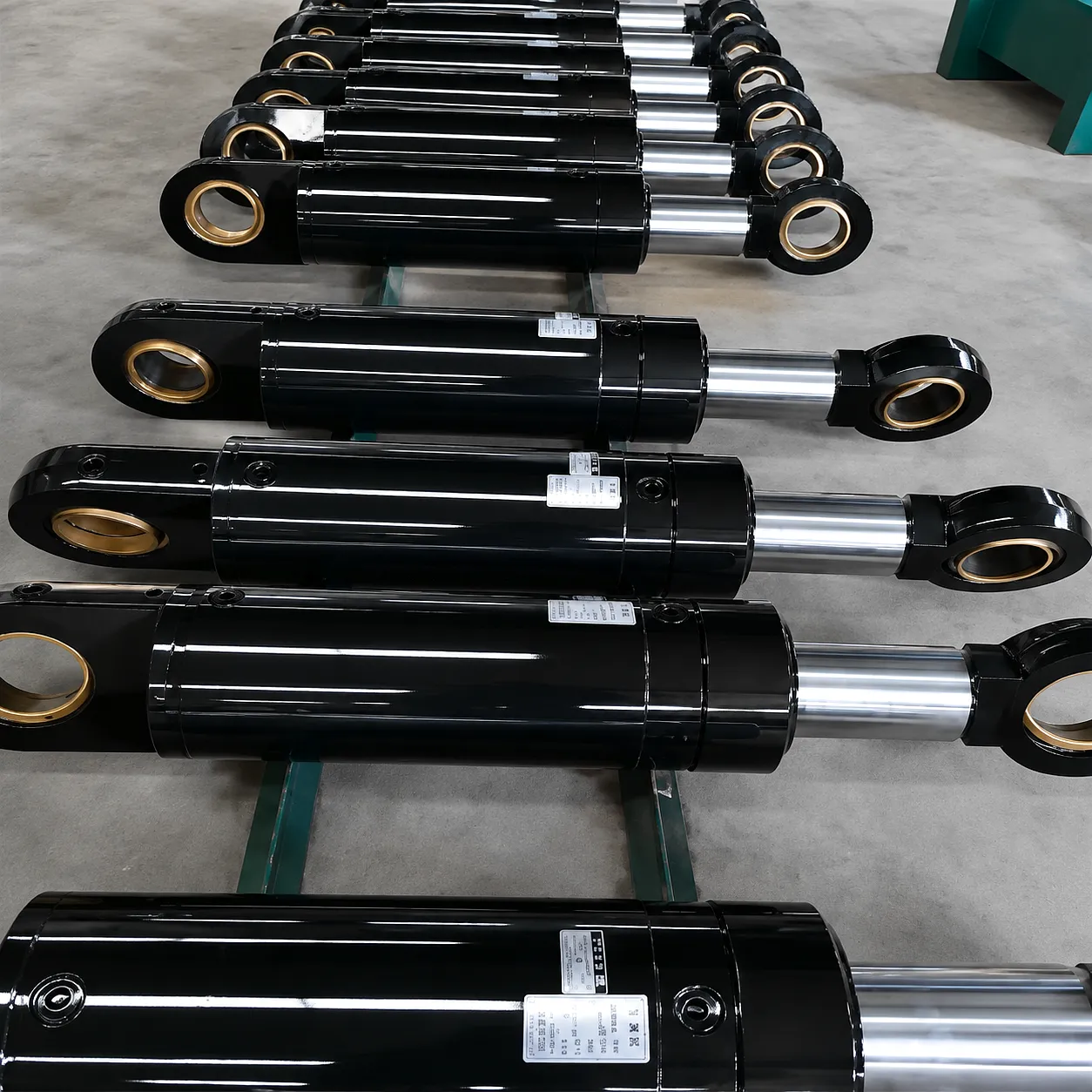
Aerial Platform Cylinders: Buckling by Design
Hydraulic cylinders used in folding boom and telescopic aerial work platforms represent one of the most demanding applications of Euler’s principles in real-world manufacturing. These cylinders must maintain full compressive load capacity at extended positions where the rod is exposed to its maximum free length — precisely the condition that drives slenderness ratios to their upper limits. Ever Power’s engineering team designs these cylinders with rod diameters, chrome surface hardness, and end-mounting geometry calculated against worst-case buckling scenarios at every stage of extension.
Rod Material Selection and Its Impact on Buckling Resistance
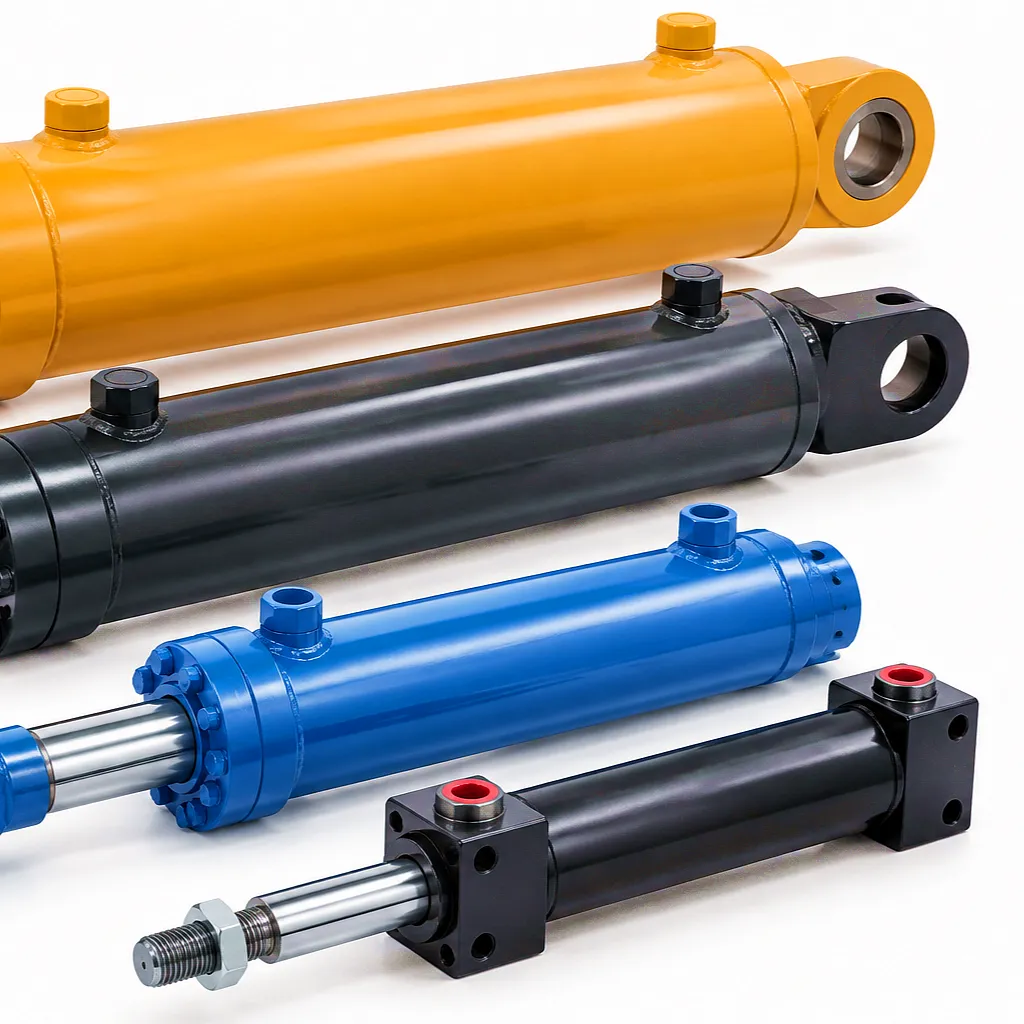
Material choice influences buckling capacity through two independent routes. Young’s Modulus determines the stiffness of the elastic column response — the E term in Euler’s formula — and this varies between alloy families. Yield strength, by contrast, determines where the cylinder transitions from elastic buckling (governed by Euler) into inelastic or plastic buckling governed by the Johnson parabola formula. Long-stroke cylinders with adequate rod diameter typically remain in the Euler regime; shorter, thicker rods often fall below the transition slenderness ratio and must be assessed differently. In the context of UK hydraulic cylinder specifications, the most common rod materials fall into the following groups:
42CrMo4 / EN 1.7225
The workhorse chromium-molybdenum alloy for UK hydraulic rods. E ≈ 206 GPa, yield strength up to 1,000 MPa after quench-and-temper. Excellent hardenability for induction hardening and chrome plating. Widely stocked in Sheffield and Birmingham service centres.
Duplex Stainless 2205
Specified in corrosive environments — North Sea offshore, coastal infrastructure in Aberdeen and the Thames Estuary, water treatment works. E ≈ 200 GPa, slightly lower than alloy steel. The high yield strength (≥ 450 MPa) partially compensates. Note that the lower E reduces F_cr proportionally.
S355J2 / EN 1.0577
A structural steel grade occasionally used in heavy cylinders where the bore-to-rod ratio is generous and yield strength requirements are moderate. E ≈ 210 GPa gives a slight buckling advantage over the alloy grades, but yield strength (≥ 355 MPa) limits compressive stress capacity. Rarely chosen for long-stroke applications by UK hydraulic engineers.
Hydraulic Cylinder Buckling Performance: Technical Reference Table
The table below summarises critical buckling loads calculated by Euler’s formula for commonly specified rod and stroke combinations, using 42CrMo4 steel (E = 206 GPa), solid round rod cross-sections, and a Case 1 end condition (K = 1.0). Safety factor of 3.5 applied throughout. These values are provided as engineering reference data only and do not substitute for a full structural calculation specific to each installation.
| Rod Ø (mm) | Stroke (mm) | I (×10⁻⁶ m⁴) | F_cr (kN) | F_perm (kN, SF=3.5) | Slenderness Ratio |
|---|---|---|---|---|---|
| 50 | 600 | 0.307 | 344 | 98 | 48 |
| 60 | 900 | 0.636 | 500 | 143 | 60 |
| 70 | 1,200 | 1.179 | 1,669 | 477 | 69 |
| 80 | 1,500 | 2.011 | 1,820 | 520 | 75 |
| 100 | 2,000 | 4.909 | 2,498 | 714 | 80 |
| 120 | 2,500 | 10.179 | 3,321 | 949 | 83 |
| 140 | 3,000 | 18.857 | 4,284 | 1,224 | 86 |
Industrial Application Scenarios: Where Buckling Calculations Are Non-Negotiable
Across the UK’s manufacturing and infrastructure sectors, there are several categories of hydraulic cylinder application where Euler’s buckling analysis determines the entire design approach. These are environments where stroke lengths routinely exceed 800 mm, where operating cycles are high, and where a buckling failure carries serious safety or financial consequences.
Mobile Aerial Work Platforms — UK Urban Construction
Boom lift cylinders on platforms used across London, Manchester, and Leeds construction sites regularly operate at strokes between 1,200 mm and 1,800 mm. The rod must carry compressive loads while the boom is horizontal — the worst-case orientation — and any buckling failure risks a platform collapse. Ever Power aerial cylinder designs account for intermediate extension positions where effective length peaks relative to load, not just full extension.
Steel Rolling Mill Press Frames — Sheffield and Rotherham
Hydraulic press cylinders in Sheffield’s remaining steel plate and section rolling facilities drive large compressive forces at long strokes during bloom reduction and coil straightening operations. These applications run millions of cycles annually, and any calculation error in the buckling limit translates directly into premature rod failure or, more seriously, sudden lateral collapse during a production run. Cylinders specified here by UK plant engineers require trunnion mounting (Case 3) with full Euler verification.
Agricultural Implement Lifting — Yorkshire and East Anglia
Three-point linkage and toolbar lift cylinders on large arable farm equipment in Yorkshire, Lincolnshire, and the East Anglian fens frequently carry substantial implement masses at extended strokes. Tractor-mounted implement widths have grown significantly, and the resulting load eccentricity amplifies buckling risk beyond what pure column theory predicts for a concentric load. Cylinders supplied to UK agricultural OEMs are validated with an eccentricity correction applied to the base Euler figure.
Marine Deck Equipment — Aberdeen and Southampton
Offshore crane cylinders, A-frame actuators, and ramp-lifting systems on supply vessels operating out of Aberdeen and Southampton impose combined axial and lateral loads on their cylinder rods — a condition that requires the interaction equation rather than pure Euler, but which begins with the Euler critical load as the reference value. Marine applications additionally require corrosion-resistant rod materials and coatings that do not compromise the dimensional tolerances feeding into the moment-of-inertia calculation.
Tunnel Boring and Civil Engineering — UK Infrastructure Projects
TBM main thrust cylinder arrays and secondary segment erector cylinders operate at some of the highest load-to-stroke ratios in hydraulic engineering. On major UK civil infrastructure schemes, individual thrust cylinders can exceed 2,500 mm stroke while maintaining working pressures above 350 bar. These applications demand Case 4 end conditions where achievable, maximising buckling resistance through rigid guidance at both ends. Procurement engineers on such projects routinely require full Euler documentation as part of the cylinder technical submission.
Technical Advantages of Buckling-Verified Long-Stroke Cylinders
When Euler’s analysis is embedded into the design process rather than applied retrospectively, the resulting cylinders carry several engineering advantages that generic pressure-rated cylinders cannot match. The key differentiators become apparent not at commissioning but over the operational lifetime of the machine, particularly in applications where the cylinder cycles through its full stroke range thousands of times per year.
✦ Optimised Rod Diameter — No Material Waste
Buckling analysis identifies the minimum rod diameter that satisfies structural requirements, preventing overspecification. UK machinery builders operating on tight margins benefit directly from reduced material costs and lower moving mass in dynamic applications.
✦ Predictable Fatigue Behaviour Over Service Life
A cylinder operating well below its Euler critical load exhibits predominantly elastic behaviour, meaning fatigue crack growth rates and seal wear patterns are more predictable. Maintenance intervals can be scheduled with confidence rather than estimated. This reliability is valued by fleet operators managing large numbers of aerial platforms across the UK.
✦ CE and UKCA Marking Compliance
Following the UK’s implementation of UKCA marking requirements post-2021, machinery incorporating hydraulic cylinders requires documented structural analysis in the technical file. A completed Euler buckling calculation with a stated safety factor is often the most direct path to demonstrating structural adequacy under the UK Machinery Regulations and BS EN ISO 4413.
✦ Compatibility with Slotted Guide Sleeves and Intermediate Supports
Where the Euler calculation reveals insufficient margin, the engineering response is typically the addition of a rod guidance sleeve or an intermediate support bearing at the midpoint of the stroke. These solutions change the effective buckling length dramatically — a midpoint support converts a Case 1 cylinder into two Case 1 half-length cylinders, each with four times the Euler capacity of the original. Ever Power manufactures integrated guide collar assemblies as an optional upgrade for long-stroke cylinders delivered to UK customers.
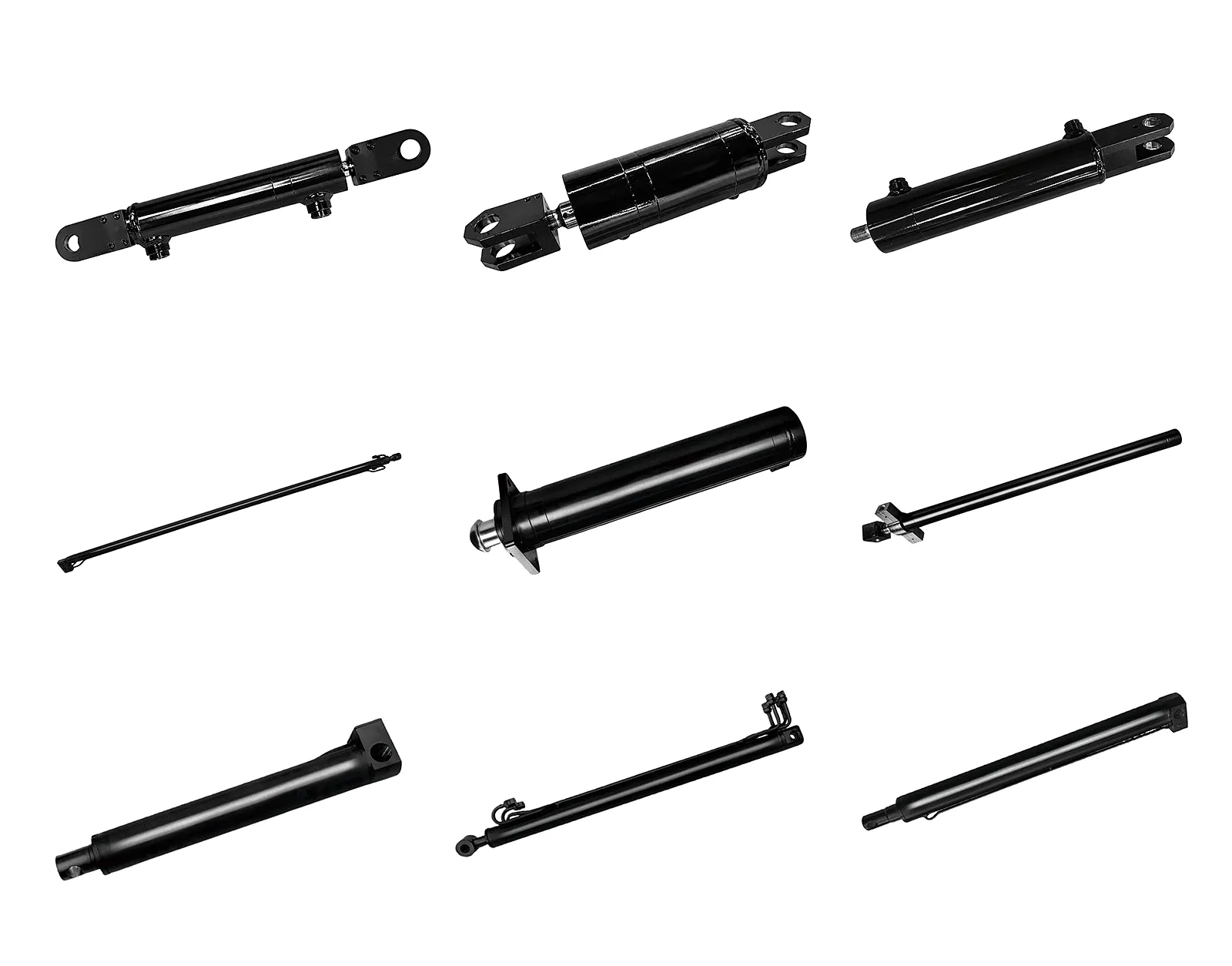
Customer Success Story: Aerial Platform Fleet, Sheffield
Meridian Elevated Access Solutions Ltd.
Sheffield, South Yorkshire — Aerial Work Platform Fleet Operator and OEM Service Partner
The Challenge
Meridian operates a fleet of 47 telescopic and articulating boom lifts deployed across construction and industrial maintenance contracts in South Yorkshire, Derbyshire, and Nottinghamshire. In the spring of 2024, their fleet maintenance manager identified a recurring issue: main boom angle cylinders with a 1,458 mm stroke were developing lateral rod deflection after approximately 14,000 cycles — well below the 30,000-cycle service interval specified by the original platform manufacturer. Two units showed visible rod curvature at full extension, and Meridian faced both safety concerns and a significant warranty dispute with the incumbent cylinder supplier. The root cause, identified by an independent mechanical engineering consultant, was that the original cylinders had been sized on bore pressure capacity alone, with no Euler buckling analysis performed. The effective free length under the as-installed mounting geometry corresponded to a K-factor closer to 1.8 rather than the assumed 1.0, reducing the actual safety factor against buckling to approximately 1.4.
The Ever Power Solution
Meridian contacted Ever Power following a recommendation from a Leeds-based hydraulic distributor. The Ever Power engineering team collected the installation drawings and confirmed the actual end-condition K-factor as 1.7 — less than 1.8 but still substantially higher than 1.0. A replacement cylinder specification was prepared: the rod diameter was increased from 70 mm to 85 mm, raising the moment of inertia from 1.179 × 10⁻⁶ m⁴ to 2.584 × 10⁻⁶ m⁴ and pushing the Euler critical load from 1,669 kN to 3,135 kN at the corrected effective length. At a safety factor of 3.5, the new permissible load was 896 kN — comfortably above the maximum operational compressive load of 620 kN confirmed from the platform load data. Ever Power also supplied a revised clevis mounting bush with increased spherical bearing clearance to prevent inadvertent load transfer into moment at the rod end. All 47 replacement cylinders were delivered in two consignments over seven weeks, complete with EN 10204 3.1 material certificates and signed Euler calculation sheets in the format required for Meridian’s insurance documentation. Over the following 16 months, zero rod deflection incidents were recorded across the fleet.
“The fact that Ever Power provided a signed Euler calculation sheet with every single cylinder — not just a generic data sheet — gave our insurance auditor exactly what they needed. No other supplier we approached could offer that level of structural documentation.”
James Thornton — Fleet Maintenance Manager, Meridian Elevated Access Solutions Ltd., Sheffield
“We had tried two other suppliers who simply remanufactured the original rod diameter. Ever Power were the first to push back on the specification and correctly identify that the as-installed K-factor was the actual problem. That engineering conversation before we ordered was worth more than any price discount.”
Sarah Beaumont — Technical Director, Meridian Elevated Access Solutions Ltd.
“Sixteen months, zero incidents, and our fleet is cycling harder than before. The 85 mm rod cylinders run noticeably smoother at full extension — you can feel the absence of that marginal lateral movement we had accepted as normal. Ever Power’s customisation capability and the speed of delivery across two consignments exceeded our expectations significantly.”
David Rayner — Operations Manager, Meridian Elevated Access Solutions Ltd., Sheffield
Frequently Asked Questions: Hydraulic Cylinder Buckling in UK Industrial Applications
How do I calculate the safe working load of a long-stroke hydraulic cylinder to avoid buckling on a UK construction site?
Apply Euler’s formula using the rod’s Young’s Modulus and second moment of area, then divide the resulting critical buckling load by a safety factor of at least 3.5. You also need to confirm the correct end-condition K-factor for your mounting arrangement — a clevis-to-clevis installation typically uses K = 1.0, while a flange-fixed mounting with a free rod end uses K = 2.0. UK construction machinery suppliers and aerial platform OEMs should include this calculation in the technical file for UKCA compliance.
What is the difference between Euler’s column buckling formula and the Johnson parabola for hydraulic cylinder rod sizing?
Euler’s formula applies when the slenderness ratio of the rod exceeds the transition value for the material — typically above 80–100 for steel. Below this threshold, the Johnson parabola gives more accurate results because the failure mode shifts from elastic buckling into inelastic or plastic column failure governed by yield strength. Long-stroke hydraulic cylinders with slenderness ratios above 100 are firmly in Euler territory; short, thick rods fall below the transition and need the Johnson formula instead. For most UK hydraulic cylinder applications with strokes above 800 mm and rod diameters below 100 mm, Euler is the appropriate method.
Which hydraulic cylinder rod material gives the best buckling resistance for aerial work platforms used across Birmingham and Sheffield?
42CrMo4 chromium-molybdenum alloy steel remains the standard choice for aerial platform cylinder rods in UK industrial environments. Its Young’s Modulus of approximately 206 GPa and yield strength above 700 MPa after quench-and-temper treatment give the best combination of buckling stiffness and compressive strength. Chrome plating adds surface hardness without altering the bulk modulus that determines buckling behaviour. For coastal or aggressive-environment applications — offshore rigs, water treatment plant — 2205 duplex stainless steel is appropriate, with a small reduction in E to approximately 200 GPa noted in the Euler calculation.
How much does it cost to get a custom long-stroke hydraulic cylinder with a certified buckling calculation from a UK-compatible supplier?
Custom cylinder pricing varies based on bore diameter, stroke length, rod material, end configuration, and required certifications. For UK buyers, Ever Power offers factory pricing with full EN 10204 3.1 material certification and Euler calculation documentation included at no additional charge for orders above standard minimum quantities. To obtain an accurate price and lead-time quote specific to your application, email [email protected] with your bore, stroke, working pressure, and installation details. Typical response with initial pricing is within one UK working day.
Where can UK plant engineers find a reliable hydraulic cylinder supplier who provides Euler buckling documentation for UKCA technical files?
Ever Power at boom-cylinders.com supplies long-stroke hydraulic cylinders to UK buyers with full structural calculation packages as standard. Our engineering team confirms end-condition K-factors based on your installation drawings, performs documented Euler analysis, and issues signed calculation sheets suitable for inclusion in UKCA technical files and CE declarations of conformity. We ship to all major UK logistics hubs, including Birmingham, Sheffield, Manchester, London, and Aberdeen, with established freight partnerships for both single-unit prototype orders and production-volume runs.
When should a hydraulic cylinder rod guide or intermediate support sleeve be specified instead of simply increasing the rod diameter?
A rod guide or intermediate support sleeve becomes the preferred solution when the bore-to-rod diameter ratio is already maximised for the available port geometry, or when the cylinder body length constraints make a thicker rod impractical. An intermediate support at the midpoint of the rod’s free buckling length effectively halves L_eff, quadrupling the Euler critical load without any change to rod diameter. For telescopic or multi-stage cylinders — common in UK tipper vehicle applications — intermediate guidance at each stage transition is standard practice and may be the only practical means of achieving an adequate buckling safety factor.
Ready to Specify a Buckling-Verified Hydraulic Cylinder?
Reach the Ever Power engineering team directly — custom quotations include a full Euler calculation sheet at no extra cost.
© Ever Power Hydraulic Cylinders | boom-cylinders.com | UK B2B Supply | edit by gzl
 Kazakh
  English
  Italian
  Portuguese
  Dutch
Dutch  Swedish
  Danish
  Finnish
  Polish
  Hindi
Hindi  Turkish
  Ukrainian
  Romanian
  Spanish
  German
  Russian
  Korean
  Japanese
  Vietnamese
  Thai
Thai  Indonesian
  Malay
Malay  French
  Greek
Greek