
제품 설명
| Part Name | Auto Spare Parts Clutch Master Cylinder for SCANIA 115712 1114685 1361136 |
| OEM Number | 115712 1114685 1361136 |
| Hole diameter: 31.75mm Braking system: FTE Thread size: 14 x 1.5 Material: Cast Iron | Diameter: 25.40mm Axle distance: 60mm Thread size: 12X1.5 Material: Cast Aluminum Drive type: Hydraulic |
| Quality Warranty | 12 Months |
| 상표 | SI, PPB, or customized |
| Packing | Neutral, SI, PPB brand packing or customized |
| OEM/ODM service | 예 |
| Manufacture place | ZHangZhoug, China |
| Production Capacity | 30000PCS |
| Inspection | 100% |
| 자격증 | ISO9001:2015 TS16949 |
| Payment | T/T, PayPal, West Union |
OEM
SCANIA : 1 105 332 SCANIA : 1 105 332-9 SCANIA : 1 114 685 SCANIA : 1 114 685-9 SCANIA : 1 358 801 SCANIA : 1 361 136 SCANIA : 360 824 |
REFERENCE
BREMBO : C C2 003 FERODO : FHC5141 FTE : KG250004.0.2 | LPR : 7004 LPR : 7005 PNEUMATICS : CP-502 |
Packing and Delivery
Work shop
Exhibition
우리의 장점
| More than 20 years of manufacturing and exporting experience OEM manufacturing available Full range, large stock Quickly feedback One year warranty One-stop service On-time delivery |
FAQ
Q1.What is your shipping logistic?
Re: DHL, TNT, FedEx express, by air/sea/train.
Q2:What’s the MOQ?
Re: For the wheel hub assembly. The MOQ is always 50 sets. If ordering together with other models, small quantities can be organized. But need more time due to the production schedule.
Q3. What are your goods of packing?
Re: Generally, our goods will be packed in Neutral white or brown boxes for the hub bearing unit. Our brand packing SI & CHINAMFG are offered. If you have any other packing requests, we shall also handle them.
Q4. What is your sample policy?
Re: We can supply the sample if we have ready parts in stock.
Q5. Do you have any certificates?
Re: Yes, we have the certificate of ISO9001:2015.
Q6:Any warranty of your products.
Re: Sure, We are offering a guarantee for 12 months or 40,000-50,000 km for the aftermarket.
Q7: How can I make an inquiry?
Re: You can contact us by email, telephone, WhatsApp, , etc.
Q8: How long can reply inquiry?
Re: Within 24 hours.
Q9: What’s the delivery time?
Re: Ready stock 10-15 days, production for 30 to 45 days.
Q10: How do you maintain our good business relationship?
Re: 1. Keep stable, reliable quality, competitive price to ensure our customer’s benefit;
2. Optimal lead time.
3. Keep customers updated about the new goods.
4. Make customers satisfaction as our main goal.
Q11: Can we visit the company & factory?
Re: Yes, welcome for your visit & business discussion.
| After-sales Service: | One Year |
|---|---|
| Warranty: | 예 |
| Part: | Clutch Master Cylinder |
| Material: | Aluminium |
| Classification: | Hydraulic Clutch |
| 인증: | ISO/TS16949:2002 |
| Samples: | US$ 50/Piece 1 Piece(Min.Order) | |
|---|
| 맞춤 설정: | 사용 가능 |
|
|---|
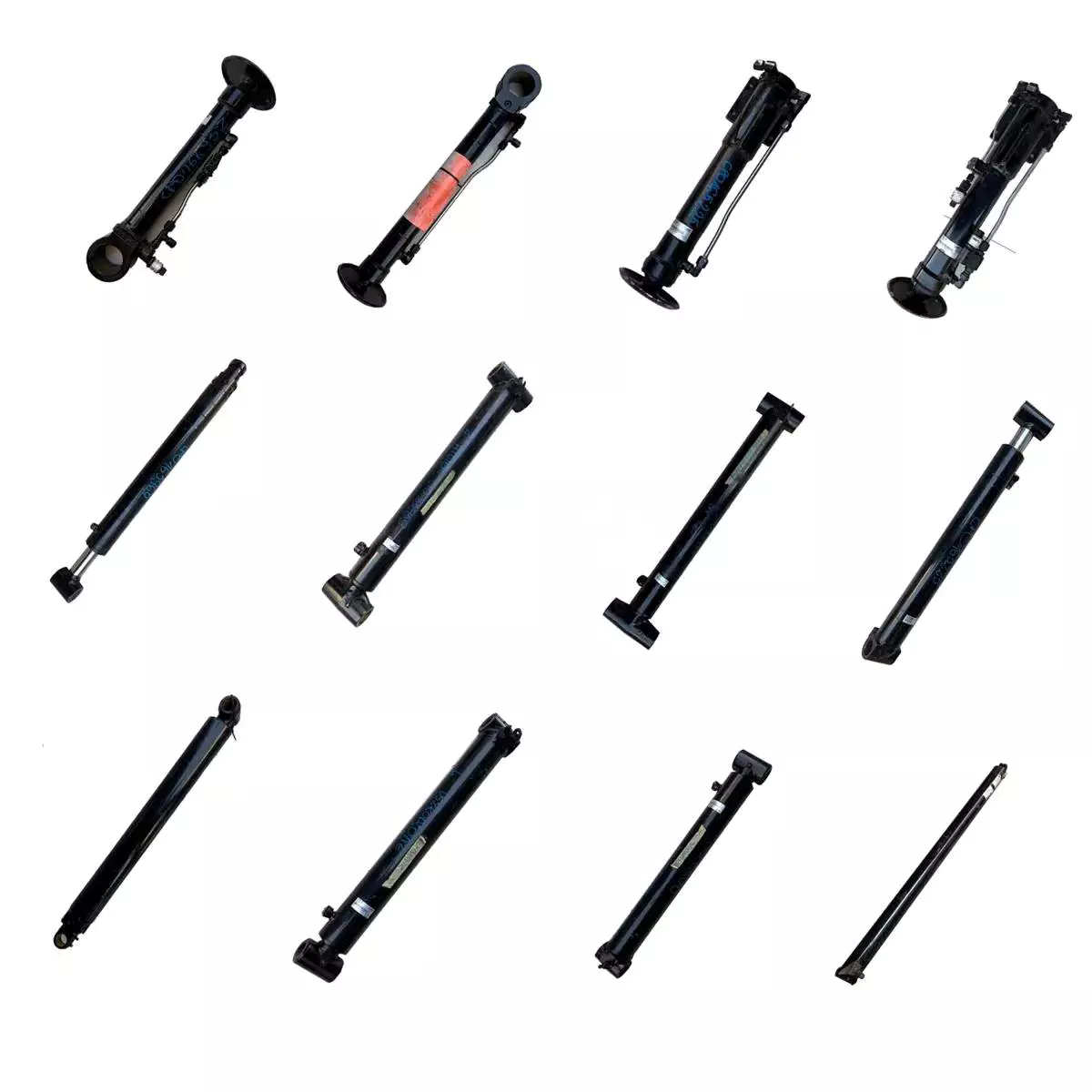
How do hydraulic cylinders handle the challenges of precise positioning and control?
Hydraulic cylinders are designed to handle the challenges of precise positioning and control with a combination of engineering principles and advanced control systems. These challenges often arise in applications where accurate and controlled movements are required, such as in industrial automation, construction, and material handling. Here’s a detailed explanation of how hydraulic cylinders overcome these challenges:
1. Fluid Power Control:
– Hydraulic cylinders utilize fluid power control to achieve precise positioning and control. The hydraulic system consists of a hydraulic pump, control valves, and hydraulic fluid. By regulating the flow of hydraulic fluid into and out of the cylinder, operators can control the speed, direction, and force exerted by the cylinder. The fluid power control allows for smooth and accurate movements, enabling precise positioning of the hydraulic cylinder and the attached load.
2. Control Valves:
– Control valves play a crucial role in handling the challenges of precise positioning and control. These valves are responsible for directing the flow of hydraulic fluid within the system. They can be manually operated or electronically controlled. Control valves allow operators to adjust the flow rate of the hydraulic fluid, controlling the speed of the cylinder’s movement. By modulating the flow, operators can achieve fine control over the positioning of the hydraulic cylinder, enabling precise and accurate movements.
3. Proportional Control:
– Hydraulic cylinders can be equipped with proportional control systems, which offer enhanced precision in positioning and control. Proportional control systems utilize electronic feedback and control algorithms to precisely regulate the flow and pressure of the hydraulic fluid. These systems provide accurate and proportional control over the movement of the hydraulic cylinder, allowing for precise positioning at various points along its stroke length. Proportional control enhances the cylinder’s ability to handle complex tasks that require precise movements and control.
4. Position Feedback Sensors:
– To achieve precise positioning, hydraulic cylinders often incorporate position feedback sensors. These sensors provide real-time information about the position of the cylinder’s piston rod. Common types of position feedback sensors include potentiometers, linear variable differential transformers (LVDTs), and magnetostrictive sensors. By continuously monitoring the position, the feedback sensors enable closed-loop control, allowing for accurate positioning and control of the hydraulic cylinder. The feedback information is used to adjust the flow of hydraulic fluid to achieve the desired position accurately.
5. Servo Control Systems:
– Advanced hydraulic systems employ servo control systems to handle the challenges of precise positioning and control. Servo control systems combine electronic control, position feedback sensors, and proportional control valves to achieve high levels of accuracy and responsiveness. The servo control system continuously compares the desired position with the actual position of the hydraulic cylinder and adjusts the flow of hydraulic fluid to minimize any positional error. This closed-loop control mechanism enables the hydraulic cylinder to maintain precise positioning and control, even under varying loads or external disturbances.
6. Integrated Automation:
– Hydraulic cylinders can be integrated into automated systems to achieve precise positioning and control. In such setups, the hydraulic cylinders are controlled by programmable logic controllers (PLCs) or other automation controllers. These controllers receive input signals from various sensors and use pre-programmed logic to command the hydraulic cylinder’s movements. The integration of hydraulic cylinders into automated systems allows for precise and repeatable positioning and control, enabling complex sequences of movements to be executed with high accuracy.
7. Advanced Control Algorithms:
– Advancements in control algorithms have also contributed to the precise positioning and control of hydraulic cylinders. These algorithms, such as PID (Proportional-Integral-Derivative) control, adaptive control, and model-based control, enable sophisticated control strategies to be implemented. These algorithms consider factors such as load variations, system dynamics, and environmental conditions to optimize the control of hydraulic cylinders. By employing advanced control algorithms, hydraulic cylinders can compensate for disturbances and achieve precise positioning and control over a wide range of operating conditions.
In summary, hydraulic cylinders overcome the challenges of precise positioning and control through the use of fluid power control, control valves, proportional control, position feedback sensors, servo control systems, integrated automation, and advanced control algorithms. By combining these elements, hydraulic cylinders can achieve accurate and controlled movements, enabling precise positioning and control in various applications. These capabilities are essential for industries that require high precision and repeatability in their operations, such as industrial automation, robotics, and material handling.
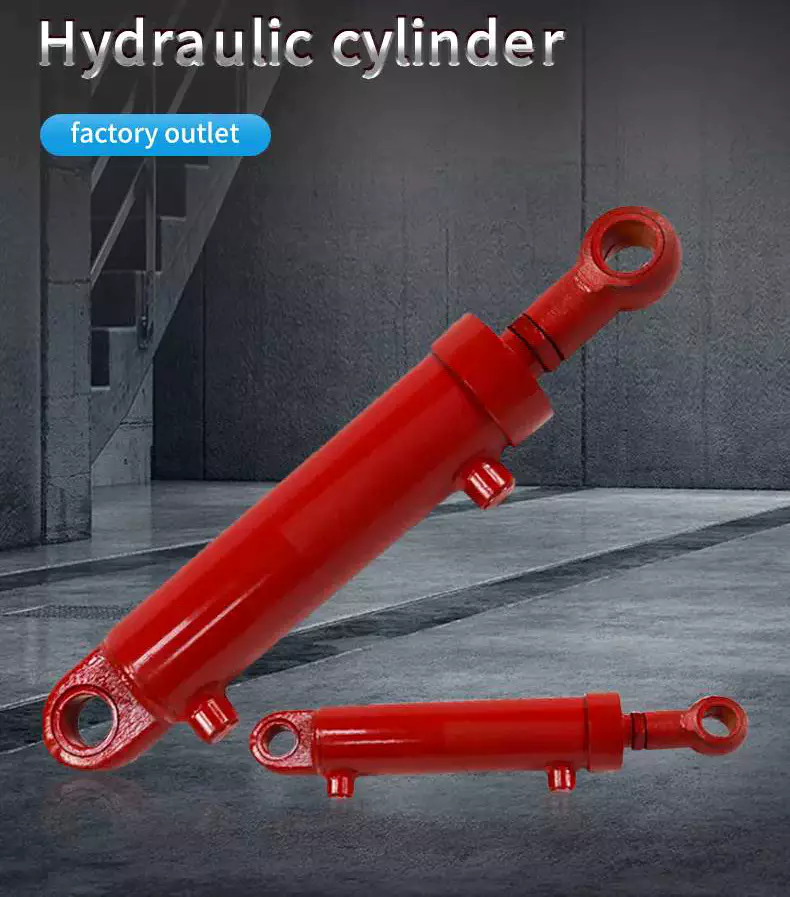
유압 실린더가 제조 공정의 전반적인 생산성에 미치는 영향
유압 실린더는 제조 공정의 전반적인 생산성 향상에 매우 중요한 역할을 합니다. 이 다재다능한 장치는 강력하고 정밀한 직선 운동을 생성할 수 있는 능력 덕분에 다양한 산업 분야에서 널리 사용됩니다. 유압 실린더가 제조 공정의 생산성에 미치는 영향을 자세히 살펴보겠습니다.
- 강력한 에너지 생성: 유압 실린더는 높은 힘을 발생시킬 수 있어 무거운 하중을 처리하고 까다로운 작업을 수행할 수 있습니다. 유압 실린더는 필요한 힘을 제공함으로써 제조 공정에서 기계 및 장비의 효율적이고 효과적인 작동을 가능하게 합니다. 이러한 강력한 힘 발휘 능력은 더 큰 공작물을 다룰 수 있게 하고, 공정 효율성을 높이며, 수작업 필요성을 줄여 생산성 향상에 기여합니다.
- 정밀성과 제어력: 유압 실린더는 하중의 움직임을 정밀하게 제어하여 정확한 위치 지정, 정렬 및 반복 작업을 가능하게 합니다. 유압 실린더가 제공하는 부드럽고 제어된 직선 운동은 조립, 자재 운반 및 가공과 같은 제조 공정에서 정밀한 작동을 보장합니다. 이러한 정밀도와 제어는 오류, 재작업 및 불량품을 최소화하여 생산성 향상과 고품질 제품 생산으로 이어집니다.
- 속도와 효율성: 유압 실린더는 고속으로 작동할 수 있어 제조 공정에서 빠른 동작과 사이클 타임을 가능하게 합니다. 높은 힘과 빠른 속도의 조합으로 기계 및 장비의 작동 속도를 높여 생산 사이클 타임을 단축하고 전체 생산량을 증가시킬 수 있습니다. 유압 실린더는 제조 공정의 속도와 효율성을 최적화함으로써 생산성과 생산량 향상에 기여합니다.
- 유연성과 적응성: 유압 실린더는 유연성이 뛰어나 다양한 제조 분야에 적용할 수 있습니다. 하중 용량, 스트로크 길이, 장착 방식 등 특정 요구 사항에 맞춰 맞춤 제작이 가능합니다. 이러한 다재다능함 덕분에 유압 실린더는 다양한 기계 및 장비에 통합되어 여러 제조 요구 사항을 충족할 수 있습니다. 다양한 작업과 환경에 적응할 수 있는 능력은 자원의 효율적인 활용과 공정 최적화를 통해 전반적인 생산성을 향상시킵니다.
- 신뢰성 및 내구성: 유압 실린더는 견고성과 내구성이 뛰어나 까다로운 제조 환경에 적합합니다. 무거운 하중, 반복 사용 및 열악한 작동 조건을 견딜 수 있는 능력 덕분에 장기간 안정적인 성능을 보장합니다. 실린더 고장이나 유지 보수 필요성으로 인한 가동 중단 시간을 최소화함으로써 생산성을 향상시키고 제조 공정을 중단 없이 운영할 수 있습니다.
요약하자면, 유압 실린더는 제조 공정의 전반적인 생산성에 상당한 영향을 미칩니다. 강력한 힘 생성, 정밀한 제어, 빠른 속도와 효율성, 유연성과 적응성, 그리고 신뢰성과 내구성은 공정 최적화, 생산량 증대, 품질 향상, 그리고 노동력 절감에 기여합니다. 제조업체는 유압 실린더의 이러한 역량을 활용하여 생산성을 향상시키고, 운영을 간소화하며, 제조 공정의 효율성을 극대화할 수 있습니다.
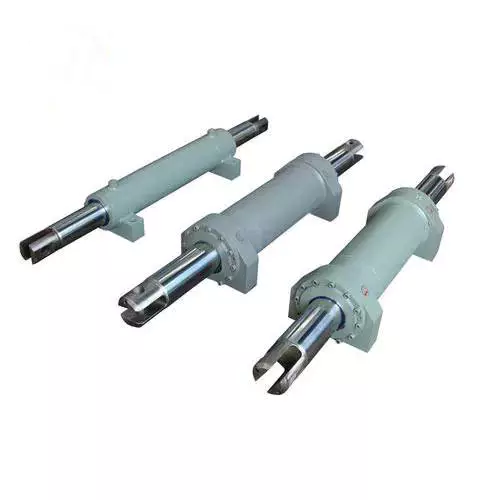
How do hydraulic cylinders ensure precise and controlled movement in equipment?
Hydraulic cylinders are widely used in various equipment and machinery to provide precise and controlled movement. They utilize hydraulic fluid and mechanical components to achieve accurate positioning, smooth operation, and reliable control. Here’s a detailed explanation of how hydraulic cylinders ensure precise and controlled movement in equipment:
1. Hydraulic Principle:
– Hydraulic cylinders operate based on Pascal’s law, which states that pressure exerted on a fluid is transmitted equally in all directions. The hydraulic fluid is contained within the cylinder, and when pressure is applied, it acts on the piston, generating force. By controlling the pressure and flow of hydraulic fluid, the movement of the cylinder can be precisely regulated, allowing for accurate and controlled motion.
2. Force and Load Management:
– Hydraulic cylinders are designed to handle specific loads and forces. The force generated by the hydraulic cylinder depends on the hydraulic pressure and the surface area of the piston. By adjusting the pressure, the force output can be controlled. This allows for precise management of the load and ensures that the cylinder can handle the required force without exerting excessive or insufficient force. Proper load management contributes to the precise and controlled movement of the equipment.
3. Control Valves:
– Control valves play a crucial role in regulating the flow and direction of hydraulic fluid within the cylinder. These valves allow operators to control the extension and retraction of the cylinder, adjust the speed of movement, and stop or hold the cylinder at any desired position. By manipulating the control valves, precise and controlled movement can be achieved, enabling operators to position equipment accurately and perform specific tasks with precision.
4. Flow Control:
– Hydraulic cylinders incorporate flow control valves to manage the rate of hydraulic fluid flow. These valves control the speed of the cylinder’s extension and retraction, allowing for smooth and controlled movement. By adjusting the flow rate, operators can precisely control the speed of the cylinder, ensuring that it moves at the desired rate without sudden or erratic movements. Flow control contributes to the overall precision and control of the equipment’s movement.
5. Position Sensing:
– To ensure precise movement, hydraulic cylinders can be equipped with position sensing devices such as linear transducers or proximity sensors. These sensors provide feedback on the position of the cylinder, allowing for accurate position control and closed-loop control systems. By continuously monitoring the position, the equipment’s movement can be controlled with high accuracy, enabling precise positioning and operation.
6. Proportional Control:
– Advanced hydraulic systems utilize proportional control technology, which allows for precise and fine-tuned control of the hydraulic cylinder’s movement. Proportional valves, often operated by electronic control systems, provide variable flow rates and pressure adjustments. This technology enables precise control of speed, force, and position, resulting in highly accurate and controlled movement of the equipment.
7. Cushioning and Damping:
– Hydraulic cylinders can incorporate cushioning and damping mechanisms to ensure smooth and controlled movement at the end of the stroke. Cushioning features, such as adjustable cushions or shock absorbers, reduce the impact and decelerate the cylinder before reaching the end of the stroke. This prevents abrupt stops and minimizes vibrations, contributing to precise and controlled movement.
8. Load Compensation:
– Some hydraulic systems utilize load compensation mechanisms to maintain precise movement even when the load varies. Load-sensing systems monitor the load demand and adjust the hydraulic pressure and flow accordingly to meet that demand. This compensation ensures that the equipment’s movement remains accurate and controlled, regardless of changes in the applied load.
In summary, hydraulic cylinders ensure precise and controlled movement in equipment through the application of hydraulic principles, force and load management, control valves, flow control, position sensing, proportional control, cushioning and damping mechanisms, and load compensation. These features and technologies allow operators to achieve accurate positioning, smooth operation, and reliable control, enabling equipment to perform tasks with precision and efficiency. The combination of hydraulic power and careful design considerations ensures that hydraulic cylinders deliver precise and controlled movement in a wide range of industrial applications.


editor by CX 2023-10-29
 Korean
  English
  Italian
  Portuguese
  Dutch
Dutch  Swedish
  Danish
  Finnish
  Polish
  Hindi
Hindi  Kazakh
  Turkish
  Ukrainian
  Romanian
  Spanish
  German
  Russian
  Japanese
  Vietnamese
  Thai
Thai  Indonesian
  Malay
Malay  French
  Greek
Greek