
제품 설명
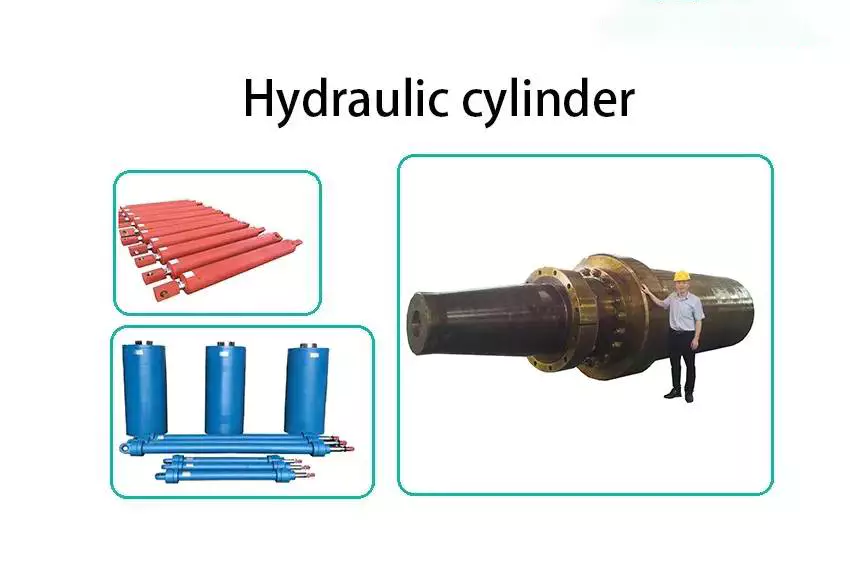
Our company produces all series of hydraulic cylinders, including engineering cylinders, tie rod cylinders, earring cylinders, multi-section cylinders, flange cylinders, high pressure cylinders, heavy-duty cylinders, HSG series hydraulic cylinders, single-acting cylinders, two-way cylinders, and other non-standard customized hydraulic product. After years of practice, our company has accumulated rich experience in processing and installation. The parts are precision CNC machined by all series of horizontal lathe, and the seals are made of CHINAMFG imported famous brand products. The products are continuously improved and improved, and the quality and accuracy are reliable and stable. Our cylinder products have been exported to the Middle East. , Asia, Europe and the United States and other places, we have more than 10 years of cooperation with oil cylinder customers.
In order to achieve maximum quality control, 80% of our parts are produced by ourselves, among which we can process super-large hydraulic cylinder body parts and telescopic shaft parts with our large horizontal lathes, we can even turn hydraulic cylinders with a length of more than 11 meters, and The surface finish of the shaft cylinder can reach Ra1.6 directly through the lathe.
Our main products :
tie rod cylinder, welding cylinder, double-acting cylinder, single-acting cylinder, piston cylinder, plunger cylinder, single-rod cylinder, double-rod cylinder, etc.;
Technical parameters: The cylinder diameter is 32~320mm, the stroke is 5~6000mm, and the working pressure is 2.5~31Mpa;
The installation methods include flange, single ear, double ear, foot seat, hinge shaft, welded pipe, etc., and provide rod end connectors, including Y-type joint, I-type joint, joint bearing, welded pipe, etc.;
Workshop overview:
Our sheet metal fabrication workshop equipped with a series of cutting machines, including laser cutter, flame cutter, water jet cutter, and plasma cutter, with these advanced CNC machine we can cut the materials with high efficiency and high accuracy.
| Laser Cutting | Plasma Cutting | Flame Cutting | Water-jet Cutting | |
| Cutting Depth | 25mm | 100mm | 450mm | 250mm |
| Cutting Width | 3500mm | 4000mm | 6000mm | 3500mm |
| Cutting Length | 28000mm | 20000mm | 20000mm | 10000mm |
| Accuracy | ±0.2mm | ±1mm | ±0.8mm |
We have a series of imported CNC Machining equipment, including large gantry machining center, horizontal boring and milling machine, turning and milling compound center, large vertical lathe machining center, heavy horizontal lathe machining center, dmulti-hole drilling and other machining equipment facilities.
Our processing capabilities are as follows:
| Gantry Machining Center | Max Height:4000mm | Max Width:4500mm | Max Length: 12000mm | ||
| Large Boring Mill | X: 15000mm | Y:4000mm | Z+W:900+1000 mm | Max Weight: 250T | Bore Tool Dia: 280mm |
| Truning and Milling center | Height: 4500mm | Weight: 350T | Max Diameter:11000mm | ||
| Vertical Lathe | Height: 4000mm | Weight: 50T | Max Diameter: 5000mm | ||
| Horizontal Lathe | Max Length: 12m | Weight: 50T | |||
| Deep hole drilling | X:3000mm | Y:2500mm | Z:700mm | Hole Dia: 16-80mm | Depth: 700mm |
| Multi-hole drilling | X:7000mm | Y:3000mm | Z:700mm | Hole Dia:2-120mm | Depth: 320mm |
We have a complete welding platform, including plasma welding, strip surfacing, argon arc welding, TIG welding, laser welding, hand arc welding, and submerged arc welding equipment clusters.Welding methods include tube-sheet strip surfacing, automatic submerged arc welding, carbon dioxide gas shielded welding, argon tungsten arc welding, electrode arc welding, plasma welding, etc. The materials that can be welded are carbon steel, alloy steel, stainless steel, and non-ferrous metals such as copper, aluminum, and titanium.
To ensure that the quality strictly meets the requirements, we have special quality inspectors to supervise and review the product quality for all projects, and we are equipped with a variety of inspection methods. For welding, we have magnetic particle inspection, X-ray inspection and other methods to inspect the weld quality. For precision machined products, we use advanced three-coordinate testing equipment to check product size, flatness, parallelism, concentricity, etc. For precision machined surfaces, we will also use special testing equipment to check that the surface roughness perfectly meets the acceptance criteria. Moreover, we will custom make inspection methods to serve for their project.
Inspection Facilites:
| After-sales Service: | Tbd |
|---|---|
| Warranty: | Tbd |
| Condition: | New |
| 인증: | ISO9001 |
| Standard: | ASTM |
| Customized: | Customized |
| Samples: | US$ 2500/Ton 1 Ton(Min.Order) | |
|---|
| 맞춤 설정: | 사용 가능 |
|
|---|
유압 실린더 기술에 스마트 기능과 같은 새로운 트렌드가 있습니까?
네, 유압 실린더 기술에는 스마트 기능 통합을 비롯한 여러 가지 새로운 트렌드가 나타나고 있습니다. 산업계가 첨단 기술을 지속적으로 도입하고 효율성을 추구함에 따라 유압 실린더에도 성능 향상과 추가적인 이점 제공을 위한 혁신적인 기능들이 탑재되고 있습니다. 다음은 유압 실린더 기술의 주요 트렌드입니다.
1. 센서 통합:
유압 실린더 기술의 중요한 트렌드 중 하나는 센서 통합입니다. 유압 실린더 내부에 센서를 내장하여 압력, 온도, 위치, 하중 등 다양한 매개변수를 모니터링할 수 있습니다. 이러한 센서는 실시간 데이터를 제공하여 상태 모니터링, 예측 정비, 향상된 운영 제어를 가능하게 합니다. 데이터 수집 및 분석을 통해 작업자는 유압 시스템의 성능을 최적화하고, 잠재적인 문제를 사전에 감지하고, 고장을 예방하여 신뢰성을 높이고 가동 중지 시간을 줄일 수 있습니다.
2. 연결성 및 IoT:
유압 실린더가 사물 인터넷(IoT) 생태계에 통합되어 연결성과 데이터 교환이 가능해지고 있습니다. 유압 실린더를 네트워크에 연결하면 작업자는 원격으로 성능을 모니터링하고 제어할 수 있습니다. IoT 지원 유압 실린더는 원격 진단, 성능 최적화, 예측 유지보수와 같은 기능을 제공합니다. 이러한 연결성은 전체 장비 시스템과의 통합을 향상시키고 데이터 기반 의사결정을 통해 효율성과 생산성을 개선할 수 있도록 합니다.
3. 에너지 효율적인 설계:
지속가능성과 에너지 효율성에 대한 관심이 높아짐에 따라 유압 실린더 기술도 에너지 절약 기능을 통합하는 방향으로 발전하고 있습니다. 제조업체들은 향상된 밀봉 기술, 마찰 감소, 최적화된 유체 흐름 역학을 갖춘 유압 실린더를 개발하고 있습니다. 이러한 발전은 에너지 손실을 최소화하고 시스템 전체 효율을 향상시킵니다. 에너지 효율적인 유압 실린더는 전력 소비 감소, 운영 비용 절감, 환경 발자국 감소에 기여합니다.
4. 첨단 소재 및 코팅:
유압 실린더 기술에서 새롭게 떠오르는 트렌드 중 하나는 첨단 소재와 코팅의 활용입니다. 제조업체들은 강도와 내구성을 유지하면서 유압 실린더의 전체 무게를 줄이기 위해 복합재료나 합금과 같은 경량 소재를 연구하고 있습니다. 또한, 내식성, 내마모성 및 수명 향상을 위해 특수 코팅 및 표면 처리 기술이 적용되고 있습니다. 이러한 기술 발전은 특히 까다로운 환경에서 유압 실린더의 수명과 신뢰성을 향상시켜 줍니다.
5. 지능형 제어 시스템:
유압 실린더 기술은 성능을 최적화하고 고급 기능을 구현하는 지능형 제어 시스템을 도입하고 있습니다. 이러한 시스템은 알고리즘, 머신 러닝 및 인공지능을 활용하여 프로세스를 자동화하고, 변화하는 환경에 적응하며, 유압 실린더의 움직임을 최적화합니다. 지능형 제어 시스템은 실시간으로 매개변수를 조정하여 정밀하고 효율적인 작동을 보장합니다. 이러한 추세는 유압 시스템 응용 분야에서 자동화 증대, 생산성 향상 및 안전성 강화를 가능하게 합니다.
6. 예측 유지보수:
유압 실린더 기술에서 예측 정비가 점차 중요해지고 있습니다. 센서와 모니터링 시스템에서 수집된 데이터를 활용하는 예측 정비 알고리즘은 유압 실린더의 상태와 성능을 분석할 수 있습니다. 이러한 분석을 통해 잠재적인 고장이나 성능 저하를 사전에 파악하여 선제적인 정비 조치를 취할 수 있습니다. 예측 정비는 계획되지 않은 가동 중단을 줄이고, 유압 실린더의 수명을 연장하며, 정비 일정을 최적화하여 비용 절감과 장비 가용성 향상을 가져옵니다.
7. 강화된 안전 기능:
유압 실린더 기술은 작업자와 장비의 안전을 향상시키기 위해 강화된 안전 기능을 통합하고 있습니다. 이러한 기능에는 통합 안전 밸브, 부하 모니터링 시스템 및 비상 정지 기능이 포함됩니다. 유압 실린더의 안전 시스템은 사고를 예방하고 과부하를 방지하며 안정적인 작동을 보장합니다. 첨단 안전 기능의 통합은 더욱 안전한 작업 환경을 조성하고 엄격한 안전 규정을 준수하는 데 기여합니다.
유압 실린더 기술의 이러한 새로운 트렌드는 업계가 혁신, 성능 최적화 및 지속 가능성에 집중하고 있음을 보여줍니다. 스마트 기능, 연결성, 첨단 소재 및 예측 유지보수 기능의 통합을 통해 유압 실린더는 더욱 효율적으로 작동하고, 실시간 정보를 제공하며, 전반적인 시스템 성능을 향상시킬 수 있습니다. 기술이 계속 발전함에 따라 유압 실린더 기술도 더욱 발전하여 다양한 산업 및 응용 분야에 향상된 기능과 효율성을 제공할 것으로 기대됩니다.
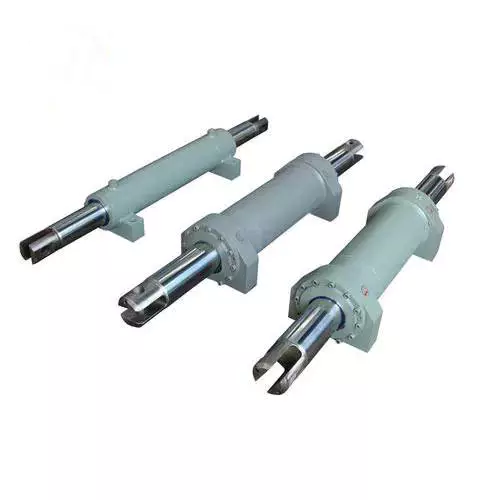
Ensuring Stable Performance of Hydraulic Cylinders Under Fluctuating Loads
Hydraulic cylinders are designed to provide stable performance even under fluctuating loads. They achieve this through various mechanisms and features that allow for efficient load control and compensation. Let’s explore how hydraulic cylinders ensure stable performance under fluctuating loads:
- Piston Design: The piston inside the hydraulic cylinder plays a crucial role in load control. It is typically equipped with seals and rings that prevent leakage of hydraulic fluid and ensure effective transfer of force. The piston design may incorporate features such as stepped or tandem pistons, which provide enhanced load-bearing capabilities and improved stability by distributing the load across multiple surfaces.
- Cylinder Cushioning: Hydraulic cylinders often incorporate cushioning mechanisms to minimize the impact and shock caused by fluctuating loads. Cushioning can be achieved through various methods, such as adjustable cushion screws, hydraulic cushioning valves, or elastomeric cushioning rings. These mechanisms slow down the piston’s movement near the end of the stroke, reducing the impact and preventing sudden stops that could lead to instability.
- Pressure Compensation: Fluctuating loads can result in pressure variations within the hydraulic system. To ensure stable performance, hydraulic cylinders are equipped with pressure compensation mechanisms. These mechanisms maintain a consistent pressure level in the system, regardless of load changes. Pressure compensation can be achieved through the use of pressure relief valves, compensating pistons, or pressure-compensated flow control valves.
- Flow Control: Hydraulic cylinders often incorporate flow control valves to regulate the speed of the cylinder’s movement. By controlling the flow rate of hydraulic fluid, the cylinder’s motion can be adjusted to match the changing load conditions. Flow control valves allow for smooth and controlled movement, preventing abrupt changes that could lead to instability.
- Feedback Systems: To ensure stable performance under fluctuating loads, hydraulic cylinders can be integrated with feedback systems. These systems provide real-time information on the cylinder’s position, velocity, and force. By continuously monitoring these parameters, the hydraulic system can make immediate adjustments to maintain stability and compensate for load fluctuations. Feedback systems can include position sensors, pressure sensors, or load sensors, depending on the specific application.
- Proper Sizing and Selection: Ensuring stable performance under fluctuating loads starts with proper sizing and selection of hydraulic cylinders. It is crucial to choose cylinders with appropriate bore size, rod diameter, and stroke length to match the anticipated load conditions. Oversized or undersized cylinders can lead to instability and reduced performance. Proper sizing also involves considering factors such as the required force, speed, and duty cycle of the application.
In summary, hydraulic cylinders ensure stable performance under fluctuating loads through features such as piston design, cushioning mechanisms, pressure compensation, flow control, feedback systems, and proper sizing and selection. These mechanisms and considerations allow hydraulic cylinders to provide consistent and controlled movement, even in dynamic load conditions, resulting in reliable and stable performance.
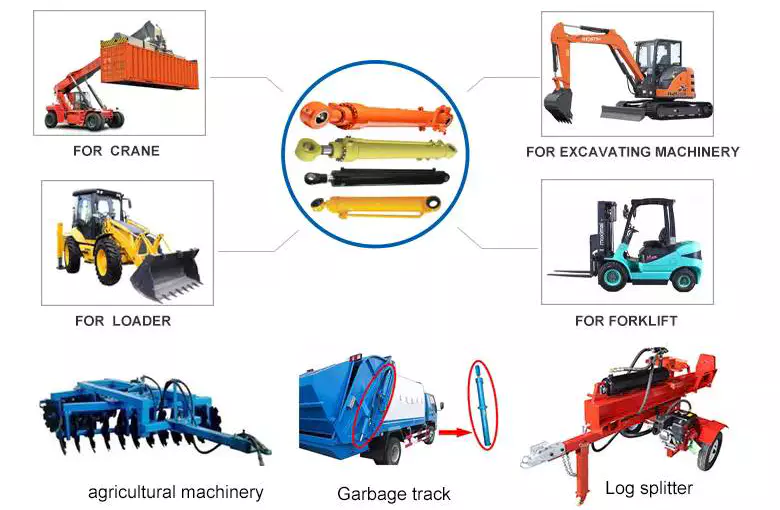
Can you explain the role and significance of hydraulic cylinders in machinery?
Hydraulic cylinders play a crucial role in machinery across various industries. They are essential components that provide controlled and powerful linear motion, enabling the operation of heavy equipment and facilitating numerous tasks. The role and significance of hydraulic cylinders in machinery can be explained in detail as follows:
Role of Hydraulic Cylinders:
– Conversion of Hydraulic Energy: Hydraulic cylinders convert hydraulic energy, typically in the form of pressurized hydraulic fluid, into linear force and motion. This conversion allows machinery to perform tasks such as lifting, pushing, pulling, clamping, tilting, and controlling various mechanisms.
– Generation of Linear Motion: Hydraulic cylinders generate linear motion by utilizing the principles of Pascal’s law. When hydraulic fluid is directed into one side of the cylinder, it applies pressure on the piston, resulting in linear movement of the piston and the attached piston rod. This linear motion can be used to actuate other components within the machinery or directly perform the required task.
– Force Generation: Hydraulic cylinders are capable of generating high forces due to the hydraulic pressure applied to the piston. The force output of a hydraulic cylinder depends on the surface area of the piston and the pressure of the hydraulic fluid. This force allows machinery to exert significant power for lifting heavy loads, applying pressure, or overcoming resistance.
– Precise Control: Hydraulic cylinders offer precise control over the linear motion and force exerted. By regulating the flow of hydraulic fluid, the speed and direction of the cylinder’s movement can be accurately adjusted. This level of control is crucial in machinery that requires precise positioning, delicate movements, or synchronization of multiple cylinders.
– Integration with Hydraulic Systems: Hydraulic cylinders are integral parts of hydraulic systems used in machinery. They work in conjunction with hydraulic pumps, valves, and actuators to create a complete hydraulic circuit. This integration allows for efficient power transmission, control, and coordination of various machine functions.
Significance of Hydraulic Cylinders:
– Heavy Equipment Operation: Hydraulic cylinders are vital in heavy machinery used in construction, mining, agriculture, material handling, and other industries. They enable the lifting and movement of heavy loads, the operation of attachments, and the performance of tasks that require high force and precision.
– Versatility and Adaptability: Hydraulic cylinders are versatile components that can be designed and tailored to meet specific machinery requirements. They can be integrated into various types of equipment and customized based on factors such as force capacity, stroke length, speed, and mounting options. This adaptability makes hydraulic cylinders suitable for diverse applications.
– Durability and Reliability: Hydraulic cylinders are built to withstand rigorous operating conditions, including high pressures, heavy loads, and continuous use. They are designed with robust materials, precise machining, and effective sealing systems to ensure durability and reliability over extended periods of operation.
– Safety and Load Control: Hydraulic cylinders provide safe and controlled operation in machinery. They offer overload protection mechanisms, such as relief valves, to prevent damage caused by excessive force or pressure. Additionally, hydraulic cylinders allow for precise load control, minimizing the risk of accidents during lifting, lowering, or positioning of heavy loads.
– Compact Design: Hydraulic cylinders offer a high power-to-size ratio, allowing for compact machinery design. Their relatively small size compared to the forces they can generate makes them suitable for applications where space is limited or weight restrictions apply.
– Energy Efficiency: Hydraulic cylinders contribute to energy efficiency in machinery. The use of hydraulic systems allows for the transfer of power over long distances without significant power losses. Additionally, hydraulic cylinders can incorporate energy-saving features such as load-sensing technology and regenerative circuits, reducing energy consumption.
Overall, hydraulic cylinders play a vital role in machinery by providing controlled and powerful linear motion. Their significance lies in their ability to convert hydraulic energy, generate high forces, offer precise control, integrate with hydraulic systems, and facilitate the operation of heavy equipment across various industries. Hydraulic cylinders contribute to increased productivity, safety, and efficiency in machinery applications, making them indispensable components in modern-day engineering.


editor by CX 2023-10-31
 Korean
  English
  Italian
  Portuguese
  Dutch
Dutch  Swedish
  Danish
  Finnish
  Polish
  Hindi
Hindi  Kazakh
  Turkish
  Ukrainian
  Romanian
  Spanish
  German
  Russian
  Japanese
  Vietnamese
  Thai
Thai  Indonesian
  Malay
Malay  French
  Greek
Greek