
Technical Reference · Ever Power · UK Industrial Supply
100mm Bore Hydraulic Cylinder
Metric Specification Guide for Industrial Buyers
UK B2B
Custom Manufacturing
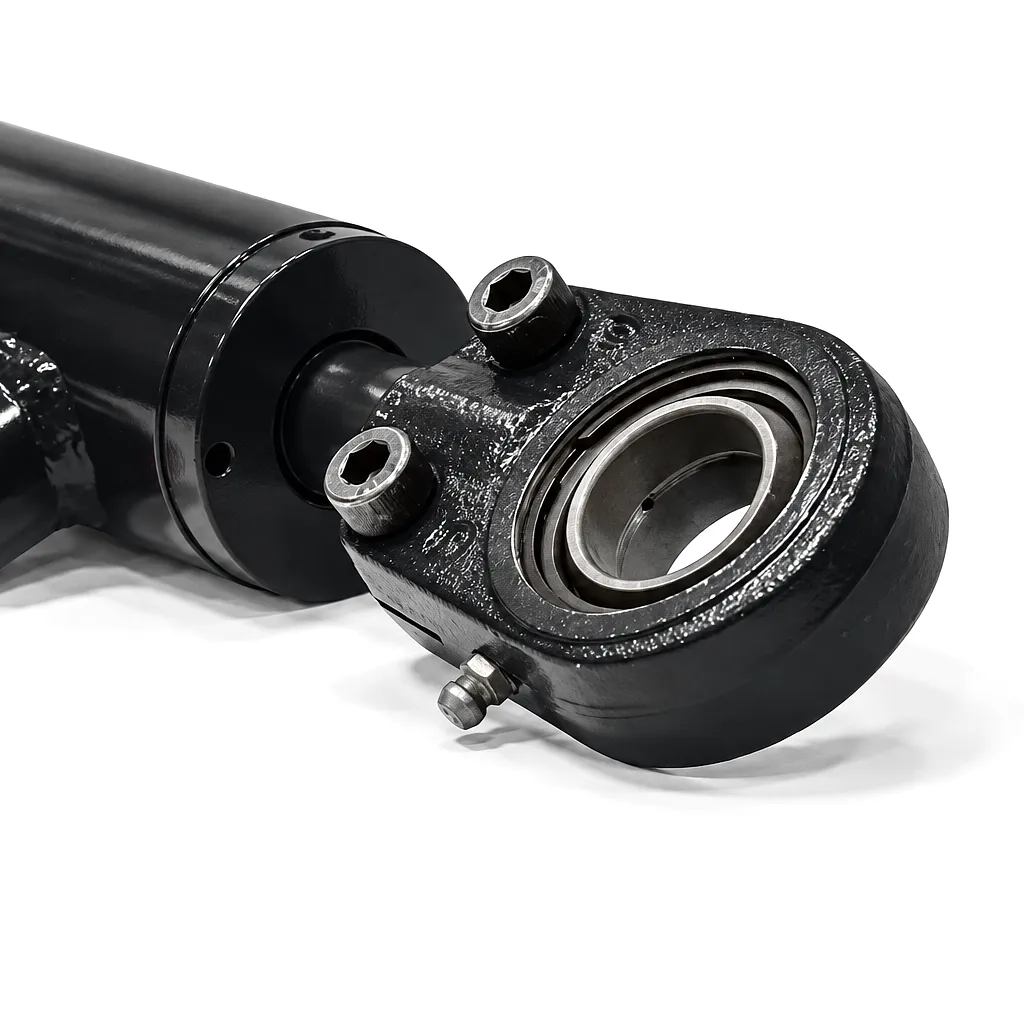 In the hydraulic engineering world, the 100mm bore hydraulic cylinder occupies a uniquely strategic position. It sits at the intersection of moderate force output and compact dimensional envelope — capable of generating substantial pushing and pulling forces while remaining dimensionally suitable for medium-duty mobile plant, press assemblies, industrial automation systems, and heavy fabrication equipment. Across the UK’s manufacturing belt — from the engineering estates of Birmingham and Coventry to the steel processing corridors of Sheffield and Rotherham — procurement engineers routinely specify this bore size when they need a reliable, metric-dimensioned actuator that can handle demanding duty cycles without excessive bulk.
What separates a high-performing 100mm bore cylinder from a merely adequate one is not simply the bore diameter. It is the combination of material selection, sealing architecture, surface finishing, stroke tolerance control, and the manufacturing discipline of whoever builds it. This guide is written specifically for UK industrial buyers, maintenance engineers, and plant managers who need accurate technical information to make confident procurement decisions — whether you are replacing an aging cylinder on a press line in Wolverhampton or specifying new actuators for a bespoke handling system being commissioned in Leeds.
Operating Principle: How a 100mm Bore Hydraulic Cylinder Generates Force
Pascal’s Law in Practice
Every hydraulic cylinder, regardless of bore size, converts fluid pressure into mechanical force using Pascal’s principle: pressure applied to an enclosed fluid transmits equally in all directions. With a 100mm bore — a cross-sectional area of 7,854 mm² (π × 50² mm²) — even relatively modest system pressures translate into substantial output force. At 160 bar operating pressure, this bore diameter delivers approximately 125.7 kN of push force. At 250 bar, the theoretical output reaches 196.4 kN, making this an extremely capable size class for industrial press work, clamping systems, and heavy material handling rigs throughout UK manufacturing facilities.
Double-Acting Cycle
The standard configuration for a 100mm bore hydraulic cylinder in industrial duty is double-acting, meaning hydraulic pressure drives the piston rod both outward and inward under controlled power. When pressurised oil enters the cap-end port, it acts on the full 7,854 mm² bore area and the rod extends. When pressure switches to the rod-end port, the effective area is reduced by the rod cross-section — for a standard 70mm rod this gives approximately 4,012 mm² effective area — and the rod retracts under hydraulic control. This bi-directional force control is indispensable in clamping, tilting, and press-down-hold-release sequences typical of automated production lines across the Midlands and Northern England.
Sealing Architecture
Sealing integrity is what transforms a well-machined tube into a reliable, long-life actuator. In a 100mm bore silinder hidraulik, the piston seal assembly — typically a composite of a primary PTFE-loaded polyurethane seal and a secondary NBR O-ring energiser — must handle the full system pressure while permitting smooth, controllable movement. The rod seal and wiper combination at the gland end prevents external contamination from entering the cylinder body and ensures hydraulic oil stays inside the system. Premium-grade cylinders from Ever Power use a multi-lip rod seal configuration developed specifically for machines operating in contaminated environments, such as aggregate processing plants and steel-fabrication facilities.
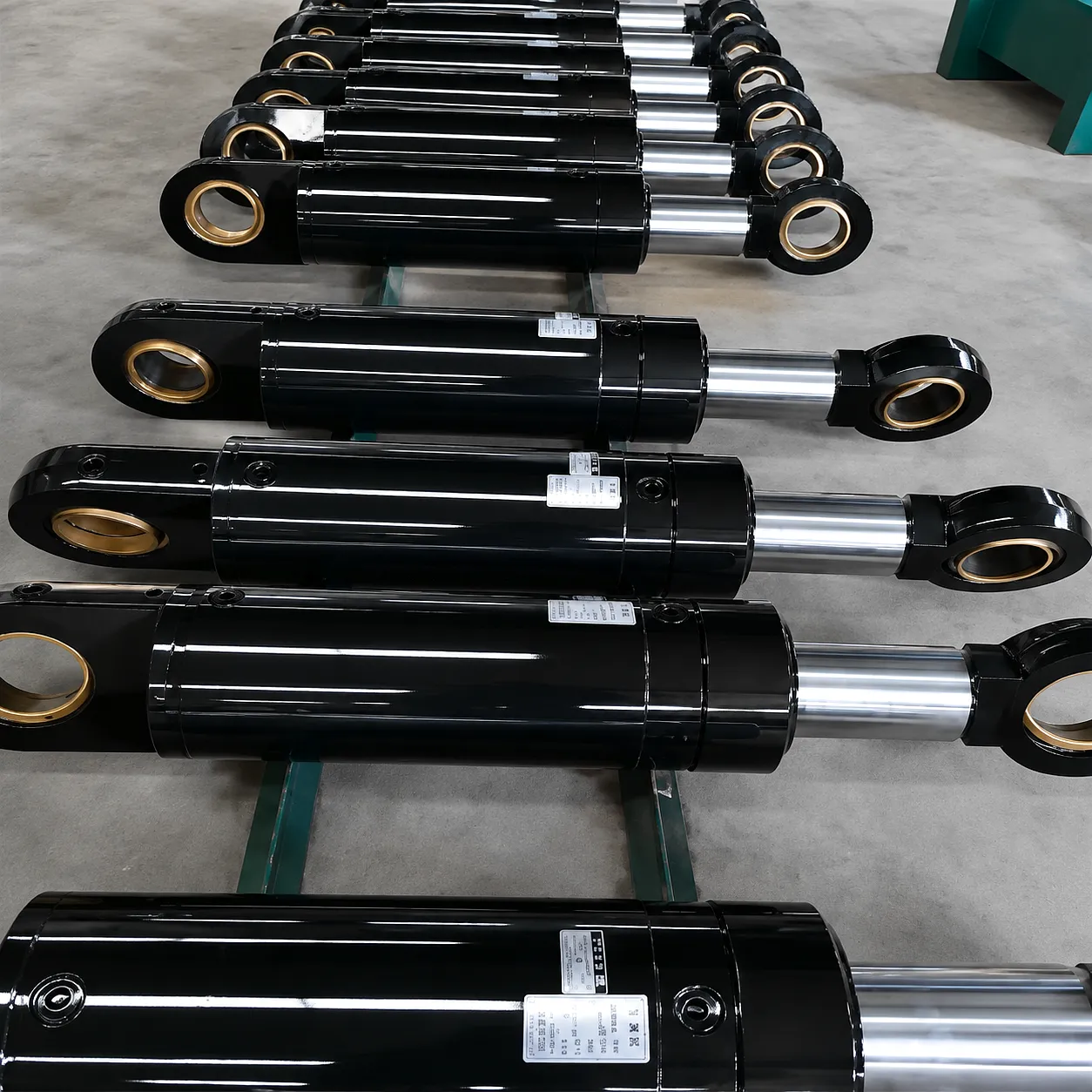
Material Selection: The Metallurgical Foundation of Cylinder Longevity
The service life and pressure-handling capability of a 100mm bore hydraulic cylinder is determined primarily by the materials chosen for each major component. A cylinder that looks correct on paper can fail prematurely in the field if the barrel material lacks adequate tensile strength, if the rod surface hardness is insufficient to resist seal wear, or if the piston material combination generates fretting corrosion under vibration loads. The following breakdown reflects the material standards used by Ever Power in its industrial-grade cylinder production.
Cylinder Barrel
Cold-drawn seamless steel tube (St52 / E355 to EN 10305-1) with skived and roller-burnished internal bore. Achieves Ra 0.2–0.4 µm surface finish without grinding swarf contamination. Wall thickness engineered for 4:1 burst pressure safety factor at rated working pressure.
Rod Omboh
CK45 carbon steel or 42CrMo4 alloy steel, induction hardened to 58–62 HRC, hard chrome plated (minimum 25 µm thickness). Standard rod diameters 50mm, 63mm, and 70mm for the 100mm bore class. Optional EN 1.4021 (420 stainless) rod for coastal or chemically aggressive environments.
Piston
Ductile iron (GGG40/GGG50) or steel (S355), precision turned and fitted with PTFE-composite wear rings. The piston-to-rod connection is threaded and pinned to DIN standards, eliminating rotation in service. Cast iron pistons offer excellent vibration damping in press and compaction applications.
End Caps & Gland
EN-GJS-400 ductile iron or mild steel (S235/S355) with machined port faces to BSP or SAE connection standards. The front gland carries the rod wiper and primary rod seal, with an optional dust exclusion scraper for plant exposed to abrasive particles — a particularly common requirement on aggregate and quarrying equipment in the North of England.
Seals & Wipers
Standard kit: NBR piston seals and rod seals, polyurethane wiper. For elevated temperatures (above 80°C), Viton (FKM) seal kits are standard. Low-friction PTFE-loaded seal variants are available for position-sensitive servo-hydraulic applications requiring reduced stick-slip and consistent breakout force.
100mm Bore Hydraulic Cylinder: Performance & Technical Specification Table
The table below consolidates the core metric specifications for Ever Power’s 100mm bore industrial hydraulic cylinders. All values reflect standard production series; custom configurations are available on enquiry.
| Parameter | Standard Specification | Notes / Options |
|---|---|---|
| Bore Diameter | 100 mm | ISO 6020 / ISO 6022 metric series |
| Standard Rod Diameters | 50 mm / 63 mm / 70 mm | Custom rod sizes available |
| Working Pressure (Max) | 250 bar (25 MPa) | High-pressure version to 350 bar on request |
| Test Pressure | 375 bar (1.5 × working pressure) | Hydrostatic pressure test, each unit |
| Push Force @ 250 bar (70mm rod) | 196.4 kN (approx.) | Full bore area = 7,854 mm² |
| Pull Force @ 250 bar (70mm rod) | 100.3 kN (approx.) | Rod-end annular area = 4,012 mm² |
| Standard Stroke Range | 50 mm – 2,000 mm | Longer strokes subject to buckling analysis |
| Operating Temperature | -20°C to +80°C (NBR seals) | FKM seals: -20°C to +150°C |
| Barrel Surface Finish (ID) | Ra 0.2 – 0.4 µm | Skived and roller-burnished (SRB) |
| Rod Surface Finish | Ra 0.2 – 0.4 µm (chrome plated) | Min 25 µm hard chrome; HRC 58–62 |
| Mounting Options | Flange (MF1/MF2/MF3), Trunnion (MT4), Clevis (MC5/MC6) | All ISO 6020 mounting families |
| Port Connection Standard | BSP (preferred UK market) / SAE O-ring face seal | Port size G1/2″ – G3/4″ depending on application |
| Cushioning | Adjustable end cushions (both ends) | Reduces piston impact velocity at end-of-stroke |
| External Finish | Black paint (ISO C3 environment) | Zinc phosphate primer + topcoat; marine C5-M available |
| Applicable Standards | ISO 6020-1, ISO 6022, BS EN 693 | CE marking documentation on request |
Why Engineers Specify the 100mm Bore: Core Technical Advantages
There are good reasons why the 100mm bore has become a preferred size class among plant engineers throughout the UK’s heavy-industry base. The following advantages reflect not just theoretical capability but real-world performance data from machines operating in press shops, foundry facilities, and offshore marine equipment across Britain.
High Force-to-Weight Ratio
At 250 bar, a 100mm bore cylinder delivers nearly 200 kN in a package that can be mounted in confined structural envelopes. Compared to pneumatic alternatives of the same bore, hydraulic output force is approximately 10 to 15 times greater for equivalent cylinder dimensions. This makes the 100mm bore hydraulic cylinder the default choice for compaction presses, material testing rigs, and automated clamping systems where structural weight budgets are constrained.
ISO Metric Interchangeability
Compliance with ISO 6020 and ISO 6022 means that a 100mm bore hydraulic cylinder from Ever Power will dimensionally fit the same mounting envelope as any other ISO-compliant manufacturer’s unit. For UK maintenance engineers managing aging production lines — where the original OEM may no longer support the equipment — this interchangeability eliminates lengthy lead times and custom fabrication costs. Port connections to BSP standard, the norm throughout UK industry, ensure straightforward hydraulic circuit integration.
Adjustable End Cushioning
Integrated adjustable cushioning at each end of travel decelerates the piston assembly before it contacts the end cap, dramatically reducing mechanical shock loads on the mounting structure and the cylinder itself. In high-cycle applications — automated press lines, palletising systems, robotic welding positioners — this cushioning capability extends cylinder service life by a factor of two to three compared with non-cushioned alternatives, particularly when cycle rates exceed 20 strokes per minute.
Precision Positional Repeatability
A well-built 100mm bore cylinder with low-friction seal technology and premium barrel finish delivers stroke position repeatability within ±0.05 mm when paired with a quality proportional valve and linear position transducer. This level of precision opens the hydraulic cylinder class to servo-hydraulic machine tool axes, injection moulding clamping stations, and wind turbine blade positioning rigs — applications where electromechanical servo drives were previously the only viable option.
Wide Fluid Compatibility
Standard NBR seal kits accommodate mineral oil (ISO VG 46 / VG 68, HM and HLP grades per ISO 6743-4), while optional FKM kits handle phosphate ester fluids (HFD-R), water glycol (HFC), and other fire-resistant hydraulic media increasingly specified on UK foundry, offshore, and steel-plant equipment following updated risk assessment requirements under HSE guidance on fire risk reduction in hydraulic systems.
In-Service Repairability
Unlike welded-construction cylinders, the tie-rod or threaded-gland construction typical of industrial 100mm bore cylinders allows full disassembly in the field. Seal replacement, rod inspection, and barrel cleaning can be completed by a competent hydraulic technician without specialist tooling. This repairability is a significant total-cost-of-ownership advantage for UK plant operators managing maintenance programmes in-house rather than relying on external service contractors.
Industrial Application Scenarios Across UK Manufacturing
Metal Pressing & Stamping — Sheffield & Rotherham Steel Corridor
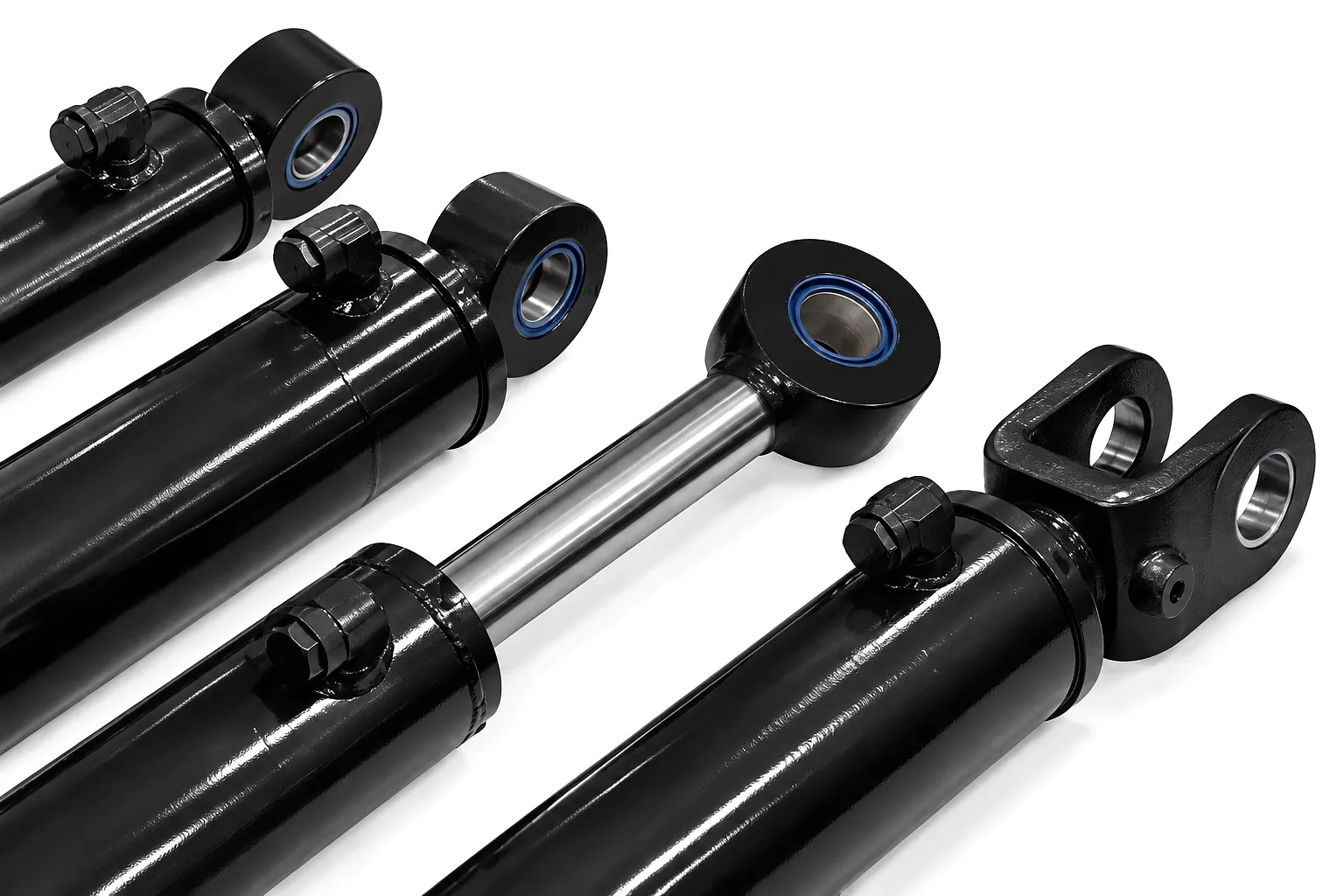 Sheffield’s steel heritage has evolved into a precision metals and advanced alloy processing sector that depends heavily on reliable hydraulic pressing equipment. The 100mm bore hydraulic cylinder is the workhorse actuator for mid-range press beds — typically 80 to 200 tonne capacity — used in blanking, forming, and drawing dies. The combination of 250 bar maximum pressure capability and adjustable end cushioning allows press engineers to control approach speed, dwell pressure, and retraction in a single programmable hydraulic sequence. Cylinder strokes in these applications typically range from 300mm to 600mm with demanding duty cycles often exceeding 500 strokes per shift.
Automotive Body Assembly — Birmingham & Coventry Midlands Plants
The West Midlands automotive cluster, anchored in Birmingham, Coventry, and Solihull, operates some of the UK’s most technically demanding hydraulic systems on welding positioners, body assembly jigs, and sub-frame clamping fixtures. A 100mm bore cylinder in this context must deliver consistent clamping force across thousands of vehicle bodies per day without detectable drift, leakage, or positional variation. Low-friction seal kits and premium chrome rod surfaces are non-negotiable specifications in these environments. Ever Power supplies this sector with cylinders that undergo 100% hydrostatic pressure testing and individual performance certification before despatch.
Construction & Material Handling Plant — Northern England
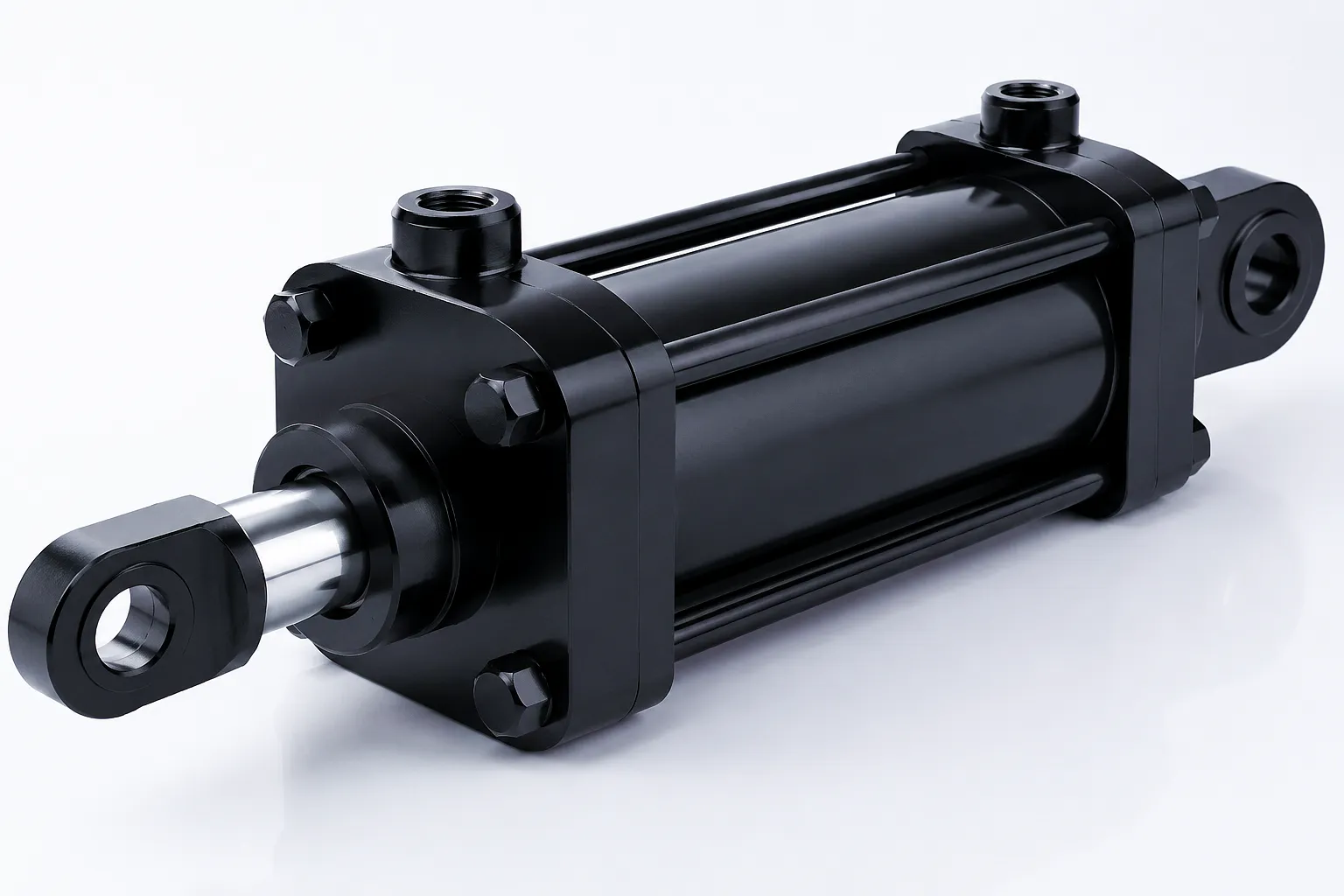 Across the construction and quarrying sectors operating from Leeds to Newcastle, the 100mm bore cylinder performs essential work in tipping trailers, aggregate feed conveyors, stone-crushing jaw adjusters, and concrete batching plant gates. These applications demand corrosion resistance alongside brute force — cylinders routinely operating in open outdoor environments exposed to rain, aggregate dust, and temperature swings spanning more than 40°C across the British calendar year. Stainless rod options, enhanced wiper seals, and external protective coatings meeting ISO C4 or C5-I classification are standard specifications for this demanding segment of the UK plant market.
Offshore & Marine Deck Equipment — Aberdeen, Teesside & Barrow-in-Furness
The North Sea offshore energy sector, supported from Aberdeen, and the naval shipbuilding sector centred around Barrow-in-Furness and the Tyne, place extraordinarily stringent requirements on hydraulic actuators. Cylinders used in hatch cover drives, crane slew systems, ramp actuators, and stabiliser mechanisms must withstand seawater spray, salt-laden air, and prolonged static loading without internal or external deterioration. Ever Power’s 100mm bore cylinders for marine duty are specified with electroless nickel plated (ENP) barrel exteriors or full stainless construction, marine-grade C5-M topcoat, and Viton seal kits rated to 150°C — meeting Lloyd’s Register and DNV-GL documentation requirements where client specifications demand it.
Renewable Energy Installation — Wind Turbine Blade Pitch & Nacelle Systems
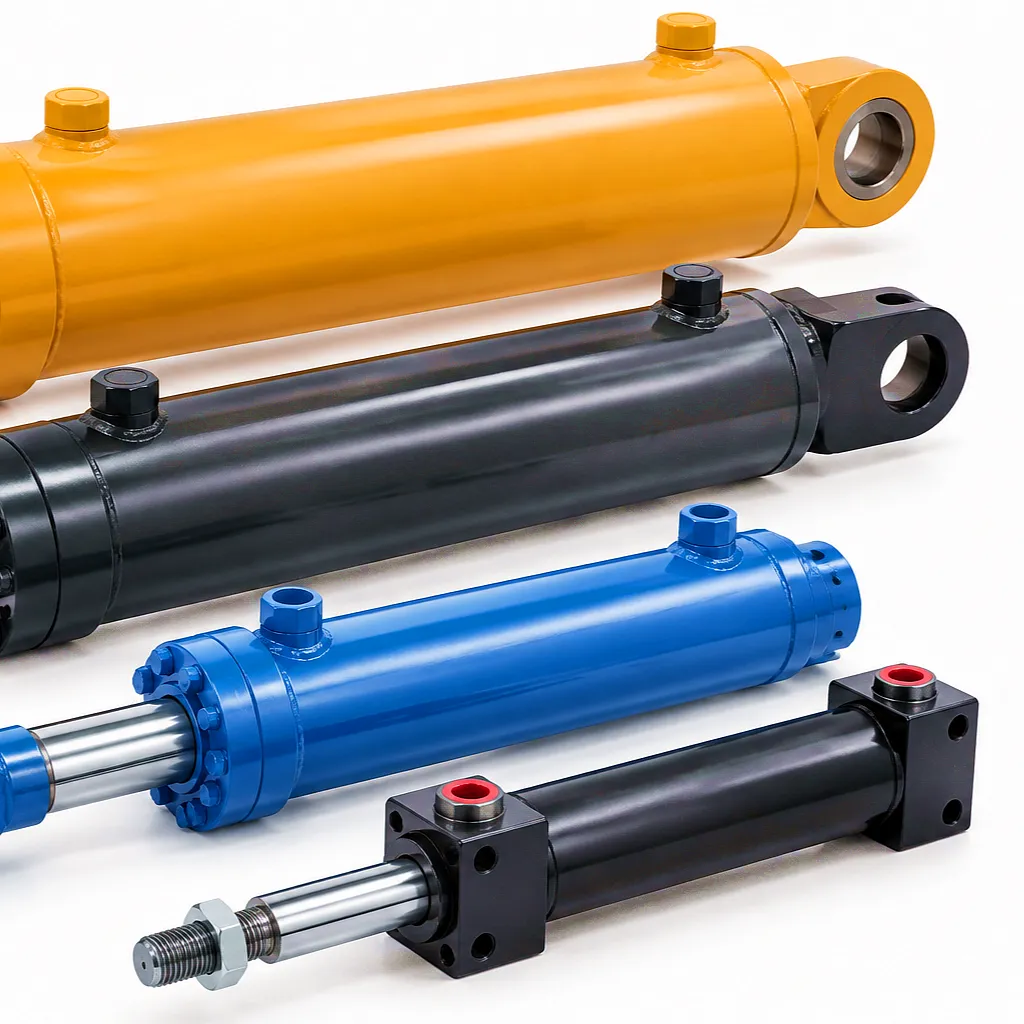 As the UK expands its renewable energy infrastructure — from the wind farm developments off the Yorkshire and East Anglian coastlines to onshore arrays in Scotland — hydraulic cylinders play a critical role in blade pitch control systems and nacelle locking mechanisms. A 100mm bore cylinder in a pitch control application must deliver precise, repeatable angular adjustment across temperature extremes and under substantial aerodynamic loads. High-sensitivity low-friction seals, integrated position transducer mounting bosses, and stainless rod construction are standard requirements for this growing and technically demanding application segment, where long-term field reliability is far more important than initial purchase price.
Ever Power: Custom Manufacturing Capability & Supply Chain Assurance
Ever Power operates a dedicated hydraulic cylinder manufacturing facility equipped with CNC turning centres, deep-hole boring machines for barrel production, skiving and roller-burnishing lines, and fully equipped metrology rooms with CMM measurement capability. The ability to machine bore diameters from 40mm through to 500mm on a single production site — combined with in-house hard chrome plating lines and a dedicated assembly and pressure-test bay — means that every 100mm bore hydraulic cylinder leaving our facility has been built, assembled, tested, and certified under one quality management system. We operate to ISO 9001 and maintain full material traceability from raw steel certificate to despatch documentation.
Customisation at Ever Power is not an upsell — it is our standard operating mode. UK buyers sourcing 100mm bore hydraulic cylinders for bespoke machine builds, replacement of discontinued OEM parts, or upgrade projects on aging plant will find our engineering team willing to work from customer drawings, reverse-engineered measurements, or collaborative design briefs. Typical customisation requests include non-standard stroke lengths, modified port locations and sizes, custom mounting bracket integration, integrated position sensor housings, and non-standard sealing configurations for unusual fluid compatibility requirements. Lead times for custom-designed cylinders in the 100mm bore class typically run four to six weeks from design sign-off, with expedite options available for urgent UK plant breakdowns.
100% Pressure Tested
Every cylinder individually tested at 1.5× working pressure
Full CMM Metrology
Co-ordinate measuring machine verification on all critical dimensions
Custom Configurations
Non-standard stroke, ports, mountings, seals — engineered to your drawing
UK Logistics Support
Air freight and sea freight options; UK customs clearance documentation provided
Customer Success Story: Sheffield Forging & Fabrication Group
Sector: Heavy Steel Fabrication | Location: Sheffield, South Yorkshire
Challenge Resolved: Premature cylinder failure on automated press line; production downtime reduced by 73%
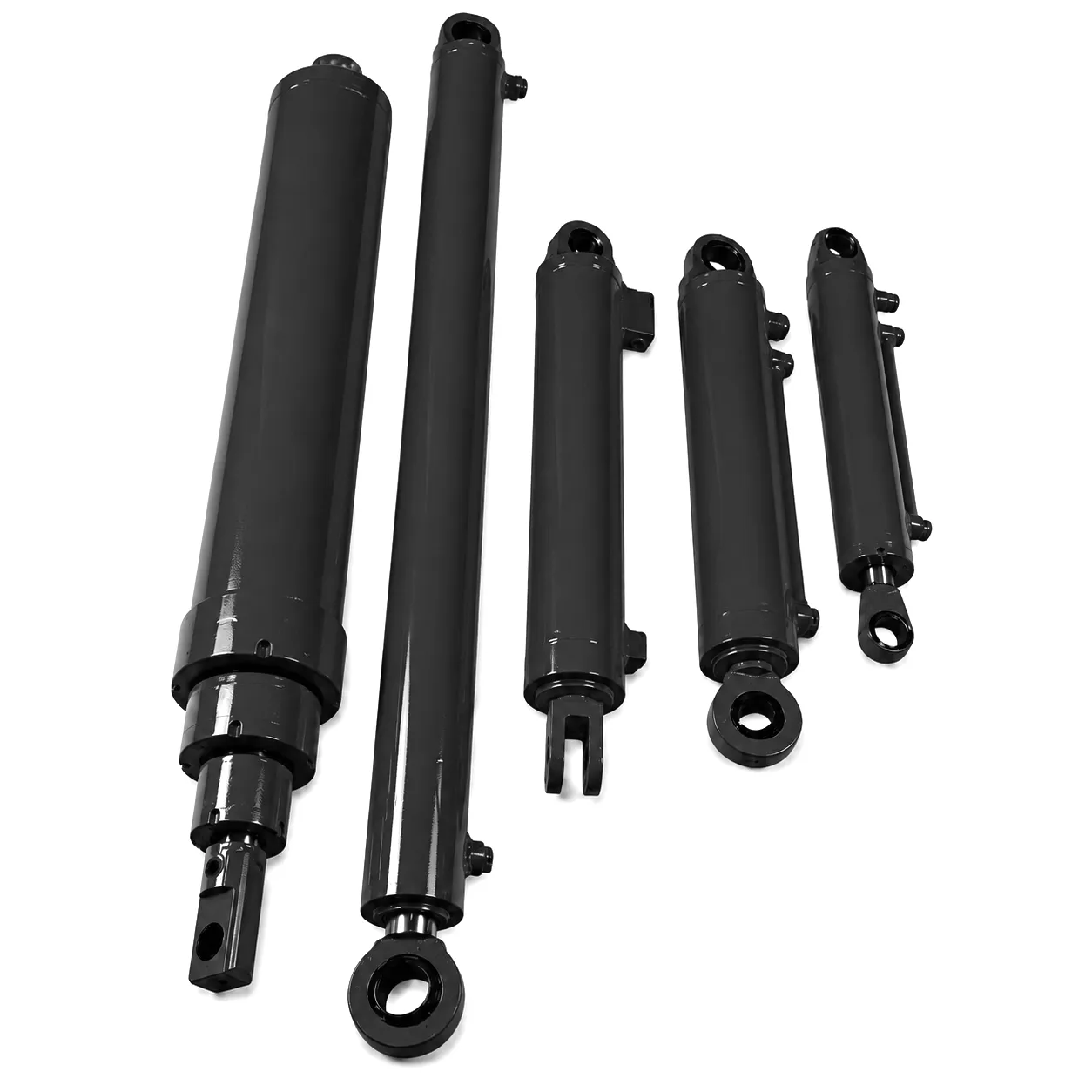 A Sheffield-based steel fabrication group — operating a six-press automated production line producing structural sections for the UK civil engineering and construction sector — came to Ever Power after experiencing chronic hydraulic cylinder failures on their largest 150-tonne press beds. The cylinders in service were a non-metric imperial-bore design sourced from a now-discontinued European OEM, meaning replacement parts required expensive one-off machining. Press downtime was running at an average of 11.4 hours per month across the line, at an estimated productivity cost exceeding £38,000 per quarter.
Ever Power’s engineering team conducted an on-site assessment at the Sheffield facility, reviewed the existing cylinder drawings, and proposed a complete conversion to ISO-metric 100mm bore hydraulic cylinders engineered to fit the existing press bed mounting envelope without structural modification. The solution involved custom non-standard mounting flange patterns machined to Ever Power’s production capability, 70mm rod diameter for maximum push force at 250 bar, FKM seals to handle the facility’s fire-resistant hydraulic fluid (phosphate ester, HFD-R grade), and individually certified pressure test data sheets for the production manager’s maintenance records.
Eight cylinders were supplied, installed, and commissioned over a single planned maintenance weekend, avoiding unplanned production interruption. In the 14 months following commissioning, zero cylinder-related failures were recorded on the press line. The plant maintenance manager reported a 73% reduction in hydraulic-related downtime across the full six-press line — translating to an estimated annual saving exceeding £120,000 when factoring in recovered production hours and reduced maintenance labour costs.
★★★★★
“The pressure testing certification on every cylinder gave our engineering director exactly the traceability documentation he needed for our QMS audit. Performance has been completely consistent at 250 bar across 14 months. Zero leaks, zero issues.”
— Plant Maintenance Manager, Steel Fabrication Group, Sheffield
★★★★★
“What convinced us to go with Ever Power was the ability to supply FKM seal kits as standard and match our non-standard flange pattern without a significant tooling surcharge. The commercial team was straightforward to deal with and quoted accurately from our drawings first time.”
— Procurement Engineer, Heavy Press Division, South Yorkshire
★★★★★
“The barrel surface finish and rod chrome quality are visibly superior to what we had before. You can see the difference on delivery. More importantly, cycle counts are now tracking well ahead of our previous cylinders’ failure curve — a result we weren’t expecting this quickly.”
— Senior Hydraulic Systems Engineer, Rotherham Steel Plant, Yorkshire
Soalan Lazim
❓ How much does a custom 100mm bore hydraulic cylinder cost to buy from a UK supplier, and what factors affect the final price?
The cost of a 100mm bore hydraulic cylinder varies considerably depending on stroke length, operating pressure rating, rod diameter, seal specification, mounting configuration, and external finish requirements. As a general guide for the UK market, a standard ISO 6020-compliant double-acting 100mm bore cylinder with a 500mm stroke and NBR seals at 250 bar maximum pressure will typically range from £280 to £650 per unit at commercial quantities. Cylinders with custom stroke lengths, non-standard port locations, stainless rod, FKM seal kits, or enhanced corrosion protection will carry higher costs reflecting the additional material and manufacturing steps involved. Ever Power provides detailed, itemised quotations — contact [email protected] with your technical requirements for an accurate price within one working day.
❓ Which ISO mounting standard should I specify when ordering a 100mm bore hydraulic cylinder for a machine tool application in the UK?
For machine tool applications in the UK, the most commonly specified mounting families under ISO 6020 for a 100mm bore cylinder are the front flange (MF3 or MF5) for rigidly supported axial loading, and the rear clevis (MC6) or spherical bearing rod eye for applications requiring angular accommodation. If the machine design involves space constraints behind the cylinder, a square head or rear flange (MF1/MF2) may be preferable. For any application where the cylinder body must absorb side loads — for instance in a guide-free clamping station — a trunnion mount (MT4) with the pivot point near the cylinder centreline dramatically reduces bending moment on the rod and gland. Our engineering team will advise on mounting selection from your load and geometry data at no charge.
❓ What is the typical lead time for a custom 100mm bore hydraulic cylinder order delivered to a manufacturing site in Sheffield or Birmingham?
For standard catalogue 100mm bore configurations, Ever Power typically ships within 7 to 14 working days from order confirmation, with air freight to UK typically adding 5 to 7 days transit time from our manufacturing facility. Custom cylinders — those requiring modified flange patterns, non-standard stroke lengths, integrated sensor bosses, or specialised coating — run a manufacturing lead time of 4 to 6 weeks from approved engineering drawings, followed by the same shipping window. For urgent plant breakdown situations at sites in Sheffield, Birmingham, or elsewhere in the UK, expedited production options may be available and should be discussed directly with the commercial team at [email protected].
❓ Where can I get a reliable quote for hydraulic cylinders with 100mm bore and metric BSP ports for use in the UK industrial sector?
Ever Power is a specialist manufacturer and supplier of industrial hydraulic cylinders to the UK and European markets. For 100mm bore cylinders with metric BSP ports — the UK-standard connection thread — send your dimensional requirements, operating pressure, stroke, and intended application to [email protected]. The technical team will confirm BSP port size recommendations (typically G1/2″ for standard flow rates and G3/4″ for higher-velocity circuits) and provide a full technical quotation with delivery options. Alternatively, if you have an existing cylinder drawing or a competitor part number, our team can cross-reference and quote a direct metric equivalent.
❓ How do I calculate the exact push and pull force for a 100mm bore cylinder at a given working pressure in bar?
Force calculation for a 100mm bore cylinder follows two straightforward formulas. For push (extension) force: multiply the bore area in mm² by the pressure in N/mm² (where 1 bar = 0.1 N/mm²). Bore area for 100mm bore = π × 50² = 7,854 mm². At 160 bar (= 16 N/mm²): push force = 7,854 × 16 = 125,664 N = approximately 125.7 kN. At 250 bar: push force = 7,854 × 25 = 196,350 N = approximately 196.4 kN. For pull (retraction) force, subtract the rod cross-sectional area from the bore area first. With a 70mm rod: rod area = π × 35² = 3,848 mm²; annular area = 7,854 – 3,848 = 4,006 mm². Pull force at 250 bar = 4,006 × 25 = 100,150 N = approximately 100.2 kN.
❓ What type of hydraulic oil should I use in a 100mm bore cylinder operating in a UK manufacturing plant environment, and how often should I change it?
For most UK industrial plant environments operating at ambient temperatures between 10°C and 35°C, ISO VG 46 mineral hydraulic oil to ISO 6743-4 classification HLP is the standard recommendation for systems incorporating 100mm bore cylinders. Where ambient temperatures are higher — foundry environments, heated press shops — ISO VG 68 may be more appropriate to maintain adequate film thickness at elevated sump temperatures. Oil change intervals depend primarily on the condition monitoring programme in place; typically, a well-filtered closed circuit with regular particle count checks (ISO 4406 cleanliness level 18/16/13 or better recommended) allows 4,000 to 6,000-hour change intervals. Contaminated oil is the single most common cause of premature cylinder seal degradation — maintaining filter integrity is more important than oil type for cylinder service life.
100mm Bore Hydraulic Cylinder — Custom Solutions by Ever Power
ISO-metric manufacturing · BSP port standard · UK logistics · 100% hydrostatic pressure tested
Get a Quote Now → [email protected]
suntingan oleh gzl
 Malay
Malay  English
  Italian
  Portuguese
  Dutch
Dutch  Swedish
  Danish
  Finnish
  Polish
  Hindi
Hindi  Kazakh
  Turkish
  Ukrainian
  Romanian
  Spanish
  German
  Russian
  Korean
  Japanese
  Vietnamese
  Thai
Thai  Indonesian
  French
  Greek
Greek