
Penerangan Produk
China Factory Fabricate Bulk-Production Reasonable Priced Hydraulic Steering Cylinder for Large Forklifts
Produk Spesifikasi:
| Barang | Spesifikasi |
| Diameter lubang | 60mm~500mm |
| Diameter badan | 30mm~450mm |
| Strok | 100mm~600mm |
| Woorking Pressure | 17-40Mpa,Customizable |
| Rawatan permukaan rod omboh | Penyaduran Krom Keras Ha, Kromium Putih Susu Bersalut Elektro+Kromium Keras, Penyaduran Nikel+Penyaduran Kromium Keras, Bahan Api Oksigen Berhalaju Tinggi CrC NiC, Salutan Seramik, Nitriding, Salutan Laser |
| Bahan | Tiub tarik sejuk tegangan tinggi, ketepatan diasah untuk jangka hayat pengedap yang lebih lama |
| Pemasangan | Subang, Flange, Clevis.Foot, Trunnion, Boleh Disesuaikan |
| Jenis Meterai | Parker, NOK, Hallite GAPI atau sebagai keperluan pelanggan |
| Warrenty | 18 bulan |
| MOQ | 1 keping |
| Masa Pengeluaran | Berdasarkan kuantiti pesanan. Biasanya 30-40 hari. |
| Pensijilan | ISO9001, CE, SGS |
| Color | Gery,Yellow,Red,Black,Customizable |
| Pembungkusan | metal case,plywood case,carton or as requirement |
| Perkhidmatan | OEM & ODM |
| Kelebihan Harga | Harga kilang yang kompetitif dengan kualiti terjamin |
| Jenis Perniagaan | Pengilang |
Paparan Produk:
The built-in sensor of the steering cylinder is used to accurately measure the steering displacement of large forklifts.
Kaedah Pemasangan:
Permohonan: Walking machinery large forklift.
Other Related Products:
Kilang Kami:
Proses Pemeriksaan:
| Jenis Pemeriksaan | Piawaian Pemeriksaan |
| Pemeriksaan Bahan Mentah | Sebelum penyimpanan, QC akan mengukur bahan mentah. |
| Pemeriksaan Bahan Proses | Semasa pengeluaran, QC menjalankan pemeriksaan rawak. Sebelum bahagian silinder hidraulik dipindahkan ke proses seterusnya, QC akan menjalankan pemeriksaan. |
| Pengujian Fungsi Akhir | Semua silinder hidraulik mengambil ujian fungsi hidraulik |
Pemeriksaan Sifat Mekanikal Bahan Mentah
Pemeriksaan Bahan Proses
Pengujian Fungsi Akhir
Pembungkusan & Penghantaran:
Mengenai KAMI:
Sijil Kami
ZheJiang Tianjian Hydraulic Technology Co.,Ltd ialah mengkhusus dalam pengeluaran pelbagai jenis silinder hidraulik serta laras silinder, silinder omboh dan aksesori silinder lain.
Sebagai pengeluar silinder hidraulik yang sangat khusus, Tianjian menyediakan penyelesaian pengoptimuman reka bentuk dan produk yang boleh dipercayai kepada ramai pelanggan di dalam dan luar negara. Tidak kira dalam jentera pembinaan, jentera jambatan kereta api, jentera kapal pelabuhan, jentera metalurgi dan perlombongan, jentera industri minyak dan ringan, kenderaan khas dan industri lain, Tianjian boleh menyediakan pelbagai skim dan produk pengoptimuman reka bentuk silinder hidraulik standard dan bukan standard mengikut keperluan pengguna, dan menyediakan perkhidmatan bersepadu untuk kesempurnaan dan kualiti.
Jika boleh, apabila menghubungi kami, sila gunakan maklumat seperti di bawah
Lubang | Rod | Strok | Tekanan Kerja | Pemasangan | Persekitaran kerja |
|
|
|
|
|
|
Atau anda boleh menawarkan kami gambar rajah lakaran atau gambar anda supaya kami dapat memahami maksud anda dengan tepat, membantu kami mengelakkan kesilapan.
Dan jika anda mempunyai sampel, kami boleh mengeluarkan mengikut sampel anda selepas menghantar kepada kami.
Selamat datang ke kilang kami jika anda mempunyai masa lapang.
Kepuasan anda adalah motivasi terbesar kami.
Kini, anda boleh menghubungi kami untuk sebarang pertanyaan atau pertanyaan.
Soalan Lazim:
1, Apakah yang dilakukan oleh syarikat anda?
A: kami adalah pembekal produk hidraulik berkualiti tinggi termasuk Silinder Hidraulik, Motor Hidraulik, Pek Kuasa Hidraulik, Stesen Hidraulik dan komponen Hidraulik lain.
2, Adakah anda sebuah syarikat pembuatan atau perdagangan?
A: Kami adalah pengilang.
3, Sijil apa yang anda ada?
A: Semua kilang kami diperakui ISO. Dan pembekal utama bahan dan alat ganti kami adalah dengan sijil CE, RoHS, CSA dan UL.
4, Berapa lama masa penghantaran anda?
A: Masa penghantaran bergantung pada produk dan kuantiti yang berbeza. Silinder biasanya memerlukan kira-kira 45-60 hari dan Motor memerlukan kira-kira 30-50 hari.
5, Bolehkah anda membuat bahagian sebagai keperluan atau lukisan pelanggan?
A: Ya, kami boleh membuat OEM untuk anda sebagai lukisan anda. Jurutera kami juga boleh memberi anda sokongan profesional untuk cadangan teknikal.
6, Apakah jenis terma pembayaran yang anda terima?
A: Kami lebih suka T/T melalui bank. 30% apabila pesanan disahkan dan 70% sebelum penghantaran. L/C juga boleh diterima untuk jumlah melebihi 20,000USD.
7, Apakah polisi jaminan anda?
A: Semua produk kami dijamin selama 1 tahun penuh dari tarikh penghantaran terhadap kecacatan bahan dan mutu kerja. Waranti ini tidak meliputi bahagian yang haus semasa operasi biasa atau rosak akibat kecuaian. Kami mengingatkan dengan serius bahawa minyak hidraulik yang tidak bersih pasti akan menyebabkan kerosakan pada komponen Hidraulik anda. Dan kerosakan ini tidak termasuk dalam julat waranti. Oleh itu, kami sangat mengesyorkan anda menggunakan minyak bersih yang baharu atau memastikan minyak sistem bersih semasa menggunakan bahagian kami.
| Certification: | GS, RoHS, CE, ISO9001 |
|---|---|
| Pressure: | Medium Pressure |
| Work Temperature: | High Temperature |
| Acting Way: | Double Acting |
| Working Method: | Straight Trip |
| Adjusted Form: | Regulated Type |
| Samples: | US$ 600/Set 1 Set(Min.Order) | |
|---|
| Customization: | Available |
|
|---|
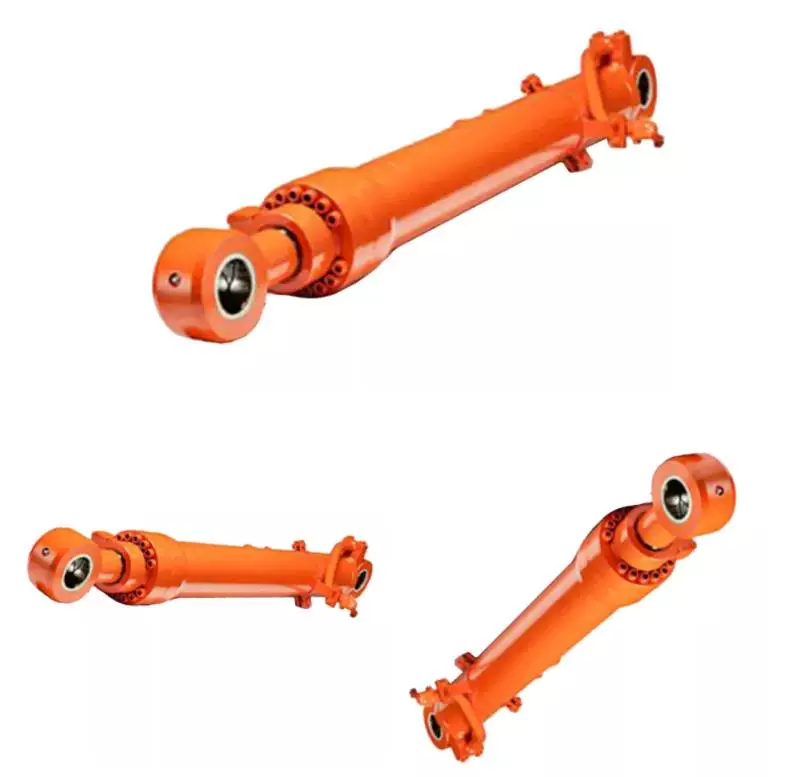
How do hydraulic cylinders enhance the performance of construction and mining equipment?
Hydraulic cylinders play a vital role in enhancing the performance of construction and mining equipment by providing powerful and precise linear motion. These industries require heavy-duty machinery that can withstand demanding conditions and efficiently perform tasks such as lifting, pushing, and digging. Here’s a detailed explanation of how hydraulic cylinders enhance the performance of construction and mining equipment:
1. Power and Force:
– Hydraulic cylinders are capable of generating substantial force, allowing construction and mining equipment to handle heavy loads and perform challenging tasks. The hydraulic system applies pressure to the fluid, which is transmitted to the hydraulic cylinder, resulting in the movement of the piston rod. The larger the diameter of the cylinder, the greater the force that can be generated. Hydraulic cylinders enable the equipment to exert significant force, making it possible to lift and move heavy materials, excavate soil and rock, and perform other demanding operations.
2. Precise Control:
– Hydraulic cylinders offer precise control over the movement of construction and mining equipment. By regulating the flow of hydraulic fluid into and out of the cylinder through control valves, operators can precisely control the speed, position, and force exerted by the hydraulic cylinder. This level of control allows for accurate and controlled movements, enabling operators to perform tasks with precision and efficiency. Whether it’s lifting a specific load, positioning an attachment, or maneuvering in tight spaces, hydraulic cylinders provide the necessary control for optimal equipment performance.
3. Adaptability:
– Hydraulic cylinders are highly adaptable to various construction and mining equipment. They can be designed and manufactured in different sizes, stroke lengths, and configurations to suit specific requirements. Hydraulic cylinders can be integrated into different types of equipment, such as excavators, loaders, bulldozers, and drilling rigs. Their adaptability allows for the customization of equipment to meet the needs of different applications and operating conditions, enhancing overall performance.
4. Durability and Reliability:
– Construction and mining environments are known for their harsh conditions, including extreme temperatures, vibrations, and exposure to dust, dirt, and debris. Hydraulic cylinders are designed to withstand these challenging conditions and provide long-lasting performance. They are constructed using robust materials, such as high-strength steel, and equipped with seals and components that can endure heavy loads, impacts, and contaminants. The durability and reliability of hydraulic cylinders ensure that construction and mining equipment can operate continuously and withstand the demanding nature of these industries.
5. Safety:
– Hydraulic cylinders contribute to the safety of construction and mining equipment operations. Their precise control allows operators to perform tasks with accuracy, minimizing the risk of accidents and damage to the equipment or surrounding structures. Hydraulic cylinders also enable the implementation of safety features, such as overload protection systems and emergency stop mechanisms, ensuring the safe operation of the equipment. The reliable and controlled movements provided by hydraulic cylinders enhance overall safety in construction and mining operations.
6. Increased Productivity:
– By providing the necessary power, precise control, and adaptability, hydraulic cylinders contribute to increased productivity in construction and mining applications. Construction and mining equipment equipped with hydraulic cylinders can perform tasks more efficiently and effectively, reducing the time and effort required to complete projects. The ability to handle heavy loads, control movements precisely, and adapt to various tasks improves the overall productivity of the equipment, leading to cost savings and improved project timelines.
In summary, hydraulic cylinders enhance the performance of construction and mining equipment by providing power, precise control, adaptability, durability, and safety. They enable these machines to handle heavy loads, perform tasks with accuracy, withstand harsh conditions, and increase productivity. Hydraulic cylinders are integral components that contribute to the efficiency and effectiveness of construction and mining operations.
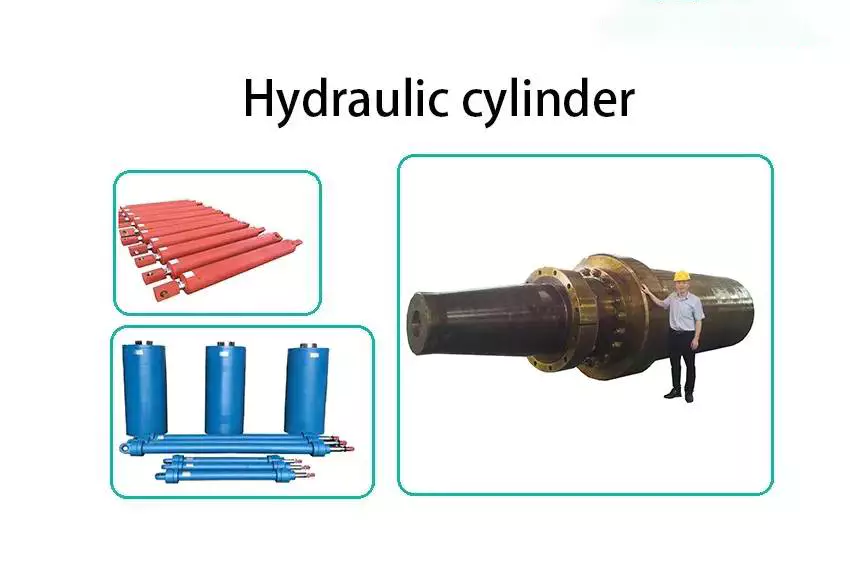
Adaptation of Hydraulic Cylinders for Medical Equipment and Aerospace Applications
Hydraulic cylinders have the potential to be adapted for use in medical equipment and aerospace applications, offering unique advantages in these industries. Let’s explore how hydraulic cylinders can be adapted for these specialized fields:
- Medical Equipment: Hydraulic cylinders can be adapted for various medical equipment applications, including hospital beds, patient lifts, surgical tables, and rehabilitation devices. Here’s how hydraulic cylinders are beneficial in medical equipment:
- Positioning and Adjustability: Hydraulic cylinders provide precise and smooth movement, allowing for accurate positioning and adjustments of medical equipment. This is crucial for ensuring patient comfort, proper alignment, and ease of use.
- Load Handling: Hydraulic cylinders offer high force capabilities, enabling the safe handling of heavy loads in medical equipment. They can support the weight of patients, facilitate smooth transitions, and provide stability during procedures.
- Controlled Motion: Hydraulic cylinders provide controlled and stable motion, which is essential for delicate medical procedures. The ability to adjust speed, position, and force allows for precise and controlled movements, minimizing patient discomfort and ensuring accurate treatment.
- Durability and Reliability: Hydraulic cylinders are designed to withstand rigorous use and demanding environments, making them suitable for medical equipment applications. Their durability and reliability contribute to the long-term performance and safety of medical devices.
- Aerospace Applications: Hydraulic cylinders can also be adapted for aerospace applications, where lightweight yet robust systems are essential. Here’s how hydraulic cylinders are advantageous in aerospace:
- Flight Control Systems: Hydraulic cylinders play a critical role in aircraft flight control systems, including ailerons, elevators, rudders, and landing gear. They provide precise and reliable actuation, allowing pilots to control the aircraft’s movements with accuracy and responsiveness.
- Weight Optimization: Hydraulic cylinders can be designed using lightweight materials, such as aluminum alloys or composite materials, to reduce overall weight. This weight optimization is crucial in aerospace applications to enhance fuel efficiency, payload capacity, and aircraft performance.
- Shock and Vibration Resistance: Aerospace environments involve significant shock and vibration forces. Hydraulic cylinders can be engineered to withstand these dynamic loads while maintaining performance and reliability, ensuring consistent operation even under extreme conditions.
- Space Constraints: Hydraulic cylinders can be designed to fit within the space constraints of aircraft or spacecraft. Their compact size and flexible mounting options allow for efficient integration into the limited available space.
In summary, hydraulic cylinders can be adapted for use in medical equipment and aerospace applications, leveraging their precise positioning, load handling capabilities, controlled motion, durability, and reliability. In medical equipment, hydraulic cylinders enable comfortable patient positioning, smooth transitions, and controlled movements during procedures. In aerospace, hydraulic cylinders provide precise actuation, weight optimization, shock and vibration resistance, and space-efficient solutions. By adapting hydraulic cylinders to these specialized fields, manufacturers can meet the unique requirements and enhance the performance of medical equipment and aerospace systems.
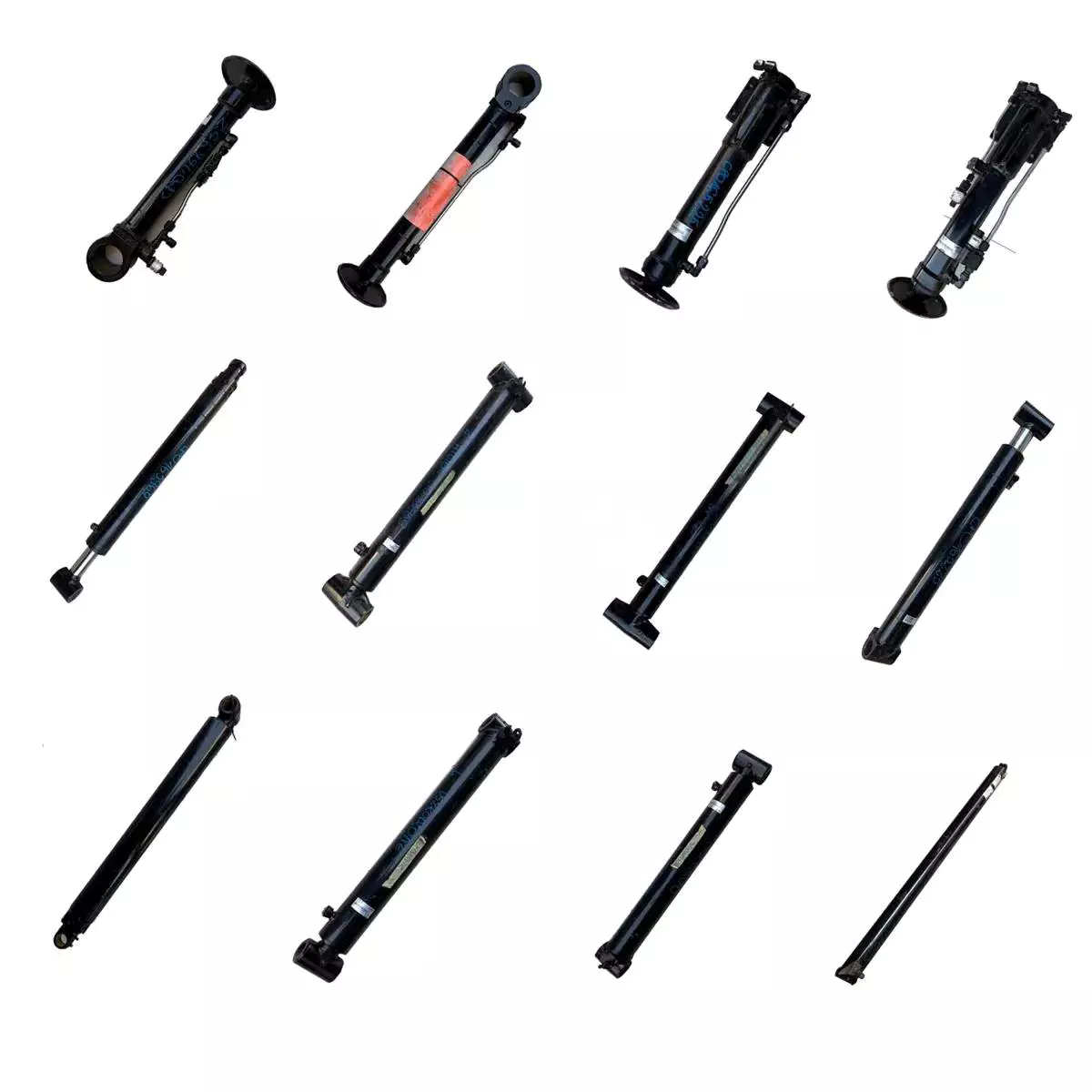
How do hydraulic cylinders handle variations in load, pressure, and speed?
Hydraulic cylinders are designed to handle variations in load, pressure, and speed effectively. They incorporate features and components that allow them to adapt to changing operating conditions and maintain optimal performance. Here’s a detailed explanation of how hydraulic cylinders handle variations in load, pressure, and speed:
Variations in Load:
– Hydraulic cylinders are capable of handling variations in load by adjusting the force they exert. The force output of a hydraulic cylinder is determined by the hydraulic pressure and the surface area of the piston. When the load increases, the pressure in the hydraulic system can be adjusted to generate a higher force. This adjustment can be achieved by regulating the flow of hydraulic fluid into the cylinder using control valves. By controlling the pressure and flow, hydraulic cylinders can adapt to different load requirements, ensuring that the force applied is sufficient to handle the load while preventing excessive force that could cause damage.
Variations in Pressure:
– Hydraulic cylinders are designed to handle variations in pressure within the hydraulic system. They are equipped with seals and other components that can withstand high-pressure conditions. When the pressure within the hydraulic system fluctuates, the hydraulic cylinder adjusts accordingly to maintain its performance. The seals prevent fluid leakage and ensure that the hydraulic pressure is effectively transmitted to the piston, allowing the cylinder to generate the required force. Additionally, hydraulic systems often incorporate pressure relief valves and other safety mechanisms to protect the cylinder and the entire system from overpressure conditions.
Variations in Speed:
– Hydraulic cylinders can handle variations in speed through the control of hydraulic fluid flow. The speed of a hydraulic cylinder’s extension or retraction is determined by the rate at which hydraulic fluid enters or exits the cylinder. By adjusting the flow rate using flow control valves, the speed of the cylinder’s movement can be regulated. This allows for precise control over the speed, enabling operators to adapt to varying speed requirements based on the specific task or load. Furthermore, hydraulic systems can incorporate flow control valves with adjustable orifice sizes to fine-tune the speed of the cylinder’s movement.
Load-Sensing Technology:
– Advanced hydraulic systems may incorporate load-sensing technology to further enhance the ability of hydraulic cylinders to handle variations in load, pressure, and speed. Load-sensing systems monitor the load demand and adjust the hydraulic pressure and flow accordingly to meet that demand. This technology ensures that the hydraulic cylinder provides the necessary force while optimizing energy efficiency. Load-sensing systems are particularly beneficial in applications where the load requirements can vary significantly, allowing hydraulic cylinders to adapt in real-time and maintain precise control over force and speed.
Accumulators:
– Hydraulic systems can also utilize accumulators to assist in handling variations in load, pressure, and speed. Accumulators store hydraulic fluid under pressure, which can be released when needed to supplement the flow and pressure in the system. When there are sudden increases in load or pressure demands, accumulators can provide additional fluid to the hydraulic cylinder, ensuring smooth operation and preventing pressure drops. Similarly, accumulators can assist in maintaining consistent speed by compensating for fluctuations in flow rate. They act as a supplemental energy source, helping hydraulic cylinders respond effectively to variations in operating conditions.
In summary, hydraulic cylinders handle variations in load, pressure, and speed through various mechanisms and components. They can adjust the force output to accommodate different load requirements by regulating hydraulic pressure. The seals and components within hydraulic cylinders allow them to withstand variations in pressure within the hydraulic system. By controlling the flow of hydraulic fluid, hydraulic cylinders can regulate the speed of their movement. Advanced technologies such as load-sensing systems and the use of accumulators further enhance the adaptability of hydraulic cylinders to changing operating conditions. These features and mechanisms enable hydraulic cylinders to maintain optimal performance and provide reliable force and motion control in a wide range of applications.


editor by CX 2023-10-25
 Malay
Malay  English
  Italian
  Portuguese
  Dutch
Dutch  Swedish
  Danish
  Finnish
  Polish
  Hindi
Hindi  Kazakh
  Turkish
  Ukrainian
  Romanian
  Spanish
  German
  Russian
  Korean
  Japanese
  Vietnamese
  Thai
Thai  Indonesian
  French
  Greek
Greek