
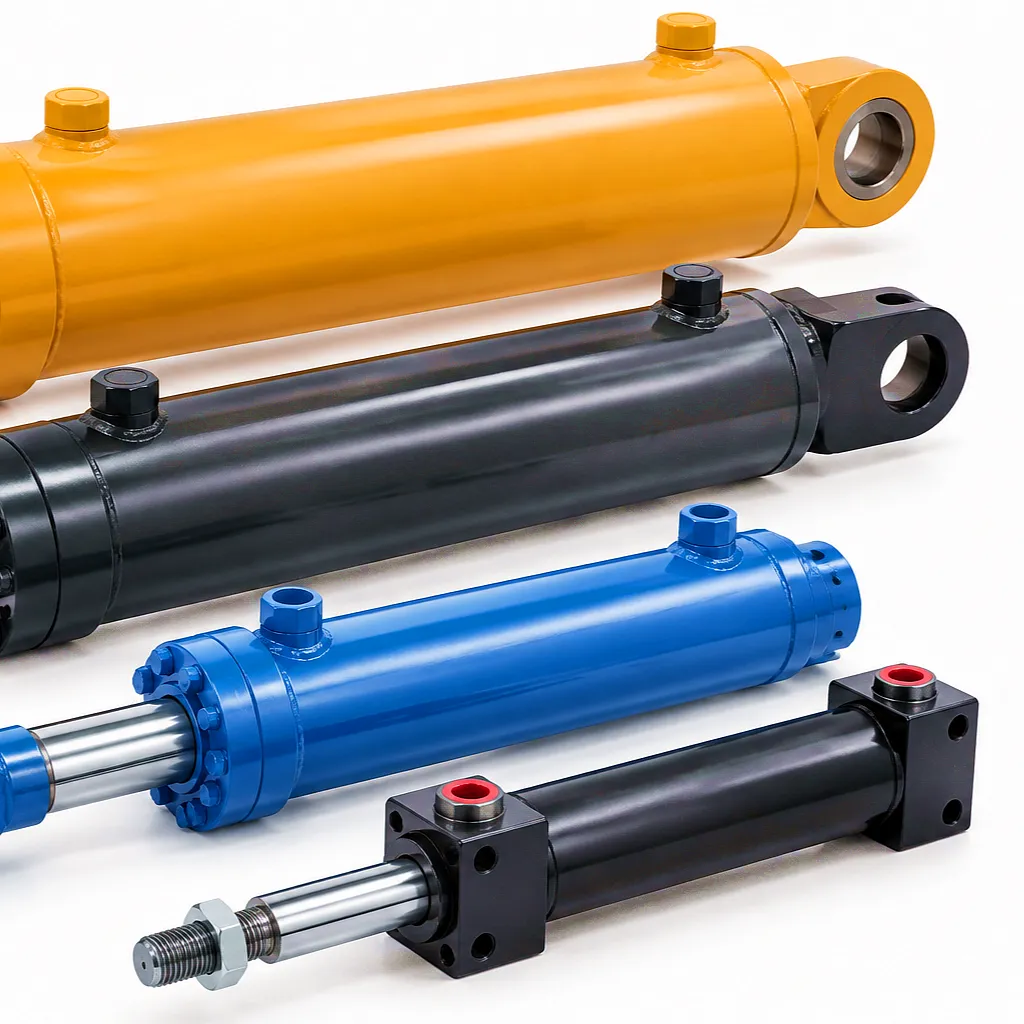
 Every machine designer working in Birmingham’s fabrication shops or Sheffield’s precision engineering plants eventually confronts the same challenge: the hydraulic system needs more stroke capacity, more force, or a longer service cycle — but the installation envelope hasn’t grown by a single millimetre. This tension between mechanical ambition and spatial reality is where the compact hydraulic cylinder versus full-size cylinder debate becomes genuinely consequential, not just a spec-sheet comparison exercise.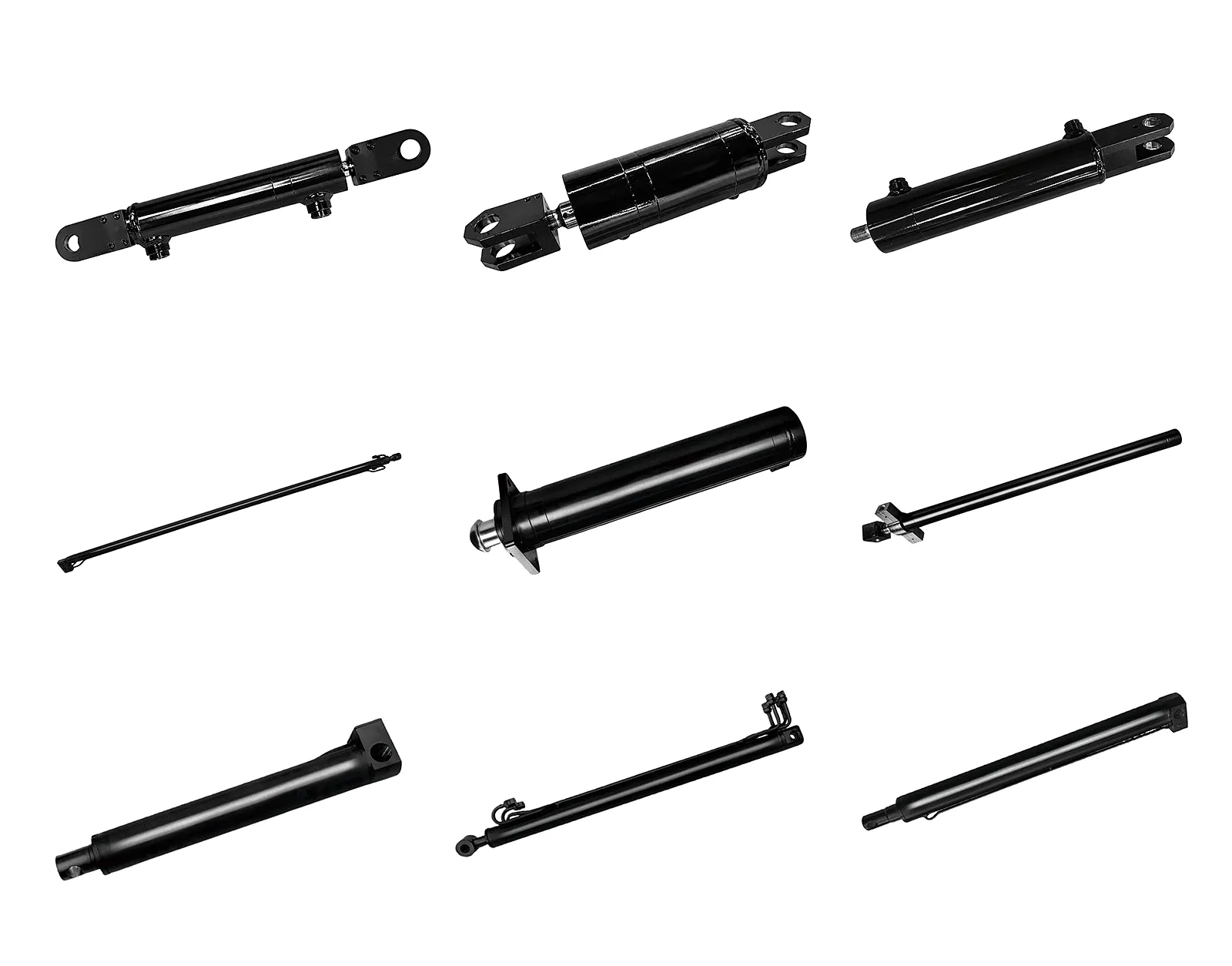
How Both Cylinder Types Actually Work Under Pressure
Compact Hydraulic Cylinder
A compact hydraulic cylinder operates on precisely the same Pascal’s Law foundation as its full-size counterpart — pressurised fluid acts on a piston area to produce linear force proportional to bore diameter and system pressure. Where compact cylinders diverge is in their bore-to-stroke ratio and overall body architecture. Designers achieve the reduced envelope by using shorter stroke lengths, thicker-walled shorter barrels, and integrated port manifolds that eliminate external pipe bends. The piston rod diameter is often disproportionately large relative to bore size to maintain column strength, since the exposed rod length is a key buckling risk in confined spaces where traditional guide arrangements cannot be installed. Many compact designs also employ integrated position sensing, eliminating external transducer housings that would defeat the purpose of going compact in the first place.
Full-Size Hydraulic Cylinder
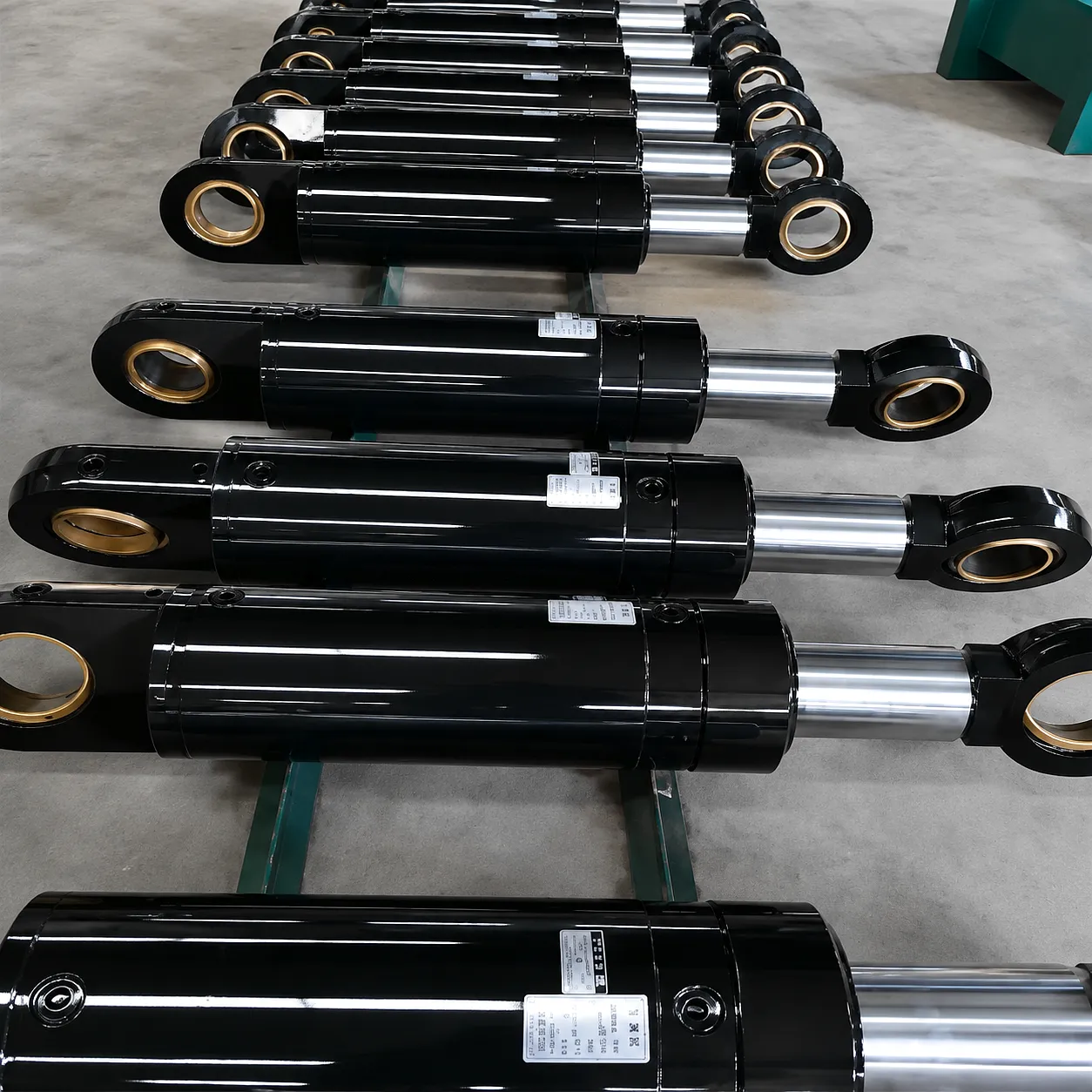
A full-size hydraulic cylinder uses a conventional bore-to-stroke relationship, typically with stroke lengths ranging from a few hundred millimetres out to several metres in heavy civil or offshore applications. The larger bore diameters — commonly 80 mm to 400 mm in UK industrial settings — permit lower operating pressures for equivalent force output, which is a significant thermal and seal-life advantage. Full-size designs carry their porting externally, giving maintenance engineers at facilities like those across Coventry’s automotive supply chain easy access to seals without disassembling surrounding structure. The greater internal volume also allows better management of fluid bypass and contamination without immediate performance degradation, providing a natural buffer against imperfect filtration in real-world factory environments.
Core Materials That Define Performance Boundaries
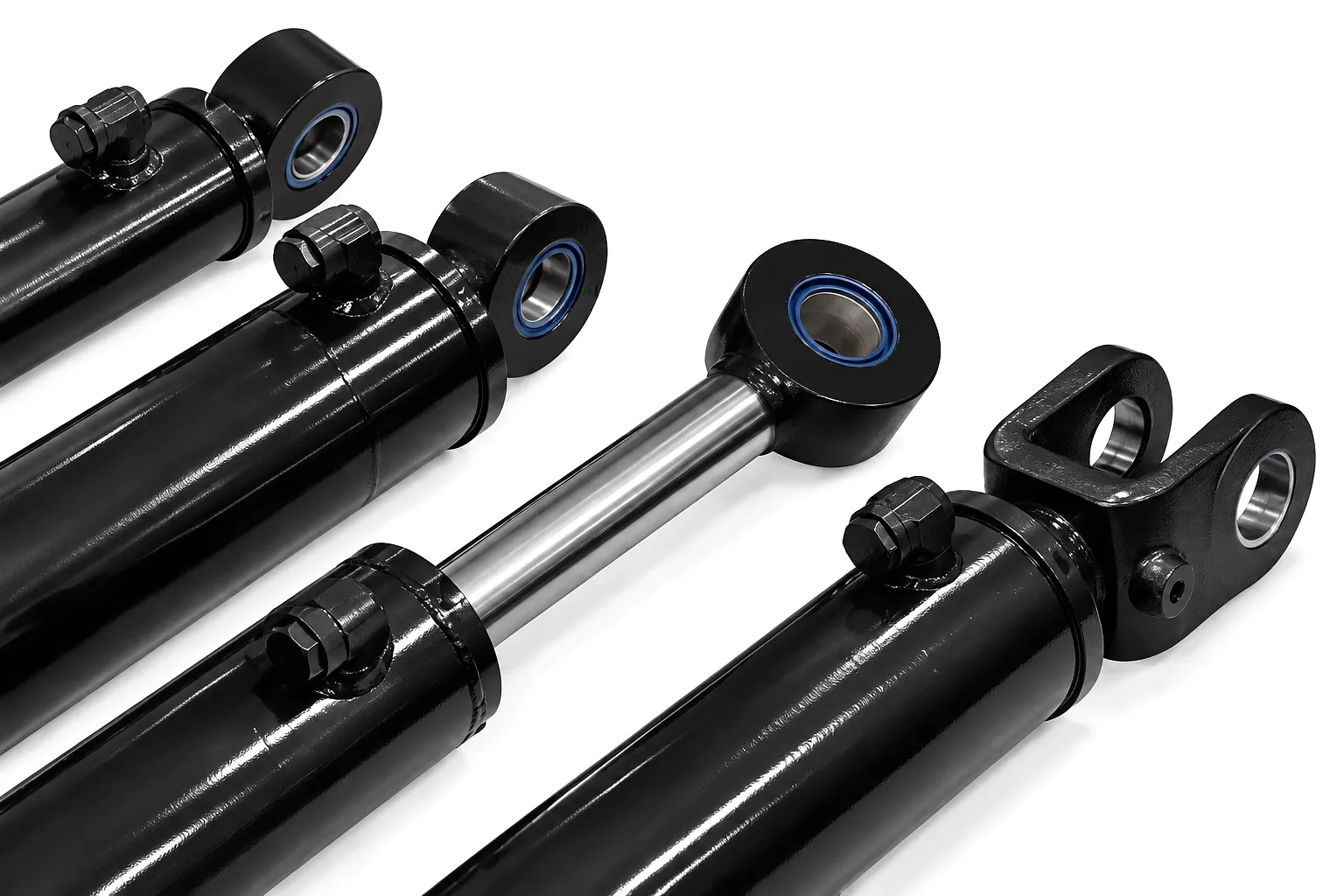 Material selection is where compact and full-size cylinders diverge most decisively in terms of what engineers can realistically specify. Compact hydraulic cylinder bodies are predominantly manufactured from EN24T alloy steel or high-strength stainless steel grades — materials chosen for their exceptional yield strength-to-density ratio, which allows the thinner walls required to keep the external envelope small without compromising pressure containment at ratings up to 350 bar or beyond.
Piston rods in compact units typically use case-hardened carbon steel with hard chrome plating to a minimum 20–25 micron depth, combined with mirror-finish grinding to Ra 0.2 or better. This surface specification is non-negotiable: because compact cylinder seals operate under higher specific contact pressure than their full-size equivalents — the same force delivered through a smaller seal circumference — any surface defect translates rapidly into leakage. In corrosive environments common in food processing facilities around Leeds or coastal marine installations, electroless nickel or ceramic composite coatings replace chrome, adding chemical resistance without the plating thickness variation that standard electroplating can introduce.
Full-size cylinders enjoy greater material flexibility: ductile cast iron remains cost-effective for bores above 150 mm where machining tolerances are less demanding, while structural steels such as S355J2 serve in welded designs for quarrying and heavy civils. The piston seal material choices are broader too — PTFE composite, polyurethane, and Nitrile all perform acceptably at the lower specific pressures a larger piston distributes.
Core Technical Advantages — Where Each Design Wins
Compact Cylinder Advantages
- Dramatically reduced installation footprint — critical in robotic cells and mobile platforms
- Lower total machine mass, benefiting any application where weight directly affects efficiency or certification
- Faster dynamic response due to reduced internal fluid volume to fill and evacuate
- Integration-friendly design — manifold ports, position sensors, and cushioning can be built in at the factory level
- Reduced plumbing complexity, which is a genuine operational advantage for maintenance crews in Sheffield’s precision machining sector
- High pressure capability relative to physical size, enabling 250–350 bar ratings in bore sizes under 63 mm
Full-Size Cylinder Advantages
- Greater raw force output through larger bore area — ideal for heavy pressing, lifting, and clamping operations
- Lower seal contact pressure at equivalent force, substantially extending seal service intervals
- Superior thermal dissipation thanks to larger surface area and fluid volume acting as a thermal buffer
- Easier field maintenance — seals are accessible without specialist tooling, reducing downtime in Birmingham foundry and forging operations
- Better accommodation of side loads without accelerated rod-seal wear
- Wider range of mounting configurations and cushioning adjustments available off the shelf
Product Technical and Performance Parameter Comparison
| Parameter | Compact Cylinder | Full-Size Cylinder |
|---|---|---|
| Bore Diameter Range | 20 mm – 80 mm | 80 mm – 500 mm |
| Operating Pressure | Up to 350 bar | Up to 250 bar (standard) |
| Stroke Length Range | 25 mm – 500 mm | 100 mm – 6,000 mm |
| Body Material | EN24T alloy steel, 316 SS | S355J2 steel, ductile iron |
| Rod Surface Finish | Hard chrome / ceramic Ra ≤ 0.2 µm | Hard chrome Ra ≤ 0.4 µm |
| Seal Material Options | PTFE, PU, FKM (Viton) | NBR, PU, PTFE, FKM |
| Temperature Range | -30°C to +150°C | -20°C to +120°C |
| Mounting Styles | Flange, foot, threaded body | Clevis, flange, foot, trunnion |
| Cushioning | Fixed or factory-set | Adjustable needle valve |
| Typical Mass (80 mm bore) | 4 – 9 kg | 12 – 25 kg |
| Seal Life (typical duty) | 3,000 – 8,000 hours | 8,000 – 20,000 hours |
Industrial Application Scenarios: Which Cylinder Fits Which Machine
Robotic Assembly Cells — West Midlands Automotive Supply Chain
West Midlands automotive suppliers building transfer lines and end-of-arm tooling for body-in-white operations routinely specify compact hydraulic cylinders where cycle times are below one second and robot reach envelopes leave no room for external plumbing. In these systems, the faster hydraulic response of the compact unit — achieved through reduced internal dead volume — shaves measurable time from each production cycle. A 40 mm bore compact cylinder rated to 280 bar delivers approximately 35 kN of clamping force from a body no larger than a large thermos flask, making it compatible with ISO 9409 robot flange mounting without custom adaptor plates. Seal wear is managed through high-quality hydraulic filtration at Beta 16(c) ≥ 200, which is the minimum specification Ever Power recommends for compact cylinder circuits operating above 10 Hz cycle frequency in these production environments.
Steel Pressing and Forging — Sheffield Heavy Industry
Sheffield’s heritage in steel forging and drop-hammer operations demands hydraulic cylinders with the raw force output that only large bore full-size units can deliver. A 250 mm bore cylinder operating at 200 bar produces approximately 980 kN of thrust — close to 100 tonnes of forming force — which no compact cylinder of remotely comparable external dimension can approach. For these presses, the thermal mass and large fluid reservoir associated with full-size cylinders also serve an important buffering role: the enormous energy inputs from each press stroke generate heat at a rate that would destroy compact seal compounds within days. Full-size units in Sheffield foundry presses typically run Viton (FKM) seals with dedicated external heat exchangers, achieving seal service intervals of 15,000 to 20,000 operating hours before replacement is needed.
Agricultural Machinery — East Anglian Harvesting Equipment
East Anglian combine harvester and grain cart manufacturers occupy a genuinely interesting middle ground in the compact-versus-full-size decision. The chassis envelope is constrained — particularly on header lift and reel adjustment circuits where compact cylinders are almost universally preferred — while threshing cylinder drive and stone trap ejection systems benefit from the stroke length and force reserve of full-size units. Modern combine headers in the UK market are specifying compact hydraulic cylinders for the lateral float function because each flotation wing requires four to six actuators, and reducing individual unit mass by even 3–4 kg per cylinder saves 18–24 kg of unsprung header weight, directly improving ground-following accuracy on cambered East Anglian fields.
Mobile Lifting Platforms — Construction and Infrastructure Sectors
Scissor lifts, boom lifts, and truck-mounted platforms operating across UK construction sites — from HS2 corridor work in the Midlands to offshore wind turbine maintenance platforms in the North Sea support sector — represent perhaps the most visible application of telescopic and compact cylinder technology. The challenge here is matching maximum extended reach with minimum stowed height and vehicle mass, which is precisely where multi-stage telescopic cylinders, technically a compact-origin architecture extended to achieve full-size strokes, deliver extraordinary engineering value. Stowed length reduction of 60–70% compared with an equivalent single-stage full-size cylinder is achievable, enabling vehicle height compliance with the UK’s 4.65 m road transport limit.
Thermal Management and Seal Longevity: The Hidden Trade-off
Heat generation inside a hydraulic cylinder is proportional to pressure drop across internal clearances and the frequency of load reversals. Compact cylinders, by virtue of their smaller internal geometry, reach thermal equilibrium at higher temperatures than full-size equivalents under identical duty cycles. This is not inherently problematic — modern high-temperature seal compounds such as FKM operate continuously to 150°C — but it mandates careful system design. Hydraulic oil viscosity falls with temperature, which increases internal leakage across the piston seal and reduces volumetric efficiency. In a compact cylinder circuit, this effect can become noticeable above 80°C bulk oil temperature, leading to creep in position-holding applications like clamping jigs on Birmingham’s precision machined component lines.
Ever Power addresses this through simulation-led thermal modelling during the engineering phase, matching seal compound to the projected duty cycle heat generation before a cylinder leaves the factory floor. Compact hydraulic cylinder circuits destined for high-frequency applications receive a mandatory thermal analysis report as part of the Ever Power delivery package — a level of pre-delivery diligence that distinguishes manufacturers committed to total system performance from those who simply ship components.
Seal Selection Quick Reference
| Seal | Temp | Best Use |
|---|---|---|
| NBR | -30 to 100°C | General duty |
| PU | -35 to 110°C | Wear resistance |
| FKM | -20 to 200°C | High temp/chem |
| PTFE | -60 to 260°C | Extreme range |
Manufacturing Excellence
Ever Power: Precision Manufacturing and Deep Customisation for UK Industrial Clients
Ever Power operates a vertically integrated hydraulic cylinder manufacturing facility equipped with CNC deep-hole boring machines, internal honing lines capable of achieving bore surface finishes to Ra 0.2 micron, and coordinate measuring machines for 100% dimensional verification against customer drawings. This infrastructure allows Ever Power to manufacture both compact and full-size hydraulic cylinders to tolerances that meet or exceed ISO 6020-2 and ISO 3320 standards, with full material certification traceable to mill certificates from blast-furnace origin — a supply chain transparency standard increasingly required by UK Tier 1 procurement specifications.
The Ever Power customisation capability is particularly relevant for UK engineers who have outgrown the catalogue limitations of their previous hydraulic cylinder suppliers. Non-standard bore sizes, dual-rod configurations, integrated magnetostrictive position transducers, stainless steel construction for food-grade or offshore environments, and special port face arrangements to suit OEM manifold interfaces are all within Ever Power’s standard engineering scope — not special projects requiring long lead times. Most custom hydraulic cylinder designs move from technical review to first-article delivery within four to six weeks, supported by Ever Power’s dedicated UK export logistics and documentation team that handles CE marking declarations, UKCA compliance documentation, and third-party inspection coordination with SGS and Bureau Veritas.
Ever Power’s supply chain resilience is built on strategic raw material stock holdings, which means that even at periods of global steel supply disruption — as experienced across UK manufacturing during recent years — hydraulic cylinder delivery schedules are maintained without the emergency surcharges that other suppliers levy. UK procurement managers from Coventry, Manchester, and Leeds have cited this supply reliability as a decisive factor in converting from spot purchasing to blanket order frameworks with Ever Power.
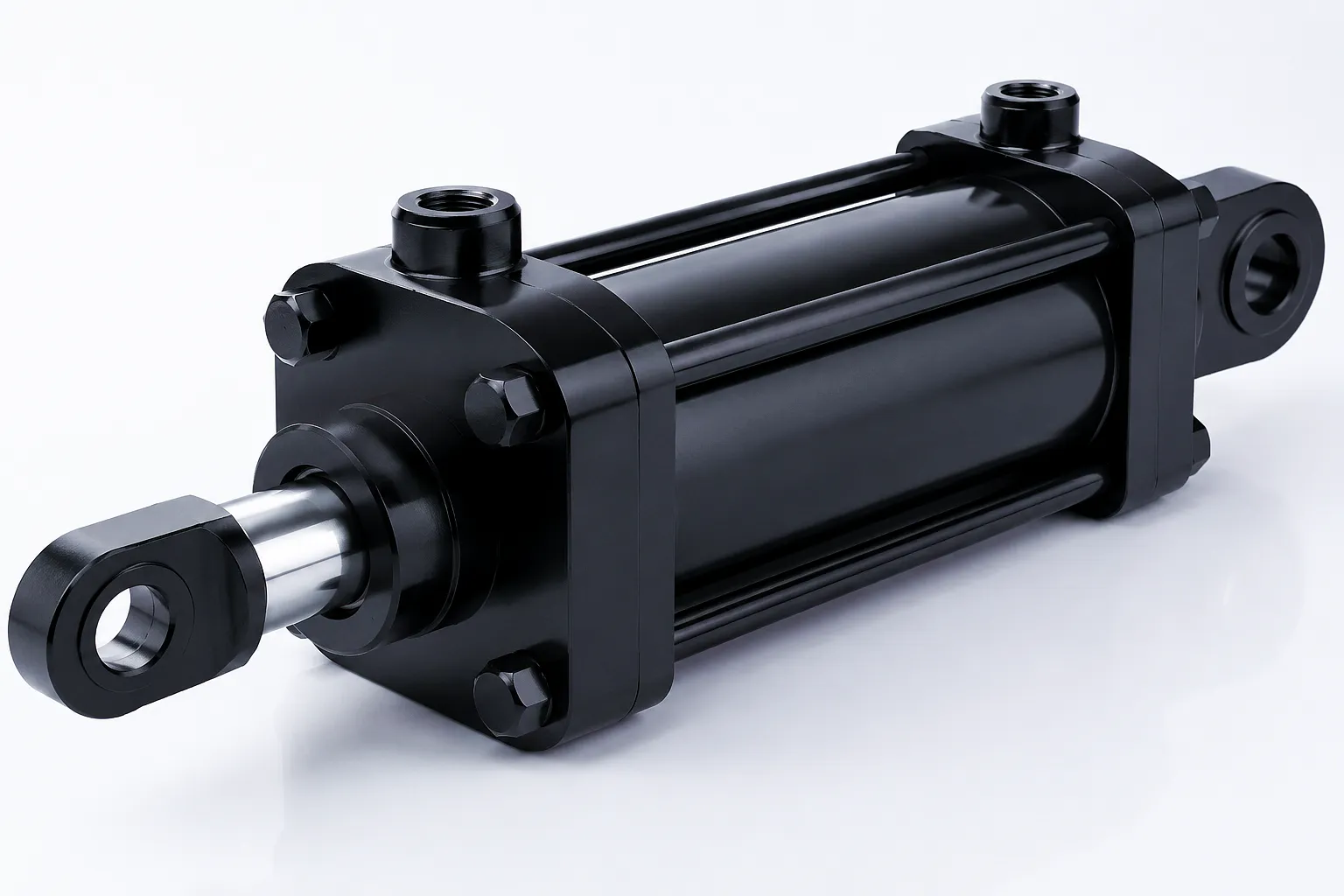
Manufacturing Highlights
- ISO 9001:2015 certified
- 100% pressure-tested before despatch
- CE / UKCA documentation included
- 4–6 week custom lead time
- SGS / Bureau Veritas inspection
- Dedicated UK export team
✓ Customer Success Story
Birmingham Aerospace Tooling Manufacturer Eliminates Downtime with Compact Cylinder Retrofit
A precision tooling manufacturer based in Solihull, on the eastern edge of Birmingham’s aerospace and automotive corridor, was operating a fleet of twelve CNC machining centres with integrated hydraulic clamping systems. The original full-size cylinders on the pallet-change and workholding circuits were consuming too much of the machine’s structural bay — their 120 mm OD bodies required support brackets that compromised the rigidity of the machine tool base — and a persistent hydraulic leakage problem during high-frequency clamping cycles was causing a measurable increase in scrap rate across the fleet.
The engineering team contacted Ever Power through the company’s UK distributor network with a requirement to replace the existing cylinders with a compact hydraulic cylinder design that would deliver identical clamping force — approximately 28 kN — from a body diameter no greater than 63 mm. Ever Power’s engineering review identified that the original design was operating at only 140 bar, well below what modern compact cylinder technology could handle, and proposed an EN24T alloy steel compact cylinder rated to 280 bar at 50 mm bore, producing 27.5 kN thrust — a 1.8% force variance from the original specification, entirely within the workholding system’s compliance range.
The retrofit required custom port face orientation and an integrated magnetostrictive linear encoder to preserve the machine’s existing position feedback loop. Ever Power delivered first articles within five weeks of purchase order, including all CE marking documentation and a factory acceptance test report. Following installation across all twelve machining centres, the Solihull facility recorded zero clamping-related downtime events in the first six months of operation — a result that translated directly into a 3.4% improvement in overall equipment effectiveness across the affected production cells.
★★★★★
“The compact hydraulic cylinder spec Ever Power provided cut our machine bay obstruction by nearly half. More importantly, we’ve had no seal failures in six months of continuous three-shift running. The customisation process was straightforward — they understood exactly what we needed from the first technical call.”
James Hartley — Engineering Director, Solihull Precision Tools Ltd
★★★★★
“We’ve used full-size cylinders for our forging press line in Sheffield for years and have no intention of switching — the seal life and force output at large bore is simply unmatched for that duty. But when we needed compact cylinders for the robotic loading system, Ever Power delivered on spec and on time. Clear technical documentation made UKCA sign-off painless.”
Rachel Crowther — Head of Procurement, Northern Forge Group, Sheffield
★★★★★
“Our combine header redesign for the 2026 harvest season required six compact cylinders per header with a specific port orientation we couldn’t get from the usual catalogue suppliers. Ever Power turned around a custom drawing within 48 hours and had samples at our Cambridgeshire facility in under six weeks. The quality of the chrome rod finish exceeded what our previous supplier provided on standard stock items.”
Tom Greenway — R&D Manager, Fen Valley Agri-Engineering, Cambridge
A Decision Framework for UK Engineers: When to Choose Which
The compact versus full-size hydraulic cylinder decision is rarely made in isolation from the wider machine design, procurement budget, maintenance programme, and operational context. A structured decision framework helps avoid the most common error — selecting based on familiarity rather than genuine fit analysis. The matrix below captures the critical questions engineers should answer before raising a purchase requisition.
| Decision Factor | Choose Compact | Choose Full-Size |
|---|---|---|
| Installation Envelope | Tight — < 80 mm OD required | Open — space is available |
| Force Requirement | Up to ~50 kN (high-pressure) | 50 kN to 10 MN + |
| Cycle Frequency | High — > 5 Hz | Low to medium — < 2 Hz |
| Maintenance Access | Limited — prefer long-life seals | Good — field seal replacement OK |
| Operating Temperature | Requires thermal analysis | Self-buffering at large fluid volume |
| Unit Cost | Higher per unit — lower system cost | Lower per unit — simpler system |
↪ Single-Stage Telescopic
Silinder Hidraulik Teleskopik Tersuai Untuk Platform Pengangkat
Achieving full-size stroke from compact collapsed length — the ideal choice for vehicle-mounted and scissor-lift applications.
Heavy Duty Hydraulic Cylinder Manufacturer Single Acting Cylinders
Single-acting full-size cylinders for pressing, stamping, and high-duty-cycle industrial workholding with gravity or spring return.
Whole-Life Cost: The Metric That Changes the Conversation
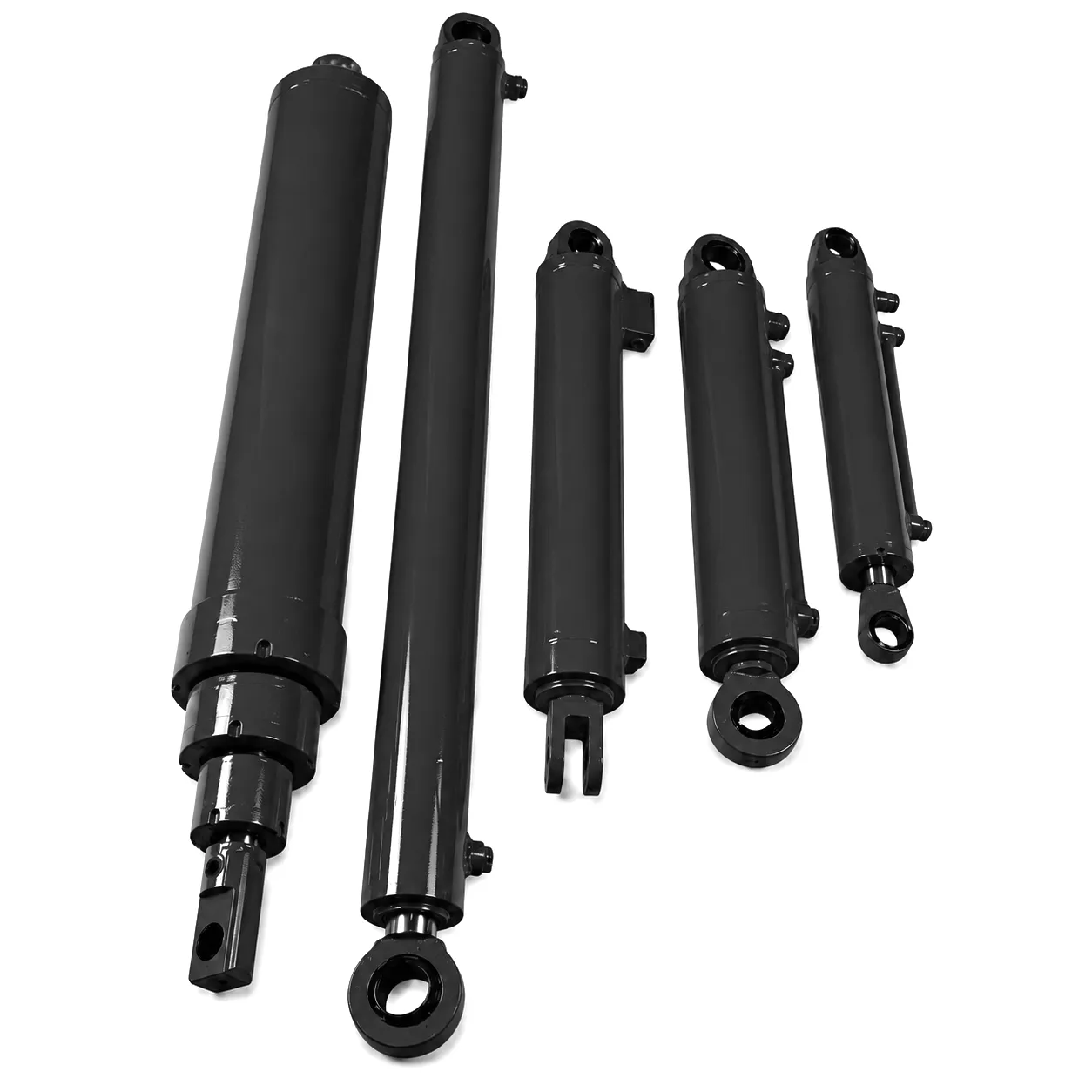 Unit price comparisons between compact and full-size hydraulic cylinders routinely produce misleading conclusions. Compact cylinders carry a higher unit price at equivalent bore size, reflecting the tighter machining tolerances, premium material grades, and more elaborate internal construction required. A procurement exercise based solely on purchase order value will almost always select the full-size option — and in many cases, that is the correct outcome. The analysis changes substantially when whole-life cost is the metric.
Compact cylinders reduce system costs through several indirect channels: elimination of external plumbing reduces manifold machining, pipework, and leak point count; reduced machine mass in mobile applications cuts fuel consumption over the operational life; and integrated sensor mounting eliminates transducer housing fabrication from surrounding structure. In a typical robotic assembly cell in the West Midlands, these indirect savings have been quantified at 15–25% of total hydraulic system cost, more than offsetting the per-unit price premium of the compact cylinders themselves.
Full-size cylinders win the whole-life argument through superior seal longevity and lower maintenance labour intensity. In applications with good access — a hydraulic press in a Birmingham metalforming facility, for instance — a skilled maintenance engineer can change the entire seal kit in a full-size cylinder in under two hours. The same task on a compact cylinder integrated into a robot arm requires partial machine disassembly and can take four to eight hours, making seal life the dominant cost driver for that design class. Specifying FKM seals and maintaining a filtration regime at ISO 4406 cleanliness class 16/14/11 or better can extend compact cylinder seal life to the point where the maintenance cost differential becomes commercially insignificant — but only if that cleanliness standard is actually held in service.
Soalan Lazim
What is the typical price difference between compact hydraulic cylinders and full-size cylinders when buying from a UK supplier?
Compact hydraulic cylinders typically carry a 20–40% unit price premium over full-size cylinders at equivalent bore sizes, reflecting tighter tolerances and premium material grades. However, system-level cost comparisons — accounting for plumbing, sensor mounting, and machine mass — often favour compact cylinders in integrated designs. For an accurate quote tailored to your specific UK application, contact [email protected].
Which type of hydraulic cylinder should I specify for a robotic assembly cell in a Birmingham automotive plant where installation space is extremely limited?
Compact hydraulic cylinders are the correct choice for robotic assembly environments with tight installation envelopes. Bore sizes of 32–63 mm at pressures up to 280–350 bar deliver 15–50 kN of clamping or actuation force from bodies small enough to mount directly on ISO 9409 robot flanges. Ever Power’s compact cylinder range is specifically designed for high-cycle robotic duty in UK automotive Tier 1 facilities.
How long do seals last in a compact hydraulic cylinder compared to a full-size unit operating in a Sheffield forging facility?
Under comparable duty cycles, full-size cylinder seals typically achieve 8,000–20,000 hours because the larger seal circumference distributes contact pressure more favourably. Compact cylinder seals in properly maintained circuits with ISO cleanliness class 16/14/11 and FKM seal compounds reach 3,000–8,000 hours. In Sheffield forging applications involving high thermal load, full-size cylinders with Viton seals and external cooling are the recommended configuration.
Where can I get a custom-engineered compact hydraulic cylinder quote from a reliable supplier for my UK agricultural machinery application?
Ever Power supplies custom compact and full-size hydraulic cylinders to UK agricultural OEMs and Tier 1 machinery manufacturers, with specific experience in combine harvester header flotation, baler plunger, and grain cart tipping cylinder applications. Send your technical specification directly to [email protected] for a detailed engineering review and costing within two working days.
What are the UKCA certification requirements for hydraulic cylinders used in UK industrial machinery after Brexit, and does Ever Power provide the necessary documentation?
Hydraulic cylinders supplied as components for UK machinery must comply with the Supply of Machinery (Safety) Regulations 2008 as retained and amended post-Brexit, with UKCA marking applicable for the Great Britain market. Ever Power provides complete technical documentation including Declaration of Incorporation, material mill certificates, pressure test records, and dimensional inspection reports sufficient for UKCA integration compliance assessment. Third-party inspection by SGS or Bureau Veritas is available on request.
How quickly can I get a custom compact hydraulic cylinder delivered to a manufacturing site in Coventry or Manchester from an overseas manufacturer like Ever Power?
Ever Power’s standard lead time for custom compact hydraulic cylinders is four to six weeks from purchase order to factory despatch, with delivery to Coventry, Manchester, or any UK mainland location via dedicated freight in a further three to five working days. Air freight options are available for urgent requirements at additional cost. Ever Power maintains a UK export documentation team that handles all customs classification and import documentation to minimise port clearance time.
Ready to Specify the Right Cylinder?
Talk to Ever Power’s Engineering Team Today
Whether you need compact cylinder miniaturisation for a space-constrained robotic cell or full-size force output for a heavy press line, Ever Power delivers engineering-led solutions with full UK compliance documentation.
✉ Get a Quote — [email protected]
Response within 2 working days · UKCA documentation included · Custom engineering from 4 weeks
suntingan oleh gzl
 Malay
Malay  English
  Italian
  Portuguese
  Dutch
Dutch  Swedish
  Danish
  Finnish
  Polish
  Hindi
Hindi  Kazakh
  Turkish
  Ukrainian
  Romanian
  Spanish
  German
  Russian
  Korean
  Japanese
  Vietnamese
  Thai
Thai  Indonesian
  French
  Greek
Greek