
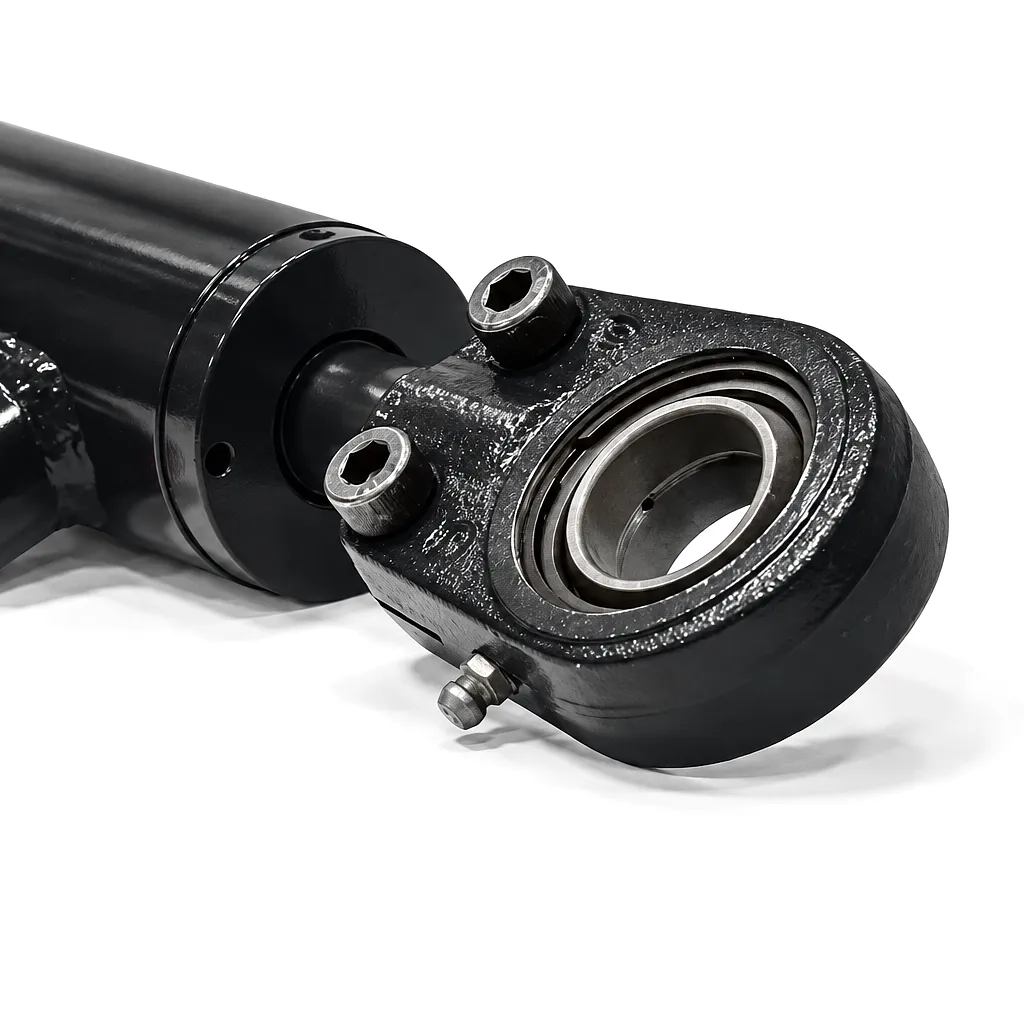
 Hydraulic cylinders sit at the mechanical heart of some of the UK’s most demanding industrial operations — from crane systems in Sheffield’s steel fabrication yards to aerial work platforms servicing Birmingham’s dense urban construction corridors. Yet despite their critical role, the process of selecting a manufacturer is often rushed, reduced to a quote comparison without the deeper due diligence that protects long-term plant uptime. A cylinder failure at elevation or under extreme load is not a maintenance inconvenience; it is a safety event with regulatory, financial, and human consequences.
Why the Choice of Manufacturer Changes Everything
The hydraulic cylinder market is not a commodity space, even though pricing pressure sometimes treats it as one. A cylinder rated at a given bore and stroke can vary enormously in seal life, surface finish tolerance, weld quality, and pressure cycling durability depending on which factory produced it and what standards governed that production. UK procurement managers operating under ISO 9001 or machinery directive compliance know this acutely — the paperwork a supplier provides is only as meaningful as the manufacturing process behind it. When a hydraulic cylinder powers a critical motion — extending a boom arm on an aerial work platform above a busy London construction site or actuating a press in a Yorkshire automotive stamping facility — the difference between a manufacturer who holds tolerances to within ±0.01 mm and one who works to ±0.05 mm is the difference between a five-year service interval and a six-month failure. That gap does not show up on a quotation sheet. It only reveals itself once the cylinder is in service, often at the worst possible moment.
How a Hydraulic Cylinder Actually Works — and Why It Matters for Procurement
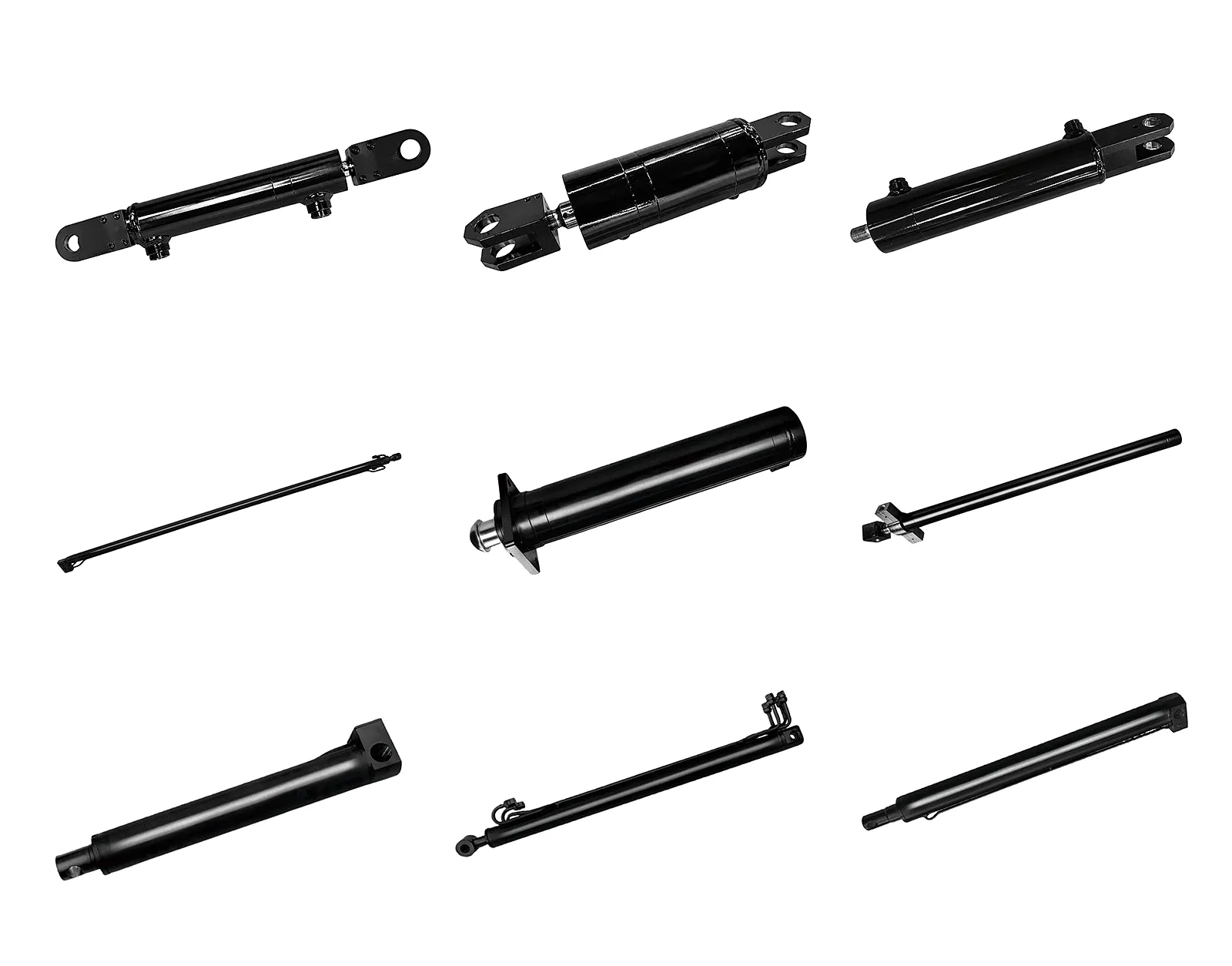
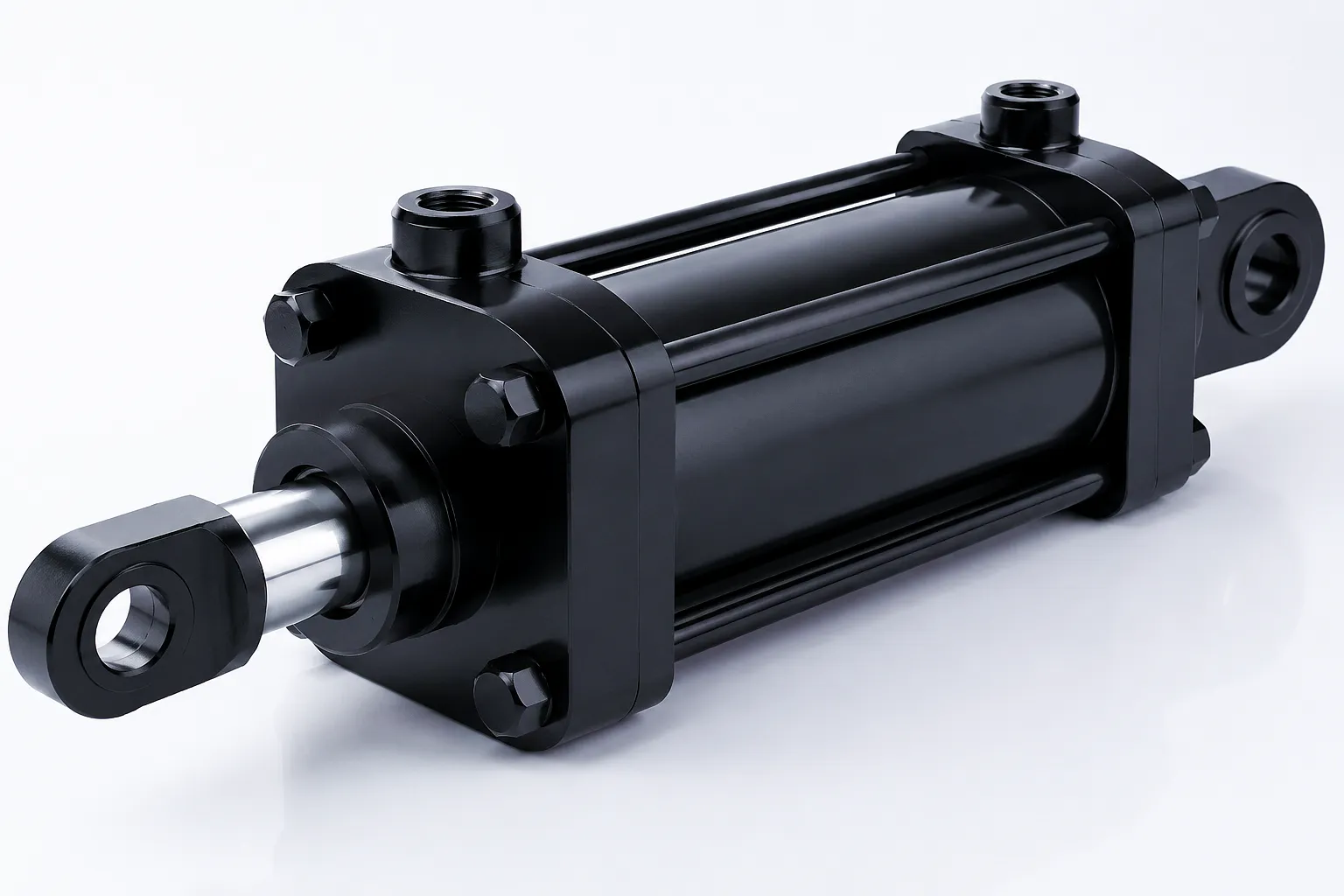
A hydraulic cylinder converts fluid pressure into linear mechanical force. Pressurised hydraulic oil enters the cylinder chamber via a port, acting against the face of a piston. The differential in pressure between the piston-side (full bore) and the rod-side (annular area) determines the force available in each direction of travel. This basic physics has been understood for over a century, but the engineering precision required to make that conversion reliable under cyclic loading, temperature variation, and contamination is where manufacturers diverge sharply.
The piston rod — typically a chromium-plated or hard-chrome-coated steel bar — must maintain a surface finish of Ra 0.2 µm or better to protect the rod seals from abrasion. The barrel bore requires honing to H7 or H8 tolerance to ensure the piston seal rides true across the full stroke. Any deviation in these parameters creates micro-leakage paths that accelerate seal degradation. In applications like boom-angle cylinders for aerial platforms, where the cylinder may cycle thousands of times per year under variable side loads, seal longevity is not an abstract specification — it is the primary determinant of maintenance cost over the asset’s life.
Understanding this principle helps B2B buyers form better questions. Rather than asking simply “what is the rated pressure?”, the informed procurement question is: “What surface finish specification do you hold on the rod, and how is this verified during QC?” That shift in questioning immediately separates manufacturers who understand what they’re making from those who treat cylinders as assemblies of parts.
Core Materials: What Separates a Premium Cylinder from a Budget One
Rod Omboh
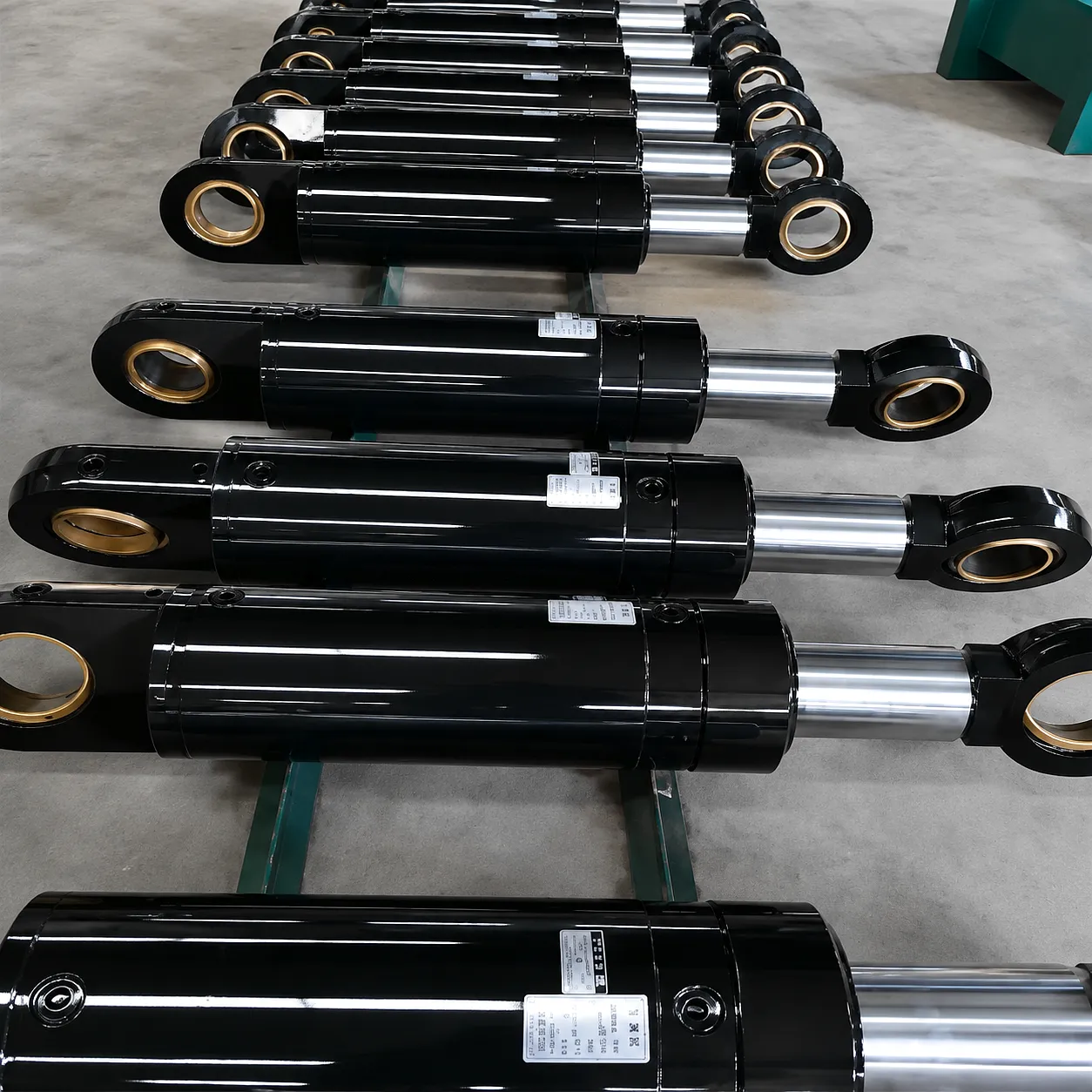
Manufactured from 20MnV6 or 42CrMo4 alloy steel, then induction-hardened and ground. The outer surface receives a hard chrome plating of 20–25 µm on precision cylinders, or an increasingly common alternative — High Velocity Oxygen Fuel (HVOF) thermal spray coating — which delivers superior corrosion resistance particularly relevant for cylinders operating in the coastal industrial zones around ports like Southampton and Liverpool. Ask any prospective supplier for the rod material certificate and coating thickness test report as standard.
Cylinder Barrel
The barrel tube is typically cold-drawn seamless steel (ST52 or equivalent EN 10305 standard) or precision-skived and roller-burnished tube for hydraulic applications. The choice matters: skived-and-burnished tube eliminates the honing step, producing a surface finish suitable for seal contact in a single pass, and the cold-work hardening improves wear resistance. Procurement teams should request the barrel material specification and verify EN compliance, particularly when cylinders will be subject to UK PSSR 2000 (Pressure Systems Safety Regulations) inspection regimes.
Seal Packages
Seals are the consumable component most buyers underestimate. A cylinder running standard NBR seals in a mobile application that experiences temperature swings between -20°C on a Scottish winter night and +70°C at the cylinder surface during sustained operation will show accelerated wear. Specifying polyurethane (PU) rod seals with PTFE-filled anti-extrusion rings, alongside fluorocarbon (FKM/Viton) options for high-temperature environments, substantially extends service intervals. Premium manufacturers offer seal selection guidance as part of the specification process; this capability separates them clearly from catalogue-only suppliers.
Product Technical and Performance Parameter Reference Table
The table below represents typical performance parameters across common hydraulic cylinder types supplied into UK industrial and mobile equipment markets. These figures serve as a baseline for comparison when evaluating supplier quotations. Always request test reports confirming that actual production units meet or exceed these parameters under proof-pressure testing.
Core Technical Advantages That Affect Real-World Performance
Tight Bore Tolerance for Consistent Force Output
Bore tolerance directly governs the uniformity of force output across the stroke. Cylinders manufactured to H7 bore tolerance — the standard applied to precision hydraulic components — deliver consistent piston-to-barrel clearance that keeps internal leakage below 1 cc/min at working pressure. In applications like angle cylinders on aerial platforms, where smooth and predictable boom movement is both a productivity requirement and a safety necessity, this consistency is non-negotiable. Budget-grade cylinders working to wider tolerances exhibit stick-slip behaviour and unpredictable extension velocities that create jerky platform movement — a hazard at height and a liability issue for UK operators working under Working at Height Regulations 2005.
Weld Integrity Under Cyclic Loading
For welded-body hydraulic cylinders — the dominant construction in heavy mobile equipment — weld quality is the single most critical structural variable. Fatigue cracking at the barrel-to-gland interface is among the most common failure modes in service, and it is entirely preventable through correct weld preparation, heat input control, and post-weld inspection. Manufacturers who conduct ultrasonic or dye-penetrant testing on welds as a standard production step — rather than sampling — deliver a fundamentally different risk profile. When specifying cylinders for high-cycle applications in construction or forestry equipment operating through the Scottish Highlands or the Welsh uplands, requesting weld procedure qualification records (WPQR) from your supplier is a straightforward way to distinguish serious manufacturers from those assembling to price.
Corrosion Protection for UK Environmental Conditions
The UK’s maritime climate — salt-laden air reaching well inland via prevailing south-westerlies, combined with the operational use of de-icing salts on road surfaces from October through March — creates a corrosive environment that accelerates rust on external cylinder surfaces. The gap between a basic paint finish and a proper two-pack epoxy primer with topcoat, or hard chrome on all exposed metalwork, becomes visible within a single British winter. Asking prospective suppliers for their standard corrosion protection specification, and requesting salt-spray test data (ideally to ISO 9227 with 500-hour minimum performance), is a practical step that eliminates suppliers unable to meet real-world UK conditions. The added cost of proper corrosion protection is consistently recouped within the first service interval through reduced maintenance time.
Featured Products for Aerial Platform Applications:
Folding Boom Angle Cylinder for Aerial Work Vehicle (1458mm Stroke)
Designed for the demanding multi-axis motion requirements of modern articulating aerial platforms, this cylinder delivers 1458 mm of precise stroke with the pressure-rated integrity that aerial operations in crowded UK urban environments require. Its mounting geometry is engineered to accommodate the angular loading characteristic of folding boom kinematics — eliminating the accelerated rod-seal wear that plagues cylinders designed to simpler specifications.
Silinder Sudut Boom Utama Platform Udara (Lejang 555mm)
The main boom angle cylinder forms the primary load-bearing actuator in telescopic and articulating boom platforms. At 555 mm stroke, this unit serves the mid-range platform class most commonly deployed in UK commercial construction and facilities maintenance — the work-at-height sector governed by the most active regulatory scrutiny in European occupational safety. Precision-honed bore, high-strength seal package, and hard-chrome rod protection are standard across this series.
Industrial Application Scenarios Across UK Sectors
Aerial Work Platforms — Urban Construction, Birmingham & London
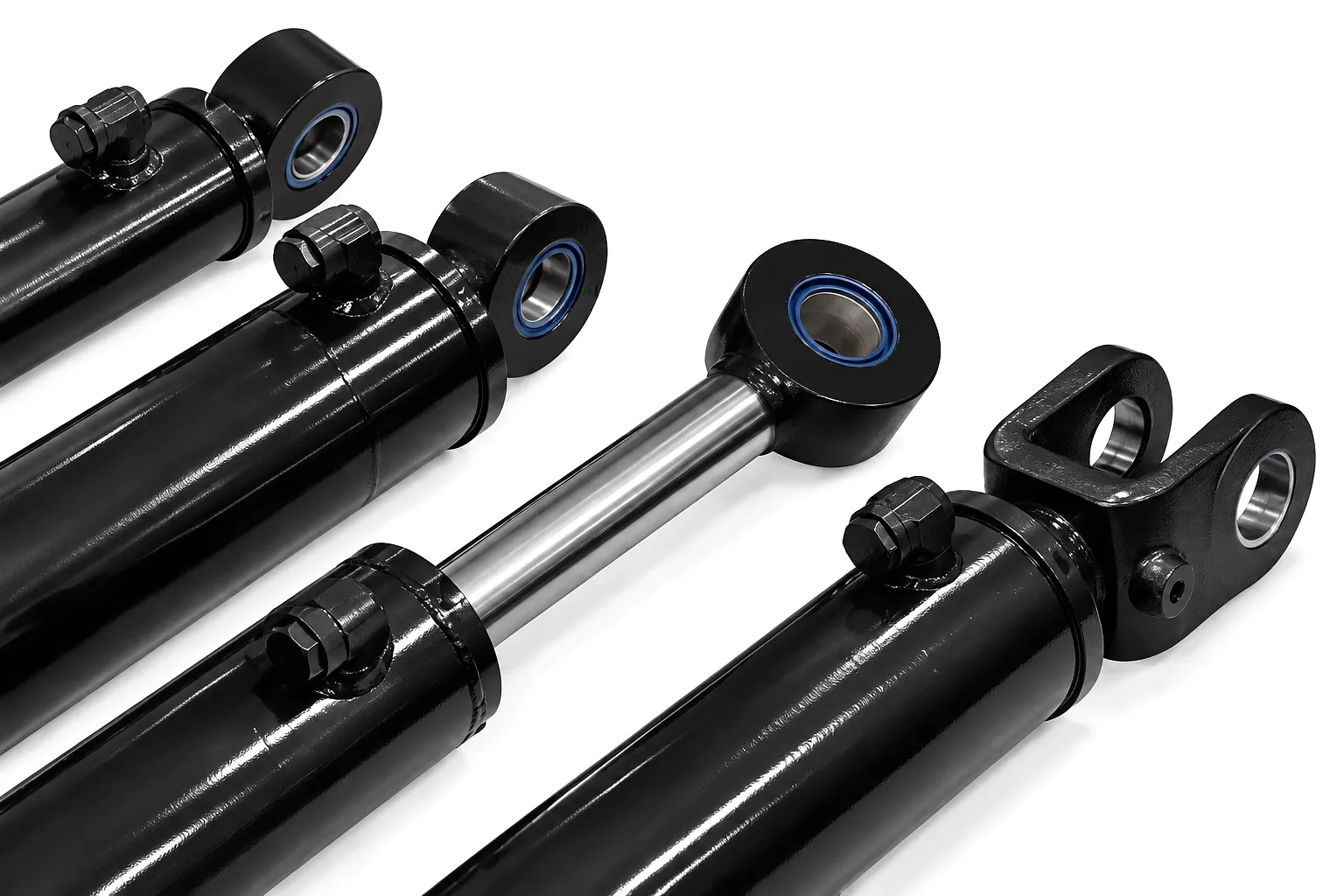
Birmingham’s continuous infrastructure renewal programme and London’s high-density commercial development pipeline together represent one of the UK’s most active markets for aerial work platforms. These machines depend on angle cylinders to position booms within millimetre-accurate working zones in confined street-level environments. The demand for smooth, controllable cylinder actuation — without the micro-jolts that arise from seal contamination or bore irregularity — is at its most critical in city-centre settings where unpredictable platform movement creates both safety risk and project delay. Hydraulic cylinders serving these applications require the tightest available tolerance grades, superior seal packages rated for the temperature cycling that urban diesel-powered platforms experience, and corrosion protection suited to salt-spray road conditions encountered in winter maintenance work.
Steel Fabrication & Heavy Press — Sheffield & Rotherham
Sheffield’s heritage as Britain’s steel capital persists in its modern form through precision metal fabrication, specialist alloy processing, and advanced manufacturing for defence and aerospace. Hydraulic cylinders in this sector operate in environments characterised by high ambient temperature from furnace radiant heat, metallic contamination from machining coolants and swarf, and high-frequency cycling from press operations. Cylinders serving press and clamping functions in Sheffield and Rotherham facilities require particulate-resistant seal designs, thermal-barrier rod coatings, and barrel materials verified to handle the dynamic loads imposed by press cycling. Procurement teams in this region routinely specify ISO VG 46 or 68 hydraulic fluid compatibility as a base condition, and any cylinder supplier unable to confirm compatibility and recommend appropriate seal grades under this condition warrants careful scrutiny.
Agricultural Machinery — East Anglia & Yorkshire Wolds
The arable farming belts of East Anglia and the Yorkshire Wolds represent the UK’s most intensive agricultural machinery market. Hydraulic cylinders in tractor implement systems, bale handlers, and combine harvester headers face a specific combination of challenges: low-temperature starts on cold autumn mornings, high contamination exposure from soil and crop residue entering mounting areas, and the short but intensive seasonal duty cycles that mean cylinders must perform reliably for six-week harvest windows after months of storage. These conditions favour cylinders with low-friction seal compounds that maintain responsiveness at 5°C, external surface treatments that resist fertiliser spray corrosion, and end cap designs that prevent contaminant ingress at the rod-entry point. Agricultural equipment manufacturers sourcing hydraulic cylinders for UK-market machinery increasingly specify these parameters by name rather than accepting generic standard designs.
Marine & Port Equipment — Southampton, Grimsby & Teesport
UK port infrastructure — crane gantries, ship-to-shore loaders, hatch cover actuators, and roll-on/roll-off ramp systems — presents one of the harshest environments that hydraulic cylinders encounter. Continuous salt-air exposure, tidal humidity cycling, and the structural demands of handling cargo masses measured in hundreds of tonnes combine to create failure conditions that standard industrial cylinders simply cannot withstand. Marine-grade hydraulic cylinders for port applications at Southampton, Grimsby, and Teesport typically require stainless steel rod options, sacrificial zinc anode protection on external structures, and seals rated for continuous operation in atmospheres with salt concentrations exceeding the 500-hour ISO 9227 test. Specifying marine-grade hydraulic actuators is not a premium option in port environments — it is the baseline required for any reasonable service life expectation.
The Procurement Checklist: Questions That Separate Good Suppliers from Great Ones
The following questions, posed directly to any supplier during the evaluation phase, provide a structured basis for comparing manufacturers across the dimensions that matter most in B2B industrial procurement. A supplier who answers these with specific data — rather than generalities — has demonstrated the organisational maturity that supports reliable long-term supply.
1. What is your bore tolerance standard, and how is it verified at final inspection?
The answer reveals whether the manufacturer understands the relationship between bore tolerance and long-term seal performance, and whether their QC process closes the loop between design intent and manufactured output.
2. Can you provide material traceability certificates for rod and barrel stock?
Material traceability is a baseline expectation for CE-marked machinery and PSSR-regulated pressure equipment in the UK. A supplier who cannot provide mill certificates on request is not suitable for serious industrial procurement.
3. What is your standard proof test pressure, and do you issue individual test certificates per cylinder?
Sampling-based pressure testing is inadequate for safety-critical applications. Each cylinder destined for aerial work, lifting, or high-pressure clamping duty should carry its own test certificate, not a batch-level report.
4. What is your lead time for custom-stroke or custom-bore cylinders, and what is the minimum order quantity?
The answer to this question determines whether the supplier can genuinely serve OEM or project-specific procurement needs, or whether they are fundamentally a catalogue-items business. The price difference between a bespoke cylinder and an adapted standard unit can be significant; understanding this early avoids downstream surprises.
5. What warranty terms do you offer, and how is warranty claim processing handled for UK customers?
Warranty terms reflect a manufacturer’s confidence in their product. A 12-month warranty with easy UK-based returns processing is the floor; manufacturers who offer 18 or 24 months with clear defect categorisation are sending a meaningful signal about product reliability. For international suppliers, the logistics of warranty returns must be resolved before the order — not after a failure.
Ever Power: Precision Manufacturing and Genuine Customisation Capability
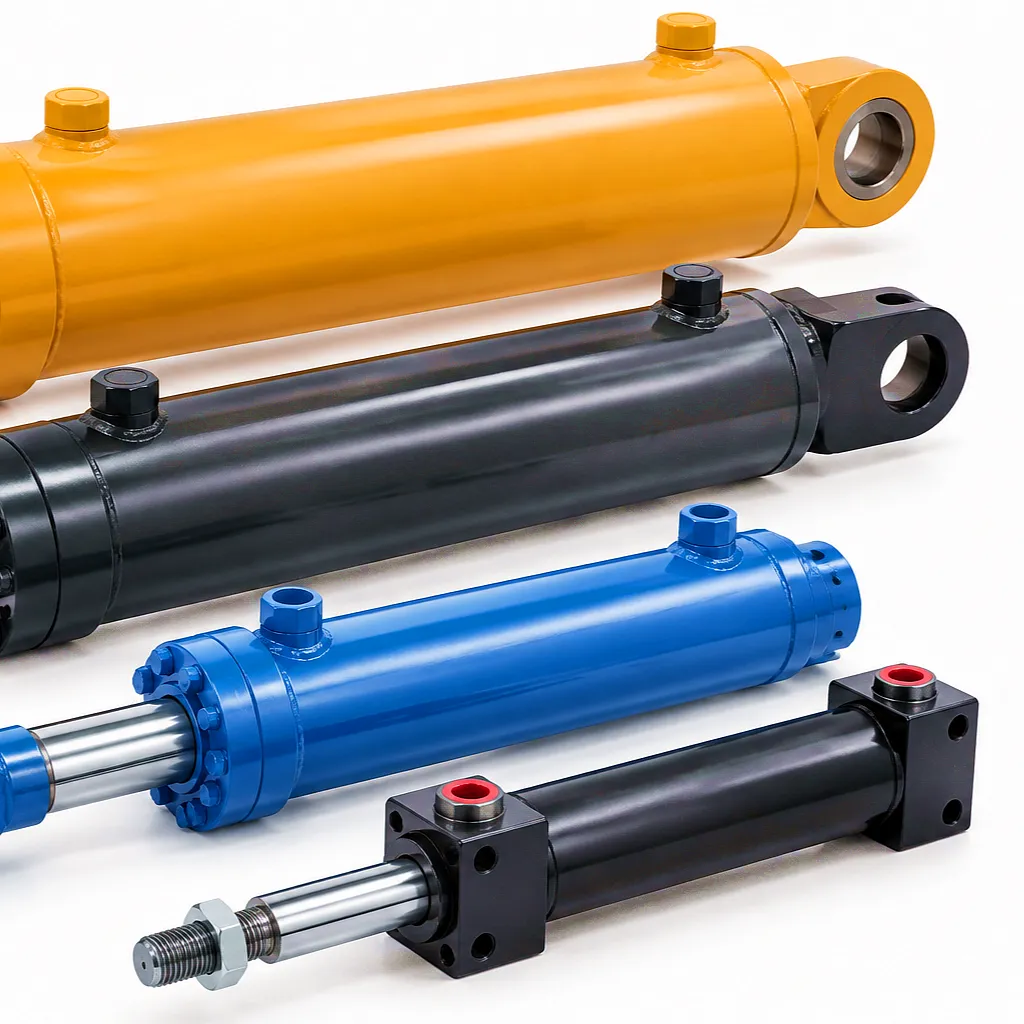 Ever Power operates a vertically integrated hydraulic cylinder manufacturing facility where every critical production step — from raw tube selection through bore machining, chrome plating, seal assembly, and pressure testing — is conducted under a unified quality management system certificated to ISO 9001. This vertical integration means Ever Power does not depend on subcontracted machining or chrome plating from external shops whose quality standards may differ from their own. When a UK procurement manager requests material traceability, test certificates, or process records for an Ever Power cylinder, those documents are generated internally from records that cover the complete manufacturing history of that specific unit.
Customisation is a genuine operational capability at Ever Power, not a marketing claim. The engineering team works with customers at the specification stage to select bore sizes, stroke lengths, mounting geometries, port configurations, and seal packages suited to the exact application. For UK customers supplying OEM equipment into regulated sectors — aerial platforms, lifting systems, agricultural machinery — Ever Power can provide design review support, prototype units with accelerated test programmes, and supply chain documentation packages structured to support CE marking or PSSR compliance. The manufacturing facility maintains a range of precision ground tooling for non-standard bore sizes, and the chrome plating line is capable of achieving the 20–30 µm deposit thickness required for extended-service applications.
Lead times for standard-range cylinders are typically 15–25 working days from confirmed order, with express production available for urgent replacement needs. Custom-specification projects receive a detailed timeline at the quotation stage, structured around the customer’s assembly schedule rather than the factory’s convenience. DDP (Delivered Duty Paid) shipping to UK addresses is available, eliminating the customs and import logistics overhead that makes sourcing from some international manufacturers operationally complex for UK buyers.
✉ Request a Custom Quote — [email protected]
Response within 24 hours · DDP UK delivery available · ISO 9001 certified
Customer Success Story: Aerial Platform Fleet Renewal, West Midlands
Background: A Birmingham-based equipment hire company operating a fleet of 38 articulating boom platforms encountered a recurring maintenance problem with the boom angle cylinders on a specific platform model. Over a 14-month period, twelve cylinders across the fleet had required replacement following premature seal failure — a pattern that was driving unplanned downtime during the peak spring-to-autumn hire season when demand from construction and utilities maintenance customers was at its highest.
The Investigation: The hire company’s engineering team identified that the original equipment cylinders were specified to Ra 0.4 µm rod surface finish — adequate for controlled industrial environments but insufficient for mobile plant operating on Birmingham’s road infrastructure, where contamination ingress during transit and deployment was accelerating seal abrasion. The team contacted Ever Power after reviewing technical specifications that indicated rod surface finish to Ra 0.2 µm as standard, combined with a polyurethane primary seal and PTFE anti-extrusion ring as the standard seal package for mobile applications.
The Solution: Ever Power’s engineering team reviewed the dimensional package of the original cylinder and produced a direct-replacement unit matched to the OEM mounting geometry — retaining full compatibility with the platform’s hydraulic circuit — while upgrading the rod specification, seal package, and external corrosion protection. A trial batch of six cylinders was supplied and installed across three platforms, with the hire company’s engineering team monitoring performance over a 90-day intensive hire period.
The Outcome: At the 90-day review, all six trial cylinders remained in service with no seal-related maintenance events recorded. The hire company subsequently placed an order for 32 units to bring the remaining fleet to the upgraded specification, and has maintained Ever Power as their primary cylinder supplier across multiple platform types. The estimated annual maintenance cost reduction — based on eliminated emergency replacements and reduced planned seal service intervals — was calculated at approximately £18,400 across the 38-unit fleet.
What Our UK Customers Say
“We had been replacing boom angle cylinders on two of our platforms every eight to ten months — it had become a budget line we accepted as inevitable. After switching to Ever Power’s upgraded specification units, we went through a full hire season without a single cylinder call-out on those platforms. The performance data speaks clearly.”
— Fleet Engineering Manager, Platform Hire Company, Birmingham
“What impressed us about Ever Power wasn’t just the cylinder quality — it was the documentation package. Material certificates, individual pressure test reports, dimensional inspection sheets — everything our compliance team needs for PSSR records was already prepared and shipped with the units. That level of organisation tells you something about how seriously a manufacturer takes quality.”
— Procurement Director, Steel Fabrication Firm, Sheffield
“We needed a non-standard bore and stroke combination with a specific pin-to-pin dimension that no catalogue product could match. Ever Power’s engineering team turned around a detailed technical confirmation within two days, and the prototype units arrived ahead of schedule. The customisation process was far more straightforward than we anticipated — clear communication at every stage.”
— Design Engineer, Agricultural Machinery OEM, Lincolnshire
Soalan Lazim
How much does it typically cost to source custom hydraulic cylinders from a B2B supplier in the UK market?
Custom hydraulic cylinder pricing in the UK B2B market varies widely depending on bore size, stroke length, operating pressure, and seal specification. Standard-range bore cylinders (40–100 mm) in low volumes typically range from £80 to £350 per unit; precision or heavy-duty grades with enhanced rod and seal specification can run from £200 to over £1,000 depending on specification. To get an accurate quote that reflects your specific dimensional and performance requirements, contacting suppliers directly with a full specification sheet delivers better results than relying on catalogue pricing.
Which certifications should I look for when comparing hydraulic cylinder suppliers for aerial work platform applications in the UK?
For aerial work platform applications subject to UK regulations, the minimum certifications to look for are ISO 9001 for the manufacturing quality system and CE marking for the cylinder as a pressure component under the Pressure Equipment Directive. For cylinders incorporated into machinery subject to the Machinery Directive, you will also want to see Declaration of Conformity documentation. Individual pressure test certificates per cylinder — rather than batch test reports — are strongly recommended for safety-critical lifting applications and simplify your own PSSR compliance records.
Where can I find a reliable hydraulic cylinder supplier who offers fast delivery to Sheffield or Birmingham for replacement parts?
Suppliers who offer DDP shipping to UK addresses — meaning import duties and customs clearance are handled by the supplier, not the buyer — eliminate a significant logistics friction point that can turn a 2-week lead time into a 6-week ordeal. For replacement cylinder orders to Sheffield, Birmingham, or anywhere else in the UK Midlands and North, the combination of a clear order confirmation timeline, DDP shipping terms, and a 24-hour quotation response is the standard to hold suppliers to. Ever Power provides DDP delivery to UK addresses with typically 15–25 working day lead times for standard-range cylinders.
What questions should I ask a hydraulic cylinder manufacturer before placing a large B2B order to make sure I am not overpaying for the wrong specification?
The five most important questions are: What bore tolerance do you manufacture to and how is it verified? Can you provide individual material certificates? What is your proof test procedure and do you issue per-unit certificates? What seal options are available for my operating temperature and fluid type? And what is your standard warranty period and UK returns process? A supplier who answers these with specific, documented responses is almost always capable of supporting a serious B2B procurement relationship. Vague or generalised answers to these specific questions are a reliable early warning sign.
How long does it take to get a price quote for a custom hydraulic cylinder from an international manufacturer, and what information do I need to provide?
A well-organised manufacturer should turn around a detailed price quote for a custom hydraulic cylinder within 24–48 hours, provided you supply the key specification data upfront. That means: bore diameter and rod diameter, stroke length, mounting type (clevis, flange, trunnion, etc.), operating and maximum pressure, fluid type and temperature range, required certifications, and target delivery quantity. If you have an existing cylinder to replace, a dimensioned drawing or even a photo with key measurements annotates the specification effectively. Suppliers who need more than a week to produce a quote for a single custom cylinder are generally not set up for responsive B2B procurement.
What is the typical price difference between a standard hydraulic cylinder and a precision-grade cylinder designed for aerial platform use in UK industrial environments?
For equivalent bore and stroke, a precision-grade cylinder with Ra 0.2 µm rod finish, PU seal package, and individual pressure test certificate typically costs 25–45% more than a standard-grade unit. However, when you factor in the extended seal service life — often two to three times longer in mobile applications — the total cost of ownership over a three-year operating period almost always favours the precision-grade specification. For UK equipment hire companies and OEM manufacturers calculating lifecycle cost rather than unit price, this calculation usually makes the decision straightforward.
Ready to specify your hydraulic cylinders?
Talk to Ever Power — Precision Hydraulic Cylinders for UK B2B
Custom bore, stroke, and seal specification · DDP UK delivery · ISO 9001 certified · 24h quotation response
suntingan oleh gzl
 Malay
Malay  English
  Italian
  Portuguese
  Dutch
Dutch  Swedish
  Danish
  Finnish
  Polish
  Hindi
Hindi  Kazakh
  Turkish
  Ukrainian
  Romanian
  Spanish
  German
  Russian
  Korean
  Japanese
  Vietnamese
  Thai
Thai  Indonesian
  French
  Greek
Greek