
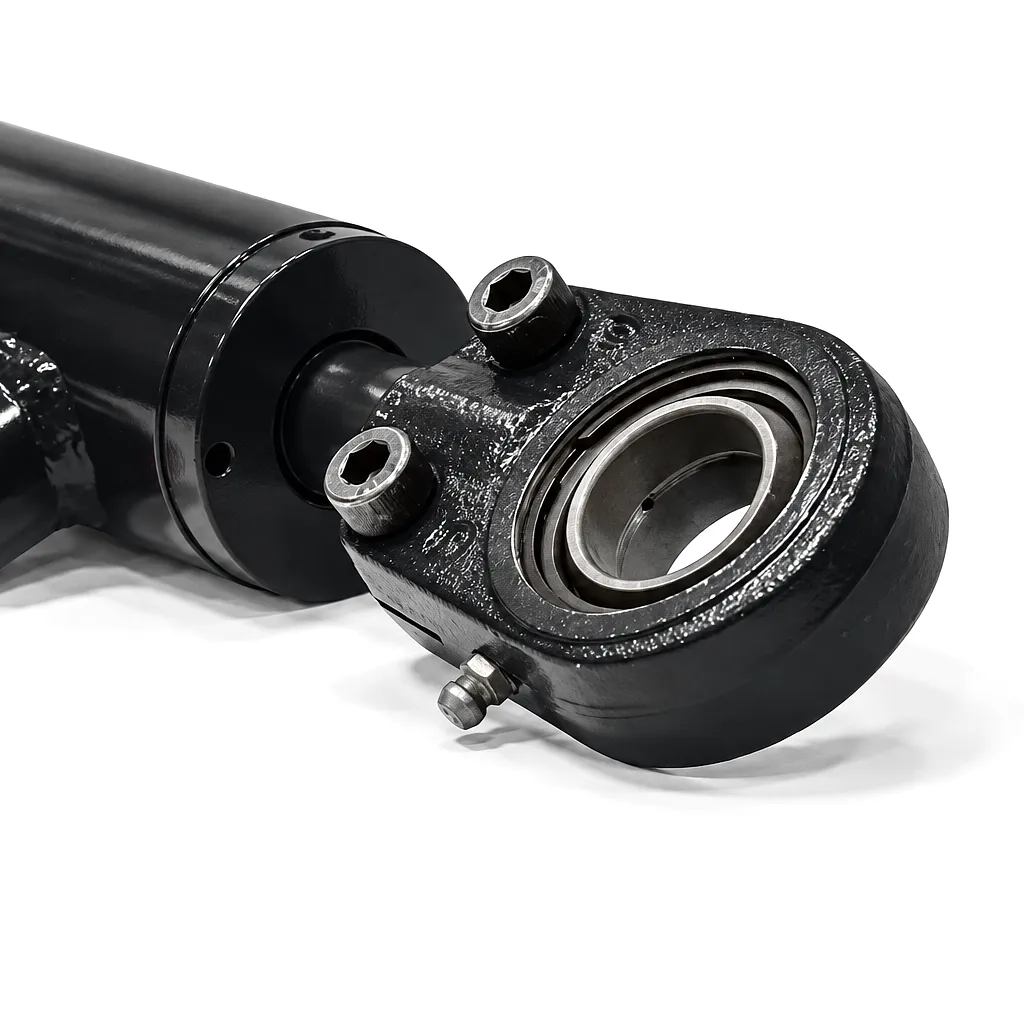
 Japan’s manufacturing ecosystem operates under some of the tightest engineering tolerances in the world. When hydraulic cylinders are specified for equipment entering the Japanese supply chain — whether installed in construction plant, precision machine tools, or automated assembly lines — compliance with JIS (Japanese Industrial Standards) is not optional. The JIS B 8367 family of standards governs hydraulic cylinders’ dimensional envelope, pressure ratings, test procedures, and materials in a way that is subtly but critically different from ISO 6020 and DIN equivalents that European or American engineers may be more familiar with.
For importers and OEM integrators supplying into the Japanese market, this creates a real procurement challenge. Off-the-shelf cylinders dimensioned to ISO or DIN will frequently fail JIS interchangeability checks even when the bore and stroke appear identical at a glance. Flange bolt patterns, port thread types (JIS B 0203 tapered pipe thread versus NPT or BSP), and rod-end fitting geometries all differ, and the Japanese market’s quality inspectors are thorough enough to catch every discrepancy.
This guide unpacks the key technical differences, outlines the dimensional and material specifications you need to specify correctly, and explains how Ever Power’s custom manufacturing capability bridges the gap between standard catalogue product and fully JIS-compliant hydraulic cylinder supply.
📩 Get a Quote — JIS Compliant Hydraulic Cylinders
Response within 24 hours · Custom JIS specifications welcomed
Understanding JIS Hydraulic Cylinder Standards and Why They Differ
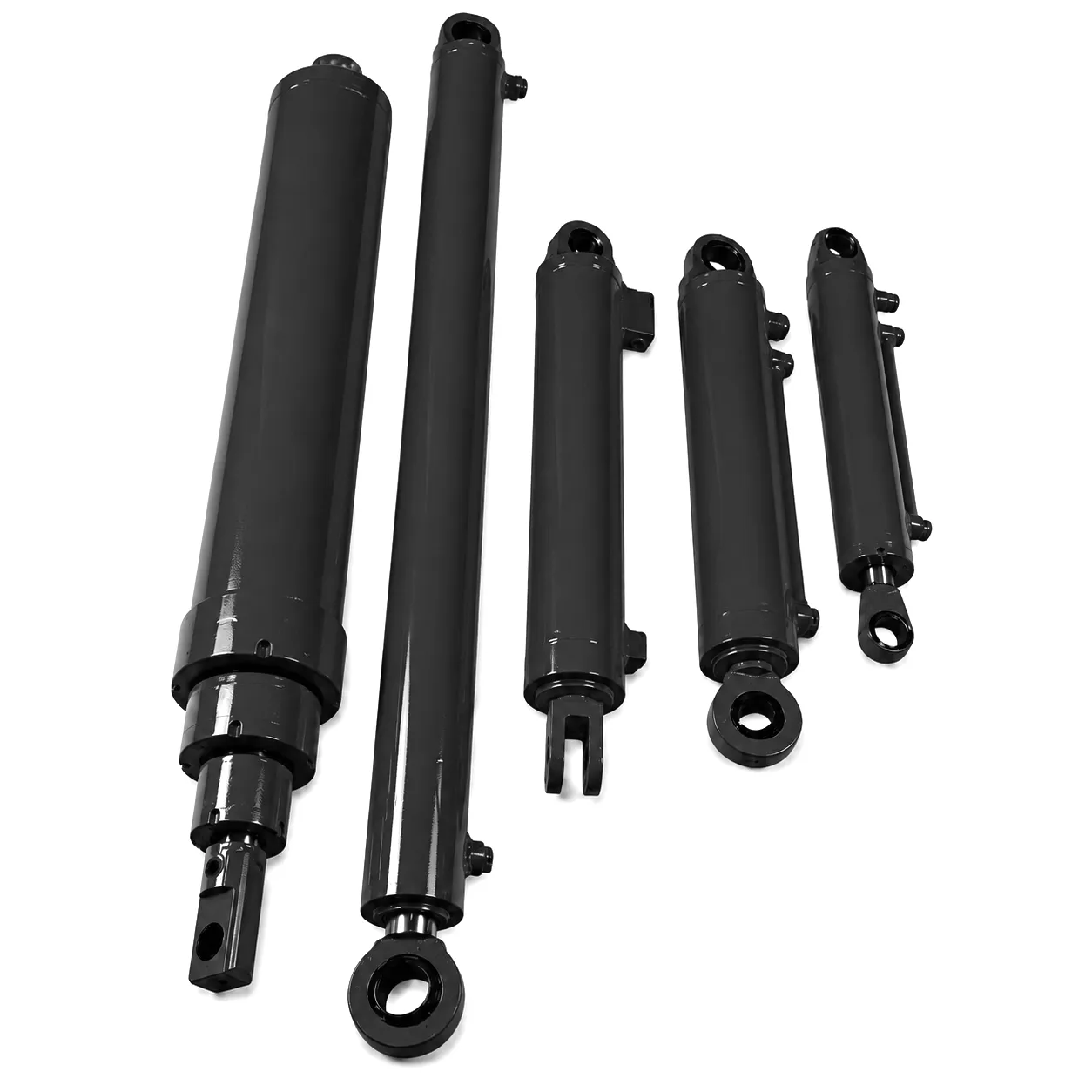 The Japanese Industrial Standards organisation — administered through the Ministry of Economy, Trade and Industry (METI) — maintains JIS B 8367 as the primary reference for hydraulic fluid power cylinders. This standard was first codified in the 1960s when Japan’s heavy manufacturing sector was expanding rapidly, and its structure reflects the precision culture that characterises Japanese industrial production. Unlike ISO 6020/1, which focuses primarily on mounting dimensions for cylinder categories, JIS B 8367 integrates not just dimensional tables but explicit test methods, permissible surface finish values, and traceability requirements for pressure vessels.
One of the most immediately practical differences concerns port threads. Japanese hydraulic systems overwhelmingly use JIS B 0203 tapered parallel threads — sometimes abbreviated as PT threads — which are mechanically similar to BSP tapered (BSPT) but carry subtly different thread form angles and sealing characteristics. A hydraulic cylinder supplied with NPT or standard BSP ports will technically fit a PT fitting but the sealing engagement is not equivalent, and Japanese equipment inspectors routinely flag this as a non-compliance point during incoming goods checks at facilities in Osaka, Nagoya, and Hiroshima.
Beyond threading, JIS cylinders specify bore diameter series that align with Japanese machine tool and mobile equipment standards. The preferred bore series runs 32 mm, 40 mm, 50 mm, 63 mm, 80 mm, 100 mm, 125 mm, 160 mm, and 200 mm — largely mirroring ISO preference bores but with differences in the associated stroke increments and rod diameter pairings. Getting these relationships right is essential for interchangeability when the cylinder must retrofit into an existing Japanese machine frame.
Working Principle of a JIS-Compliant Hydraulic Cylinder
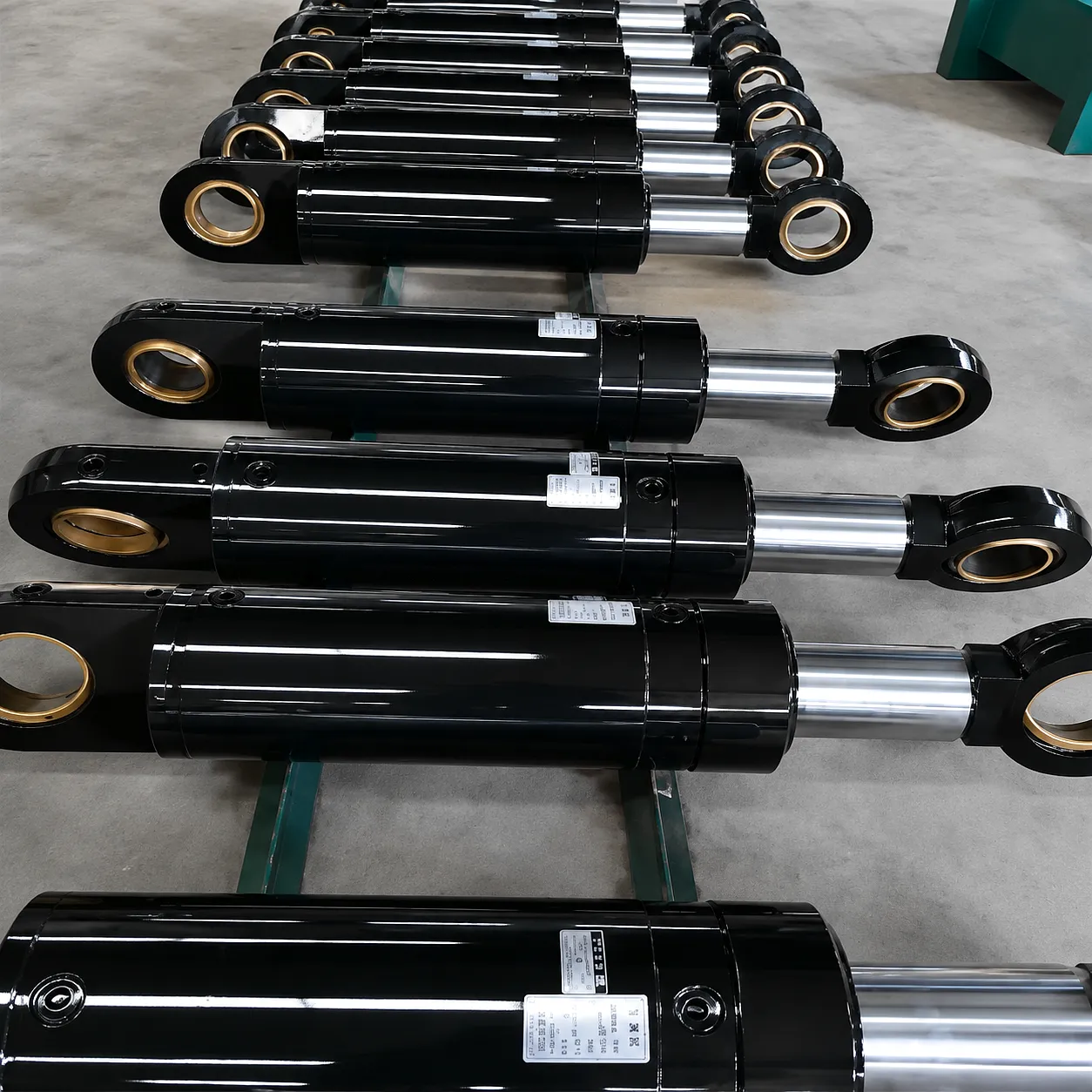
At its core, a hydraulic cylinder converts hydraulic pressure into controlled linear mechanical force. Pressurised fluid — typically hydraulic oil conforming to ISO VG 46 or ISO VG 68 grades commonly specified in Japanese industrial equipment — enters through the port on one side of the piston. The pressure differential across the piston face multiplied by the effective bore area generates the output thrust. For a double-acting cylinder operating at 20 MPa (the standard JIS working pressure for medium-duty industrial cylinders) with a 100 mm bore, the extend force calculates to approximately 157 kN before seal friction losses are deducted.
JIS B 8367 places explicit requirements on the test pressure that cylinders must sustain without leakage or permanent deformation. The hydrostatic proof test must be conducted at 1.5 times the rated working pressure, with a minimum hold duration of one minute per test point. Cylinders destined for Japanese customers often need documentation proving this test was completed, as Japanese procurement managers at facilities in Toyota City and Yokohama frequently request factory test certificates as a condition of purchase order approval.
The seal arrangement within a JIS cylinder is engineered around a philosophy of zero detectable external leakage under all specified operating conditions. Rod seals, wiper seals, and static O-ring seals are all dimensioned and toleranced to achieve this, and the standard specifies that acceptance testing should include full extension and full retraction cycles at maximum rated pressure before the no-leakage criterion is applied. This is stricter than many European standard interpretations where minor weeping at static seals may be considered acceptable.
Extend Force
F = P × A = Pressure (Pa) × Bore Area (m²). At 20 MPa with 100 mm bore: F ≈ 157 kN. This is the fundamental relationship that determines cylinder sizing for a given load application in any JIS-governed hydraulic circuit.
Proof Test Pressure
JIS mandates hydrostatic proof at 1.5× rated working pressure, held for a minimum of 60 seconds. Factory test certificates documenting this procedure are routinely requested by Japanese procurement departments as part of incoming inspection protocols.
Zero Leakage Criterion
JIS B 8367 requires demonstrably zero external leakage at all specified operating points. Rod seals, wiper seals, and port O-rings are all dimensioned to this performance target, which is enforced during full-stroke acceptance cycling at maximum rated pressure.
Core Materials Used in JIS Hydraulic Cylinder Manufacturing
Cylinder Barrel — Seamless Steel Tube
JIS S45C or JIS SCM440 (chromium-molybdenum alloy) cold-drawn seamless tube is the standard barrel material. The bore is precision honed to achieve Ra 0.4 µm surface finish, which is critical for seal life under Japanese precision machine standards. Wall thickness is calculated to exceed the 4:1 burst pressure safety margin required by JIS B 8367. Chromium-molybdenum tube is specified where operating temperatures exceed 80°C or where cyclic fatigue loading is anticipated.
Piston Rod — Hard Chrome Steel
Piston rods are ground and polished JIS S45C or SCM440 steel with a hard chrome plate thickness of 20–30 µm on external surfaces. The chrome layer delivers a surface hardness of 800–1000 HV, which resists scoring from abrasive particles and extends rod seal life significantly. JIS-specified rod tolerances follow h6 or h8 fit designations depending on the cylinder category. For corrosive environments — common in coastal industrial zones near Osaka Bay or Ise Bay — ceramic composite coatings or stainless steel alloys conforming to SUS316 are available as upgrades.
End Caps and Flanges — Ductile Iron or Steel Fabrication
Front and rear end caps are cast from JIS FCD450 ductile iron for standard-duty cylinders, offering excellent machinability for precise port threading and mounting hole patterns. High-pressure industrial cylinders above 25 MPa rated working pressure use steel fabrication or forged end caps from JIS S25C, which offer higher tensile strength and better fatigue resistance. Mounting threads and seal groove dimensions strictly follow JIS B 2401 O-ring groove standards.
Seals — NBR, FKM, and PTFE
Standard seal kits use nitrile rubber (NBR) compounds rated for continuous operation from -20°C to +80°C. Fluorocarbon (FKM/Viton) seals are specified when fluid temperatures exceed 80°C, or when phosphate ester or synthetic fluid types are used — both common in Japanese precision machine tool applications. PTFE-filled guide rings reduce stick-slip at low velocities, which is a specific performance requirement often stated in Japanese machine tool OEM specifications. All seal groove dimensions follow JIS B 2401 series.
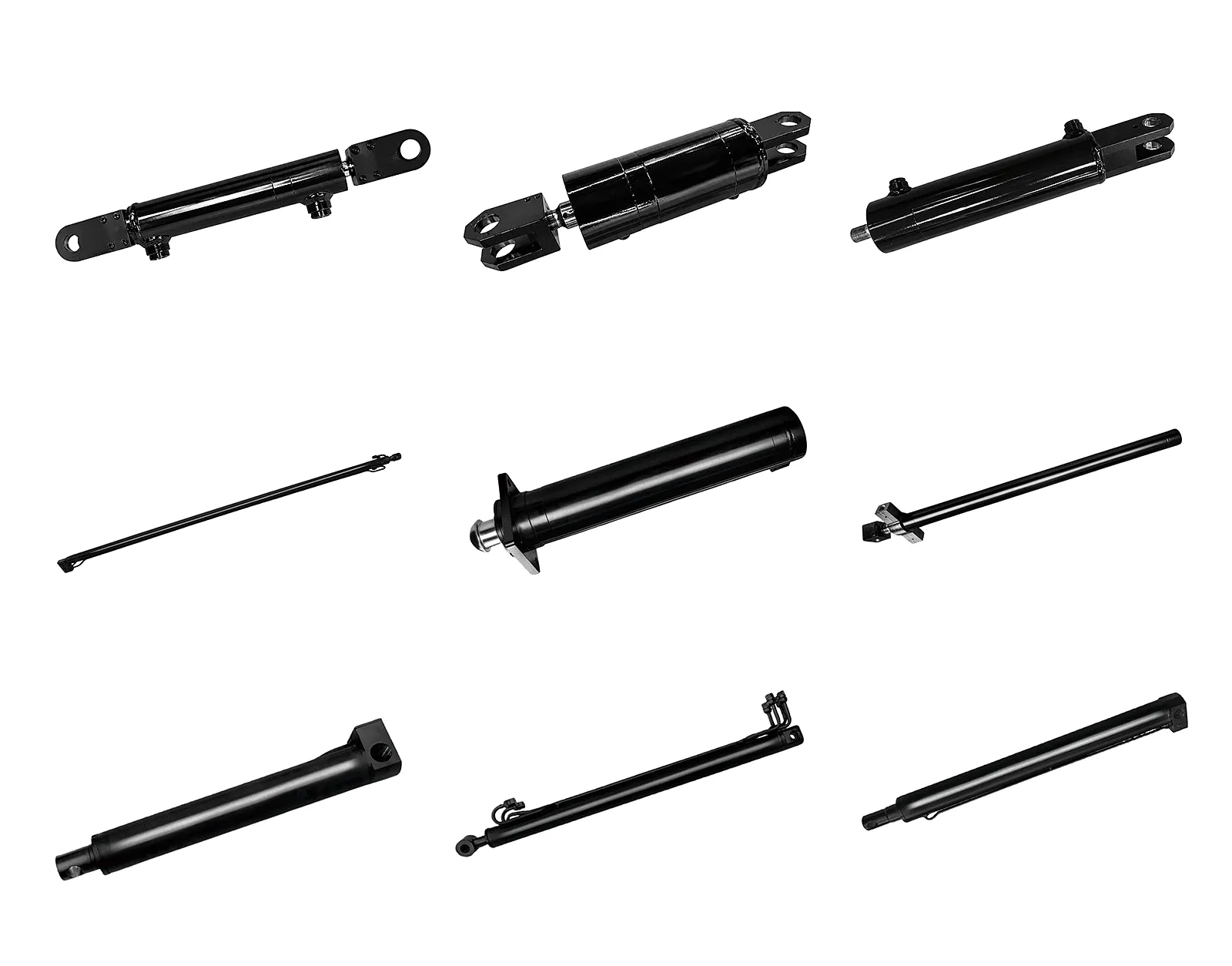
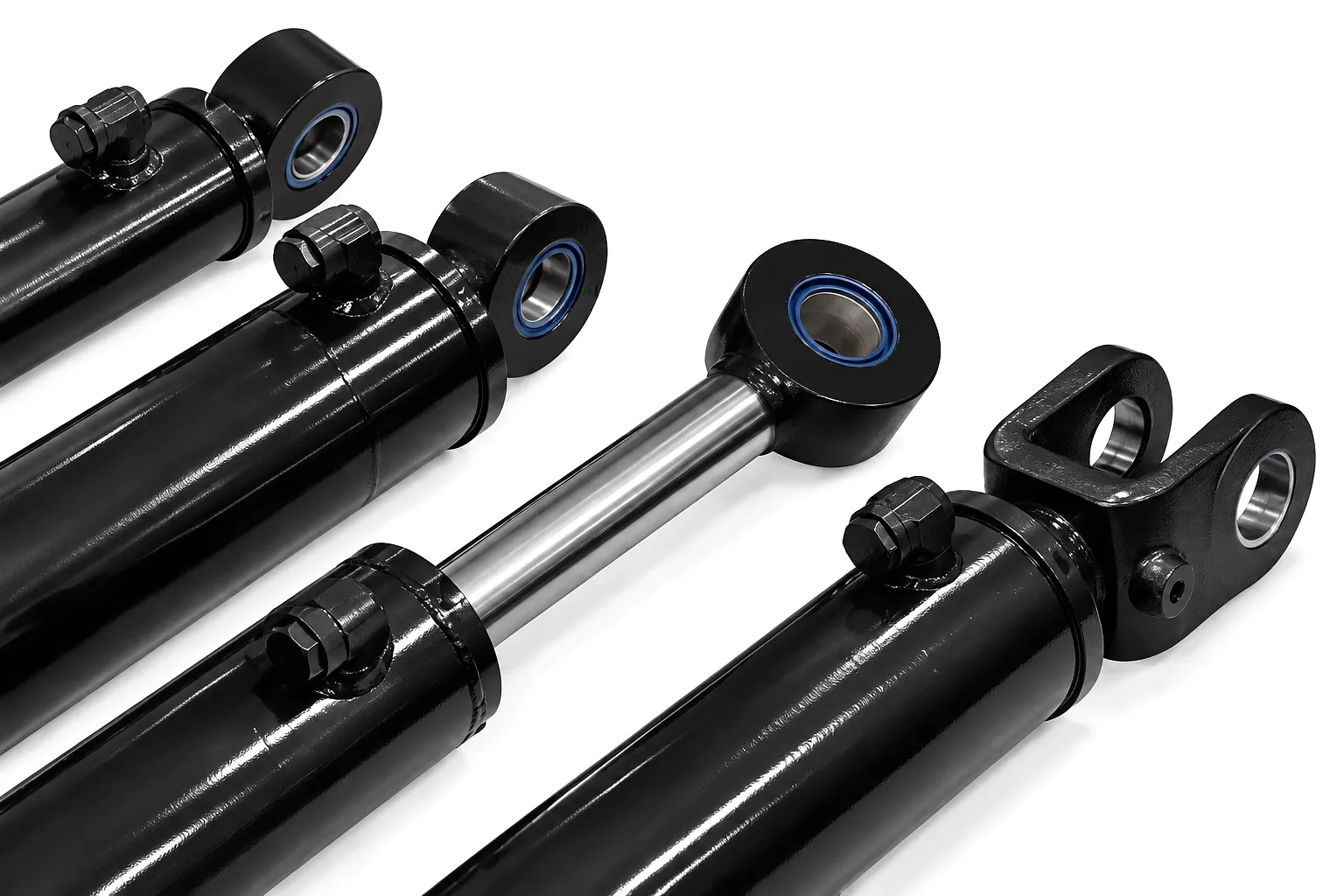
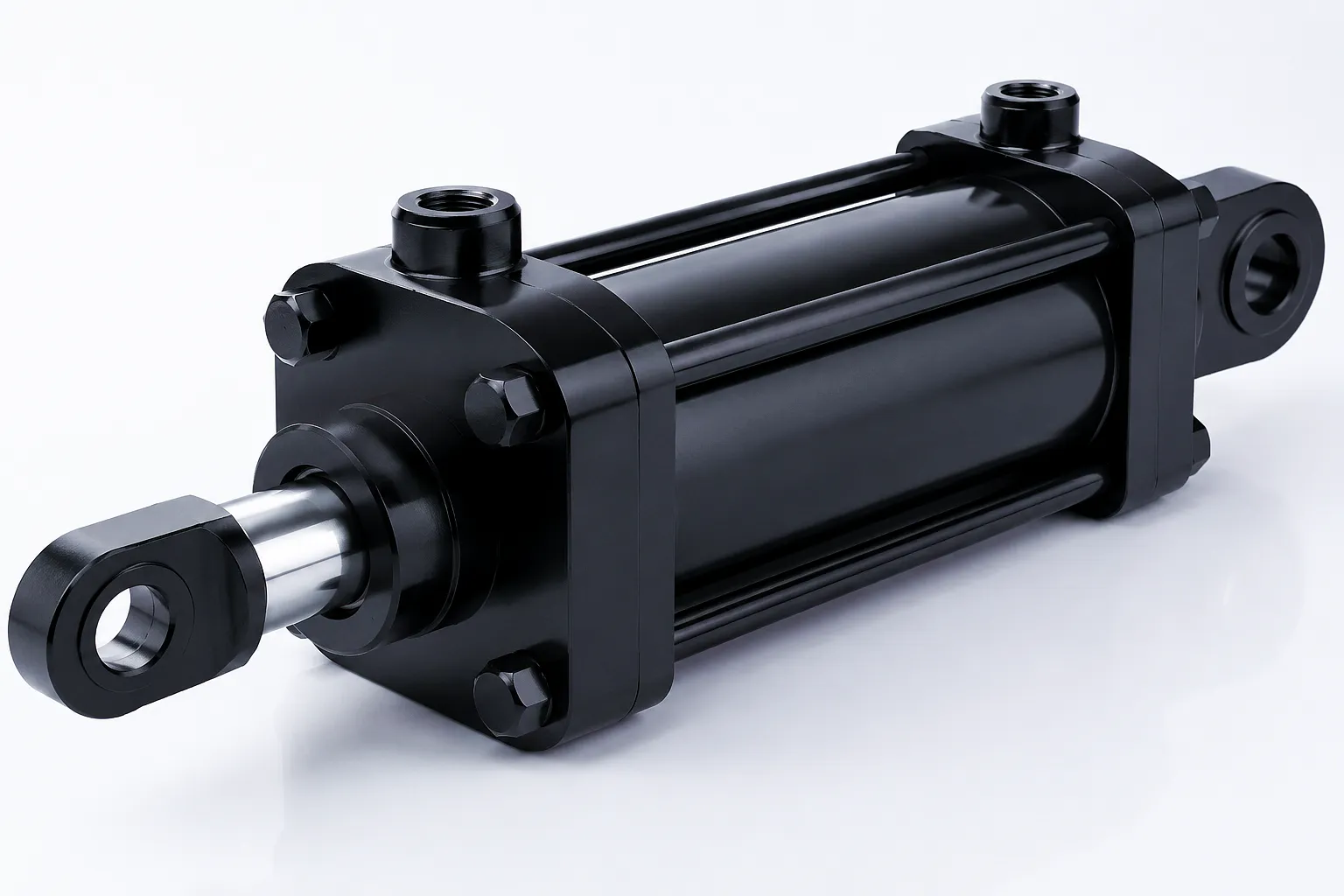
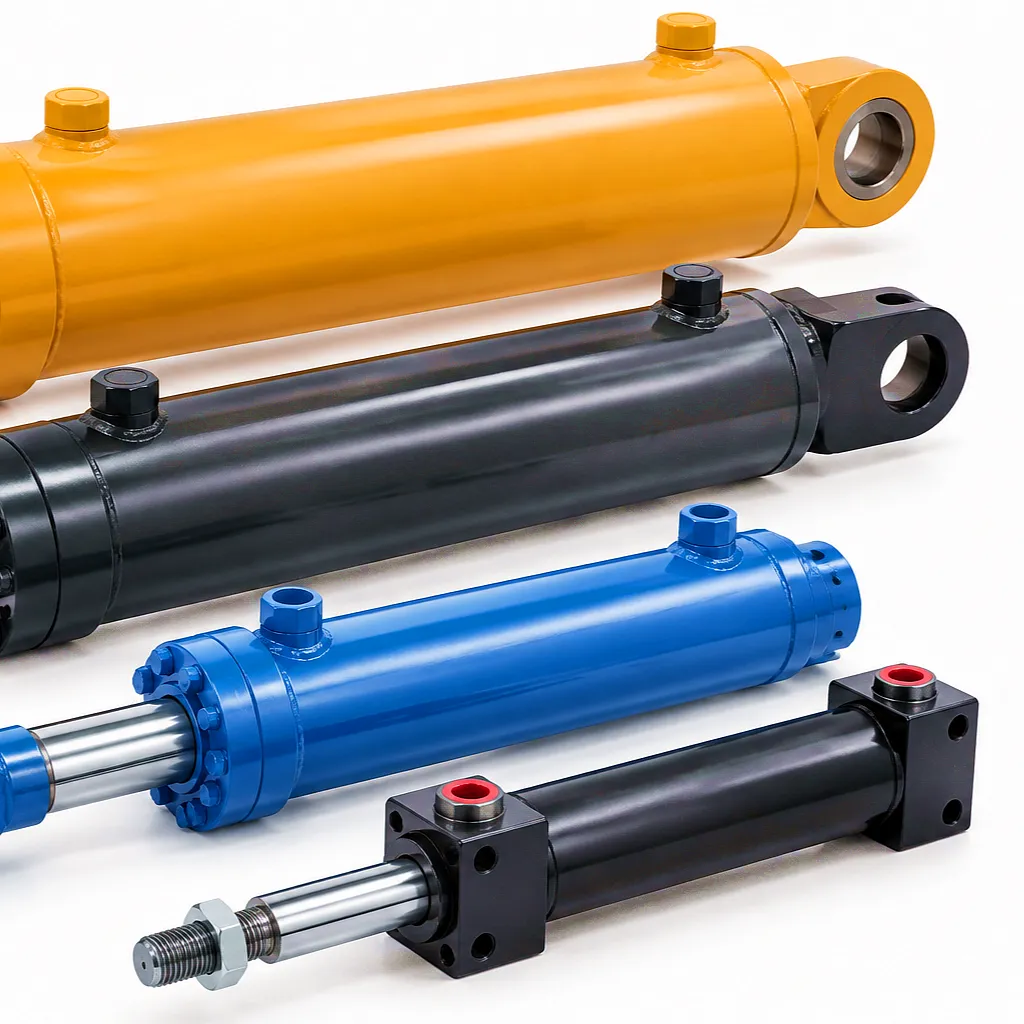
Ever Power JIS-compliant hydraulic cylinder range — custom bore, stroke, and port configurations available
JIS Hydraulic Cylinder — Technical and Performance Specifications
| Parameter | Standard Value / Range | JIS Reference | Notes |
|---|---|---|---|
| Bore Diameter Series | 32, 40, 50, 63, 80, 100, 125, 160, 200 mm | JIS B 8367 | Aligns with Japanese machine tool and mobile equipment standards |
| Rated Working Pressure | 16 MPa (light duty) / 20–25 MPa (standard–heavy) | JIS B 8367 | Maximum 35 MPa for special high-pressure variants |
| Hydrostatic Proof Test | 1.5 × rated working pressure, 60 s minimum hold | JIS B 8367 | Factory test certificate provided for all units |
| Barrel Bore Surface Finish | Ra 0.4 µm (honed inner bore) | JIS B 0601 | Critical for seal life and zero-leakage performance |
| Rod Chrome Layer Thickness | 20–30 µm hard chrome, HV 800–1000 | JIS H 8615 | Ceramic composite or nickel-chrome alternatives available |
| Port Thread Type | JIS B 0203 tapered pipe thread (PT) | JIS B 0203 | NPT or BSP on request for export applications |
| Rod Diameter Tolerance | h6 or h8 per JIS B 0401 | JIS B 0401 | Determines seal groove sizing and fit class |
| Standard Seal Material | NBR (standard) / FKM (high-temp) / PTFE guide rings | JIS B 2401 | FKM rated to 150°C continuous; NBR rated to +80°C |
| Operating Temperature Range | -20°C to +80°C (NBR) / up to +150°C (FKM) | JIS B 8367 | Low-temperature seals available to -40°C |
| Cylinder Types Available | Single-acting, double-acting, telescopic, clevis-mount | JIS B 8367 | Custom mounting configurations on request |
| Stroke Length (standard range) | 50 mm to 3000 mm (custom on request) | JIS B 8367 | Non-standard strokes produced with 2-week lead time |
| Barrel Material Grade | JIS S45C / JIS SCM440 cold-drawn seamless tube | JIS G 4105 / G 4051 | SUS316 stainless steel barrels available for corrosive environments |
Why JIS-Compliant Hydraulic Cylinders Outperform Non-Standard Alternatives
Direct Interchangeability Within Japanese Equipment
When a cylinder is dimensioned strictly to JIS B 8367, replacement and maintenance within Japanese-market machines is straightforward. Bore series, rod diameters, flange bolt patterns, and port positions all match the original equipment drawings, eliminating the costly engineering adaptation work that non-JIS cylinders require. This is particularly valuable for maintenance teams at equipment depots in the Chubu region or for OEMs supplying spare parts into Japan-based assembly operations.
Superior Seal Life Through Precision Tolerancing
The tighter bore and rod tolerances mandated under JIS standards result in measurably longer seal life compared with cylinders built to looser commercial tolerances. When bore cylindricity and rod straightness are maintained within JIS specified limits, seal contact geometry remains consistent throughout the operating stroke, reducing stress concentrations that cause premature seal failure. Industry maintenance data from hydraulic equipment operators in Japanese automotive plants consistently shows JIS-compliant cylinders achieving 30% longer seal service intervals than equivalent non-JIS units.
Smoother Passage Through Japanese Customs and Inspection
JIS mark certification or clear JIS compliance documentation dramatically accelerates incoming goods inspection at Japanese ports of entry, including Nagoya Port and Yokohama. Japanese industrial buyers increasingly require suppliers to present dimensional inspection reports cross-referenced against JIS B 8367 tables. Having this documentation prepared as part of the standard shipment package reduces customs clearance delays and avoids the expensive re-inspection processes that non-documented hydraulic components frequently trigger.
Better Low-Velocity Positioning Accuracy
Japanese machine tool applications routinely demand hydraulic cylinder positioning accuracy in the ±0.05 mm range, which requires very low stick-slip characteristics at the beginning of movement. JIS-specified PTFE guide rings combined with precision bore honing reduce the breakout force differential that causes position error in feedback-controlled servo-hydraulic systems. This makes JIS hydraulic cylinders the specification of choice for press brakes, coordinate measuring machine positioning stages, and precision stamping equipment manufactured for or used within Japan.
Traceable Material Certification
Every JIS-compliant cylinder supplied by Ever Power carries full material traceability documentation linking each barrel tube, rod, and end cap to its mill test certificate. This aligns with the documentation expectations of Japanese Tier 1 automotive suppliers and plant operators who conduct periodic material audits. Mill certificates reference JIS material grades — G 4051 for carbon steels, G 4105 for alloy steels — so the Japanese buyer’s quality team can verify compliance without commissioning independent analysis.
Extended Corrosion Protection Options
Japan’s coastal industrial zones — stretching from Keihin near Tokyo through Chukyo around Nagoya and Hanshin around Osaka and Kobe — expose hydraulic equipment to persistent salt air corrosion. JIS cylinders from Ever Power can be specified with epoxy paint systems, nickel-chrome composite rod coatings, or stainless barrel options to extend service life in these environments. Corrosion protection specifications are detailed in the product datasheet and can be matched to JASO or JIS corrosion resistance test classes as required.
Industrial Application Scenarios for JIS Hydraulic Cylinders
Automotive Stamping and Press Equipment in Aichi Prefecture
The Toyota City cluster and surrounding automotive supplier parks in Aichi Prefecture represent one of the highest concentrations of hydraulic press equipment in the world. Cylinder bore sizes of 100 mm to 200 mm operating at 20–25 MPa are the workhorse specification across body panel stamping, welding fixture clamping, and die cushion systems. JIS compliance in this context is not just a preference — many Tier 1 suppliers to Japanese automakers carry it as a supplier qualification requirement. Ever Power’s JIS hydraulic cylinders are engineered to perform through multi-million cycle press duty with certified seal change intervals that align with standard Japanese production maintenance schedules.
Shipbuilding and Marine Equipment at Hiroshima and Nagasaki Yards
Japan’s shipbuilding yards — particularly those around Hiroshima, Nagasaki, and Kure — operate large hydraulic systems for ship launching equipment, dry dock gate mechanisms, and on-board steering gear. Hydraulic cylinders in these environments must satisfy both JIS standards and specific marine classification society requirements. Bore sizes in the 125–200 mm range are common, and corrosion resistance is paramount given constant salt air exposure. Ever Power supplies JIS cylinders with marine-grade epoxy or nickel-chrome composite surface treatment for these applications, along with full dimensional inspection documentation compatible with classification society in-service inspection requirements.
CNC Machine Tools and Precision Machining Centres in the Chubu Region
Machine tool builders in Nagoya’s Chubu manufacturing belt produce equipment where hydraulic clamping and indexing cylinders must achieve positioning repeatability within ±0.02 mm across thousands of daily cycles. This specification requires cylinders dimensioned and finished to JIS precision grades, using PTFE guide rings to minimise stick-slip and precision-honed bores to maintain consistent seal preload throughout the service life. The compact bore series — 32 mm to 63 mm — is most common in machine tool applications, with total cylinder assembly lengths tightly controlled to fit within machine frame envelopes. Ever Power manufactures these short-stroke precision cylinders with tolerance packages certified to JIS B 0401 IT6 class on all mating dimensions.
Construction Machinery Export and OEM Supply
Japan exports a large volume of construction equipment — excavators, crawler cranes, concrete pumps — into Southeast Asian and Middle Eastern markets, with hydraulic cylinder specifications still governed by JIS standards to maintain interchangeability with Japanese-origin spare parts. Boom cylinders, arm cylinders, and bucket cylinders for medium excavators typically use 80 mm to 160 mm bores at 30–35 MPa working pressure. These are Among the most mechanically demanding applications for hydraulic cylinders, combining high cyclic loading, external contamination, and frequent full-stroke operation. Boom cylinder assemblies supplied by Ever Power for JIS-market construction OEMs are proof-tested to 1.5× rated pressure and supplied with full dimensional inspection reports cross-referenced against JIS B 8367 dimensional tables.
Agricultural and Rice Paddy Equipment in Hokkaido and Niigata
Agricultural machinery for Japan’s rice-growing regions — particularly in Hokkaido and Niigata — operates in wet, muddy conditions where hydraulic cylinder contamination resistance is critical. Transplanting machines, combine harvesters, and tractor implement lift systems all use JIS-dimensioned hydraulic cylinders with enhanced wiper seal packages to exclude mud and crop residue from the rod seal. Operating pressures are lower — typically 14–18 MPa — but the cycle counts per season are very high. Hydraulic cylinders for agricultural applications are supplied with extended-reach dust wiper seals and optional bellows rod protection, both of which Ever Power can manufacture to JIS-compliant dimensions.
Ever Power — Precision JIS Hydraulic Cylinder Manufacturing and Custom Supply
In-House CNC Honing and Grinding
Ever Power operates dedicated CNC honing lines capable of achieving Ra 0.4 µm bore finish to JIS B 0601 specification, with bore cylindricity measured and certified on CMM equipment. Rod grinding produces h6 tolerance on every finished diameter before chrome plating, guaranteeing seal groove fit accuracy across every unit in a production batch.
Custom JIS Specification Engineering
Our engineering team works directly from customer-supplied drawings or JIS standard reference tables to produce custom cylinder assemblies. Non-standard bore-stroke combinations, bespoke mounting flange patterns, custom port positions, and specialised seal specifications are all accommodated within the same quality framework. Customers receive DXF/PDF certified drawings with all JIS cross-references annotated, supporting their own internal design documentation requirements.
Supply Chain and Logistics Capability
Ever Power maintains finished goods inventory of the most common JIS bore-stroke combinations for immediate despatch, with sea freight consolidation services direct to Yokohama, Nagoya, and Osaka ports. For customers requiring bonded warehouse or vendor-managed inventory arrangements in Japan, our international logistics partners can provide in-country stock management. Air freight is available for urgent replacement cylinder orders where production line downtime makes sea transit impractical.
Complete QA Documentation Package
Every cylinder shipment is accompanied by a documentation package including: mill certificates for barrel, rod, and end cap materials; hydrostatic pressure test record signed by QA supervisor; dimensional inspection report against JIS B 8367 reference tables; chrome layer thickness and hardness test certificate; and packing list with serial number traceability. This documentation package is formatted to align with Japanese receiving inspection procedures and can be provided in bilingual Japanese-English format on request at no additional charge.
Request a custom JIS cylinder quotation from Ever Power. Our technical team responds within 24 hours with a dimensioned proposal and lead time confirmation.
Customer Success Story: Precision Press Tool Manufacturer, Nagoya, Japan
 A mid-sized precision press tool manufacturer based in Nagoya’s Minami-ku district had been sourcing hydraulic clamping cylinders from a domestic Japanese supplier for over a decade. When that supplier exited the market in 2022, the manufacturer faced a critical supply continuity problem: their clamping fixtures used 50 mm bore JIS cylinders with non-standard flange mounting patterns, and the long lead times from alternative Japanese suppliers were threatening their production schedule.
The procurement team contacted Ever Power through an industry referral. After receiving the original JIS-dimensioned engineering drawings, Ever Power’s technical team confirmed that the cylinder could be manufactured exactly to specification — including the non-standard flange bolt pattern and the FKM seal specification required for the mineral-oil plus synthetic blend fluid in their hydraulic system. A sample batch of 12 units was manufactured and shipped within 18 days of order confirmation.
Incoming inspection at the Nagoya facility checked all cylinder dimensions against JIS B 8367 reference tables, verified port thread form against JIS B 0203, and conducted a hydrostatic leak test at 1.5× working pressure. Every unit passed without exception. The manufacturer placed a blanket order for 240 units over the following twelve months, with Ever Power holding a consignment stock of 30 units at a Yokohama freight forwarding facility to guarantee a maximum three-day supply response for urgent replacement needs.
Two years on, the relationship continues with zero warranty claims, zero dimensional non-conformances, and a certified supply arrangement that has since been extended to include 80 mm bore hydraulic cylinders for a newly commissioned pressing line.
What Customers Say About Ever Power JIS Hydraulic Cylinders
“We specified 50 mm bore FKM-seal cylinders to JIS B 8367, sent Ever Power our original engineering drawings, and received units that passed our incoming CMM inspection without a single deviation. The PT port threads were perfect and the dimensional report they provided was formatted exactly as our QA team expects. Supply reliability over two years has been outstanding.”
Senior Procurement Manager
Precision Press Tool Manufacturer, Nagoya
“The 125 mm boom cylinders we ordered for our excavator OEM programme were delivered with a complete JIS documentation package including material certificates and pressure test records. Our Japanese customer’s incoming inspection team accepted them on first submission — something we had never achieved with our previous supplier. The custom stroke length and modified clevis mount were manufactured exactly as drawn.”
Technical Director
Construction Equipment OEM, Hiroshima Prefecture
“We source JIS hydraulic cylinders for agricultural transplanting machinery serviced in Niigata. Ever Power’s extended wiper seal option has reduced our service call-out rate in muddy field conditions by a measurable margin. The cylinders are dimensionally identical to the Japanese OEM originals they replace, and the price is significantly better than buying through Japanese domestic distributors. Lead time to our Niigata warehouse has been consistent at 14–18 days.”
Parts Supply Manager
Agricultural Machinery Distributor, Niigata
How to Specify a JIS Hydraulic Cylinder Correctly: A Practical Checklist
Specifying a cylinder for JIS market supply requires capturing more information than a simple bore-and-stroke order. The checklist below covers the key parameters that every JIS-compliant purchase order should define clearly.
01 — Bore Diameter
Specify from the JIS preferred bore series. Confirm whether the bore dimension is nominal or finished-honed, as this affects wall thickness and seal groove dimensions throughout the assembly.
02 — Rod Diameter and Tolerance Class
State the rod diameter and the required JIS fit class (h6 for precision, h8 for standard). Specify chrome layer thickness if performance documentation is required for your customer’s incoming inspection.
03 — Stroke Length
Define the required stroke in millimetres. Confirm whether this is the nominal stroke or the minimum stroke at maximum retraction — these differ by the cushion adjustment range when end-of-stroke cushions are specified.
04 — Working and Proof Pressure
State the maximum working pressure in MPa. This drives wall thickness, end cap design, and bolt sizing. Confirm whether the proof test pressure must be documented at 1.5× working pressure as standard or at a different ratio for your application.
05 — Port Type and Size
Specify JIS B 0203 PT thread size (PT1/4, PT3/8, PT1/2, PT3/4 are most common). Confirm port location — side or end ports — and whether ports should be plugged for shipping or fitted with adaptors.
06 — Seal Material and Temperature
Select NBR for standard mineral oil up to 80°C, FKM for higher temperatures or synthetic fluid types, and specify PTFE guide rings if low-velocity positioning accuracy is required. Always state the hydraulic fluid type to confirm seal compatibility.
Frequently Asked Questions — JIS Hydraulic Cylinders for the Japanese Market
What is the difference between JIS B 8367 and ISO 6020 hydraulic cylinder standards, and does it really matter for my application?
The standards differ in several practically important ways. JIS B 8367 uses PT (JIS B 0203) tapered pipe threads for hydraulic ports rather than the BSP or NPT threads common in ISO-dimensioned products. Mounting flange bolt patterns, rod end thread sizes, and cushion adjustment valve designs also follow JIS conventions that differ from ISO 6020/1 and ISO 6020/2 specifications. For applications where the cylinder must be interchangeable with Japanese original equipment — as in spare parts supply or OEM machine tool maintenance — these differences are critical and will cause non-conformance at incoming inspection. For new-build applications where you specify the surrounding hydraulic system from scratch, ISO and JIS can be designed around each other, but it requires explicit awareness of the threading differences in particular.
How much does it typically cost to source custom JIS hydraulic cylinders from Ever Power, and what is included in the price?
Custom JIS cylinder pricing depends on bore size, stroke, working pressure, seal specification, and quantity. Standard bore sizes with JIS-compliant dimensions typically price competitively against Japanese domestic supply — usually at a saving of 25–40% for quantities above 10 units, once documentation and freight costs are factored in. The quoted price always includes the full documentation package: material certificates, pressure test record, and dimensional inspection report. For an accurate quotation specific to your application, email your drawing or specification to [email protected] and our team will respond within 24 hours with a detailed price and lead time.
Which hydraulic cylinder supplier in Nagoya or Osaka can provide JIS-compliant cylinders with full dimensional documentation for automotive industry incoming inspection?
While domestic Japanese suppliers in the Chubu and Hanshin regions can provide JIS cylinders, lead times are often extended and pricing is high for small to medium batch quantities. Ever Power provides an alternative: factory-built JIS B 8367 compliant cylinders with a full dimensional inspection report referencing specific table rows from the standard, CMM-measured bore and rod dimensions, and PT thread form verification — all formatted to align with Japanese Tier 1 automotive incoming inspection procedures. Shipments arrive at Nagoya or Osaka ports typically within 14–18 days for standard bore-stroke combinations, with bilingual Japanese-English documentation provided at no additional cost.
When should I specify FKM seals instead of standard NBR seals in a JIS hydraulic cylinder for Japanese machine tool applications?
FKM seals are the right choice whenever the hydraulic fluid operating temperature exceeds 80°C, or when the fluid type is a phosphate ester fire-resistant fluid, a synthetic ester, or a polyol ester — all of which are used in some Japanese precision machine tool hydraulic circuits for fire-safety reasons. NBR seals deteriorate rapidly in contact with these fluid types, leading to early leakage and cylinder failure. FKM-sealed cylinders are also the appropriate specification for hydraulic systems in hot working environments, such as die casting machine clamping circuits where the hydraulic unit is in close proximity to the furnace. Ever Power manufactures both NBR and FKM seal variants to JIS groove dimensions and can advise on the appropriate specification for your fluid and temperature combination.
Where can I find a reliable overseas supplier who can ship JIS B 8367 compliant hydraulic cylinders directly to Yokohama port with complete traceability documentation?
Ever Power ships JIS-compliant hydraulic cylinders to Yokohama, Nagoya, and Osaka ports on a regular consolidation freight schedule, typically achieving 14–18 day transit from order confirmation for standard bore-stroke combinations, and 25–35 days for fully custom specifications. Every shipment includes a full traceability package: material mill certificates cross-referenced to JIS grade designations, CMM dimensional inspection report against JIS B 8367 tables, hydrostatic pressure test certificate, and chrome thickness and hardness test results. Bilingual documentation (Japanese and English) is available for all documents at no additional charge, removing the translation burden from your Japan-side receiving team.
How does Ever Power ensure that the JIS PT port threads on their hydraulic cylinders meet the correct sealing standard required for Japanese hydraulic systems?
Ever Power machines all JIS B 0203 PT port threads on CNC turning centres using dedicated JIS thread form tooling, and each threaded port is checked with calibrated JIS-class Go / No-Go thread plug gauges before assembly. The gauge certificates are traceable to METI-approved calibration standards. For customers who require evidence of thread compliance, we can include a thread inspection record in the shipping documentation noting the gauge class and the result for each individual cylinder. This level of thread verification is what distinguishes a genuinely JIS-compliant cylinder from a product that is merely dimensioned to approximate JIS dimensions without formal verification.
Ready to Source JIS-Compliant Hydraulic Cylinders?
Send us your JIS specification or original engineering drawing. Ever Power’s technical team will respond with a dimensioned proposal, documentation package description, and firm lead time within 24 hours.
Technical content accurate as of current JIS B 8367 revision. Specifications are subject to revision; consult the current standard text or contact Ever Power engineering for confirmation on critical applications. All performance data based on standard operating conditions with compatible hydraulic fluid and standard mineral oil unless otherwise stated.
suntingan oleh gzl
 Malay
Malay  English
  Italian
  Portuguese
  Dutch
Dutch  Swedish
  Danish
  Finnish
  Polish
  Hindi
Hindi  Kazakh
  Turkish
  Ukrainian
  Romanian
  Spanish
  German
  Russian
  Korean
  Japanese
  Vietnamese
  Thai
Thai  Indonesian
  French
  Greek
Greek