
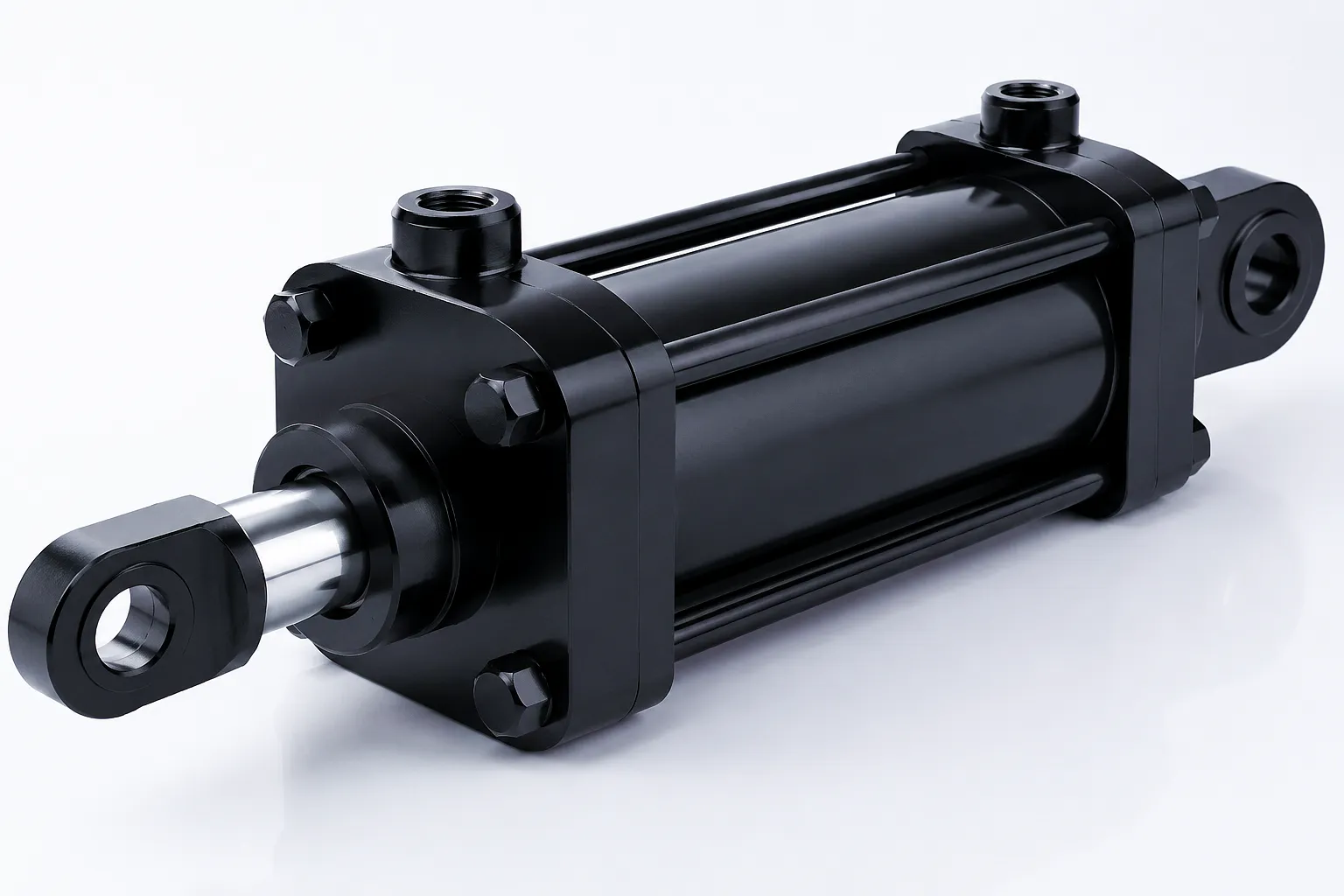
The cylinder rod sits at the mechanical heart of every hydraulic actuator, yet its diameter is a specification that many engineers treat as an afterthought — something to confirm once bore size and operating pressure have been fixed. That assumption carries real risk. Rod diameter directly governs how much compressive and tensile force the piston rod can sustain without buckling, how smoothly it transmits stroke under eccentric loading, and how long the sealing surfaces will remain intact before the first service intervention becomes necessary.
For UK manufacturers operating presses in Sheffield’s special steels sector, bespoke automation lines around Birmingham’s automotive supply chain, or offshore hydraulic systems on North Sea platforms, getting rod diameter right from the design stage is the difference between a cylinder that performs across its 10-year design life and one that fails seals, develops side-play, or buckles under shock load within the first year of service. This guide pulls the engineering apart — from Euler buckling theory to chrome-plating standards — and shows where rod diameter sits in every decision.
How Rod Diameter Determines Load Capacity in Hydraulic Cylinders
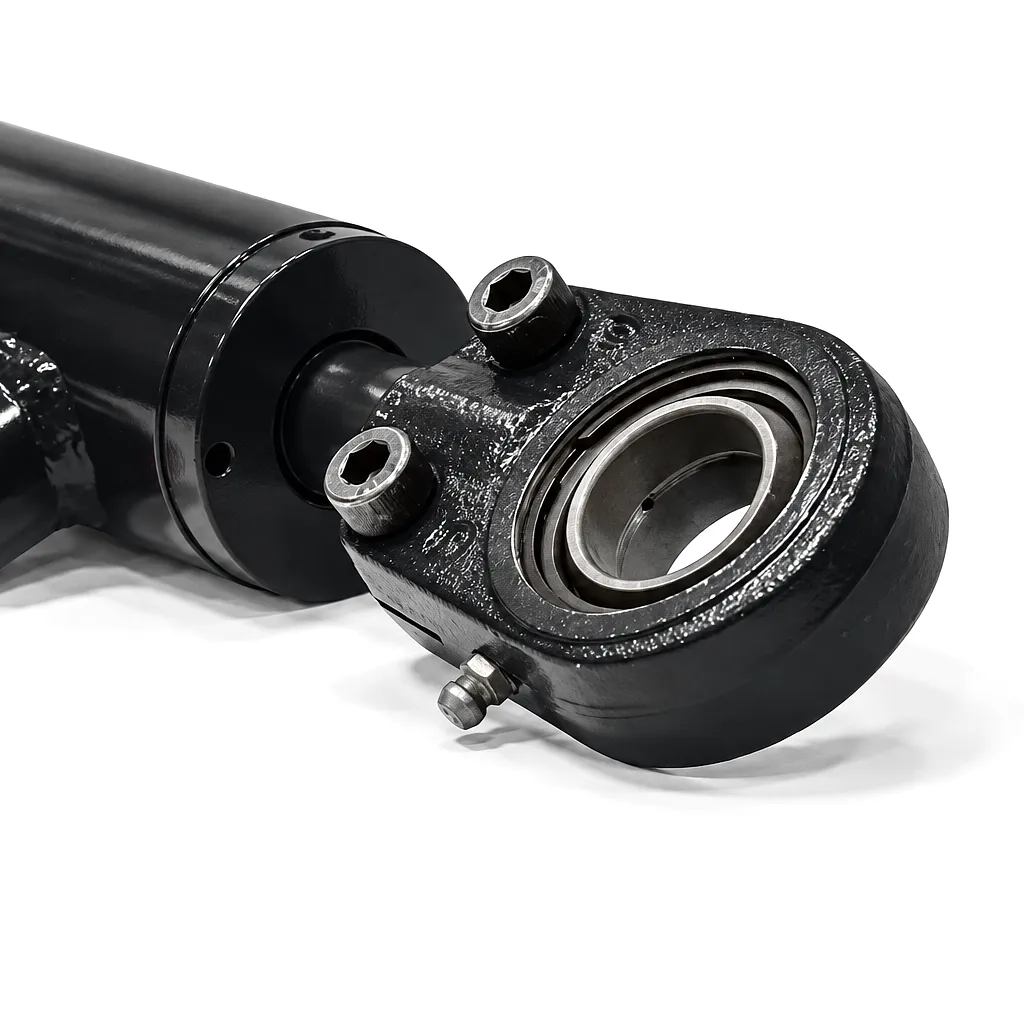 Load capacity in a hydraulic cylinder is not simply a function of bore area and system pressure. While bore diameter sets the maximum theoretical force output, the rod diameter determines whether that force can actually be transmitted to the load without structural failure. The rod must survive both tension (during retraction) and compression (during extension), and these two loading modes impose very different demands on the cross-sectional geometry.
During the extension stroke, a hydraulic rod under compressive load behaves as a column. As stroke length increases, the slenderness ratio — the relationship between unsupported length and rod cross-section — grows, and the risk of Euler buckling rises sharply. Euler’s critical load formula tells us that buckling resistance scales with the fourth power of rod diameter divided by the square of free length. Doubling the rod diameter therefore increases buckling resistance by a factor of 16 while only doubling the required stroke space on the push side. This is why engineers working with long-stroke cylinders — common in agricultural implement lift systems and mobile crane outriggers — must upsize rod diameter well beyond what a simple force calculation would suggest.
Tensile load during retraction is a more straightforward calculation, but rod diameter still matters. A rod that is too slender for its retraction force will experience stress concentrations at the rod-to-piston thread interface, leading to fatigue cracking long before the cylinder’s designed service life is reached. UK offshore and materials handling applications, where cycle counts run into hundreds of thousands per year, see this failure mode regularly when rod sizing is copied from low-duty designs without recalculation.
Lateral Stability: Why Slenderness Ratio Governs Cylinder Safety
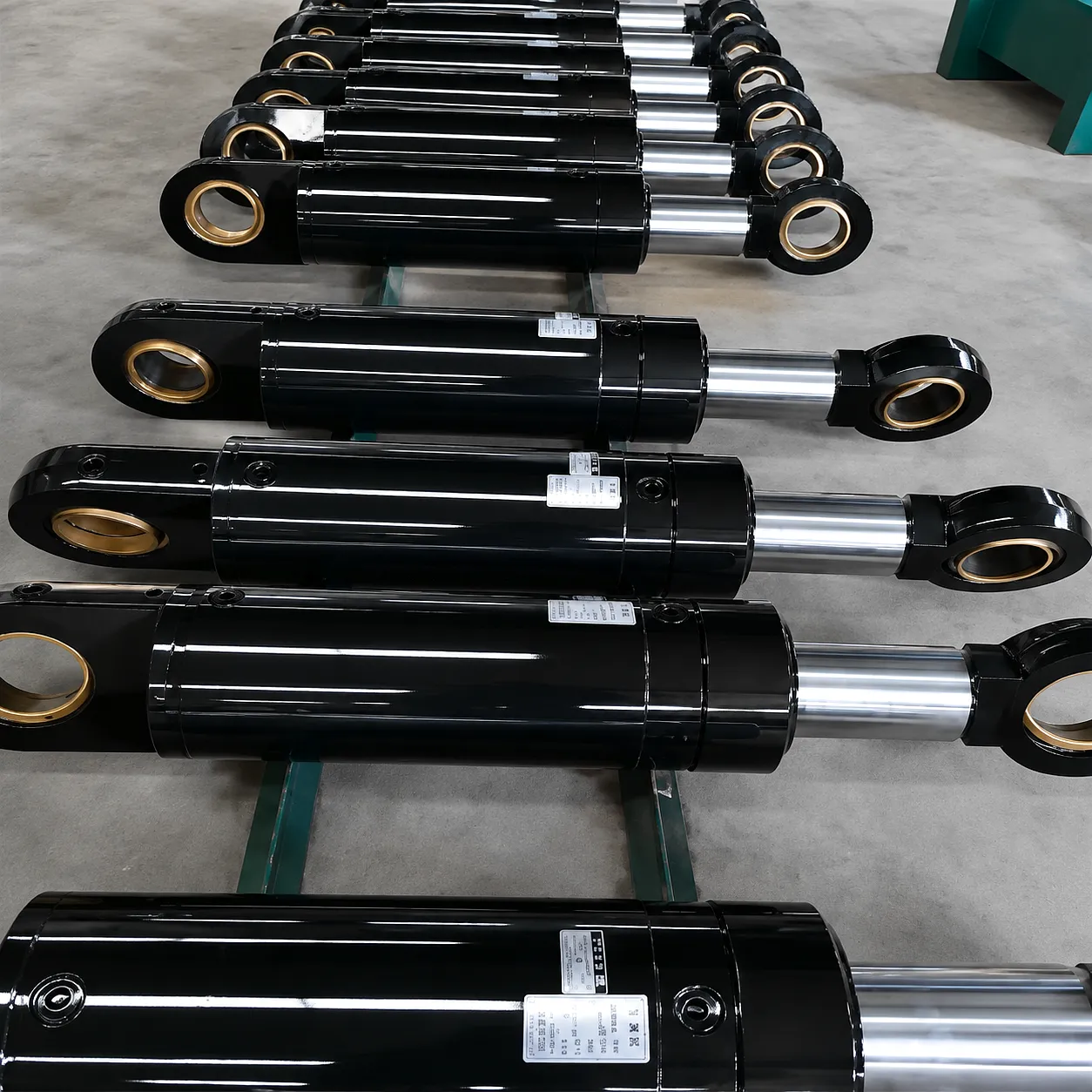 Lateral stability in a hydraulic cylinder is expressed through the slenderness ratio, defined as the effective free length of the rod divided by its minimum radius of gyration. For solid circular rods — the standard in most industrial cylinders — the radius of gyration is simply one quarter of the rod diameter. Engineers following ISO 4413 and BS 6965 hydraulic safety standards in the UK are required to verify that slenderness ratios remain within limits that provide an adequate safety factor against buckling under the rated operating load plus any dynamic shock contributions.
What this means practically is that for every increase in stroke length, the designer has two options: add end-fixity (pin-pin, pin-fixed, or fixed-fixed mounting arrangements) to reduce the effective free length, or increase rod diameter to boost the radius of gyration. Pin-pin mounting — common in agricultural machinery, where the cylinder must accommodate angular displacement — gives the least end-fixity benefit, effectively using the full geometric length as the free length. In Sheffield’s heavy fabrication sector, where press and forming cylinder strokes regularly exceed 600 mm, pin-pin mounted cylinders frequently require rod diameters 20–30% larger than the calculation for tensile load alone would indicate.
Eccentric loading compounds the stability challenge. When a cylinder is used in a situation where the applied load is not perfectly collinear with the rod axis — which describes most real-world trunnion, side-lug, and clevis-mounted installations — bending moments are superimposed on the compressive column stress. A rod that was sized for pure axial loading may be significantly undersized for the actual combined stress state. Finite element analysis of combined bending and compression typically reveals that rod diameter must be increased by 15–25% to maintain equivalent safety margins when notable eccentricity is present, a finding consistent with guidance from the British Fluid Power Association.
Featured Product
Hydraulic Rotary Actuator Steering Cylinder
Precision-engineered rotary actuation with optimised rod diameter for stable steering loads. Suitable for agricultural and mobile plant applications across the UK.
View Product →
Featured Product
Double-Acting Forklift Tilt Cylinder
Heavy-duty tilt cylinder built for consistent mast stability. Rod diameter engineered to handle sustained eccentric loads in logistics warehouse environments.
View Product →
Core Materials: What the Rod Is Made From and Why It Matters
Cold-Drawn Honed Steel (CK45 / ST52)
The baseline material for the vast majority of industrial hydraulic rods. Cold drawing imparts compressive residual stresses at the surface that enhance fatigue resistance, while the honed finish reduces roughness to Ra 0.2–0.4 µm — the surface quality needed to allow elastomeric seals to operate without extrusion or rapid wear. CK45 offers a tensile strength of approximately 650–800 MPa depending on heat treatment, adequate for general industrial cycling in presses, injection moulding machines, and materials handling equipment.
Hard Chrome Plated Surface (HCP)
A hard chrome layer of 20–40 µm is electrodeposited over the honed substrate to achieve surface hardness of 850–1000 HV. This plating dramatically reduces seal friction, resists scratching from contamination ingress, and provides a corrosion barrier that extends service intervals in wet or outdoor environments — relevant for agricultural machinery used across Yorkshire and the Lincolnshire fenland regions. The effective rod diameter at the sealing surfaces incorporates the chrome layer, which must be considered when specifying bore clearances.
Stainless Steel Grades (316L / 304)
For offshore, food-processing, and pharmaceutical applications — sectors with significant presence in Aberdeen, Hull, and the Humber estuary zone — stainless steel rods avoid the corrosion risk entirely. Grade 316L offers superior chloride resistance compared to 304, making it the preferred choice for subsea or tidal hydraulic systems. Yield strength is lower than chrome-plated carbon steel (approximately 170–310 MPa for annealed 316L), so rod diameter must be increased to compensate, a trade-off explicitly required by DNV and Lloyd’s Register guidance for offshore equipment.
HVOF and Ceramic Thermal Spray Coatings
High-velocity oxygen fuel (HVOF) tungsten carbide and ceramic coatings represent the leading edge of rod surface technology, increasingly replacing hexavalent chrome plating as REACH and UK-REACH regulations tighten environmental standards on electroplating facilities. HVOF coatings reach 1200–1400 HV hardness and feature lower porosity than electroplated chrome, extending wear life substantially in abrasive or high-particulate environments such as quarrying, tunnelling, and construction plant working across England’s infrastructure sector.
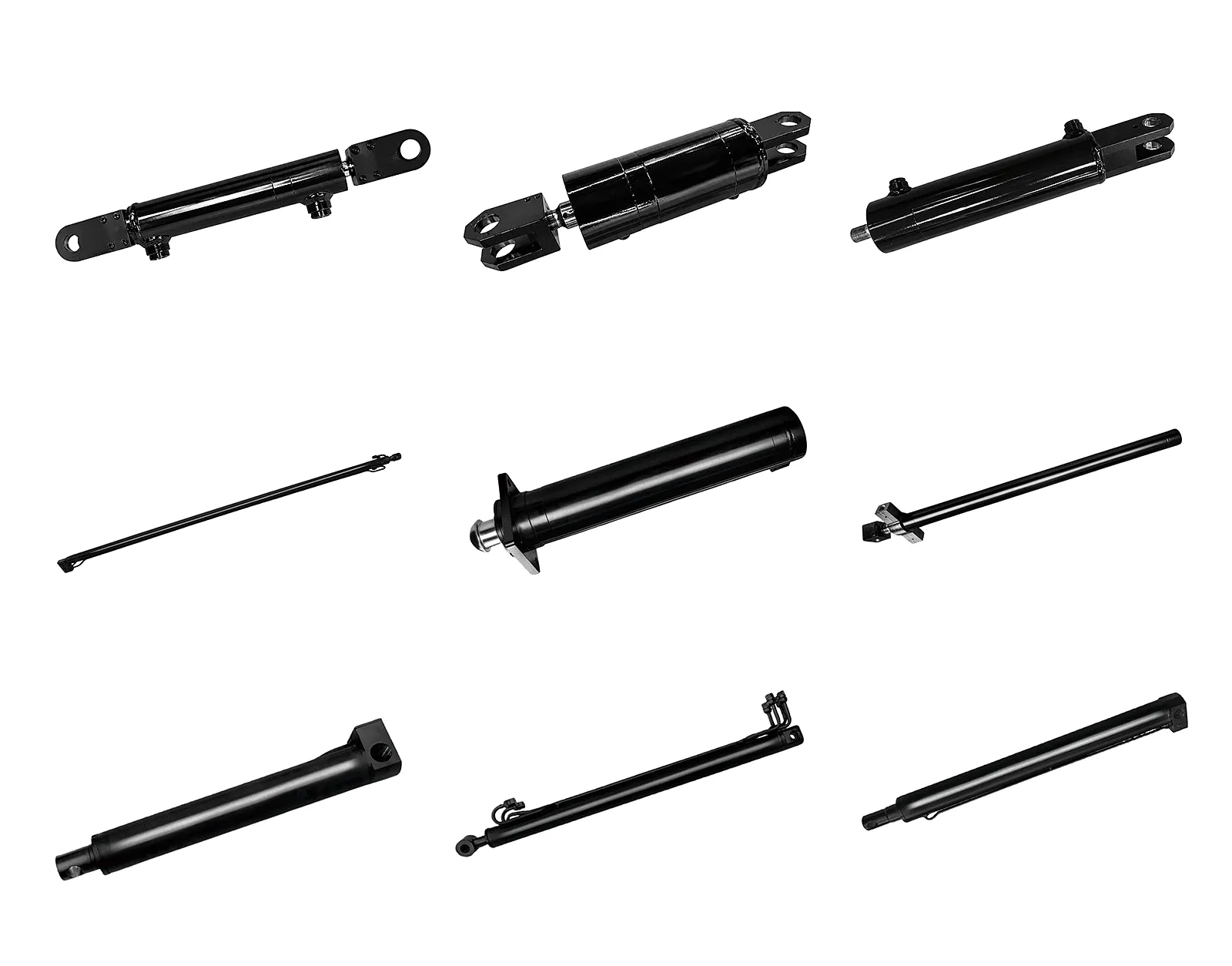
Cylinder Rod Diameter: Technical Performance Parameters Table
| Rod Diameter (mm) | Typical Bore Range (mm) | Max Compressive Load (kN) | Max Stroke — Pin-Pin (mm) | Surface Hardness (HV) | Rod Material | Typical Application |
|---|---|---|---|---|---|---|
| 25 | 40 – 63 | Up to 18 | 300 | 850 – 950 | CK45 + HCP | Light automation, tooling |
| 40 | 63 – 100 | Up to 55 | 550 | 850 – 1000 | CK45 + HCP | Agricultural lift, conveyors |
| 63 | 100 – 140 | Up to 135 | 850 | 900 – 1050 | CK45 / ST52 + HCP | Mobile cranes, forklift tilt |
| 80 | 125 – 160 | Up to 220 | 1100 | 900 – 1100 | 42CrMo4 + HCP | Press tooling, steel mills |
| 100 | 160 – 200 | Up to 345 | 1400 | 950 – 1100 | 42CrMo4 + HVOF | Offshore platform, heavy press |
| 125 | 200 – 250 | Up to 540 | 1800 | 1000 – 1400 | 42CrMo4 + HVOF / Ceramic | Mining, tunnelling, ship lifts |
| 160+ | 250+ | Custom rated | Custom rated | 1000 – 1400 | 42CrMo4 / 316L Custom | Dock gates, dam control, OEM |
How Cylinder Rod Diameter Directly Determines Seal Life
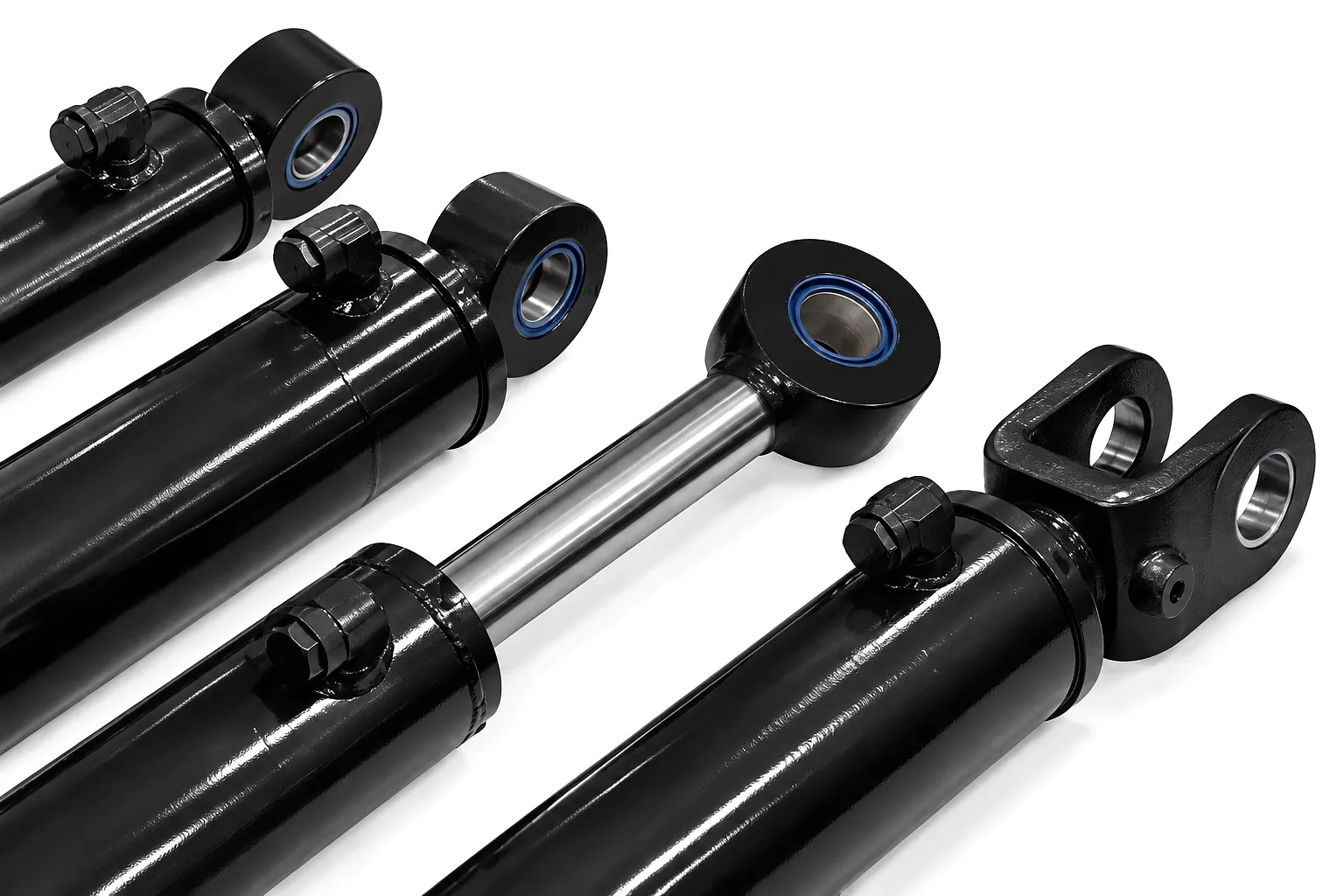
Seal longevity depends on three factors that all tie back to rod diameter: surface contact stress, rod deflection under load, and the ratio of rod speed to seal lip interference. A rod that is undersized for its loading condition will deflect laterally as it extends under compressive force, causing the rod to press asymmetrically against its rod seal and wiper. This side-loading of the seal lip generates uneven wear — one side of the polyurethane or NBR lip material degrades far faster than the other — creating a leak path that progressively worsens with each cycle.
The contact stress between rod surface and seal is also diameter-dependent. For a given interference fit (typically 0.5–1.5 mm diametral interference for standard rod seals), contact pressure is inversely proportional to rod circumference. Larger-diameter rods therefore distribute the same seal preload over a greater contact area, reducing unit pressure on the elastomer and extending fatigue life of the seal material. In practice, this means that stepping up rod diameter by one standard increment — say from 63 mm to 70 mm — can more than double seal service life in high-cycle applications such as press brakes and repetitive clamping fixtures common in UK automotive Tier 1 suppliers in the West Midlands and Coventry areas.
Rod surface finish also interacts with seal life in a way that ties directly to diameter specification. As rod diameter increases, achieving a consistent Ra 0.2 µm honed finish across the full functional length becomes more demanding. Larger-diameter rods require longer grinding passes and more controlled plunge-cut honing to avoid taper or out-of-roundness that would compromise the dynamic sealing interface. At Ever Power, all rods above 80 mm diameter are processed on CNC cylindrical grinding machines with in-process gauging, ensuring dimensional tolerance of h8 (ISO 286) across the full functional length before chrome application.
Industrial Application Scenarios: Where Rod Diameter Choice Has the Greatest Impact
Steel Pressing and Forging — Sheffield and Rotherham
Hydraulic cylinders in press and forging operations experience some of the highest specific loads in any manufacturing context. Die-cushion cylinders underneath a forming press may see dynamic loads exceeding 400 kN with rapid reversal cycles. Rod diameter selection in these machines must account for the shock load multiplier — typically 1.5 to 2.5 times the quasi-static load — meaning that a 200 kN press cushion cylinder requires a rod rated for 300–500 kN effective compression. Sheffield’s special steel forging firms routinely specify 100–125 mm diameter rods in 42CrMo4 with HVOF coating for exactly this reason, achieving rod service lives of 18–24 months between refurbishment even at 200+ strokes per hour.
Agricultural Machinery Lift Systems — East Anglian Arable
Three-point linkage lift cylinders on large arable tractors operating across Cambridgeshire and Norfolk face a combination of long stroke, pin-pin mounting, and very high payload — a combination that creates extreme slenderness ratio requirements. A tractor carrying a 1.2 tonne rear implement at maximum lift height imposes a compressive load through a pin-pin mounted cylinder with a free length often exceeding 700 mm. Engineering teams specifying replacement or upgraded cylinders for large arable tractors frequently discover that a nominal bore-pressure calculation would specify a 50 mm rod, but Euler buckling analysis for the pin-pin mounting demands 70–80 mm minimum. Under-sizing here leads to rod bow that permanently deforms the chrome layer, accelerating seal failure and creating fluid ingress risk.
Offshore Drilling and Platform Support — North Sea Operations
North Sea hydraulic systems present a unique convergence of challenges: extreme pressure ratings (350–500 bar working pressure in BOP systems), aggressive marine environments demanding stainless or HVOF rod surfaces, long unsupported stroke lengths in riser tensioner cylinders, and safety case requirements that mandate conservative safety factors often at 4:1 or higher. Rod diameter in these applications is frequently the limiting design constraint rather than bore pressure — 160 mm and 200 mm diameter rods are not uncommon in large riser tensioner units. The Aberdeen-centred supply chain for North Sea maintenance has developed specific expertise in receiving, inspecting, and repairing such large-bore hydraulic assemblies, and Ever Power’s logistics capability extends to direct-to-Aberdeen port delivery of cylinder assemblies exceeding 3,000 kg.
Warehouse Forklift Tilt Cylinders — UK Logistics Sector
Forklift tilt cylinders operate under a particularly demanding eccentric loading pattern — the cylinder is side-mounted and must transmit mast tilt torque through a combination of compressive load and bending moment at the rod-to-clevis interface. UK warehouse operators, particularly in distribution hubs around Daventry, Northampton, and the M1 corridor, report that tilt cylinder seal failures are frequently caused by rod undersizing rather than seal material fatigue. A 63 mm CK45 chrome rod handles the nominal tilt load in calculation, but combined bending from mast eccentricity at full 4-tonne rated capacity typically demands a 70 or 80 mm rod to keep bending stress within the chrome layer’s elastic limit.
Civil Infrastructure — Road and Rail Construction
Hydraulic cylinders in tunnelling shields, piling rigs, and road reconstruction plant operating across HS2 construction corridors and the ongoing Midlands motorway upgrade programmes face exceptional duty. Tunnelling thrust cylinders on a 9-metre TBM may number 20 or more per machine, each delivering up to 2,000 kN of thrust through a 160 mm diameter rod at 320 bar. The cumulative thrust that advances the machine is produced by the product of rod cross-sectional area and system pressure, meaning that rod diameter is as consequential as pressure to throughput. At these scales, any rod diameter error ripples directly into tunnel advancement rate and project schedule — the economic stakes make careful specification by the contractor’s hydraulics engineer non-negotiable.
Pharmaceutical and Food Processing — Hygienic Environments
Stainless steel rod cylinders in CIP-compliant environments — prevalent in the UK food manufacturing corridor stretching from the Cheshire plain through Yorkshire — face a rod diameter decision driven by corrosion resistance rather than buckling alone. Because 316L stainless has lower yield strength than heat-treated carbon steel, direct substitution of a 50 mm carbon rod with a 50 mm stainless rod gives a cylinder that is understrength in compression. Correct hygienic cylinder specification typically requires upgrading rod diameter by one standard step and verifying revised slenderness ratio to maintain the original safety factor — an engineering check that is often missed when procurement teams simply substitute materials without re-engineering the rod geometry.
Core Technical Advantages of Correctly Sized Hydraulic Cylinder Rods
🔩
Eliminated Buckling Risk
Correct rod diameter ensures the Euler safety factor remains above 3.5 at full rated load and maximum stroke, preventing sudden lateral collapse that would destroy seals and the rod chrome layer in a single event.
📐
Uniform Seal Contact and Extended Service Intervals
Larger rod circumference distributes seal preload uniformly, reducing unit contact stress on the seal lip and extending service life from 500,000 cycles to over 2,000,000 cycles in documented press applications.
⚙️
Compatibility with Standard ISO 6020 and ISO 6022 Mounting
Ever Power rods are machined to ISO 6020-1 and ISO 6022 dimensional standards, ensuring full interchangeability with existing mountings and guide arrangements without custom interface machining.
🛡️
Fatigue-Resistant Thread Interface
Correctly sized rods keep thread interface stresses well within the fatigue endurance limit of the rod material, preventing progressive crack propagation at the high-stress thread runout region — the most common fatigue site in incorrectly sized assemblies.
🌍
Compliance with UK PSSR 2000 and PED Requirements
Rod sizing calculations carried out to ISO 4413 and verified against UK Pressure Systems Safety Regulations 2000 ensures every cylinder supplied into UK plants meets the written scheme of examination requirements without additional engineering justification.
📊
Reduced Whole-Life Cost
An upfront rod diameter increase of one standard increment typically adds 8–15% to cylinder unit cost while reducing seal replacement frequency by 50–65% and eliminating unplanned downtime events — a whole-life cost saving that pays back the premium within 12–18 months in medium-duty cycling applications.
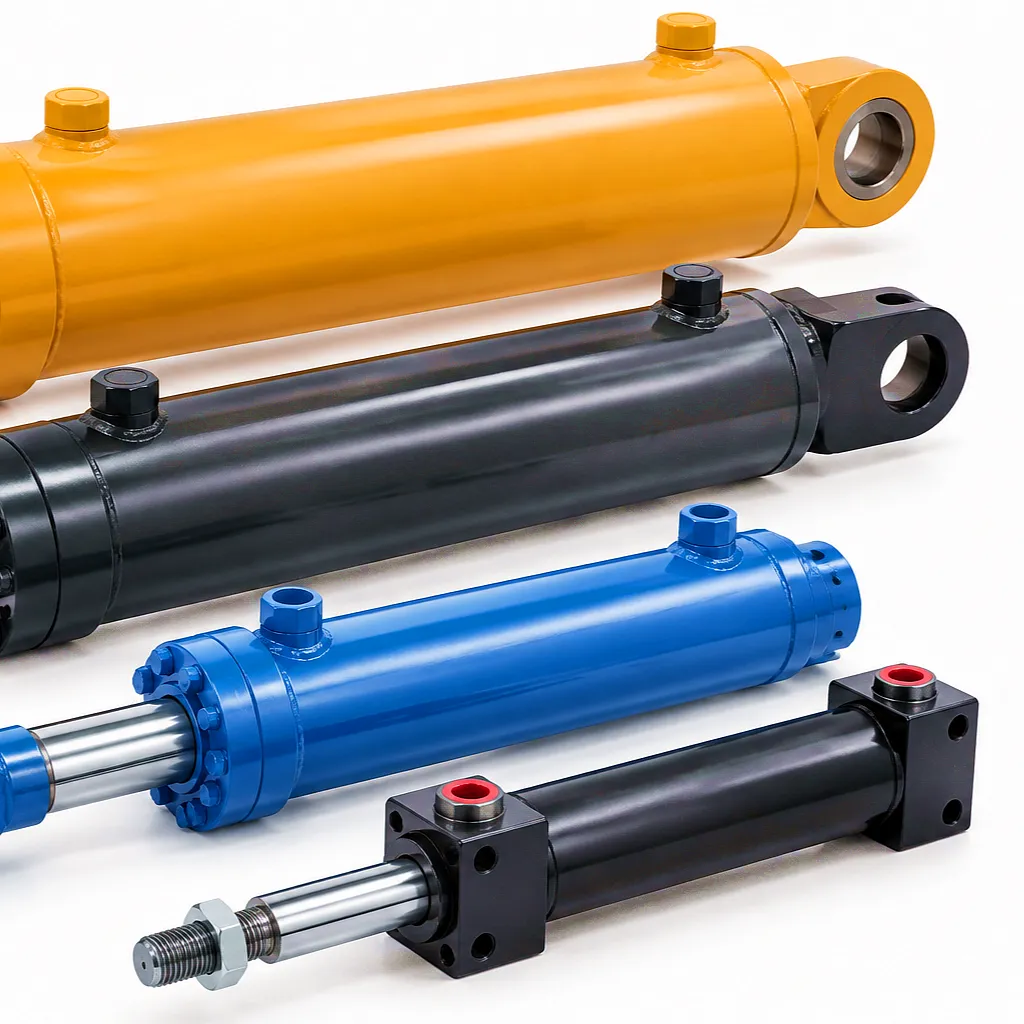 Ever Power operates a purpose-built hydraulic cylinder manufacturing facility equipped to handle rod diameters from 20 mm up to 320 mm across a complete range of bore sizes, pressure ratings, and special material grades. The production floor centres on CNC turning capacity that allows rod machining from solid billets of CK45, 42CrMo4, 316L stainless, and special duplex grades to finished rod diameter in a single handling sequence, eliminating the dimensional variation that occurs when bars are transferred between machines in multi-stage processes.
Customer Success Story
Birmingham Automotive Press Supplier Eliminates Chronic Rod Failure With Diameter Upgrade
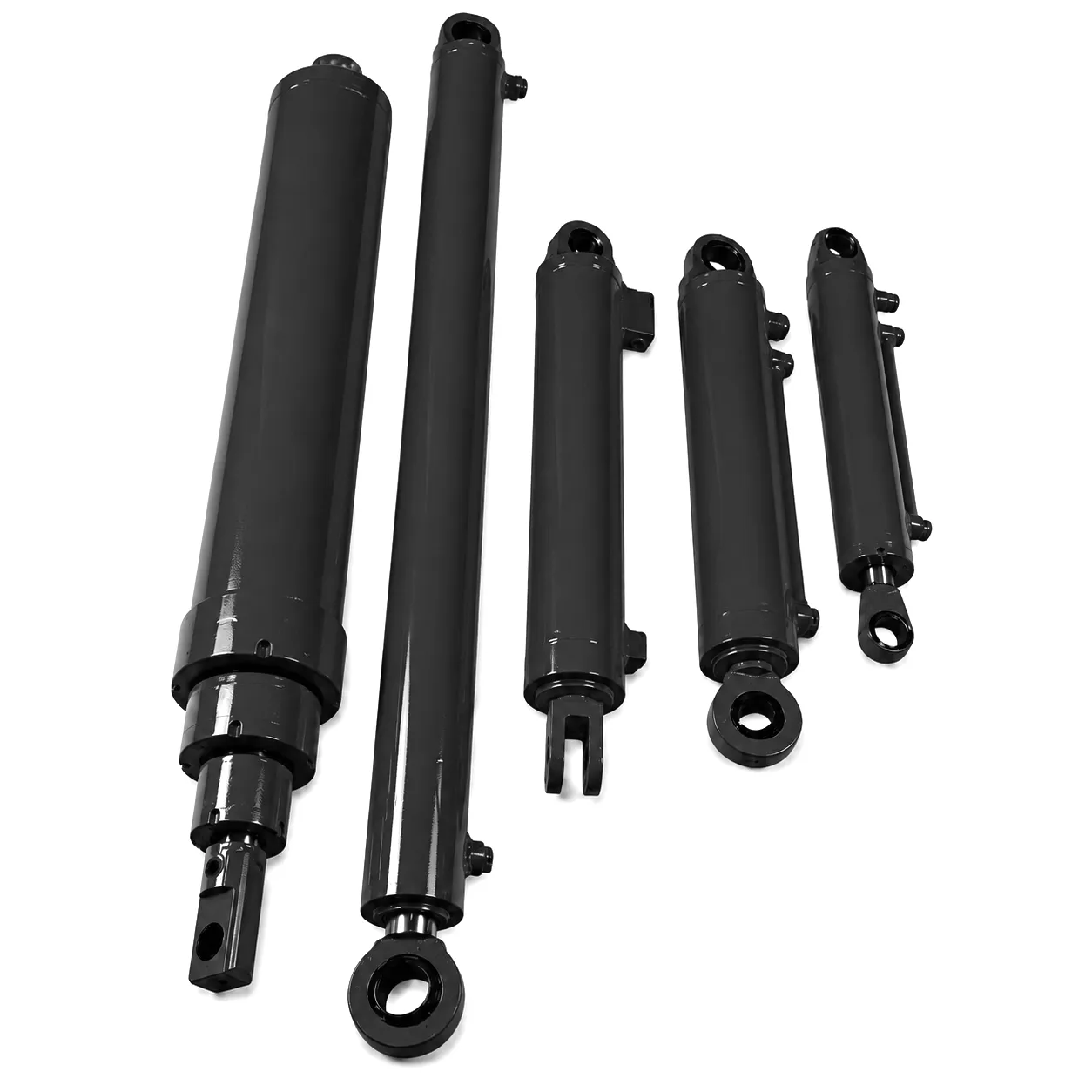
A Tier 1 automotive pressings manufacturer based in Smethwick, West Midlands, was experiencing chronic silinder hidraulik rod failures on the die cushion actuators beneath their 800-tonne tandem press line. The press ran a demanding production schedule of 180 strokes per hour across two shifts, producing structural door pillar stampings for three major UK car assembly plants. Each rod failure event required an unplanned press shutdown of 6–8 hours, including die removal, cylinder change-out, and re-commissioning — at a cost to the business exceeding £18,000 per event in lost output and maintenance labour.
The original equipment cylinders used 80 mm diameter CK45 chrome rods at a 250-bar operating pressure, specified to match the nominal 400 kN rated cushion force. A detailed failure analysis conducted with the plant’s maintenance engineering team revealed that the actual dynamic shock load during the press closing event was 620–680 kN — well above the nominal rating and pushing the 80 mm rod into the buckling risk zone on each stroke. Chrome layer delamination caused by cyclic flexing was the primary failure mode in each instance.
Ever Power’s engineering team reviewed the load data, performed Euler buckling analysis for the fixed-pin mounting arrangement, and recommended a redesign to 100 mm diameter 42CrMo4 rods with 35 µm HVOF coating in place of hard chrome. The bore was retained at its original size to avoid die-cushion hydraulic circuit changes, with the piston ring arrangement modified to accommodate the increased rod cross-section within the existing bore. The rod-to-bore area ratio change was checked against retraction force requirements and confirmed adequate.
Following installation of the upgraded cylinder assemblies, the press line ran for 14 months without a single rod-related unplanned shutdown — a record for the facility. Planned maintenance at the 14-month mark showed negligible chrome wear and no evidence of lateral deflection marking on the seal housings. The Smethwick plant subsequently standardised the 100 mm 42CrMo4 HVOF specification across all eight cushion cylinder positions on the tandem line, and has placed a framework agreement with Ever Power covering ongoing supply and refurbishment services.
★★★★★
“The rod diameter recommendation from Ever Power’s engineers was exactly right. We had two years of fighting that press line and within a fortnight of the new cylinders going in, the whole attitude of the machine changed. We have not touched a cushion cylinder since.”
— Maintenance Engineering Manager, Automotive Pressings, Smethwick
★★★★★
“What made the difference was Ever Power’s willingness to actually look at our load cycles and mounting geometry before quoting. Other suppliers just gave us like-for-like replacements. The 42CrMo4 HVOF rods they specified have been running 14 months without a seal event — our previous record was four months.”
— Plant Engineering Director, West Midlands Manufacturing Group
★★★★★
“The documentation package from Ever Power — material certs to 3.1, dimensional inspection reports, and the buckling calculation summary — made our PSSR written scheme update genuinely straightforward. That level of traceability is rare from a hydraulic supplier at this price point.”
— Senior Mechanical Engineer, North West Process Industries
Common Questions
Hydraulic Cylinder Rod Diameter — Frequently Asked Questions
Ready to Specify Your Hydraulic Cylinder Rod Diameter?
Share your load data, stroke, and mounting arrangement with Ever Power’s engineering team. We will confirm the correct rod diameter and provide a full technical and commercial quotation within 48 hours.
suntingan oleh gzl
 Malay
Malay  English
  Italian
  Portuguese
  Dutch
Dutch  Swedish
  Danish
  Finnish
  Polish
  Hindi
Hindi  Kazakh
  Turkish
  Ukrainian
  Romanian
  Spanish
  German
  Russian
  Korean
  Japanese
  Vietnamese
  Thai
Thai  Indonesian
  French
  Greek
Greek