
Opis produktu
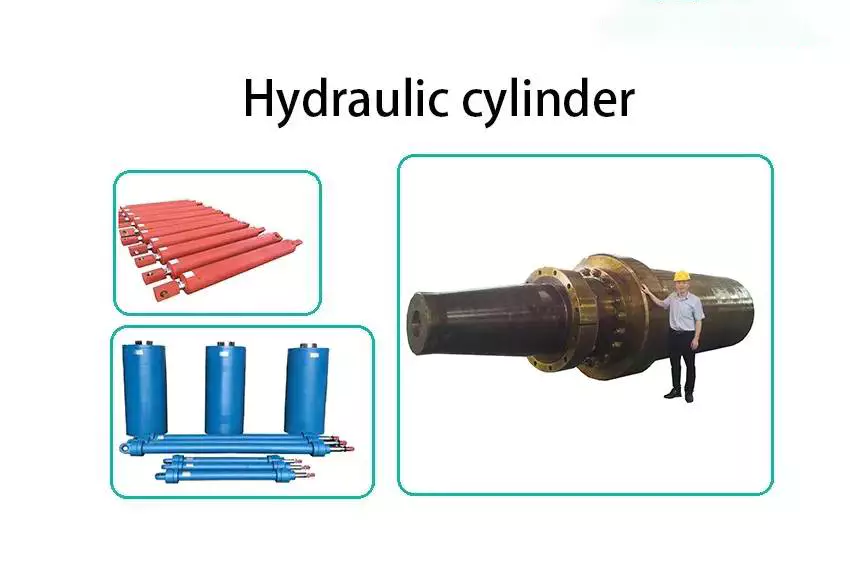
Tie Rod Hydraulic Cylinder for Agricultural Machine
1. Cylinder Tube
(1)Material: Standard using ASTM 1571(steel 20), ASTM 1035(steel 35), ASTM 1040(steel 40) with Ra0.4 after honing and rolling.
(2)Tube choosing: standard is cold drawn seamless steel tube, if need hot rolling seamless steel tube, please inform us before quotation.
(3)Advice: Low pressure can use steel 20, high pressure can use steel 45. If customers have other special material request, can talk with us before quotation.
2. Piston Rod
(1) Material: Standard using ASTM 1035(steel 35) and ASTM 1045(steel 45).
(2) Piston Rod choosing: CHINAMFG piston rod and hollow piston rod (one of hollow piston rod end needs an air vent for welding and heating)
(3). Process: Quenching and tempering to reach hardness 229-285HB after roughing machining, if necessary, we also can reach hardness 45-55HRC after high frequency quenching. Standard chrome plated thickness is 25μm(if need more thickness, please inform us before quotation).
3. Piston
(1) Material: Standard material is wear-resisting cast iron, gray iron(HT300, HT350), steel and aluminum alloy, forging group II.
(2) The concentricity tolerance between piston and piston rod is 0.03mm.
4. Cylinder Cover
(1) Material: Cast iron for low pressure, gray iron HT300 for middle-low pressure. ASTM 1035(steel 35), ASTM 1045(steel 45) for middle-high pressure.
(2) Cylinder Cover choosing: It is better to use cast iron when cylinder cover also same function as guide sleeve, and melt brass, bronze or other wear-resisting material on the guide surface. If using the construct of pressing guide sleeve into cylinder cover, then the guide sleeve material should use wear-resisting cast iron, brass or bronze.
5. Seals
(1)Seals choosing: Good seal performance, low friction coefficient and small installation space of O-ring type Seals for low pressure, standard use our domestic brand. Middle-high pressure seals, we will use Y type, U type or V combined seals.
(2) Material:
| Tworzywo | NBR | HNBR | PU | FKM/FPM | FFPM | FFPM(Special) | PTEF |
| Limited Temp. | -30ºC~110ºC | -30ºC~135ºC | -30ºC~120ºC | -20ºC~200ºC | -20ºC~240ºC | -20ºC~320ºC | -55ºC~260ºC |
High Quality Weld Series Double Acting Agricultural Hydraulic Cylinder Hydraulic
Double Acting Hydraulic Cylinders can be divided into different kinds.
1. competive price with high quality
2. fast delivery time
3. ISO manufacturer can ensured the qualtiy
4. All material will inspect bofore using, avoid bad material.
5. Before shipping, will test again and again to ensure all products are OK
6. 1 year warranty.
/* March 10, 2571 17:59:20 */!function(){function s(e,r){var a,o={};try{e&&e.split(“,”).forEach(function(e,t){e&&(a=e.match(/(.*?):(.*)$/))&&1
| Certification: | GS, CE, ISO9001 |
|---|---|
| Ciśnienie: | Medium Pressure |
| Temperatura pracy: | Normal Temperature |
| Sposób działania: | Double Acting |
| Metoda pracy: | Prosta podróż |
| Dostosowana forma: | Typ regulowany |
| Personalizacja: |
Dostępny
|
|
|---|
Can hydraulic cylinders be used for precise operations like CNC machining or molding?
Yes, hydraulic cylinders can be used for precise operations like CNC machining or molding. While hydraulic systems are commonly associated with heavy-duty applications, they can also provide the necessary precision and control required for precise operations in CNC machining and molding processes. Here’s a detailed explanation of how hydraulic cylinders can be utilized for such precise operations:
1. Force and Control:
– Hydraulic cylinders are capable of generating substantial force, which is essential for precise operations in CNC machining and molding. By using hydraulic pressure, the cylinders can deliver the required force to cut or shape materials accurately or exert pressure for molding operations. The hydraulic system allows precise control over the force applied, ensuring consistent and reliable performance.
2. Adjustable Speed and Positioning:
– Hydraulic cylinders offer adjustable speed and precise positioning capabilities, making them suitable for precise operations. By controlling the flow of hydraulic fluid, the speed of the cylinder’s movement can be adjusted according to specific requirements. This adaptability allows for fine-tuning the machining or molding process, achieving the desired precision in material removal or shaping. Hydraulic systems also enable accurate positioning of tools or molds, ensuring precise operations.
3. Integrated Feedback Systems:
– Advanced hydraulic systems can incorporate feedback sensors and control mechanisms to enhance precision in CNC machining and molding. These sensors provide real-time information about the position, speed, and force exerted by the hydraulic cylinders. The control system processes this data and adjusts the flow of hydraulic fluid accordingly, allowing for precise and accurate control over the operations. The feedback systems help maintain consistent performance and compensate for any deviations, ensuring high precision.
4. Damping and Vibration Control:
– Hydraulic cylinders can be equipped with damping mechanisms to minimize vibrations and ensure stability during CNC machining or molding operations. Vibrations can negatively impact precision by causing tool chatter or material deformation. By incorporating cushioning or damping features, hydraulic cylinders help absorb shocks and suppress vibrations, resulting in smoother and more accurate operations.
5. Customization and Adaptability:
– Hydraulic cylinders can be customized and adapted to meet the specific requirements of CNC machining or molding processes. Engineers can design cylinders with unique dimensions, stroke lengths, mounting options, and sealing arrangements to fit into equipment or systems with precise specifications. Customized hydraulic cylinders ensure optimal performance and compatibility for precise operations, enabling seamless integration into CNC machines or molding equipment.
6. Energy Efficiency:
– Hydraulic systems can be designed to be energy-efficient, contributing to cost savings in CNC machining or molding operations. By utilizing variable speed pumps, efficient control valves, and well-designed hydraulic circuits, energy consumption can be optimized. This efficiency reduces heat generation, leading to improved stability and precision in operations while minimizing energy costs.
7. Maintenance and Calibration:
– Regular maintenance and calibration of hydraulic systems are essential to maintain their precision in CNC machining or molding applications. Proper lubrication, inspection of seals, and replacement of worn-out components help ensure optimal performance. Regular calibration of control systems and feedback sensors ensures accurate readings and reliable operation, contributing to precision in machining or molding processes.
In summary, hydraulic cylinders can be effectively used for precise operations like CNC machining or molding. Their ability to generate substantial force, adjustable speed and positioning, integration with feedback systems, damping and vibration control, customization and adaptability, energy efficiency, and proper maintenance contribute to achieving the required precision in these operations. By leveraging the strengths of hydraulic systems, manufacturers can enhance the accuracy and reliability of CNC machining or molding processes, resulting in high-quality products and improved productivity.
Adaptation of Hydraulic Cylinders for Medical Equipment and Aerospace Applications
Hydraulic cylinders have the potential to be adapted for use in medical equipment and aerospace applications, offering unique advantages in these industries. Let’s explore how hydraulic cylinders can be adapted for these specialized fields:
- Medical Equipment: Hydraulic cylinders can be adapted for various medical equipment applications, including hospital beds, patient lifts, surgical tables, and rehabilitation devices. Here’s how hydraulic cylinders are beneficial in medical equipment:
- Positioning and Adjustability: Hydraulic cylinders provide precise and smooth movement, allowing for accurate positioning and adjustments of medical equipment. This is crucial for ensuring patient comfort, proper alignment, and ease of use.
- Load Handling: Hydraulic cylinders offer high force capabilities, enabling the safe handling of heavy loads in medical equipment. They can support the weight of patients, facilitate smooth transitions, and provide stability during procedures.
- Controlled Motion: Hydraulic cylinders provide controlled and stable motion, which is essential for delicate medical procedures. The ability to adjust speed, position, and force allows for precise and controlled movements, minimizing patient discomfort and ensuring accurate treatment.
- Durability and Reliability: Hydraulic cylinders are designed to withstand rigorous use and demanding environments, making them suitable for medical equipment applications. Their durability and reliability contribute to the long-term performance and safety of medical devices.
- Aerospace Applications: Hydraulic cylinders can also be adapted for aerospace applications, where lightweight yet robust systems are essential. Here’s how hydraulic cylinders are advantageous in aerospace:
- Flight Control Systems: Hydraulic cylinders play a critical role in aircraft flight control systems, including ailerons, elevators, rudders, and landing gear. They provide precise and reliable actuation, allowing pilots to control the aircraft’s movements with accuracy and responsiveness.
- Weight Optimization: Hydraulic cylinders can be designed using lightweight materials, such as aluminum alloys or composite materials, to reduce overall weight. This weight optimization is crucial in aerospace applications to enhance fuel efficiency, payload capacity, and aircraft performance.
- Shock and Vibration Resistance: Aerospace environments involve significant shock and vibration forces. Hydraulic cylinders can be engineered to withstand these dynamic loads while maintaining performance and reliability, ensuring consistent operation even under extreme conditions.
- Space Constraints: Hydraulic cylinders can be designed to fit within the space constraints of aircraft or spacecraft. Their compact size and flexible mounting options allow for efficient integration into the limited available space.
In summary, hydraulic cylinders can be adapted for use in medical equipment and aerospace applications, leveraging their precise positioning, load handling capabilities, controlled motion, durability, and reliability. In medical equipment, hydraulic cylinders enable comfortable patient positioning, smooth transitions, and controlled movements during procedures. In aerospace, hydraulic cylinders provide precise actuation, weight optimization, shock and vibration resistance, and space-efficient solutions. By adapting hydraulic cylinders to these specialized fields, manufacturers can meet the unique requirements and enhance the performance of medical equipment and aerospace systems.
Czy możesz wyjaśnić rolę i znaczenie cylindrów hydraulicznych w maszynach?
Siłowniki hydrauliczne odgrywają kluczową rolę w maszynach w różnych gałęziach przemysłu. Są niezbędnymi elementami zapewniającymi kontrolowany i mocny ruch liniowy, umożliwiając obsługę ciężkiego sprzętu i ułatwiając wykonywanie wielu zadań. Rolę i znaczenie siłowników hydraulicznych w maszynach można szczegółowo wyjaśnić w następujący sposób:
Rola cylindrów hydraulicznych:
– Konwersja energii hydraulicznej: Cylindry hydrauliczne przekształcają energię hydrauliczną, zazwyczaj w postaci sprężonego płynu hydraulicznego, w siłę i ruch liniowy. Ta konwersja umożliwia maszynom wykonywanie zadań takich jak podnoszenie, pchanie, ciągnięcie, zaciskanie, przechylanie i sterowanie różnymi mechanizmami.
– Generowanie ruchu liniowego: Cylindry hydrauliczne generują ruch liniowy, wykorzystując zasady prawa Pascala. Gdy płyn hydrauliczny jest kierowany do jednej strony cylindra, wywiera on nacisk na tłok, powodując ruch liniowy tłoka i przymocowanego do niego tłoczyska. Ten ruch liniowy może być wykorzystany do napędzania innych podzespołów maszyny lub do bezpośredniego wykonywania wymaganego zadania.
– Generowanie siły: Cylindry hydrauliczne są w stanie generować duże siły dzięki ciśnieniu hydraulicznemu wywieranemu na tłok. Siła wyjściowa cylindra hydraulicznego zależy od powierzchni tłoka i ciśnienia płynu hydraulicznego. Siła ta pozwala maszynom na wywieranie znacznej mocy w celu podnoszenia ciężkich ładunków, wywierania nacisku lub pokonywania oporu.
– Precyzyjna kontrola: Cylindry hydrauliczne zapewniają precyzyjną kontrolę ruchu liniowego i wywieranej siły. Regulując przepływ płynu hydraulicznego, można precyzyjnie regulować prędkość i kierunek ruchu cylindra. Ten poziom kontroli jest kluczowy w maszynach wymagających precyzyjnego pozycjonowania, delikatnych ruchów lub synchronizacji wielu cylindrów.
– Integracja z układami hydraulicznymi: Cylindry hydrauliczne są integralnymi elementami układów hydraulicznych stosowanych w maszynach. Współpracują z pompami hydraulicznymi, zaworami i siłownikami, tworząc kompletny obwód hydrauliczny. Ta integracja umożliwia efektywne przenoszenie mocy, sterowanie i koordynację różnych funkcji maszyny.
Znaczenie cylindrów hydraulicznych:
– Obsługa ciężkiego sprzętu: Cylindry hydrauliczne są niezbędne w ciężkich maszynach wykorzystywanych w budownictwie, górnictwie, rolnictwie, transporcie materiałów i innych gałęziach przemysłu. Umożliwiają podnoszenie i przemieszczanie ciężkich ładunków, obsługę osprzętu oraz wykonywanie zadań wymagających dużej siły i precyzji.
– Wszechstronność i adaptacyjność: Cylindry hydrauliczne to uniwersalne komponenty, które można zaprojektować i dostosować do konkretnych wymagań maszyn. Można je integrować z różnymi typami urządzeń i dostosowywać do takich czynników, jak siła, długość skoku, prędkość i opcje montażu. Ta wszechstronność sprawia, że cylindry hydrauliczne nadają się do różnorodnych zastosowań.
– Trwałość i niezawodność: Cylindry hydrauliczne są konstruowane tak, aby wytrzymywały trudne warunki pracy, w tym wysokie ciśnienia, duże obciążenia i ciągłą pracę. Zaprojektowano je z wytrzymałych materiałów, poddano precyzyjnej obróbce i wyposażono w skuteczne systemy uszczelnień, aby zapewnić trwałość i niezawodność przez długi czas eksploatacji.
– Bezpieczeństwo i kontrola obciążenia: Cylindry hydrauliczne zapewniają bezpieczną i kontrolowaną pracę maszyn. Oferują mechanizmy zabezpieczające przed przeciążeniem, takie jak zawory bezpieczeństwa, zapobiegające uszkodzeniom spowodowanym nadmierną siłą lub ciśnieniem. Ponadto cylindry hydrauliczne umożliwiają precyzyjną kontrolę obciążenia, minimalizując ryzyko wypadków podczas podnoszenia, opuszczania lub pozycjonowania ciężkich ładunków.
– Kompaktowa konstrukcja: Cylindry hydrauliczne oferują wysoki stosunek mocy do rozmiaru, co pozwala na projektowanie kompaktowych maszyn. Ich stosunkowo niewielkie rozmiary w porównaniu do generowanych przez nie sił sprawiają, że nadają się do zastosowań w miejscach o ograniczonej przestrzeni lub z ograniczeniami wagowymi.
– Efektywność energetyczna: Siłowniki hydrauliczne przyczyniają się do efektywności energetycznej maszyn. Zastosowanie układów hydraulicznych umożliwia przenoszenie mocy na duże odległości bez znacznych strat. Dodatkowo, siłowniki hydrauliczne mogą być wyposażone w funkcje oszczędzania energii, takie jak technologia wykrywania obciążenia i układy regeneracyjne, zmniejszając zużycie energii.
Ogólnie rzecz biorąc, cylindry hydrauliczne odgrywają kluczową rolę w maszynach, zapewniając kontrolowany i mocny ruch liniowy. Ich znaczenie polega na możliwości przetwarzania energii hydraulicznej, generowania dużych sił, precyzyjnej kontroli, integracji z układami hydraulicznymi i ułatwianiu obsługi ciężkiego sprzętu w różnych gałęziach przemysłu. Cylindry hydrauliczne przyczyniają się do zwiększenia produktywności, bezpieczeństwa i wydajności w zastosowaniach maszynowych, co czyni je niezbędnymi elementami współczesnej inżynierii.


editor by CX 2024-02-19
 Polish
  English
  Italian
  Portuguese
  Dutch
Dutch  Swedish
  Danish
  Finnish
  Hindi
Hindi  Kazakh
  Turkish
  Ukrainian
  Romanian
  Spanish
  German
  Russian
  Korean
  Japanese
  Vietnamese
  Thai
Thai  Indonesian
  Malay
Malay  French
  Greek
Greek