
Opis produktu
Opis produktu
A: Opis produktu
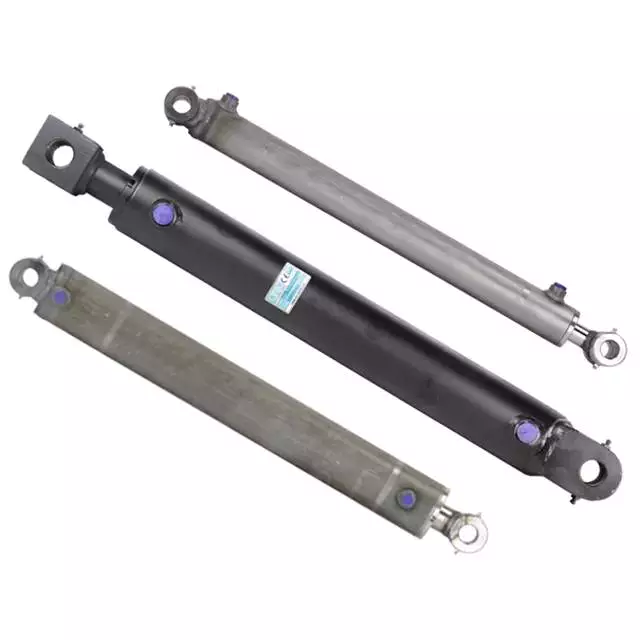
| Nazwa towaru | double acting hydraulic cylinder, hydraulic cylinder |
| Odpowiedni model | construction machinery |
| Oryginalny | ZheJiang, Chiny |
| Gwarancja | Jeden rok |
| Min. ilość | 1 sztuka |
| Uszczelka | standardowa skrzynia eksportowa drewniana lub taka, jakiej potrzebujesz |
| Czas wysyłki | Zwykle 30-60 dni. Czas realizacji różni się w zależności od wielkości zamówienia. |
| Port dostawy | HangZhou, Chiny |
Parametry produktu
CATALOGUE OF HYDRAULIC CYLINDERS
| NO. | MACHINERY NAME | CYLINDER MODEL | TUBE(mm) | ROD(mm) | STROKE LENGTH(mm) | LOCATING DISTANCE(mm) | WORKING PRESSURE(Mpa) |
| 1 | CANE HARVESTER | 40-22-108 | 40 | 22 | 108 | 352 | 16 |
| 2 | CANE HARVESTER | 40-43-180 | 40 | 43 | 180 | 295 | 16.5 |
| 3 | CANE HARVESTER | 50-25-165 | 50 | 25 | 165 | 440 | 16 |
| 4 | CANE HARVESTER | 63-40-733 | 63 | 40 | 733 | 1120 | 16 |
| 5 | CANE HARVESTER | 75-40-250 | 75 | 40 | 250 | 521 | 16.5 |
| 6 | CANE HARVESTER | 83-60-140 | 83 | 60 | 140 | 525 | 16 |
| 7 | COMBINE HARVESTER | 32-18-123 | 32 | 18 | 123 | 313 | 16 |
| 8 | COMBINE HARVESTER | 50-25-87 | 50 | 25 | 87 | 265 | 16 |
| 9 | COMBINE HARVESTER | 50-25-126 | 50 | 25 | 126 | 816 | 16 |
| 10 | COMBINE HARVESTER | 83-60-150 | 83 | 60 | 150 | 625 | 16 |
| 11 | CORN HARVESTER | 40-22-200 | 40 | 22 | 200 | 367 | 16 |
| 12 | CORN HARVESTER | 40-35-270 | 40 | 35 | 270 | 640 | 16 |
| 13 | CORN HARVESTER | 45-25-200 | 45 | 25 | 200 | 430 | 16 |
| 14 | CORN HARVESTER | 50-25-220 | 50 | 25 | 220 | 439 | 16 |
| 15 | CORN HARVESTER | 50-28-210 | 50 | 28 | 210 | 490 | 16 |
| 16 | CORN HARVESTER | 52-35-190 | 52 | 35 | 190 | 350 | 16 |
| 17 | CORN HARVESTER | 55-35-270 | 55 | 35 | 270 | 739 | 16 |
| 18 | CORN HARVESTER | 55-35-780 | 55 | 35 | 780 | 1030 | 16 |
| 19 | CORN HARVESTER | 55-45-160 | 55 | 45 | 160 | 279 | 16 |
| 20 | CORN HARVESTER | 63-35-621 | 63 | 35 | 621.5 | 1066 | 16 |
| 21 | CORN HARVESTER | 63-45-950 | 63 | 45 | 950 | 1310 | 16 |
| 22 | CORN HARVESTER | 68-50-255 | 68 | 50 | 255 | 764 | 16 |
| 23 | CORN HARVESTER | 75-45-916 | 75 | 45 | 916 | 1320 | 16 |
| 24 | CORN HARVESTER | 25-180 | / | 25 | 180 | 340 | 16 |
| 25 | CORN HARVESTER | 45-185 | / | 45 | 185 | 300 | 16 |
| 26 | CORN HARVESTER | 45-280 | / | 45 | 280 | 795 | 16 |
| 27 | CORN HARVESTER | 45-360 | / | 45 | 360 | 520 | 16 |
| 28 | CORN HARVESTER | 50-155 | / | 50 | 155 | 405 | 16 |
| 29 | CORN HARVESTER | 50-215 | 50 | 215 | 467 | 16 | |
| 30 | CORN HARVESTER | 60-210 | 60 | 210 | 1130 | 16 |
Seals: Hallite, Parker, Merkel, etc.
Painting: anti rust painting
Certificate: ISO9001,SGS, CE, BV, TUV
Shaft diameter: 15mm to 600mm
Model number: double acting or single acting
Stage: Up to 5 level
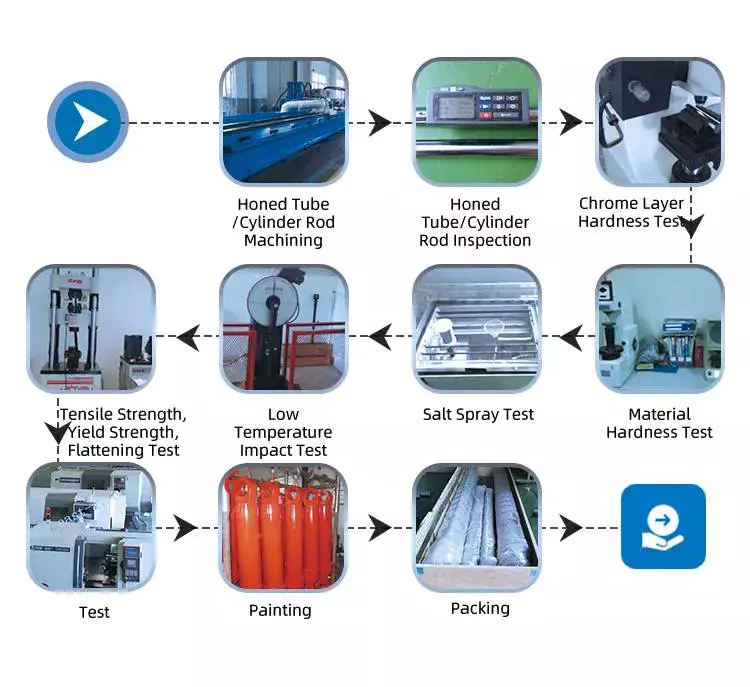
Process: CNC Lathe Machining, CNC Cleaning Machining Robot welding, Milling
Testing Equipment: digital ultrasonic flow detector, ZEISS metallurgical microscope, ultrasonic thickness gauge, CAAM, Projector, Pin Gauge, etc
Application: Agricultural, Industrial, Engineer, Construction etc
Keyword: Double Acting Telescopic Hydraulic Cylinder,
After Warranty Service: Online support, Video technical support
Color: blue, red, yellow, green,grey, black, or Client’s Request
Size: Custom
MOQ: 1
Lead time: 30~40days
Customization: customized logo, customized package (min. Order 1 piece)
Shipping: sea freight, land freight, express, air freight
Protection: On-time dispatch is guaranteed
Możliwość zaopatrzenia Możliwość dostawy 3000 sztuk miesięcznie
*Możemy dostosować i zaprojektować zgodnie z Twoimi potrzebami
*Możemy również produkować według Twoich rysunków
*Jeśli potrzebujesz jakiegokolwiek siłownika hydraulicznego, skontaktuj się z nami
Nasze usługi/certyfikaty
—Certyfikat CE jakości sprawdzonej
—Przyjęcie certyfikatu ISO Systemu Zarządzania Jakością
—Certyfikat BV weryfikacji linii produktów głównych
—Szybka dostawa
—Serwis posprzedażowy
—24 godziny na dobę, 7 dni w tygodniu – serwis online
Profil firmy
KENDE to wiodący globalny projektant, producent i dystrybutor siłowników hydraulicznych, kabin, zbiorników oleju, przeciwwag, wysięgników, ramion, łyżek, podwozi, podpór, rur, węży, złączek, bloków zaworowych, opon, kół i innych części. Produkty te są szeroko stosowane w budownictwie, górnictwie, dźwigach, transporcie materiałów, samochodach ciężarowych, transporcie, przemyśle naftowym i gazowym, sprzęcie rolniczym i ogrodniczym itd.
Dostarczamy szeroką gamę części do koparek, ładowarek, wiertnic, wywrotek, wózków widłowych, ciągników, przyczep, kombajnów, samochodów osobowych, autobusów, ciężarówek i innych. Nasze produkty koncentrują się na poprawie wydajności i wydłużeniu żywotności maszyn i urządzeń.
Założona w styczniu 2015 roku, do dziś staliśmy się dużą grupą posiadającą 3 fabryki w Azji, dostarczającą szeroką gamę produktów i usług dla klientów na całym świecie.
Posiadamy najnowocześniejszy sprzęt produkcyjny i specjalistyczne centrum badawczo-rozwojowe, aby zapewnić klientom produkty najwyższej jakości.
Naszą wizją jest: „Nauka i technologia na pierwszym miejscu, Zawsze z wdzięcznym sercem, Przemierzaj świat w cnocie, Walcz o lepszą przyszłość”.
Często zadawane pytania
1)>. Jaki jest czas dostawy?
:Zwykle realizacja zamówienia trwa od 30 do 60 dni od otrzymania zaliczki. Konkretny czas dostawy zależy od ilości zamówionych produktów i ich ilości.
2)>. Jakie są Twoje warunki cenowe?
: EXW, FOB, CFR, CIF, DDU.
3)> Jakie są warunki płatności?
: T/T 50% jako depozyt i 50% przed dostawą. Pokażemy Ci zdjęcia produktów i opakowań przed zapłatą reszty.
4)> Czy możesz dostarczyć próbkę za darmo?
: Niestety, możemy przygotować dla Ciebie tylko próbkę po cenie zakupu.
5)> Czy możesz produkować na podstawie próbek?
:Tak, możemy wykonać produkcję na podstawie Państwa próbek lub rysunków technicznych. Możemy zbudować formy i oprzyrządowanie.
6)>Jaka jest Twoja polityka dotycząca próbek?
:Możemy dostarczyć próbkę, jeśli mamy gotowe części w magazynie, ale klient musi zapłacić koszt próbki i koszt przesyłki kurierskiej.
7)>Czy testujecie wszystkie swoje towary przed dostawą?
:Tak, przed dostawą przeprowadzamy test 100%
8)>:Jak sprawić, aby nasza współpraca była długotrwała i dobra?
:1. Utrzymujemy dobrą jakość i konkurencyjne ceny, aby zapewnić naszym klientom korzyści;
2. Szanujemy każdego klienta jak przyjaciela, szczerze prowadzimy interesy i nawiązujemy z nim przyjaźnie, bez względu na to, skąd pochodzi.
| Certification: | CE, TUV, SGS, BV |
|---|---|
| Ciśnienie: | Wysokie ciśnienie Niskie ciśnienie Średnie ciśnienie |
| Temperatura pracy: | Wysoka temperatura Niska temperatura Normalna temperatura |
| Sposób działania: | Podwójne działanie Pojedyncze działanie |
| Metoda pracy: | Prosta podróż |
| Dostosowana forma: | Typ regulowany |
| Personalizacja: |
Dostępny
|
|
|---|
What role do hydraulic cylinders play in optimizing power distribution and efficiency?
Hydraulic cylinders play a significant role in optimizing power distribution and efficiency in various applications. They are widely used in industries such as construction, manufacturing, agriculture, and transportation, where efficient power transmission and precise control are essential. Here’s a detailed explanation of the role hydraulic cylinders play in optimizing power distribution and efficiency:
1. Power Transmission:
– Hydraulic cylinders serve as a means of power transmission in hydraulic systems. They convert the hydraulic fluid’s pressure and flow into linear mechanical force, allowing for controlled movement of loads. Hydraulic cylinders efficiently transmit power from an energy source, such as a hydraulic pump, to the working components of the system. The ability to transmit power over long distances with minimal energy losses makes hydraulic cylinders an efficient choice for various applications.
2. High Power Density:
– Hydraulic cylinders offer high power density, meaning they can generate significant force relative to their size. This characteristic enables compact and lightweight hydraulic systems while delivering substantial power output. Hydraulic cylinders can produce high forces even at low operating speeds, making them suitable for heavy-duty applications. The high power density of hydraulic cylinders contributes to the optimization of power distribution by maximizing the force output while minimizing the system’s overall size and weight.
3. Load Handling and Control:
– Hydraulic cylinders provide precise load handling and control capabilities, contributing to power distribution optimization. By adjusting the flow of hydraulic fluid to the cylinder, operators can control the speed, force, and direction of the cylinder’s movement. This level of control allows for accurate positioning and smooth operation of loads, reducing energy waste and improving overall system efficiency. Hydraulic cylinders enable precise load handling and control, leading to optimal power distribution and improved energy efficiency.
4. Variable Force and Speed:
– Hydraulic cylinders offer the advantage of variable force and speed control. By regulating the flow of hydraulic fluid, the force exerted by the cylinder can be adjusted as needed. This flexibility enables hydraulic systems to adapt to different load requirements, optimizing power distribution. Hydraulic cylinders can operate at varying speeds, allowing for efficient power distribution across different stages of an operation. The ability to vary force and speed according to the application’s demands enhances energy efficiency and overall system performance.
5. Energy Recovery:
– Hydraulic cylinders can contribute to energy efficiency through energy recovery mechanisms. In certain applications, hydraulic systems utilize accumulators to store and release energy. Hydraulic cylinders can store energy during deceleration or when the load is lowering, and then release it to assist in subsequent movements. This energy recovery process reduces the overall energy consumption of the system, optimizing power distribution and improving efficiency. The ability to recover and reuse energy enhances the sustainability and cost-effectiveness of hydraulic systems.
6. Integrated Control Systems:
– Hydraulic cylinders can be integrated into advanced control systems, such as servo control or proportional control systems. These systems utilize electronic feedback, sensors, and control algorithms to optimize power distribution and efficiency. By continuously monitoring and adjusting the flow of hydraulic fluid, the control systems ensure that the cylinder operates at the most efficient operating point, minimizing energy losses and maximizing power distribution. Integrated control systems enhance the overall energy efficiency of hydraulic systems and contribute to power optimization.
7. System Efficiency Improvement:
– Hydraulic cylinders, when combined with other components in a hydraulic system, contribute to overall system efficiency improvement. The integration of efficient hydraulic pumps, valves, and actuators helps minimize energy losses, pressure drops, and heat generation. By optimizing the design and configuration of the hydraulic system, including the selection of appropriate cylinder sizes, operating pressures, and control strategies, power distribution can be optimized, leading to improved energy efficiency. Proper system design and component selection are critical for achieving optimal power distribution and efficiency.
In summary, hydraulic cylinders play a crucial role in optimizing power distribution and efficiency in various applications. They enable efficient power transmission, offer high power density, provide precise load handling and control, allow for variable force and speed control, facilitate energy recovery, can be integrated into advanced control systems, and contribute to overall system efficiency improvement. By leveraging the capabilities of hydraulic cylinders, industries can achieve better power utilization, reduced energy consumption, and improved system performance.
Handling Challenges of Different Fluid Viscosities in Hydraulic Cylinders
Hydraulic cylinders are designed to handle the challenges associated with different fluid viscosities. The viscosity of hydraulic fluid can vary based on temperature, type of fluid used, and other factors. Hydraulic systems need to accommodate these variations to ensure optimal performance and efficiency. Let’s explore how hydraulic cylinders handle the challenges of different fluid viscosities:
- Fluid Selection: Hydraulic cylinders are designed to work with a range of hydraulic fluids, each with its specific viscosity characteristics. The selection of an appropriate fluid with the desired viscosity is crucial to ensure optimal performance. Manufacturers provide guidelines regarding the recommended viscosity range for specific hydraulic systems and cylinders. By choosing the right fluid, hydraulic cylinders can effectively handle the challenges posed by different fluid viscosities.
- Viscosity Compensation: Hydraulic systems often incorporate features to compensate for variations in fluid viscosity. For example, some hydraulic systems utilize pressure compensating valves that adjust the flow rate based on the viscosity of the fluid. This compensation ensures consistent performance across different operating conditions and fluid viscosities. Hydraulic cylinders work in conjunction with these compensation mechanisms to maintain precision and control, regardless of the fluid viscosity.
- Temperature Control: Fluid viscosity is highly dependent on temperature. Hydraulic cylinders employ various temperature control mechanisms to address the challenges posed by temperature-induced viscosity changes. Heat exchangers, coolers, and thermostatic valves are commonly used to regulate the temperature of the hydraulic fluid within the system. By controlling the fluid temperature, hydraulic cylinders can maintain the desired viscosity range, ensuring reliable and efficient operation.
- Efficient Filtration: Contaminants in hydraulic fluid can affect its viscosity and overall performance. Hydraulic systems incorporate efficient filtration systems to remove particles and impurities from the fluid. Clean fluid with the appropriate viscosity ensures optimal functioning of hydraulic cylinders. Regular maintenance and filter replacements are essential to uphold the desired fluid viscosity and prevent issues related to fluid contamination.
- Proper Lubrication: Different fluid viscosities can impact the lubrication properties within hydraulic cylinders. Lubrication is essential for minimizing friction and wear between moving parts. Hydraulic systems employ lubricants specifically formulated for the anticipated fluid viscosity range. Adequate lubrication ensures smooth operation and extends the lifespan of hydraulic cylinders, even in the presence of varying fluid viscosities.
In summary, hydraulic cylinders employ various strategies to handle the challenges associated with different fluid viscosities. By selecting appropriate fluids, incorporating viscosity compensation mechanisms, controlling temperature, implementing efficient filtration, and ensuring proper lubrication, hydraulic cylinders can accommodate variations in fluid viscosity. These measures enable hydraulic systems to deliver consistent performance, precise control, and efficient operation across different fluid viscosity ranges.
How do hydraulic cylinders handle variations in load, pressure, and speed?
Hydraulic cylinders are designed to handle variations in load, pressure, and speed effectively. They incorporate features and components that allow them to adapt to changing operating conditions and maintain optimal performance. Here’s a detailed explanation of how hydraulic cylinders handle variations in load, pressure, and speed:
Variations in Load:
– Hydraulic cylinders are capable of handling variations in load by adjusting the force they exert. The force output of a hydraulic cylinder is determined by the hydraulic pressure and the surface area of the piston. When the load increases, the pressure in the hydraulic system can be adjusted to generate a higher force. This adjustment can be achieved by regulating the flow of hydraulic fluid into the cylinder using control valves. By controlling the pressure and flow, hydraulic cylinders can adapt to different load requirements, ensuring that the force applied is sufficient to handle the load while preventing excessive force that could cause damage.
Variations in Pressure:
– Hydraulic cylinders are designed to handle variations in pressure within the hydraulic system. They are equipped with seals and other components that can withstand high-pressure conditions. When the pressure within the hydraulic system fluctuates, the hydraulic cylinder adjusts accordingly to maintain its performance. The seals prevent fluid leakage and ensure that the hydraulic pressure is effectively transmitted to the piston, allowing the cylinder to generate the required force. Additionally, hydraulic systems often incorporate pressure relief valves and other safety mechanisms to protect the cylinder and the entire system from overpressure conditions.
Variations in Speed:
– Hydraulic cylinders can handle variations in speed through the control of hydraulic fluid flow. The speed of a hydraulic cylinder’s extension or retraction is determined by the rate at which hydraulic fluid enters or exits the cylinder. By adjusting the flow rate using flow control valves, the speed of the cylinder’s movement can be regulated. This allows for precise control over the speed, enabling operators to adapt to varying speed requirements based on the specific task or load. Furthermore, hydraulic systems can incorporate flow control valves with adjustable orifice sizes to fine-tune the speed of the cylinder’s movement.
Load-Sensing Technology:
– Advanced hydraulic systems may incorporate load-sensing technology to further enhance the ability of hydraulic cylinders to handle variations in load, pressure, and speed. Load-sensing systems monitor the load demand and adjust the hydraulic pressure and flow accordingly to meet that demand. This technology ensures that the hydraulic cylinder provides the necessary force while optimizing energy efficiency. Load-sensing systems are particularly beneficial in applications where the load requirements can vary significantly, allowing hydraulic cylinders to adapt in real-time and maintain precise control over force and speed.
Accumulators:
– Hydraulic systems can also utilize accumulators to assist in handling variations in load, pressure, and speed. Accumulators store hydraulic fluid under pressure, which can be released when needed to supplement the flow and pressure in the system. When there are sudden increases in load or pressure demands, accumulators can provide additional fluid to the hydraulic cylinder, ensuring smooth operation and preventing pressure drops. Similarly, accumulators can assist in maintaining consistent speed by compensating for fluctuations in flow rate. They act as a supplemental energy source, helping hydraulic cylinders respond effectively to variations in operating conditions.
In summary, hydraulic cylinders handle variations in load, pressure, and speed through various mechanisms and components. They can adjust the force output to accommodate different load requirements by regulating hydraulic pressure. The seals and components within hydraulic cylinders allow them to withstand variations in pressure within the hydraulic system. By controlling the flow of hydraulic fluid, hydraulic cylinders can regulate the speed of their movement. Advanced technologies such as load-sensing systems and the use of accumulators further enhance the adaptability of hydraulic cylinders to changing operating conditions. These features and mechanisms enable hydraulic cylinders to maintain optimal performance and provide reliable force and motion control in a wide range of applications.


editor by CX 2023-10-12
 Polish
  English
  Italian
  Portuguese
  Dutch
Dutch  Swedish
  Danish
  Finnish
  Hindi
Hindi  Kazakh
  Turkish
  Ukrainian
  Romanian
  Spanish
  German
  Russian
  Korean
  Japanese
  Vietnamese
  Thai
Thai  Indonesian
  Malay
Malay  French
  Greek
Greek