
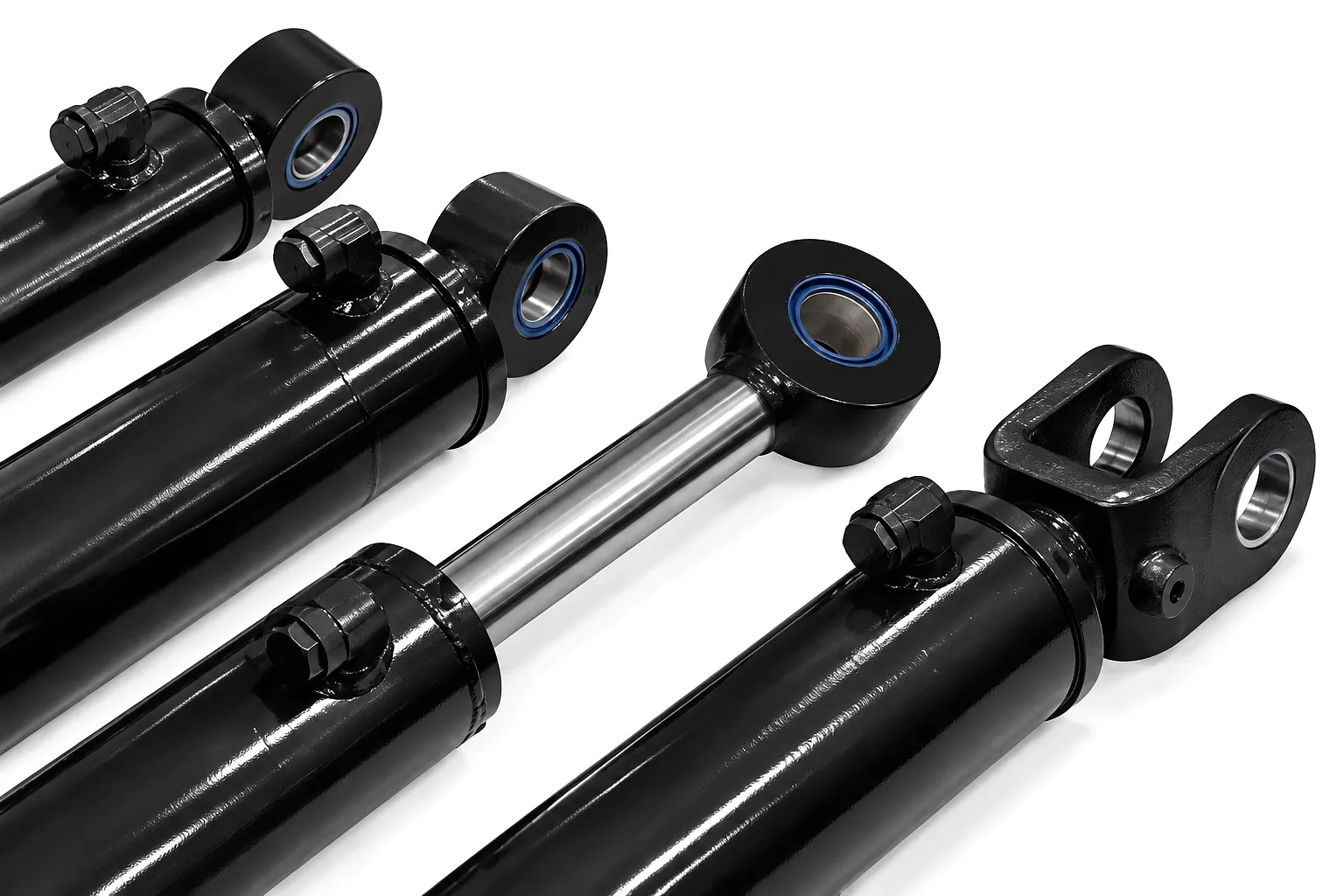
 In virtually every manufacturing plant across Birmingham, Sheffield, and the broader UK industrial corridor, engineers face a critical decision when specifying hydraulic actuators: whether to use a front flange mount or a rear flange mount. Both configurations attach the cylinder body rigidly to a machine frame using bolted flanges, but the structural and functional differences between them are substantial. Choosing incorrectly can lead to misalignment stress, premature seal failure, accelerated rod wear, and costly unplanned downtime — consequences that no production manager wants to face mid-shift.
Understanding Flange Mounting in Hydraulic Cylinders
What Is a Flange Mount?
A flange mount is a rigid, bolted attachment method where a machined steel plate (the flange) is integral to the cylinder body and is fastened directly to a machine structure or mounting plate. Unlike pin or clevis mounts, flange configurations transfer force in a purely axial direction, making them ideal where straight-line motion must be maintained without angular deviation. The flange provides an exceptionally stable and repeatable mounting interface, which is why they are the preferred choice in precision manufacturing, press operations, and automated assembly lines throughout UK industry. The flange body is precision-machined to tight tolerances, ensuring bolt-hole concentricity and face flatness that eliminate rocking or shifting under cyclic loading. In high-duty applications — such as those common in Sheffield’s steel-forming sector — this rigidity is not optional; it is essential to maintaining dimensional accuracy in the finished workpiece.
Flange Position Fundamentals
The key distinction between front and rear flange mounts comes down to where along the cylinder body the flange is located — and therefore which direction the load is carried relative to the mounting interface. A front flange (also called a cap end flange) is located at the rod end of the cylinder. A rear flange (cap end or head end flange) is located at the blind end, opposite the rod. This seemingly simple geometric difference has profound implications for how thrust forces travel through the structure, how bending moments are managed, and how practical it is to service the cylinder in situ. Both styles are available in square or round flange profiles and can be specified in standard or custom bolt-circle configurations to suit existing machine frames — a significant advantage for retrofit projects in older UK manufacturing facilities where non-standard frames are common.
Front Flange Mount: Engineering Characteristics and Best-Fit Scenarios
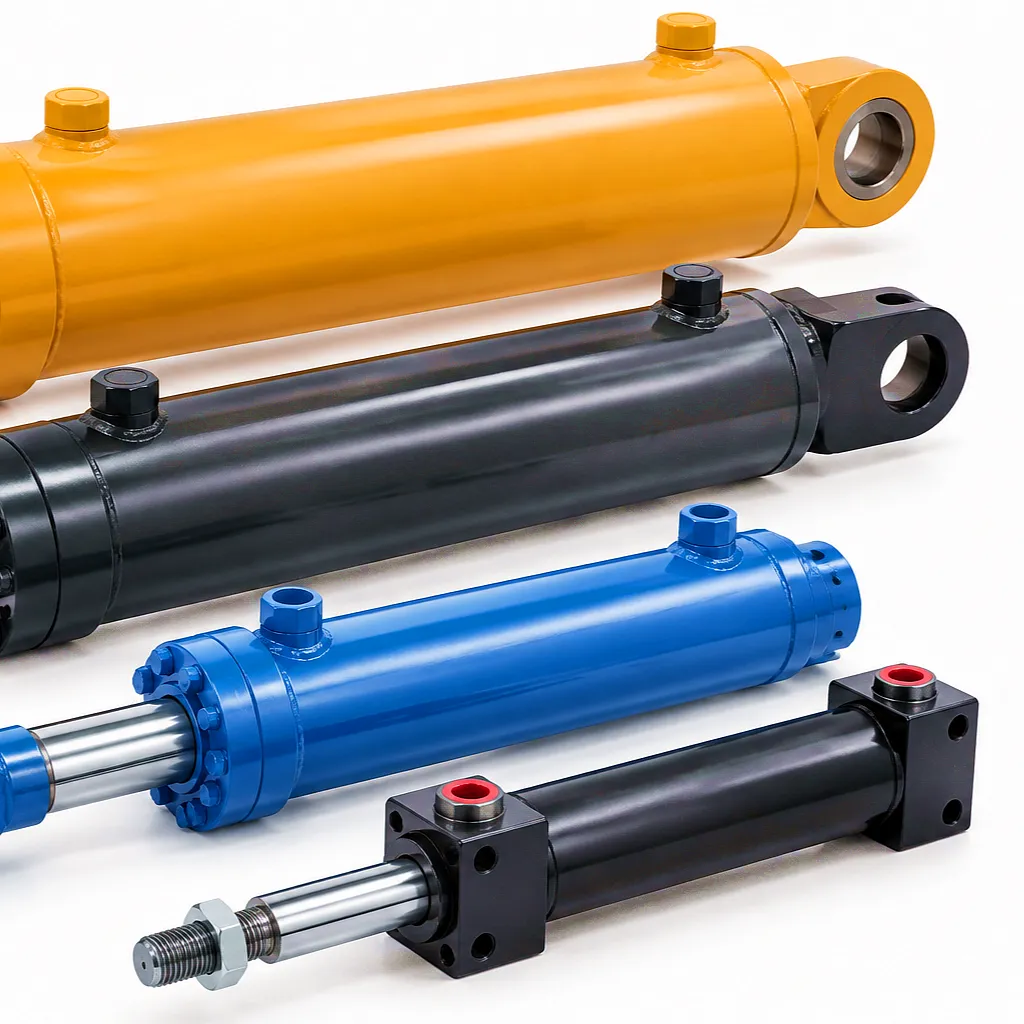
Featured Product
Heavy Duty Single Acting Hydraulic Cylinders →
Ideal for push-only front flange applications in press and clamping operations.
When a hydraulic cylinder is mounted via the front flange — meaning the flange is positioned at the rod-end cap — the mounting point sits closest to where the mechanical work is being done. This configuration places the cylinder body behind the mounting plate, with the rod extending through or beyond the flange face toward the load. The structural consequence is that compressive (push) forces during the extend stroke are carried efficiently through the flange into the machine frame, because the force pathway is short and direct.
Front flange mounts perform particularly well in applications where the cylinder must push a load away from the machine structure and where the mounting panel itself can absorb the reaction force cleanly. In automotive press shops — a sector with a significant presence in the West Midlands around Coventry and Birmingham — front flange cylinders are used extensively in blanking, forming, and transfer press operations. The flange bolts into a robust die shoe or press crown, and the cylinder rod drives the ram downward with precision and repeatability.
One practical advantage of the front flange style in maintenance-intensive environments is rod seal accessibility. Because the rod-end cap (where seals are typically housed) faces outward and is close to the mounting face, field engineers can in many cases replace worn rod seals without fully removing the cylinder from the machine — a meaningful time and cost saving on busy production lines that cannot afford extended planned maintenance windows.
Front Flange — Key Engineering Strengths
✓ Short load path on extension stroke — efficient push force transfer
✓ Rod seal accessible without full cylinder removal
✓ Compact installation depth behind mounting wall
✓ Suits push-dominant cycles in press and clamping applications
✓ Strong performance in vertically-oriented installations
Rear Flange Mount: Load Path Logic and Industrial Applications
The rear flange mount positions the flange at the blind end of the cylinder — the cap end furthest from the rod. This means the entire cylinder body projects outward from the mounting surface toward the load, with the rod extending away from the machine structure. Mechanically, this arrangement puts the cylinder body in tension during the retraction (pull) stroke, because the flange is anchored at the back and the rod is pulling something toward the machine.
In applications where retraction force is the primary working stroke — such as pulling, clamping from behind a part, or tensioning — the rear flange mount handles the load path with considerably less cantilever stress than a front flange would in the same role. Material handling systems in port logistics facilities along the Humber estuary, for example, often employ rear flange cylinders in gate-locking and boom-retraction mechanisms where robust pull cycles are critical to operational safety.
Rear flange mounts also offer installation flexibility in deep-access scenarios. Because the mounting face is at the back of the unit, the cylinder can be inserted through or into a machine housing and secured from behind, without needing clearance at the rod end. This is particularly useful in confined-space installations — a recurring challenge in retrofitted machinery common across ageing manufacturing sites in the North East and Yorkshire. The rod emerges cleanly from the front with no mounting hardware obstructing access to rod end connections or couplings.
In terms of bending moment management, the rear flange mount places the cylinder body as the structural element spanning between the mount and the load point. Cylinder barrel thickness, end cap weld integrity, and tie rod preload (in tie rod cylinder styles) all become critical factors in the specification process. Ever Power’s engineering team accounts for all of these variables in the design phase, applying finite element analysis to validate cylinder body integrity under the specific loading profile of each customer’s application.
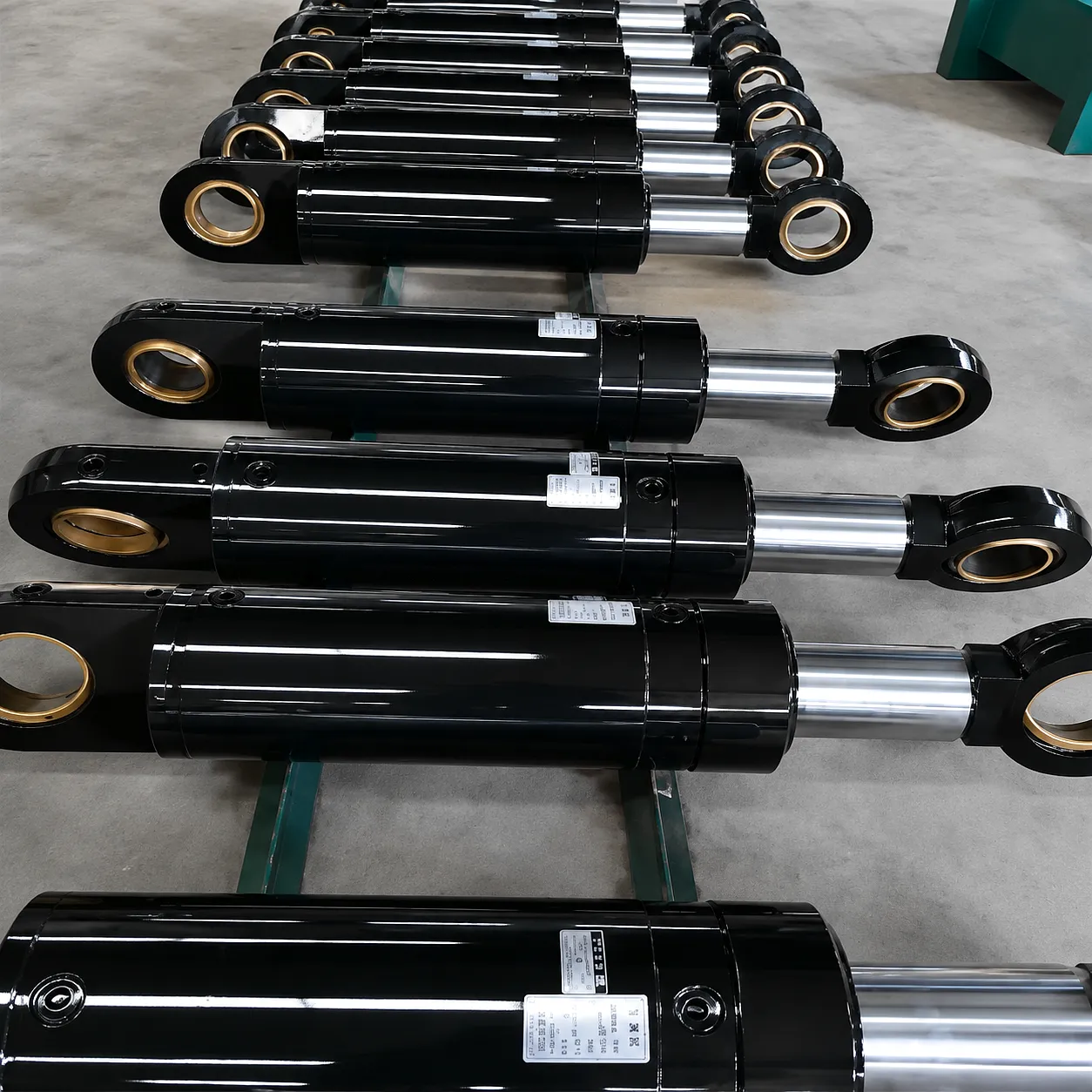
Rear Flange — Key Engineering Strengths
✓ Efficient pull-stroke load path
✓ Clean rod-end access for coupling connections
✓ Ideal for blind-bore and deep-housing installations
✓ Suits horizontal pull and tensioning applications
✓ Reduced hardware congestion at working end
Technical Performance & Specification Comparison Table
| Parametr | Front Flange Mount | Rear Flange Mount |
|---|---|---|
| Flange Location | Rod end (front cap) | Blind end (rear cap) |
| Primary Working Stroke | Extension (push) | Retraction (pull) |
| Operating Pressure Range | Up to 350 bar (standard) / 500 bar (HP rated) | Up to 350 bar (standard) / 500 bar (HP rated) |
| Bore Diameter Range | 40 mm – 500 mm | 40 mm – 500 mm |
| Rod Diameter Range | 25 mm – 360 mm | 25 mm – 360 mm |
| Stroke Length (standard) | 50 mm – 3000 mm | 50 mm – 3000 mm |
| Barrel Material | St52 / S355 cold-drawn seamless steel tube | St52 / S355 cold-drawn seamless steel tube |
| Rod Material & Surface | Ck45 / 42CrMo4 chrome-plated (Ra 0.2 – 0.4 µm) | Ck45 / 42CrMo4 chrome-plated (Ra 0.2 – 0.4 µm) |
| Flange Material | Ductile iron (GGG40) or structural steel S355 | Ductile iron (GGG40) or structural steel S355 |
| System uszczelnień | Compact U-seal + wiper + backup ring (Parker / NOK) | Compact U-seal + wiper + backup ring (Parker / NOK) |
| Temperature Range | -30°C to +120°C (standard seals) | -30°C to +120°C (standard seals) |
| Rod Seal Access | Easy — at front face | Moderate — requires rod-end access |
| Best Stroke Orientation | Push (extension primary) | Pull (retraction primary) |
| Typical Flange Bolt Circle | 4 or 8 bolt; custom patterns available | 4 or 8 bolt; custom patterns available |
| Hydraulic Connection Ports | BSP / SAE / BSPT / metric (per UK standards) | BSP / SAE / BSPT / metric (per UK standards) |
| Surface Protection (cylinder) | Standard primer + topcoat; optional zinc electroplate | Standard primer + topcoat; optional zinc electroplate |
Core Materials: What Goes Into a High-Performance Flange Mount Cylinder
🧰
Cylinder Barrel
Cold-drawn seamless steel tubing to EN 10305-1, grade St52 or S355. Internal bore honed to IT7 tolerance, Ra 0.2 µm finish for optimised seal life and minimal leakage.
🧹
Piston Rod
Ck45 or 42CrMo4 alloy steel, induction-hardened (50-58 HRC surface), hard chrome-plated to 25-40 µm. Offers outstanding corrosion resistance and impact durability in wet UK environments.
⛭
Flange Body
GGG40 ductile iron or S355J2 structural steel, machined to H7 concentricity tolerance. Bolt holes reamed for tight fit; face flatness within 0.05 mm to prevent rocking under cyclic bolt loads.
🟢
Seals & Wiper System
Parker or NOK polyurethane U-seals, PTFE backup rings, polyurethane wiper rings. Optional NBR, FKM (Viton), or HNBR compounds for high-temperature or chemical exposure environments.
⚖
Piston & Cushioning
Cast iron or steel piston with bronze guide band. Adjustable end-stroke cushioning (needle valve) standard on bore sizes 80 mm and above, preventing impact damage at stroke limits.
Industrial Application Scenarios: Where Each Mounting Style Excels
Front Flange Application
Press and Stamping Operations — West Midlands Automotive Manufacturing
Hydraulic press lines operating in the automotive pressing sector around Coventry and Birmingham are among the most demanding environments for flange-mounted cylinders. In a typical transfer press application, the cylinder must deliver consistent, repeatable extension forces ranging from 50 kN to well over 2,000 kN — stroke after stroke, across multiple shifts, with tight dimensional tolerances. Front flange cylinders are the standard specification here because the mounting face at the rod end integrates cleanly with the press crown or bolster plate, the rod enters the die space without hardware obstruction, and the force transfer during the pressing stroke (extension) is direct and efficient. Cushioning is essential in these applications: adjustable deceleration valves or hydraulic cushioning at stroke end prevent shock loads that would otherwise fatigue flange bolt threads over time. Ever Power supplies front flange press cylinders with bore sizes from 100 mm to 400 mm, customised stroke lengths, and dual-circuit port arrangements that suit servo-hydraulic control architectures common in modern UK press lines.
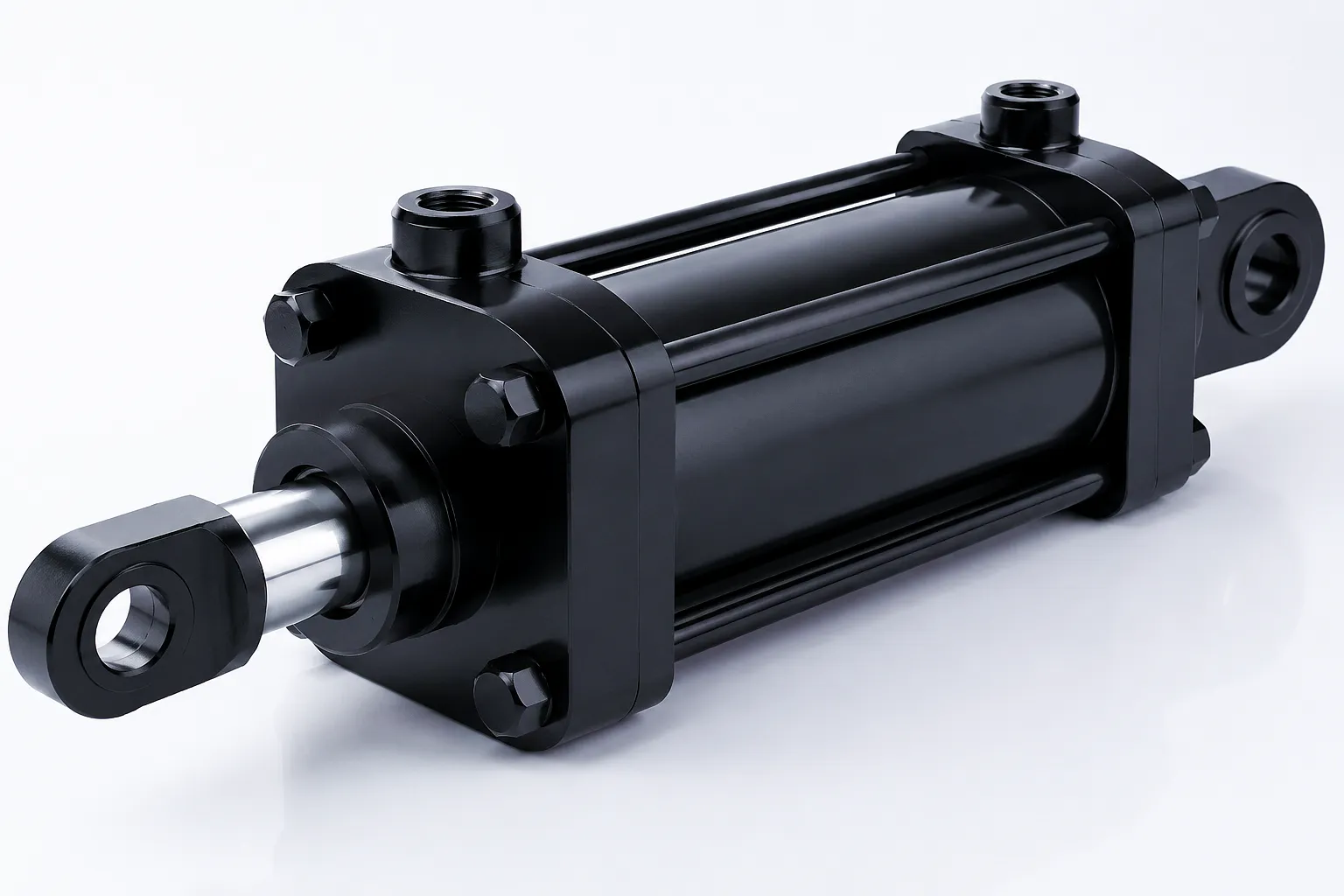
Rear Flange Application
Material Handling and Gate Locking — Humber Estuary Port Logistics
Port and bulk terminal operations along the Humber — including facilities at Hull, Grimsby, and Immingham — operate heavy hydraulic gate, boom, and lock mechanisms that depend on reliable retraction force to secure loads and maintain operational safety. Rear flange cylinders are the preferred actuator type for these systems because the flange can be bolted to a structural steel upright behind the mechanism, with the cylinder body extending forward into the machine space and the rod connecting to the latch, boom, or gate via a clevis or pin coupling at the front. When the rod retracts, it draws the gate closed or locks the boom with considerable force — and the rear flange transfers this tensile load cleanly back into the mounting structure without cantilever stress. Cylinders in this service see exposure to salt-laden marine air, which makes material and coating specification critical: Ever Power supplies these units with marine-grade epoxy topcoats over zinc primer, nickel-plated port fittings, and stainless steel bleed screws as standard for port environment service.
Front Flange Application
Lifting Platform and Scissor Lift Systems — UK Construction and Warehousing
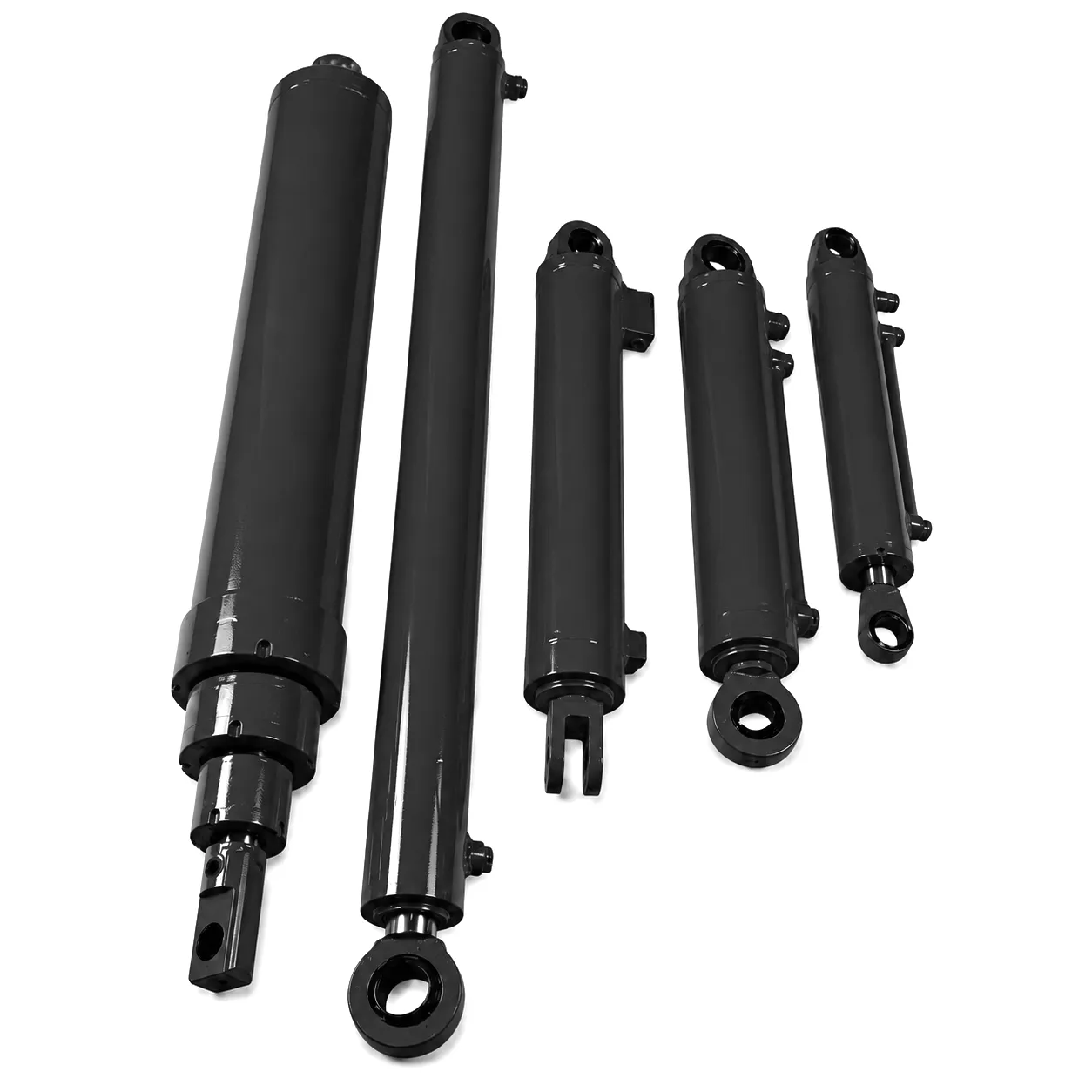
Scissor lift platforms and mast-type elevating work platforms — widely used across UK construction, warehouse logistics, and infrastructure maintenance sectors — often incorporate front flange or telescopic hydraulic cylinders as their primary lifting actuator. The front flange configuration allows the cylinder to be mounted cleanly within the scissor arm assembly, with the mounting plate integrated into the bottom frame and the rod pushing upward against the upper platform structure. Double-acting telescopic variants provide the extended stroke range required for higher-reach platforms without excessive retracted length, which is critical in space-constrained warehouse mezzanine installations. Ever Power’s custom telescopic cylinder series is engineered to customer-specific extended lengths and collapse ratios, with flange bolt patterns designed to match existing platform frame geometries — reducing retrofit complexity and installation time significantly.
Rear Flange Application
Steel Rolling Mill Hydraulic Clamping — Sheffield Special Steel Sector
Sheffield’s special steel industry — producing high-alloy engineering steels for aerospace, defence, and precision tooling sectors — relies on hydraulic clamping cylinders in rolling mills, forging presses, and grinding fixtures. In these environments, rear flange cylinders are frequently used to clamp workpieces against fixed stops during grinding or inspection. The cylinder is mounted at the back of the clamping housing, and the rod retracts to pull the clamping jaw closed against the component with a controlled and repeatable force. The rear flange transfers the reaction force back into the heavy mill frame efficiently, and because there is no mounting hardware at the rod end, the workpiece access zone remains unobstructed — important for inspection procedures or torch-cutting operations that must occur while the workpiece is clamped. Operating in environments where scale, oil mist, and high ambient temperatures are constant, these cylinders are specified with high-temperature FKM seals and thermally stable hydraulic fluid compatibility as standard.
Ever Power · Hydraulic Cylinder Product Range
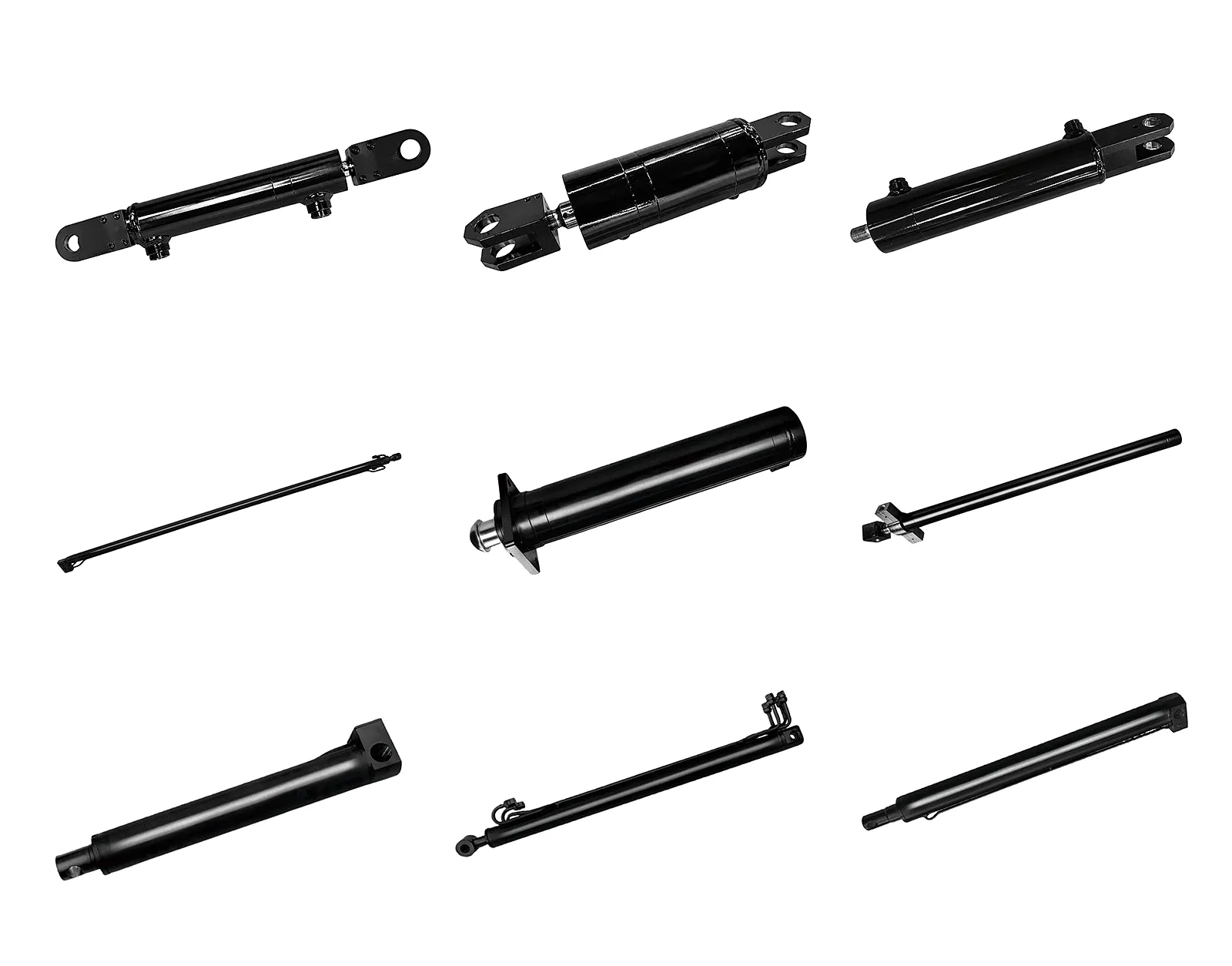
Ever Power: Custom Flange-Mount Hydraulic Cylinders, Precision-Engineered to Your Specification
Manufacturing excellence · Global supply chain · UK technical support
🏭
Advanced Manufacturing Facility
Ever Power operates a purpose-built hydraulic cylinder manufacturing facility equipped with CNC deep-hole boring and skiving-rollering lines for seamless tube processing, multi-axis rod turning and grinding centres, automated hard chrome plating with thickness control to ISO 6158, and CMM-based dimensional inspection to ensure every flange face and bore meets engineering drawing tolerances before shipment. The factory holds ISO 9001:2015 certification and operates a documented materials traceability system from raw steel mill certificate through to finished product test certificate — providing the audit trail that UK procurement teams and quality engineers require.
🛠
Customisation Capabilities
No two applications are identical, and Ever Power’s engineering team treats every flange mount cylinder enquiry as a bespoke project. Customisation extends to bore and rod diameter combinations outside standard ranges, non-standard stroke lengths, custom flange face dimensions and bolt-circle patterns matched to existing machine frames, dual or triple-port valve block integration, position feedback transducer integration (magnetostrictive or potentiometric), accumulator charging ports, and customer-specific paint or plating specifications. DXF and STEP drawing exchange for concept review, followed by 2D manufacturing drawings for customer approval, ensures that what is built matches exactly what was agreed — no surprises on delivery.
🌎
UK Supply Chain & Logistics
Ever Power maintains a dedicated UK customer services and logistics coordination channel, ensuring that orders destined for sites across England, Scotland, and Wales receive accurate lead-time commitments, proactive shipment tracking, and responsive technical aftercare. Standard cylinder orders are typically packed in custom-built wooden export crates lined with VCI film for moisture and corrosion protection during sea freight transit. For urgent replacement requirements in time-sensitive production environments, air freight options are available with coordinated customs clearance to minimise port delays at UK entry points — a service particularly valued by customers in process industries where unplanned shutdown costs are high.
Ready to specify your front or rear flange mount hydraulic cylinder? Our engineering team will review your application and prepare a detailed technical proposal.
Customer Success Story: Sheffield Forgemaster Cylinder Replacement Programme
A specialist open-die forging company in Sheffield — producing large steel forgings for the oil and gas, nuclear, and defence sectors — approached Ever Power with a critical cylinder replacement requirement. Their forging manipulator, a robotic arm used to position and rotate large billets under the forge hammer, was fitted with aging rear flange cylinders that had developed chronic rod seal leakage after years of demanding service. The original manufacturer could no longer supply direct replacements within an acceptable lead time, and the manipulator downtime was costing the business significant revenue on a high-value contract forging programme.
Ever Power’s engineering team received the customer’s original design drawings and conducted a full dimensional survey of the installation envelope via a site visit coordinated through a UK technical representative. The replacement design retained the original rear flange bolt-circle pattern and rod thread specification to ensure drop-in compatibility, while upgrading the piston rod material from standard Ck45 to 42CrMo4 with deeper hardening and a thicker chrome deposit for improved wear resistance under the high radial loads generated by manipulator arm movement. FKM seals replaced the original NBR specification to handle the elevated hydraulic oil temperatures common in high-duty forging hydraulic circuits.
Two replacement cylinders were shipped by air freight within 18 days of drawing approval, allowing the customer to complete their planned maintenance window and return the manipulator to full production without exceeding their contract delivery commitments. Since installation, the upgraded cylinders have completed over 14 months of continuous service without seal replacement — an improvement of more than 300% versus the end-of-life performance of the original units.
What Our Customers Say
★★★★★
“The rear flange cylinder Ever Power supplied for our forging manipulator was dimensionally perfect — it bolted straight in without any shimming or rework. The upgraded rod material and FKM seals have performed beyond our expectations in a genuinely punishing environment. We have already placed a repeat order for two more units to cover our second manipulator as a planned maintenance replacement.”
— Maintenance Engineering Manager, Open-Die Forging Facility, Sheffield
★★★★★
“We specified front flange cylinders from Ever Power for a new transfer press installation at our Birmingham facility. The engineering team provided detailed dimensional drawings within 48 hours of our enquiry, and the manufactured cylinders arrived with full material certificates and hydrostatic test records. The quality of the bore honing and rod chrome finish was immediately obvious — our hydraulics technicians commented that they were among the best-finished cylinders they had handled. Lead time from order confirmation to delivery was 22 days, which met our commissioning schedule.”
— Projects Engineer, Automotive Pressing Division, Birmingham
★★★★★
“Ever Power’s willingness to work to our non-standard flange bolt pattern — which was a legacy from the original German machine OEM — saved us a significant redesign cost. The custom rear flange cylinders they produced for our Humber dock gate mechanism have now been in service for two winters without a single maintenance call. The marine coating specification they recommended has held up exceptionally well against the salt air environment at the terminal.”
— Site Hydraulics Specialist, Bulk Terminal Operations, Humber Estuary
Często zadawane pytania
+ What is the difference between a front flange mount and a rear flange mount on a hydraulic cylinder, and how do I know which one my application in the UK needs?
A front flange mount attaches the cylinder at the rod end, making it most efficient when the primary working stroke is extension (push). A rear flange mount attaches at the blind end, making it best when the primary working stroke is retraction (pull). The right choice depends on your load direction, available installation space, and whether you need accessible rod-end maintenance. If you are unsure, contact Ever Power’s engineering team with your application details and we will recommend the correct configuration.
+ How much does a custom front flange or rear flange hydraulic cylinder cost, and can I get a quote from a UK supplier today?
The cost of a custom flange-mount hydraulic cylinder depends on bore diameter, stroke length, operating pressure, material specification, and any special features such as position sensing or special port configurations. Prices for standard sizes start from a few hundred pounds and scale with complexity and size. To receive an accurate quotation, email your technical requirements to [email protected] — Ever Power typically responds with a detailed technical proposal and price within one working day.
+ Where in the UK can I find a reliable hydraulic cylinder supplier that manufactures custom rear flange cylinders with fast lead times for industrial use in Sheffield or Birmingham?
Ever Power supplies custom rear flange and front flange hydraulic cylinders to industrial customers across the UK, including the heavy engineering and manufacturing sectors in Sheffield, Birmingham, Coventry, and the broader Midlands and South Yorkshire regions. With air freight options and a UK logistics coordination service, urgent replacement orders can typically be delivered within three to four weeks. Contact the sales team at [email protected] with your requirements.
+ Which hydraulic cylinder mounting style should I choose for a press application in my West Midlands automotive plant where push force is the primary requirement?
For a press application where extension (push) force is the primary working stroke, a front flange mount is the standard engineering recommendation. It provides a direct, short load path between the flange mounting face and the point of force application, minimising bending moments on the cylinder body and optimising structural efficiency. It also allows for easier rod seal service on the press floor without full cylinder removal.
+ How do I specify the correct flange bolt pattern and bolt size when ordering a replacement rear flange hydraulic cylinder for legacy machinery in a UK industrial plant?
When ordering a replacement rear flange cylinder for legacy machinery, you will need to provide the flange outside diameter, the bolt-circle diameter (the pitch circle diameter on which the bolt holes sit), the number of bolt holes, the bolt hole diameter (or thread size if they are tapped), and the flange face-to-mounting-surface depth. If you can provide a hand sketch or photograph of the original flange face alongside the cylinder bore and stroke, Ever Power’s engineering team can prepare a verification drawing before manufacture to confirm compatibility.
+ What seal materials do hydraulic cylinder suppliers in the UK recommend for front or rear flange cylinders operating in marine or coastal industrial environments with salt air exposure?
For marine or coastal installations — such as port equipment on the Humber or Mersey — FKM (Viton) seals are strongly recommended over standard NBR, as they offer superior resistance to seawater contamination in the hydraulic fluid and to the ozone degradation that accelerates seal ageing in coastal air. Additionally, the cylinder exterior should be specified with zinc-rich epoxy primer and two-part epoxy topcoat, stainless steel port plugs, and chrome-plated or nickel-plated external fittings to prevent galvanic corrosion in humid salt-air environments.
Ready to Specify Your Hydraulic Cylinder Mounting Solution?
Talk to Ever Power’s hydraulic engineering team. We handle front flange, rear flange, and custom mounting configurations for UK industrial customers across all sectors — from heavy forging to precision press, from port logistics to lifting platforms.
© Ever Power Hydraulic Cylinders · boom-cylinders.com · Supplied to UK industrial customers in Birmingham, Sheffield, Coventry, Hull & beyond · edit by gzl
 Polish
  English
  Italian
  Portuguese
  Dutch
Dutch  Swedish
  Danish
  Finnish
  Hindi
Hindi  Kazakh
  Turkish
  Ukrainian
  Romanian
  Spanish
  German
  Russian
  Korean
  Japanese
  Vietnamese
  Thai
Thai  Indonesian
  Malay
Malay  French
  Greek
Greek