
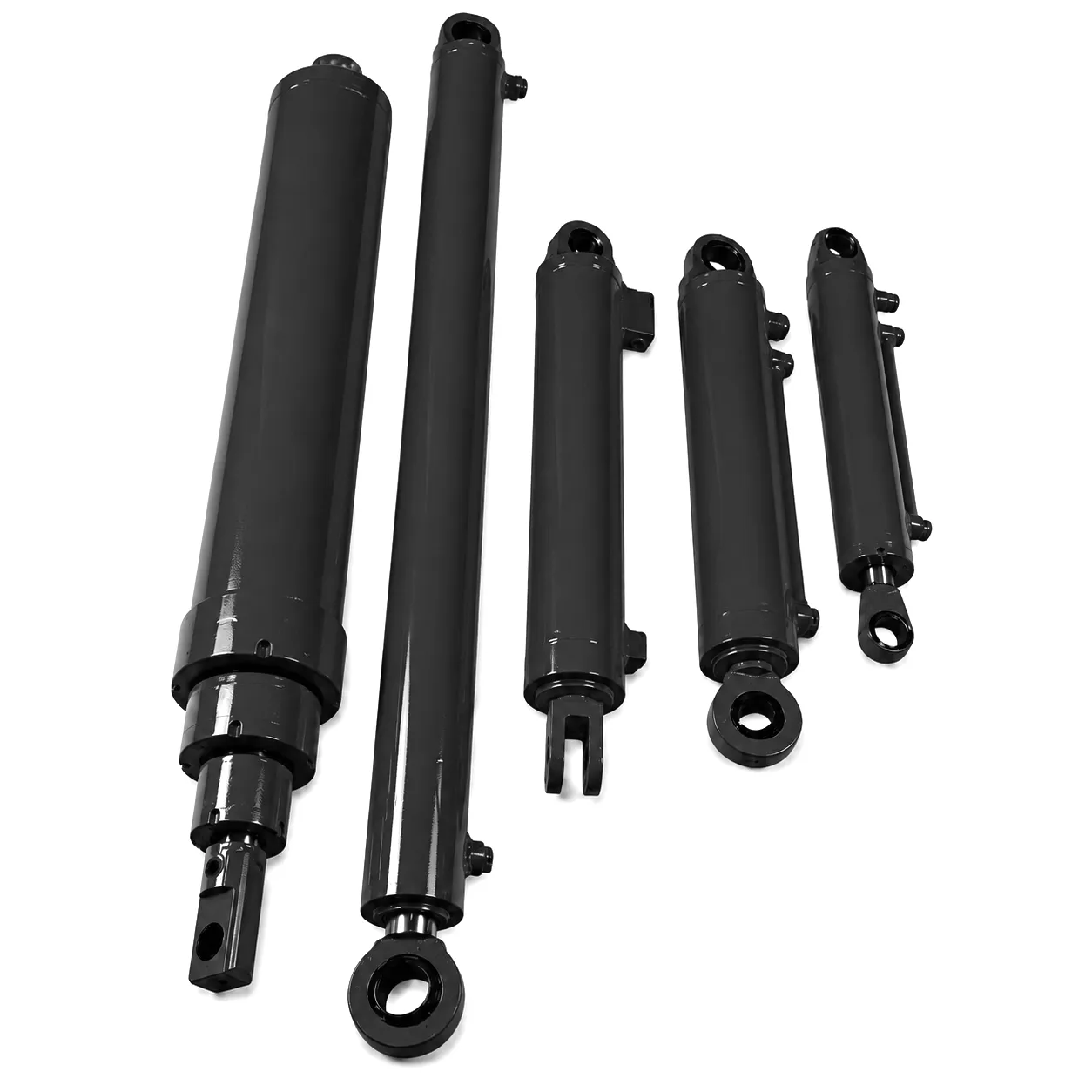
What Bore Size Actually Means in a Hydraulic Cylinder
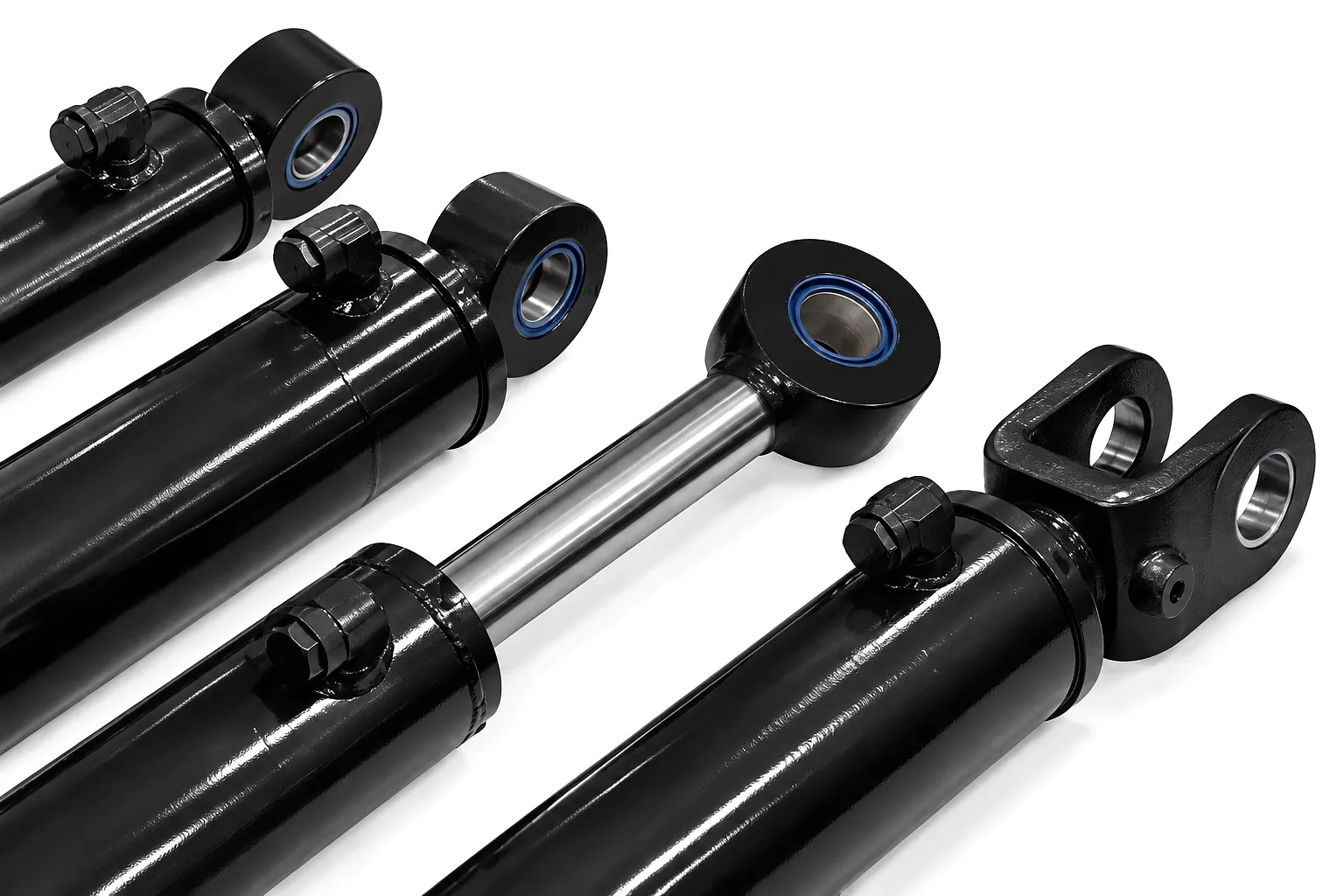 The bore of a hydraulic cylinder refers to the internal diameter of the cylinder barrel — the hollow tube through which the piston travels under fluid pressure. It is measured in millimetres in metric systems (standard across UK and European engineering) and expressed as a clean nominal value: 40 mm, 63 mm, 80 mm, 100 mm, and so on, following ISO 6020/6022 and BS EN 3320 standards. Bore size is not to be confused with the outer diameter of the cylinder barrel, nor with the piston rod diameter — these are distinct dimensions that carry their own separate engineering implications. When a drawing or specification sheet states a bore size, it is referring exclusively to this internal measurement of the cylindrical chamber.
The piston inside the bore is machined to fit within a very tight tolerance, typically within the H7/g6 or H8/f7 tolerance band depending on the application class. This tight fit, sealed by piston seals made from polyurethane or PTFE composite materials, ensures that the pressurised fluid acts entirely on the face of the piston rather than bypassing it. The force the cylinder can generate — in kilonewtons — is a direct function of the bore area and the system operating pressure. This relationship makes bore size the single most consequential physical dimension in any hydraulic cylinder specification, and why every calculation begins here.
Core Materials That Define Bore Performance and Longevity
Honed Steel Tube Barrel
The cylinder barrel is the component that physically defines the bore. In industrial hydraulic cylinders, the barrel is manufactured from precision seamless cold-drawn steel tube, typically St 52.3 (equivalent to S355J2H under EN 10210) or E355 grade. The inner surface is precision honed to a surface roughness of Ra 0.2 to Ra 0.4 micrometres — a mirror finish that is essential for both seal integrity and long service life. In corrosive environments, such as offshore applications in Aberdeen or marine equipment in coastal UK ports, 316L stainless steel or internally hard-chrome-plated barrels are specified. The bore geometry must maintain concentricity within 0.05 mm along its entire length to prevent differential wear and side-loading of the piston seals.
Piston and Rod Materials
The piston itself is machined from ductile iron (GG-25 or GGG-40) or structural steel, depending on the pressure class. Its outer diameter is ground to the exact nominal bore minus the specified seal groove clearance, with tolerance classes held to H7/g6 for precision hydraulic applications. The piston rod — the external component that transmits the cylinder’s force to the load — is manufactured from induction-hardened and chrome-plated C45E steel, providing a surface hardness of typically 58–62 HRC. This hard chrome layer, applied at 20 to 30 micrometres thickness, resists rod seal wear and protects against environmental contamination. Nikasil coating and DLC (diamond-like carbon) coatings are emerging alternatives in high-specification applications where chrome plating is restricted under REACH environmental regulations in the UK and EU.
Seal Compounds and Bore Compatibility
Seals are bore-size-specific components. Piston seals, which bear directly on the honed bore surface, are made from polyurethane (PU), PTFE composites, or NBR (nitrile rubber) depending on the operating temperature range and fluid type. The seal lip geometry must be precisely matched to the bore diameter and the surface finish of the barrel. For bores above 160 mm — common in heavy press applications in the Black Country manufacturing region — multi-piece composite seal assemblies are used rather than single-lip seals. Wiper seals on the gland end protect the bore from ingress of contamination, a critical concern in construction plant operating in UK field conditions. Wrong bore specification leads to wrong seal selection, accelerating leakage and failure.
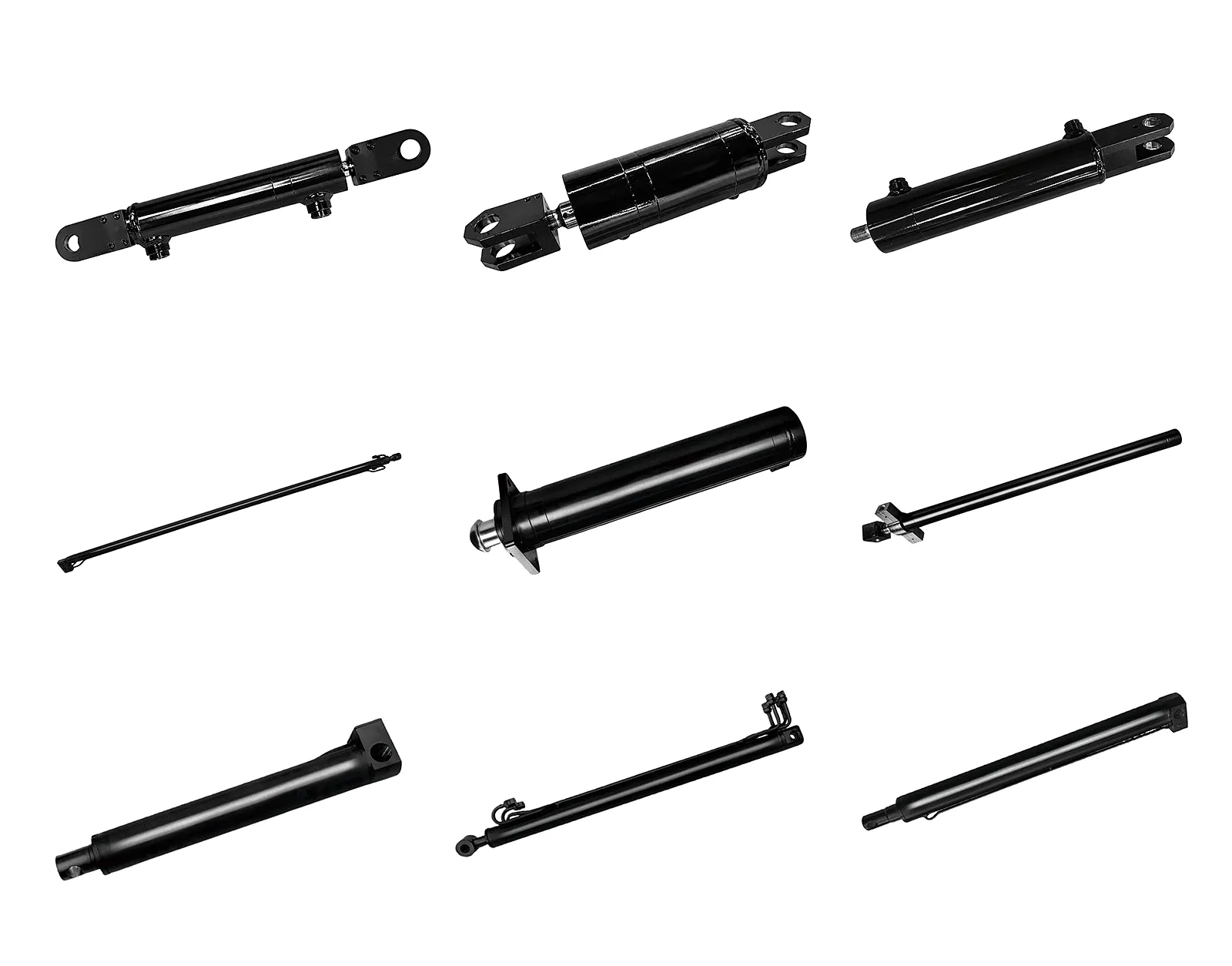
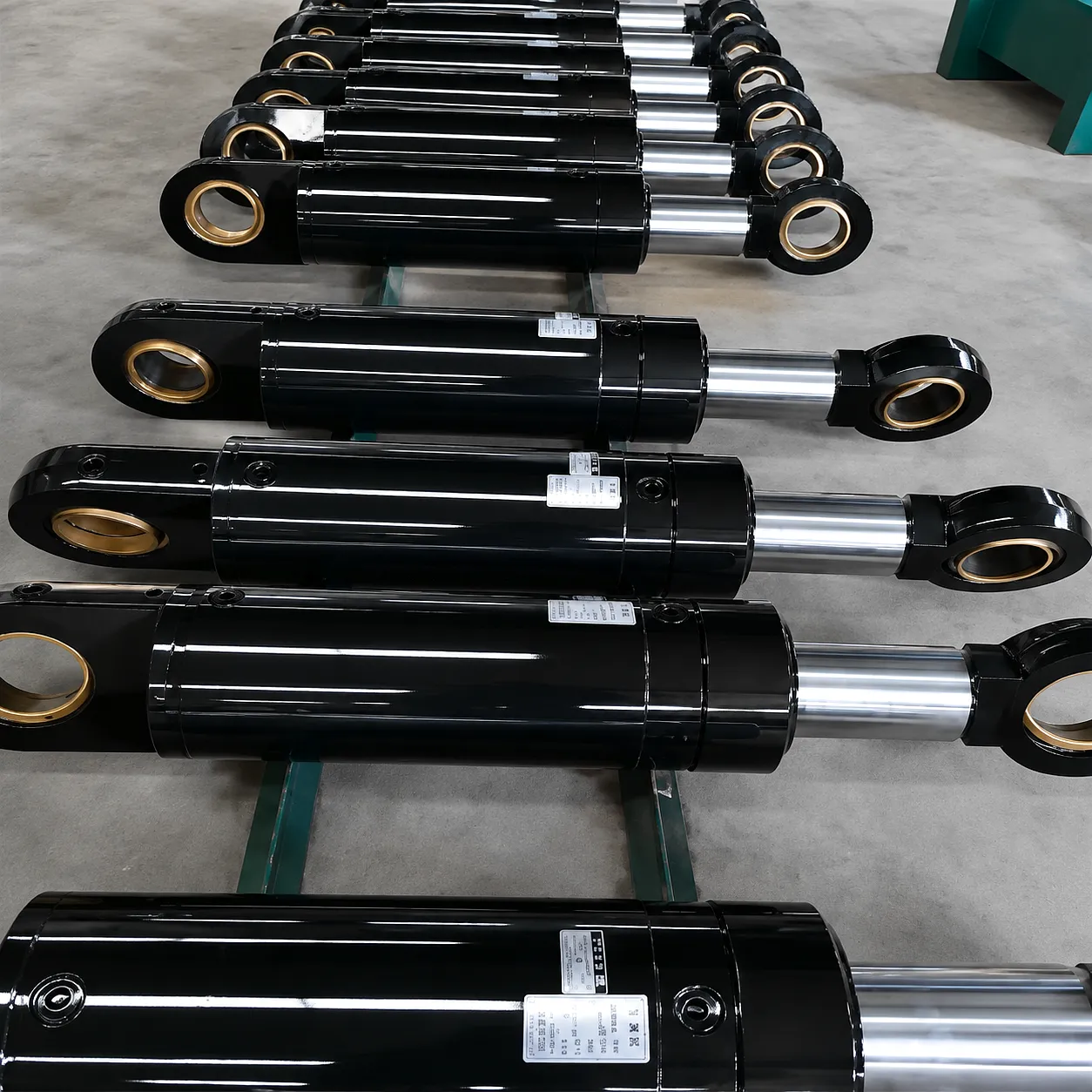
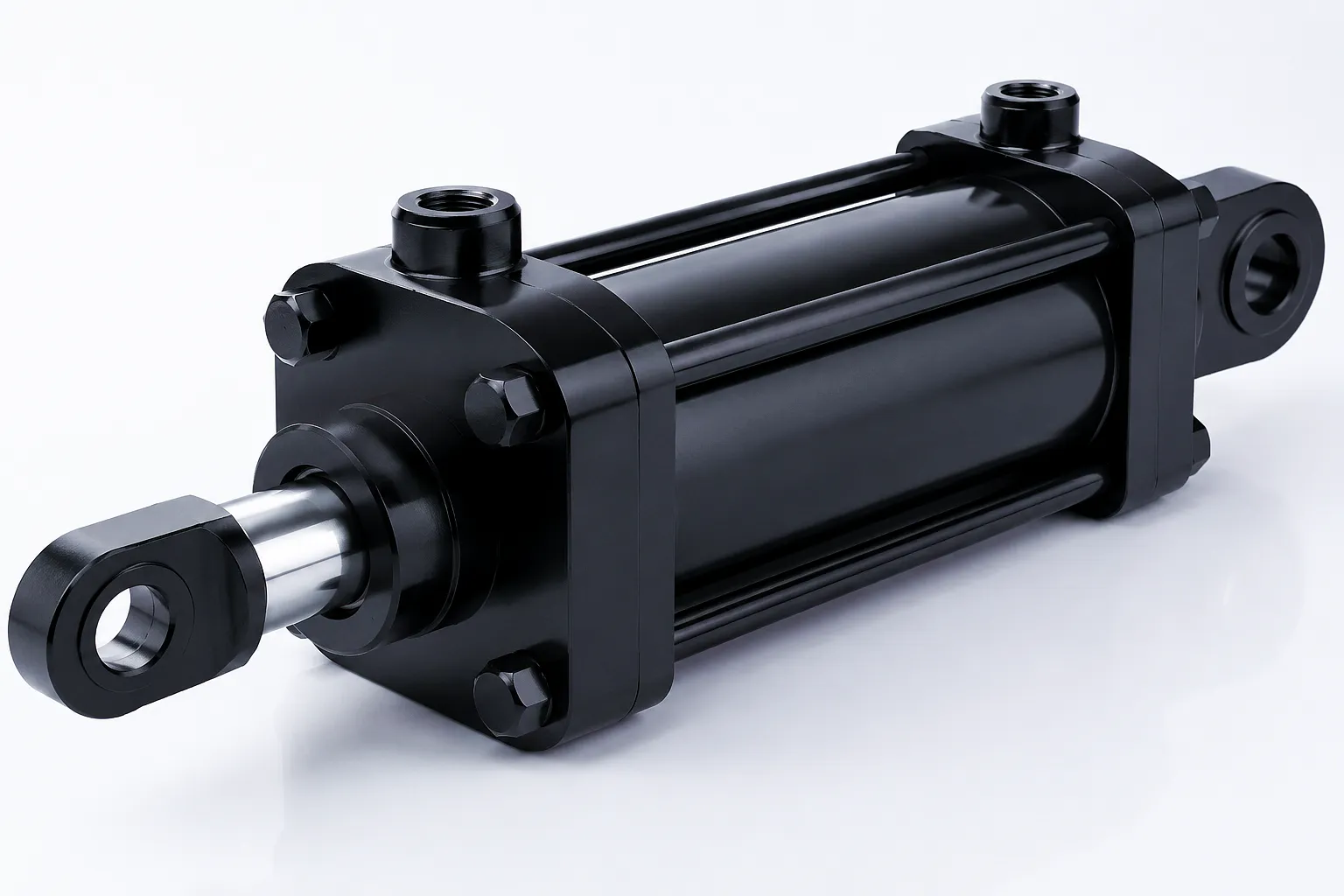
Ever Power hydraulic cylinder product range — engineered for precision across bore sizes 25 mm to 500+ mm
Why Getting Bore Size Right Delivers Measurable Technical Advantages
Optimised Force Output
Selecting a bore diameter precisely matched to your system pressure and load requirement ensures maximum cylinder efficiency. Over-boring wastes capital and adds unnecessary mass and fluid volume to the circuit. Under-boring creates chronic under-performance and accelerated component wear. The correct bore produces the exact force needed at the working pressure your power unit is sized to deliver — a calibration that protects every other component in the circuit simultaneously.
Extended Seal Service Life
When the bore diameter is correct for the operating pressure, piston seals run at their designed contact stress. Oversized cylinders operating at low system pressure cause seals to underload and allow fluid bypass — a slow-motion leak that is sometimes misdiagnosed as barrel wear. Undersized bores in high-pressure systems overload seal lips, causing rapid extrusion and failure. A correctly specified bore keeps every seal in its design window, dramatically reducing maintenance intervals and unplanned downtime on UK production lines.
Thermal and Speed Stability
A bore-correct cylinder moves the designated fluid volume per stroke cycle, keeping flow velocities inside the circuit within designed limits. Oversized bores demand excessive pump delivery, generating heat that degrades oil viscosity and accelerates seal ageing. The stroke speed of a hydraulic cylinder is governed by flow rate and bore area — the larger the bore, the more flow you need for equivalent velocity. Matching bore size to required stroke speed prevents thermal runaway in sustained-cycle applications such as agricultural baling presses or industrial cold-heading machinery.
Structural Integrity and Fatigue Resistance
Bore size dictates barrel wall thickness in relation to operating pressure. Using the Barlow formula — where minimum wall thickness equals (operating pressure × bore radius) / (material yield strength × safety factor) — engineers determine the minimum steel wall that prevents yield. For cylinders operating at 350 bar or above, as is common in offshore lifting and tunnel boring equipment, bore diameter must be carefully balanced against wall thickness to maintain structural integrity under peak pressure spikes. Ever Power’s bore machining centre holds roundness within 0.01 mm, preventing stress concentration at the barrel wall.
Product Technical and Performance Specification Table
Industrial Application Scenarios: Where Bore Size Decisions Are Critical
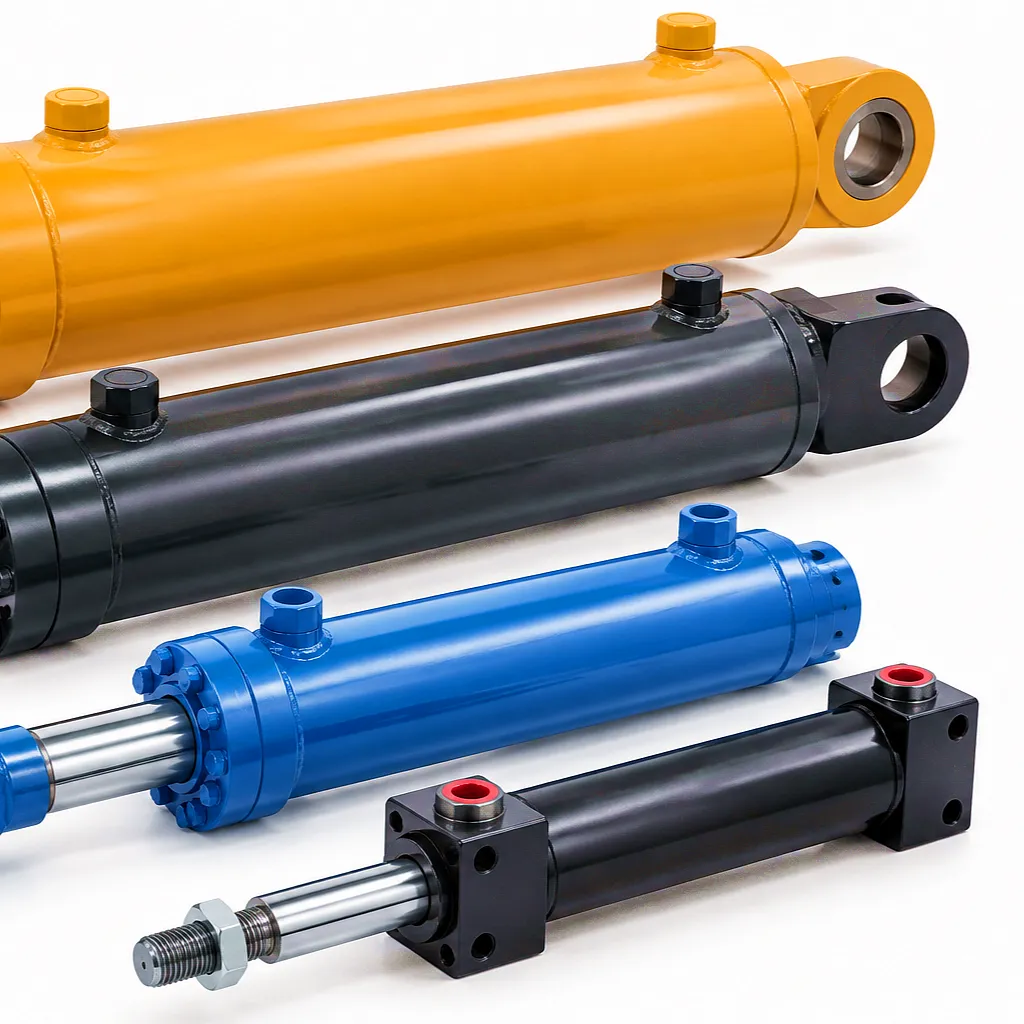
Customer Success Story: Birmingham Hydraulic Press Overhaul
Heavy metal stamping plant, West Midlands — Ever Power bore-matched cylinder replacement programme
A medium-scale metal stamping operation in Birmingham’s Tyseley industrial district ran a fleet of eight hydraulic presses originally installed in the 1990s. The cylinder inventory across these presses included a mix of bore sizes — nominally 100 mm and 125 mm — but years of ad-hoc maintenance had resulted in several replacement cylinders being fitted with non-original bore dimensions. The consequence was that two of the eight presses were delivering approximately 18% less clamping force than their design specification, which manifested as dimensional variation in stamped components and an elevated rejection rate at the final inspection stage. The plant engineering team initially attributed the problem to tooling wear before a detailed hydraulic survey identified the bore mismatch.
Ever Power was contacted through the plant’s UK procurement partner. Our technical team reviewed the original press drawings, confirmed the correct bore specification (100 mm at 230 bar operating pressure for the 220 kN clamping requirement), and supplied a matched set of eight replacement cylinders with H7-tolerance 100 mm bores, all supplied with EN 10204 3.1 material certification. Cylinders were delivered to the Birmingham facility on a four-week lead time, including complete documentation packs for the plant’s maintenance management system. Following installation and system commissioning, the plant recorded a 94% reduction in dimensional variation failures within the first production month. Press throughput also improved by approximately 7% as the operators were no longer compensating for underperformance through slower cycle rates.
The project confirmed a lesson that Ever Power’s engineering team has seen repeatedly: bore size errors introduced through uncontrolled maintenance replacement are often invisible at installation, becoming apparent only when output quality or throughput is tracked carefully over time. Ever Power now supplies this Birmingham plant with cylinder sets on an annual service cycle under a standing supply agreement, with bore specifications locked by part number to prevent recurrence of the original problem.
Customer Reviews
“We had been chasing a clamp force problem on our press line for nearly two years. Ever Power identified it as a bore size mismatch within the first technical conversation, supplied correctly specified cylinders, and the problem simply went away. The quality of the cylinders — bore surface finish, seal fit, documentation — was excellent throughout.”
“We needed a custom 140 mm bore cylinder with a non-standard port position for a marine crane installation in Aberdeen. Ever Power’s team handled the full engineering package — bore calculation, wall thickness check, material certification — and delivered within the project window. The cylinder passed DNV-GL site inspection first time. We have used them for three subsequent projects.”
“Our agricultural equipment line uses paired cylinders for header lift, and bore matching between pairs is critical for level operation. Ever Power supplied bore-matched pairs within 0.02 mm of each other, which eliminated the header drift issue we had struggled with using other suppliers. Delivery to our Lincolnshire facility was on time and fully documented.”
Często zadawane pytania
How do I calculate the right bore size for a hydraulic cylinder in a UK industrial press application?
Begin with the required output force in kilonewtons and your system operating pressure in bar. Rearrange F = P × A to find the required piston area: A = F / P. Calculate the bore diameter from that area using d = 2 × √(A / π). Select the nearest ISO standard nominal bore above that calculated value to maintain a working safety margin. Ever Power’s technical team can verify this calculation for any press application.
What is the typical price range for a custom bore hydraulic cylinder supplied to a UK manufacturer, and how do I get a quote?
Custom bore hydraulic cylinders for UK industrial applications vary widely in cost depending on bore diameter, stroke length, operating pressure class, material specification, and certification requirements. Standard bore cylinders (40–100 mm) for moderate-duty applications typically range from a few hundred to several thousand pounds per unit. Heavy-duty or large-bore custom cylinders can be significantly higher. The fastest route to a firm price is to email your specification to [email protected] — include bore, stroke, operating pressure, mounting style, and any certification requirements.
Which bore size hydraulic cylinder supplier in the UK can provide EN 10204 3.1 material certificates and UKCA documentation for heavy press applications?
Ever Power supplies all hydraulic cylinders with EN 10204 3.1 material certification as standard, covering the cylinder barrel, piston rod, end caps, and sealing system. For applications governed by UK Pressure Equipment (Safety) Regulations 2016, third-party 3.2 inspection certificates from accredited notified bodies are available on request. UKCA conformity documentation can be prepared for CE-equivalent declarations required by UK buyers operating post-Brexit.
How does bore size affect the stroke speed of a hydraulic cylinder in a high-cycle agricultural baling machine operating in Lincolnshire?
Stroke speed is governed by the flow rate delivered to the cylinder divided by the bore area. A larger bore requires more flow to achieve the same stroke velocity. In a high-cycle baling press, where stroke speed directly determines throughput, specifying a bore that is larger than necessary forces the hydraulic power unit to deliver excess flow — requiring a larger pump and more engine power. The correct bore keeps stroke speed within the cycle time requirement using the available power unit flow capacity, optimising the machine’s overall energy efficiency.
Where can I find a reliable hydraulic cylinder manufacturer that offers bore sizes from 25 mm to 800 mm for OEM machine builders based in Sheffield or Birmingham?
Ever Power manufactures hydraulic cylinders across the full bore range from 25 mm to 800 mm and beyond for UK OEM machine builders across sectors including steel processing in Sheffield, automotive pressing in Birmingham, and agricultural machinery in the East Midlands. Custom bore specifications, non-standard stroke lengths, and OEM branding programmes are all available. Contact the Ever Power sales team at [email protected] with your bore, stroke, pressure, and application details to start the quotation process.
Ready to specify the right bore size for your application?
Ever Power’s engineering team is ready to review your requirements and deliver a precision-matched cylinder quotation.
© Ever Power Hydraulic Cylinders · Precision Bore Manufacturing · UK Supply · edit by gzl
 Polish
  English
  Italian
  Portuguese
  Dutch
Dutch  Swedish
  Danish
  Finnish
  Hindi
Hindi  Kazakh
  Turkish
  Ukrainian
  Romanian
  Spanish
  German
  Russian
  Korean
  Japanese
  Vietnamese
  Thai
Thai  Indonesian
  Malay
Malay  French
  Greek
Greek