
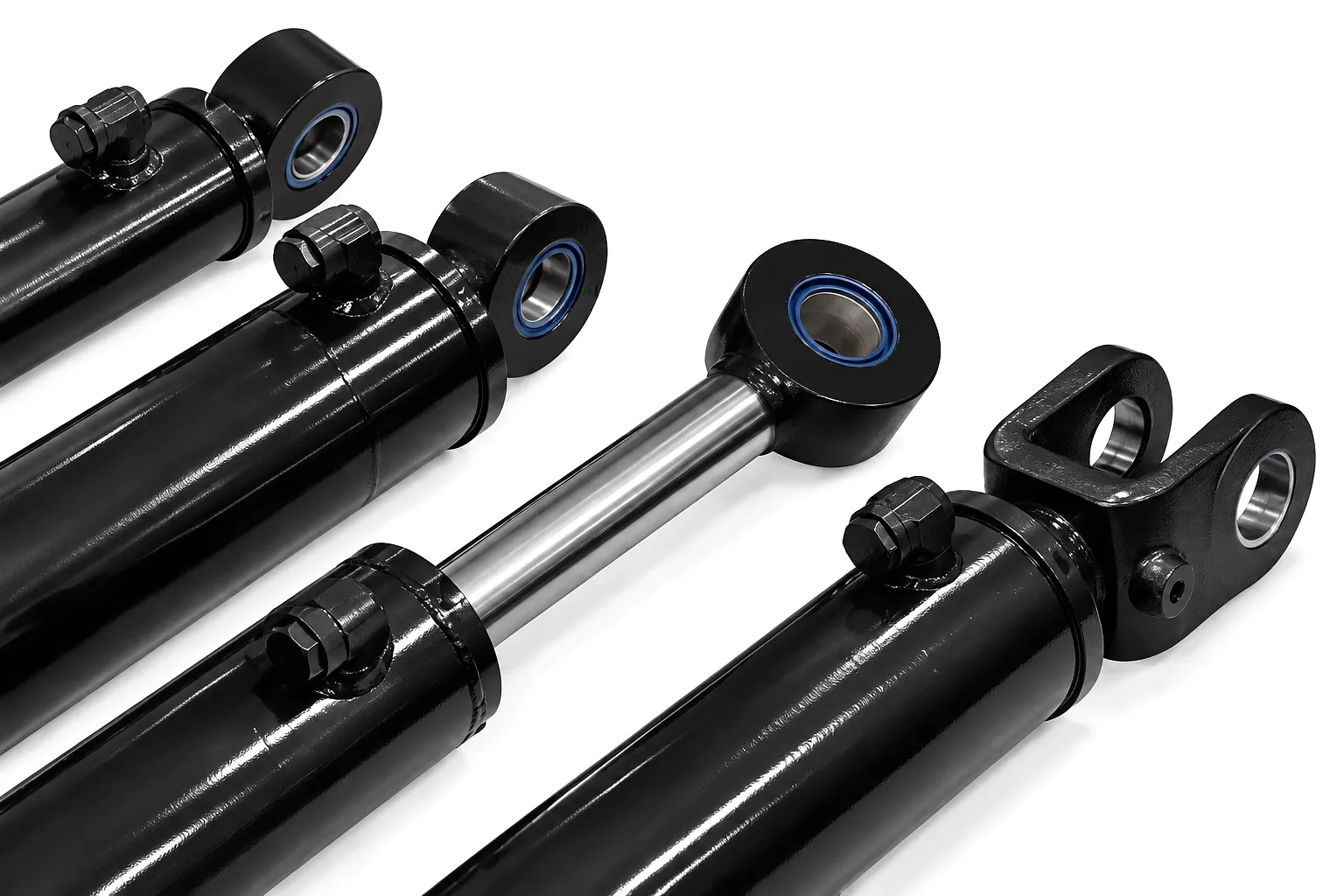
 The compact excavator market has expanded rapidly across the United Kingdom, driven by urban regeneration projects in cities such as Birmingham, Sheffield, Leeds, and Manchester, where tight access corridors and mixed-use sites demand smaller plant. Yet the hydraulic boom cylinder — the linear actuator that translates pump pressure into boom lifting force — is often treated as an interchangeable commodity. That assumption costs operators money. A cylinder mismatched in bore size, stroke length, sealing grade, or chrome specification will underperform, leak under cyclic load, or fail prematurely in the abrasive, wet conditions that characterise British groundworks sites from autumn through spring. Understanding precisely what governs cylinder performance in the sub-8-tonne class gives procurement teams a decisive advantage, whether they are purchasing OEM replacements or specifying units for custom attachment builds.
How a Hydraulic Boom Cylinder Works in Practice
Pressurised Fluid Entry
Hydraulic oil — typically ISO VG 46 — is directed from the machine’s main control valve into the cylinder’s cap-end port. Operating pressures in the sub-8-tonne class commonly range from 200 to 310 bar, depending on manufacturer and application. The incompressible oil acts against the piston face, converting fluid energy into mechanical thrust with near-instantaneous response. The ratio of bore diameter to system pressure determines maximum push force, and getting this ratio right for the machine’s rated breakout force is the fundamental starting calculation for any cylinder specification exercise.
Piston Rod Extension and Retraction
As pressure builds, the piston assembly travels along the barrel bore, extending the chrome-plated rod through the rod-end gland. Simultaneously, returning oil from the rod-end is routed back through the control valve to tank. Retraction reverses this flow path — rod-end pressure retracts the piston, lowering the boom. The annular area difference between the cap-end and rod-end faces creates an asymmetry in force and speed: extension force is always greater than retraction force at equal pressure. For boom-down functions, machine designers sometimes compensate by specifying higher rod-end flow rates to maintain acceptable cycle times without sacrificing holding load capacity on inclines.
End Cushioning and Load Holding
Quality boom cylinders for compact excavators incorporate adjustable end cushions at both the cap-end and rod-end of stroke. These metered orifices progressively decelerate the piston before it contacts the end cap, eliminating hydraulic shock that would otherwise fatigue weld seams and loosen pivot pin bores over time. Load-holding valves — either integral counterbalance valves or pilot-operated check valves mounted on the cylinder ports — prevent unintended boom drift when the operator releases controls. On UK building sites where machines frequently park on graded banks, this feature directly prevents costly property damage and meets the requirements of LOLER (Lifting Operations and Lifting Equipment Regulations 1998).
Core Materials: Why Specification Matters in British Site Conditions
Barrel Tube — ST52 / E355 Cold-Drawn Steel
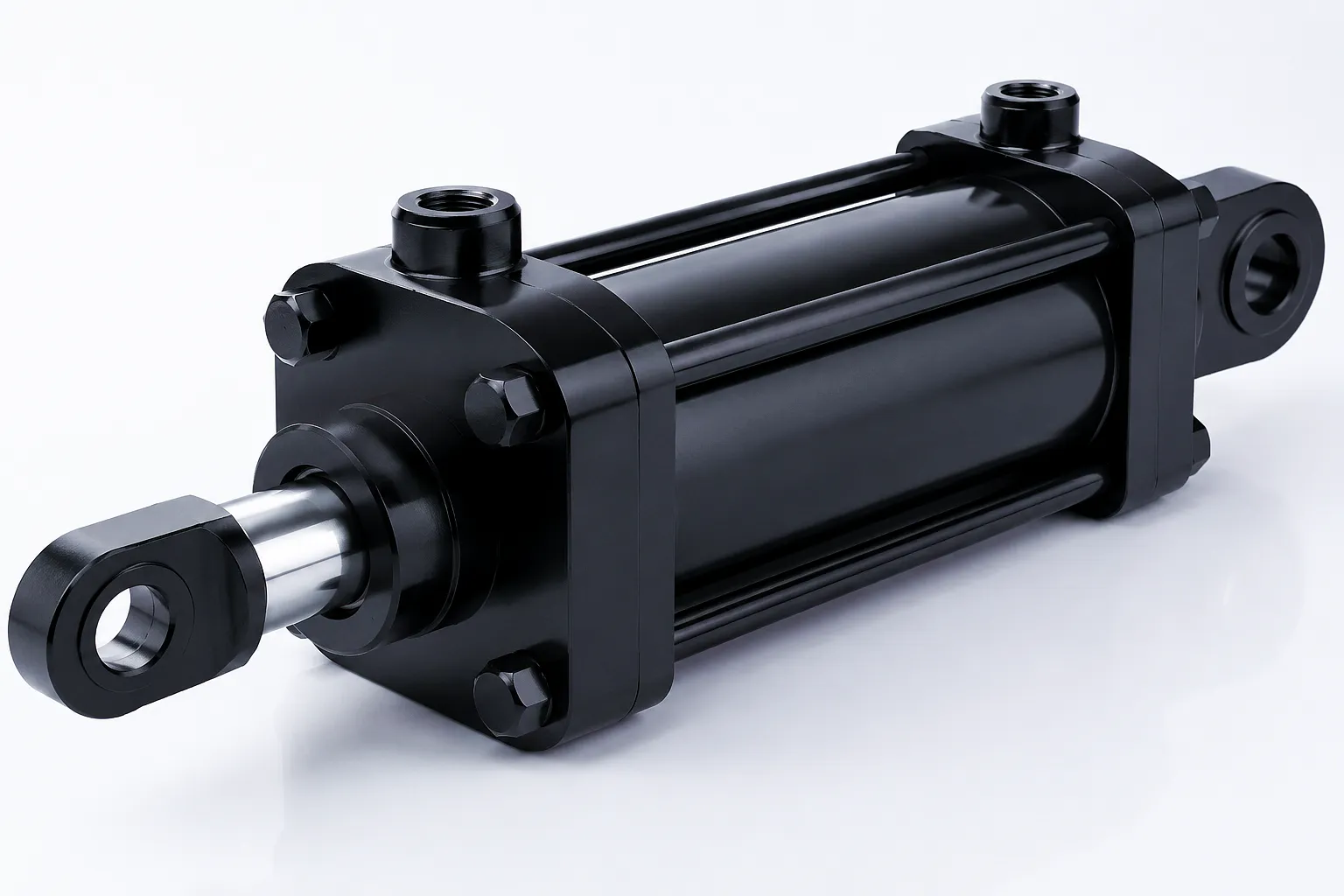
The hydraulic cylinder barrel in mini excavator applications is almost universally machined from cold-drawn seamless steel tube to EN 10305-1 standard, equivalent to ST52 or E355. Cold drawing refines the grain structure and improves dimensional tolerances to H8/H9, essential for maintaining piston seal integrity under cyclic pressure. Honed to an internal surface finish of Ra 0.4 µm or better, the bore ensures controlled oil film distribution across piston seals without causing spiral leakage paths. On machines operating in the clay-heavy soils of the Midlands or the sand and gravel of East Anglia, barrel wall thickness must be calculated with a safety factor of at least 2.5 against burst pressure.
Piston Rod — Induction Hardened and Hard Chrome Plated
Piston rods in mini excavator boom cylinders are machined from CK45 or 42CrMo4 steel bar, induction hardened to a surface hardness of 52–62 HRC, then hard chrome plated to a deposit thickness of 20–35 µm before being ground and polished to Ra 0.1–0.2 µm. This surface stack delivers the scratch resistance needed to survive contact with grit and debris flung off bucket lips and tracks — a persistent hazard on construction sites in cities like Sheffield where brownfield redevelopment constantly turns up crushed aggregate. Rods exposed to particularly corrosive environments, such as coastal utility trenching in areas like Hull or Aberdeen, benefit from nickel-chrome duplex plating or alternative HVOF thermal spray coatings that provide superior corrosion barrier performance.
Sealing Systems — Polyurethane and PTFE Composite
The sealing assembly is the most maintenance-sensitive component in any hydraulic cylinder. In sub-8-tonne boom cylinders, the piston seal is typically a polyurethane or filled PTFE composition designed for continuous operating temperatures of -30°C to +100°C — a range that comfortably covers British winters on exposed moorland sites and summer operation of a machine working close to a diesel generator. The rod seal pack generally combines a primary lip seal with a secondary wiper seal and a PTFE-coated anti-extrusion ring to guard against seal blow-out under pressure spikes. Choosing a seal kit rated to the working pressure plus a 20% spike allowance is essential when the machine shares a hydraulic circuit with a high-flow auxiliary attachment such as a hydraulic breaker.
End Caps and Pivot Eyes — GS-52 Cast Iron or Forged Steel
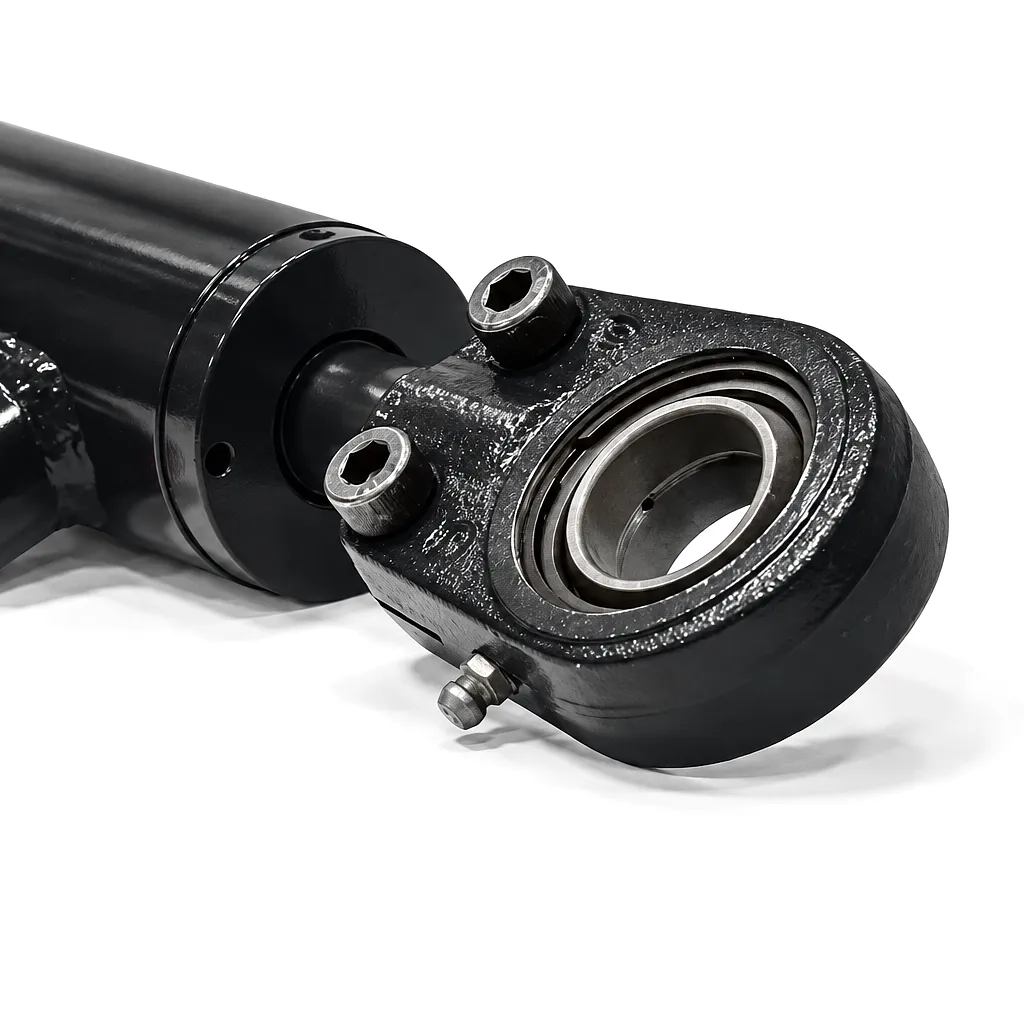
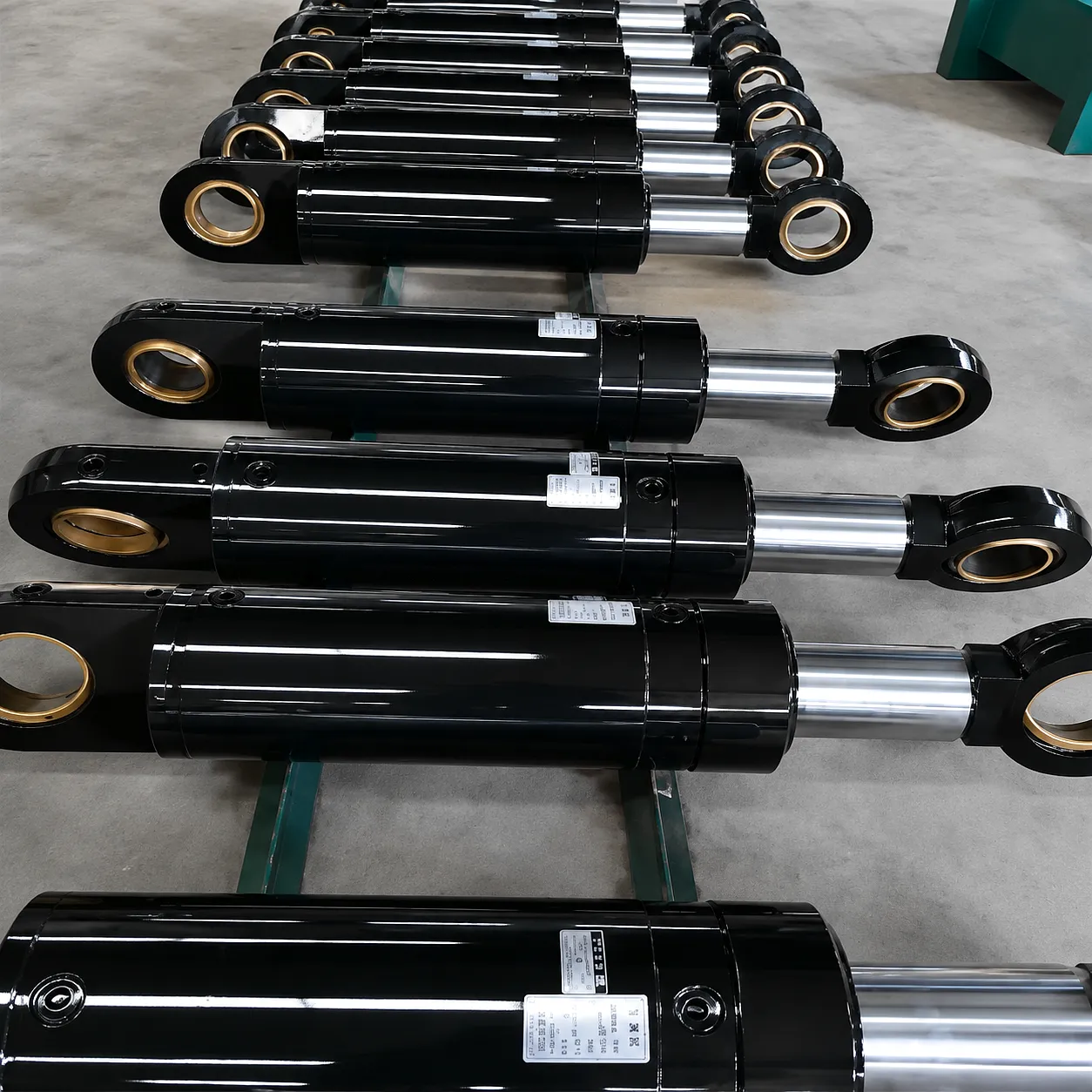
Cap and base end closures on mini excavator boom cylinders are typically manufactured from GS-52 nodular cast iron or forged S355 structural steel, with welded or threaded connections to the barrel. Forged end caps are preferred for applications where side-loading is anticipated — such as when the boom is used to push laterally against a trench wall, a common improper practice that nonetheless occurs regularly on real sites. Pivot eyes and clevises are bored to H7 tolerance and fitted with replaceable bronze or composite bushings, allowing straightforward refurbishment without replacing the entire cylinder assembly. Specifying sealed bushings significantly extends greasing intervals, reducing scheduled downtime and the associated cost burden for plant hire operations maintaining fleets in cities like Manchester or Bristol.
Key Engineering Advantages That Separate High-Spec Cylinders from Budget Units
Precision Bore Concentricity
Bore concentricity tolerances held to within 0.02 mm across the full barrel length prevent eccentric piston loading, which is the root cause of uneven seal wear and rod side-play in extended positions. Machines working on sloping ground in the Peak District or the Pennines — common utility relocation territories — subject cylinders to combined axial and bending loads that quickly expose poor concentricity in budget barrels.
Extended Rod Stroke-to-Bore Ratios
Well-engineered mini excavator boom cylinders maintain stroke-to-bore ratios of up to 10:1 without compromising buckling resistance. This is achieved through careful selection of rod diameter — typically 60–80% of bore diameter in the sub-8-tonne class — and through precise alignment of mounting bores. Greater stroke reach allows smaller machines to achieve dig depths competitive with units one weight class higher, a commercially significant advantage for plant hire companies tendering against larger competitors in restricted-access urban sites across Glasgow, Edinburgh, and Liverpool.
Low-Temperature Seal Performance
Seal compounds rated to -30°C maintain their elasticity and lip contact force during cold-start cycles on British winter mornings, preventing the characteristic leak signatures — oil weeping around the rod gland — that appear on cylinders fitted with standard seals when ambient temperatures drop below 5°C. This performance specification is directly relevant to plant operating through Scottish winters or exposed Yorkshire dale sites where overnight frost is routine from October through April and machines must be operational without extended warm-up periods to meet programme deadlines.
Cushion Adjustability
Externally adjustable cushion needles allow operators and service technicians to tune end-of-stroke deceleration without disassembling the cylinder. This is critical when a machine transitions between attachment types — from a standard bucket to a hydraulic thumb grip — which alters the inertial load the cylinder decelerates at each stroke end. Factory-preset fixed orifices save cost at point of manufacture but become a liability in rental fleets where machines are configured differently month to month, introducing shock loading that progressively damages weld seams and eventually precipitates barrel failure under pressure.
When specifying a complete hydraulic system for a mini excavator retrofit, the boom cylinder selection should be evaluated alongside the machine’s pump and control valve capabilities. A well-matched Unidade de potência hidráulica personalizada ensures consistent flow delivery and pressure regulation that maximises cylinder duty cycle without overheating the circuit — a common failure mode on compact machines running extended demolition attachments in confined basement excavations.
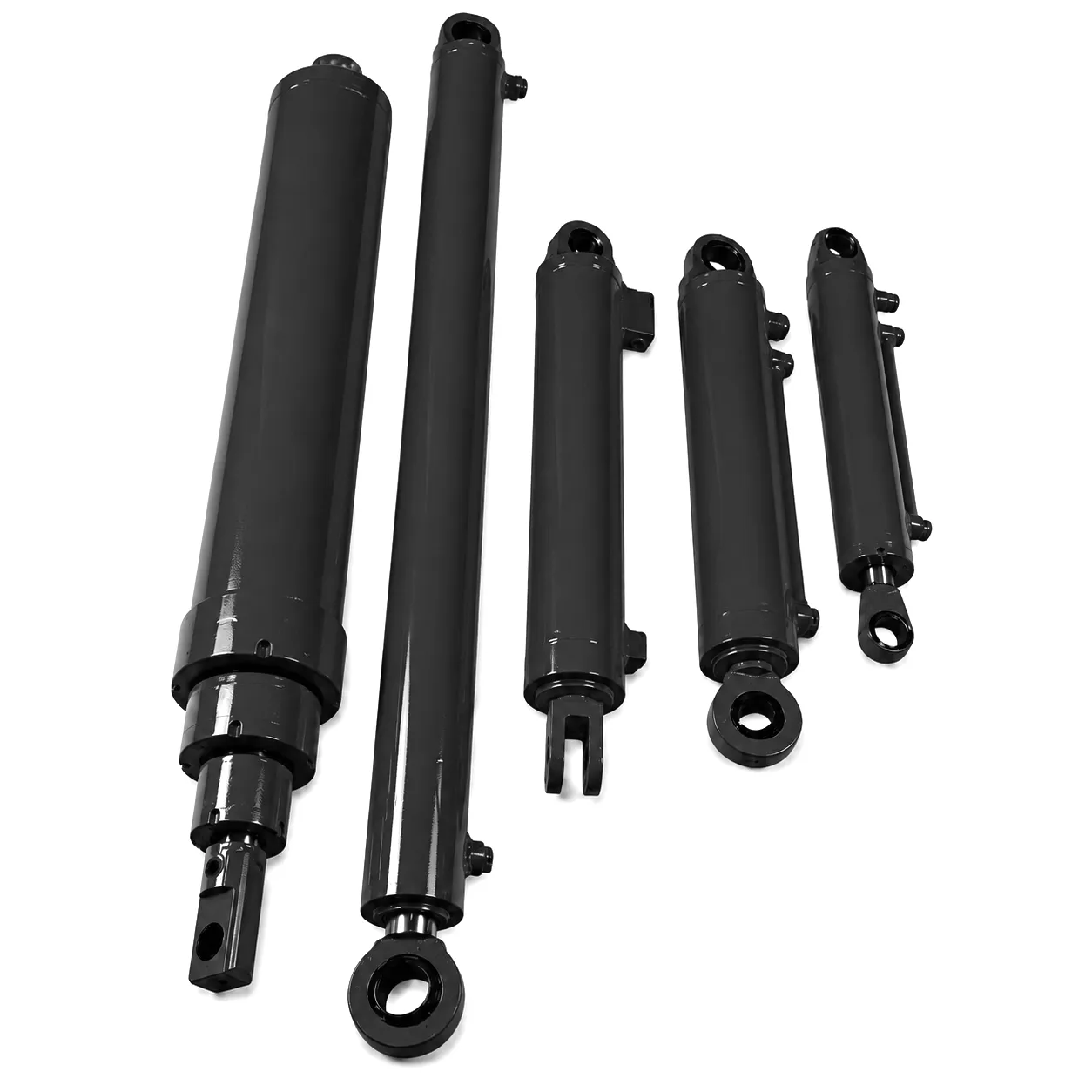
Product Technical and Performance Parameters
| Parâmetro | Typical Range (Sub-8t Class) | Engineering Note |
|---|---|---|
| Diâmetro do furo | 50 – 100 mm | Determines maximum push force at rated pressure |
| Diâmetro da haste | 35 – 75 mm | 60–80% of bore; governs buckling resistance |
| Comprimento do curso | 300 – 900 mm | Matched to boom arm geometry and max dig depth |
| Operating Pressure | 200 – 310 bar | Safety factor 1.5x burst rating minimum |
| Push Force (typical) | 39 – 244 kN | Force = Pressure × Bore Area (cap-end) |
| Material do barril | ST52 / E355 Cold-Drawn Seamless | EN 10305-1; honed to Ra 0.4 µm |
| Material da haste | CK45 / 42CrMo4 Induction Hardened | Hard chrome 20–35 µm; Ra 0.1–0.2 µm |
| Rod Surface Hardness | 52 – 62 HRC | Prevents scoring from grit contamination |
| Seal Temperature Range | -30°C to +100°C | PU/PTFE composite; matched to ISO VG 46 oil |
| Bore Concentricity | ±0.02 mm | Critical for piston seal longevity |
| End Cushion Type | Adjustable needle (both ends) | Reduces end-of-stroke shock by 80–90% |
| Mounting Options | Clevis, trunnion, flange, cross-tube | OEM pin-bore replication available |
| Load-Holding Valve | Pilot-operated check or counterbalance | LOLER 1998 compliance on UK lifting plant |
Industrial Application Scenarios for Sub-8-Tonne Excavator Boom Cylinders
Customer Success Story: Sheffield Utilities Contractor Cuts Cylinder Downtime by 68%
Meridian Infrastructure Services operates a fleet of fourteen 3–7 tonne excavators across South Yorkshire, primarily engaged in gas distribution network upgrades under long-term framework agreements with National Grid. The company had experienced persistent boom cylinder failures on five of their 5.5-tonne machines — specifically rod seal blow-out after approximately 1,800 operating hours, well short of the 3,000-hour intervals targeted in their maintenance programme. The failures were traced to seal compound mismatch: the OEM replacement seals sourced through a national distributor were standard NBR formulation, insufficiently resistant to the 78°C continuous oil temperature the machines reached when running a hydraulic impact moil on back-to-back shifts during winter main replacement works.
After contact with Ever Power’s technical sales team, Meridian specified a complete cylinder rebuild programme using Ever Power barrels with FKM rod seal packs and upgraded wiper seals rated to 115°C continuous. The first batch of ten cylinders was delivered to their Sheffield depot in 18 working days, arriving with full EN 10204 3.1 material certificates and individual pressure test records. Meridian’s workshop manager refitted the units using Ever Power’s supplied installation instructions and torque specifications, noting that the port thread forms and mounting pin diameters were precisely matched to the original machine drawings.
At the 2,400-hour inspection point, none of the refitted cylinders showed any rod seal weepage. By 3,200 hours — a new benchmark for this fleet — all ten cylinders remained fully serviceable. Meridian has since extended the programme across their full 5.5-tonne fleet and has commenced trialling Ever Power boom cylinders on their 7.2-tonne machines undertaking deep service crossings on the Sheffield Supertram line maintenance corridor.
“The FKM seal specification Ever Power recommended has completely changed our cylinder service intervals. We went from recurring blow-outs at under 2,000 hours to zero seal failures past 3,200. The technical support during the specification phase was genuinely impressive — they understood exactly what our circuit temperatures were doing to standard seal compounds.”
“We’ve been sourcing boom cylinders through UK distributors for years and always assumed the lead times and generic spec sheets were just how the market worked. Ever Power’s custom production — OEM-dimensional match, 3.1 certs, pressure test charts — at a competitive price with a three-week turnaround has genuinely changed how we approach planned maintenance procurement for our fleet of mini excavators.”
“The adjustable cushion specification on the Ever Power cylinders made an immediate difference when we fitted hydraulic breakers. No more violent end-of-stroke slams that we used to accept as normal. The service life of pivot bushings around the boom head improved significantly within the first two months. Definite recommendation to any contractor running compact excavators on demolition work.”
Perguntas frequentes
Questions from UK plant operators, procurement managers, and hire fleet engineers
Q
How much does a custom hydraulic boom cylinder for a sub-8-tonne mini excavator typically cost when sourced from a UK-compatible supplier?
Q
What specifications should I look for when selecting a replacement boom cylinder for a Kubota or Yanmar compact excavator operating on UK construction sites?
Q
Where can I find a reliable hydraulic boom cylinder supplier in the UK who can deliver OEM-quality custom cylinders with EN 10204 material certificates?
Q
How do I know when my mini excavator boom cylinder needs replacing rather than just resealing, and what are the signs of barrel wear versus rod damage?
Q
Which hydraulic cylinder seal specification is best suited to mini excavators operating in cold weather conditions across northern England and Scotland during winter?
Q
How quickly can a custom boom cylinder be manufactured and delivered to a plant hire depot in Birmingham or Sheffield from an overseas supplier?
Q
What documentation do I need from a hydraulic cylinder supplier to comply with PSSR 2000 and LOLER 1998 requirements on UK construction plant?
Source Hydraulic Boom Cylinders Engineered to Your Specification
Whether you need OEM-matched replacements for your existing fleet or fully custom cylinders for an attachment development programme, Ever Power’s engineering and logistics teams are ready to support you. Request a detailed technical quotation today.
editado por gzl
 Portuguese
  English
  Italian
  Dutch
Dutch  Swedish
  Danish
  Finnish
  Polish
  Hindi
Hindi  Kazakh
  Turkish
  Ukrainian
  Romanian
  Spanish
  German
  Russian
  Korean
  Japanese
  Vietnamese
  Thai
Thai  Indonesian
  Malay
Malay  French
  Greek
Greek