
CE Marking for Hydraulic Cylinders
What Manufacturers Need to Know for EU Export
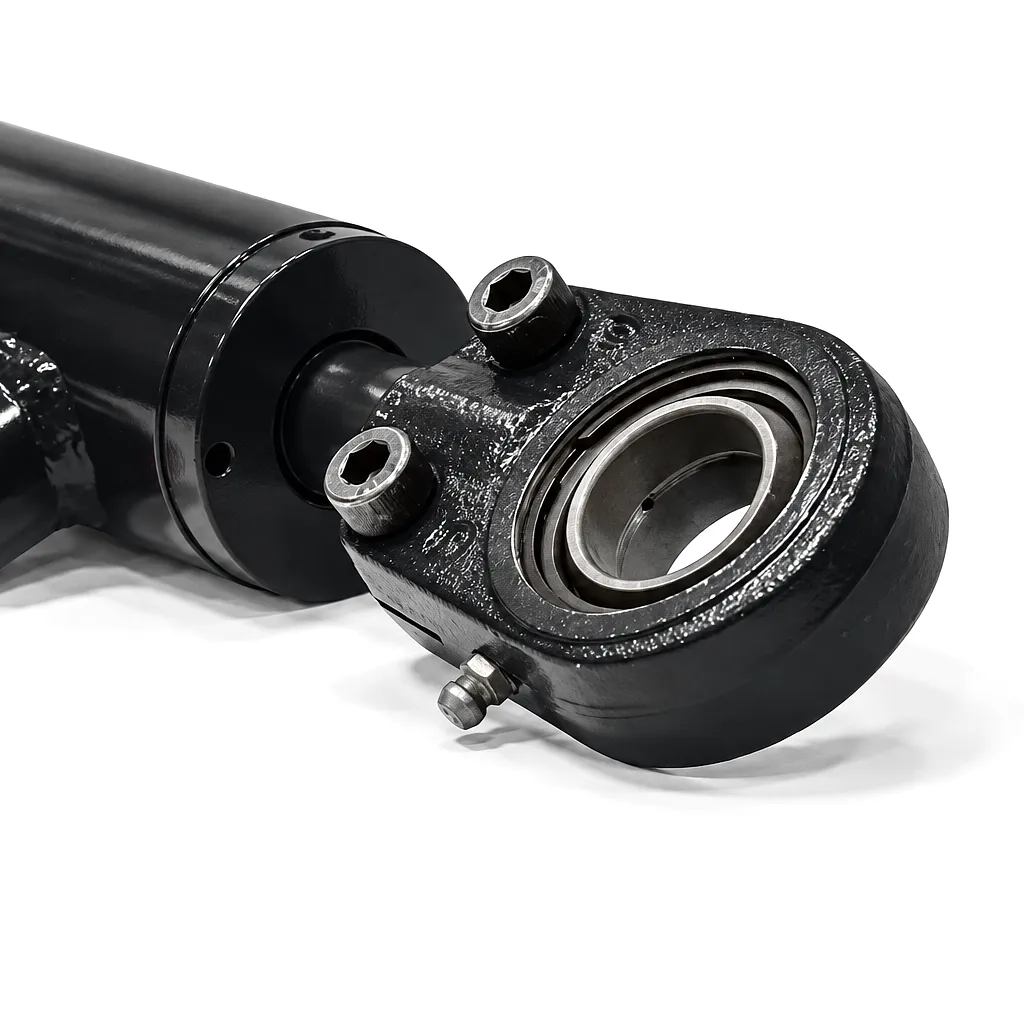 Selling hydraulic cylinders into European Union markets is not simply a matter of engineering a capable product and shipping it across the Channel. The CE marking process represents a binding legal commitment — a manufacturer’s public declaration that their hydraulic cylinder complies with every applicable EU directive and harmonised standard. For UK-based manufacturers eyeing post-Brexit export opportunities into Germany, France, the Netherlands, and beyond, understanding this compliance framework thoroughly is no longer optional. It shapes production planning, procurement decisions, documentation workflows, and ultimately determines whether a product can legally reach customers in 27 member states.
The complexity is compounded by the fact that hydraulic cylinders do not fall neatly under a single directive. Depending on the cylinder’s rated working pressure, its application context — whether it drives a crane in a Sheffield steelworks or actuates a baling press on a Lincolnshire farm — and whether it is sold as a standalone component or embedded in a larger machine, different regulatory instruments may apply either individually or in combination. This guide walks through the core requirements with the precision that engineers and compliance managers actually need.
Need CE-compliant hydraulic cylinders for your EU market shipments?
Which EU Directives Apply to Hydraulic Cylinders
The machinery and pressure equipment landscape in the EU is governed by several interlocking directives, and hydraulic cylinder manufacturers must identify which ones apply before beginning any conformity assessment. The most relevant is the Machinery Directive 2006/42/EC — soon to be superseded by the Machinery Regulation (EU) 2023/1230 — which covers hydraulic cylinders when they are supplied as partly completed machinery or as components of a machine intended for the market. If a cylinder is designed and sold for integration into a machine, the cylinder manufacturer must provide a Declaration of Incorporation along with specific technical documentation, even if CE marking of the cylinder itself is deferred to the machine integrator.
Applies when cylinders form part of machinery or partly completed machinery. Requires risk assessment, technical file, and either full CE marking or Declaration of Incorporation depending on the supply chain position.
Triggered when maximum allowable pressure (PS) exceeds 0.5 bar. Cylinders are classified by PS × Volume or PS × DN into categories I–IV, determining whether self-certification or third-party Notified Body involvement is required.
Seals, coatings, and surface treatments must comply with REACH SVHC restrictions. Hydraulic fluids are outside REACH scope for cylinders, but material composition documentation for metal alloys, elastomers, and platings is increasingly demanded by EU procurement teams.
The Pressure Equipment Directive (PED) 2014/68/EU represents the second critical framework for most industrial hydraulic cylinders. A cylinder rated at 350 bar working pressure with a bore diameter of 100 mm generates a PS × V figure that almost certainly places it in PED Category II or III, requiring conformity assessment by a Notified Body — an independent organisation accredited by a member state’s national authority. UK manufacturers exporting post-Brexit must use an EU-based Notified Body, as UKAS-accredited bodies no longer hold recognition under EU legislation. This is a practical logistical point that trips up many British engineering firms attempting to re-enter European supply chains after 2021.
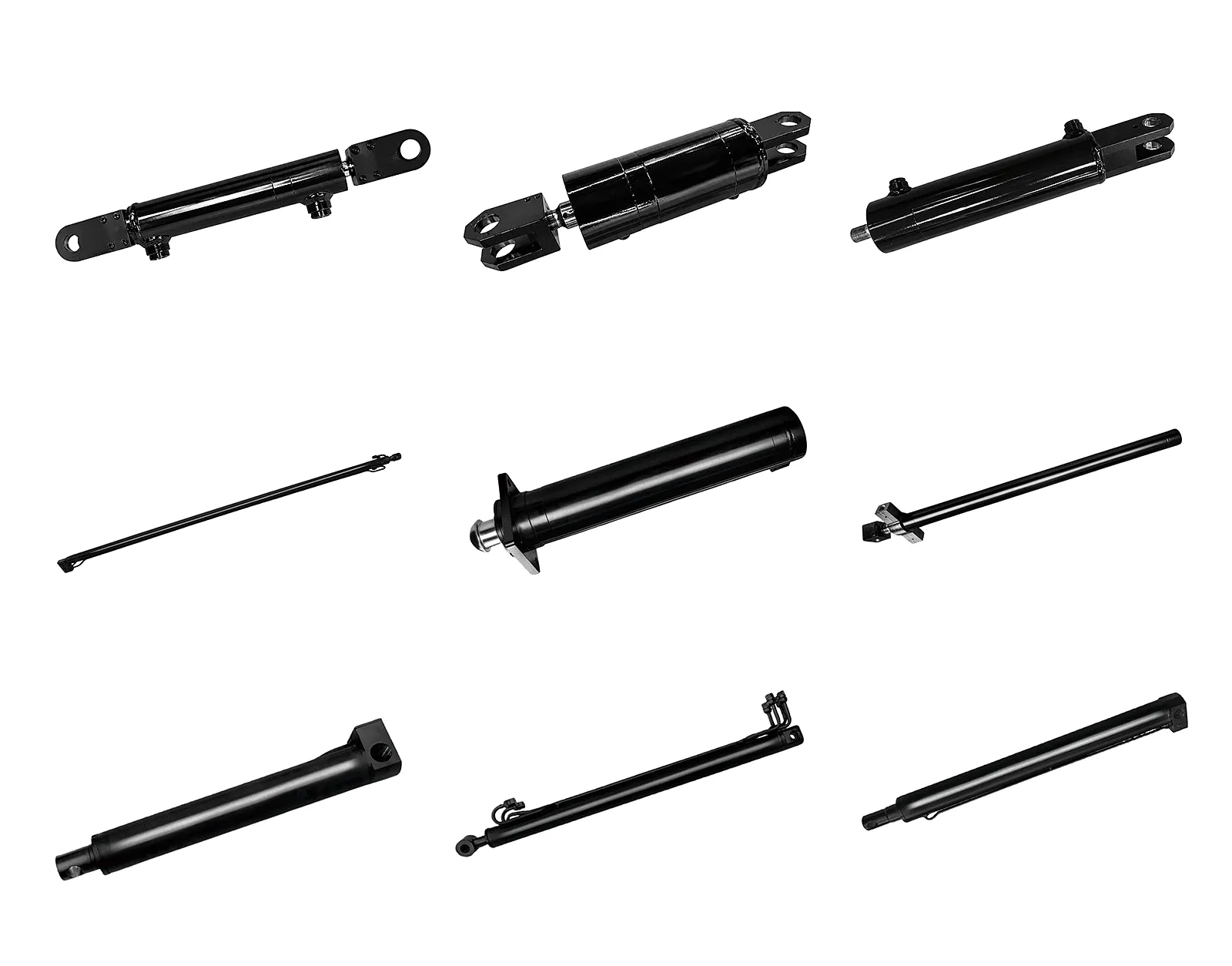
Ever Power hydraulic cylinder product range — engineered for EU market compliance and long-term industrial reliability
How Hydraulic Cylinders Work: The Engineering Principle
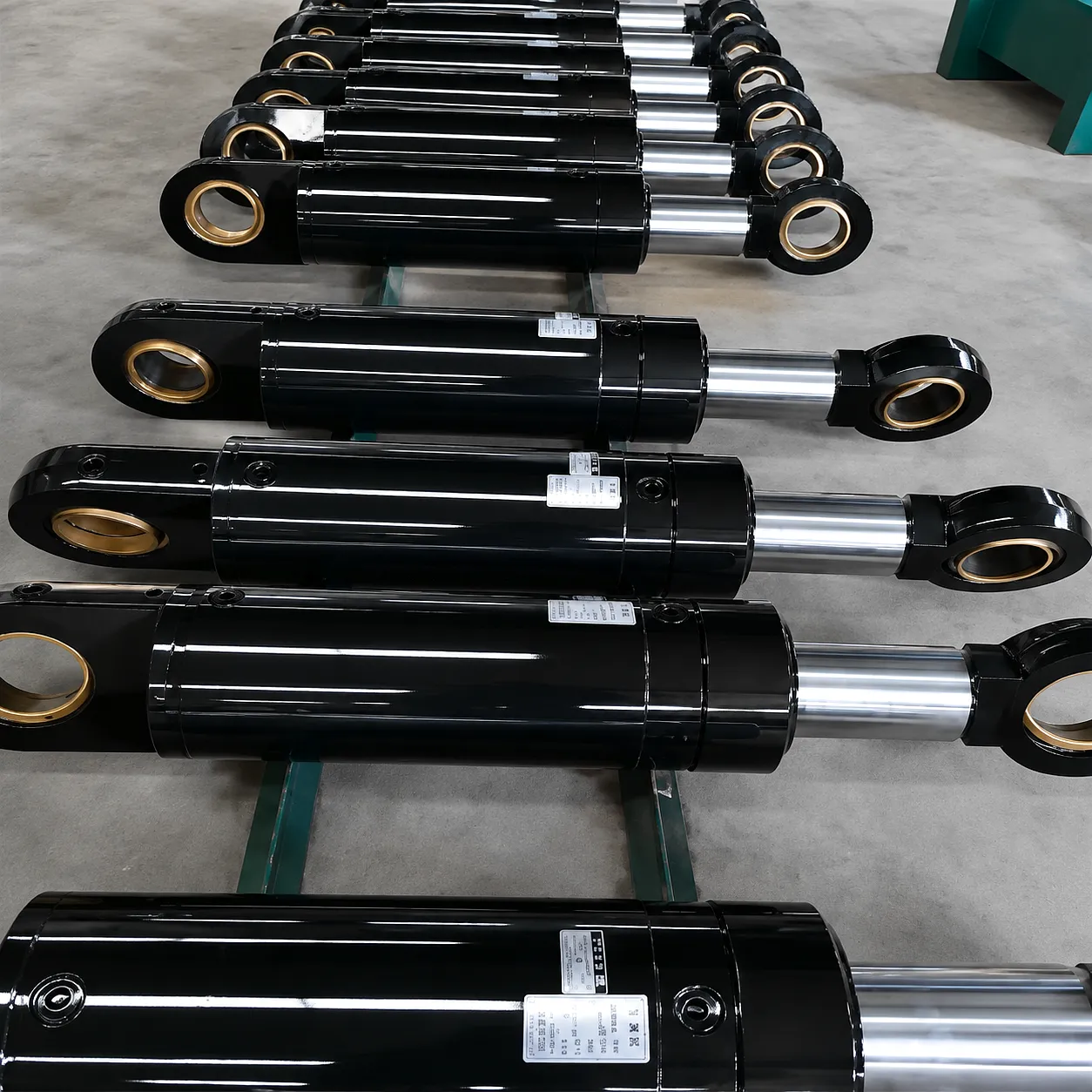 A hydraulic cylinder converts hydraulic pressure energy into controlled linear mechanical force. Pressurised fluid — typically mineral oil rated ISO VG 46 or VG 68 — enters the cylinder through the port, acting on the cross-sectional area of the piston. Pascal’s principle governs the output: force equals pressure multiplied by piston area (F = P × A). The resulting push or pull force acts through the piston rod, which passes through the rod-end gland seal and performs external mechanical work.
In a double-acting cylinder, fluid is routed to alternate sides of the piston under directional valve control, enabling both extension and retraction under power. Single-acting cylinders use fluid pressure for one stroke and gravity or a return spring for the reverse. Telescopic configurations stack multiple tubes to achieve long strokes in short retracted lengths — critical for tipper vehicles and crane applications operating across UK infrastructure projects from Birmingham bypass schemes to Scottish offshore supply vessels.
Material Specification: What Goes Inside a Quality Hydraulic Cylinder
Material selection is not merely an engineering preference — under CE marking requirements, the materials used in pressure-bearing components must be traceable, conforming to recognised standards, and documented in the technical file. For the cylinder barrel, seamless cold-drawn steel tube manufactured to EN 10305-1 (tolerance class E4) is the European standard benchmark. The inside bore is honed to a surface roughness of Ra 0.2–0.4 µm, which both optimises seal service life and ensures consistent breakout pressure across the cylinder’s operational range.
Seamless cold-drawn steel to EN 10305-1. Honed bore Ra 0.2–0.4 µm. Typical grade: E355 (ST52).
Hard chrome-plated or induction-hardened CK45 steel. Chrome layer 20–25 µm, Ra ≤ 0.2 µm. Corrosion resistance per ISO 9227.
Polyurethane (PU) rod seals, NBR or HNBR piston seals, PTFE-based wear rings. Temperature range: –30°C to +120°C.
High-strength ductile iron (EN-GJS-500-7) or S355J2 structural steel. Threaded or welded, pressure-tested per PED Annex I.
Exterior: epoxy primer + polyurethane topcoat per ISO 12944 corrosivity category C3 or C4 for coastal/offshore applications.
Technical & Performance Parameter Table
The table below consolidates the performance envelope across Ever Power’s core hydraulic cylinder ranges. Each figure reflects real-world design limits backed by third-party pressure testing and dimensional verification per the relevant EN ISO standards. These numbers form the baseline for CE conformity assessment documentation and should be read alongside the specific technical file for each cylinder series. Applications deviating from standard parameters are handled through Ever Power’s engineering-led customisation process.
| Parametru | Gamă standard | High-Pressure Series | Customisation Available |
|---|---|---|---|
| Working Pressure (PS) | Up to 250 bar | Up to 450 bar | Da |
| Diametrul alezajului | 40 – 320 mm | 50 – 500 mm | Da |
| Lungimea cursei | 100 – 3,000 mm | Up to 8,000 mm | Da |
| Diametrul tijei | 25 – 200 mm | Up to 350 mm | Da |
| Temperature Range | –20°C to +100°C | –40°C to +150°C | Da |
| Mounting Styles | Flange, clevis, trunnion, foot | All + swivel eye, tang | Da |
| Seal Material | PU / NBR / PTFE | HNBR / FKM / EPDM | Da |
| Chrome Layer Thickness | 20–25 µm | 25–35 µm (duplex) | Da |
| PED Category (typical) | Category I / II | Category III / IV | Per application |
The CE Marking Process for Hydraulic Cylinders: Step by Step
The conformity assessment journey begins well before any physical testing. A manufacturer must first identify all applicable directives and determine the relevant conformity assessment modules. For a standard industrial hydraulic cylinder operating below 200 bar, the self-certification route via Module A (internal production control) under PED may be appropriate. Higher-pressure or larger-volume cylinders almost always require external involvement from an EU Notified Body. Ever Power’s in-house compliance team prepares the technical file structure from the initial design phase, meaning customers receive fully documented products without scrambling for records at the audit stage.
Product Advantages: Why CE-Compliant Hydraulic Cylinders Command Premium Markets
CE marking eliminates border friction across all 27 EU member states. For UK manufacturers exporting post-Brexit, it is the single most effective mechanism for maintaining competitive supply chain presence in European OEM markets, from Dutch agricultural equipment builders to German hydraulic press manufacturers.
A properly issued Declaration of Conformity establishes unambiguous legal responsibility at each supply chain stage. Hydraulic cylinder buyers in Germany, Belgium, and Sweden routinely mandate CE documentation as a contractual prerequisite. It protects the OEM from liability arising from non-compliant components in their finished machinery.
The conformity assessment process demands hydrostatic proof testing, dimensional verification, and material certification. This forces a quality discipline that results in measurably more consistent products. Cylinders from compliant factories show statistically lower early failure rates and longer mean service intervals than unverified alternatives.
European procurement teams — particularly those operating under ISO 9001, EN 9100, or sector-specific quality management frameworks — require complete traceability packages. CE-compliant hydraulic cylinders come with EN 10204 material certificates, test records, and installation instructions already structured for audit. This dramatically reduces onboarding friction for new supplier relationships.
Industrial Application Scenarios: Where CE-Compliant Hydraulic Cylinders Are Deployed
Across European industrial supply chains, CE-certified hydraulic cylinders appear in a remarkable breadth of end-use contexts. Understanding these application environments helps manufacturers make the correct directive determination from the outset — and it is why Ever Power’s engineering team engages with customers at the specification stage rather than treating cylinders as off-the-shelf commodities.
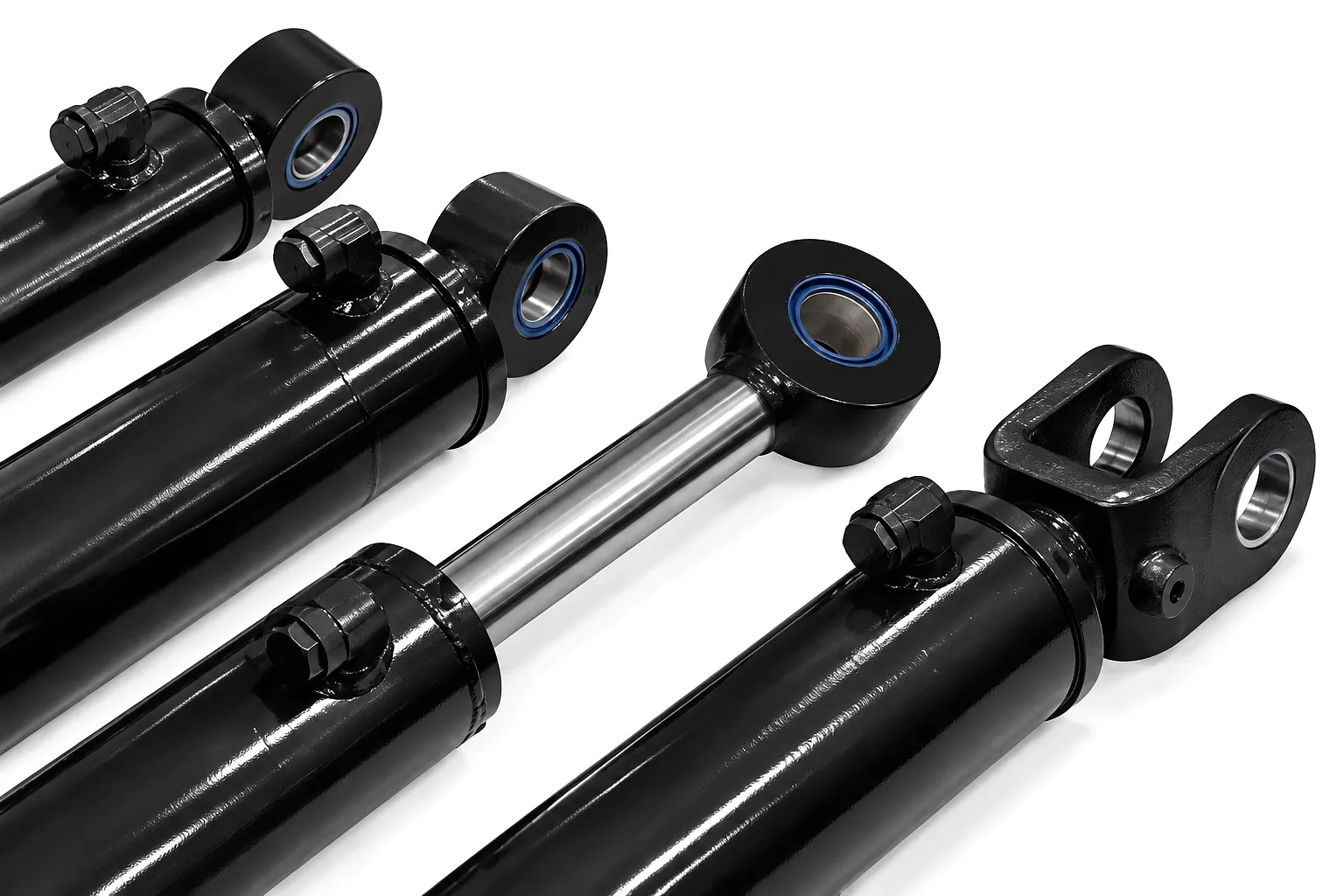
Excavator boom and dipper arm cylinders operating on HS2 and National Highways projects must carry CE marking under the Machinery Directive. Long-stroke hydraulic cylinders are critical for tunnel boring equipment used across Crossrail extensions and Scottish road upgrades. Welded-body hydraulic cylinders rated to 350 bar are the workhorse actuators across this sector.
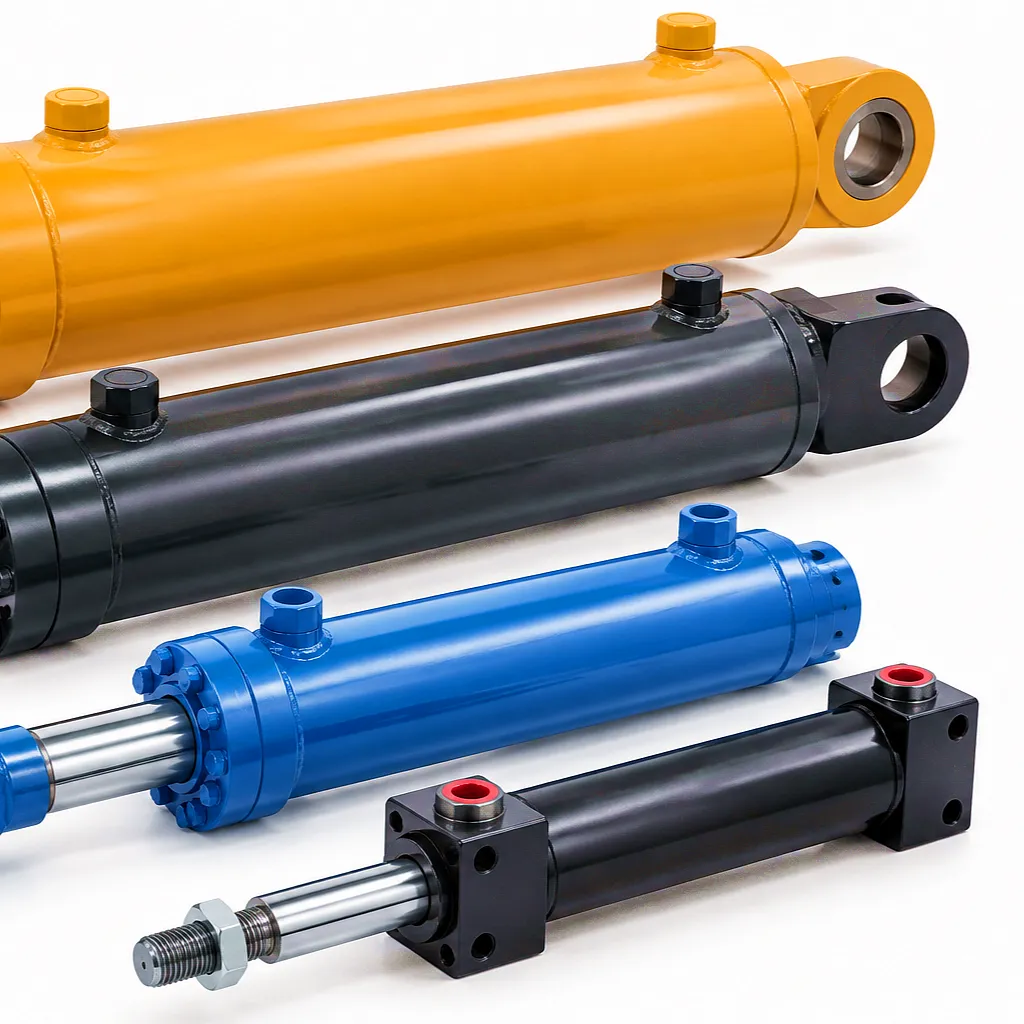
Sheffield and Birmingham remain centres of precision metal forming in the UK. Hydraulic press cylinders in these facilities — and in equivalent German and Italian facilities they supply — routinely operate at 400–450 bar. These high-pressure hydraulic cylinders fall squarely into PED Category III or IV and demand Notified Body examination of design documentation before CE marking can proceed.
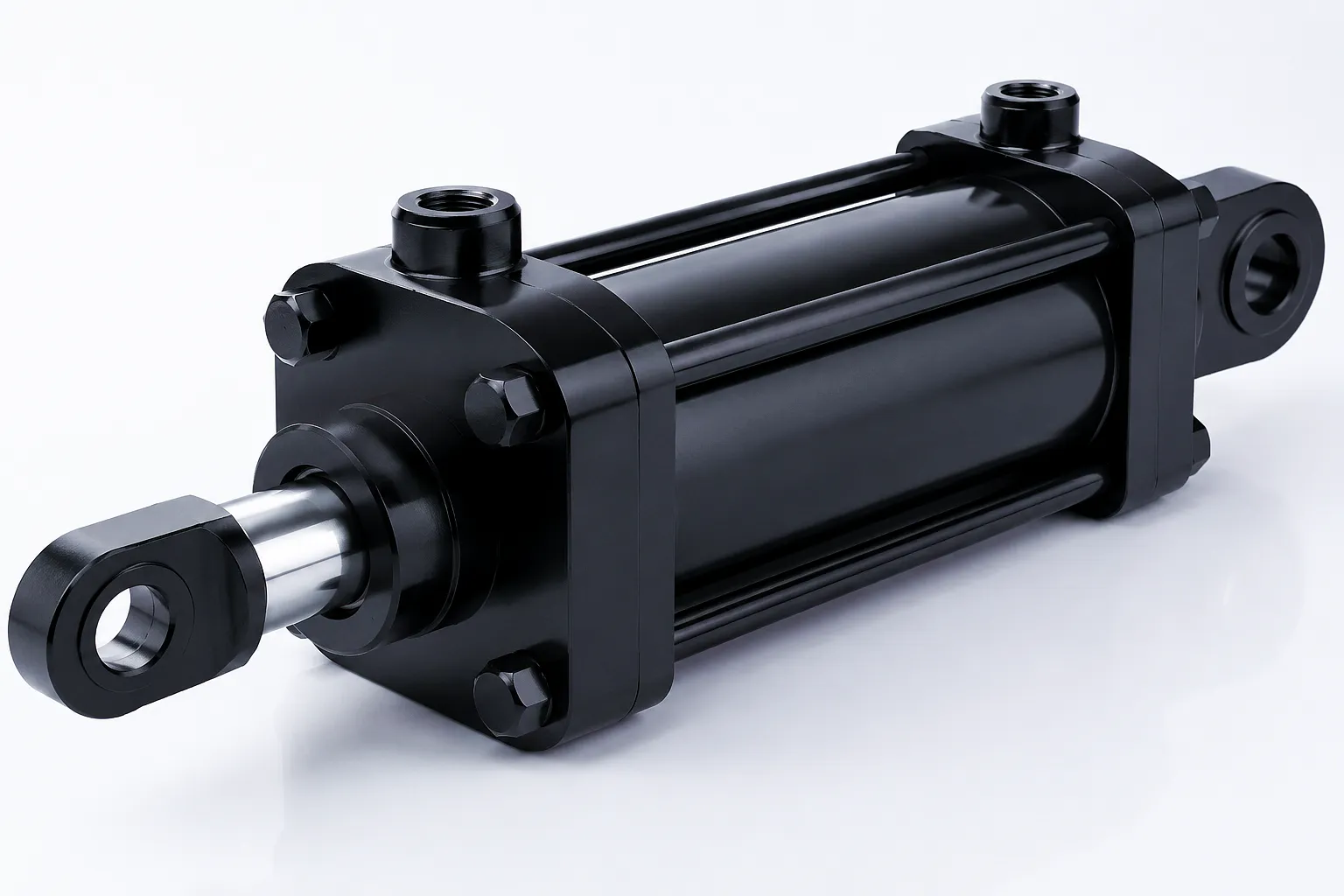
From Lincolnshire combine harvesters to Dutch tulip-harvesting equipment, hydraulic cylinders powering agricultural implements must comply with the Machinery Directive. Telescopic hydraulic cylinders for tipper trailers, and double-acting front loader cylinders for tractors, are both within scope. The CE marking requirement applies at the point of first placing on the EU market.
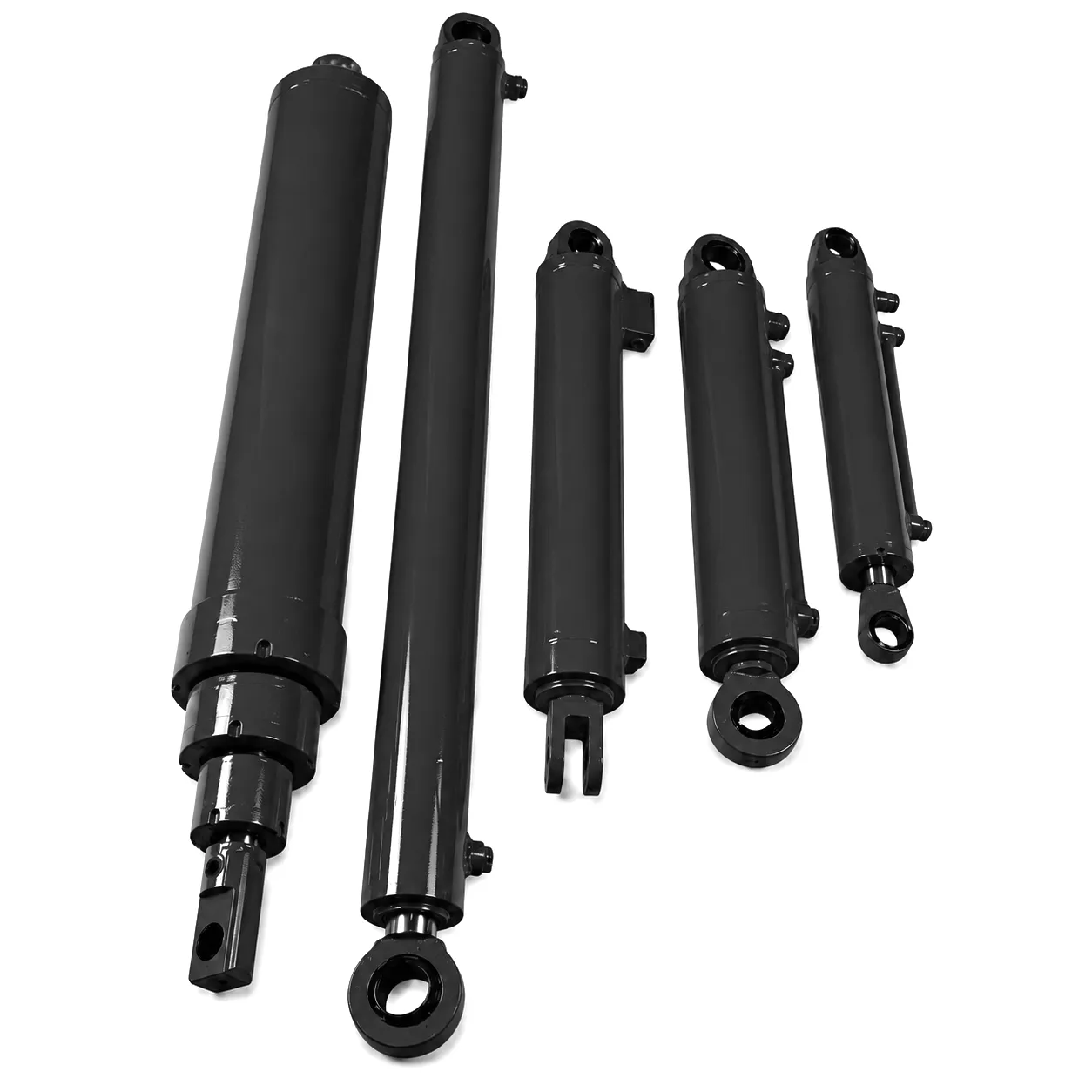
North Sea offshore installations and port handling equipment across Aberdeen, Rotterdam, and Bremerhaven demand hydraulic cylinders rated for saltwater exposure and wide temperature cycles. Corrosion-resistant piston rods with duplex chrome or HVOF tungsten carbide coatings are combined with low-temperature seal packages meeting the demands of marine PED compliance under 2014/68/EU.
Ever Power: Precision Manufacturing and CE Documentation Support
Ever Power maintains in-house compliance engineers who prepare and maintain technical files, risk assessments, and declarations. EU customers receive a complete documentation package — not a template checklist.
Non-standard bore diameters, stroke extensions, special port configurations, sensor integration, load-holding valves, and alternative seal chemistries are all handled through structured ECN (Engineering Change Notice) processes that preserve CE compliance across modifications.
For high-category PED products, Ever Power coordinates directly with accredited EU Notified Bodies on behalf of UK-based customers. This removes the administrative burden from manufacturers who lack established EU compliance relationships post-Brexit.
Material traceability from mill certificate to finished product. Every hydraulic cylinder batch is traceable by serial number to its material heat, process parameters, and test results — giving UK export managers the audit-ready supply chain documentation that EU customers require.
Speak with Ever Power’s engineering team about CE-compliant hydraulic cylinders for your EU export programme:
Customer Success Story: Sheffield Precision Forging — EU Market Re-Entry
Meridian Forge Technologies, a Sheffield-based manufacturer of precision forged aerospace and automotive components, had been supplying hydraulic press actuators to a Tier 1 German automotive parts group since 2017. The post-Brexit regulatory transition disrupted this relationship in early 2022 when their German customer’s quality team flagged that the hydraulic cylinders — rated at 380 bar, bore 180 mm — lacked EU-recognised CE documentation. UKAS-backed certification was no longer accepted, and Meridian’s internal engineering team lacked bandwidth to navigate the EU Notified Body engagement process independently.
Meridian approached Ever Power for a complete cylinder replacement and compliance package. Ever Power’s engineering team conducted a dimensional and duty-cycle review of the existing cilindri hidraulici, confirmed PED Category III classification, and engaged TÜV Rheinland as the Notified Body for design examination (Module B). The cylinder technical file — including FEA-based wall thickness calculations, material certificates to EN 10204 3.2, and hydrostatic test records at 543 bar — was prepared within eight weeks. A full EU Declaration of Conformity was issued alongside the first production batch of 24 custom hydraulic cylinders, each engraved with CE mark and Notified Body number.
Meridian Forge Technologies resumed deliveries to their German customer within four months of initial engagement. The supply relationship has since expanded to include a Dutch stamping press builder, with Ever Power providing a product family of three hydraulic cylinder variants across the programme — all sharing the same CE documentation structure, reducing the customer’s ongoing compliance overhead significantly.
“The CE documentation package from Ever Power was the most complete we’ve received from any hydraulic cylinder supplier. TÜV accepted the technical file on first submission — no revision requests. That alone saved us at least six weeks in our EU re-approval timeline.”
“We specified a non-standard bore and a stroke sensor mounting boss that no standard hydraulic cylinder supplier could accommodate without losing CE status. Ever Power’s team handled the design modification, updated the technical file, and reissued the DoC. The cylinders have now run 4,200 hours in our press line without a seal failure.”
“Price competitiveness on CE-marked hydraulic cylinders was something I wasn’t expecting from this supplier. We compared three EU-based alternatives and Ever Power came in 18% below the median on a like-for-like spec, with faster lead time and REACH material compliance documentation already included. Exactly what a UK exporter needs right now.”
Întrebări frecvente
What does CE marking actually mean for hydraulic cylinders being exported to Germany or the Netherlands from the UK?
How much does it cost to get CE certification for a custom hydraulic cylinder destined for an EU industrial buyer?
Which EU Notified Body should a Sheffield or Birmingham manufacturer use for PED hydraulic cylinder certification?
Where can I get a reliable quote for CE-compliant hydraulic cylinders for export to France or Belgium from a UK supplier?
When does the new EU Machinery Regulation 2023/1230 replace the Machinery Directive 2006/42/EC, and how does this affect hydraulic cylinder CE marking?
How long does it typically take to get CE documentation ready for a custom hydraulic cylinder ordered from a UK supplier for EU export?
Ever Power · CE-Compliant Hydraulic Cylinders
Ready to Discuss Your EU Export Requirements?
Our engineering team is ready to review your hydraulic cylinder specifications, confirm applicable CE directive scope, and provide a full compliance-inclusive quotation — usually within 48 hours.
[email protected] · CE Documentation Included · EU Notified Body Coordination Available
editat de gzl
 Romanian
  English
  Italian
  Portuguese
  Dutch
Dutch  Swedish
  Danish
  Finnish
  Polish
  Hindi
Hindi  Kazakh
  Turkish
  Ukrainian
  Spanish
  German
  Russian
  Korean
  Japanese
  Vietnamese
  Thai
Thai  Indonesian
  Malay
Malay  French
  Greek
Greek