
Descriere produs
China Factory Provide Double Acting Piston Injection Hydraulic Cylinder for Injection Molding Machine
Produs Specificații:
| Articol | Specificații |
| Diametrul alezajului | 200mm-500mm,customizable |
| Diametrul corpului | 120mm-420mm,customizable |
| Accident vascular cerebral | 350mm-1200mm,customizable |
| Working Pressure | 7-40Mpa,customizable |
| Tratamentul suprafeței tijei pistonului | Cromare dură, Crom alb lăptos electrolizat + Crom dur, Nichelare + Crom dur, CrC NiC cu oxigen de mare viteză, Acoperire ceramică, Nitrurare, Placare cu laser |
| Presiunea de lucru | Maximum 38MPa,Customizable |
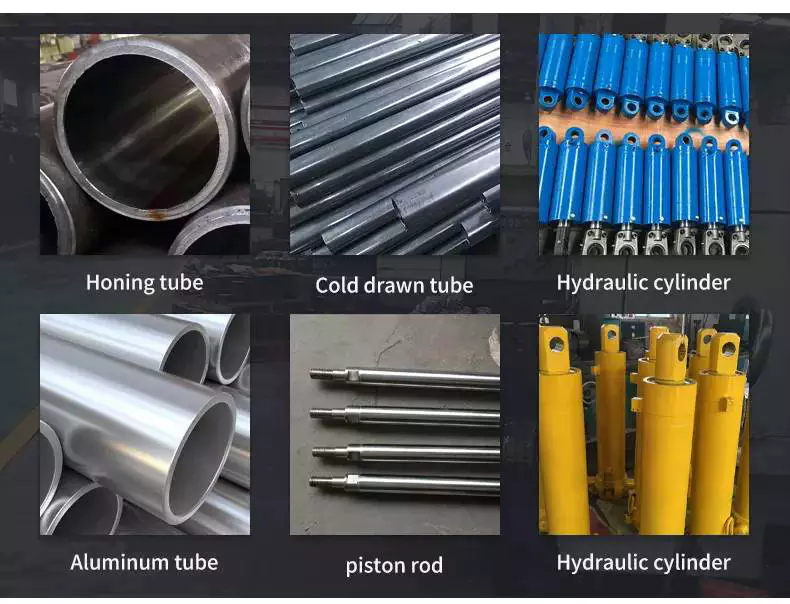
| Material | Tub tras la rece de înaltă rezistență la tracțiune, honuit cu precizie pentru o durată de viață extinsă a etanșării |
| Montare | Cercei, Flanșă, Picior Clevis, Articulație, Personalizabil |
| Tipul de etanșare | Parker,NOK, Hallite GAPI or as customer’s requirement |
| Warrenty | 18 luni |
| MOQ | 1pcs |
| Timp de producție | În funcție de cantitatea comenzii, în mod normal 30-40 de zile. |
| Certificare | ISO9001, CE, SGS |
| Culoare | Red,White,Pink,Yellow,Bule,etc,Customizable |
| Ambalaj | carcasă metalică, carcasă din placaj, carton sau după cum este necesar |
| Serviciu | OEM și ODM |
| Avantaj de preț | Preț competitiv din fabrică cu calitate garantată |
| Tipul afacerii | Producător |
Afișaj produs:
Aplicații:Industrial Engineering,Injection Molding Machine.
Metodă de montare:
Fabrica noastră:
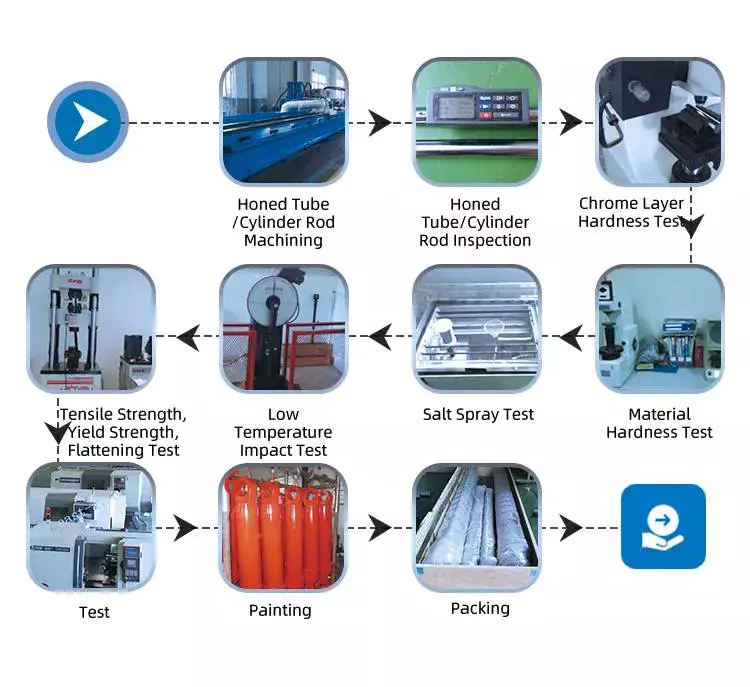
Procesul de inspecție:
| Tipul de inspecție | Standard de inspecție |
| Inspecția materiilor prime | Înainte de depozitare, QC măsoară materiile prime. |
| Inspecția materialelor de proces | În timpul producției, inspectorii de calitate efectuează o inspecție aleatorie. Înainte ca piesele cilindrului hidraulic să fie transferate în procesul următor, QC-urile efectuează o inspecție. |
| Testarea funcțională finală | Toți cilindrii hidraulici sunt supuși unui test de funcționare hidraulică |
Inspecția proprietăților mecanice ale materiilor prime
Inspecția materialelor de proces
Testarea funcțională finală
Ambalare și livrare:
Despre noi:
Certificatul nostru
Zhejiang Tianjian Hydraulic Technology Co.,Ltd este specializată în producția de diferite tipuri de cilindri hidraulici, precum și de cilindri, cilindri cu piston și alte accesorii pentru cilindri.
În calitate de producător specializat de cilindri hidraulici, Tianjian oferă soluții de optimizare a proiectării și produse fiabile multor clienți din țară și din străinătate. Indiferent de utilajele de construcții, utilajele pentru poduri feroviare, utilajele pentru nave portuare, utilajele metalurgice și miniere, utilajele pentru industria petrolieră și ușoară, vehiculele speciale și alte industrii, Tianjian poate oferi diverse scheme și produse standard și non-standard de optimizare a proiectării cilindrilor hidraulici, în funcție de cerințele utilizatorilor, și poate oferi servicii integrate pentru perfecțiune și calitate.
Dacă este posibil, atunci când ne contactați, vă rugăm să furnizați informațiile de mai jos.
Alezaj | Tijă | Accident vascular cerebral | Presiunea de lucru | Montare | Mediul de lucru |
|
|
|
|
|
|
Sau ne puteți oferi diagrama sau fotografiile dvs., astfel încât să putem înțelege exact ce înseamnă, ajutându-ne să evităm greșelile.
Și dacă aveți mostre, putem fabrica conform mostrelor dvs. după ce ni le-ați trimis.
Bine ați venit la fabrica noastră dacă aveți timp.
Satisfacția dumneavoastră este cea mai mare motivație a noastră.
Our Main Customers
Acum ne puteți contacta pentru orice întrebare sau nelămurire.
FAQ:
1, Cu ce se ocupă compania dumneavoastră?
R: Suntem furnizori de produse hidraulice de înaltă calitate, inclusiv cilindri hidraulici, motoare hidraulice, grupuri electrogene, stații hidraulice și alte componente hidraulice.
2, Sunteți producător sau societate comercială?
R: Suntem producător.
3, Ce certificat aveți?
R: Toate fabricile noastre sunt certificate ISO. Iar principalii noștri furnizori de materiale și piese dețin certificate CE, RoHS, CSA și UL.
4, Cât timp durează livrarea?
R: Timpul de livrare depinde de diferitele produse și cantitate. Cilindrul necesită de obicei aproximativ 45-60 de zile, iar motorul aproximativ 30-50 de zile.
5, Puteți realiza piese conform cerințelor sau desenelor clientului?
R: Da, putem produce produse OEM conform desenelor dumneavoastră. Inginerul nostru vă poate oferi, de asemenea, asistență profesională pentru sugestii tehnice.
6, Ce fel de condiții de plată acceptați?
R: Preferăm plata prin T/T prin bancă. 30% la confirmarea comenzii și 70% înainte de expediere. Acreditarea este, de asemenea, acceptată pentru sume peste 20.000 USD.
7, Care este politica dumneavoastră de garanție?
R: Toate produsele noastre sunt garantate timp de 1 an de la data livrării împotriva defectelor de materiale și de manoperă. Această garanție nu acoperă piesele uzate în timpul funcționării normale sau deteriorate din neglijență. Reamintim cu seriozitate că uleiul hidraulic murdar va cauza cu siguranță deteriorarea componentelor hidraulice. Iar aceste daune nu sunt incluse în intervalul de garanție. Prin urmare, vă recomandăm insistent să utilizați ulei nou curat sau să vă asigurați că uleiul de sistem este curat atunci când utilizați piesele noastre.
| Certificare: | GS, RoHS, CE, ISO9001 |
|---|---|
| Presiune: | High Pressure |
| Temperatura de lucru: | High Temperature |
| Mod de acțiune: | Double Acting |
| Metodă de lucru: | Straight Trip |
| Formă ajustată: | Regulated Type |
| Samples: | US$ 1100/Set 1 Set(Min.Order) | |
|---|
| Personalizare: | Disponibil |
|
|---|
How do hydraulic cylinders contribute to the overall cost-effectiveness of industrial processes?
Hydraulic cylinders play a crucial role in enhancing the overall cost-effectiveness of industrial processes. They offer several advantages and contribute to increased productivity, improved efficiency, reduced maintenance costs, and enhanced operational performance. Here’s a detailed explanation of how hydraulic cylinders contribute to the cost-effectiveness of industrial processes:
1. High Power Density:
– Hydraulic cylinders provide a high power-to-weight ratio, allowing them to generate substantial force in a compact design. This power density enables the use of smaller and lighter equipment, reducing material and manufacturing costs, and increasing the efficiency of industrial processes.
2. Precise Force and Position Control:
– Hydraulic cylinders offer precise force and position control, allowing for accurate movement and positioning of machinery or workpieces. This level of control enhances process efficiency, reduces material waste, and improves overall product quality. Precise force control also minimizes the risk of equipment damage, further reducing maintenance and repair costs.
3. High Load Handling Capacity:
– Hydraulic cylinders are known for their ability to handle high loads. They can exert significant force, making them suitable for heavy-duty industrial applications. By efficiently handling heavy loads, hydraulic cylinders contribute to increased productivity and throughput, reducing the need for additional equipment and streamlining industrial processes.
4. Flexibility and Versatility:
– Hydraulic cylinders offer a high degree of flexibility and versatility in industrial processes. They can be easily integrated into various types of machinery and equipment, allowing for diverse applications. This adaptability reduces the need for specialized equipment, resulting in cost savings and increased operational efficiency.
5. Energy Efficiency:
– Hydraulic systems, including hydraulic cylinders, can be designed to operate with high energy efficiency. By utilizing efficient hydraulic circuit designs, advanced control systems, and energy recovery mechanisms, hydraulic cylinders minimize energy waste and reduce operational costs. Energy-efficient hydraulic systems also contribute to a more sustainable and environmentally friendly industrial operation.
6. Durability and Longevity:
– Hydraulic cylinders are built to withstand demanding industrial environments and heavy usage. They are constructed with robust materials and undergo stringent quality control measures to ensure durability and longevity. Their ability to withstand harsh conditions and repetitive motion reduces the need for frequent replacements, minimizing downtime and maintenance costs.
7. Reduced Maintenance Requirements:
– Hydraulic cylinders require relatively low maintenance compared to other types of actuators. Properly designed hydraulic systems with efficient filtration and contamination control mechanisms can prevent damage to the cylinders and extend their service life. Reduced maintenance requirements result in lower downtime, decreased labor costs, and improved cost-effectiveness of industrial processes.
8. System Integration and Automation:
– Hydraulic cylinders can be seamlessly integrated into automated industrial processes. By incorporating hydraulic cylinders into automated systems, tasks can be performed with precision and repeatability, reducing human error and optimizing efficiency. Automation also allows for continuous operation, increasing productivity and overall cost-effectiveness.
9. Cost-Effective Replacement:
– In situations where hydraulic cylinders require replacement or repair, the cost-effectiveness of the process is still maintained. Hydraulic cylinders are typically modular in design, allowing for easy replacement of individual components or complete units. This modularity reduces downtime and associated costs, as only the affected components need to be replaced, rather than the entire system.
In summary, hydraulic cylinders contribute to the overall cost-effectiveness of industrial processes through their high power density, precise control capabilities, high load handling capacity, flexibility, energy efficiency, durability, reduced maintenance requirements, system integration, and cost-effective replacement options. Their ability to enhance productivity, efficiency, and operational performance while minimizing maintenance and downtime costs makes hydraulic cylinders a valuable component in various industrial applications.
Ensuring Consistent Force Output for Repetitive Tasks with Hydraulic Cylinders
Hydraulic cylinders are designed to ensure consistent force output for repetitive tasks. This consistency is essential for maintaining precise control, achieving uniform results, and optimizing the performance of hydraulic systems. Let’s explore how hydraulic cylinders achieve consistent force output for repetitive tasks:
- Design and Manufacturing Standards: Hydraulic cylinders are manufactured to meet strict design and manufacturing standards. These standards ensure that the cylinders are built with precision and accuracy, enabling them to deliver consistent force output. The components, such as the piston, cylinder barrel, seals, and valves, are engineered to work together harmoniously, minimizing variations in force generation.
- Pressure Regulation: Hydraulic systems incorporate pressure regulation mechanisms to maintain a constant pressure level. Pressure relief valves, pressure regulators, and pressure-compensated pumps help maintain a consistent hydraulic pressure throughout the system. By regulating the pressure, hydraulic cylinders receive a consistent supply of pressurized fluid, resulting in consistent force output for repetitive tasks.
- Flow Control: Flow control valves are utilized in hydraulic systems to manage the flow rate of hydraulic fluid. These valves regulate the speed at which the fluid enters and exits the hydraulic cylinder, influencing the force output. By controlling the flow rate, hydraulic cylinders can achieve consistent force output for repetitive tasks. This is particularly important when it comes to tasks that require precise and uniform force application.
- Effective Seal Performance: Sealing systems play a crucial role in hydraulic cylinders by preventing fluid leakage and maintaining pressure integrity. High-quality seals and proper installation ensure effective sealing throughout the cylinder’s operation. By minimizing internal leakage, hydraulic cylinders can maintain consistent force output, even during repetitive tasks.
- Maintenance and Inspection: Regular maintenance and inspection of hydraulic cylinders are essential for ensuring consistent force output. By following maintenance schedules, replacing worn-out components, and monitoring cylinder performance, any potential issues that could affect force consistency can be identified and addressed promptly. This proactive approach helps maintain the reliability and performance of hydraulic cylinders over time.
In summary, hydraulic cylinders employ various mechanisms to ensure consistent force output for repetitive tasks. Adherence to design and manufacturing standards, pressure regulation, flow control, effective seal performance, and regular maintenance all contribute to achieving consistent force output. By maintaining precision, minimizing variations, and addressing potential issues, hydraulic cylinders provide reliable and consistent force generation, facilitating the successful completion of repetitive tasks in various applications.
How do manufacturers ensure the quality and compatibility of hydraulic cylinders?
Manufacturers employ various measures to ensure the quality and compatibility of hydraulic cylinders, ensuring that they meet industry standards, performance requirements, and the specific needs of their customers. Here’s a detailed explanation of the methods and practices used by manufacturers to ensure the quality and compatibility of hydraulic cylinders:
1. Design and Engineering:
– Manufacturers employ skilled engineers and designers who have expertise in hydraulic systems and cylinder design. They use advanced design software and tools to create hydraulic cylinders that meet the desired specifications and performance requirements. Through careful analysis and simulation, manufacturers can ensure that the cylinders are designed to function optimally and provide the necessary force, stroke length, and reliability.
2. Material Selection:
– High-quality materials are crucial for the durability, performance, and compatibility of hydraulic cylinders. Manufacturers carefully select materials such as steel or other alloys based on their strength, corrosion resistance, and suitability for hydraulic applications. They source materials from reputable suppliers and perform quality checks to ensure that the materials meet the required standards and specifications.
3. Quality Control:
– Manufacturers implement robust quality control processes throughout the production of hydraulic cylinders. This includes rigorous inspections and tests at various stages of manufacturing, from raw material inspection to final assembly. Quality control personnel perform dimensional checks, surface finish inspections, and functional tests to verify that the cylinders meet the specified tolerances, performance criteria, and compatibility requirements.
4. Testing and Validation:
– Hydraulic cylinders undergo testing and validation procedures to ensure their performance, reliability, and compatibility. Manufacturers conduct various tests, such as pressure testing, leakage testing, load testing, and endurance testing. These tests simulate real-world operating conditions and verify that the cylinders can withstand the expected loads, pressures, and environmental factors. Additionally, manufacturers may perform compatibility testing to ensure that the cylinders can integrate seamlessly with other hydraulic system components.
5. Compliance with Standards:
– Manufacturers adhere to industry standards and regulations to ensure the quality and compatibility of hydraulic cylinders. They follow standards such as ISO 9001 for quality management systems and ISO 6020/2 or ISO 6022 for hydraulic cylinders. Compliance with these standards ensures that the manufacturing processes, quality control measures, and product performance meet internationally recognized benchmarks.
6. Certification and Accreditation:
– Manufacturers may obtain certifications and accreditations from recognized organizations to demonstrate their commitment to quality and compatibility. Certifications such as ISO certifications or third-party certifications provide assurance to customers that the hydraulic cylinders have undergone rigorous evaluations and meet specific quality and compatibility standards.
7. Customer Collaboration:
– Manufacturers actively engage with customers to understand their specific requirements and ensure compatibility. They work closely with customers to gather application-specific details, such as operating conditions, load requirements, and environmental factors. This collaborative approach allows manufacturers to customize hydraulic cylinders and provide solutions that are perfectly matched to the customer’s needs, ensuring compatibility and optimal performance.
8. Continuous Improvement:
– Manufacturers are committed to continuous improvement in their processes and products. They invest in research and development to incorporate the latest technologies, materials, and manufacturing techniques. By staying updated with industry advancements, manufacturers can enhance the quality, performance, and compatibility of their hydraulic cylinders over time.
By implementing effective design and engineering practices, selecting high-quality materials, conducting rigorous quality control, testing and validation procedures, complying with industry standards, obtaining certifications, collaborating with customers, and embracing continuous improvement, manufacturers ensure the quality and compatibility of hydraulic cylinders. These measures help to deliver reliable, high-performance cylinders that meet the diverse needs of industries and applications.

editor by CX 2023-10-20
 Romanian
  English
  Italian
  Portuguese
  Dutch
Dutch  Swedish
  Danish
  Finnish
  Polish
  Hindi
Hindi  Kazakh
  Turkish
  Ukrainian
  Spanish
  German
  Russian
  Korean
  Japanese
  Vietnamese
  Thai
Thai  Indonesian
  Malay
Malay  French
  Greek
Greek