
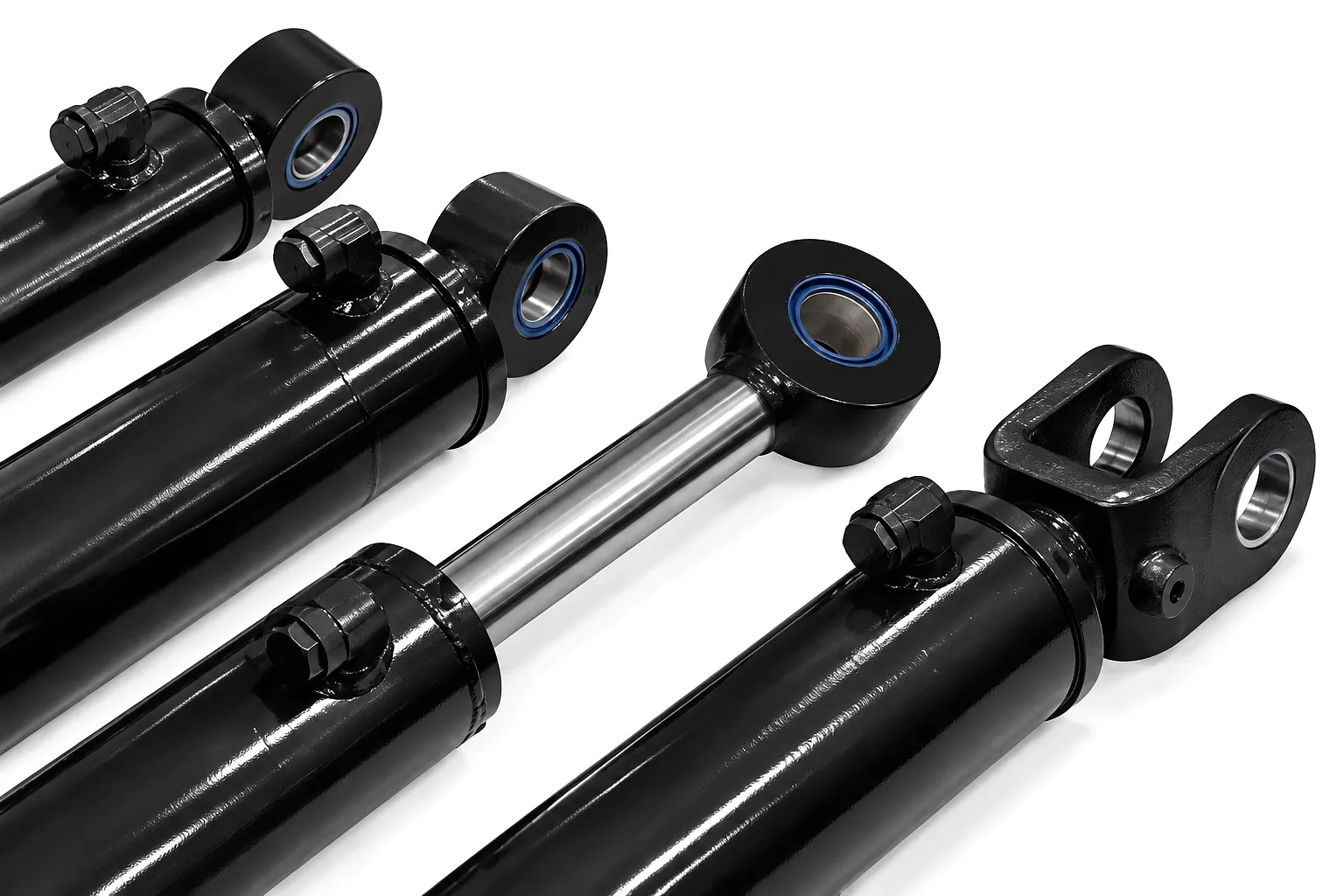
 Seal failure is one of the most disruptive and costly issues facing hydraulic system operators across the UK’s manufacturing, construction, and agricultural sectors. Whether your facility is running heavy press lines in Birmingham, agricultural machinery fleets in Lincolnshire, or port handling equipment along the Mersey, a failed hydraulic cylinder seal doesn’t simply create a small oil leak — it triggers a cascade of consequences. Pressure efficiency drops, contamination enters the system, rod surfaces degrade, and in many cases an entire production line halts. The financial impact in lost throughput, emergency part procurement, and engineer call-out fees can dwarf the original cost of routine preventive maintenance many times over.
Understanding Why Hydraulic Cylinder Seals Fail
Root cause analysis — the foundation of effective prevention
Running a hydraulic cylinder beyond its rated pressure specification is among the most common causes of premature seal failure in UK industrial environments. When system pressure spikes — whether from sudden load changes, pressure transients from pump start-up, or hydraulic shock caused by directional valve switching — seals are exposed to stress far beyond their design envelope. Polyurethane and NBR seals become extruded into clearance gaps at the piston and rod, a process that permanently deforms the seal lip and destroys its sealing geometry. British manufacturing facilities operating multi-cylinder press or injection moulding systems are particularly vulnerable when pressure relief valves are poorly calibrated or worn, allowing surge pressures to reach seals repeatedly over time until catastrophic failure occurs.
Contaminated hydraulic fluid is responsible for a significant proportion of all hydraulic cylinder seal failures documented across UK maintenance records. Particulate contamination — metallic wear debris from pumps and motors, silica particles entering through degraded breather caps, or fibrous material from deteriorating filter elements — acts as an abrasive against seal lips and rod surfaces alike. ISO 4406 cleanliness classifications exist precisely because clean fluid is as critical to seal longevity as any material choice. Water ingress is equally destructive: in damp workshop environments common across northern England and Scotland, water contamination causes corrosion of rod and bore surfaces, swells rubber-based seals and causes them to harden or crack over time, and degrades the lubrication film that seals depend on for smooth operation. Maintaining fluid at ISO 16/14/11 or better is non-negotiable in high-duty-cycle applications.
Temperature is a primary determinant of seal service life. Standard NBR seals perform reliably within a range of approximately -30°C to +100°C, while PTFE and EPDM variants extend that envelope for specialised applications. When operating temperatures exceed design limits — common in continuous-duty steel processing, foundry operations, or high-cycle agricultural machinery used during summer harvests — seal elastomers harden, lose elasticity, and develop surface micro-cracks that grow progressively under each pressure cycle. Conversely, extremely cold start-up conditions in outdoor UK construction equipment cause seals to stiffen temporarily, dramatically increasing rod friction and the risk of seal lip damage during the first extension strokes of the day. Thermal management through adequate cooling, correct fluid viscosity selection, and cold-start protocols significantly extends hydraulic cylinder seal life.
The surface finish of a hydraulic cylinder rod is not a cosmetic detail — it is a critical sealing interface. Chrome-plated rods manufactured to Ra 0.1–0.2 µm roughness provide the optimal balance between seal lip lubrication and sealing contact. When rod surfaces develop pitting from corrosion, scoring from abrasive particles, or mechanical impact damage from installation mishandling, the seal lip is forced to traverse these defects with every stroke. Each transit introduces micro-tears that accumulate into full seal failure. In Sheffield’s steel fabrication sector, rod corrosion from exposure to cutting fluids and coolant mist is a recurring issue. Similarly, bore surface damage from collapsed wiper seals — which allow external contamination to reach the rod seal — dramatically shortens seal service intervals. Regular rod inspection with profilometry or even tactile assessment by experienced engineers catches these issues before they escalate.
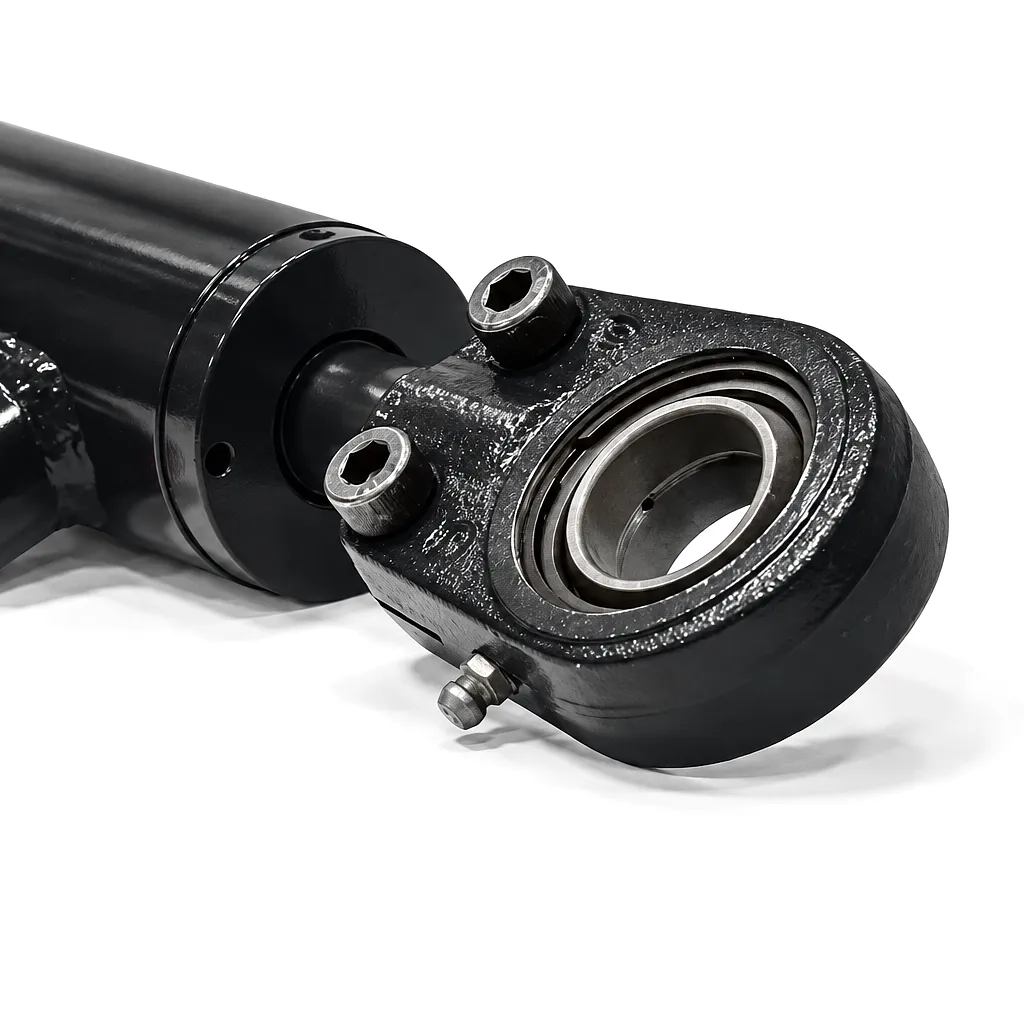 Featured Product
Engineered with precision-ground rod surfaces and multi-layer seal configurations for extended service life in demanding steering and actuation applications across UK industrial fleets.
The Complete Hydraulic Cylinder Seal Maintenance Checklist
Structured by inspection frequency — daily checks through annual overhaul
Daily inspection forms the foundation of any hydraulic cylinder seal maintenance programme. Before each shift begins — whether on a material-handling line in Coventry, a fabrication press in the West Midlands, or an agricultural baler operating in East Anglia — operators should visually inspect all exposed cylinder rods for signs of oil film weeping at the rod seal area. A faint oil sheen on a clean rod is normal and actually desirable as it indicates the seal is providing a thin lubricating film to the rod surface. However, visible oil pooling, droplets forming at the rod seal housing, or oil tracks running down the cylinder barrel indicate seal degradation requiring immediate assessment. The wiper seal condition should be noted: any sign of deformation, lip rollback, or accumulated grit at the wiper face means contamination is entering the seal stack.
Weekly inspection elevates the scope from observation to measurement and system-level assessment. This is the appropriate interval for checking hydraulic fluid condition using quick test strips or a basic particle count analysis — particularly important for UK facilities where coolant mist, metalworking fluids, or outdoor conditions introduce contamination pathways not present in enclosed environments. During weekly inspection, engineers should verify that all cylinder mounting hardware remains torqued to specification, as misalignment caused by loose mounts creates side-loading on the rod that concentrates stress on one sector of the rod seal, causing accelerated wear on that area. Hydraulic hose and fitting conditions should be checked for external seepage at the cylinder port connections. Any cylinder exhibiting drift — measurable extension or retraction under static load — has compromised piston sealing and should be scheduled for investigation before the next shift cycle.
Monthly servicing is where engineering teams move from observation and monitoring into active maintenance interventions. A full fluid analysis sample should be drawn monthly from the reservoir and submitted to an accredited laboratory — many UK fluid suppliers offer this service, and results provide quantified data on wear metal concentration, particle counts, water content, acid number, and viscosity change. This data forms the basis for scientifically informed fluid change decisions rather than arbitrary calendar-based replacements. Monthly service is also the appropriate interval for verifying cylinder stroke stop function: cylinders extending to full mechanical end-of-stroke generate enormous pressure on end cushions and piston seals that repeated end-of-stroke bottoming dramatically shortens seal life. Checking and setting deceleration valve or flow-control settings to ensure smooth cushioned deceleration before end stops should be part of every monthly hydraulic cylinder service routine.
Annual overhaul represents the comprehensive reset of hydraulic cylinder seal integrity. For cylinders in continuous-duty applications — large hydraulic presses in Sheffield’s forging sector, lifting systems in Tyneside’s automotive body assembly plants, or compact tipping cylinders on agricultural trailers in Yorkshire — annual disassembly allows direct inspection of components that are invisible during service. Rod surface roughness can be measured with contact profilometry; bore internal condition inspected with an endoscope for scoring or corrosion pitting; piston seal extrusion damage assessed before it migrates to bore scoring. Any seals showing compression set, lip edge wear, or elastomer hardening should be replaced as a complete kit rather than individually, since component seals from the same original batch will have experienced identical stress history and will reach end of life at similar intervals. Reassembly must follow torque sequences specified in the cylinder design documentation, with particular attention to end cap thread engagement which, if under-torqued, creates a fatigue failure path at the critical cap joint.
Choosing the Right Seal Material for Your Application
Material selection — the most consequential decision in hydraulic cylinder seal longevity
Specifying the wrong seal material for a given fluid type, temperature range, or chemical environment is one of the most preventable causes of hydraulic cylinder seal failure in British industry, yet it remains common because seal material datasheets are rarely consulted after the initial equipment build. When hydraulic systems are subsequently converted to fire-resistant fluids — a change increasingly common in UK foundries, steel plants, and offshore-adjacent facilities operating under Health and Safety Executive guidelines — standard NBR seals may be wholly incompatible with the new fluid chemistry. Phosphate ester fluids, for example, rapidly destroy NBR and require EPDM or PTFE-based seals. HFA water-in-oil emulsion fluids require NBR or HNBR, while HFD polyol ester fluids require EPDM specifically. Understanding fluid-elastomer compatibility is not optional engineering knowledge — it is the single most impactful technical decision affecting seal service life across all operating parameters.
Seal Installation: Where Most Failures Actually Begin
Correct assembly practice — eliminating the most common point of early seal failure
Hydraulic cylinder seal failure during or shortly after installation — typically within the first 500 operating hours — is almost invariably a consequence of incorrect fitting technique rather than product defect. Maintenance engineers across UK facilities frequently underestimate the precision required for hydraulic cylinder seal installation. The most damaging practices include using sharp-edged tools to lever seals over rod threads or port edges, folding seal lips during insertion into gland housings, failing to properly clean and deburr all surfaces before assembly, and assembling without the correct seal installation mandrels that guide seals over machined edges without lip distortion.
Contamination during installation is equally destructive. Even minor quantities of grit or metallic debris introduced during reassembly will be trapped between the seal lip and the rod or bore surface, causing immediate abrasive wear that defeats the purpose of seal replacement. Work surfaces must be cleaned, and all hydraulic cylinder components should be flushed with clean hydraulic fluid before final assembly. New seals should always be pre-lubricated with the system’s hydraulic fluid — never petroleum jelly or silicone grease, which can be incompatible with seal elastomers and fluid chemistry. In Birmingham’s tooling and die-casting sector, where cylinder rebuilds are performed in production environments, workbench contamination control is the most frequently overlooked factor in achieving consistent seal service life after overhaul.
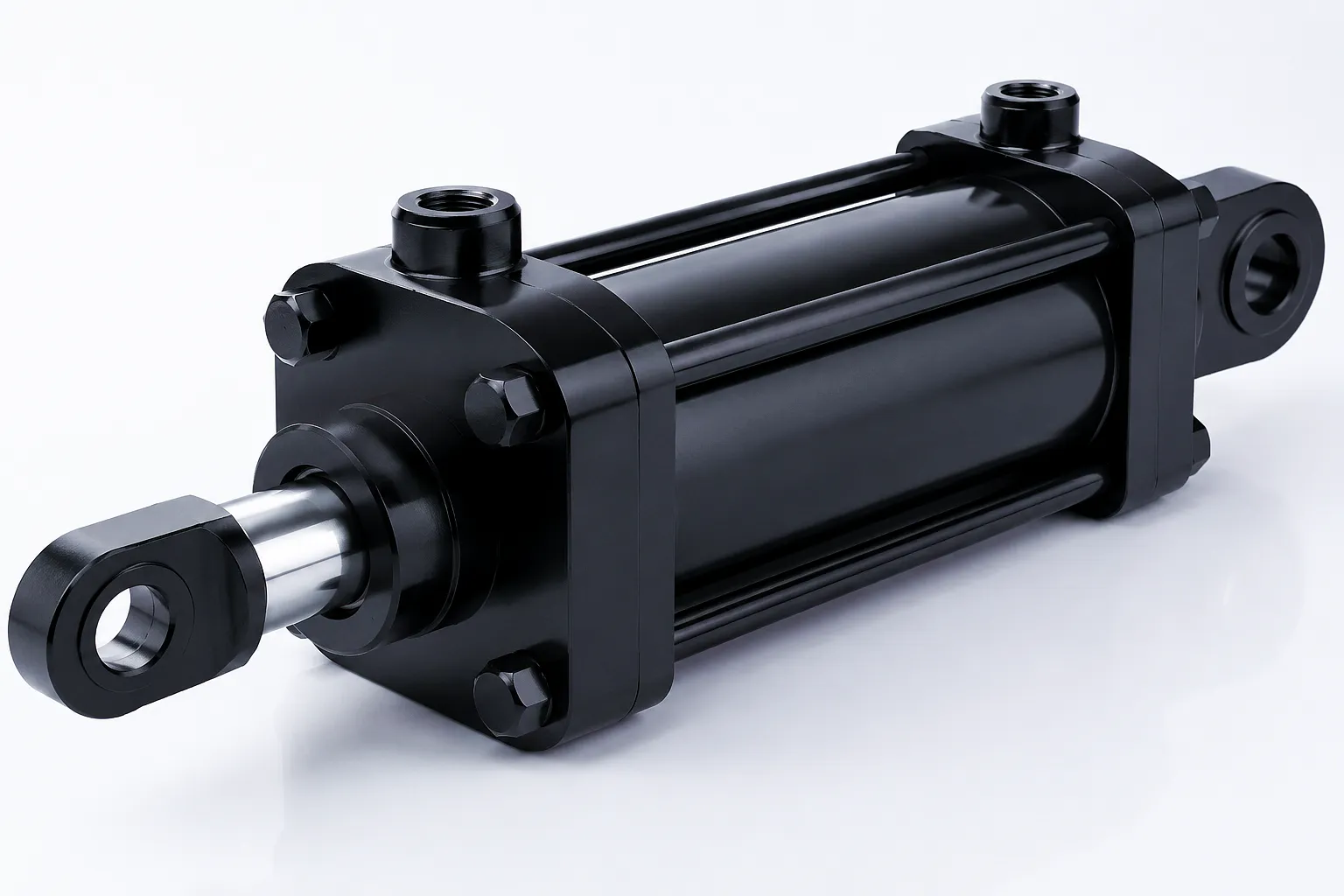 Premium Product
Designed with matched PU and PTFE seal combinations for maximum longevity in heavy-duty forklift tilt applications. Tested to 500-bar operating pressure with full wiper protection for dusty UK warehouse and logistics environments.
Hydraulic Cylinder Seal Performance & Technical Specification Reference
Reference data for specification, procurement, and maintenance planning
Sheffield Forging Operation Achieves 74% Reduction in Cylinder Downtime
A mid-scale forging operation based in Sheffield’s Lower Don Valley was experiencing hydraulic cylinder seal failures at an alarming rate across its 12-press production floor. The facility runs continuous two-shift operations producing large precision forgings for the UK automotive and energy sectors, with hydraulic press cylinders operating at working pressures between 280 and 420 bar under high cycle rates. Prior to engaging Ever Power, the maintenance team was replacing rod seals every three to four months on average — a frequency that consumed significant maintenance budget and, more critically, required scheduled four-hour press shutdowns that disrupted production planning across downstream machining cells.
The Ever Power engineering team conducted a full system audit over a two-week period, collecting fluid samples, measuring rod surface profiles on the most frequently failing cylinders, reviewing the facility’s maintenance records, and observing press cycle parameters during live production. The findings identified a combination of factors: fluid contamination running at ISO 21/19/16 — significantly above acceptable levels — combined with operating temperatures regularly reaching 78°C in the press hydraulic circuit, and standard NBR seals being used in a system that had recently transitioned to a synthetic ester-based fire-resistant fluid. The fluid-elastomer incompatibility alone was sufficient to explain accelerated seal degradation.
Ever Power supplied a complete set of custom-dimensioned HNBR rod seals and PTFE-backed piston seals sized for the facility’s non-standard bore diameters — a critical service given that off-the-shelf seal kits were unavailable for several of the older press cylinders. A structured fluid management programme, a replacement high-efficiency filtration system, and a properly configured heat exchanger recommendation were provided as part of the solution package. Eighteen months after implementation, the Sheffield facility documented an average seal replacement interval of 14 months compared to the previous 3.5 months — a 74% reduction in seal-related downtime events and an estimated annual saving of over £38,000 in combined parts, labour, and lost production costs.
“After specifying Ever Power HNBR seal kits for our Sheffield press cylinders and following their fluid management guidance, we’ve gone from patching leaks monthly to scheduling planned overhauls. The custom sizing service for our older non-standard cylinders was the real differentiator — no other supplier could provide that.”
“We run a mixed fleet of hydraulic tipping bodies out of Birmingham’s logistics corridor. Rod seal failure in dirty environments was our biggest maintenance cost. Ever Power’s PU rod seals with dust exclusion wipers have transformed our seal service intervals — we’re getting twice the life from every overhaul.”
“Our agricultural cylinder rebuild programme in Lincolnshire needed seals that could handle cold start-up temperatures in winter and high-cycle harvesting loads in summer. Ever Power’s engineering team specified HNBR kits with the right hardness for our application and provided technical data to back every decision. Exceptional supplier.”
Ever Power: Precision Manufacturing & Custom Hydraulic Cylinder Solutions
Engineering-grade customisation — from prototype to production batch
Ever Power’s manufacturing facilities operate to rigorous process standards that address the full hydraulic cylinder lifecycle — from raw material selection and precision machining to final pressure testing and seal integrity verification. For UK industrial buyers operating in demanding sectors including steel processing, automotive production, food manufacturing, and marine engineering, the ability to specify exact seal material compounds, rod surface treatments, bore tolerances, and port configurations makes Ever Power a genuinely engineering-led supply partner rather than a catalogue distributor.
Customisation capabilities extend across every dimension of hydraulic cylinder design. Non-standard bore diameters from 25 mm to 500 mm, stroke lengths up to 8,000 mm, operating pressures to 700 bar, and specialist rod materials including induction-hardened and hard-chrome plated, nickel-chrome plated, or stainless steel rods for corrosion-critical environments are all within standard production scope. Where UK customers require CE-marked assemblies compliant with the Machinery Directive and Pressure Equipment Directive, Ever Power provides full documentation packages including material certificates, dimensional inspection reports, and pressure test certificates.
Lead times for custom hydraulic cylinder orders are managed through an integrated supply chain that includes in-house bar stock management, machining centres operating across multiple shifts, and a controlled seal assembly environment with particulate-controlled clean assembly areas. For urgent replacement requirements — the type of situation that arises when an unplanned cylinder failure threatens a UK production schedule — Ever Power maintains a stock of commonly used seal kits and semi-finished cylinder blanks that enable accelerated turnaround. UK logistics partners provide reliable express freight services that keep downtime measured in days rather than weeks for the majority of urgent custom requirements.
Industrial Application Scenarios for Hydraulic Cylinder Seal Management
Sector-specific guidance for UK operations
In Birmingham and Wolverhampton’s stamping and forging operations, hydraulic cylinder seals are subject to high-frequency pressure cycles and often contaminated with metalworking fluid mist. HNBR rod seals with tandem wiper configurations and 10-micron absolute return-line filtration represent the minimum specification for achieving annual seal change intervals in these environments. Fluid temperature control through dedicated oil coolers is essential wherever continuous press cycling keeps hydraulic circuits operating at sustained high load factors.
UK agricultural equipment faces some of the most challenging seal conditions of any sector — outdoor temperature extremes from sub-zero winter storage to peak harvesting heat, contamination from field dust and crop debris, and the seasonal intensity of use that places high stress on seals that may have sat statically compressed for months. Polyurethane seals are widely specified for agricultural cylinder rod positions due to their exceptional abrasion resistance, while standard NBR remains appropriate for lower-pressure lift and tipping functions where mineral hydraulic oil is used.
Excavator boom, arm, and bucket cylinders operating on UK construction sites endure constant exposure to abrasive grit, water ingress from rain, and impact risk from stone and debris. Wiper seal quality directly determines rod seal longevity in this environment — a heavy-duty polyurethane wiper with a steel-reinforced lip provides substantially better exclusion performance than standard rubber wipers. Chrome rod quality on replacement cylinders should be verified; thin or poorly bonded chrome layers fail rapidly in abrasive site conditions, exposing the base steel to corrosive attack within months.
Hydraulic cylinders on port cranes, ship-unloader jibs, and quayside handling equipment operate in salt-laden atmospheric conditions that present severe corrosion challenges for rod surfaces and external hardware. FKM seals are specified for high-temperature marine engine-room applications, while stainless steel rod cylinders with electroless nickel-plated end caps address external corrosion in exposed harbour environments. Maintenance intervals at portside facilities typically align with vessel call schedules, and Ever Power’s ability to supply exact-dimension replacement cylinders and seal kits with short lead times suits this operationally demanding context.
Întrebări frecvente
Real answers to questions from UK hydraulic engineering and maintenance teams
Talk to Ever Power’s Engineering Team Today
Whether you need a complete custom seal kit for a non-standard cylinder, a replacement hydraulic cylinder assembly, or technical consultation on your maintenance programme — Ever Power is ready to assist. UK buyers receive priority engineering response.
 Romanian
  English
  Italian
  Portuguese
  Dutch
Dutch  Swedish
  Danish
  Finnish
  Polish
  Hindi
Hindi  Kazakh
  Turkish
  Ukrainian
  Spanish
  German
  Russian
  Korean
  Japanese
  Vietnamese
  Thai
Thai  Indonesian
  Malay
Malay  French
  Greek
Greek