
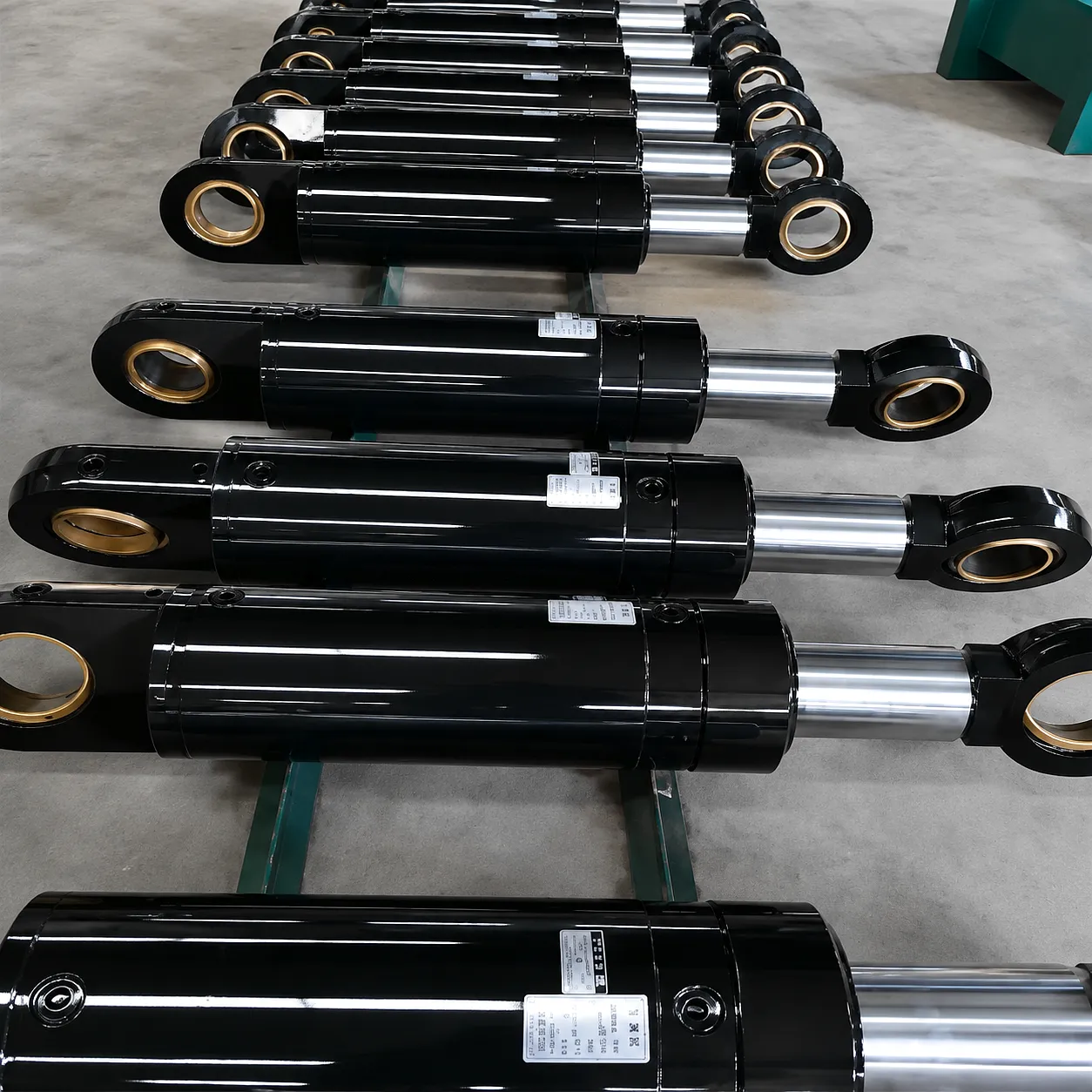
 When a hydraulic cylinder fails on a steel fabrication line in Sheffield or a construction site in Birmingham, every hour without the right replacement costs real money. The challenge is not simply finding a cylinder — it is finding the right one. Bore diameter, stroke length, rod diameter, mounting configuration, and port threading all need to be measured accurately before you even pick up the phone to a supplier. Miss a single dimension and the replacement cylinder will not fit, will not seal, or will operate dangerously outside its pressure rating. This guide walks through the full measurement process step by step, using the kind of practical precision that UK maintenance engineers rely on in heavy industry every day.
Hydraulic cylinders are among the most load-critical components in any fluid power system. Whether you are replacing a tie-rod cylinder on a packaging press or sourcing a custom welded body unit for agricultural machinery in rural Yorkshire, the dimensional accuracy of your replacement directly determines installation success, seal integrity, and long-term performance. At Ever Power, we have supplied precision hydraulic cylinders to UK industrial buyers for years, and the first question we always ask is: have you measured the original correctly? The sections below will ensure that the answer is yes.
Why Precise Measurement Is Non-Negotiable in Hydraulic Cylinder Replacement
A hydraulic cylinder that is even 2 mm out of bore specification will cause immediate sealing problems. The internal lip seals — whether polyurethane or PTFE composite — are engineered to exacting tolerances, and any dimensional deviation causes bypass leakage that degrades system pressure and ultimately leads to catastrophic seal failure. In UK manufacturing environments operating under ISO 4413 safety standards for fluid power systems, an incorrectly specified replacement cylinder can also create a compliance liability. Plant managers in automotive manufacturing hubs around Coventry and Sunderland have learned this the hard way during unplanned shutdowns. The stroke length is equally critical: a cylinder 10 mm shorter than the original may appear functional but will prevent full actuator travel, leading to incomplete machine cycles and product rejects on the production line.
Rod diameter accuracy is just as important as bore measurement. The piston rod must match the existing gland housing dimensions precisely, since the rod seals — typically chevron packing or U-seal configurations — are machined into the end cap assembly. A rod even 1 mm over-diameter will bind at the gland; one that is under-diameter will leak. Port size and thread type determine the hydraulic fitting compatibility: BSP (British Standard Pipe) threads are the standard across UK plant equipment, and confusing a 1/2 inch BSP port with a 1/2 inch NPT (American) or BSPP (parallel) thread creates a fitting that appears to seat but will weep under pressure. Getting these details right before you place the order saves weeks of back-and-forth and keeps your equipment running.
Tools Required Before You Begin Measuring
 Before removing the cylinder from service — or while it is still accessible — gather a vernier caliper (0–150 mm range minimum), a steel tape measure, an inside bore gauge or telescoping gauge set, a thread pitch gauge for identifying port threads, a micrometer for rod diameter, and a notepad or phone camera to record all measurements with reference photos. In industrial facilities across the West Midlands and the North East of England, maintenance teams now use digital calipers with Bluetooth data logging to eliminate transcription errors during field measurement. If the cylinder has already been removed, working on a clean, well-lit bench is strongly recommended to prevent parallax errors. Label every measurement immediately with its location reference: bore, stroke, rod, front port, rear port, and any clevis or trunnion dimensions. Do not rely on memory in a busy workshop environment.
📏
Vernier Caliper — 0 to 150 mm digital preferred, 0.01 mm resolution
📈
Inside Bore Gauge — telescoping or dial-type for accurate bore ID measurement
🔢
Steel Tape Measure — for stroke length and overall body length
🔧
Thread Pitch Gauge — for BSP, BSPP, NPT port identification
🔋
Micrometer — for precision rod diameter measurement to 0.001 mm
Measuring the Bore Diameter — The Most Critical First Step
 The bore diameter is the internal diameter of the cylinder barrel — it is the dimension that determines the force output of the hydraulic cylinder at a given system pressure. To measure it accurately, the cylinder must be fully retracted and depressurised. If the unit is already removed from the machine, use a telescoping gauge inserted into the barrel opening and expand it until it contacts both walls; transfer this reading to an outside micrometer for a precise figure. Alternatively, use a dedicated bore gauge with a dial indicator for a direct reading. Take the measurement at three positions along the bore — near the front, at the midpoint, and near the rear — and also take three rotational readings at each position (12 o’clock, 4 o’clock, and 8 o’clock). This gives you nine readings total and reveals whether the bore is ovally worn, which affects seal selection for the replacement cylinder.
Standard UK industrial hydraulic cylinders use metric bore sizes. The most common bore diameters in British manufacturing and construction equipment are: 40 mm, 50 mm, 63 mm, 80 mm, 100 mm, 125 mm, 160 mm, and 200 mm. If your measurement falls between standard sizes — say 81.4 mm when you expected 80 mm — this indicates barrel wear and your replacement cylinder should be specified at the original 80 mm bore, with new seals matched to the original nominal dimension rather than the worn actual dimension. This is a key distinction that suppliers like Ever Power factor into every custom replacement quote.
Measuring Stroke Length Accurately
Stroke length is the distance the piston rod travels from the fully retracted position to the fully extended position. This is measured as the linear distance the rod moves, not the overall extended or retracted body length of the cylinder. To measure it on a removed cylinder: fully retract the rod manually, mark the rod at the face of the gland seal housing, then fully extend the rod and measure from the same reference point at the gland face to the new rod position. This gives you the net stroke length. If the cylinder is still in service, hydraulically extend the cylinder to its mechanical stop (not a software stop), mark the rod position at the front face of the head, retract fully to its stop, and measure the distance the mark moved.
Common stroke lengths for UK plant and agricultural applications range from 100 mm on compact cylinders used in clamping fixtures up to 3000 mm or more on large boom cylinders used in forestry and earth-moving equipment operating across Scotland and Wales. Always add 5–10 mm of extra stroke allowance when specifying a replacement for equipment that has experienced end-of-stroke impact damage — the cushioning needs to be recalibrated at a slightly longer stroke. Note the retracted length and extended length separately: these are used to confirm the physical installation envelope fits within the machine frame, particularly relevant in tight cab-mounted applications on agricultural equipment built for narrow field conditions in eastern England.
Rod Diameter, Rod Thread, and Rod End Configuration
 The piston rod is the moving component that transmits force from the hydraulic cylinder to the load. Its diameter directly determines the area difference between the full-bore side (cap end) and the rod side of the piston, which is fundamental to the cylinder’s force output and speed in both extension and retraction directions. Use a micrometer to measure the rod at several points along its length — particularly at the mid-stroke zone where the rod spends most of its working life and where corrosion and scoring are most common. Measure at two perpendicular orientations at each point to detect any ovality or bending. Standard metric rod diameters commonly used in UK hydraulic systems include 25 mm, 32 mm, 40 mm, 50 mm, 63 mm, 80 mm, and 100 mm.
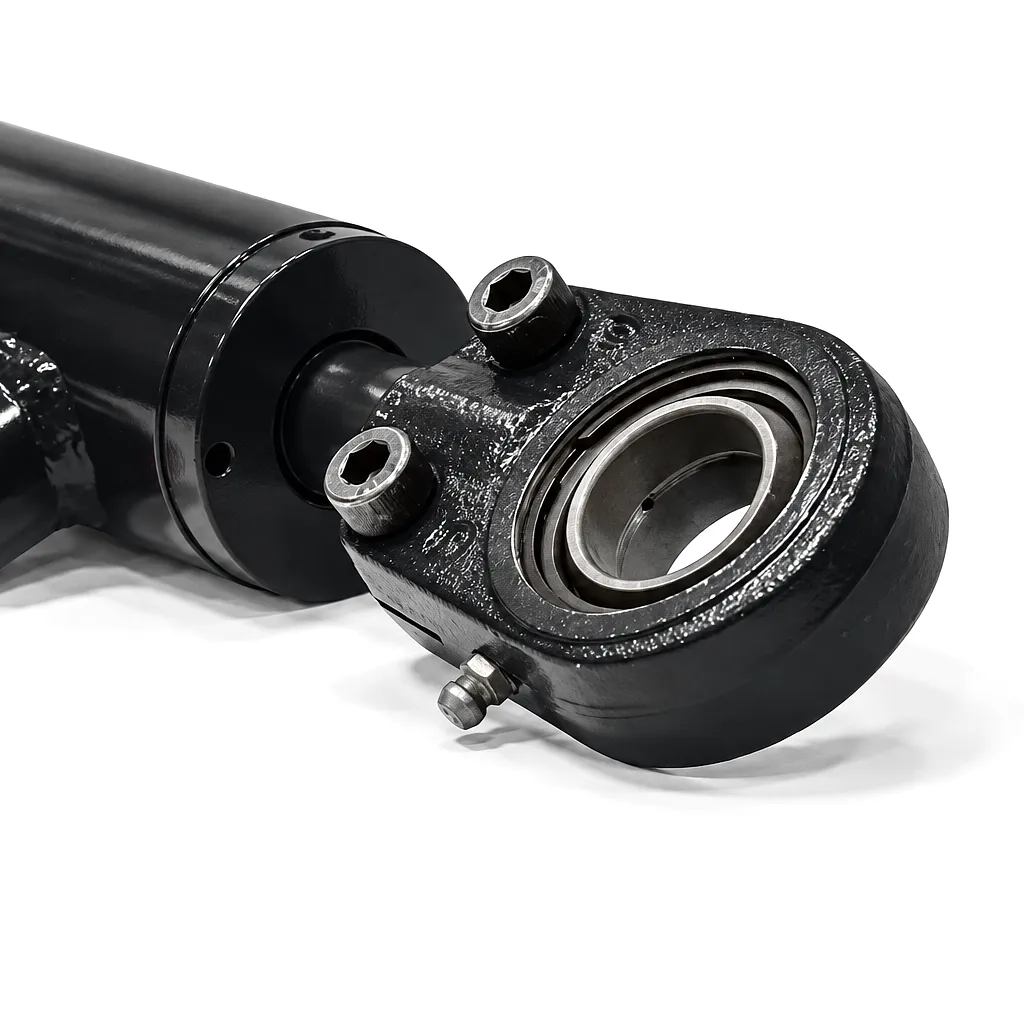
The rod end configuration must also be recorded. Common UK configurations include: male threaded rod end (specifying thread diameter, pitch, and length of thread engagement), female threaded rod end (internal thread, specify same parameters), clevis or fork end (specify pin diameter, inside width, and outside width of the clevis), and eye rod end with spherical bearing (specify pin bore diameter and bearing outer diameter). Photograph the rod end from multiple angles. If the thread is metric, it will be in the M-designation series (M20x2.0, M30x2.0, etc.). If it is inch-based, confirm whether it is UNC, UNF, or BSP, as these are all found on older UK industrial plant equipment particularly in the Midlands manufacturing belt.
Hydraulic Cylinder Measurement Parameters — Technical Reference Table
Recording the Mounting Configuration and Flange Dimensions
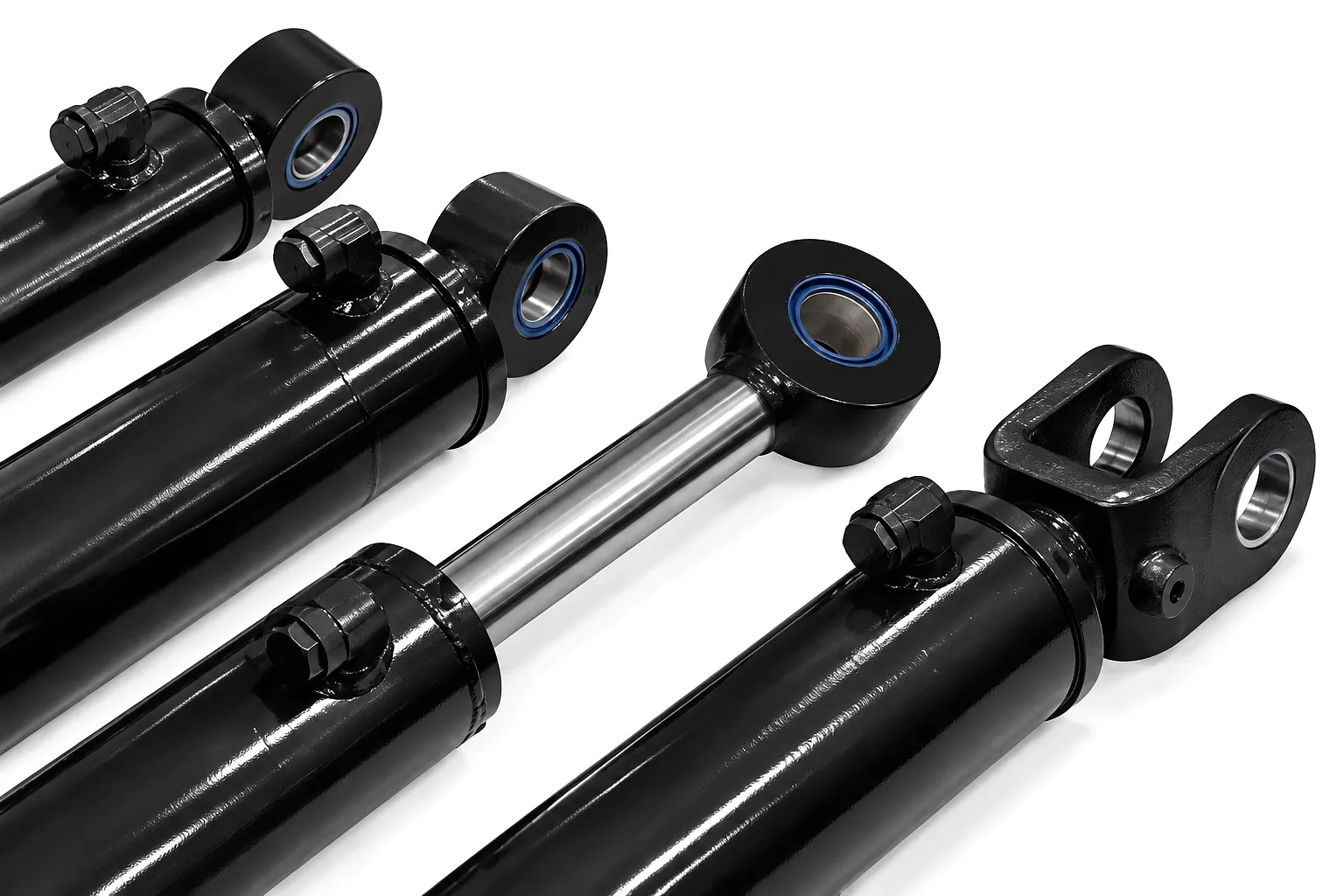
The mounting configuration is the physical interface between the hydraulic cylinder and the machine structure, and it has at least as much impact on replacement success as the bore and stroke dimensions. Getting this wrong means the replacement cylinder physically cannot be bolted into the original position. The most common mounting styles encountered on UK industrial equipment are: front flange (mounted on the front head), rear flange (mounted on the cap end), side tapped lugs (two or four tapped holes on the barrel body), clevis or pivot pin (at the cap end and often at the rod end too for double-pivot applications), foot mount (integral saddle brackets welded to the barrel), and trunnion mount (side-mounted pivot pins for mid-body articulation). Each mounting style requires specific dimensional data to be recorded.
For flange-mounted cylinders — extremely common on hydraulic power presses and injection moulding machines operating across plastic manufacturing facilities in Lancashire and Cheshire — you need the bolt circle diameter (the diameter of the circle on which the fixing bolts sit), the bolt hole diameter, the number of bolt holes, their angular spacing, and the flange outside diameter. For clevis mounts, record the pin diameter (the diameter of the pivot pin), the inside width of the clevis fork, the outside width, and the distance from the clevis pin centre to the rear of the cap body. All clevis dimensions should be measured with the cylinder removed from service and the pin cleaned of grease and debris to get accurate readings.
Port Threading, Hydraulic Fittings, and Seal Specification
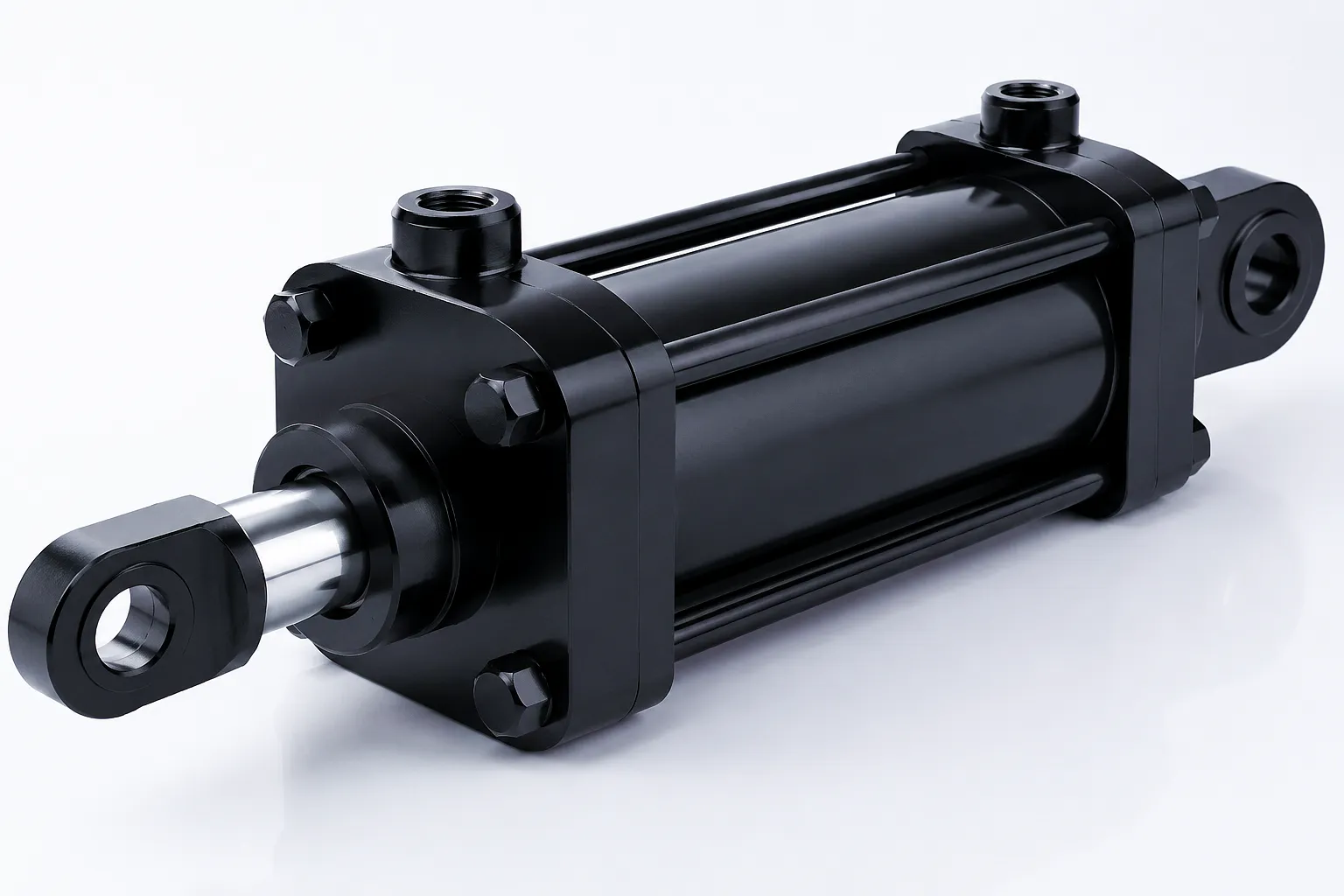 The hydraulic ports on the cylinder body are where the supply and return hoses connect. In the UK, BSP (British Standard Pipe) is the dominant thread standard for hydraulic fittings, though you will occasionally encounter BSPP (the parallel version) and even metric SAE fittings on imported equipment. Use a thread pitch gauge to count the threads per inch on the port, then measure the nominal outside diameter of the threaded bore using a caliper. Cross-reference these two measurements against a BSP thread chart: a 3/4 inch BSP, for instance, has a nominal OD of 26.4 mm and 14 threads per inch. It is critically important to distinguish between tapered BSP (BSPT — seals on the thread itself) and parallel BSPP (seals on a bonded washer or O-ring face seal fitting). Installing a BSPT fitting into a BSPP port will initially appear to seal but will fail under pressure cycling.
The seal package inside the cylinder — the piston seal, the rod seal, the wiper seal, and the static end cap seals — must all be specified to match the replacement cylinder’s operational environment. NBR (nitrile) seals work with standard mineral hydraulic oils (ISO VG 46 or VG 68), which are the standard grades used in UK industrial hydraulic power units. If your system uses fire-resistant hydraulic fluid such as phosphate ester HF-D type, PTFE or FKM (Viton) seals are mandatory. For applications involving biodegradable hydraulic oils — increasingly specified by UK local authorities for environmental compliance in outdoor or near-waterway machinery — polyurethane seals with confirmed HETG or HEPG fluid compatibility are the correct choice. Record the current seal condition from the failed cylinder; blue-black seals indicate thermal degradation and suggest the system is running above the correct temperature range.
Application Scenarios: Where Precise Cylinder Measurement Matters Most
From heavy steel fabrication in Sheffield to offshore support equipment at Aberdeen, getting the measurement right is industry-critical.
⛩ Steel and Metal Fabrication — Sheffield and Rotherham
Sheffield’s special steel sector runs hydraulic presses, bending machines, and forging units that rely on welded-body cylinders rated to 350 bar and above. These are non-standard bore configurations and require exact measurements before any replacement order is placed. Cylinder bore diameters of 125 mm to 250 mm with strokes exceeding 800 mm are common. Ever Power supplies custom-welded cylinders to this sector with hard chrome rod surfaces and high-temperature FKM seal packs designed for forge shop environments.
🏥 Automotive Manufacturing — Midlands Production Lines
Assembly plant presses and body-shop transfer equipment in Birmingham and Coventry use tie-rod cylinders with very tight stroke tolerances — sometimes ±0.5 mm — to maintain precise panel gap positioning. A replacement cylinder must match the stroke and bore exactly, and the port position (end-ported vs side-ported) must align with existing hose routing to avoid re-plumbing the hydraulic circuit. Ever Power’s precision tie-rod cylinders are manufactured to ISO 6020/2 standards for direct compatibility with these applications.
🌿 Agricultural Equipment — Yorkshire, East Anglia, and the Scottish Borders
Boom arms on sprayers, front-end loaders, and baler systems all use single or double-acting cylinders that must withstand repeated duty cycles through muddy, cold UK field conditions. These cylinders frequently have non-standard stroke lengths tailored to specific equipment frame designs. Accurate stroke measurement — and recording the extended and retracted body lengths — is essential so the replacement cylinder fits the linkage geometry without alteration. Corrosion-resistant stainless rod options are increasingly specified for washdown environments in the food and dairy sector in Somerset and Cheshire.
⚓ Offshore and Marine — Aberdeen and the Humber Estuary
Deck cranes, hatch covers, and stabiliser systems on vessels operating from Aberdeen and Immingham use cylinders with duplex stainless bodies or heavy-duty marine-grade coating systems. Port threading must be confirmed against hydraulic system drawings to maintain ATEX or DNV GL compliance. These environments demand full material certifications and traceability, which Ever Power provides as standard on all marine-specification orders. Measurement accuracy here is a compliance requirement as much as an engineering one.
🏗 Civil Construction and Plant Hire — Nationwide UK
Hydraulic breakers, compactors, and crane outrigger cylinders on plant hire equipment cover a huge range of makes and models. The challenge here is that older equipment — some of which has been in UK hire fleets since the 1990s — may use inch-bore cylinders or obsolete mounting standards. Accurately measuring and documenting all dimensions before approaching Ever Power enables our engineering team to cross-reference against modern metric equivalents or manufacture a like-for-like replacement, avoiding the need for costly machine frame modification on the customer’s side.
Ever Power Hydraulic Cylinder Range
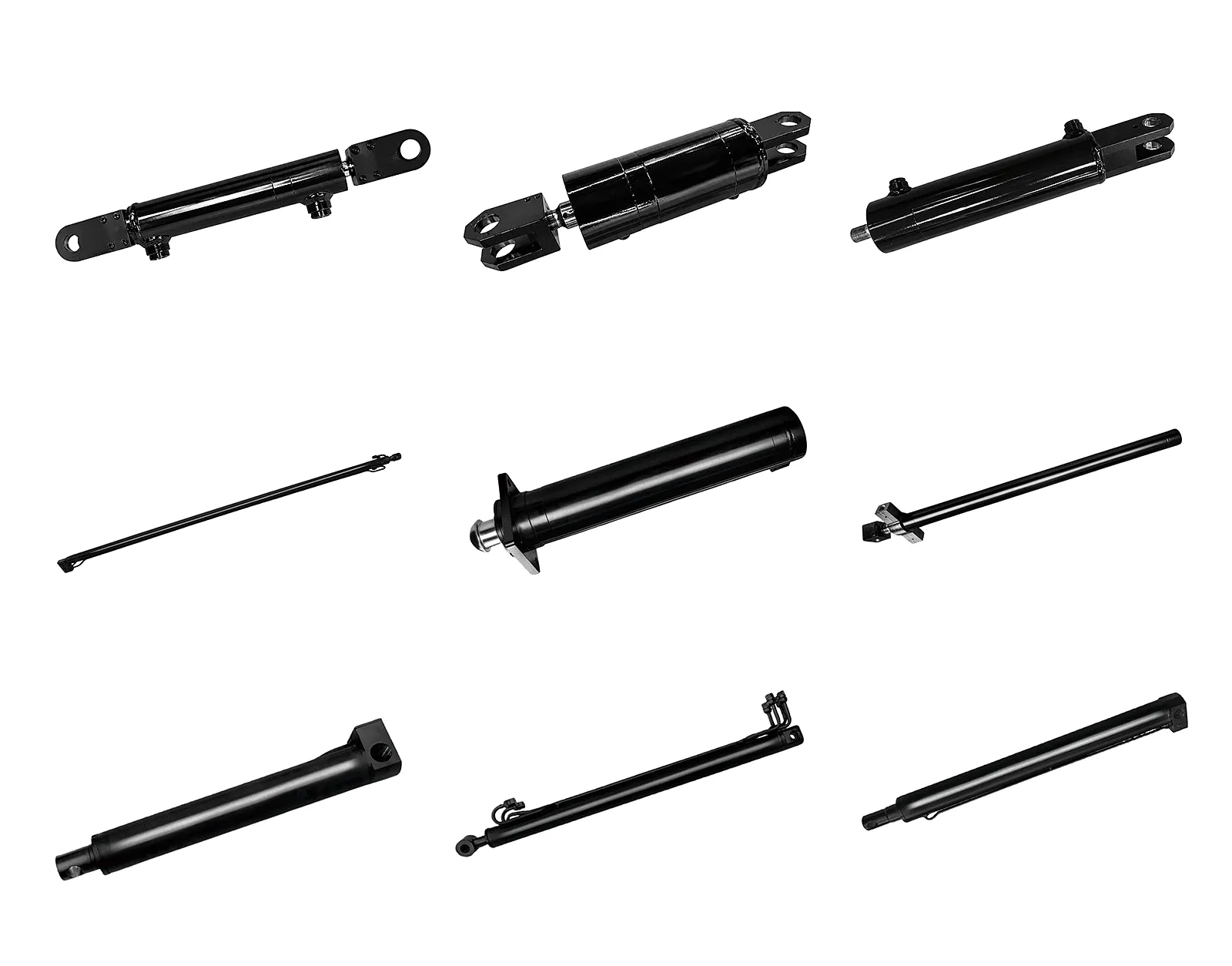
Ever Power: Custom Hydraulic Cylinder Manufacturing for UK Industrial Buyers
Factory-direct precision engineering with full measurement support and rapid UK despatch.
⚙ Precision CNC Manufacturing
Ever Power operates a state-of-the-art manufacturing facility equipped with CNC honing machines, deep-hole boring lines, and automated hard chrome plating cells. Our barrel honing process achieves a Ra surface finish of 0.2 to 0.4 micrometres — the standard range required for long seal life. Rod grinding and chrome plating are performed in-house, with chrome layer thickness controlled to between 20 and 30 micrometres for optimal corrosion resistance in UK damp environments. Every bore is machined to H7 tolerance as standard, with tighter H6 tolerance available for precision press applications upon request.
🛠 Full Customisation Capability
No two replacement situations are identical. Ever Power’s engineering team works directly from your measurement data sheet to design a cylinder that is dimensionally and functionally equivalent to your original — or improved where the opportunity exists to specify better seal materials, harder chrome, or enhanced cushioning. We cover bore diameters from 32 mm to 500 mm and strokes from 50 mm to 8,000 mm in a single-piece barrel. Non-standard mounting flanges, unusual port positions, and integrated position transducer housings are all within our standard capability, with no minimum order quantity for custom-specified replacement units.
🏭 UK Supply Chain and Delivery
Ever Power ships direct to UK industrial addresses including delivery to manufacturing facilities across the Midlands, the North of England, Scotland, and South Wales. Standard replacement cylinders ship within 7–14 working days; urgent replacement orders for critical plant can be escalated with our fast-track service. All cylinders are shipped hydraulically tested to 1.5 times working pressure, with full pressure test certificates and material certifications available on request to satisfy UK site health and safety requirements. Our sales team provides technical drawing review and measurement confirmation before any order is placed — we check your measurements against our CAD drawings before manufacture begins.
Customer Success Story: Rapid Cylinder Replacement for a Steel Tube Manufacturer in Rotherham
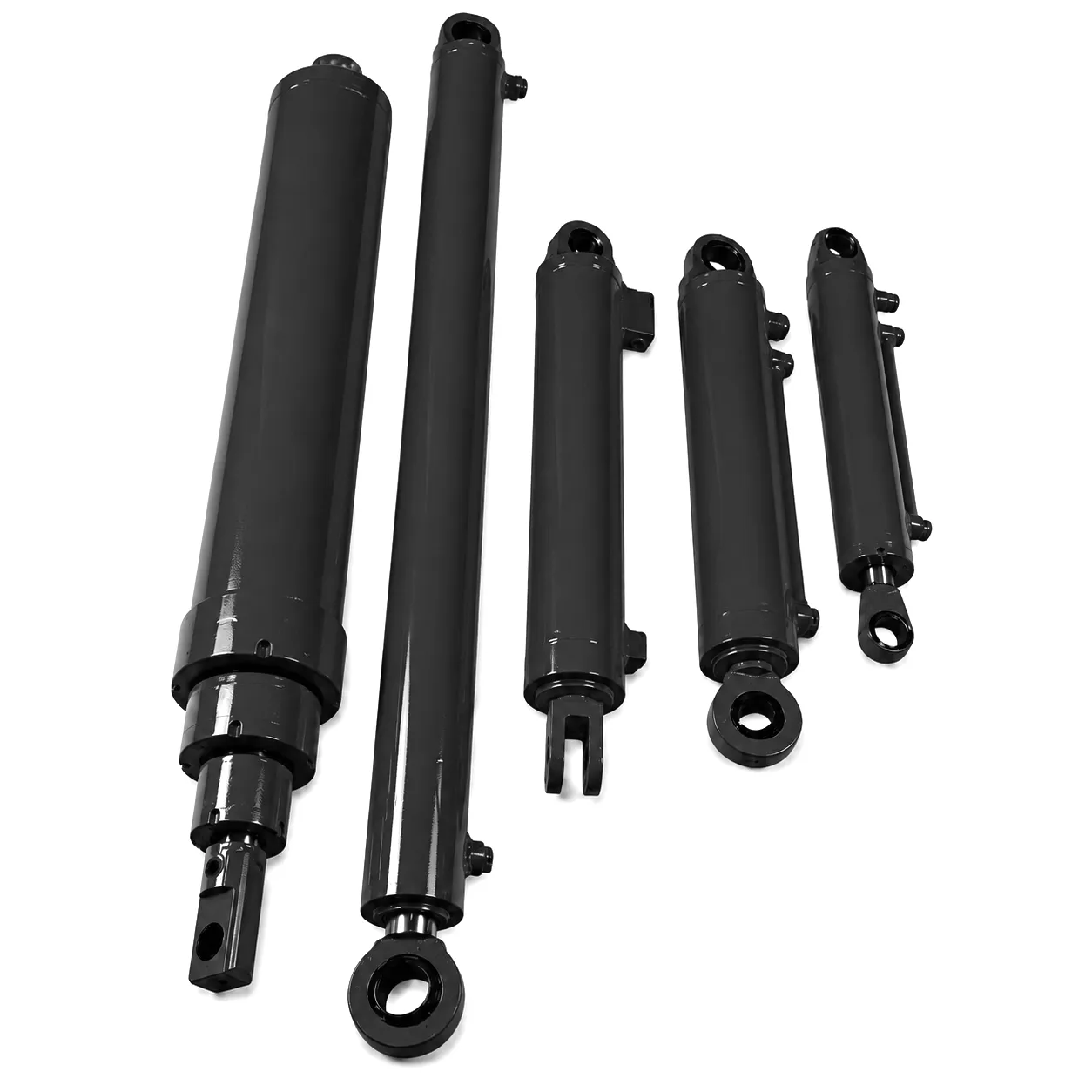 A precision steel tube manufacturer in Rotherham, South Yorkshire, was operating a rotary transfer machine with 12 hydraulic clamping cylinders — all welded-body units with 80 mm bore, 320 mm stroke, and a non-standard front flange mounting with four M16 holes on a 150 mm bolt circle. When two cylinders failed within the same week due to rod seal degradation from overheating oil, the production line halted. The plant maintenance manager needed exact replacements urgently — the machines were running specialised aerospace-grade tube sections under a time-sensitive defence contract.
The maintenance team followed a systematic measurement process, photographing each cylinder and recording all critical dimensions: bore 80 mm H7, stroke 320 mm, rod 50 mm with M42x2.0 male thread, 3/4 inch BSP end ports with side exit configuration, FKM seals rated to 200°C, and 200 bar working pressure. They emailed these measurements and photos to Ever Power’s technical sales team. Within 24 hours, Ever Power confirmed dimensional compatibility with our standard welded-body range and provided a drawing for sign-off. Six replacement hydraulic cylinders — two as emergency units and four as planned stock — were manufactured, pressure-tested, and despatched to Rotherham within nine working days. The line was back in production before the contract deadline, with the planned stock units sitting in the plant’s spare parts store ready for any future occurrence.
“The downtime cost us significantly per day. Having a supplier who could confirm technical specifications in hours rather than days, and deliver tested cylinders in under two weeks, made a real operational difference. We will not be going back to the original OEM supply route.” — Plant Maintenance Manager, Rotherham Steel Tube Manufacturer
James H., Hydraulic Systems Engineer
Automotive Press Line, West Midlands
“We had a custom 100 mm bore cylinder with a 900 mm stroke on a tryout press — not something any local stockist could match. Ever Power matched every dimension exactly, including the non-standard clevis pin diameter and the adjustable cushion at both ends. The replacement installed in under an hour and has now run 50,000 cycles without a seal issue. The measurement support they gave us before order was genuinely helpful — they spotted that we had recorded the stroke as retracted body length rather than rod travel, which would have caused a 50 mm error.”
Margaret T., Procurement Manager
Aggregate Processing Plant, Leeds
“We maintain a fleet of jaw crushers and conveyor drives, all running on hydraulics. Ever Power has become our primary cylinder supplier because their measurement confirmation process genuinely eliminates errors — their engineers review your measurement sheet, redline any anomalies, and send a CAD drawing for approval before anything goes into production. For a procurement manager dealing with multiple sites across Yorkshire, that level of pre-order technical rigour saves me from expensive returns and wrong-delivery problems. Delivery to Leeds is consistently within the lead time quoted, even on larger bore units.”
Robert F., Plant Hire Operations Director
Plant Hire Company, Bristol and South West
“Running a mixed plant hire fleet means dealing with dozens of different cylinder configurations — some going back twenty years with inch-bore barrel sizes that are impossible to find from standard stockists. Ever Power has manufactured metric equivalent replacements for three of our older machines with inch-dimensioned cylinders. They cross-referenced the original bore to the nearest metric standard, confirmed the mounting dimensions worked with the existing machine frame, and the finished cylinders are actually better quality than the originals. No adaptation work needed on our side. That is exactly what you need when the machine is sitting on a hire customer’s site costing you penalty charges.”
Sıkça Sorulan Sorular
Ready to Source Your Replacement Hydraulic Cylinder?
Send us your measurement data and our engineering team will confirm specification and provide a detailed quote within one working day.
gzl tarafından düzenlendi
 Turkish
  English
  Italian
  Portuguese
  Dutch
Dutch  Swedish
  Danish
  Finnish
  Polish
  Hindi
Hindi  Kazakh
  Ukrainian
  Romanian
  Spanish
  German
  Russian
  Korean
  Japanese
  Vietnamese
  Thai
Thai  Indonesian
  Malay
Malay  French
  Greek
Greek